
 By
By The guan dao, a traditional Chinese polearm, is more than just a weapon. It’s a cultural symbol deeply entwined with loyalty, strength, and martial prowess. This iconic weapon design combines the long-range striking ability of a polearm with the powerful chopping ability of a large blade, making it a versatile combat functionality tool and a potent emblem in Chinese culture.
Its main benefits include its use in Chinese martial arts, historical warfare, and literary legend, where it represents strength, loyalty, and martial valor. The main uses of the guan dao range from battlefield combat and martial arts training to ceremonial displays.
The main parts include a wide, curved blade, a long wooden or metal shaft, and often a metal counterweight. Understanding why the guan dao became such a potent symbol requires exploring its history, its association with legendary figures like Guan Yu, and its place within the broader context of Chinese culture.
What Is the Guan Dao?
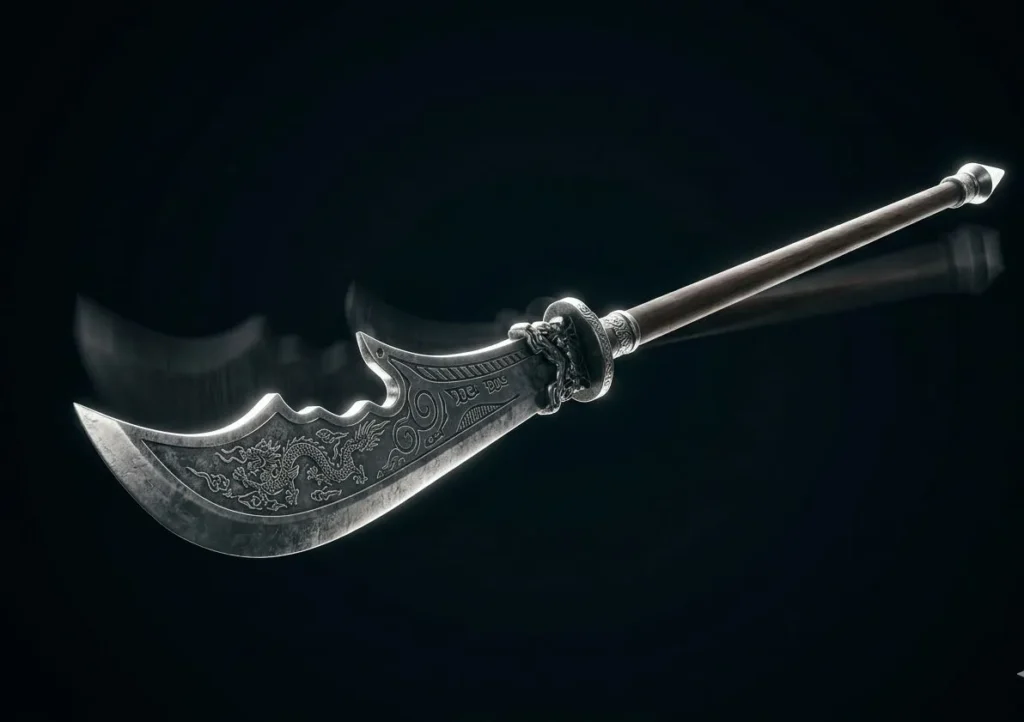
The guandao, also known as the Yanyue Dao, is a type of Chinese pole weapon, specifically a long, single-edged blade mounted on a pole. This formidable weapon features a heavy, often crescent-shaped blade attached to a long shaft, typically made of wood or metal.
It combines the attack range generates of a polearm with the cutting power of a sword, making it a versatile and effective weapon in historical warfare and Chinese martial arts (Wushu). It is often adorned with a flowing silk tassel, adding to its imposing appearance.
The Man Behind the Symbol: Guan Yu
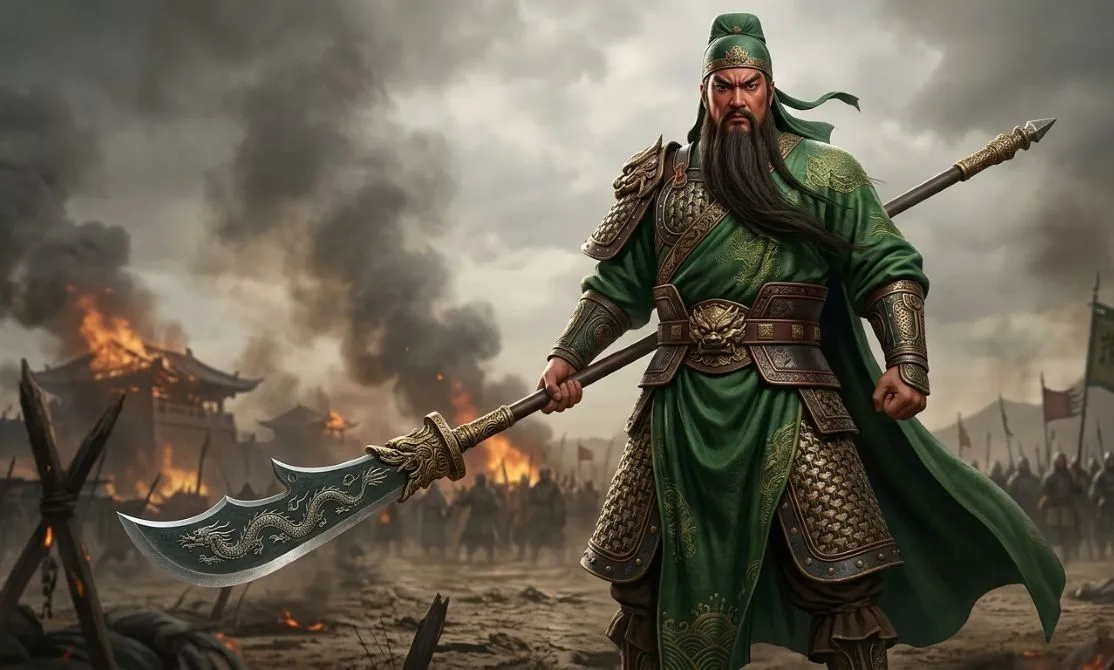
The guan dao’s symbolism is inextricably linked to Guan Yu, a famous general from the Three Kingdoms Period. Guan Yu, revered for his unwavering loyalty, righteousness, and martial skill, is often depicted wielding the guan dao.
This association cemented the weapon’s connection to these virtues in the popular imagination. Guan Yu’s blade, the Qinglong Yanyue Dao or Green Dragon Crescent Blade, became an extension of his character, embodying his strength and integrity.
Myth vs History: The Power of Storytelling
While the guan dao is strongly associated with Guan Yu, historical evidence suggests that the weapon, at least in its developed form, might not have existed during his lifetime (the Three Kingdoms Period). The earliest depictions and descriptions of the Yanyue Dao appear in texts from the Song Dynasty, centuries after Guan Yu lived.
This discrepancy highlights the power of storytelling and how legends can shape our understanding of history. The Romance of the Three Kingdoms, a historical novel, played a crucial role in popularizing the image of Guan Yu and his guan dao.
The Influence of Romance of the Three Kingdoms
The Romance of the Three Kingdoms is a cornerstone of Chinese literature and culture. This epic novel vividly portrays Guan Yu wielding his Qinglong Yanyue Dao with unparalleled skill and valor. The novel’s widespread popularity cemented the guan dao’s image as Guan Yu’s signature weapon and a symbol of his heroic qualities.
The literary legend surrounding Guan Yu and his guandao (guan dao) amplified the weapon’s cultural significance far beyond its practical use in combat.
From Warrior to Deity
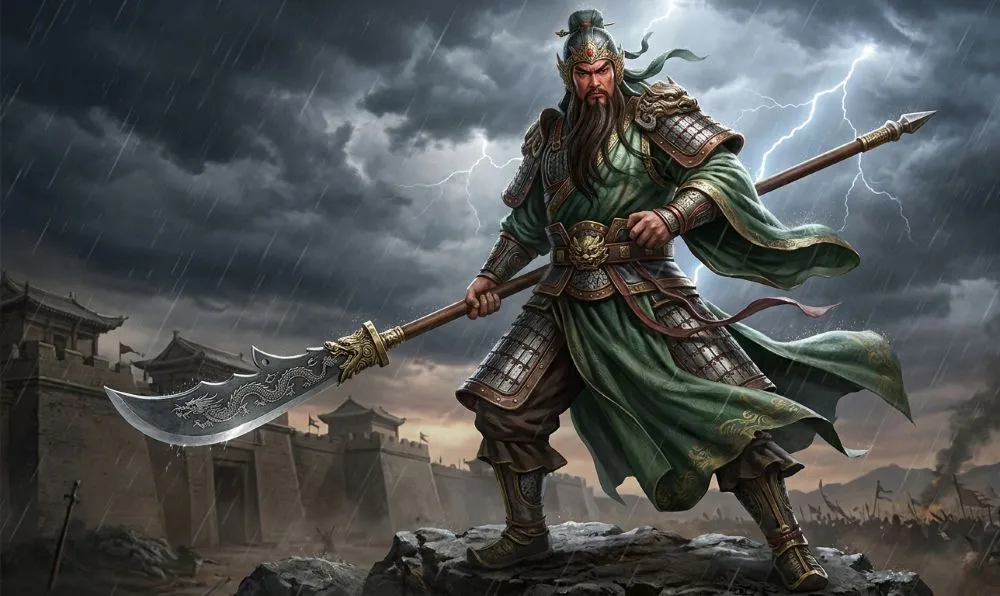
Guan Yu’s influence extends beyond military prowess; he is also revered as a deity in Chinese folk religion. Deified as Guan Gong, he is worshipped as a god of war, wealth, and protection. His image, often depicted with his guan dao, is found in temples and businesses throughout China and other parts of Asia.
This deification further elevated the guan dao’s status, transforming it from a mere weapon into a sacred object associated with divine power and blessings. The Sanctuary of Guan Yu are now common sites.
Loyalty in Confucian Values
Loyalty is a central tenet of Confucianism, a philosophy that has profoundly shaped Chinese culture for centuries. Confucianism emphasizes the importance of filial piety, loyalty to superiors, and faithfulness to one’s commitments.
Guan Yu’s unwavering loyalty to his sworn brothers, Liu Bei and Zhang Fei, perfectly embodies these Confucian ideals. Because of Guan Yu, the Guandao became a tangible representation of these valued principles.
How the Guan Dao Came to Represent Loyalty
The guan dao’s association with Guan Yu, a figure synonymous with loyalty, naturally led to the weapon itself becoming a symbol of this virtue.
Just as Guan Yu remained steadfast in his allegiance, the Guandao came to represent unwavering commitment and dedication. The image of Guan Yu wielding his weapon serves as a constant reminder of the importance of loyalty in Chinese society.
Symbolism in Art, Temples, and Tradition
The symbolism of the guandao permeates various aspects of Chinese culture. It is frequently depicted in art, from traditional paintings and sculptures to modern illustrations. In temples dedicated to Guan Yu, the Guandao is often prominently displayed as a symbol of his power and righteousness.
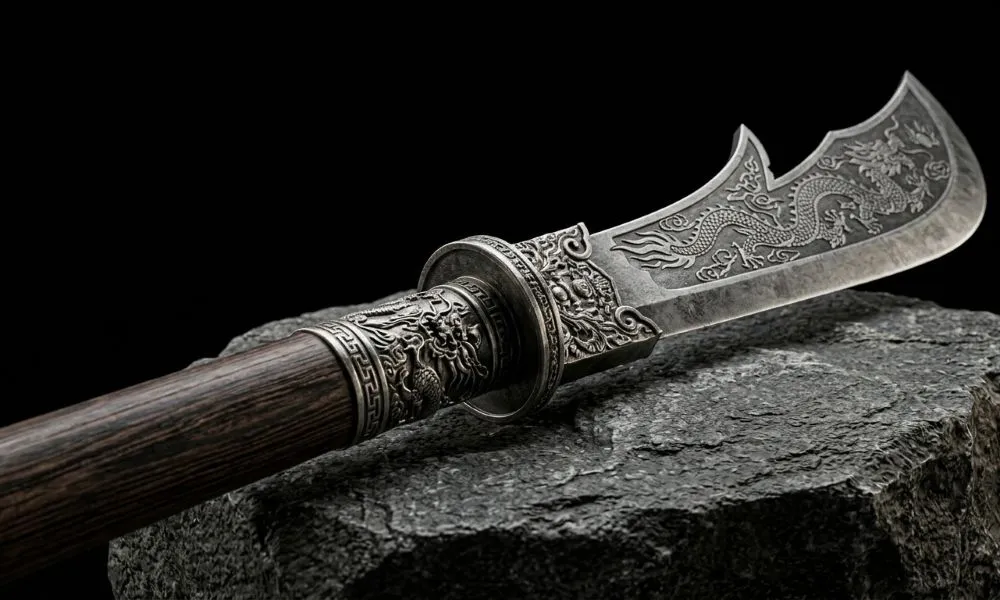
During traditional festivals and ceremonies, replicas of the guan dao may be carried in parades, further reinforcing its cultural significance. The Guandao blade is often ornate.
The Guan Dao in Martial Arts and Performance
The guan dao remains an integral part of Chinese martial arts, particularly in styles that emphasize weapon training. Practicing with the guan dao requires strength, skill, and coordination, reflecting the martial prowess associated with Guan Yu.
In Chinese Opera and Wushu performances, the weapon is often used to showcase impressive feats of strength and agility, further solidifying its image as a symbol of martial excellence. Its training is still practiced today.
Modern Interpretations and Pop Culture
The guan dao continues to appear in modern interpretations of Chinese history and culture. It is a popular weapon in video games, films, and other forms of media, often associated with characters inspired by Guan Yu.
This enduring presence in pop culture ensures that the guan dao’s symbolism remains relevant to contemporary audiences. Cosplay (historical) and Historical Reenactment also keep interest in the Guandao alive.
Why the Symbol Still Endures Today
The guan dao’s enduring symbolism stems from its deep roots in Chinese history, literature, and religion. Its association with Guan Yu, a figure revered for his loyalty, righteousness, and martial skill, has cemented its place as a powerful emblem of these virtues.
The guan dao’s continued presence in art, martial arts, and pop culture ensures that its symbolism remains relevant and resonant for generations to come.
Final Thoughts: When Weapons Become Ideals
The guan dao’s transformation from a weapon of war to a symbol of loyalty is a testament to the power of culture and storytelling. While its practical use on the battlefield may have diminished over time, its symbolic significance has only grown stronger.
The guan dao serves as a reminder that weapons can transcend their original purpose and become potent embodiments of ideals and values, deeply ingrained in the cultural consciousness. The traditional Chinese weaponry has now become a cultural symbol.
FAQS
How Effective Is the Guan Dao?
Powerful with great reach and cutting force, but heavy and slow. Effective in skilled hands, less practical than spears for typical battlefield use.
Is a Guandao a Glaive?
No. It resembles a Glaive but is heavier, broader, and more symbolic, while glaives were simpler and more practical.
Is Guan Dao Heavy?
Yes. Traditional versions can be very heavy, often used in training to build strength, though real combat versions were likely lighter.
Is the Guan Dao still used in modern martial arts today?
Yes. It’s used in Chinese martial arts and performances, emphasizing strength, discipline, and tradition rather than real combat.
Are there similar symbolic weapons in other cultures?
Yes. Weapons like the Katana or medieval swords symbolize honor, status, and cultural identity beyond combat use.