

 By
By Quick takeaways:
- Cultivation novels deliver a mastery loop the same psychological reward structure that makes video games compelling across thousands of chapters
- The genre’s self-improvement fantasy runs deeper than simple wish fulfillment: it maps onto real anxieties about effort, talent, and whether hard work actually pays off
- The Dao concept gives cultivation fiction a philosophical dimension that most power fantasy lacks, letting readers engage with questions of meaning alongside questions of power
- Tribulation arcs function as structured catharsis, making setbacks feel meaningful rather than arbitrary
- The sheer scale of cultivation novels creates a specific kind of immersion that shorter fiction cannot replicate
At some point in my decade-long journey of reading cultivation novels, I started noticing something that felt slightly embarrassing to admit. I was not just enjoying these books. I was returning to them the way other people return to comfort food, sometimes I would spend weeks binge-reading.
I still remember finishing more than 100 chapters every day, not because each chapter was a literary revelation, but because the act of reading them produced a specific, reliable feeling that was difficult to find elsewhere. A kind of forward momentum. A sense that things were being built, earned, and accumulated.
It took me years to articulate what that feeling actually was, and longer still to understand the psychological machinery producing it. 10 plus years and more cultivation novels than I could accurately count including the one I dropped midway, I think I finally have a working answer. And it turns out the question of why these novels are so compelling is more interesting than most readers or most critics give it credit for.
The Mastery Loop: Why Every Breakthrough Feels Earned
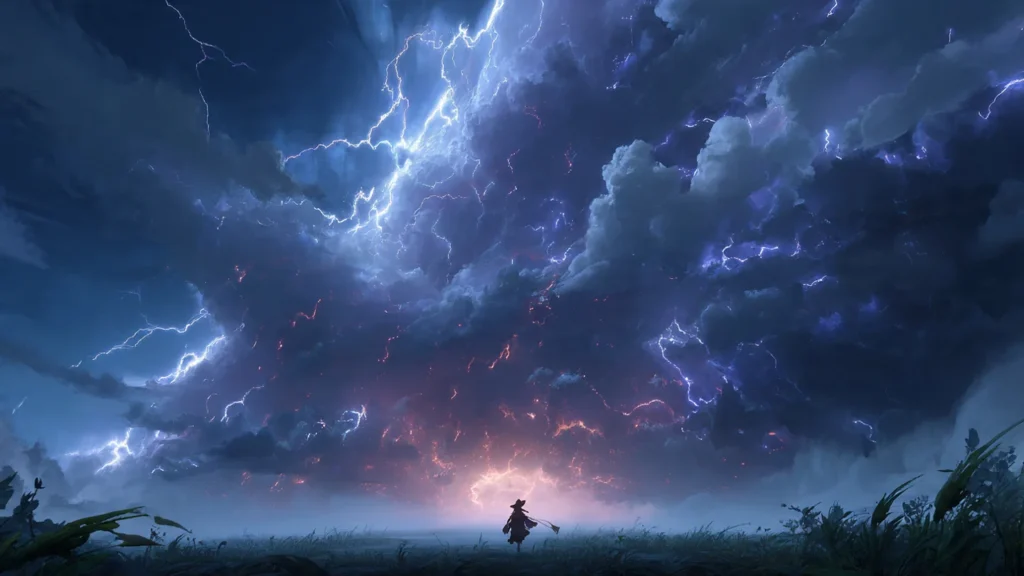
The satisfaction of cultivation progression resembles what psychologists describe as flow: a state where challenge and skill remain closely matched.
As Mihaly Csikszentmihalyi argued, people are most engaged when tasks are neither too easy nor impossibly difficult. Cultivation novels recreate that pattern narratively. Each realm introduces a challenge just beyond the protagonist’s current ability, making every breakthrough feel earned rather than arbitrary.
Cultivation novels run on an almost identical loop. A protagonist identifies a bottleneck in their cultivation, a missing insight, an insufficient resource, or a technique they cannot yet execute. They dedicate sustained effort to addressing that bottleneck. They overcome it, usually through a combination of hard work, cleverness, and a breakthrough moment that crystallizes their progress.
Then a new ceiling appears, and the loop begins again.
What makes this loop psychologically satisfying rather than merely repetitive is the specificity of the obstacles and the credibility of the effort.
When Meng Hao in I Shall Seal the Heavens spends arc after arc trying to condense a perfect Dao Pillar, the reader understands exactly what he is attempting, why it matters, and what it will mean when he succeeds. The breakthrough, when it comes, feels earned in a way that arbitrary plot victories do not.
This is why cultivation novels hold readers across thousands of chapters in a way that most Western fantasy epics struggle to match. The mastery loop gives every chapter a micro-purpose. Something is always being worked toward, even when the macro plot is in a quieter phase.
The Autonomy Fantasy: Choosing Your Own Dao

Underneath the mastery loop runs a deeper psychological current that I think is the genre’s most underappreciated appeal. Cultivation novels are, at their core, fantasies of radical autonomy.
In the real world, the paths available to any individual are heavily shaped by factors outside their control, such as where they were born, to whom, with what resources, and in what social context.
The cultivation novel’s world is nominally just as hierarchical and deterministic: spiritual roots are fixed at birth, sect resources flow to the talented, and the powerful define the rules. But the genre’s protagonists almost invariably find a way to sidestep that determinism through a combination of unusual insight, unconventional paths, and sheer refusal to accept the ceiling the world has assigned them.
More importantly, they choose their dao, their fundamental understanding of what the universe is and how they fit into it, for themselves. The Dao concept is philosophically rich in ways that Western power fantasy rarely attempts. It is not just a power source. It is a worldview, a set of values, a way of understanding existence.
Characters in A Will Eternal or Lord of the Mysteries are not just getting stronger. They are working out what they actually believe and building a practice of life around those beliefs.
This combination of external autonomy (rejecting the world’s verdict on your potential) and internal autonomy (constructing your own meaning system) is unusually potent.
Readers who feel constrained by systems they did not choose, educational, professional, and social, find in cultivation protagonists a fantasy that is more specific and more satisfying than a generic power fantasy. It is not just the fantasy of being strong. It is the fantasy of being free to define what strength means on your own terms.
The Meritocracy Illusion and Why it Comforts
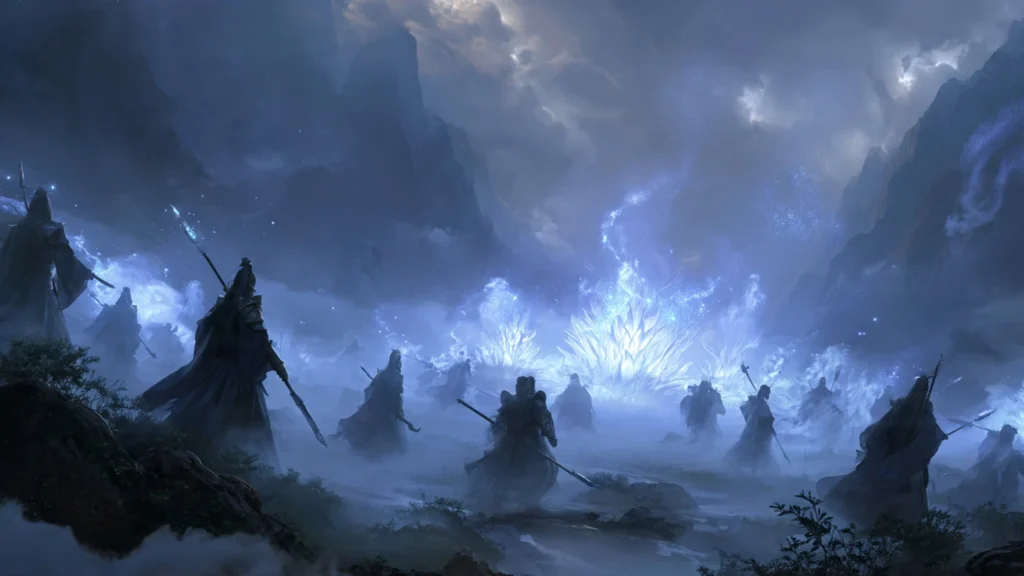
I want to be precise about this section because it touches on something the genre does that is simultaneously one of its greatest appeals and one of its legitimate critiques.
Cultivation novels are built on a meritocracy fantasy. The world is harsh and hierarchical, but effort, intelligence, and perseverance can overcome birthright disadvantages. The protagonist’s trash spiritual root is not destiny. It is a starting condition that exceptional application of will can transcend. The message, repeated across thousands of chapters in hundreds of novels, is that what you do matters more than what you were given.
This is, of course, not a fully accurate picture of how either the cultivation world or the real world operates. The genre’s best authors know this and build genuine complexity into it.
Han Li in A Record of a Mortal’s Journey to Immortality acknowledges constantly that his survival depends as much on luck and timing as on merit. But the fantasy of meritocracy, even imperfectly realized, serves a specific psychological function for readers who feel that the systems they inhabit do not adequately reward effort.
After years of reading, I have come to think this is one of the most honest things cultivation fictions does. It does not pretend the world is fair. It presents worlds that are explicitly, brutally unfair, and then tells the story of someone who refuses to accept that unfairness as the final word. The comfort is not that hard work always wins. The comfort is that hard work is worth doing anyway. That distinction matters more than critics of the genre’s “wish fulfillment” usually acknowledge.
The Dao as Meaning-Making

Most power fantasy is about acquiring capability. Cultivation novels are about acquiring capability and understanding, and the second element is what separates the best of the genre from simple power escalation.
The dao, in its philosophical roots, refers to the fundamental principle or way underlying all of existence. In cultivation fiction it becomes a personalised system of meaning: each cultivator must understand the dao in their own way, through their own experience, before they can progress beyond certain thresholds. You cannot be told your dao. You have to live your way into it.
This is psychologically significant for reasons that go beyond the genre’s surface mechanics. Readers of cultivation fiction are regularly presented with characters wrestling with questions that are recognisably philosophical: What do I actually value? What kind of person am I becoming through my choices? Is the path I am on the right one, or have I been following someone else’s definition of success?
These are not questions that most action-oriented fantasy takes seriously. They are questions that cultivation fiction builds into its power system architecture. A cultivator who pursues the wrong Dao, one that does not genuinely reflect their own nature and values, will eventually hit a wall that raw power cannot break through.
The genre creates a structural incentive for self-knowledge that is unusual in popular fiction.
I have found, talking to long-term cultivation readers, that many of them cite this dimension without necessarily naming it. They describe the genre as “deep” or “thoughtful” in a way they struggle to articulate. What they are usually responding to is this: the dao framework makes questions of meaning load-bearing in the plot, not decorative.
Tribulation and Catharsis: Why Suffering Feels Good

Every cultivation novel reader knows the tribulation arc. The protagonist, on the cusp of a major breakthrough, faces a trial proportional to the advancement they are seeking. The higher the cultivation realm, the more severe the tribulation. Lightning falls. Old enemies resurface. Internal demons made external must be confronted and defeated. The protagonist often nearly dies.
These arcs are structurally analogous to what Aristotle described as catharsis in tragedy, the emotional purging that comes from witnessing or experiencing suffering in a controlled, meaningful context. The keyword is meaningful. Tribulation suffering in cultivation fiction is never arbitrary. It is directly proportional to the significance of the breakthrough being attempted. It is framed as the price of genuine growth, not random misfortune.
This framing does specific psychological work for the reader. It validates the idea that significant personal development is genuinely difficult and costly, that the struggle is the point, not an obstacle to be minimized. It also provides a structured container for experiencing intense fictional suffering, with the near guarantee of resolution and advancement on the other side.
Long-time readers of the genre develop what I think of as tribulation literacy, an intuitive sense of how severe a trial needs to be for the breakthrough it precedes to feel credible.
When an author gets this right, the catharsis of the protagonist emerging from an extreme trial is one of the most emotionally satisfying experiences the genre produces. When an author gets it wrong, when the tribulation feels disconnected from the achievement, the whole arc falls flat. The psychological mechanism only works when the suffering feels proportionate and purposeful.
The Scale Effect: Why Length is a Feature

Western readers approaching cultivation fiction for the first time are often surprised by the length. Thousands of chapters. Multiple years of serialisation. Story arcs that would constitute entire novels in Western fantasy compressed into what functions as a subplot.
After initial resistance, many of those same readers find the length is part of what makes the genre work. The scale effect is real, and it operates on multiple psychological levels. At the most basic level, the sheer volume of time spent with a protagonist creates a depth of investment that shorter fiction cannot replicate.
Readers who have followed a character across two thousand chapters have watched them fail, adapt, grow, form relationships, lose relationships, question their path, reaffirm it, and change in ways that feel genuinely developmental rather than plot-convenient.
The protagonist of chapter 2,000 feels meaningfully different from the protagonist of chapter 1, not because the author summarized their development, but because the reader witnessed it in granular detail.

At a subtler level, the length creates a reading experience that resembles real-world mastery accumulation. The reader is not just watching a character develop mastery. They are accumulating their own mastery of the novel’s world, systems, relationships, and thematic concerns.
By chapter five hundred of a well-constructed cultivation novel, a reader knows this world with the intimacy usually reserved for places they have actually lived. That knowledge is itself satisfying, and it creates a sunk-cost dynamic that is positive rather than manipulative. The reader does not stay because they feel trapped, but because they have genuine expertise in something they have come to care about.
This is, I think, the genre’s deepest psychological hook and its most underappreciated quality. Cultivation novels offer readers the experience of becoming expert in something over time. The something happens to be fictional, but the cognitive and emotional experience of that accumulating expertise is entirely real.
Frequently asked questions
Why are cultivation novels so addictive?
Cultivation novels mirror game-like progression loops across long arcs. Each breakthrough delivers a satisfying reward, while clear goals and autonomy drive engagement. The Dao framework adds philosophical depth, creating a reading experience that feels both immediately rewarding and consistently compelling over time.
Is reading cultivation novels a form of escapism?
All fiction offers escapism, and cultivation novels are no exception. What sets them apart is the Dao framework, which engages real questions of meaning and self-definition alongside the power fantasy. Many readers find it prompts reflection on their own values and goals.
Why do cultivation novels have so many chapters?
The length is structural, not accidental. Cultivation novels are serialized on platforms like Wuxiaworld, Webnovel, and Royal Road, where authors publish continuously. The mastery loop needs time to feel meaningful, and the scale builds investment and intimacy that shorter fiction cannot match.
Do cultivation novels glorify toxic competition and violence?
Many xianxia novels do normalize extreme competition and violence, and that critique is valid. However, the genre is more varied. A Record of a Mortal’s Journey to Immortality values restraint, while Beware of Chicken rejects violence. The Dao framework can critique these values rather than celebrate them.
What psychological needs do cultivation novels meet?
Cultivation novels meet needs for mastery, autonomy, meaning through the Dao, catharsis via tribulations, and deep immersion. Readers who find them compelling often feel constrained in real life, so the protagonist’s radical self-determination resonates with those who feel their potential is limited.
Why do so many cultivation novel protagonists start as underdogs?
The underdog origin drives the genre’s core appeal. Starting disadvantaged makes the mastery loop credible and the climb visible, strengthening the meritocracy fantasy. Readers who feel overlooked identify with the starting point, so the rise feels personally meaningful rather than abstractly entertaining.
Is there academic research on why people find progression fantasy compelling?
Research on xianxia and cultivation fiction remains limited as of 2025, but reader psychology and narrative transportation provide useful frameworks. Video game studies on mastery loops and autonomy map closely to reader experiences. Csikszentmihalyi’s flow theory is especially relevant to how cultivation novels balance challenge and capability.
Cultivation MCs Glorify Violence?
Cultivation MCs often rise from humble beginnings, defined by continuous struggle from mortal weakness to immortality. Like gamblers chasing their next win, they become addicted to overcoming stronger opponents, as each victory becomes the most intense and defining moment of their lives.
Final thoughts

I have tried to explain to non-readers why I have spent weeks binge reading specific cultivation novel, and the honest answer has always been harder to articulate than it should be. “It is addictive” is true but incomplete. “It is escapism” is true, but it undersells it. “The power fantasy is satisfying” is true but misses the philosophical depth that distinguishes the genre’s best work from simple wish fulfillment.
The real answer, which I have only been able to formulate clearly after a long time thinking about it, is that cultivation novels do several psychologically sophisticated things simultaneously and sustain them over a length of time that allows those things to fully develop.
The mastery loop, the autonomy fantasy, the dao as meaning-making, the catharsis of tribulation, the scale effect of long-term immersion, these are not separate features. They are interlocking mechanisms that reinforce each other across thousands of chapters.

That interlocking is what makes the genre genuinely hard to put down, and genuinely hard to explain to someone who has not experienced it. The cultivation novel does not just tell you a story about someone becoming powerful.
It creates a reading experience in which you, as the reader, accumulate something, knowledge, investment, understanding, a kind of earned familiarity with a world and a protagonist that itself starts to feel like a form of cultivation.
That is not an accidental design outcome. It is the genre’s deepest achievement, and the main reason I think it will continue to find new readers for a long time to come.
If this analysis has made you curious about the genre and you are not sure where to start, our guide to the best cultivation novels for beginners covers the entry points most likely to hook a new reader quickly.
And if you are already deep in the genre and want to understand the power systems that drive so much of what makes cultivation novels satisfying, our explainer on spiritual roots and talent systems is a good next stop.
Related Articles
- Best Xianxia Novels of 2026: From Hidden Gems to Legends
- 13 Best Cultivation Novels With No Harem [2026 Picks]
- 12 Best Cultivation Novels [Ranked by Genre Fans]
- 7 Female MC Cultivation Novels Where the Female MC Shines [2026]
- 9 Best Progression Fantasy Books 2026 [Ranked List]
- Why Your Brain Loves Progression Fantasy & LitRPG
- How Fast Would You Die in a Cultivation Novel World?
- What If Cultivation Was Real, Starting Tomorrow?
Further Reading
- Mihaly Csikszentmihalyi – Flow: The Psychology of Optimal Experience (1990)
- Ryan, R. M., & Deci, E. L. (2000). Self-Determination Theory and the Facilitation of Intrinsic Motivation, Social Development, and Well-Being.
- Raph Koster – A Theory of Fun for Game Design
- Narrative Transportation Theory – Melanie Green & Timothy Brock
- Aristotle. Poetics.
- Campbell, J. (1949). The Hero with a Thousand Faces.
- Ryan, M.-L. (2001). Narrative as Virtual Reality.
Written by Batin Khan, a curious free spirit who loves reading and exploring the worlds of fantasy, mythology, and ancient stories. Through this blog, Batin hopes to share that sense of wonder with readers while building an exciting future along the way.