
 By
By Quick takeaways:
- Beware of Chicken is an English-language cultivation novel by Casualfarmer, originally serialised on Royal Road starting in 2021
- It subverted almost every standard xianxia trope: no tournament arcs, no revenge plots, no power-hungry protagonist grinding toward immortality
- Its cozy, slice-of-life approach gave Western readers an accessible entry point into cultivation fiction without requiring genre literacy
- The novel reached a mainstream fantasy audience that traditional xianxia translations had never touched, including readers who had never heard of Wuxiaworld
- Its success opened the door for a wave of Western-authored cultivation and progression fantasy that continues to grow in 2026
Sometime in 2022, I started seeing Beware of Chicken recommended in places I had never expected to see a cultivation novel. Not on Wuxiaworld forums or Royal Road progression fantasy threads. In mainstream fantasy book communities, cozy fiction groups, and general fiction subreddits full of people who had never read a single chapter of xianxia in their lives. People were calling it relaxing. Wholesome. A balm. They were comparing it to comfort reads, not power fantasy.
I had been following cultivation fiction for 7 to 8 years at that point. I had watched dozens of translated xianxia novels try and fail to find a Western audience beyond a dedicated niche. And here was a farming novel, an actual farming novel, where the protagonist abandons his cultivation path to grow rice and raise a rooster doing what none of them had managed.
This is the story of how it happened, and why it matters for the future of the genre.
What Beware of Chicken actually is
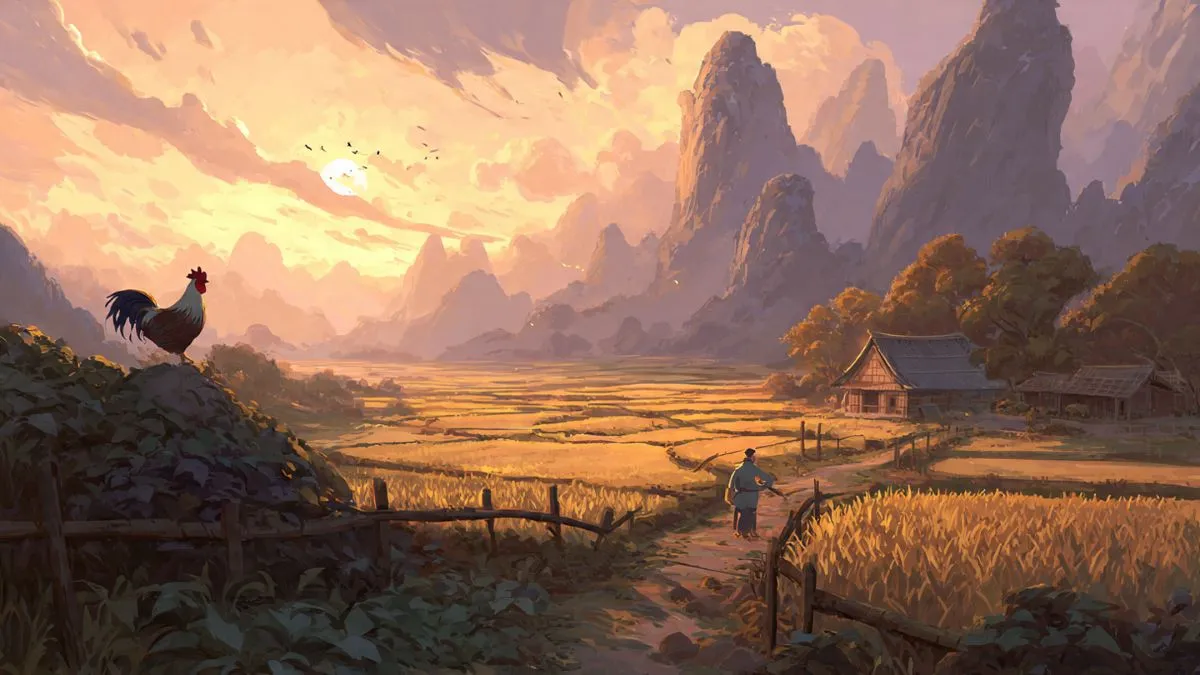
Beware of Chicken is a cultivation novel written by the Canadian author known as Casualfarmer, first published on Royal Road in 2021. The story follows Jin Rou, a young cultivator who reaches a breaking point during a brutal sect tournament, walks away from the violence and politics of the cultivation world, and retreats to a remote valley to farm.
That is the premise. He farms. He raises animals. He grows vegetables. He falls in love. He befriends a rooster named Bi De who develops his own cultivation path and philosophical outlook on life. The story is told partly from the perspective of the animals on Jin’s farm, each of whom absorbs ambient qi from their enlightened farmer and begins their own journey toward something resembling sentience.
It is, on the surface, the least likely cultivation novel to break into the mainstream. It has no tournament arcs in the traditional sense. The protagonist does not grind power levels with ruthless efficiency. Nobody is avenging a murdered family member. The central tension for long stretches is whether the harvest will be good and whether the local village will survive the coming winter.
What it has instead is warmth, genuine craft, and a perspective on cultivation fiction that years of xianxia had not prepared me for.
What Casualfarmer did differently
The first thing to understand about Beware of Chicken is that it is written by someone who had clearly read a great deal of xianxia and had thought carefully about what the genre’s assumptions actually meant for the people living inside them.
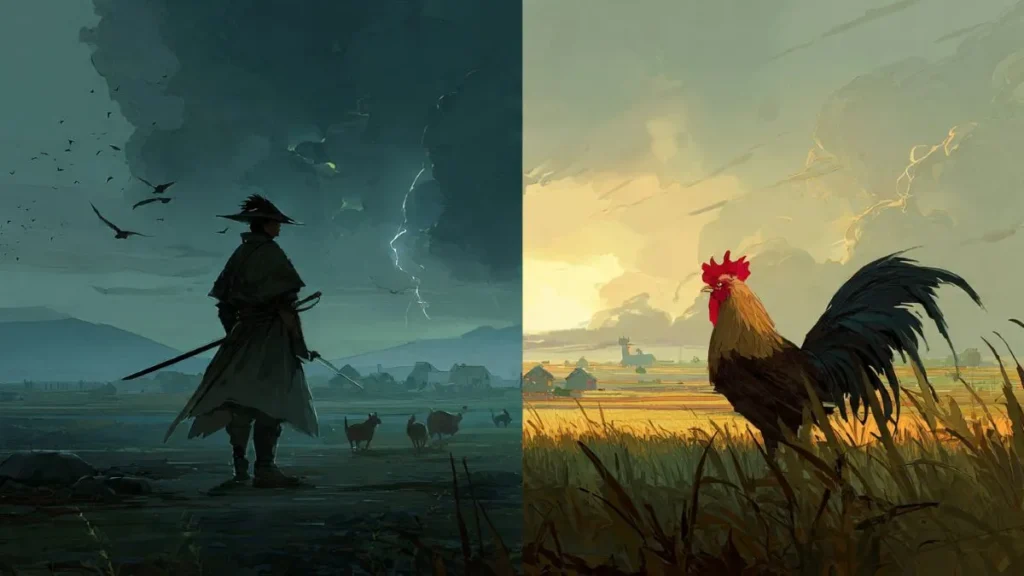
Traditional xianxia cultivation worlds are brutal by design. Resources are scarce, power is everything, and the protagonist’s ascent is almost always built on a foundation of competition, conflict, and the systematic defeat of anyone who gets in the way. The sect system is feudal and often cruel. The cultivation path demands total dedication. The dao that most protagonists pursue is inherently individualistic, a singular journey toward a singular peak.
Jin Rou’s rejection of that world is not framed as weakness. It is framed as clarity. He sees the cultivation world for what it is, a meat grinder that turns people into weapons, and chooses to opt out. His farming life is not a consolation prize. It is a deliberate philosophical counterargument to everything xianxia usually celebrates.
This is the move that made the novel resonate so widely. Casualfarmer took the genre’s standard value system, examined it with genuine critical intelligence, and then built a story around its opposite. The result reads as a love letter to xianxia and a quiet rebuke of it at the same time.
The prose style also matters. Casualfarmer writes in clean, warm, character-focused English that required no prior genre knowledge to enjoy. Traditional xianxia translations, even excellent ones, carry the weight of a translated text’s idioms, naming conventions, and cultural references that reward familiarity and occasionally alienate newcomers. Beware of Chicken was written in English, for an English-speaking audience, and it shows in every paragraph.
Why Western readers latched on
I have thought about this question a great deal, because the speed and breadth of the novel’s crossover success genuinely surprised me. By early 2023 it had a published version through a traditional press, a dedicated fanbase well outside progression fantasy circles, and reviews from readers who described it as the first fantasy novel in years that had made them feel genuinely at peace.
The timing was not accidental. Beware of Chicken arrived during a period when cozy fiction across games, novels, and other media was experiencing a significant surge in interest.
Stardew Valley had spent years demonstrating that a massive audience existed for stories about farming, community, and the quiet satisfaction of doing simple things well. The appetite for fiction that prioritised gentleness over conflict was real and underserved in the fantasy genre specifically.
Cultivation novels had never tried to feed that appetite. The genre’s default mode is escalation: bigger threats, higher stakes, longer odds, more powerful enemies. Beware of Chicken looked at that default and went in the opposite direction, and it found an audience that had been waiting for exactly that.
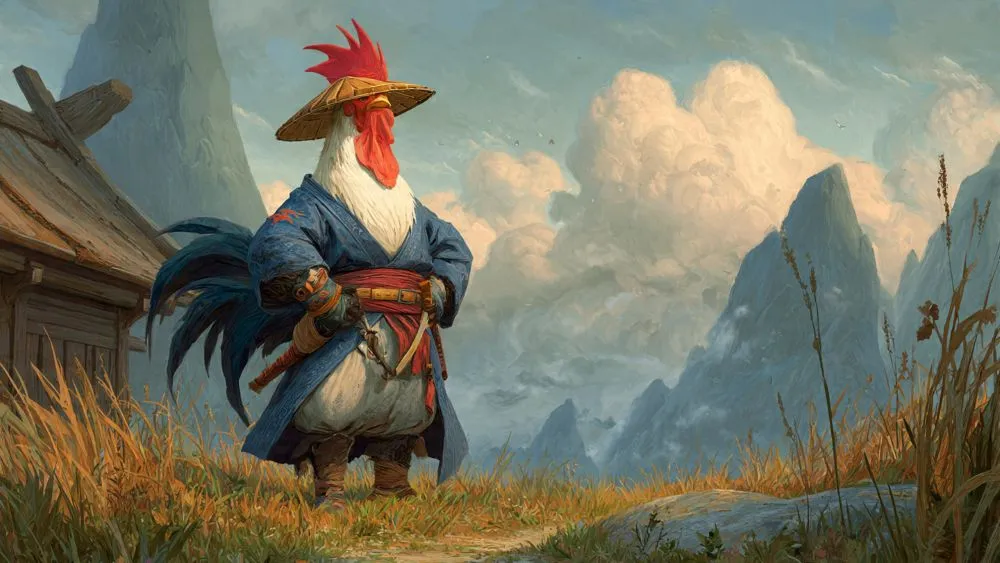
The animal perspective chapters deserve special mention here. Bi De the rooster is genuinely one of the more memorable characters in recent English-language fantasy, cultivation or otherwise. His chapters, written in a solemn, philosophical register that plays his dignity completely straight, became a touchstone for the novel’s humour and heart simultaneously.
Readers who had never touched xianxia before shared those chapters with friends. They were, in the language of the current internet, deeply shareable content. They spread the novel into communities it would never have reached through genre recommendation alone.
Read: 13 Fantasy Genres Ranked: Which One Actually Suits You?
What it changed for cultivation fiction in the West

Before Beware of Chicken, the Western cultivation fiction landscape looked roughly like this. A dedicated readership followed translated Chinese webnovels on platforms like Wuxiaworld and Webnovel.
A smaller but growing community on Royal Road had begun producing English-language cultivation and progression fantasy, led by works like The Wandering Inn and He Who Fights With Monsters, which borrowed cultivation mechanics into broader LitRPG frameworks. But cultivation fiction as a distinct genre had not found a mainstream Western fantasy audience.
Beware of Chicken changed that in two concrete ways.
The first was visibility. Its crossover success introduced cultivation fiction as a concept to readers who had no prior framework for it. Many of those readers, once they had finished the novel and wanted more, went looking for other cultivation stories. Some of them found traditional xianxia translations. Some found other Royal Road progression fantasy. The genre gained new readers who came through a door that had not existed before.
The second was permission. Among English-language authors on Royal Road and similar platforms, Beware of Chicken demonstrated that you did not have to replicate xianxia’s standard tropes to write a successful cultivation novel. You could subvert them. You could critique them. You could use the cultivation framework as scaffolding for an entirely different kind of story.
The wave of cozy cultivation, farming cultivation, and slice-of-life progression fantasy that followed in its wake was not a coincidence. It was a direct creative response to the space Casualfarmer had opened up.
By 2024, the English-language cultivation and progression fantasy space on Royal Road was significantly more varied than it had been three years earlier.
Cozy cultivation stories, cultivation comedies, cultivation stories with explicit anti-violence themes, and subgenres that barely existed before 2021 had established readerships and multiple ongoing series. Beware of Chicken did not create those trends alone, but it gave them a flagship and a proof of concept.
Its legacy and what comes next
As of April 2026, Beware of Chicken has five published volumes up to Beware of Chicken 5 through Podium Publishing, a dedicated community on Reddit and Discord, and a reputation that has outlasted the initial crossover buzz. It is recommended regularly as an entry point to cultivation fiction for readers who are curious about the genre but intimidated by the length and complexity of traditional xianxia.
What strikes me most, 10 years into following this genre, is how it achieved that entry-point status. It did not simplify cultivation fiction or strip out the elements that make the genre interesting. It kept the qi, the spiritual cultivation, the animal companions developing their own daos, the broader world of sects and cultivation politics humming in the background. What it changed was the emotional register and the protagonist’s relationship to that world.
Jin Rou is not trying to reach the top. He is trying to build something worth living in. That distinction, more than any technical feature of the novel’s craft, is what made it accessible to readers who had never thought about xianxia before. And it is the lesson that the next generation of Western cultivation authors seems to be taking seriously.
The cultivation novel’s arrival in mainstream Western fiction was not going to come from a harder, longer, more complex xianxia epic. It came from a farmer and his philosophically inclined rooster. That is, in retrospect, exactly the kind of unexpected path the genre’s protagonists would recognise.
Frequently asked questions
What is Beware of Chicken and where can I read it?
Beware of Chicken is an English-language cultivation novel by Casualfarmer, originally published on Royal Road starting in 2021. It follows Jin Rou, a cultivator who abandons his sect and retreats to a remote valley to farm. The original serialised version remains available on Royal Road.
Is Beware of Chicken suitable for readers who have never read xianxia before?
Yes, and this is one of its most significant strengths. The novel was written in English by an English-speaking author and requires no prior knowledge of xianxia conventions to enjoy.
How does Beware of Chicken differ from traditional xianxia novels?
Traditional xianxia centres on power escalation, sect competition, revenge arcs, and a protagonist grinding toward immortality through conflict. Beware of Chicken replaces all of that with farming, community building, animal companions, and a protagonist who has actively chosen to opt out of the violence of the cultivation world. The cultivation mechanics are still present, but they serve a slice-of-life story rather than a power fantasy.
Who is Bi De and why do readers love him so much?
Bi De is Jin Rou’s rooster, who absorbs ambient qi from his enlightened farmer and begins developing his own cultivation path and philosophical worldview. His chapters are written in a solemn, dignified register that plays his seriousness completely straight. The comedy and heart of those chapters come from the gap between his grand self-perception and his roosterly reality.
Did Beware of Chicken influence other cultivation novels?
Directly and measurably. Following its success, the English-language cultivation and progression fantasy space on Royal Road saw a significant increase in cozy cultivation, farming cultivation, and slice-of-life cultivation stories. Authors cited it as a permission structure proof that the cultivation framework could support stories with entirely different emotional goals than traditional xianxia.
How many volumes of Beware of Chicken are there?
As of April 2026, five published volumes are available through Podium Publishing. The Royal Road serialization continues beyond the published volumes to Beware of Chicken 6. Publication pace has been consistent, and Casualfarmer has indicated the story has a planned conclusion rather than an open-ended, indefinite run, which is relatively unusual for Royal Road cultivation fiction.
Is Beware of Chicken considered a parody of xianxia?
Not exactly, though it is frequently mislabelled as one. It is more accurately described as a subversion or a deconstruction. Parody requires mockery of its source material. Beware of Chicken takes xianxia seriously enough to argue with it, to take its value system and construct a counter-argument in story form.
Is beware of chicken good?
It’s good if you’ve read other more traditional sect/cultivation series and want to see a bit of deconstruction of that genre + isekai. it is a lighthearted slice of cultivation with a comically OP MC who just wants to live on his farm and raise a family.
Final thoughts
Beware of Chicken is not the best cultivation novel ever written. It is not the most complex, the most ambitious in scope, or the deepest exploration of cultivation philosophy the genre has produced. What it is, is the novel that made cultivation fiction legible to a Western mainstream audience for the first time at scale and it did that by being exactly what the genre had never tried to be.
Cozy. Warm. Fundamentally optimistic about what people can build when they stop trying to dominate each other.
I have recommended this novel to readers who had never touched cultivation fiction and watched them finish all four volumes in a week. I have seen it recommended in communities that would not know what xianxia meant if you asked them. And I have watched those readers, curious for more, start asking questions about the broader genre and finding their way toward the translated classics that shaped this form over decades.
That is the real legacy of Beware of Chicken. Not just a great novel, but a door. One that was built in a place nobody thought to put a door, and that turned out to be exactly where one was needed.
If you have not read it, start with the Royal Road version or pick up volume one from Podium. And if you finish it wanting more from the cultivation genre, our guide to the best cultivation novels for beginners is a good next step.