 By
By A quick note before we start: this article covers qi as a real, historical concept within Chinese philosophy, medicine, and religious practice. It’s cultural and historical content, not medical advice, and I’ll be honest throughout about where traditional theory and modern scientific consensus actually stand relative to each other.
Quick Takeaways:
- Qi is a genuine, foundational concept in Chinese philosophy and traditional medicine, generally translated as vital energy or life force, and it predates cultivation fiction by well over two thousand years
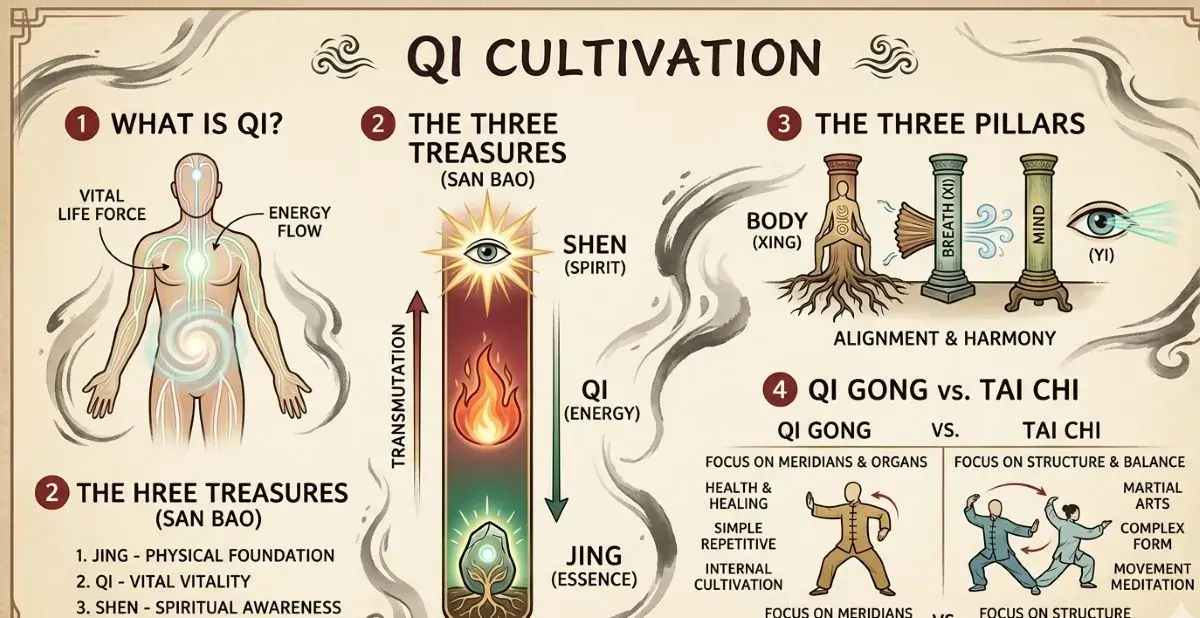
- Traditional Chinese medicine describes several distinct types of qi, inherited, digested, and breathed, each with a different origin inside the body
- The meridian system, the theorized channels qi moves through, comes directly from the Huangdi Neijing, one of the oldest medical texts in the world
- Modern biomedical science hasn’t validated qi as a literal measurable energy or meridians as literal anatomical structures, though real studies on qigong and tai chi do show measurable wellness benefits
- Cultivation fiction takes this genuine theoretical framework and dramatically amplifies it, turning a subtle regulatory concept into a storable, trainable, weaponizable resource
I want to be upfront about something before I get into this properly. Qi cultivation isn’t a fictional invention that cultivation novels happened to name after something vaguely Chinese sounding. It’s a real, foundational concept that Chinese medicine, philosophy, and religious practice have been working with continuously for over two thousand years, and understanding the actual tradition first makes the fictional version considerably more interesting rather than less.
What Qi Actually Means

A Character That Predates the Fiction by Millennia
Qi, 氣 in traditional characters, 气 in simplified, is most commonly translated as vital energy, life force, or breath, though none of those English words fully captures it on their own. The character itself is genuinely ancient, appearing in oracle bone inscriptions and early Chinese texts long before any organized medical or philosophical system had fully articulated what it meant.
Qi shows up across multiple Chinese intellectual traditions simultaneously rather than belonging to just one. Confucian thought discusses qi in relation to moral character and the cultivation of a balanced temperament. Daoist philosophy treats qi as the animating substance underlying all natural phenomena.
Traditional Chinese medicine, the tradition most directly relevant to this article, treats qi as the specific vital substance whose healthy circulation through the body determines physical well-being.
Not Quite Energy in the Physics Sense
I think the most honest way to describe qi to a modern reader is as a regulatory concept rather than a literal substance in the way English speakers usually mean when they say energy. Traditional theory treats qi as something that animates, warms, moves, and protects the body, present in breath, in food, in inherited vitality, and in the natural world generally, rather than as a single measurable quantity with a fixed physical unit.
The Text That Systematized the Whole Framework

The Huangdi Neijing
The single most important text underlying everything discussed here is the Huangdi Neijing, the Yellow Emperor’s Inner Canon, traditionally attributed to the legendary Yellow Emperor but actually compiled by multiple authors over an extended period, generally understood by scholars to have reached something close to its current form by around the Han dynasty.
This text laid out much of the theoretical framework traditional Chinese medicine still references today, qi, yin and yang balance, the five elements, and the specific channel system qi is theorized to move through. It’s genuinely one of the oldest surviving medical texts in the world, and its influence on East Asian medicine over the following two thousand years is difficult to overstate.
The Different Types of Qi in Traditional Theory

Not One Energy, Several Distinct Sources
| Type | Source | Purpose |
|---|---|---|
| Yuan Qi | Parents | Constitutional vitality |
| Gu Qi | Food | Nourishment |
| Kong Qi | Breath | Respiration |
| Ying Qi | Combined | Nutrition |
| Wei Qi | Combined | Defense |
Traditional Chinese medicine doesn’t describe qi as a single undifferentiated substance. It identifies several distinct types, each with a different theorized origin inside the body.
Yuan qi, original or prenatal qi, is theorized to be inherited from one’s parents at conception, stored in the kidneys, and representing a person’s fundamental, largely fixed constitutional vitality. Gu qi, food qi, is theorized to be extracted from digestion, the vital substance the body derives from what you eat. Kong qi, air qi, is theorized to be drawn in through breathing.
These combine, in traditional theory, into further refined forms, including zong qi, gathering qi, associated with respiration and circulation, ying qi, nutritive qi, theorized to nourish the organs and blood, and wei qi, defensive qi, theorized to circulate at the body’s surface and protect against external illness. This is a genuinely detailed and internally consistent theoretical system, whatever your view of its underlying mechanism.
How Qi Is Said to Move: The Meridian System

Jingluo, the Channel Network
Traditional Chinese medicine describes qi as circulating through the body along a network of channels called jingluo, commonly translated as meridians. This system includes twelve primary meridians, each associated with a specific organ, along with additional extraordinary vessels that don’t correspond directly to a single organ.
Acupuncture, one of the most widely practiced applications of this theory, works by inserting needles at specific points along these meridians, with the stated theoretical goal of correcting blockages or imbalances in qi flow believed to be causing illness or dysfunction.
Real Practices Built Around Cultivating Qi

Qigong
Qigong, literally qi work or qi skill, refers to a broad category of practices combining slow, deliberate movement, controlled breathing, and focused meditation, with the stated goal of gathering, balancing, and circulating qi through the body. It exists in an enormous number of regional and lineage specific forms, some oriented toward general health, others toward more advanced internal cultivation.
Tai Chi
Tai chi, or taijiquan, began as a genuine martial art, its slow, flowing movements originally developed for combat application before becoming, in its modern popular form, a gentler practice widely taught for general health and balance. It shares much of qigong’s underlying theoretical framework while retaining its own distinct movement vocabulary and lineage history.
Neigong and Tuna
Neigong, internal work, is a broader umbrella term for internal cultivation practices, frequently connected to Daoist religious and philosophical tradition specifically rather than to medicine alone. Tuna, literally exhale and inhale, refers to specific historical breath cultivation techniques, documented in Daoist texts as methods for refining and circulating qi through deliberate, controlled breathing patterns.
What Neidan Was Actually Reaching For
Internal Alchemy and the Three Treasures
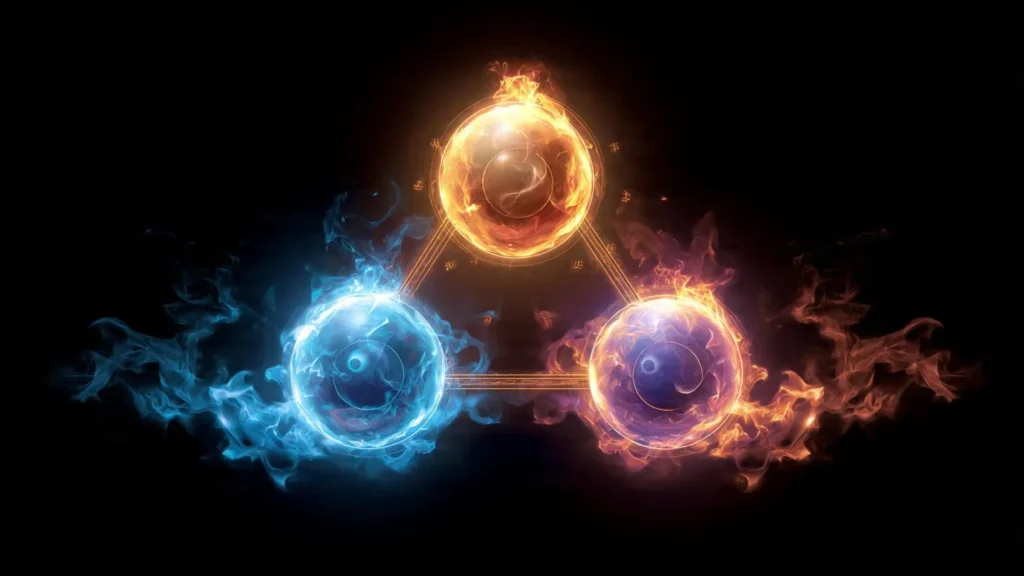
Daoist internal alchemy, neidan, represents this framework taken to its most ambitious historical extreme. Neidan practice theorized three fundamental substances, jing, essence, qi, vital energy, and shen, spirit, sometimes called the Three Treasures, and proposed specific practices for refining and transmuting one into the next, jing into qi, qi into shen, and shen ultimately into a return to primordial emptiness.
The stated goal of this refinement process, for serious historical practitioners, was genuinely physical and spiritual transformation, potentially including longevity or immortality in the most ambitious interpretations. This wasn’t understood by its practitioners as metaphor. Historical figures including the alchemist and scholar Ge Hong took this pursuit with complete seriousness, documenting specific methods in texts like the Baopuzi.
Note: Check the Sources Section for Further Reading
What Modern Science Actually Says
Being Honest About Where the Evidence Stands
I think this section matters more than any other in this article, because it’s the part popular writing on this subject frequently skips or handles dishonestly in one direction or the other. Modern biomedical science has not validated qi as a literal, measurable energy substance, and meridians have not been confirmed as literal anatomical structures with the specific properties traditional theory describes them as having.
This doesn’t mean the tradition is worthless or that the practices built around it do nothing. Genuine scientific studies on qigong and tai chi specifically have found measurable benefits in areas including balance, flexibility, stress reduction, and general markers of wellbeing.
Mainstream scientific interpretation generally attributes these real, documented benefits to the physical movement, controlled breathing, and mind body relaxation the practices genuinely involve, rather than to validating the specific traditional qi and meridian mechanism as the actual cause.
Both things can be true at once. The tradition is genuinely old, genuinely sophisticated, and genuinely still practiced by millions of people today. The specific traditional explanation for why the practices work and the modern scientific explanation for why they show measurable benefit aren’t currently the same explanation.
Where Cultivation Fiction Picks This Up and Runs With It

A Dramatic Amplification, Not an Invention
Cultivation novels, take this real theoretical framework and amplify it dramatically rather than inventing it from nothing. The real gu qi, food derived vitality, and kong qi, breath derived vitality, become the basis for fictional cultivators who absorb vast quantities of ambient spiritual energy directly from the environment, storing it in a dantian, the way real theory locates the dantian as an actual energy center in the body.
Neidan’s real, historically serious pursuit of transmuting jing, qi, and shen toward immortality becomes the fictional cultivation realm ladder I’ve written about in detail elsewhere, a tiered progression from ordinary mortal toward genuine transcendence.
The fiction isn’t hiding its source material. It’s taking a real, historically documented aspiration and giving it the dramatized, escalated shape that only fiction can actually deliver.
Why Knowing the Real Version Improves the Fiction
I’ll say this plainly, because it’s the reason I write these pieces at all. Knowing that yuan qi, gu qi, and kong qi are genuine, documented categories from real medical theory makes a cultivation novel’s spiritual root and qi absorption systems read as an elaboration on something real rather than an arbitrary invented mechanic. The fiction gets more interesting, not less, once you know exactly what it borrowed and exactly how far it pushed it past its original, considerably more modest, historical claims.
Frequently Asked Questions
Is qi scientifically proven to exist as a measurable energy?
No. Modern biomedical science has not validated qi as a literal, measurable energy substance, and meridians haven’t been confirmed as literal anatomical structures. This is traditional theoretical framework, genuinely old and still practiced, rather than an established scientific finding.
What is the Huangdi Neijing?
The Huangdi Neijing, the Yellow Emperor’s Inner Canon, is one of the oldest surviving Chinese medical texts, generally understood to have reached its current form around the Han dynasty. It established much of the qi, meridian, and yin yang framework still referenced in traditional Chinese medicine today.
Do studies actually show benefits from qigong and tai chi?
Yes, genuine studies show measurable benefits including improved balance, flexibility, and stress reduction. Mainstream scientific interpretation generally attributes these benefits to the physical movement and controlled breathing involved, rather than to confirming the traditional qi and meridian explanation as the underlying cause.
What are the different types of qi in traditional theory?
Traditional Chinese medicine identifies several types, including yuan qi, inherited prenatal vitality, gu qi, derived from food, and kong qi, derived from breathing. These combine into further refined forms including defensive and nutritive qi, each theorized to serve a distinct function in the body.
How does cultivation fiction relate to real qi theory?
Cultivation novels take genuine concepts, qi types, the dantian, internal alchemy’s pursuit of transformation, and dramatically amplify them, turning a subtle traditional health and longevity framework into a storable, trainable, and often weaponized fictional resource, while keeping the underlying vocabulary and structure recognizably intact.
Final Thoughts

Qi cultivation, in its real historical form, was never about lightning tribulations or realm breakthroughs. It was a genuinely serious, centuries old framework for understanding health, vitality, and, for the most ambitious practitioners, the possibility of transformation extending well past ordinary human limits.
Cultivation fiction took that real framework and asked what would happen if you pushed every part of it as far as it could possibly go. Knowing where the real tradition actually stops, and where the fiction starts running past it, is genuinely half the fun of taking this genre seriously.
Related Articles
- Best Xianxia Novels of 2026: From Hidden Gems to Legends
- 13 Best Cultivation Novels With No Harem [2026 Picks]
- 12 Best Cultivation Novels [Ranked by Genre Fans]
- 7 Female MC Cultivation Novels Where the Female MC Shines [2026]
- 9 Best Progression Fantasy Books 2026 [Ranked List]
- 13 Fantasy Genres Ranked: Which One Actually Suits You?
- 12 Best Dragon Books of 2026 [From The Hobbit to Seraphina]
- Mana, Chi & Aether: Three Traditions, One Idea?
Sources & Further Reading
- Stanford Encyclopedia of Philosophy – Daoism
- Joseph Needham, Science and Civilisation in China
- Dao De Jing (Tao Te Ching)
- Zhuangzi
- Fabrizio Pregadio’s The Encyclopedia of Taoism.
- Huangdi Neijing (Paul U. Unschuld or Ilza Veith)
- Baopuzi by Ge Hong
- Livia Kohn – Daoism and Chinese Culture
- Paul U. Unschuld – Medicine in China: A History of Ideas
- World Health Organization – Traditional Medicine
- U.S. National Center for Complementary and Integrative Health (NCCIH) – Tai Chi and Qigong evidence summaries.