
 By
By Quick Takeaways:
- Every cultivation novel builds on the same nine foundational concepts, even when the specific names, numbers, and rules change from book to book
- Understanding these nine terms means you can pick up almost any xianxia (Immortal cultivation novel subgenre), wuxia, or xuanhuan novel and immediately follow what’s happening without a glossary in front of you
- Several of these concepts have genuine roots in real Daoist philosophy and practice, and knowing which parts are invented fiction versus which parts are borrowed from actual history makes the reading experience noticeably richer
- New readers usually get stuck on realm names and qi terminology specifically, so those two get the most detailed treatment here
- Once you understand these nine building blocks, you’ll notice the same underlying logic across wildly different novels, even ones that seem to have nothing in common on the surface
I still remember how lost I felt reading my first cultivation novel back in 2015. Every few pages threw a new term at me, dantian, foundation establishment, spiritual root, tribulation, and I had no framework to hang any of it on.
It took me embarrassingly long to realize these weren’t random invented words each author was making up on the spot. They’re a shared toolkit the entire genre draws from.
Once you have that toolkit, cultivation fiction stops feeling like a foreign language and starts feeling like a genre with its own internal logic you can actually predict. Here are the nine concepts that toolkit is built from.
1. Qi: The Fuel Behind Everything

What It Actually Is in the Story
Qi, sometimes rendered as chi or referred to as spiritual energy, is the raw material every cultivator works with. It’s the vital force present in the air, the earth, and living things, and cultivation fundamentally means learning to absorb, refine, store, and eventually command this energy.
Every single power system in the genre, no matter how the author dresses it up, is ultimately a system for describing how a character gathers and uses qi.
A sword cultivator channels qi into their blade. An alchemist uses qi to force ingredients through transformation. A body cultivator tempers their physical form with qi until it’s stronger than steel. The specific application changes constantly. The underlying resource almost never does.
The Real Root Behind It
This isn’t a pure fantasy invention. Qi, 氣, is a genuine and foundational concept in Chinese philosophy and traditional medicine, referring to vital energy or life force that flows through the body and through the natural world. Traditional Chinese medicine still uses the concept of qi flow through meridians as a working diagnostic and treatment framework today.
What fiction adds is the idea that a sufficiently skilled person can gather qi from the environment in enormous, storable quantities and use it as something close to a weapon or a currency. That specific extension is genre invention layered on top of a genuinely old philosophical foundation.
2. The Dantian: Where It All Gets Stored
What It Actually Is in the Story
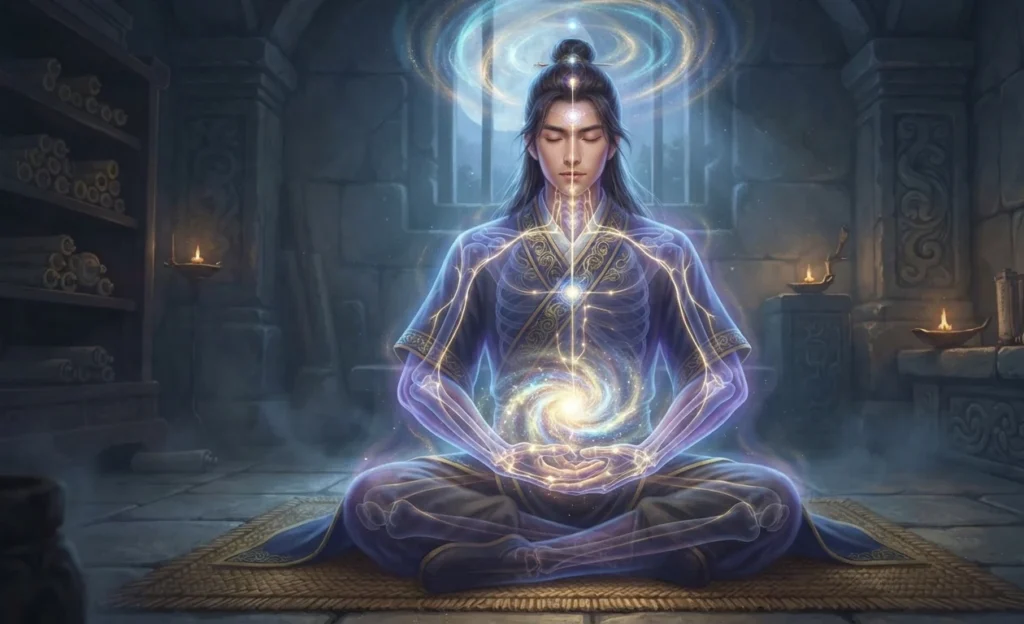
The dantian is the internal reservoir where a cultivator’s absorbed qi gets stored and refined, usually located somewhere around the lower abdomen. Novels frequently describe a character’s dantian expanding as their cultivation deepens, sometimes visualized as a physical space, a swirling ocean, a miniature sun, or a small world that grows larger and more stable with every realm breakthrough.
A shattered or crippled dantian is one of the genre’s most common tragedies, since it usually means a character can no longer store or circulate qi properly, effectively ending their cultivation path entirely. It’s also one of the most common redemption arcs, since a broken dantian being repaired or replaced is a reliable setup for a character’s comeback.
The Real Root Behind It
The dantian, 丹田, meaning field of cinnabar or field of the elixir, is a genuine concept from Chinese internal alchemy and traditional medicine, referring to specific energy centers in the body, most commonly the lower dantian near the navel, though upper and middle dantian are also recognized in some traditions.
Practitioners of neidan, internal alchemy, and qigong still work with this concept in real practice today.
Fiction’s contribution is treating the dantian as something closer to a physical container with a measurable capacity, which real Daoist internal alchemy tradition describes in more subtle, less literally spatial terms.
3. Cultivation Realms: The Ladder Everyone Climbs
What It Actually Is in the Story
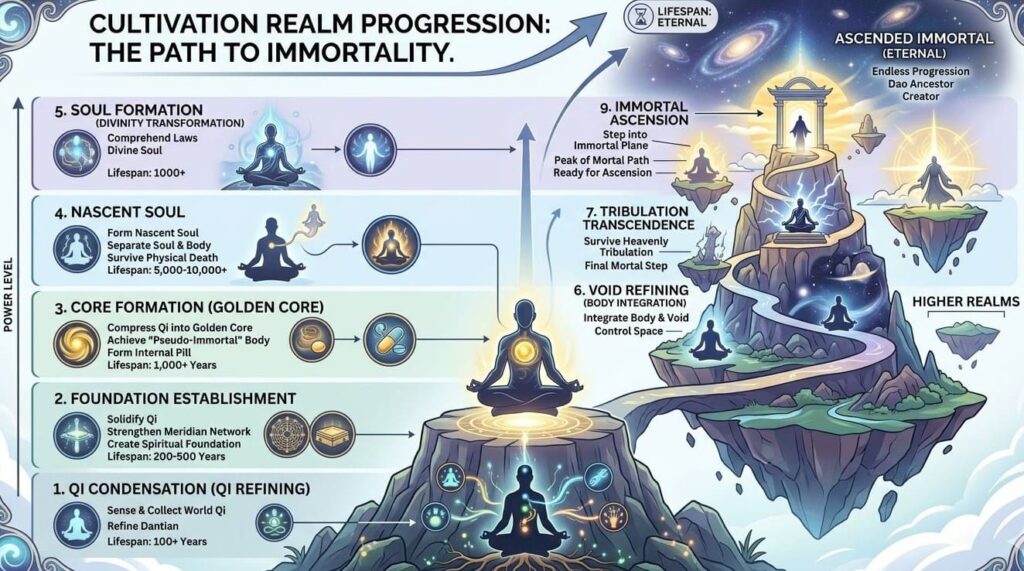
This is the concept that intimidates new readers most, and it’s also the genre’s actual backbone. Cultivation realms are the tiered stages of power that every cultivator progresses through, each one representing a genuine, qualitative leap rather than just a numerical increase.
Naming conventions vary enormously between authors, but the underlying pattern is remarkably consistent.
An early realm establishes the foundation, the character learns to sense and gather qi at all. A middle set of realms builds internal capacity, the character learns to store and refine larger and larger quantities. A late set of realms represents genuine transcendence, the character begins operating on principles that ordinary physics and biology no longer fully explain.
Why the Specific Names Don’t Matter as Much as You’d Think
New readers often panic about memorizing exact realm names between different series, and I want to give you real permission to stop doing that. Foundation Establishment in one novel might be called something entirely different in the next, but the functional position in the ladder, early foundational stage, is usually recognizable within a chapter or two regardless of the specific label the author chose.
What actually matters is tracking relative position. Is this character early, middle, or late in their personal cultivation journey, and how does that compare to the antagonist they’re about to face. That comparative tracking works across virtually every novel in the genre, even when the vocabulary changes completely.
4. Spiritual Roots: The Talent System Underneath It All
What It Actually Is in the Story
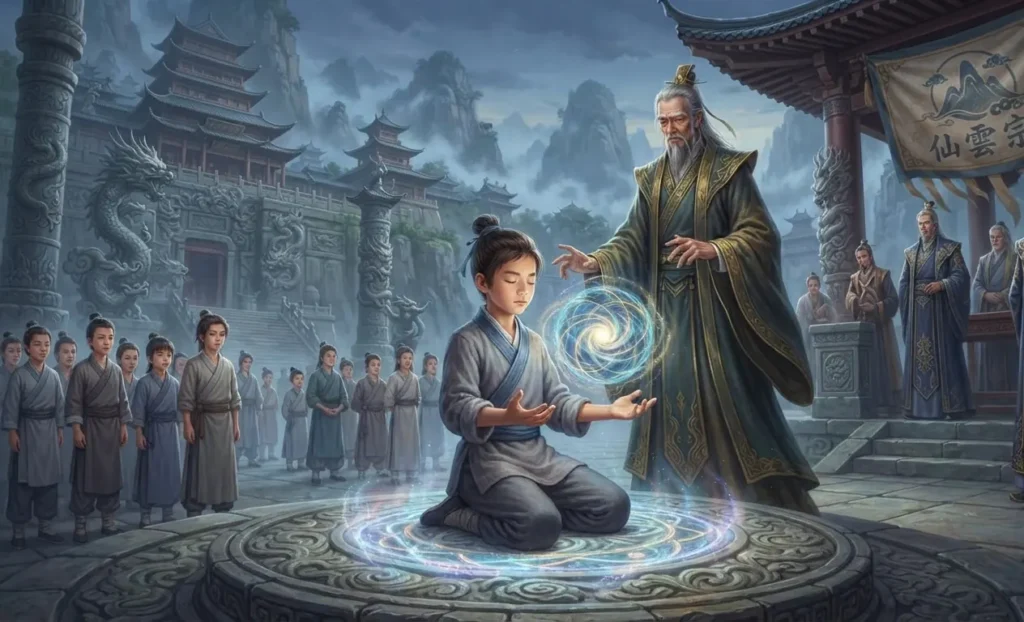
A spiritual root is a character’s innate affinity for absorbing and using qi, and it’s usually tied to one or more of the classical five elements, metal, wood, water, fire, and earth.
A character with a single, pure elemental root is typically considered exceptionally talented. A character with multiple mixed roots, sometimes called a variant or hybrid root, is usually written as cultivating more slowly but eventually gaining unusual versatility.
This is the genre’s built in explanation for why some characters advance faster than others despite similar effort, and it’s also the setup for one of the genre’s most beloved tropes: the character everyone dismissed as talentless who turns out to have an extraordinarily rare root type nobody recognized.
The Real Root Behind It
The five elements framework, wu xing, is genuine and foundational to Chinese cosmology, traditional medicine, and philosophy generally, describing five interacting phases or processes rather than five static substances. The spiritual root concept specifically, an innate personal affinity graded by rarity and purity, is genre invention built on top of that much older elemental framework.
Spiritual roots are central to A Record of a Mortal’s Journey to Immortality.
5. Heavenly Tribulation: The Trial You Cannot Skip

What It Actually Is in the Story
Heavenly tribulation is the genre’s signature high stakes event: a divine trial, usually manifesting as lightning, storms, or other catastrophic natural phenomena, that a cultivator must survive at specific major breakthroughs, most classically when crossing from a mortal or near mortal cultivation stage into a genuinely transcendent one.
The tribulation exists narratively to make major power increases feel earned rather than automatic. A character doesn’t simply arrive at a higher realm through study and effort alone. The heavens themselves have to test whether that character deserves the power they’re about to receive, and failure is often fatal or permanently crippling.
Why This Trope Works So Well
I’ve read enough cultivation novels to have a genuine opinion here: tribulation scenes are almost always the most tense, most visually memorable sequences in any given novel, and that’s not an accident of writing skill so much as structural design.
Every other obstacle in these stories can potentially be solved through cleverness, allies, or a convenient pill. Tribulation cannot be delegated or bought. It has to be survived personally, which makes it the genre’s purest test of a protagonist’s accumulated growth.
Heavenly Tribulation appears prominently in novels like A Will Eternal, I Shall Seal the Heavens, and Renegade Immortal.
6. The Dao: Power’s Deeper Ceiling
What It Actually Is in the Story
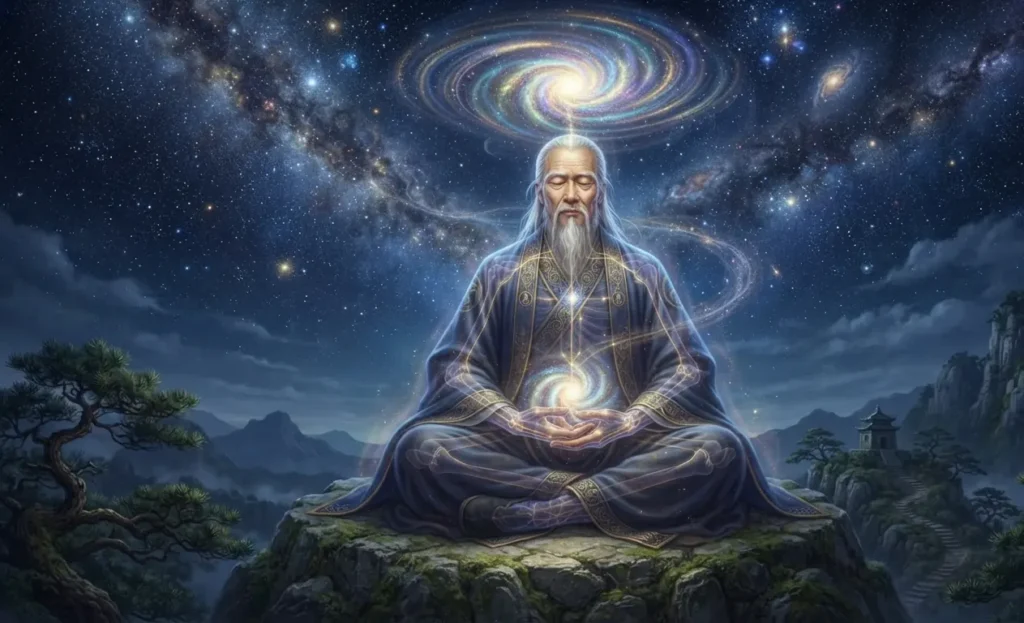
The Dao, in cultivation fiction specifically, refers to a character’s personal comprehension of some fundamental principle underlying reality, sword intent, the nature of time, the balance between life and death, or countless other possible focuses.
Advanced cultivators in the best written novels don’t just have more raw power than weaker characters. They understand something about existence that weaker characters haven’t grasped yet, and that understanding itself becomes a source of capability.
This is the concept that separates the genre’s more philosophically ambitious novels from its purely power fantasy oriented ones. A story that takes Dao comprehension seriously will have characters who plateau in raw strength but keep growing meaningfully through insight instead, which gives the fiction genuine intellectual and emotional texture beyond simple numbers going up.
The Real Root Behind It
Dao is one of the single most important concepts in all of Chinese philosophy, appearing centrally in Daoist and Confucian thought alike, referring to the underlying way or path that governs the nature of reality itself. Entire philosophical schools have spent over two thousand years working out what the Dao actually means and how a person comes to understand it.
Cultivation fiction takes this genuinely profound philosophical concept and gives it a direct, functional payoff in the story: the more of the Dao you understand, the more capable you become. That’s a significant compression of something Daoist philosophy treats with far more ambiguity and restraint, but the fictional version is drawing on serious source material rather than inventing the concept from nothing.
7. Sects and the Master Disciple Bond
What It Actually Is in the Story
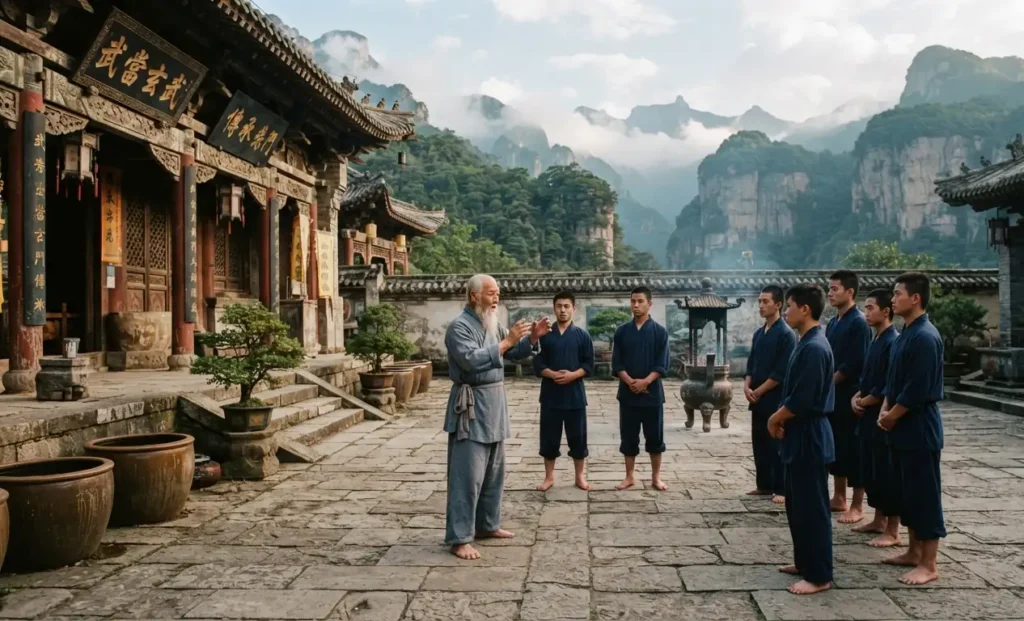
Sects are the organizational backbone of the cultivation world, functionally similar to martial arts schools, religious orders, and noble houses all at once.
Most protagonists either belong to one, are recruited into one, or spend significant portions of the story trying to establish their own. Sects typically have internal ranks, competing branches, guarded techniques passed down only to accepted disciples, and rivalries with other sects that can run for generations.
The master disciple relationship within a sect is often the emotional core of the entire story, frequently carrying more weight than romantic subplots. A master who takes a genuine personal interest in a struggling disciple, or a disciple who eventually surpasses and must reckon with their master’s legacy, is one of the genre’s most reliably powerful emotional structures.
Where This Comes From
This structure draws directly on real historical Chinese martial arts lineages and religious Daoist and Buddhist monastic organization, both of which genuinely operated through exactly this kind of formal teacher student transmission, with techniques and philosophical understanding passed down carefully rather than published openly for anyone to access.
8. Pills and Elixirs: Alchemy’s Shortcut
What It Actually Is in the Story
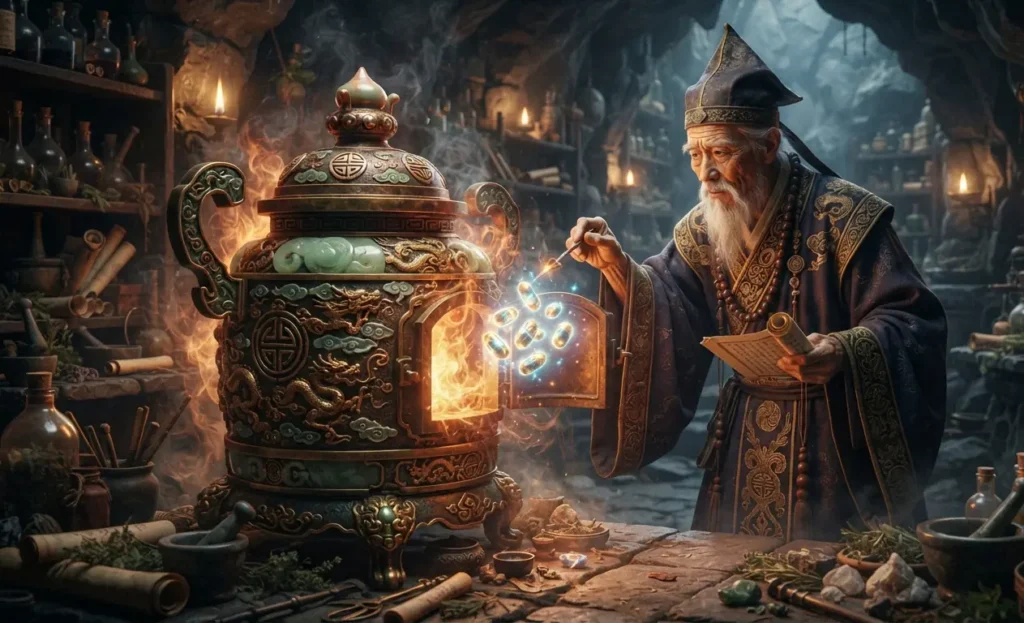
Cultivation novels are full of pills, elixirs, and refined substances that boost qi absorption, heal grievous injuries, or provide temporary or permanent power increases. A skilled alchemist is a genuinely valued figure in most cultivation societies, sometimes more sought after than a powerful fighter, since a high quality pill can shortcut months or years of ordinary cultivation effort.
The genre generally maintains a specific moral logic around pills worth knowing: relying entirely on external substances instead of genuine personal cultivation is usually treated as a flaw or a trap, producing characters whose foundation is unstable despite appearing powerful. Earned strength and purchased strength are rarely treated as equivalent, even when they look identical on the surface.
The Real Root Behind It
This draws directly on Waidan, external alchemy, a real and historically significant branch of Daoist practice that involved compounding elixirs, frequently containing mercury and other genuinely toxic substances, in pursuit of physical immortality.
Several Tang Dynasty emperors are documented to have died from consuming these elixirs, which makes this one of the darker pieces of real history sitting underneath a genre trope that’s usually played for pure adventure and convenience.
9. Cultivation Techniques and Manuals
What It Actually Is in the Story
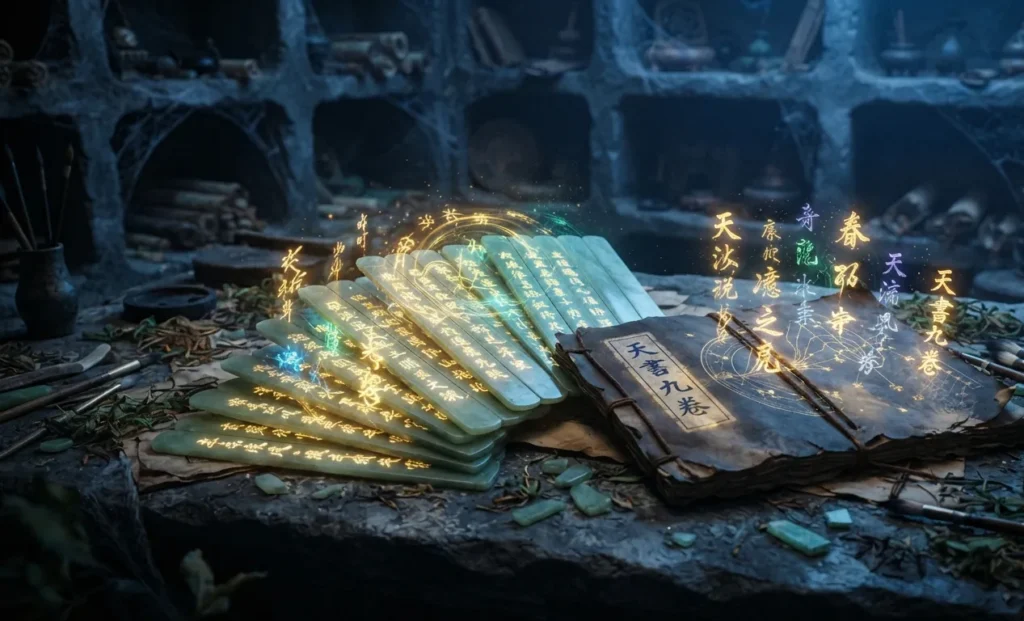
A cultivation technique, sometimes called a manual, method, or scripture depending on translation, is the specific set of instructions a cultivator follows to actually gather, circulate, and refine qi.
Different techniques produce different results even at similar power levels, some emphasizing speed of advancement, others emphasizing eventual ceiling, others built specifically around a particular element or fighting style.
Finding, stealing, inheriting, or being taught a rare high grade technique is one of the genre’s most common plot engines, and the specific grading systems authors invent for ranking technique quality, mortal grade, earth grade, heaven grade, and beyond, are almost always original inventions layered onto the genuinely old master disciple transmission system described above.
Why This Matters for New Readers
Understanding that techniques are graded and scarce explains an enormous amount of cultivation fiction’s plot logic at a glance. A protagonist’s sudden power spike usually traces back to acquiring a superior technique rather than simply training harder in a vacuum, and villains hoarding rare techniques rather than sharing them is one of the genre’s most consistent sources of conflict.
Quick Reference Table
| Concept | What It Does | Real World Root |
|---|---|---|
| Qi | The raw energy resource cultivators gather and use | Genuine concept in Chinese medicine and philosophy |
| Dantian | Internal storage and refinement center for qi | Real concept from internal alchemy and qigong |
| Cultivation Realms | The tiered power ladder every cultivator climbs | Genre invention, structure loosely echoes spiritual stages in real practice |
| Spiritual Roots | Innate talent and elemental affinity | Built on the genuine Five Elements framework |
| Heavenly Tribulation | The trial that must be survived at major breakthroughs | Genre invention |
| The Dao | Deep philosophical understanding that grants power | Drawn from real, foundational Chinese philosophy |
| Sects | The organizational and social structure of the cultivation world | Reflects real historical martial arts and monastic lineages |
| Pills and Elixirs | Substances that shortcut or boost cultivation | Rooted in real, historically documented waidan alchemy |
| Cultivation Techniques | The specific methods that determine how qi is used | Reflects real master disciple technique transmission |
Frequently Asked Questions
Do I need to memorize exact realm names to follow a cultivation novel?
No. Track relative position instead, early, middle, or late stage cultivation, rather than exact terminology. Realm names vary constantly between authors, but the underlying structure and where a character sits within it is almost always clear from context within a chapter or two.
Is qi a real concept or something invented for fiction?
Qi is genuinely rooted in real Chinese philosophy and traditional medicine, referring to vital energy or life force. Cultivation fiction extends this into something closer to a storable, weaponizable resource, which is a significant fictional elaboration on a real and much older concept.
Why do so many cultivation novels feature a talentless protagonist who turns out to be secretly powerful?
This trope connects directly to the spiritual root system. A rare or mixed root type is often initially misjudged as weak or worthless by other characters, only to reveal unusual long term potential, giving the genre one of its most consistently satisfying reversal structures.
Are pills and elixirs based on anything real?
Yes. They draw directly on waidan, external alchemy, a genuine and historically significant branch of Daoist practice focused on compounding elixirs for immortality. Several real Tang Dynasty emperors are documented to have died from consuming elixirs prepared through this actual historical practice.
What’s the difference between cultivation realms and Dao comprehension?
Realms measure raw accumulated power and capacity. Dao comprehension measures genuine philosophical understanding of some underlying principle of reality. The best written cultivation novels use both together, since a character can plateau in realm while continuing to grow meaningfully through deepening insight.
Final Thoughts

Nine concepts, and once they click, an entire genre that looked impenetrable on page one starts reading like a language you already speak.
What I find genuinely satisfying about this particular toolkit, after years of reading through it, is how much of it isn’t purely invented. The qi, the dantian, the Dao, the master disciple transmission, the very real and very dangerous history behind those alchemical pills, all of it traces back to something that real people actually believed and practiced.
Fiction took those genuine philosophical and historical building blocks and built a power fantasy on top of them. Knowing where the fiction ends and the history begins is, honestly, half the fun of reading this genre seriously.
Related Articles
- Best Xianxia Novels of 2026: From Hidden Gems to Legends
- 13 Best Cultivation Novels With No Harem [2026 Picks]
- 12 Best Cultivation Novels [Ranked by Genre Fans]
- 7 Female MC Cultivation Novels Where the Female MC Shines [2026]
- 9 Best Progression Fantasy Books 2026 [Ranked List]
- How Fast Would You Die in a Cultivation Novel World?
- 12 Best Dragon Books of 2026 [From The Hobbit to Seraphina]