

 By
By Most people asking this question are imagining themselves as the protagonist of the cultivation novel world. That’s the first mistake, and statistically it’s a big one.
The honest answer depends almost entirely on a single variable you don’t get to choose, and it isn’t courage, intelligence, or how many novels you’ve read. It’s whether you have a spiritual root, and the genre’s own internal logic says you probably don’t.
You Are Not the Main Character of the Cultivation Novel World
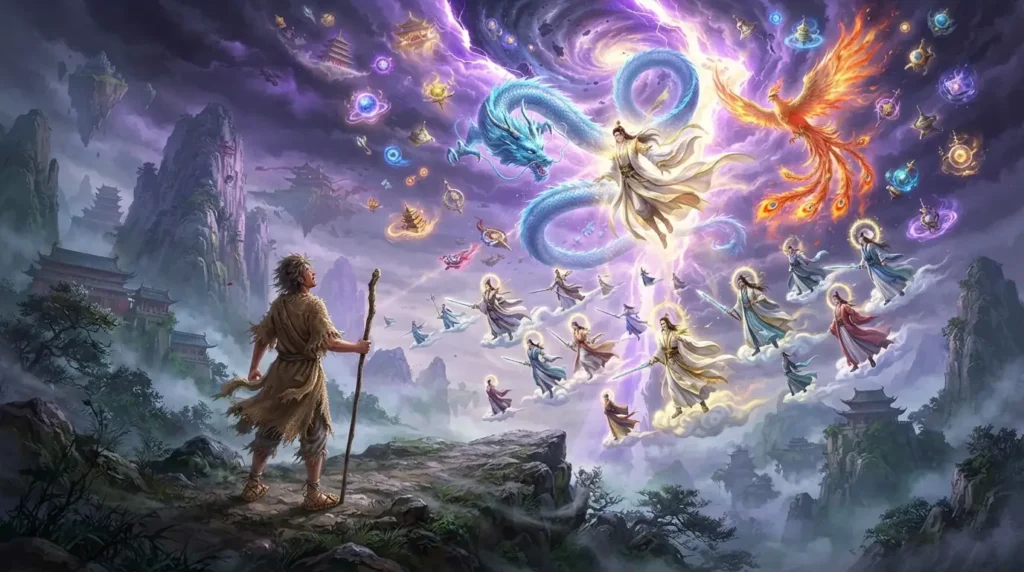
Cultivation fiction is explicit that spiritual roots (the innate capacity to sense and absorb qi) are rare. That rarity is the entire reason a protagonist’s talent means anything.
The narrative follows the exception. The population is made of everyone else.
So the realistic starting position is this. You’re a farmer, a merchant, a servant, or a city guard in a world where a bad-tempered teenager can flatten a building by accident and face no meaningful consequence for it.
Scenario One: No Spiritual Root
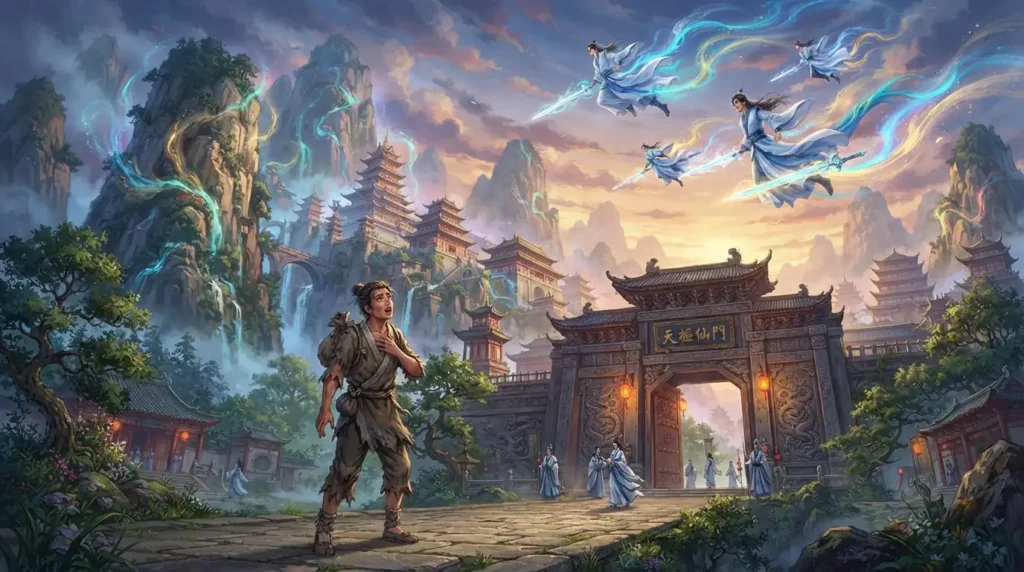
The Surprising Part
You might last decades. Genuinely.
Most cultivation worlds contain large mortal populations living under sect protection arrangements, paying tribute or taxes in exchange for the local sect discouraging bandits, demonic cultivators, and rival factions from causing trouble.
That’s a functioning protection racket, and functioning protection rackets do keep people alive. Ordinary life in a well-governed mortal city is often depicted as reasonably stable.
Mortal population also serves as a talent pool, where sects can pick disciples with spiritual roots. Wang Lin from Renegade Immortal and Han li From A Record of Mortal’s Journey to Immortality are good examples of it.
What Kills You
Not a duel. You’ll never be in a duel.
Collateral damage is the leading cause of death for people in your position. Two cultivators disagree, a technique goes wide, and a market district stops existing. The narrative usually doesn’t pause to count.
This type of scene is very common in many cultivation novels.
The second killer is proximity. Living near a sect means living near sect conflicts, and sect conflicts scale from personal grudges to regional wars without much warning.
Realistic estimate: a normal lifespan if you live somewhere boring and never travel. A lot less if your city becomes plot relevant.
Scenario Two: A Common Spiritual Root
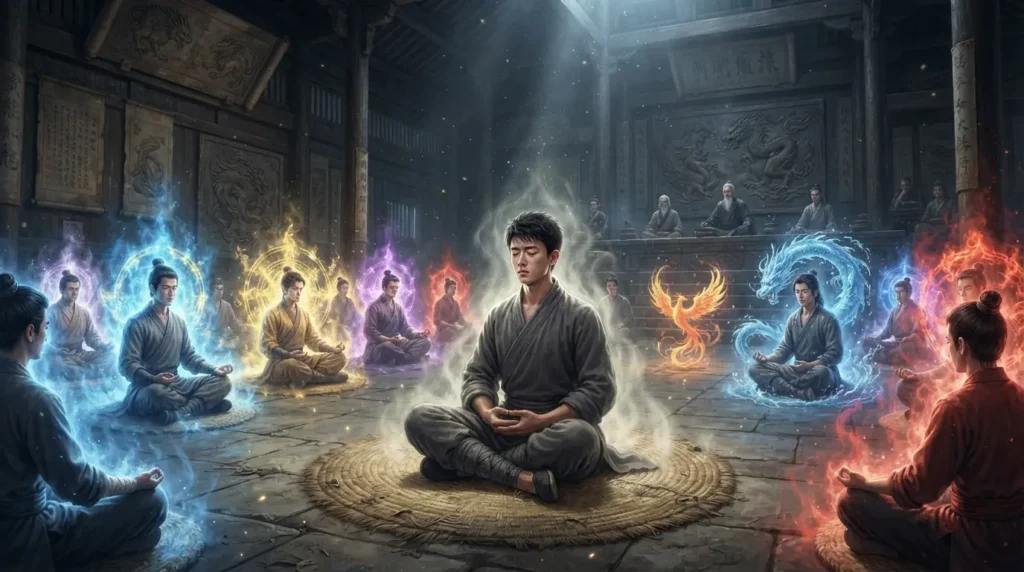
Congratulations, you can cultivate. This is arguably worse.
The Outer Disciple Problem
Let’s suppose by luck you became an outer sect disciple and bypassed the utility disciple who has the worst aptitude and manages the kitchens. This is what might happen to you in a very likely scenario.
Sect hierarchies place the overwhelming majority of members who have little to some aptitude in outer disciple positions, which typically means manual labor, resource scavenging, and access to the worst cultivation techniques the sect bothers to distribute.
Resources are scarce and contested because a normal sect in cultivation worlds has thousands of disciples. Advancement requires competing with people who will absolutely sabotage you, and the genre depicts this constantly rather than treating it as unusual.
Trials Are Lethal by Design
Sect trials, secret realm expeditions, and inheritance hunts carry mortality rates the fiction treats as acceptable. Dozens enter, a handful return, and the sect considers this a successful recruitment cycle.
You just volunteered for that because the alternative was staying a servant with mildly better qi circulation.
Realistic estimate: five to fifteen years, most likely ending in a trial you didn’t have the resources to survive.
Scenario Three: You Advance
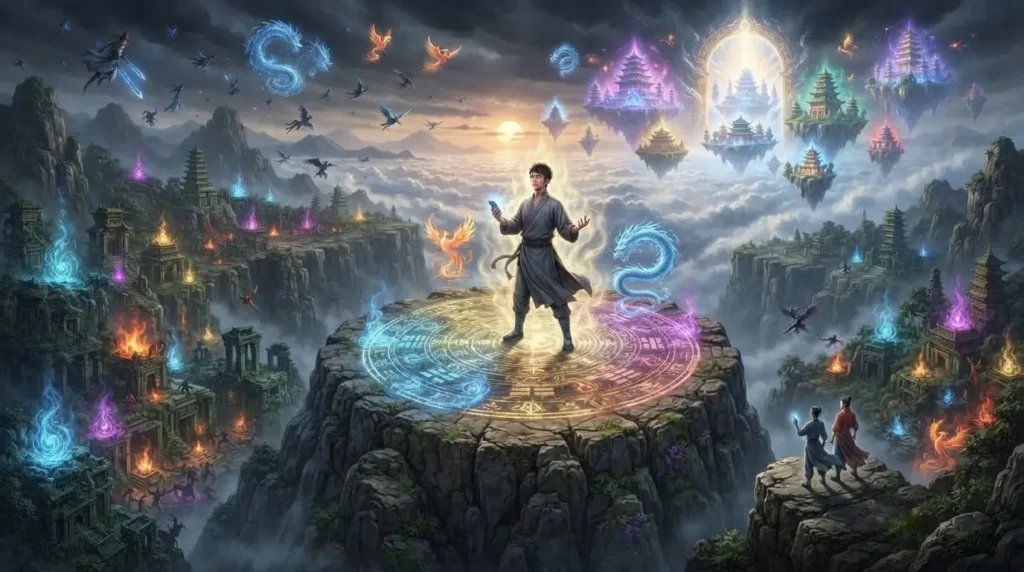
Now your problems change shape rather than disappearing.
Tribulation Is Waiting
The divine trial from heavenly dao that arrives at major breakthroughs and can’t be delegated, purchased, or avoided.
Every significant advancement means a test you personally have to survive. The genre uses this specifically so power increases stay earned rather than automatic.
Your Own Dao Heart Becomes a Threat
Advancement also exposes your dao heart to heart demons (manifestations of your own unresolved fear and guilt that surface during breakthroughs).
Failing that confrontation doesn’t usually kill you outright. It leaves you obsessed, corrupted, or permanently stalled, which in a world of ambitious rivals is functionally a slower death.
Realistic estimate: centuries of lifespan, dramatically increased odds of dying violently within any given decade.
The Real Killer Is Social, Not Martial
Here’s the thing I think most survival estimates get wrong, and it applies at every tier above.
You Cannot Tell Who Is Dangerous
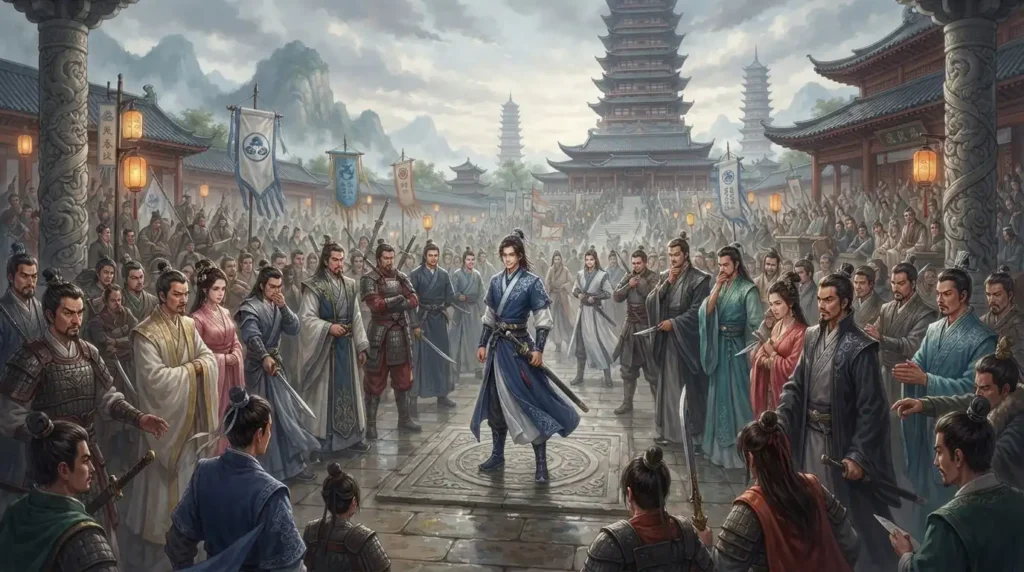
Cultivation fiction runs on the hidden expert convention constantly. The shabby old man sweeping the courtyard is a Nascent Soul elder. The unremarkable traveler is a sect patriarch in disguise. The rude teenager is a young master whose father can erase your bloodline.
These types of tropes are very common in cultivation novels; they are what push the protagonist to become stronger, but in your case, it might be the opposite.
Cultivators frequently conceal their realm deliberately, and the genre treats correctly identifying someone’s power as a genuine skill that ordinary people simply don’t have.
Offense Is the Genre’s Most Reliable Plot Engine
Count the conflicts in almost any cultivation novel and a startling proportion begin with someone giving offense to someone powerful. An insult, a refused sale, an accidental collision in a street.
This is the actual mechanism that kills background characters. Not war. Not monsters. Manners, in a world where the social cost of rudeness is occasionally death.
The practical implication: your survival odds correlate less with your strength than with your ability to be unremarkable and polite to absolutely everyone, permanently.
What This Says About the Genre
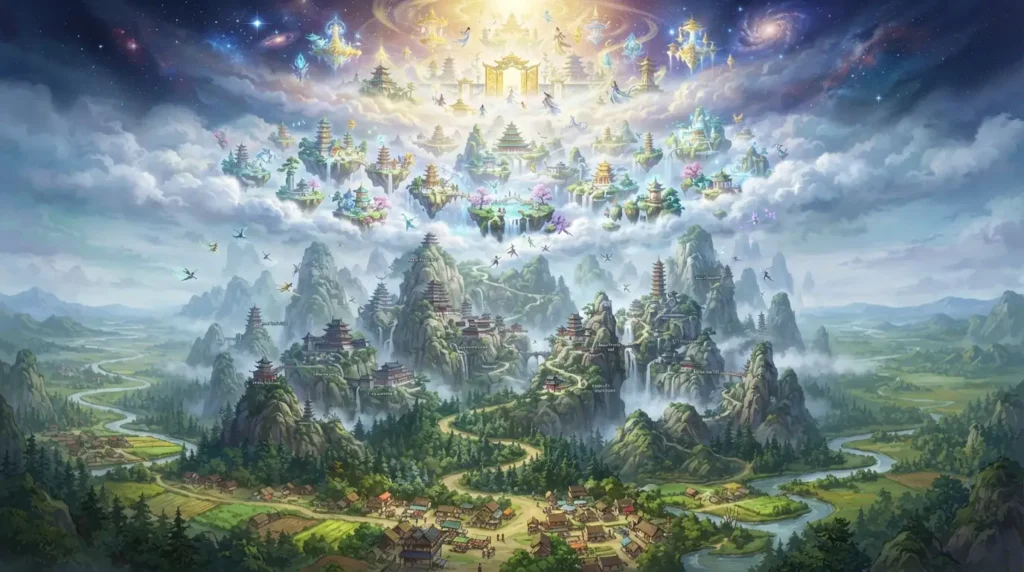
The disposability of ordinary people in cultivation fiction isn’t sloppy writing. It’s the genre being unusually honest about what enormous power asymmetry actually does to the people who don’t have any.
Western epic fantasy frequently gives its peasants narrative protection. Villages get saved. Innocent bystanders register as tragedies the text pauses for.
Cultivation fiction generally doesn’t extend that courtesy, and the effect is a world where the gap between a Foundation Establishment cultivator and a farmer is depicted as something closer to the gap between a person and an insect.
That’s uncomfortable, and I think it’s deliberate, because the genre’s whole engine is the desperate scramble to stop being the insect.
An Honest Counterargument
I’ve stacked this toward lethality, and a fair reading pushes back.
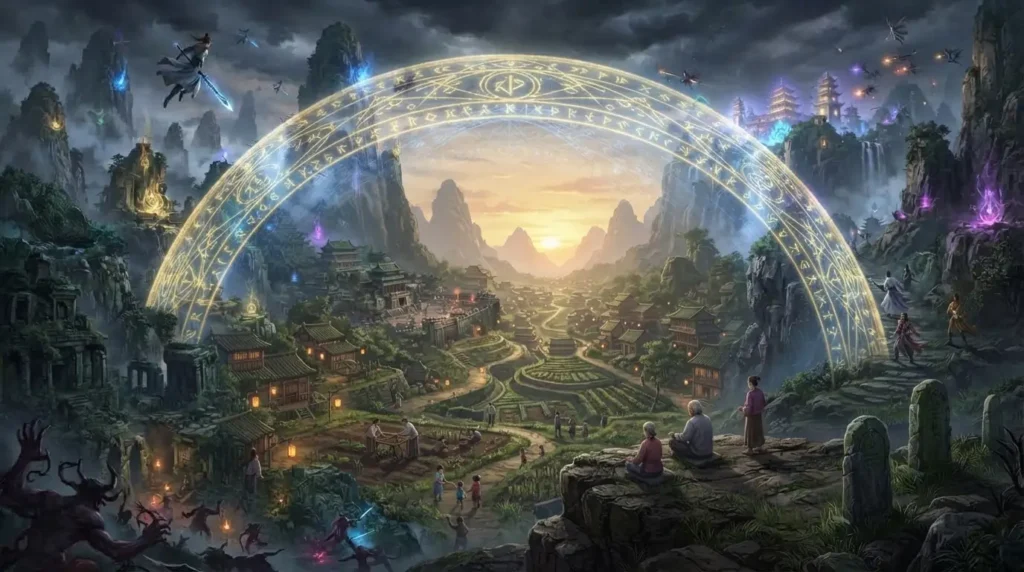
Plenty of cultivation novels depict genuinely stable, prosperous mortal societies where ordinary people live full lives, raise families, and never encounter a cultivator doing anything worse than buying groceries. Mortal cities under established sect protection can be safer than a lot of real historical settlements were.
The lethality readers perceive is partly an artifact of following a protagonist, because protagonists attract conflict by narrative necessity. Everywhere the main character goes becomes dangerous specifically because the main character arrived.
Stay away from anyone with a mysterious past and a suspicious amount of luck, and your odds improve a lot.
A Practical Survival Guide
If you insist on trying anyway, the genre’s own logic suggests five rules. and there is even a perfect example of Han Jue from Top Tier Providence:
- Assume everyone outranks you. The cost of excessive politeness is nothing. The cost of misjudging one person is everything.
- Never pick up unattended treasure. Someone is coming back for it, and they will be stronger than you.
- Decline all mysterious inheritances. Ancient masters sealed in rings are looking for a vessel, not a partner.
- Avoid secret realms entirely. These have advertised mortality rates and people volunteer anyway.
- Leave any town the protagonist enters. Immediately. You have maybe a week.
Frequently Asked Questions
Should an ordinary person try to become a cultivator?
Not necessarily. Cultivation can provide longer life and greater power, but advancement also exposes people to dangerous trials, stronger enemies, resource conflicts, and potentially fatal breakthroughs. For an ordinary person, staying unnoticed may actually be the safer strategy.
Is there a standard population ratio of cultivators to ordinary people in these worlds?
No consistent figure exists across the genre, and most novels leave it vague. The general implication is that cultivators represent a small minority, though specific ratios vary enormously depending on how magic-saturated a given author’s world is.
Can someone without a spiritual root cultivate through alternative means?
Some novels allow it through body cultivation, unusual pills, or artificial root grafting, though these paths are typically depicted as slower, more painful, and a lot more likely to fail than natural cultivation.
Why are secret realms especially dangerous?
Secret realms concentrate ambitious cultivators, valuable treasures, dangerous creatures, ancient formations, and powerful inheritances in one location. Competition is intense, and weaker participants often have little protection against stronger cultivators.
Why is protagonist protection so important when judging survival?
Cultivation stories follow characters who constantly encounter unusual opportunities and powerful enemies. An ordinary person living outside the protagonist’s path may experience far less danger, meaning the world can be considerably safer for background characters than the novels initially suggest.
Final Thoughts
The honest answer to the title is that you’d probably survive longer than you expect and die more stupidly than you’d like. Not in a duel. Not defending anything. Most likely because you said the wrong thing to a badly dressed old man in a teahouse.
Which is, when you think about it, exactly what the genre has been telling you the whole time.
Written by Batin Khan, a curious free spirit who loves reading and exploring the worlds of fantasy, mythology, and ancient stories. Through this blog, Batin hopes to share that sense of wonder with readers while building an exciting future along the way.