
 By
Quick Takeaways:
- Hades never tempts anyone, never recruits souls, and never opposes the gods. The devil role has no ancient Greek counterpart in him.
- The confusion is mostly a vocabulary accident. The Greek translation of the Hebrew Bible rendered Sheol as Hades, and Christian writers inherited the word.
- The Greeks feared him anyway, which is a different thing from calling him evil.
- The one story where he does something truly wrong, the abduction of Persephone, was approved by Zeus.
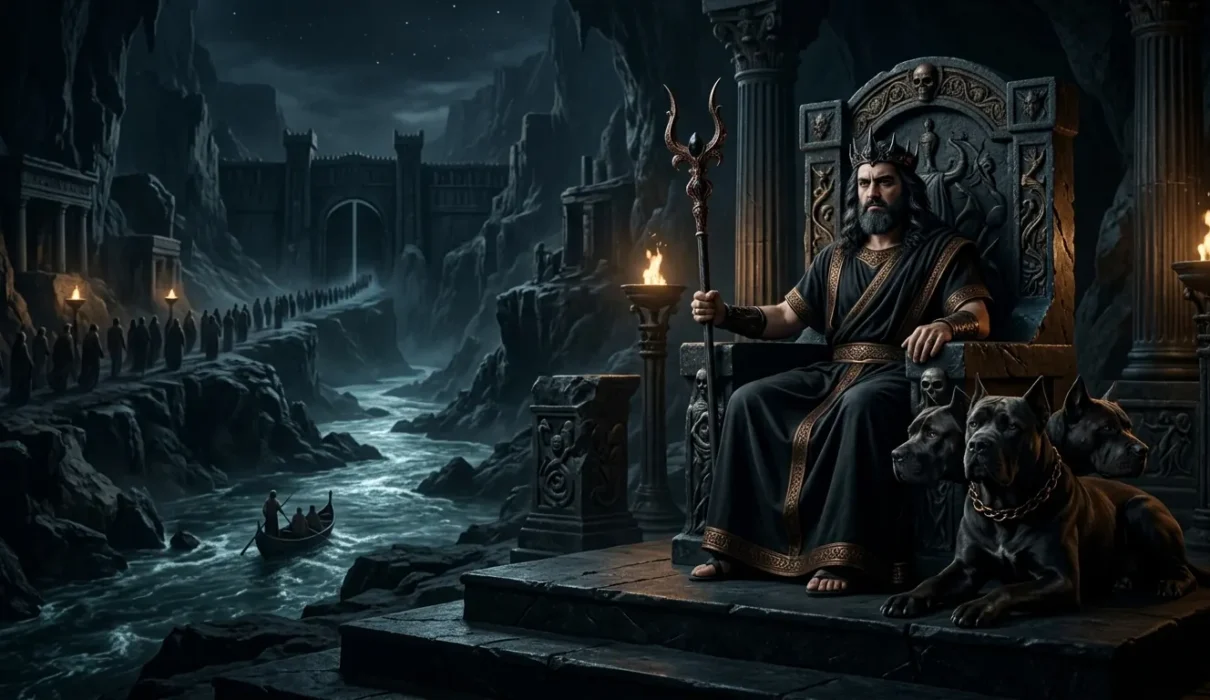
I think Hades has one of the worst public relations problems in mythology, and almost none of it comes from the myths.
Ask people to describe him and you’ll hear scheming, fire, a deal for your soul. Then try to find the scene in an ancient Greek source where he does any of that. I’ll save you the search: it isn’t there.
The Job Description Is Nothing Like the Devil’s
What the Role Actually Was
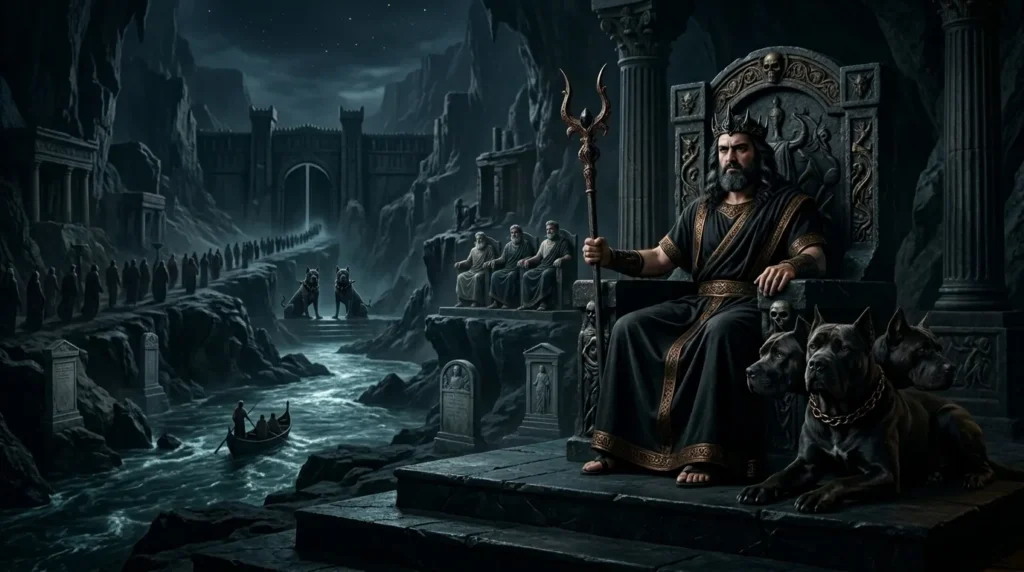
When Zeus, Poseidon, and Hades divided the cosmos, Iliad Book 15 says they drew lots. Hades drew the underworld. Nobody in the poem treats this as a demotion into villainy.
His task was receiving the dead and keeping them there. He’s the keeper of a boundary, which is a different job from running an opposition.
What He Never Does
The devil, in the traditions that built the modern image, tempts, deceives, and collects. Hades does none of these things in the surviving myths.
He doesn’t bargain for souls. He doesn’t send anyone toward wrongdoing. He doesn’t lead a revolt against Zeus, and in the stories he’s allied with his brothers.
Who Actually Punishes
This one surprised me when I first checked it. In the Odyssey, Minos, not Hades, sits with a golden scepter judging the dead.
Later Greek authors, Plato among them, name three judges: Minos, Rhadamanthys, and Aeacus. Tartarus, the deep prison, is described separately and holds the Titans. Hades the god isn’t the torturer in any of this.
The Name Everyone Avoided
What Hades Means, and the Honest Gap
Ancient writers often read the name as “unseen,” linking it to a word for invisible. A nineteenth century reference notes that others derived it from a verb meaning to take in, so Hades would be the all receiver. Modern scholars still treat the etymology as uncertain.
I’d hold the “unseen” reading loosely. It’s attractive because it matches his invisibility cap, but attractive is not the same as proven.
Pluton, the Safer Name
Plato’s Cratylus notes that people preferred to call him Pluton, the giver of wealth, rather than say the dreaded name of Hades. The wealth reading connects him to grain and mineral riches that come from underground.
The euphemism tells you the Greeks were nervous around him. It doesn’t tell you they thought he was wicked, and those two reactions often get mixed up.
The Temple Opened Once a Year
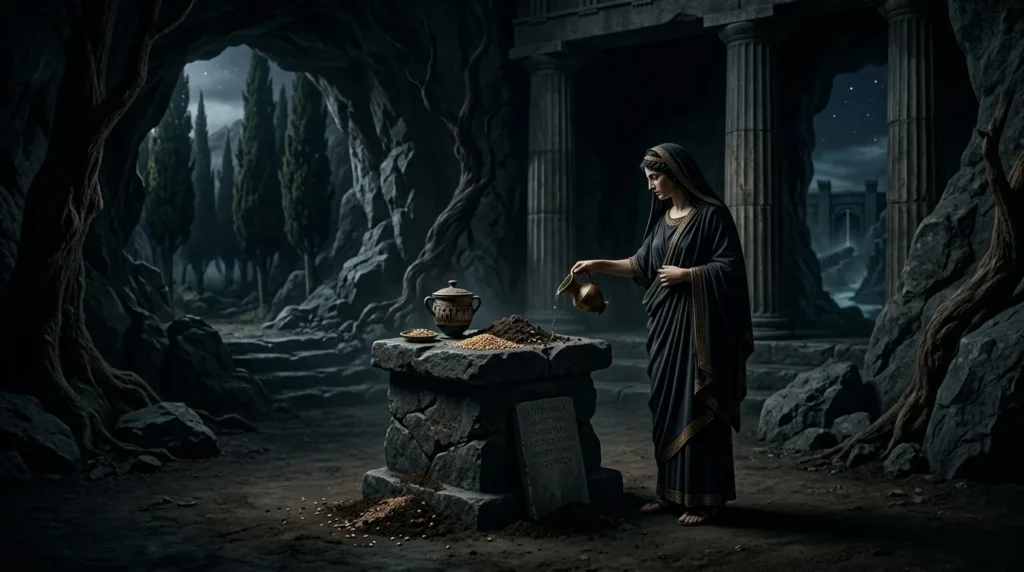
Pausanias reports that at Elis the sacred enclosure and temple of Hades were opened once a year, and only the priest could enter. He says the Eleans were the only people he knew of who worshipped Hades at all.
His own explanation is that people go down to Hades only once. I love that guess, and I’d note he labels it a supposition.
What He Looks Like in the Stories
The Helmet and the Wound
Hades owned a cap that made its wearer invisible. In the Iliad, Athena puts it on to stay hidden from Ares, so the god’s own equipment is lent out to allies.
The Iliad also mentions that Heracles wounded Hades with an arrow at Pylos and that the god went to Olympus for treatment. Pausanias connects this to the cult at Elis, saying Hades fought on the side of the Pylians. It’s a rare glimpse of the god as an actor rather than a place.
Implacable, Not Evil
Agamemnon says in Iliad Book 9 that Hades is unyielding and unappeased, and for that reason the most hated of the gods by mortals. I’m paraphrasing a line I’ve read in translation, and it’s worth checking against one.
Look at the logic of the complaint. He’s hated because he can’t be persuaded, which is the nature of death. The Greeks resented the fact, not a personality.
The Persephone Story, Read Carefully
Zeus Is the One Who Signs Off
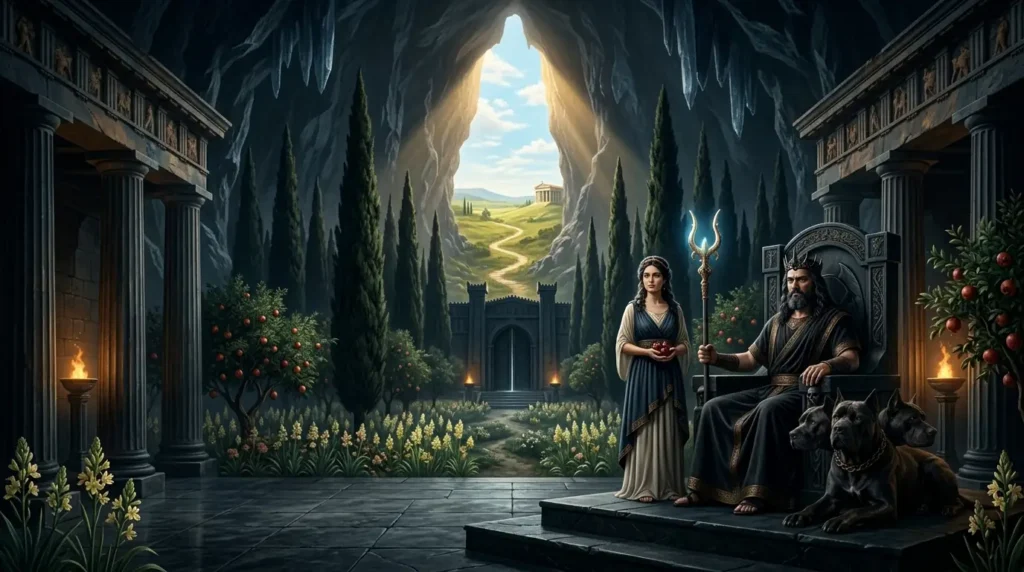
In the Homeric Hymn to Demeter, Hades takes Persephone to the underworld. The hymn says Zeus had given her to him, which means the abduction was arranged between brothers before it happened.
That changes who the myth blames. Demeter’s rage is aimed at the whole arrangement, and the hymn’s resolution comes from Zeus’s compromise rather than any punishment of Hades.
How He Speaks to Her
When Persephone is in his palace, the hymn has Hades address her gently. He tells her that he’s no unworthy husband among the gods, that she’ll rule with him, and that anyone who wrongs her will be punished.
I’m not defending the abduction. The tradition describes a young woman taken without her consent, and nothing in that should be softened. The point is that the poem frames his conduct as marriage by arrangement and not as a hunt for a victim.
The Pomegranate
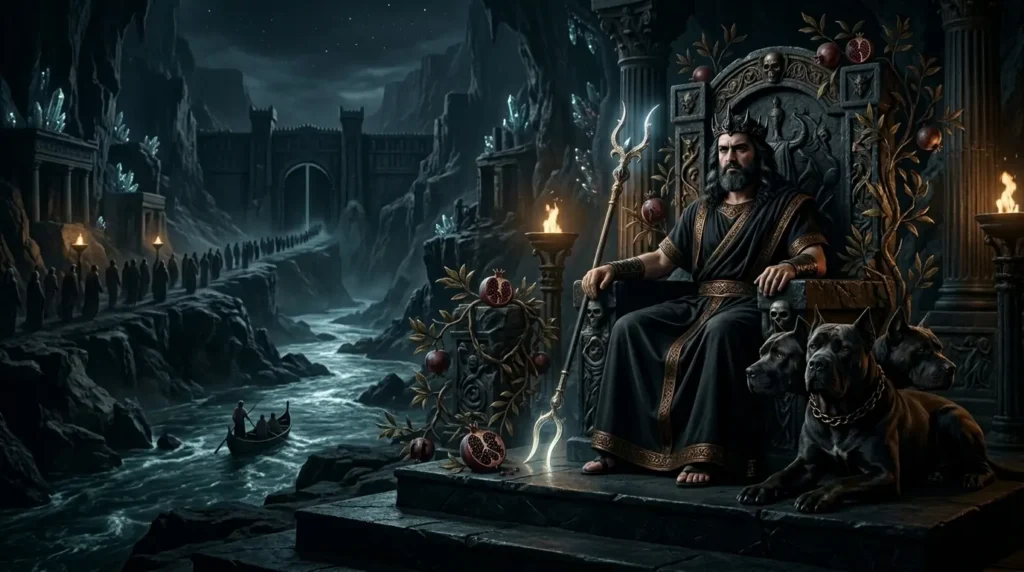
Persephone eats pomegranate seeds, which binds her to return. In the hymn, the number of seeds and who tricked whom is a little unstable, and different retellings assign the trick to Hades or to Persephone’s own choice.
Either way, the result is the seasonal split that gives Demeter her recovery. The myth is explaining the agricultural year, which has nothing to do with damnation.
So Where Did the Devil Come From?
A Translation Decision
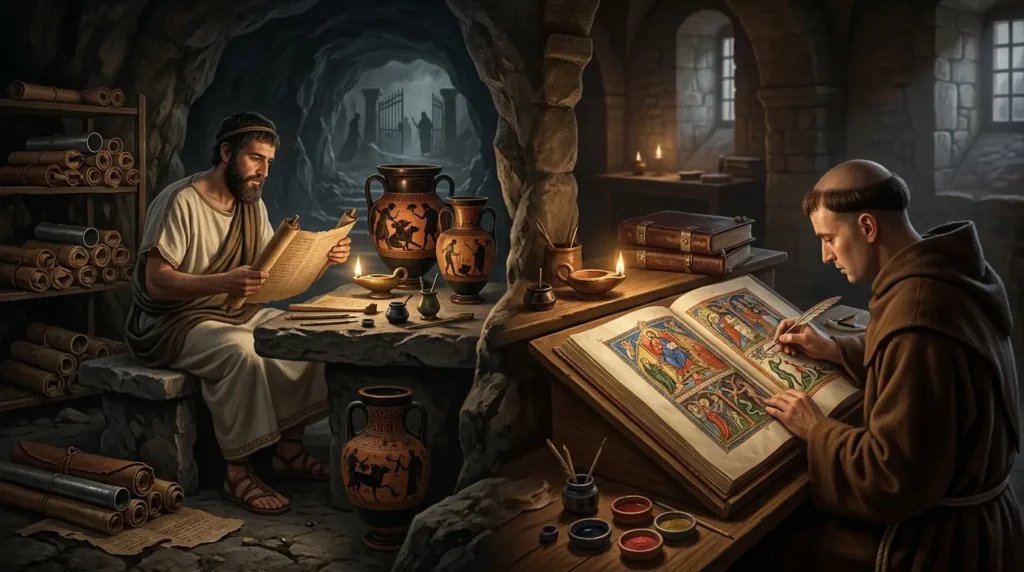
The Septuagint, the Greek translation of the Hebrew Bible, normally rendered Sheol as Hades. Sheol was the Hebrew word for the place of the dead, a shadowy destination for everyone.
The New Testament was written in Greek, so the Greek word came with the translation. Hades the name of a god became Hades the name of a place.
Hades Becomes the Enemy in Revelation
Revelation 20 depicts Death and Hades being thrown into the lake of fire. Within that passage, Hades has been absorbed into a Christian picture where the dead are judged and the realm itself is destroyed.
My reading is that this is where the sense of Hades as an adversary starts. The word crosses over, and its new context makes it part of the Christian enemy’s territory.
Dante Staffs His Hell With Greek Employees
Dante borrows Charon, Minos, and Cerberus for the Inferno. Each has a job in his Hell, and each is a figure from Greek or Roman tradition.
But Dante doesn’t put Hades at the center. At the bottom of his Hell sits Lucifer, who is the Christian adversary, and the pagan figures are subordinate staff. The Greek god was never promoted to the top job.
Modern Popular Culture Finished It
Disney’s 1997 Hercules made Hades a fast talking villain with flaming hair and a scheme to overthrow Zeus. It’s a funny performance, and it’s almost entirely invented.
Nothing in the surviving myths has Hades plotting to take over Olympus. The film put him in a role the ancient sources never gave him, and that role is now what many people think the myth says.
Why the Greeks Were Afraid but Not Hateful
The Afterlife Was Dull, Not Damnable
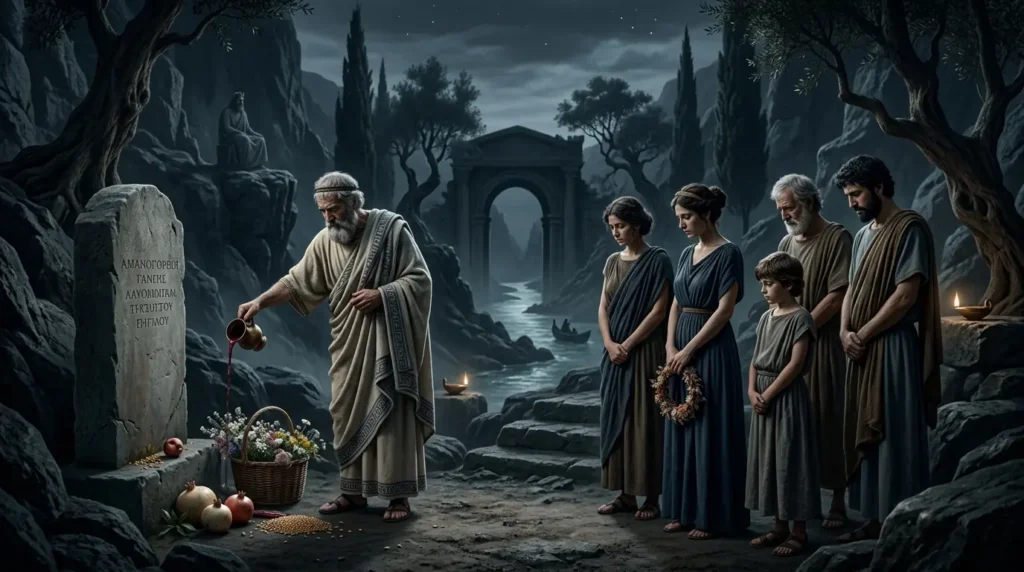
For most people, the Greek underworld meant a diminished existence as a shade. Homer’s famous line has Achilles saying he’d rather be a living laborer than lord of all the dead.
That’s a grim outlook, but it isn’t an eternal punishment. Most of the dead simply go on, faint and powerless, and Hades isn’t the author of that condition. It’s what happens to everyone.
A Few Got Special Treatment
Some figures received exceptional punishments. Tantalus, Sisyphus, and Ixion appear in lists of the condemned, and Tartarus holds the Titans.
Those are individual cases of offenders, and the sources don’t present Hades as eager to expand the list. The sorting is carried out by others, and the cruelty belongs to the punishment tradition, not the god’s personality.
A Philosophical Sidebar
Plato’s Cratylus gives a flattering etymology for Hades, in which Socrates argues that souls stay with him because of desire, not compulsion. It’s a playful, philosophical defense and I wouldn’t lean on it as doctrine.
It does show that ancient thinkers could picture him as a benefactor. The devil reading would have struck some Greeks as bizarre.
He Wasn’t Benevolent, Either
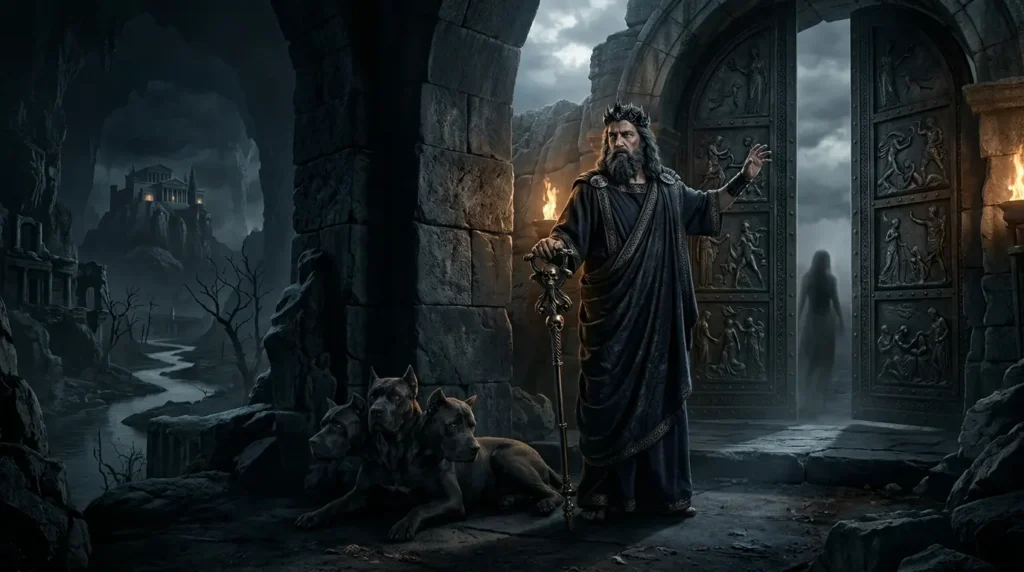
I want to push against the rehabilitation I’ve been building. Hades was feared, and the Greek sources treat his realm as a place you avoid. The Iliad calls him hateful, and the temple at Elis was closed almost all year for a reason.
Calling him “misunderstood” can slide into suggesting he was a friendly boss. He wasn’t. He was a god of an inevitable and unpleasant fact.
The Abduction Is Still an Abduction
The Hymn to Demeter works as a justification for a marriage by arrangement, and the mother’s grief is its emotional center. A reading that stresses Zeus’s approval can sound like an excuse.
I’d rather say it plainly. He took a young woman from her mother, and the myth records the consequences, including a famine, as proof that something wrong happened.
The Chthonic Gods Do Overlap
Greek religion linked Hades with Zeus Chthonios and other underworld figures, and some later traditions blended them. If you’re asking whether any Greek tradition gave a dark god a bigger role than I’ve allowed, there are Orphic and mystery cult materials where underworld figures take on more theological weight.
The key distinction holds, though. Even there, the figures aren’t antagonists of the divine order. They’re part of it.
What the Distinction Teaches
I think Hades is a useful test case for how mythologies get absorbed into later ones. A word migrates, picks up a new context, and the original owner takes the blame for things he never did.
The Greek god of the dead was a keeper of a boundary, and he did his job without stirring up trouble. If a single ancient story had him tempting mortals, I’d have found it by now.
Frequently Asked Questions
Did the Greeks have any figure like the devil at all?
Not in the Christian sense. The nearest candidates are monsters like Typhon, who challenge Zeus in the succession myths, and malicious spirits. None of them is an eternal adversary of goodness, and none rules the dead.
Is Pluto the Roman name for Hades?
Roman writers also used Dis and Orcus for the god of the dead, and Pluto comes from Pluton. The name overlap helps explain why Roman poets treated underworld figures as interchangeable.
Why is Cerberus associated with Hades?
Cerberus guards the underworld’s entrance, so he works for the realm and not against the gods. Heracles’ last labor is bringing him up and returning him, and that story shows the hound is a gatekeeper, not a tormentor.
Were there any rituals meant to honor Hades?
Chthonic offerings in general were handled differently from Olympian sacrifices, with libations poured into the ground. The best documented specific case is the yearly opening of his temple at Elis, which Pausanias describes.
What did Roman religion do with the Greek underworld?
It absorbed the Greek setup, then added its own details through names like Dis Pater and Orcus. The Roman afterlife in Virgil’s Aeneid gives the underworld a more structured moral geography than Homer’s, which is part of what Dante later inherited.
Final Thoughts
The next time someone calls Hades the Greek devil, ask where they’d cite it. The answer tends to be a movie, a translation choice, or a poem written a thousand years later.
What the sources describe is quieter. A god who drew the short straw, kept a locked house, and was avoided so thoroughly that his only known temple opened once a year, for one man.
Related Articles
- Chaos: The Primordial Void Before the Greek Gods
- The 12 Olympian Gods: Powers, Symbols & Key Stories
- Greek Mythology 101: Gods, Heroes & Monsters
- 13 Legendary Greek Heroes, Ranked by Their Feats
- Poseidon: The God of the Sea, Earthquakes & Horses
- Gaia: Greek Mythology’s Original Mother Goddess
- Rhea: The Titaness Who Tricked a God-Eating Titan
- Hera: The Goddess Reduced to “Zeus’s Jealous Wife”
Sources & Further Reading
- Homer, Iliad, Book 9
- Homer, Odyssey, Book 11
- Homeric Hymn to Demeter – The Center for Hellenic Studies
- Plato, Cratylus
- Pausanias
Written by Batin Khan, a curious free spirit who loves reading and exploring the worlds of fantasy, mythology, and ancient stories. Through this blog, Batin hopes to share that sense of wonder with readers while building an exciting future along the way.