
 By
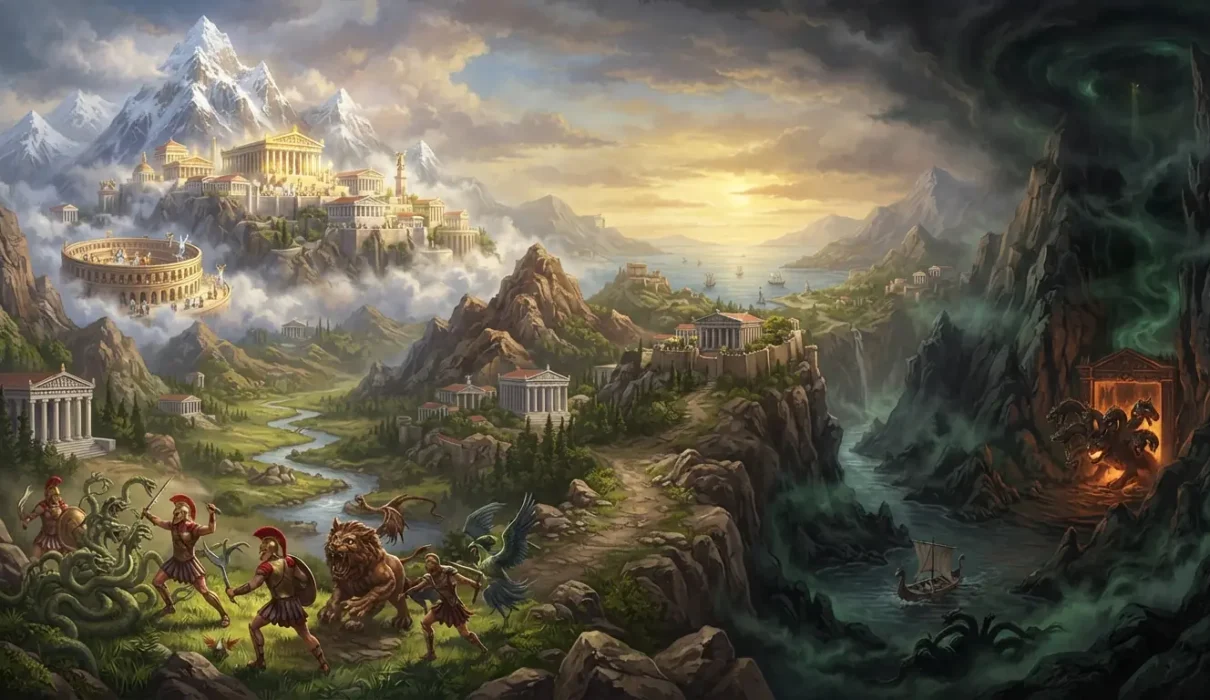
By Greek mythology gets treated as settled knowledge, a fixed cast with fixed domains and fixed stories, the kind of thing you learn once from a chart and never think about again. It was never that.
The surviving sources contradict each other in ways nobody ever resolved, gods and heroes and monsters turn out to be three positions on one continuum rather than three separate boxes, and the most important thing fantasy actually inherited from Greece isn’t creatures at all, it’s structure: the tragic flaw, the underworld descent, the hereditary curse, the idea that fate can be known in advance without being avoidable.
Roman renaming trips up more newcomers than anything else here, and it’s worth saying up front that the Roman versions aren’t simply relabeled Greek gods. Understanding all of this changes how you read both the myths themselves and everything fantasy borrowed from them, and readers who get it end up getting a lot more out of both.
There Is No Canonical Version, and That Changes Everything
The Sources Openly Contradict Each Other
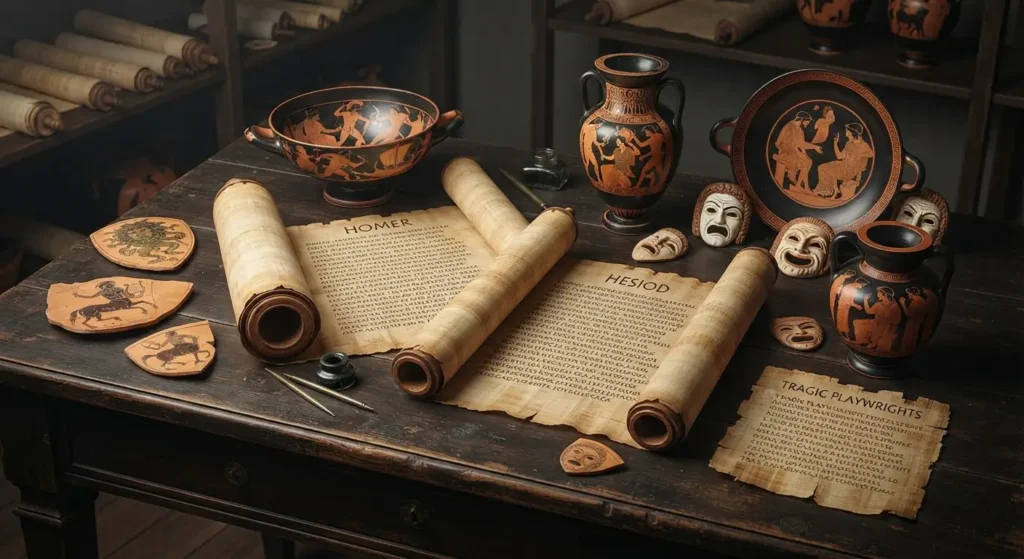
The two earliest surviving major Greek sources, Homer’s Iliad and Odyssey and Hesiod’s Theogony, are generally dated to roughly the eighth or seventh century BCE. They don’t fully agree with each other on divine genealogy, on the character of specific gods, or on how the cosmos got organized.
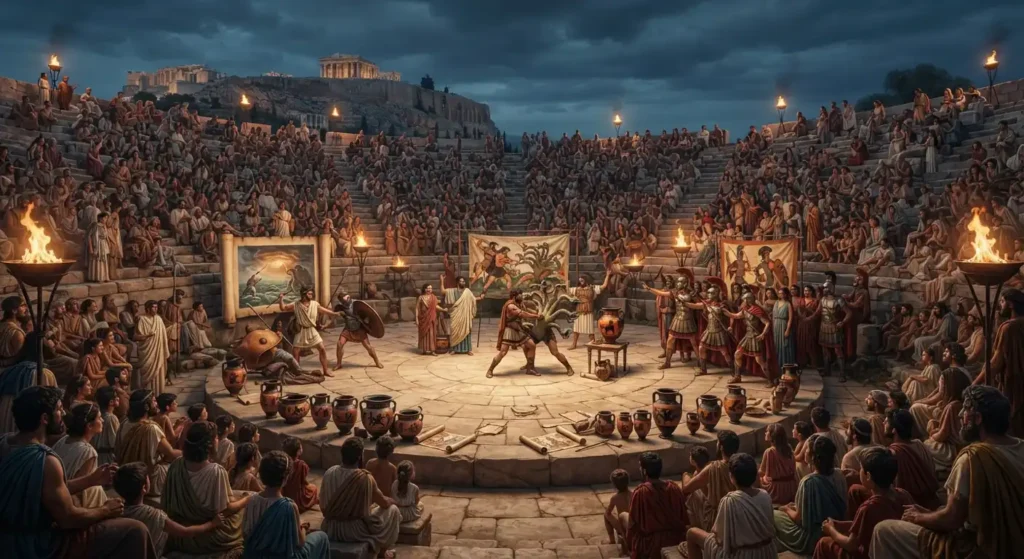
Later Athenian tragedians reworked the same figures again for their own dramatic purposes. Aeschylus, Sophocles, and Euripides each handled Electra’s story differently, with meaningfully different motivations and outcomes depending on which playwright you’re reading.
Then Roman poets, Ovid most influentially in the Metamorphoses, reworked the material a third time, centuries later, in a different language and a different religious context.
Why the Inconsistency Existed
This wasn’t carelessness. Greek myth circulated as a living oral and performance tradition, across a region that was never politically unified during the whole period the myths were taking shape.
Different city-states had real stakes in telling different versions. Athens had reason to elevate Athena and Theseus. Sparta had different heroes and different emphases. Temple sites promoted whichever version made their own location cosmically significant.
A myth that made your city the birthplace of a god was worth something concrete. Consistency across regions was nobody’s priority.
What This Means for You as a Reader
Once you know there’s no correct version, you stop asking whether a fantasy adaptation got the myth right. That’s the wrong question, and it’s the one that produces bad criticism.
The better question is which version an author chose, and what that choice does. Madeline Miller’s Circe reads completely differently once you know how thin her source material in the Odyssey actually is, and how much room that thinness deliberately left her.
Circe appears in Book Ten of the Odyssey and disappears again. Miller’s novel isn’t contradicting Homer. It’s occupying space Homer left empty, which is a different and far more interesting creative act than correction.
The Sources Worth Knowing by Name
Homer
The Iliad covers a few weeks in the tenth year of the Trojan War, focused on Achilles’ rage rather than the war’s full span. The Odyssey follows Odysseus’s ten-year journey home afterward.
Both are traditionally attributed to Homer, though whether a single historical person by that name actually composed them is still debated among classicists. The composition likely drew on generations of oral, formulaic tradition before it ever reached written form.
For fantasy readers, Homer matters because he sets the register: gods who intervene directly and personally in human affairs, and heroes whose greatness doesn’t require moral virtue.
Hesiod
The Theogony is where you get the real divine genealogy, the succession from primordial to Titans to Olympians, laid out systematically instead of referenced in passing.
Works and Days, his other major surviving poem, includes the Five Ages of Man and the Pandora story in a fuller form than most summaries give it.
Hesiod reads a lot drier than Homer, to be honest. He’s also the closest thing Greek mythology has to a structural reference document, which makes him worth knowing even if you never read him straight through.
The Athenian tragedians
Aeschylus, Sophocles, and Euripides wrote in fifth-century BCE Athens, and their surviving plays are where Greek myth turns psychologically complex instead of just narrative.
Aeschylus’s Oresteia is the House of Atreus curse, dramatized across three connected plays. Sophocles gives us Oedipus Rex and Antigone. Euripides handles Medea with a moral ambiguity that still unsettles readers today.
If you only read one, make it the Oresteia. The hereditary-curse structure fantasy leans on constantly is right there, fully formed, in 458 BCE.
Ovid
The Metamorphoses is Roman, written around 8 CE, and it’s the source for a surprising number of stories modern readers assume are Greek.
Ovid’s account of Medusa’s origin, that she was assaulted by Poseidon in Athena’s temple and punished by Athena for it, doesn’t appear in earlier Greek sources in that form. Neither does his version of several other widely known transformations.
This matters for accuracy. A lot of what circulates as “Greek myth” is specifically Ovid’s reworking of Greek material, and the distinction is worth keeping straight.
The Gods
Three Generations, Each Overthrowing the Last
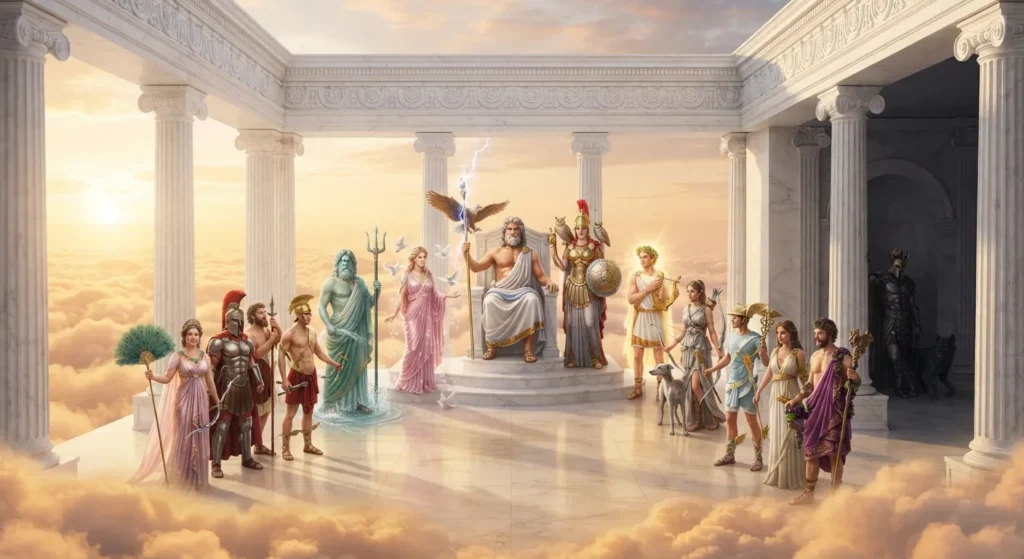
Greek divine history is a sequence of violent successions, not a stable pantheon.
The primordials come first in Hesiod’s account – Chaos, Gaia, Ouranos, Tartarus, entities closer to cosmic principles than personalities.
The Titans, led by Cronus, overthrow Ouranos. Cronus then swallows his own children to keep the same thing from happening to him.
The Olympians, led by Zeus after he escapes that fate, overthrow the Titans in the war called the Titanomachy, which Hesiod describes as lasting ten years.
What That Structure Actually Communicates
Power in Greek cosmology is seized, held by force, and permanently threatened by the next generation trying the exact same thing.
Zeus doesn’t rule because he’s the rightful heir. He rules because he won, and the myths never quite let you forget that the previous two regimes also thought they’d won for good.
Most fantasy pantheons soften this a lot. A divine order built on successful violence, with an unspoken expiration date built right in, is an uncomfortable foundation, and Greek myth just sits in that discomfort instead of resolving it.
The Twelve, With Caveats
The Twelve Olympian are less fixed than most charts suggest. Hestia and Dionysus swap the final seat depending on your source, and regional cults elevated different gods based on local significance.
The working list: Zeus, Hera, Poseidon, Demeter, Athena, Apollo, Artemis, Ares, Aphrodite, Hephaestus, Hermes, and one of the two contested seats.
Hades is usually excluded, despite being Zeus’s brother and his equal in power, on the reasoning that he rules the underworld rather than living on Olympus.
They Are Not Morally Good, and That’s Deliberate
This is the single biggest adjustment for readers coming over from fantasy, where gods are usually either benevolent or clearly evil.
Greek gods are powerful, jealous, and often cruel, and the myths don’t ask you to admire them. They ask you to understand what they’re capable of.
Hera punishes Zeus’s victims instead of Zeus himself, over and over, across dozens of stories. That’s not inconsistency. It’s a description of how power actually distributes its consequences: downward.
Specific Cruelty Worth Knowing
Artemis transforms Actaeon into a stag for accidentally seeing her bathe, and his own hunting dogs tear him apart before he can explain himself.
Athena transforms Arachne, in Ovid’s account, for the crime of being a better weaver than a goddess.
Apollo flays Marsyas alive for losing a musical contest that Apollo himself proposed.
None of this is a moral lesson about divine justice. It’s a description of what enormous power with zero accountability produces, told by people who understood that dynamic firsthand from their own political lives.
The Gods Have Real Limits
Worth knowing, because fantasy often hands its gods more, or less, power than Greek gods really had.
Zeus can’t just override fate. Several passages show him grieving over deaths he can’t prevent, including his own son Sarpedon’s, in the Iliad.
Gods can be wounded by mortals under the right circumstances, too: Diomedes wounds both Aphrodite and Ares in the Iliad, with Athena’s help.
And they can’t undo each other’s actions freely either. Divine conflict in Greek myth is genuinely limited, not a straightforward strength contest.
The Heroes
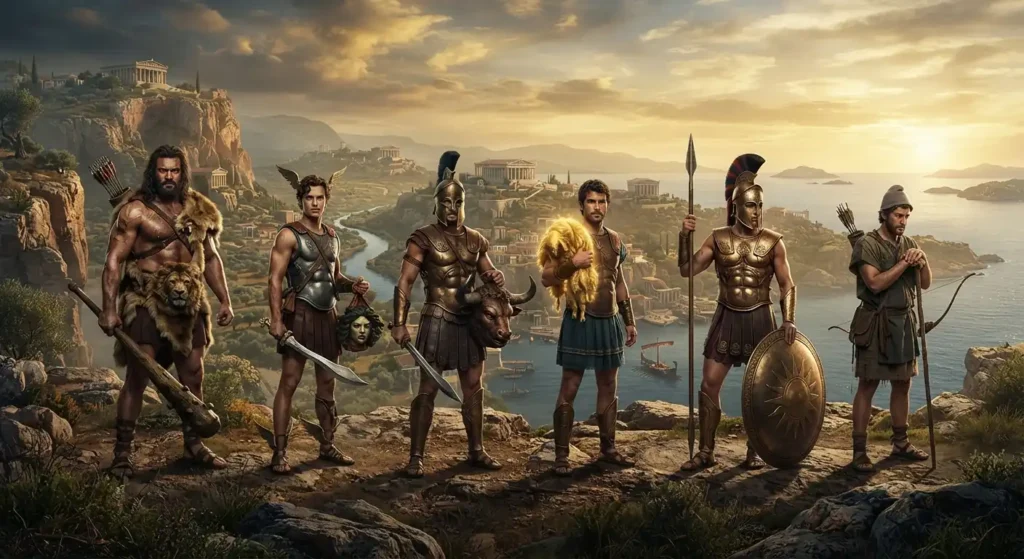
What Hero Actually Meant
The Greek term didn’t mean morally admirable. It meant someone of exceptional capability, usually with divine ancestry, who received cult worship after death at one specific physical location.
That last detail matters, and it gets lost constantly. Hero cults were real religious practice, tied to actual tombs and shrines, not just storytelling.
A hero was someone whose remains, and the site tied to them, carried real spiritual power for a specific community, which is exactly why different cities fought so hard over claiming different heroes.
Heroes Are Frequently Terrible People
Heracles murders his own wife Megara and their children, in a fit of madness sent by Hera. The famous Twelve Labors are penance for that killing, not a display of virtue.
Theseus abandons Ariadne on Naxos, right after she saves his life by handing him the thread that got him out of the Labyrinth.
Jason discards Medea for a politically advantageous marriage, after she commits multiple murders on his behalf, including her own brother’s.
The pattern repeats across enough separate myth cycles that it’s clearly deliberate, not incidental.
Hamartia, and Why It Matters More Than Any Creature
Aristotle’s Poetics names hamartia as the mechanism behind tragic downfall, and classicists still disagree, genuinely, about what he actually meant by it.
Some read it as a moral flaw. Others read something closer to an error made from incomplete knowledge, without the later Christian weight the English phrase “tragic flaw” carries.
Oedipus is the cleanest illustration of that ambiguity. He doesn’t knowingly commit any crime. He acts on incomplete information at every single step, and the catastrophe follows from his own decisions anyway.
How Fantasy Inherited This
In Robin Hobb’s FitzChivalry Farseer. Fitz is raised an unacknowledged royal bastard whose safety depends on staying unseen, and the habit of concealment calcifies into a pattern that keeps producing exactly the harm it was built to avoid in the first place.
Not cowardice. Not a moral failing. A trained response to real childhood danger, generating catastrophe through limitation rather than sin, which is the narrower reading of hamartia almost exactly.
Katabasis, the Descent That Changes You
Greek has a specific term for the hero’s journey into the underworld and back, and the pattern shows up again and again across separate myth cycles.
Orpheus descends for Eurydice and loses her by looking back at the threshold. Odysseus descends in Book Eleven of the Odyssey to consult the dead seer Tiresias. Heracles descends as his twelfth and final labor, to drag back Cerberus.
Psyche descends in the Cupid and Psyche story preserved in Apuleius. Theseus and Pirithous descend to abduct Persephone herself, and get trapped down there for their arrogance.
What the Pattern Actually Requires
A real katabasis isn’t just a visit to a dark place. It requires actually entering the realm of the dead, encountering something there that couldn’t be encountered anywhere else, and coming back permanently changed.
Orpheus comes back without Eurydice, and without his old ability to find joy in music. Odysseus comes back with knowledge of his own future death.
Fantasy uses this constantly, sometimes literally, more often as a psychological descent. Gene Wolfe’s Severian, passing through the necropolis early in Book of the New Sun, sits in exactly this shape.
The Monsters
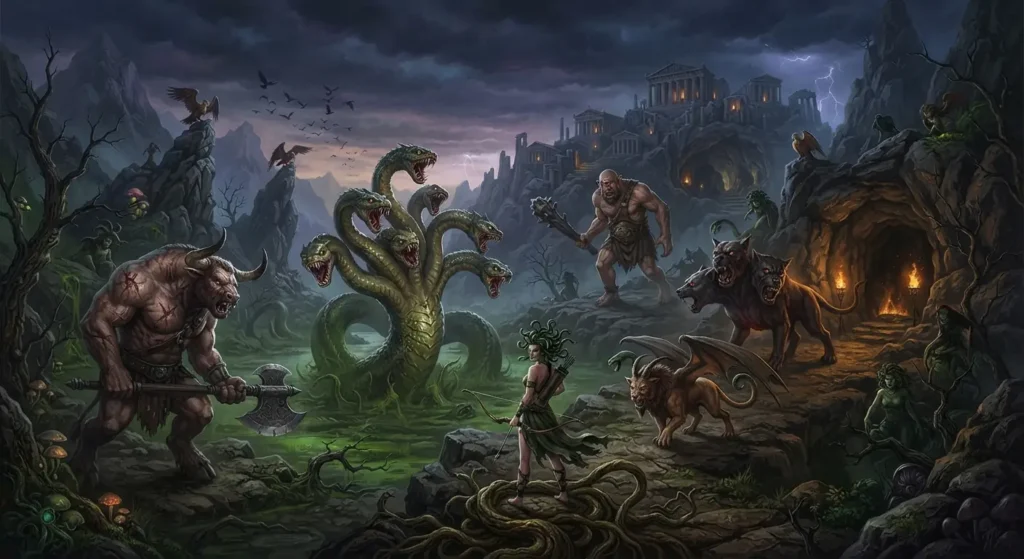
Hybridity Is the Mechanism
The Chimera combines lion, goat, and serpent, and breathes fire on top of it. The Sphinx has a woman’s head, a lion’s body, and wings. The Minotaur is bull and man. Scylla has multiple dog heads growing out of her lower body.
Categorical impurity, a creature that resists clean classification inside a culture’s system for organizing the world, is what makes these figures unsettling rather than just dangerous.
Philosopher Noël Carroll built an influential theory of horror around this exact mechanism in The Philosophy of Horror, and I’ve already discussed it in my blog post about Dark fantasy and Horror on this blog.
Most Greek Monsters Guard Rather Than Hunt
This sets Greek monsters apart from a lot of what fantasy does with monsters, and it’s worth noticing.
Ladon guards the golden apples of the Hesperides. The Colchian dragon guards the Golden Fleece. Cerberus guards the underworld’s exit, specifically keeping the dead in, rather than the living out.
Even the Sphinx works as a guardian, blocking the road to Thebes with her riddle instead of actively hunting travelers.
Why the Guardian Framing Matters for Fantasy
The guardian monster sets up a specific narrative template: the creature as an obstacle protecting a prize, and fantasy quest structures have used it ever since.
That’s structurally different from a monster that just threatens a community. A guardian implies something worth guarding, which means the monster’s presence tells you something about the value of whatever’s behind it.
Many Were Victims First
Medusa is the clearest case, specifically in Ovid’s Roman account rather than the earlier Greek sources. She was a mortal woman assaulted by Poseidon in Athena’s own temple, and Athena punished her instead of the god who’d actually committed the assault.
Arachne’s only offense was being better at weaving than a goddess.
Scylla, in several versions, was transformed by a jealous rival rather than born monstrous. Callisto was turned into a bear after Zeus assaulted her.
The Pattern Underneath
A significant share of Greek monsters are women, transformed as punishment for something done to them by a god, or for outdoing a god at something.
That’s not a coincidence, and it stops being subtle the second you start counting. The mythology is describing a specific power dynamic with unusual clarity, whether or not it means to endorse it.
Fate, and Why It’s More Interesting Than the Gods
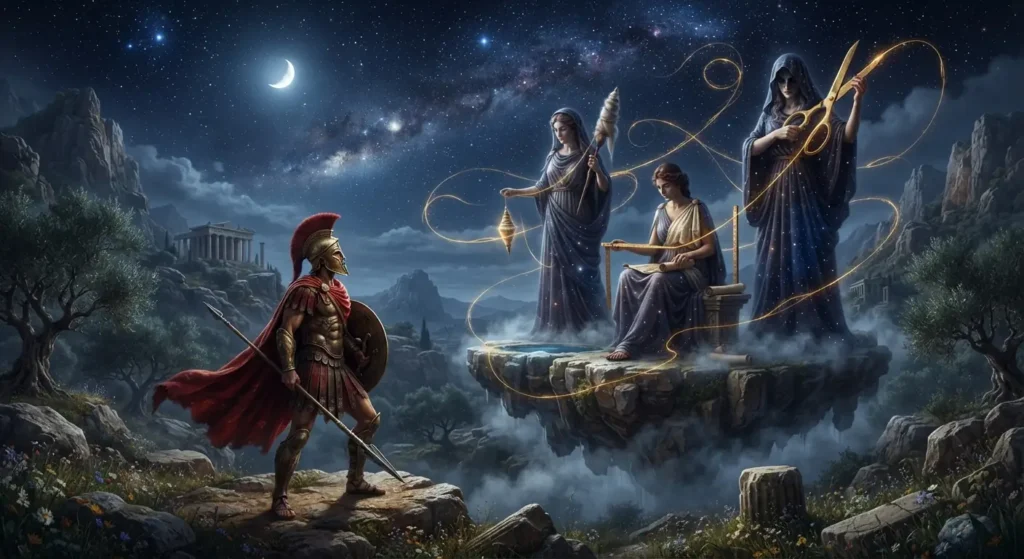
The Moirai
Three sisters: Clotho, who spins the thread of life; Lachesis, who measures it; and Atropos, who cuts it. They show up in Hesiod and across later sources alike.
Their relationship to Zeus’s authority is honestly ambiguous in the sources. Some passages suggest fate constrains even him. Others suggest he’s the one administering it.
That ambiguity was never resolved, and Greek writers seem to have been fine leaving it that way.
Prophecy That Causes What It Predicts
Greece’s most distinctive contribution to how fate works in fiction is the self-fulfilling prophecy: trying to dodge a foretold outcome is exactly what causes it.
Oedipus’s parents abandon him to stop the prophecy that he’ll kill his father and marry his mother. That abandonment is precisely why he doesn’t recognize either of them later on.
Cronus swallows his children to stop himself from being overthrown by one of them, which is exactly why Zeus grows up in hiding, motivated to overthrow him.
How Fantasy Uses This
Fate you can know but can’t escape is one of Greece’s most durable exports.
I’ve written about the same idea in my blog post about how Norse & Greek mythology influence dark fantasy on this blog: gods who know exactly how Ragnarok kills them, and fight anyway, which produces a completely different emotional register than the Greek version does.
Greek fate is ironic. Norse fate is defiant. Both show up constantly in fantasy, and knowing which one an author is reaching for tells you a lot about what the story wants from you.
The Underworld, Specifically
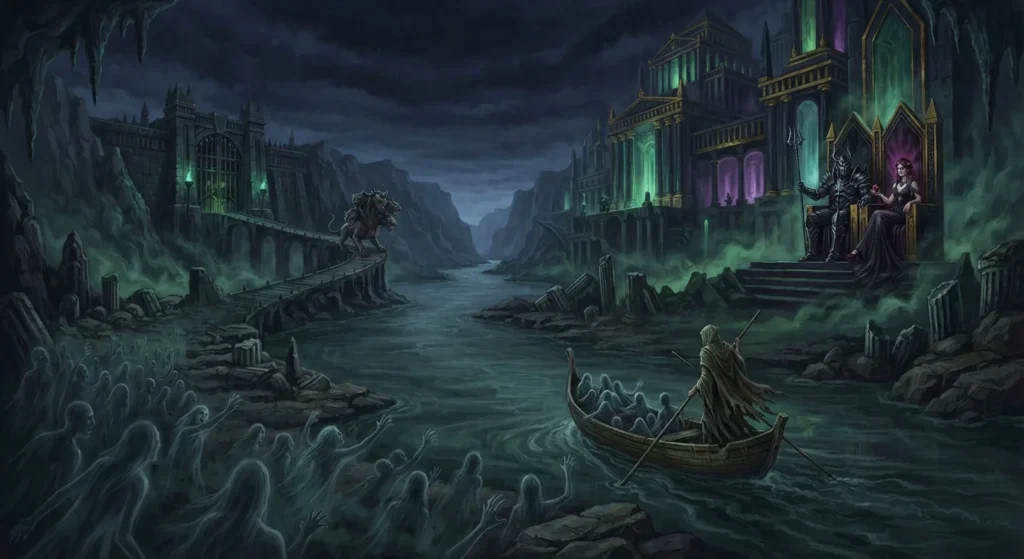
It Isn’t Hell
Greek Hades isn’t primarily a place of punishment. It’s where nearly everyone goes, no matter how they lived.
The standard afterlife is a diminished, shadowy existence, not reward and not torture either. Achilles, in Book Eleven of the Odyssey, tells Odysseus he’d rather be a living farmhand than king of all the dead.
That’s the greatest Greek hero, and he’s describing the afterlife as worse than the most menial life you could possibly live.
The Geography
The rivers matter, and fantasy references them constantly. Styx, the river of hatred that gods swear binding oaths on. Lethe, whose water causes forgetting. Acheron, Cocytus, Phlegethon.
Charon ferries the dead across for a fee, which is why coins were traditionally buried with the dead.
Tartarus sits below Hades proper, reserved for specific punishments; it’s where the defeated Titans ended up imprisoned.
Elysium and the Exceptions
Elysium exists for a small number of exceptional figures, and the criteria for getting in shift depending on the source.
Later sources expand it a bit, but the general Greek position stays the same: a good afterlife was rare, not something you earned through ordinary virtue.
For fantasy readers, this is actually useful context. A mythology where death is bleak for almost everyone produces very different heroic motivations than one where a paradise reward is waiting for the virtuous.
The Roman Renaming Problem
The Basic Substitutions
This trips up more newcomers than anything else, because both name sets circulate in modern fantasy interchangeably.
| Greek Name | Roman Name |
|---|---|
| Zeus | Jupiter |
| Hera | Juno |
| Poseidon | Neptune |
| Hades | Pluto |
| Athena | Minerva |
| Ares | Mars |
| Aphrodite | Venus |
| Hermes | Mercury |
| Artemis | Diana |
| Hephaestus | Vulcan |
| Demeter | Ceres |
| Dionysus | Bacchus |
They Aren’t Simply Relabeled
Roman religion already had its own gods before the merger with Greek equivalents, and merging them changed both sides.
Mars carried a lot more dignity in Roman religion than Ares ever had in Greek, where he was frequently painted as a brute the other gods openly disliked. Mars was a real state deity, tied directly to Rome’s founding.
Juno had her own independent Roman functions before she absorbed Hera’s mythology, and the merger produced a figure that isn’t quite identical to either predecessor.
Practical Advice
When a fantasy novel uses Roman names, check whether it’s using Roman characterizations too, or just Greek gods wearing Latin labels.
Most modern fantasy uses Roman names as a stylistic choice while keeping the Greek characterization, which is completely fine, but knowing the difference makes you a sharper reader of the books that do more with it.
What Fantasy Actually Borrowed From Greek Mythology
Structure Over Creatures
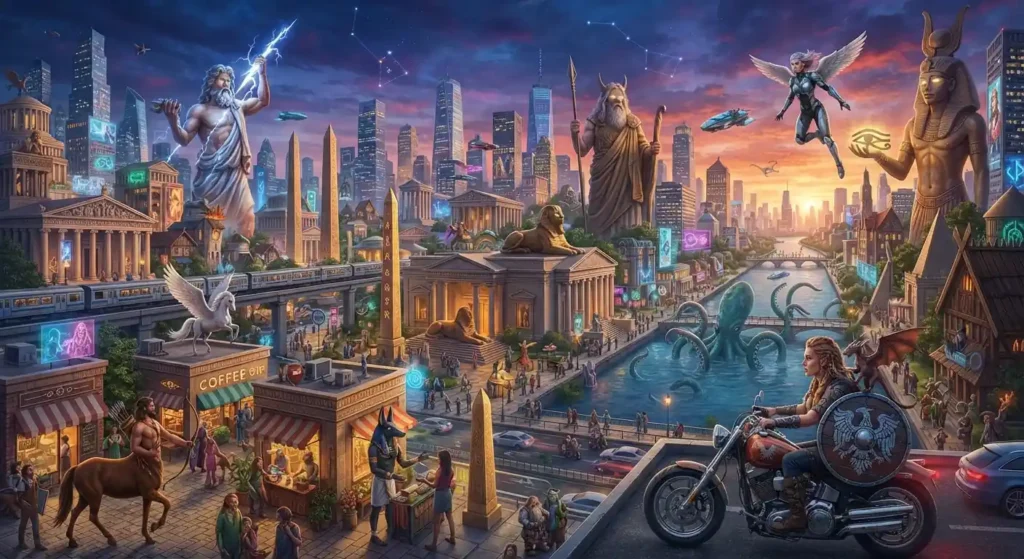
The visible borrowing is creatures: a chimera here, a minotaur there, a hydra guarding a dungeon. The important borrowing is structural, not the creatures themselves.
The Hereditary Curse
The House of Atreus runs across several surviving tragedies. Tantalus offends the gods. His son Pelops inherits the consequence. Atreus and Thyestes destroy each other over succession. Agamemnon is murdered by his own wife, Clytemnestra. Their son Orestes kills her in revenge.
The mechanism is specifically hereditary here. Individual virtue doesn’t exempt anyone from the pattern they were born into.
House Targaryen, in A Song of Ice and Fire, runs on a structurally similar engine: inherited instability recurring across generations regardless of any one person’s character. Martin has never documented this as a direct nod to the House of Atreus, so treat it as a structural comparison, not a proven influence.
The Tragic Flaw
Covered above with Fitz, but worth restating as a general principle: fantasy protagonists whose downfall comes from their own limitations, rather than an external villain, are working in a tradition Aristotle described 2,400 years ago.
The Descent and Return
Katabasis, covered above, showing up in fantasy both literally and psychologically.
What Greek Mythology Didn’t Give Fantasy
Worth being honest about the limits, too. The quest structure fantasy leans on most often owes more to medieval romance than to Greek epic.
The systematized magic system owes essentially nothing to Greek myth, where divine power just isn’t rule-bound the way fantasy magic usually is.
And the redemptive arc of a flawed character earning real moral improvement is largely absent from Greek tragedy, which tends toward recognizing the catastrophe rather than recovering from it.
An Honest Counterargument
Everything above treats Greek mythology as one coherent tradition worth studying as a single unit, and honestly, that framing deserves some pushback.
What we call “Greek mythology” spans roughly a thousand years, dozens of politically independent city-states with different religious practices, and a huge gap between the surviving literary sources and what ordinary people at village shrines really believed.
The version most fantasy readers encounter is heavily filtered: mostly Athenian, mostly literary, mostly preserved because it was written down by people who had the resources and social standing to write in the first place, then filtered again through Roman reworking and later European classical education.
Treating that filtered version as “Greek mythology,” full stop, flattens something a lot messier. Local cult practice, regional variants, and the beliefs of people who never wrote anything down are mostly invisible to us now, and invisible isn’t the same thing as absent.
I’d also flag that fantasy’s engagement with Greek material is frequently secondhand. Plenty of authors are drawing on other fantasy that drew on Greek myth, rather than on the actual sources themselves, which produces a real game of telephone worth accounting for before you assume direct influence.
Sources & Further Reading
- The Iliad and The Odyssey – Homer
- The Poetics of Aristotle, by Aristotle
- Oedipus, King of Thebes, by Sophocles
- HESIOD, THEOGONY
- Metamorphoses, by Ovid
- Madeline Miller – Circe
- Works and Days – Hesiod
- Euripides’ Medea
- Homeric Hymn to Demeter
- Greek Religion – Walter Burkert
- The Complete World of Greek Mythology – Richard Buxton
Fantasy That Engages Seriously
Madeline Miller’s Circe and The Song of Achilles both work directly from the source material and deliberately expand it rather than contradict it.
Pat Barker’s The Silence of the Girls, retelling the Iliad from Briseis’s perspective.
Frequently Asked Questions
Which surviving Greek source is considered the oldest?
Homer’s Iliad and Odyssey and Hesiod’s Theogony are generally dated to roughly the eighth or seventh century BCE, though all three drew on much older oral tradition that predates any surviving written version by an unknown stretch of time.
Did ordinary ancient Greeks believe these stories literally?
Belief varied enormously across time, region, and social class. Some philosophers openly criticized the myths as unworthy of real divinity, while local cult practice at temples and shrines stayed widespread and serious throughout the same periods.
Why does Ovid’s version of Medusa differ from earlier Greek accounts?
Ovid was a Roman poet writing centuries after the earliest Greek sources, and he substantially reworked existing material for his own literary purposes, which is why his Medusa origin doesn’t show up in that form in earlier Greek texts.
Is Percy Jackson useful for learning actual Greek mythology?
As an entry point, yes, it introduces the core figures accurately enough to build on. As a reference, no. Riordan deliberately modernizes and simplifies, and readers should treat it as a gateway, not a source.
What’s the difference between a Greek daemon and a modern demon?
The Greek daimon meant a spirit or divine intermediary, with no inherently negative moral charge. The modern demon’s association with evil comes largely from later Christian reinterpretation of the term, not its original Greek usage.
Final Thoughts
Greek mythology is more contradictory, more morally uncomfortable, and a lot less settled than its reputation suggests. And honestly, every one of those qualities is exactly what made it durable enough to keep feeding fantasy two and a half thousand years after the last of these stories got written down.
Start with the Odyssey in Wilson’s translation. Everything else here gets easier to navigate once you’ve spent real time inside one primary source, instead of forty summaries of it.
Related Article
- How Zeus Overthrew His Father to Rule Olympus
- Who Were the Titans? Names, Powers & Their Downfall
- Gaia: Greek Mythology’s Original Mother Goddess
- Rhea: The Titaness Who Tricked a God-Eating Titan
Written by Batin Khan, a curious free spirit who loves reading and exploring the worlds of fantasy, mythology, and ancient stories. Through this blog, Batin hopes to share that sense of wonder with readers while building an exciting future along the way.