
 By
By Quick Takeaways:
- A morally gray hero is distinct from both the classic antihero and the sympathetic villain, and confusing these categories is where most discussions of the trope go wrong
- Purely good protagonists remove the central source of narrative tension: genuine uncertainty about what a character will actually choose
- The appeal isn’t really about darkness for its own sake. It’s about watching people make real choices with real costs, the way actual humans do
- Four characters, Logen Ninefingers, Geralt of Rivia, Locke Lamora, and Jorg Ancrath, show the range of what gray can mean and where it starts to break down
- Readers who prefer clean heroic protagonists aren’t reading wrong. They’re just asking fiction to do something different
Reading fantasy across almost every register it comes in has taught me something that took an embarrassingly long time to name clearly: I trust morally gray characters more than I trust good ones.
Not because I think goodness is naive. Because a character who could go either way and chooses well tells me something true that a character who was always going to choose well doesn’t. Dark fantasy readers have known this for decades, even when they couldn’t articulate exactly why the flawed protagonist hits harder than the paragon.
Let me try to name it properly.
What Morally Gray Actually Means
Not the Same as an Antihero
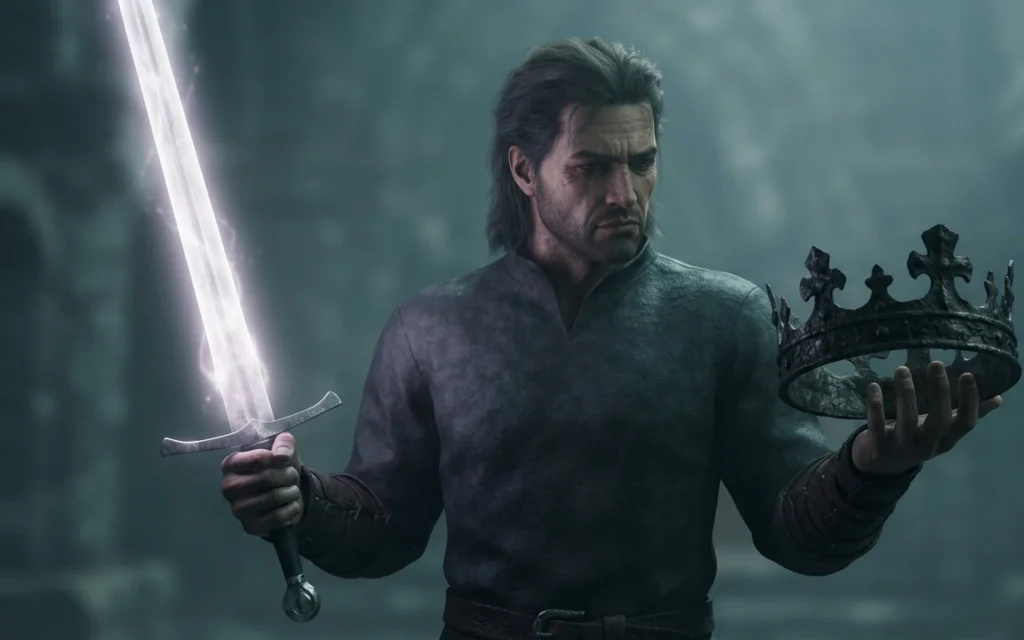
The classic antihero, think of the hardboiled noir detective or the reluctant Western gunslinger, usually still has clean intentions underneath a rough exterior. He’s cynical, unconventional, maybe violent when he shouldn’t be. But his moral compass, once you strip away the attitude, generally points the right direction.
A morally gray hero is a different animal. Their actions include choices that are genuinely wrong, not just unconventional or rough around the edges. The gray isn’t a personality trait layered over a good heart. It’s baked into the actual decisions the character makes on the page.
Not the Same as a Sympathetic Villain
The other confusion worth clearing up: a morally gray hero isn’t simply a villain we’ve been given enough backstory to understand. Sympathetic villains remain antagonists. We understand them, sometimes we even root for their goals, but the narrative still positions them as the force the protagonist must overcome.
A morally gray hero occupies the protagonist’s seat directly. We’re meant to follow them, invest in them, and often want them to succeed, even while they do things that would make us recoil from a real person behaving the same way. That specific tension, rooting for someone while doubting them, is the entire mechanism this article is trying to explain.
Read: 12 Best Dark Fantasy Books 2026: You Should Never Miss Out
The Trouble With Purely Good Heroes
When the Outcome Is Never in Doubt
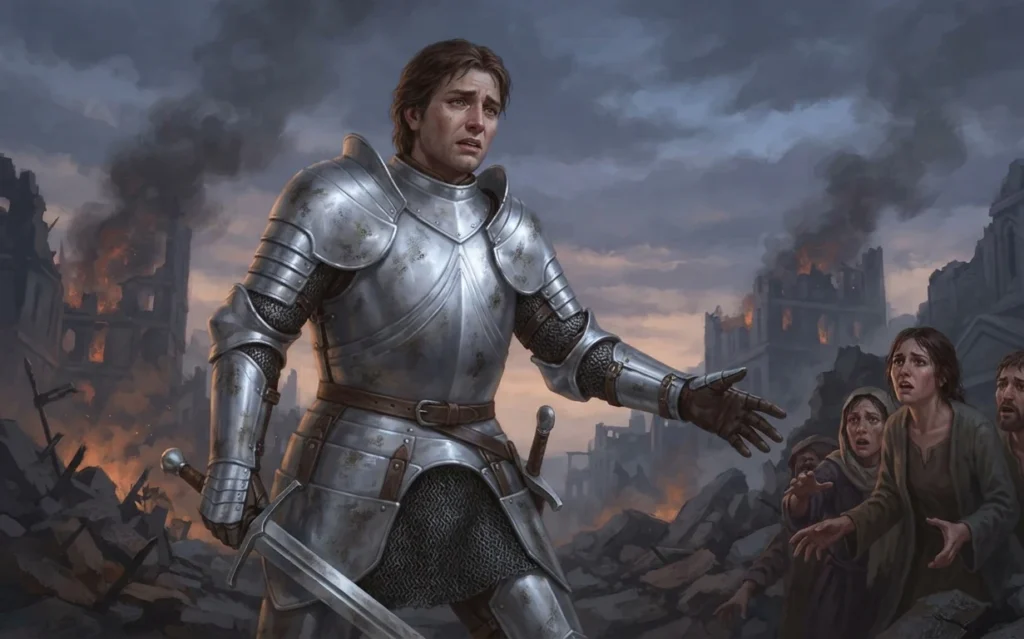
Here’s the practical problem with a hero who’s simply, reliably good: you already know what they’ll do. Faced with a moral dilemma, the good hero chooses the good option, because that’s what good heroes do. The suspense isn’t in the choice. It’s only in the mechanics of how the choice gets executed.
This isn’t a criticism of every clean hero in fiction. Plenty of them are wonderful precisely because of what they represent. But it does explain why they generate a specific kind of narrative energy that’s different from what a morally gray character produces. Predictable virtue is comforting. It is rarely tense.
Virtue Without Cost Doesn’t Move Anyone
The deeper issue is that goodness only means something when it costs the person choosing it. A hero who was never tempted to do otherwise isn’t demonstrating virtue. They’re just following a script they were always going to follow.
A morally gray character who has already done questionable things, who has genuine capacity for more of the same, and who chooses well anyway in a specific moment, gives you virtue that actually costs something. That’s the difference between watching someone be good and watching someone become good, even briefly, against their own established grain.
Read: Is Dark Fantasy Horror? Where the Line Actually Falls
Fiction as a Place to Rehearse Moral Complexity
The Old Argument for Watching Flawed People Choose
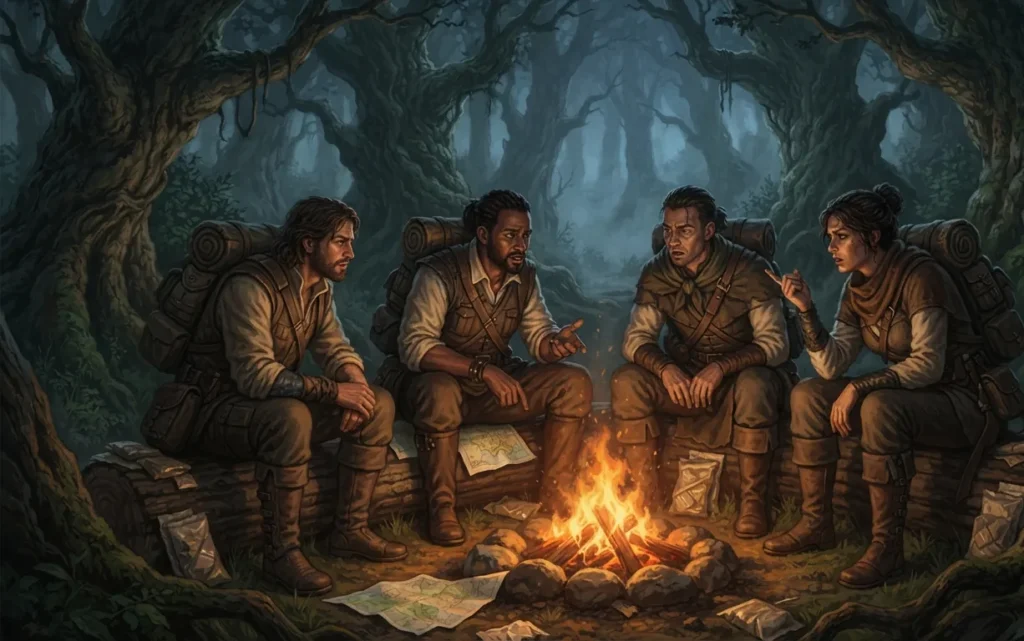
This isn’t a new phenomenon that dark fantasy invented. Aristotle was writing about it in the Poetics more than two thousand years ago when he described catharsis, the purging of pity and fear that tragedy produces in an audience watching a flawed protagonist’s downfall.
Greek tragic heroes weren’t villains and weren’t paragons. Oedipus wasn’t evil. He was proud, quick to anger, and blind to his own situation in exactly the ways that destroyed him. Audiences didn’t watch him to see good triumph. They watched to process, at a safe distance, the terrifying possibility that a person’s own flaws could undo everything they’d built.
Dark fantasy’s morally gray heroes are doing the same job in modern dress. We watch Logen Ninefingers wrestle with the violence inside him because it lets us think about our own capacity for harm without actually causing any.
Real People Don’t Sort Cleanly
There’s also a simpler argument, and it’s the one I find myself returning to most often after two decades of reading. Real people are not simply good or evil. Everyone reading this has made a compromise they’re not proud of, rationalized a choice they knew was wrong, or done something kind for reasons that weren’t entirely selfless.
Fiction that only offers characters who are consistently one thing or the other stops resembling anything true about actual human experience. Dark fantasy readers often specifically want fiction that reflects the moral texture of real life rather than the clean binaries of fairy tale, and morally gray characters are the vehicle for that resemblance.
The Specific Suspense Gray Characters Create
They Can Surprise You in Both Directions
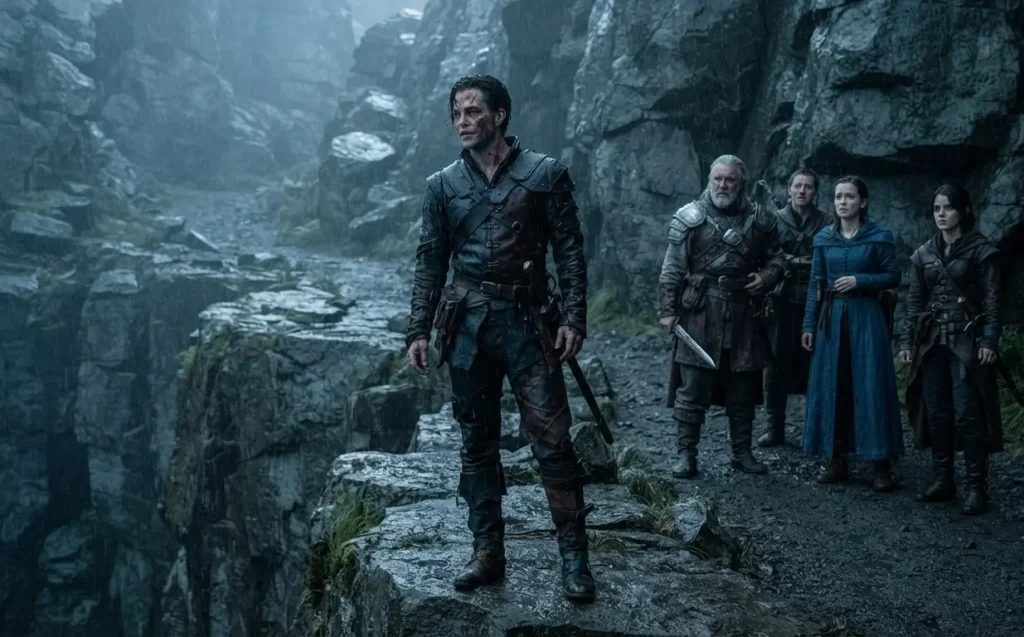
A purely good character can only surprise you by failing, which reads as a betrayal of the story’s premise. A purely evil character can only surprise you by succeeding at cruelty in a new way. Neither surprise is particularly interesting after the first few times.
A morally gray character can genuinely surprise you in either direction. They might do something quietly decent that nobody asked of them, or they might do something devastating that the narrative had been implicitly promising they wouldn’t. That double possibility is what keeps you reading closely instead of coasting on assumed outcomes.
Goodness That’s Earned Hits Harder Than Goodness That’s Assumed
There’s a specific moment that happens repeatedly across the best dark fantasy: a character who has spent hundreds of pages being unreliable, violent, or self-interested does something genuinely selfless, and it lands with a force that the same act from an established hero simply couldn’t achieve.
The reason is straightforward once you see it. We already knew the good hero would do the good thing. We didn’t know the gray character would, and watching them choose it anyway tells us something about who they actually are underneath everything else. That earned quality is worth more, narratively, than assumed virtue ever can be.
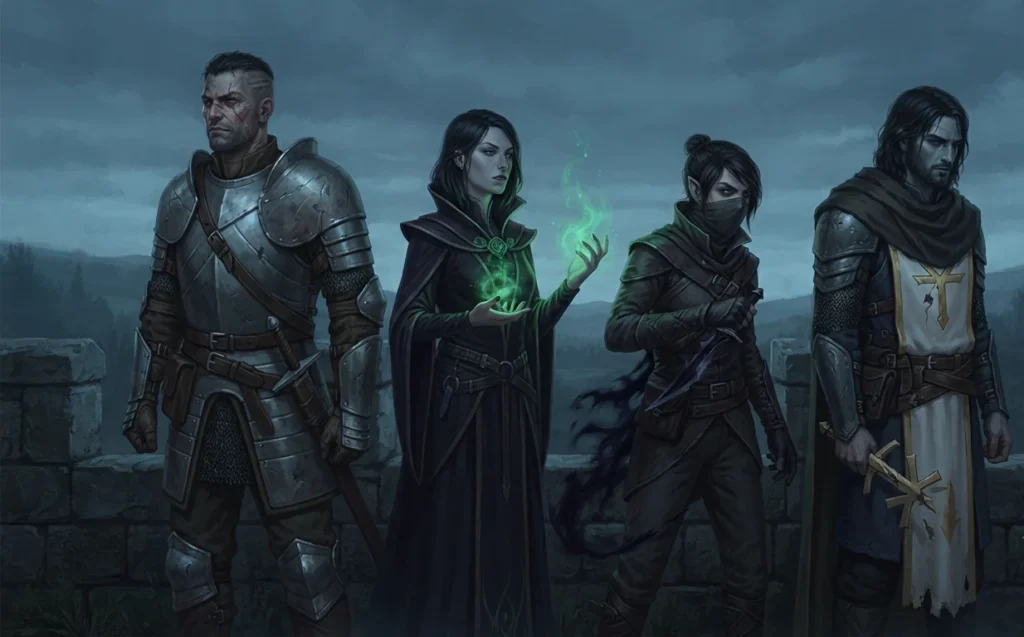
Four Characters Who Show What Gray Actually Looks Like
Logen Ninefingers and the Man He’s Trying Not to Be
Joe Abercrombie’s Logen Ninefingers is the clearest modern case study in morally gray protagonism. He’s killed more people than he can count, some of them in cold blood, and he carries a second, more violent identity, the Bloody-Nine, that surfaces when he loses control.
What makes him gray rather than simply monstrous is the visible effort he makes to be otherwise, an effort that fails often enough that you never fully trust it will hold. You root for him precisely because his goodness is never guaranteed, which makes every small kindness he manages feel like it actually cost him something.
Geralt of Rivia and the Code That Costs Him Everything
Andrzej Sapkowski’s Geralt operates by a specific, self-imposed code of neutrality, a witcher doesn’t take sides in human conflicts. But the code repeatedly fails him, forcing him into choices where neutrality itself becomes a moral failure, and where his attempts at strict impartiality cost people he cares about.
Geralt is gray not because he does obviously bad things but because his moral framework is genuinely incomplete, and watching him discover its limits across multiple stories is more compelling than watching a character who already has all the answers.
Locke Lamora and Loyalty Built on Lies
Scott Lynch’s Locke is a professional con man and thief who has built his entire adult identity around deception. Nearly everything he does to people outside his immediate circle involves manipulation, theft, or outright fraud, conducted with real skill and real enjoyment.
What makes him gray rather than simply a charming rogue is the genuine cost his profession exacts from the people he loves, and the fact that his loyalty to his found family is completely real even while his relationship with everyone else is built on lies. Both things are true simultaneously, and the novel never resolves the tension between them.
Jorg Ancrath and How Far Gray Can Stretch Before It Breaks
Mark Lawrence’s Jorg is the edge case worth including specifically because he shows where gray starts to become something else. He’s a genuinely dangerous, sociopathic thirteen year old prince, fully aware of what he is, who narrates his own atrocities without much apology.
Many readers find him too far across the line to qualify as gray at all, closer to a villain protagonist than a morally complex hero. I think that reaction is legitimate and worth taking seriously. Jorg is useful precisely because he marks the boundary: past a certain point, moral complexity stops functioning as gray and starts functioning as something the reader has to decide whether they’re willing to sit with at all.
This Isn’t Universal, and That’s Fine
Readers Who Want Clear Heroes Aren’t Wrong
I want to be honest here rather than pretend morally gray heroes are simply the more sophisticated choice. Plenty of excellent readers, and plenty of excellent fiction, prefer heroes whose goodness is stable and reliable, because that stability does something valuable too.
A clean hero can represent an aspiration rather than a mirror. Reading about someone who consistently chooses well, even when it costs them, can be genuinely inspiring in a way that gray protagonism, with its constant uncertainty, doesn’t easily replicate. Both preferences are legitimate responses to what fiction is actually for.
Why Dark Fantasy Specifically Needs This
Dark fantasy as a genre promises unflinching engagement with violence, consequence, and moral difficulty. A purely good protagonist inside that kind of world creates a specific tonal mismatch: either the world isn’t actually dark enough to threaten someone that clean, or the character feels unrealistically insulated from the moral weight everyone around them is supposedly carrying.
Morally gray heroes solve this mismatch directly. They belong to the world the genre has built because they’re made of the same compromised material as everyone else in it. That’s not darkness for its own sake. It’s simply consistency between the world an author builds and the people who are asked to survive inside it.
Frequently Asked Questions
What does morally gray actually mean in fiction?
A morally gray character makes choices that include genuinely questionable or wrong actions, not just unconventional methods or a rough personality. Unlike a classic antihero, whose intentions usually remain good underneath a difficult exterior, a gray character’s actual decisions carry real moral weight in both directions.
Is a morally gray hero the same thing as an antihero?
Not quite. Antiheroes typically retain fundamentally good intentions despite unconventional methods or cynical attitudes. Morally gray heroes make choices that are genuinely wrong, not merely rough around the edges. The distinction is about the actual content of decisions, not just personality or tone.
Why do readers trust morally gray characters more than pure heroes?
Because their goodness, when it appears, is never guaranteed and therefore actually costs something. A character who was always going to choose well isn’t demonstrating virtue in any meaningful sense. A gray character choosing well despite real capacity for otherwise carries genuine narrative weight.
Can a morally gray character be redeemed over the course of a story?
Yes, and this arc is common across dark fantasy. The redemption tends to land harder than a straightforward hero’s growth because the character had genuine, demonstrated capacity to go the other way. Their eventual goodness feels earned rather than assumed from the start.
Does every dark fantasy protagonist need to be morally gray?
No. Some of the genre’s most effective stories pair a morally gray world with a more straightforwardly good protagonist, using the contrast deliberately. What matters is internal consistency between the world an author builds and the moral texture of the people who survive inside it.
Final Thoughts
My reading habit has left me with one fairly stubborn conviction: fiction that only offers pure heroes or pure villains is telling you something incomplete about what people actually are.
Logen wrestling with the Bloody-Nine, Geralt discovering his code has limits, Locke lying to everyone except the people who matter most, even Jorg forcing you to decide how much darkness you’re willing to sit with, all of it is doing the same fundamental work that Greek tragedy was doing millennia earlier. Showing us people who could go either way, and letting us watch, from a safe distance, which way they actually go.
That’s not a taste for darkness. That’s a taste for truth dressed in armor and violence instead of a toga.
Further Reading & References
- Poetics – Aristotle
- The Rhetoric of Fiction, Booth
- Love’s Knowledge: Essays on Philosophy and Literature | Oxford Academic
- Empathy and the Novel | Oxford Academic
- Rhetorics of Fantasy – Wesleyan University Press
- The Encyclopedia of Fantasy – John Grant, John Clute
- Strategies of Fantasy – Attebery, Brian
- The Hero with a Thousand Faces – Joseph Campbell
- The Writer’s Journey: Mythic Structure for Writers – Christopher Vogler
Related Articles
- Grimdark vs Dark Fantasy: Are They One & The Same
- Why Every Great Dark Fantasy Needs a Cursed Kingdom
- How to Build a Dark Fantasy World That Actually Disturbs
- Dark Fantasy vs Gothic Fantasy: Where’s the Line?
- How Norse & Greek Mythology Built Modern Dark Fantasy
- How Dark Fantasy Creates Dread Without Horror’s Tricks
- 7 Dark Fantasy Tropes That Make The Genre Work