
 By
By Quick Takeaways:
- These fifteen fantasy creatures span mythological traditions from China to Ireland to the Himalayas, and each has documented cultural roots rather than being a modern invention
- Several creatures on this list are frequently misunderstood or flattened in popular culture compared to their original mythological complexity
- The list deliberately balances the famous (dragons, unicorns) with the culturally significant but less globally known (naga, kitsune, banshee)
- Fantasy fiction draws on all fifteen constantly, but the source mythology is almost always richer than the fictional adaptation lets on
- Understanding where these creatures actually come from changes how you read fantasy, folklore, and cultural history simultaneously
I find it very intriguing when a familiar fantasy creature turns out to have a documented history far stranger and more specific than its pop culture version suggests.
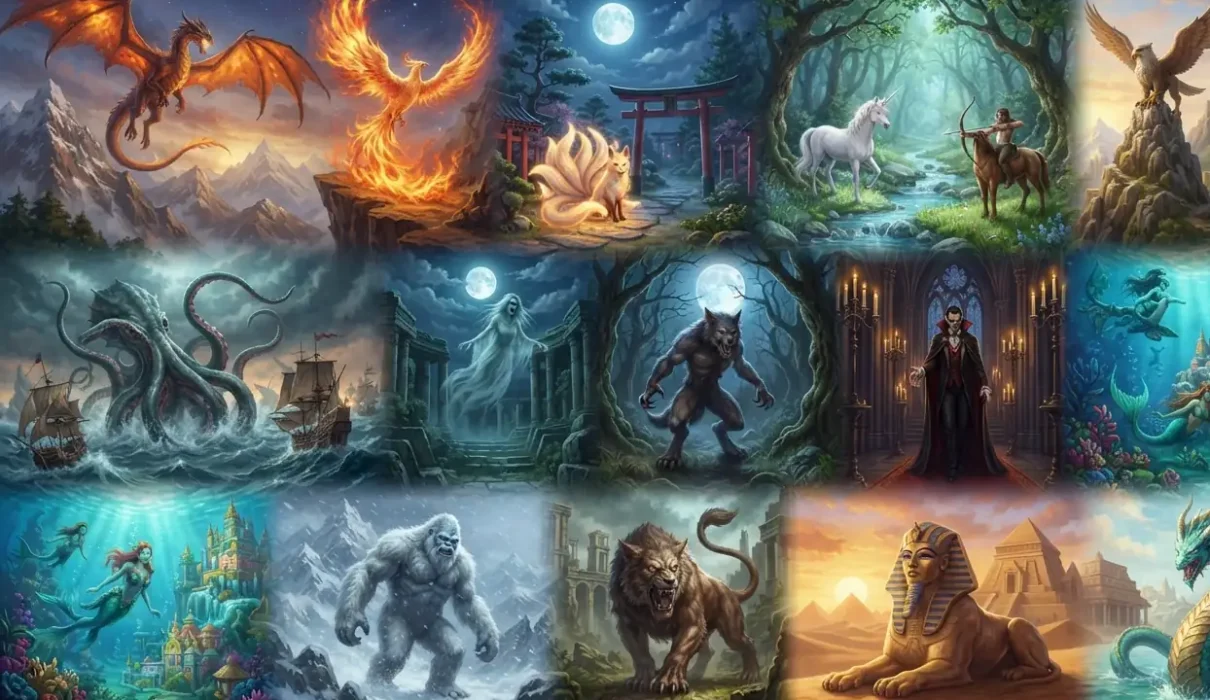
This list gathers fifteen of the most iconic creatures in world mythology, the ones that fantasy fiction returns to again and again. Each one comes from a real, traceable tradition. None of these are internet inventions dressed up as folklore.
Dragon
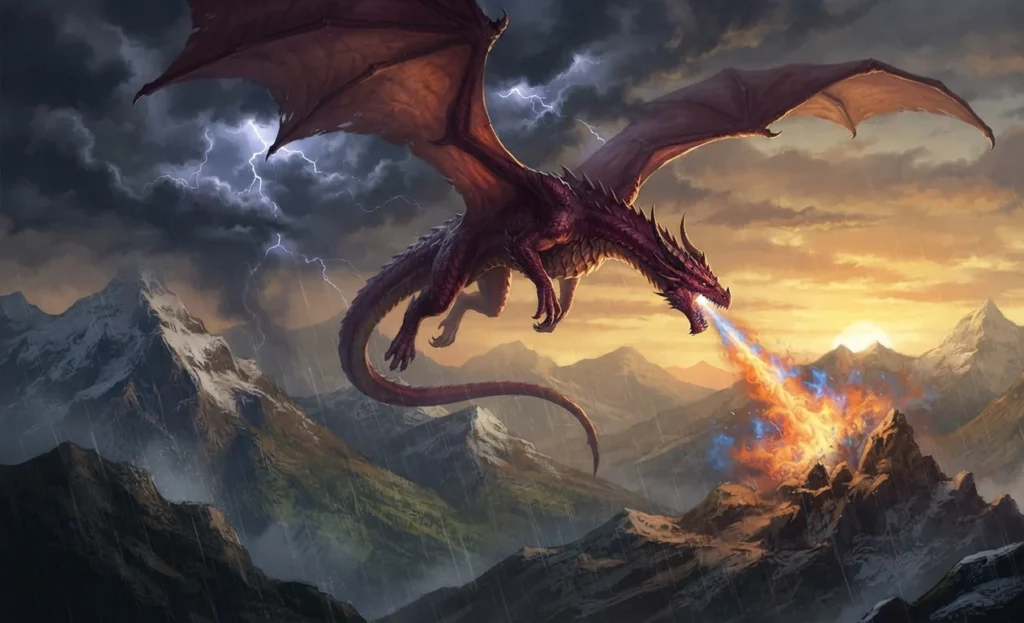
Dragons appear independently across nearly every major civilization, and the versions differ enormously. The Chinese Long is a benevolent, serpentine, water-governing cosmic being tied to rain, rivers, and imperial authority. The Western dragon of medieval European tradition is typically a four-legged, fire-associated hoarder of treasure, closer to an adversary than a divine figure.
Japanese and Korean dragon traditions sit somewhere between these, shaped by both indigenous belief and centuries of Chinese cultural influence. What unites all these traditions is scale: the dragon is consistently the largest and most cosmically significant creature in whichever mythology produced it.
No other fantastic being appears with this much independent cross-cultural consistency, which is part of why dragons remain fantasy fiction’s most reliable centerpiece.
Read: Why Dragons Took Over Romantasy, Thanks to Fourth Wing?
Kitsune
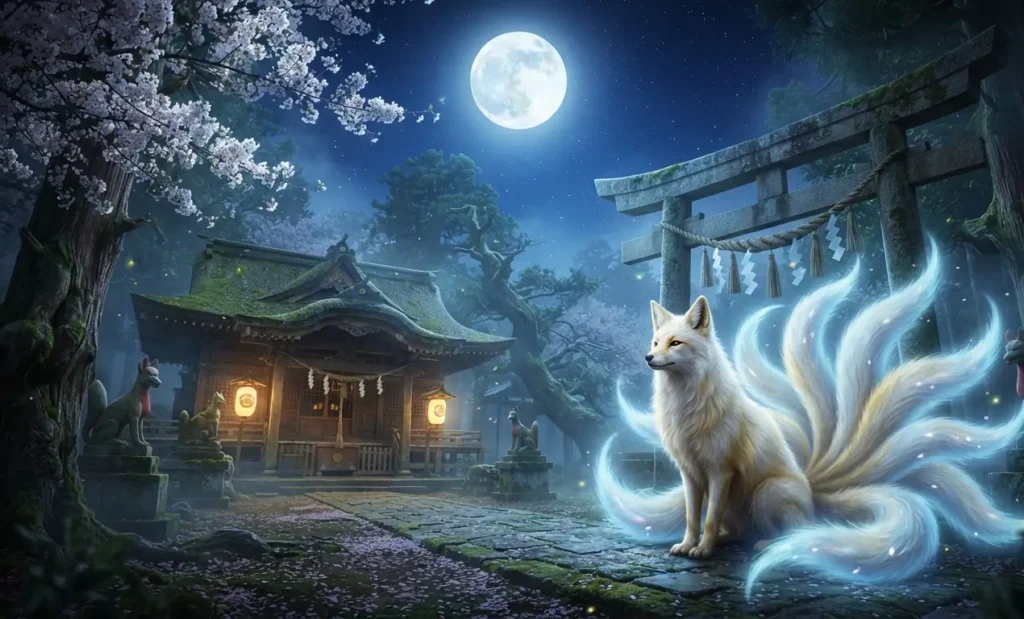
The kitsune, the fox spirit of Japanese folklore, is one of mythology’s most genuinely ambiguous figures. A kitsune can be a messenger of Inari, the Shinto deity of rice and prosperity, appearing as a benevolent guardian at shrines throughout Japan.
It can also be a trickster capable of shapeshifting into human form, most often a beautiful woman, to deceive or seduce unsuspecting travelers.
Classical accounts describe kitsune gaining additional tails as they age and accumulate power, with the most powerful reaching nine tails and achieving something close to divine status. The fox statues you’ll see guarding Inari shrines across Japan aren’t decorative. They represent this genuine and still-active religious tradition, distinct from the folkloric trickster stories that circulate alongside it.
Phoenix
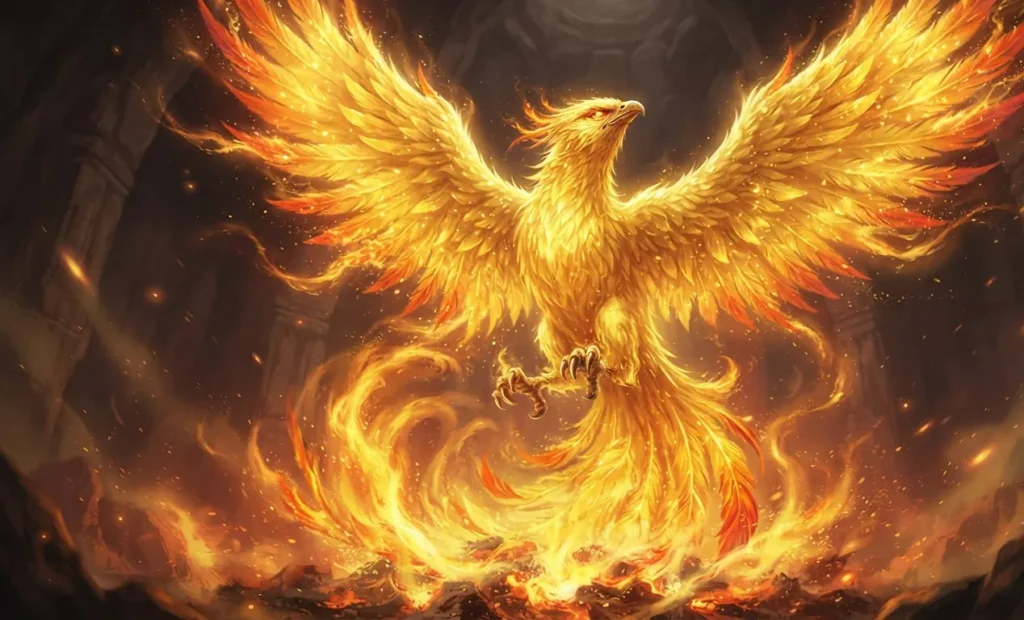
The phoenix of Greek and Egyptian tradition is distinct from the Chinese Fenghuang, despite sharing an English translation. This phoenix is specifically a bird of resurrection: it lives for centuries, builds its own funeral pyre, is consumed by fire, and rises reborn from its own ashes.
Herodotus, writing in the fifth century BCE, describes an Egyptian account of the bird, associating it with Heliopolis and a cycle tied to the sun. The Greek and later Roman traditions developed this into the more familiar cyclical death and rebirth narrative that Western culture still uses as shorthand for renewal after devastation.
It’s one of mythology’s clearest examples of a single symbolic idea. Death producing new life, given a specific and enduring animal form.
Unicorn
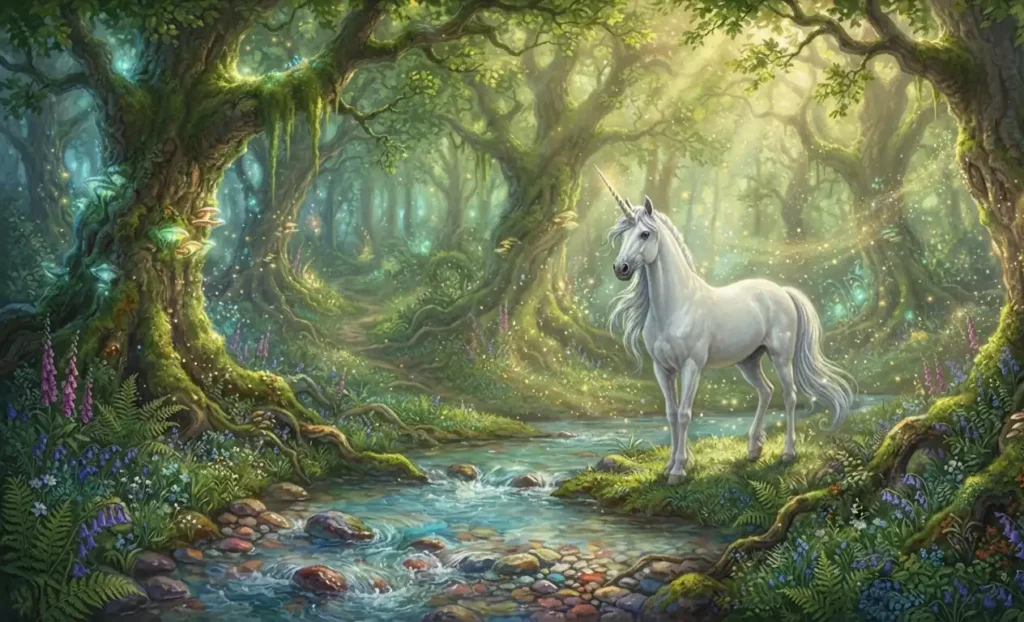
The unicorn’s documented history is stranger than its modern image as a gentle, rainbow-adjacent symbol suggests. Ancient Greek writers, including Ctesias in the fifth century BCE, described the unicorn as a real animal native to India, a wild ass with a single horn possessing medicinal properties, information likely garnered from travelers’ accounts of the rhinoceros.
Medieval European tradition transformed the creature into something considerably more symbolic: a being of extraordinary purity that could only be tamed by a virgin, its horn believed capable of detecting or neutralizing poison. This purity association made the unicorn a common allegorical figure in medieval Christian art, representing Christ in some interpretive traditions.
The gentle, approachable unicorn of contemporary imagery is a fairly recent softening of a creature that medieval sources treated as wild, dangerous, and difficult to capture.
Griffin
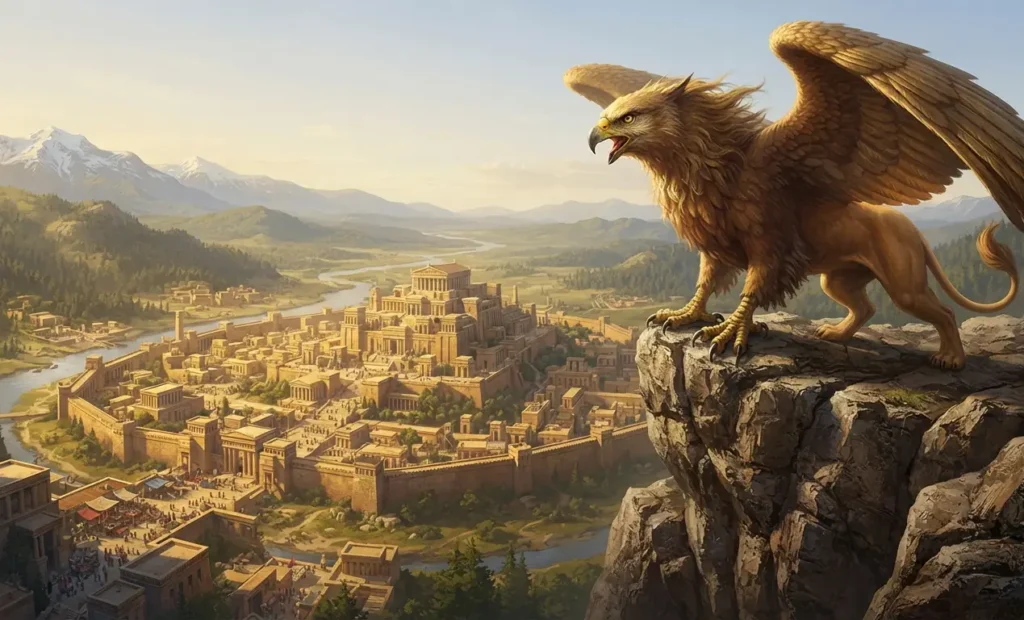
The griffin, combining a lion’s body with an eagle’s head and wings, appears across ancient Near Eastern, Persian, and Greek art long before it entered medieval European heraldry.
Herodotus and other classical sources describe griffins as guardians of gold in the far northern regions, locked in perpetual conflict with a one-eyed people called the Arimaspians who tried to steal their treasure.
Adrienne Mayor, a historian of ancient science, has proposed that the griffin legend may partly derive from ancient encounters with Protoceratops fossils in Central Asia, whose beaked skulls and quadrupedal build bear a genuine resemblance to griffin depictions.
The griffin’s combination of the king of beasts and the king of birds made it a natural symbol of strength and vigilance, which is why it became such a popular heraldic figure representing guardianship and courage.
Kraken
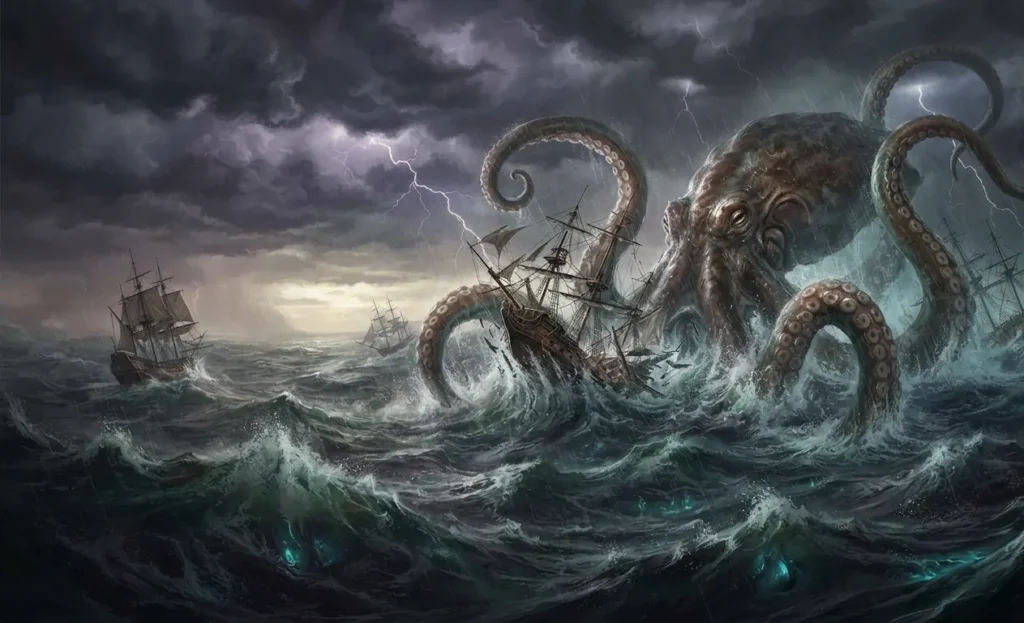
The kraken comes from Scandinavian maritime folklore, first appearing in written form in Norwegian and Icelandic sources describing an enormous sea creature capable of dragging entire ships beneath the waves. The Norwegian bishop Erik Pontoppidan gave one of the most detailed eighteenth-century descriptions, portraying the kraken as so massive that sailors sometimes mistook its back for an island.
Modern marine biology has offered a compelling partial explanation: the giant squid, a genuinely enormous deep-sea creature largely unknown to science until the nineteenth century, matches many kraken accounts closely enough that most scholars consider it the biological root of the legend.
The kraken remains one of the clearest examples of a real, if rarely seen, animal generating a mythology far larger than the animal itself.
Banshee
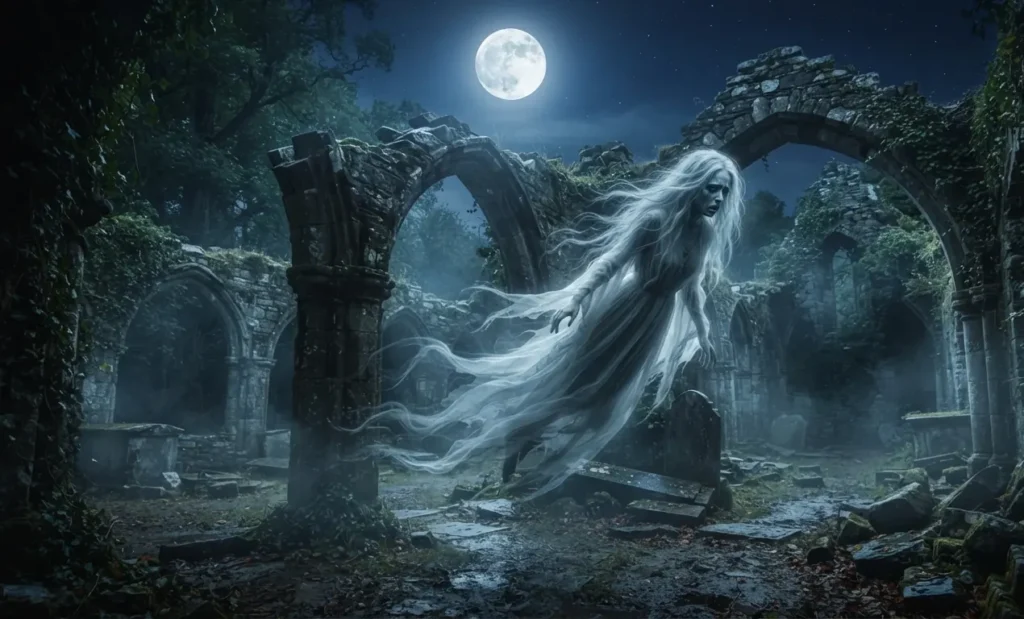
The banshee, from Irish folklore, is a female spirit whose keening wail is said to herald an impending death in a family. The name derives from the Irish bean sí, meaning woman of the fairy mound, tying the creature directly to the broader Irish tradition of the sídhe, the fairy folk believed to inhabit ancient burial mounds and hills.
Traditional accounts describe the banshee as attached to specific Irish families, particularly those descended from the ancient Gaelic nobility, appearing before a death rather than causing one.
She is a herald rather than an executioner, which distinguishes her from many other death-associated folkloric figures across world mythology. The image of a wailing, often unseen woman whose cry alone carries the news has made the banshee one of Irish folklore’s most internationally recognized exports.
Werewolf
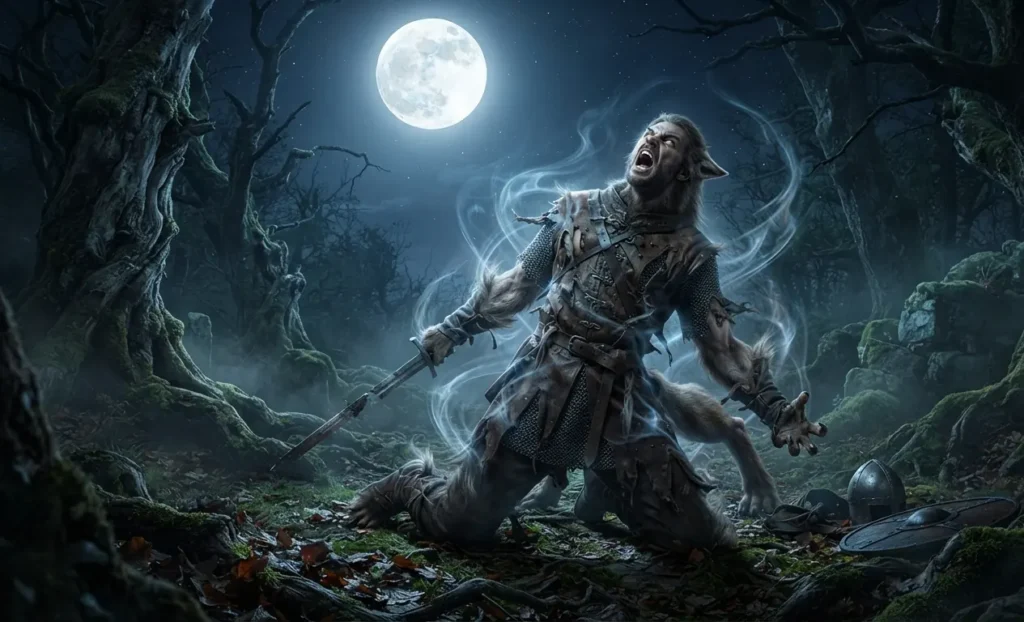
The werewolf, a human capable of transforming into a wolf, has documented roots stretching back to ancient Greek mythology, most notably the story of Lycaon, a king transformed into a wolf by Zeus as punishment for serving him human flesh. This myth is the origin of the term lycanthropy.
Medieval European folklore developed the werewolf considerably further, often connecting the transformation to a curse, a pact with dark forces, or a hereditary condition.
Actual werewolf trials occurred across parts of early modern Europe, particularly in France and Germany during periods of intense witchcraft persecution, with individuals confessing, sometimes under torture, to wolf transformation and associated crimes.
The werewolf’s persistence in fiction reflects a genuinely old and geographically widespread human fascination with the boundary between civilized humanity and predatory animal nature.
Vampire
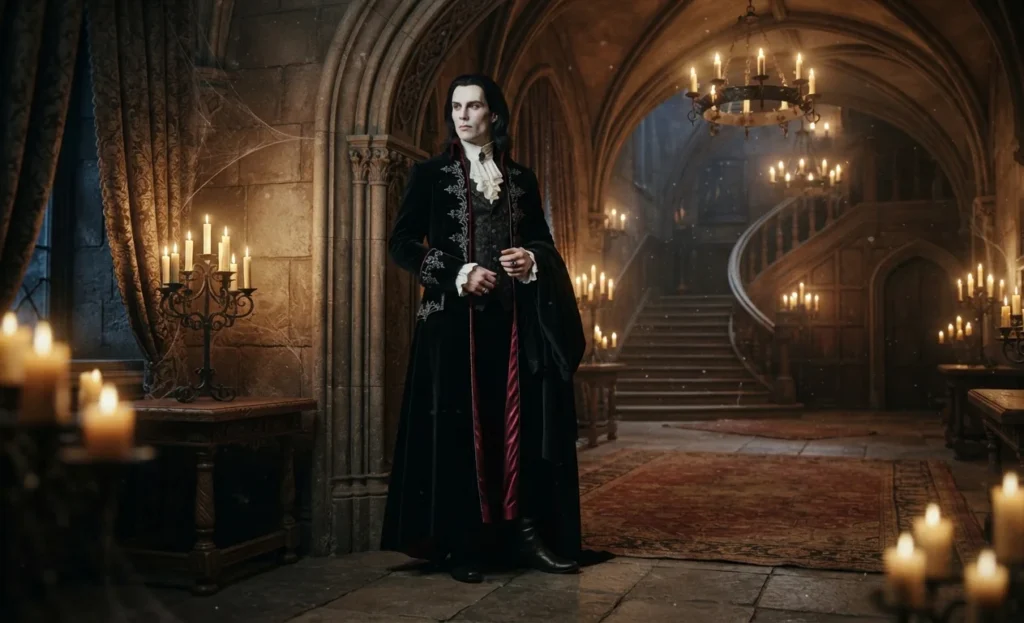
The vampire as a specific folkloric category developed most prominently in Balkan and Eastern European Slavic traditions, where corpses believed to be reanimated and feeding on the living generated widespread documented panics, particularly during the eighteenth century.
These early folkloric vampires bear little resemblance to the aristocratic, seductive figure popularized by Bram Stoker’s Dracula in 1897. Historical accounts describe bloated, ruddy-faced corpses associated with disease outbreaks, exhumed and staked or decapitated by frightened communities trying to stop what they understood as an ongoing supernatural threat to public health.
The 1725 Serbian case of Peter Plogojowitz is among the most thoroughly documented historical vampire panics, generating official reports that survive today. Stoker’s literary version, and everything descended from it, represents a considerable transformation of a folk belief rooted in genuine communal fear during epidemic disease outbreaks.
Centaur
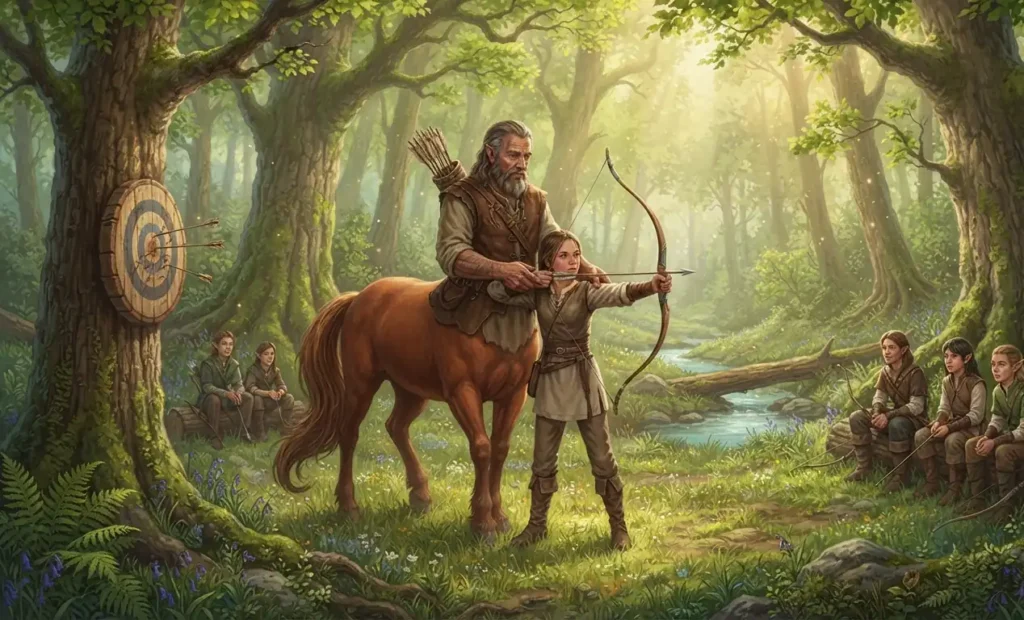
The centaur, half human and half horse, is a distinctly Greek mythological invention, appearing throughout Greek art and literature from the archaic period onward.
Most centaurs in myth are depicted as wild, impulsive, and prone to violence, especially when exposed to wine, as in the famous battle between the Lapiths and centaurs at a wedding feast.
Chiron stands as the great exception. Wise, learned, and the tutor of numerous Greek heroes including Achilles and Jason, Chiron represents a deliberate contrast to the chaotic centaur stereotype his kind otherwise embodies. Some classical sources attribute this difference to his distinct parentage, born of the Titan Cronus rather than the centaur race’s more disreputable origin.
The centaur’s enduring appeal lies in this specific tension: a being whose animal half is understood as a genuine threat to the rational human half it’s fused with.
Merfolk

Mermaids and mermen appear across an enormous range of independent traditions: Assyrian and Babylonian accounts of the fish-tailed deity Atargatis, Greek sirens (originally bird women rather than fish-tailed, though later conflated with mermaids), Scottish and Irish selkies who shed sealskins to become human, and West African and Caribbean water spirits including Mami Wata.
What unites these otherwise distinct traditions is the merfolk’s consistent association with the genuine danger and unpredictability of the sea, and with a boundary between human and animal, land and water, that the merfolk’s body itself embodies.
Sailors’ folklore frequently attributes actual manatee and dugong sightings to mermaid encounters, a proposed origin that, while probably only a partial explanation, reflects how real maritime observation and imaginative storytelling reinforced each other across centuries of seafaring cultures worldwide.
Yeti
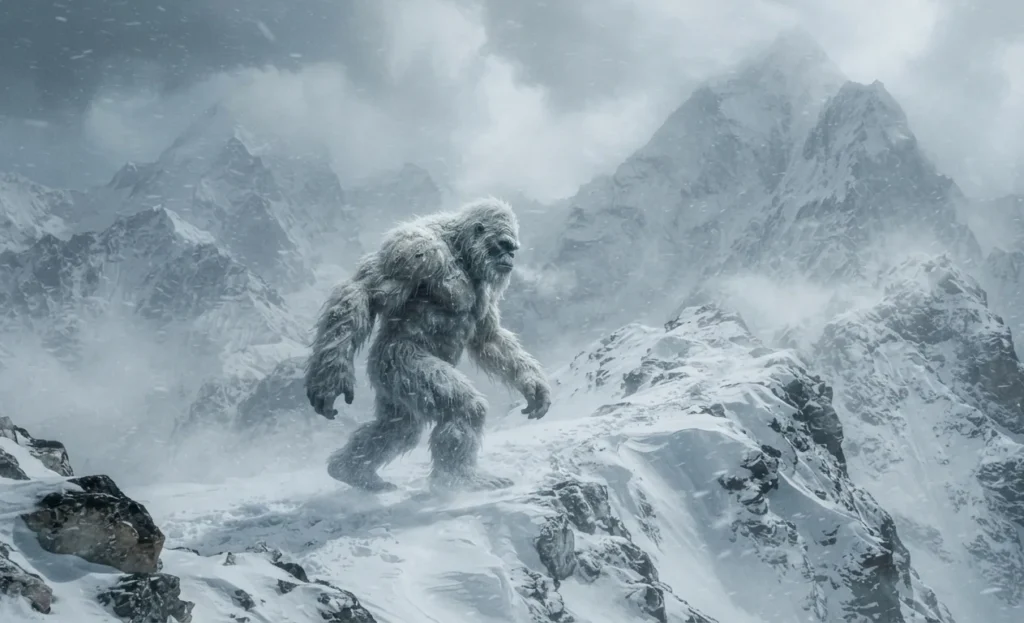
The yeti, the ape-like cryptid of Himalayan folklore, holds a documented place in Sherpa and Tibetan oral tradition long before Western mountaineering expeditions popularized the creature internationally during the twentieth century.
Local tradition describes multiple distinct types of yeti-like beings, differentiated by size, diet, and behavior, rather than a single uniform creature.
Western interest intensified significantly after 1921, when British mountaineer Charles Howard-Bury reported finding large footprints during an Everest reconnaissance expedition, a sighting that entered global popular consciousness through subsequent press coverage.
Genetic testing of alleged yeti hair and remains conducted in recent decades has consistently matched known bear species, though the tradition’s cultural significance in the region long predates and exists independently of these Western scientific investigations.
Chimera
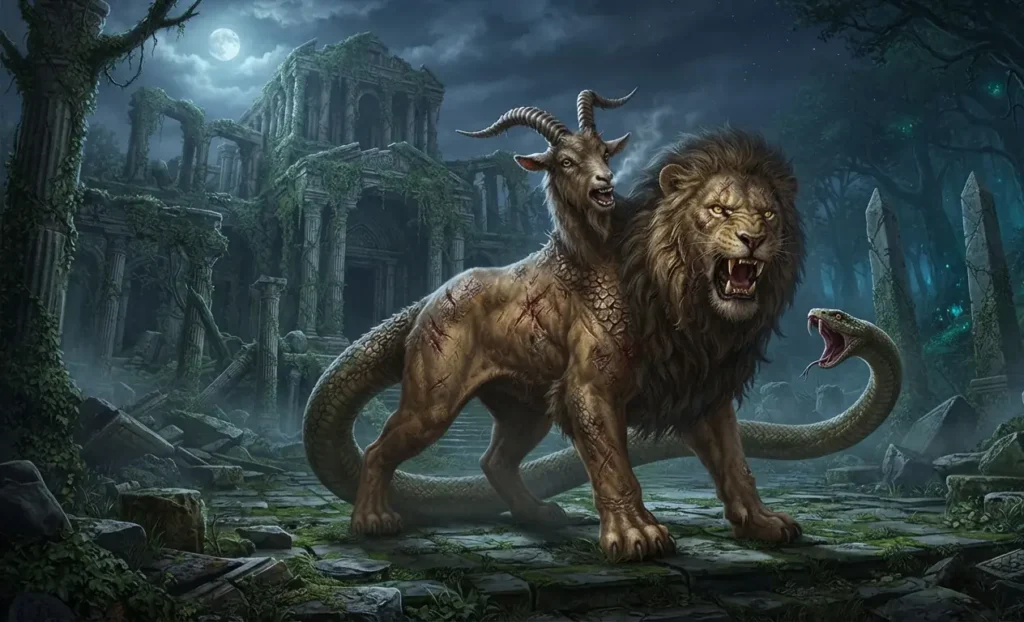
The chimera, from Greek mythology, is described in Homer’s Iliad as a fire-breathing composite creature with a lion’s head, a goat’s body, and a serpent’s tail, born of the monstrous Typhon and Echidna. It was eventually slain by the hero Bellerophon riding the winged horse Pegasus, one of Greek mythology’s most enduringly depicted heroic battles in ancient art.
The chimera’s name has since entered scientific and everyday vocabulary to describe any hybrid or composite organism, a testament to how thoroughly the original mythological image embedded itself in Western conceptual language.
Ancient Greek sources sometimes connected the chimera myth to real volcanic phenomena in Lycia, in modern-day Turkey, where flames were said to emerge naturally from the ground, suggesting the myth may have grown partly from an attempt to explain a genuine geological feature.
Sphinx
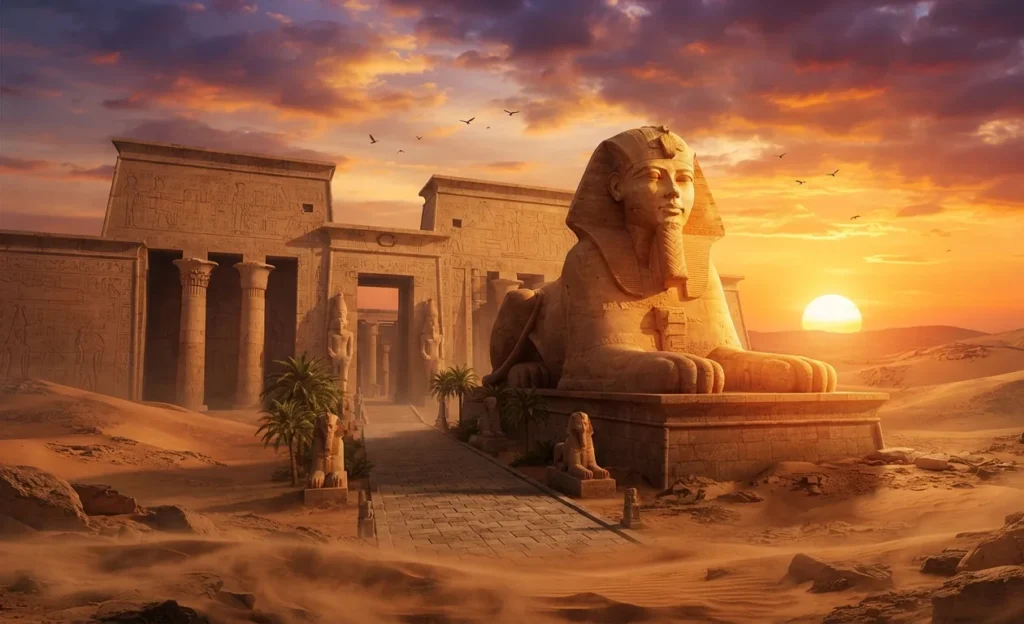
The sphinx appears in both Egyptian and Greek tradition with meaningfully different characters. The Egyptian sphinx, most famously the Great Sphinx of Giza, is typically a benevolent guardian figure, usually male, associated with royal authority and protective strength positioned at temple and tomb entrances.
The Greek sphinx is a considerably more dangerous figure: a winged, female creature who terrorized Thebes by posing a riddle to travelers and killing those who failed to answer correctly. Oedipus’s successful solution to her riddle, in the story most famously dramatized by Sophocles, caused the Greek sphinx to destroy herself.
This is one of mythology’s clearest examples of the same core image, a human-animal hybrid guarding a threshold, developing into genuinely opposite characters within two related but distinct cultural traditions.
Naga
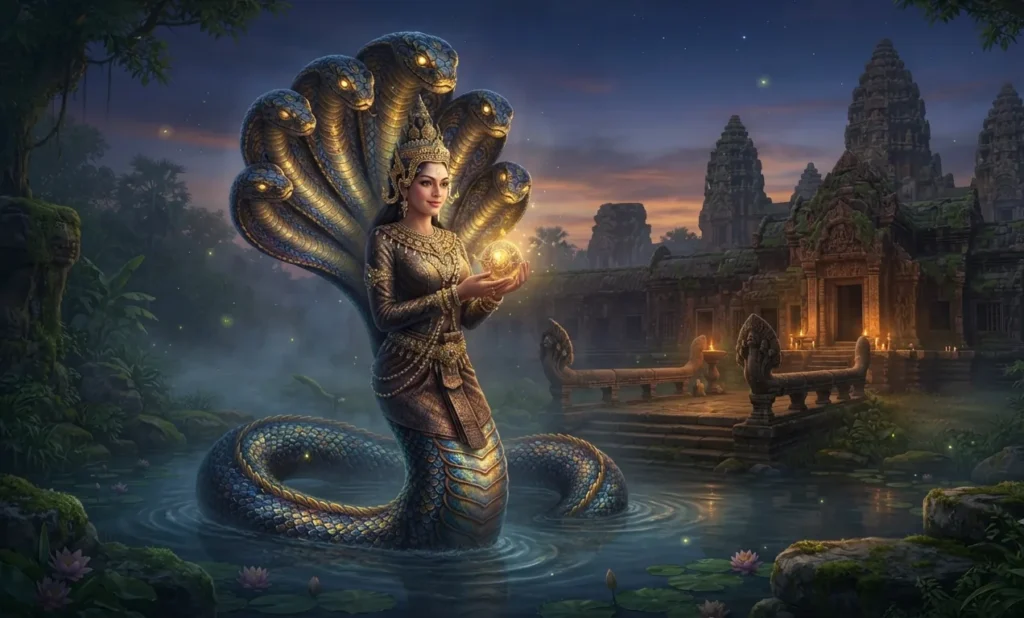
The naga, a serpent deity central to Hindu and Buddhist mythology across South and Southeast Asia, occupies a role considerably more significant and more benevolent than most Western readers realize. Nagas are typically powerful, semi-divine beings associated with water, fertility, and the protection of treasure, capable of taking human form and frequently depicted with royal dignity rather than menace.
In Buddhist tradition, the naga king Mucalinda is said to have sheltered the Buddha from a storm during his meditation, coiling his body around the Buddha and raising his hood above him like a canopy, an image reproduced constantly across Southeast Asian Buddhist art.
Naga imagery appears extensively throughout Cambodian, Thai, and Indonesian temple architecture, where naga balustrades line the approaches to major religious sites including Angkor Wat, reflecting the creature’s status as protector of sacred space rather than as a monster to be defeated.
Quick Reference Table
| Creature | Origin | Core Trait | Documented Since |
|---|---|---|---|
| Dragon | Global, multiple independent traditions | Scale and cosmic significance | Ancient (varies by culture) |
| Kitsune | Japan | Shapeshifting fox spirit | Classical Japanese texts |
| Phoenix | Greece and Egypt | Death and rebirth | 5th century BCE (Herodotus) |
| Unicorn | Greece, medieval Europe | Purity, single horn | 5th century BCE (Ctesias) |
| Griffin | Near East, Persia, Greece | Treasure guardian | Ancient Near East |
| Kraken | Scandinavia | Ship-destroying sea beast | Medieval Norse sources |
| Banshee | Ireland | Death omen wail | Medieval Irish folklore |
| Werewolf | Greece, medieval Europe | Human to wolf transformation | Ancient Greek myth (Lycaon) |
| Vampire | Balkans, Eastern Europe | Reanimated corpse | 18th century documented panics |
| Centaur | Greece | Human and horse hybrid | Archaic Greek art |
| Merfolk | Global, multiple traditions | Human and fish/seal hybrid | Ancient Mesopotamia onward |
| Yeti | Himalayas | Ape-like mountain being | Sherpa and Tibetan oral tradition |
| Chimera | Greece | Fire-breathing hybrid | Homer’s Iliad |
| Sphinx | Egypt and Greece | Riddle guardian | Ancient Egyptian and Greek sources |
| Naga | South and Southeast Asia | Serpent deity, protector | Hindu and Buddhist scripture |
Frequently Asked Questions
Which of these creatures has the oldest documented origin?
The sphinx and dragon both have extremely ancient roots, with Egyptian sphinx imagery and Chinese dragon imagery both traceable to at least the third millennium BCE. Precise dating across different cultures makes a single definitive answer difficult, but these two are consistently among the oldest documented mythological creatures worldwide.
Is the modern vampire accurate to the original folklore?
Not particularly. Original Balkan and Slavic vampire folklore described bloated, disease-associated reanimated corpses rather than the elegant, seductive aristocrat popularized by Bram Stoker’s Dracula in 1897. The folkloric vampire emerged from genuine communal fear during epidemic outbreaks rather than from romantic or gothic literary tradition.
Why do dragons appear in almost every culture independently?
Scholars propose several explanations, including a shared evolutionary fear response to composite predator features, ancient discoveries of large fossil bones interpreted as dragon remains, and the psychological appeal of a creature representing maximum natural power. No single explanation is universally accepted, but the cross-cultural consistency is well documented.
Are nagas the same as Western dragons?
They’re related but distinct. Nagas are specifically serpent deities central to Hindu and Buddhist religious tradition, typically benevolent and associated with water and protection. While nagas share some symbolic territory with dragons, particularly the Chinese Long, they belong to a separate South and Southeast Asian religious and mythological framework.
Which creature on this list is most frequently misunderstood in popular culture?
The unicorn has undergone perhaps the most significant transformation, from a wild, dangerous animal in ancient and medieval sources to a gentle, whimsical modern symbol. The kitsune and naga are also commonly flattened into simpler good or evil roles that don’t reflect their actual mythological complexity and ambiguity.
Final Thoughts
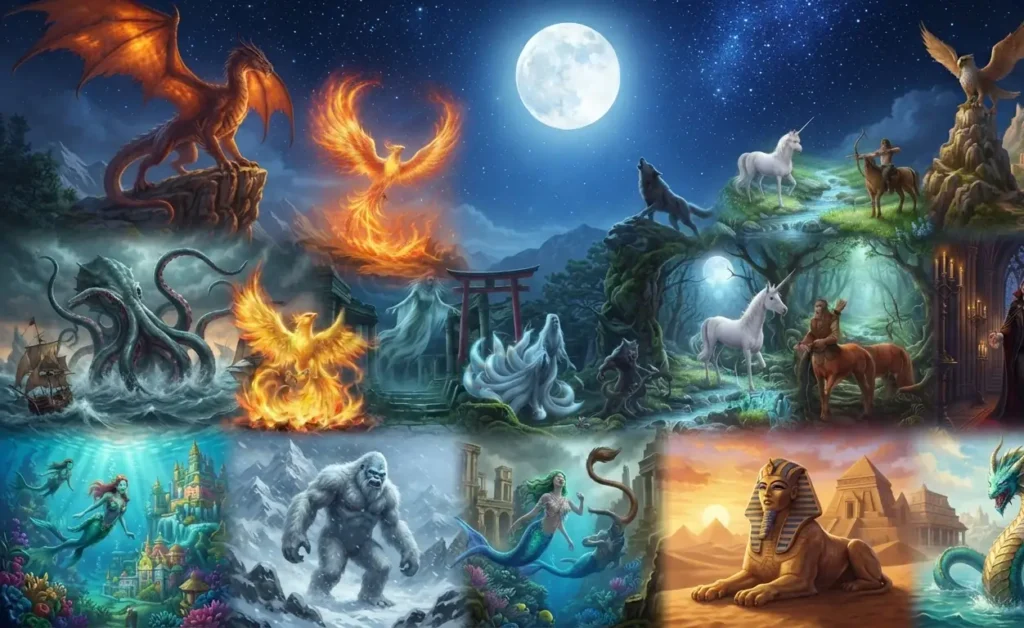
Fifteen creatures. Fifteen different cultures, each contributing something to humanity’s shared vocabulary for the impossible.
What strikes me most after spending enough time with this material is how consistently the original sources are stranger, older, and more specific than the popular versions suggest.
The unicorn was wild before it was gentle. The vampire was a plague-ridden corpse before it was an aristocrat. The naga was a protector of sacred space long before Western fantasy ever borrowed the word dragon to describe something similar.
Fantasy fiction will keep reaching for these figures, and it should. But the mythology underneath is worth knowing on its own terms, because it’s almost always richer than what made it into the story you read last.
Source & References
- The Book of Imaginary Beings – Jorge Luis Borges
- The Oxford Companion to World Mythology – David Leeming
- Giants, Monsters, and Dragons – Carol Rose
- Herodotus – Histories
- Homer – The Iliad
- Sophocles – Oedipus Rex
- Michael Dylan Foster – The Book of Yokai
- Adrienne Mayor – The First Fossil Hunters
- Katharine Briggs – An Encyclopedia of Fairies
- John Dowson – A Classical Dictionary of Hindu Mythology and Religion
Related Articles
- Dragon Mythology: How Dragons Are Depicted Across Cultures
- Why Fantasy is More Popular Than Ever Backed By Data
- 13 Overlooked Dragon Books Worth Reading in 2026
- Why Dragons Are The Most Beloved Fantasy Creatures
- Why Dragons Are Almost the Perfect Mythological Creature
- 9 Dark Fantasy Creatures That Turn Familiar Into Fear
- 15 Elemental Dragon Types in Fantasy: Fire, Ice & Beyond
- How Great Fantasy Writers Adapt Mythology Without Stealing
- 9 Fantasy Creatures Authors Invented From Scratch
Written by Batin Khan, a curious free spirit who loves reading and exploring the worlds of fantasy, mythology, and ancient stories. Through this blog, Batin hopes to share that sense of wonder with readers while building an exciting future along the way.