
 By
By Most of what I write about on this blog traces fantasy creatures back to real mythology, a dragon back to Fafnir, a phoenix back to Fenghuang.
This list runs the opposite direction. Nine Fantasy monsters, invented by specific, identifiable authors, and I want to be honest upfront that from scratch turns out to be a harder claim to fully defend than it sounds.
Tolkien’s Ents
The Word Existed. The Creature Didn’t.
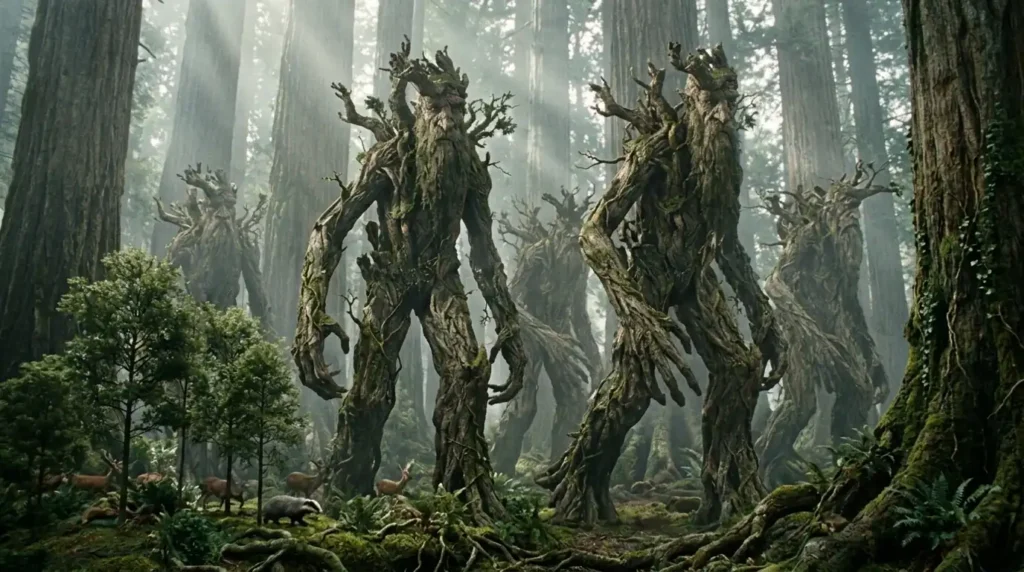
Old English has a real word, eoten, related to giant, appearing in Beowulf. Tolkien, a professional philologist, knew that word intimately.
What he built from it, sentient, walking tree shepherds who herd and protect the forests they live among, has no prior mythological creature attached to that word. He borrowed a linguistic fragment and built an entirely new being around it.
Why This Matters as a Case Study
This is the cleanest possible example of the distinction worth holding onto throughout this whole list. A borrowed word isn’t a borrowed creature. Treebeard is Tolkien’s invention, built from philological raw material rather than adapted from an existing figure.
Tolkien’s Balrogs
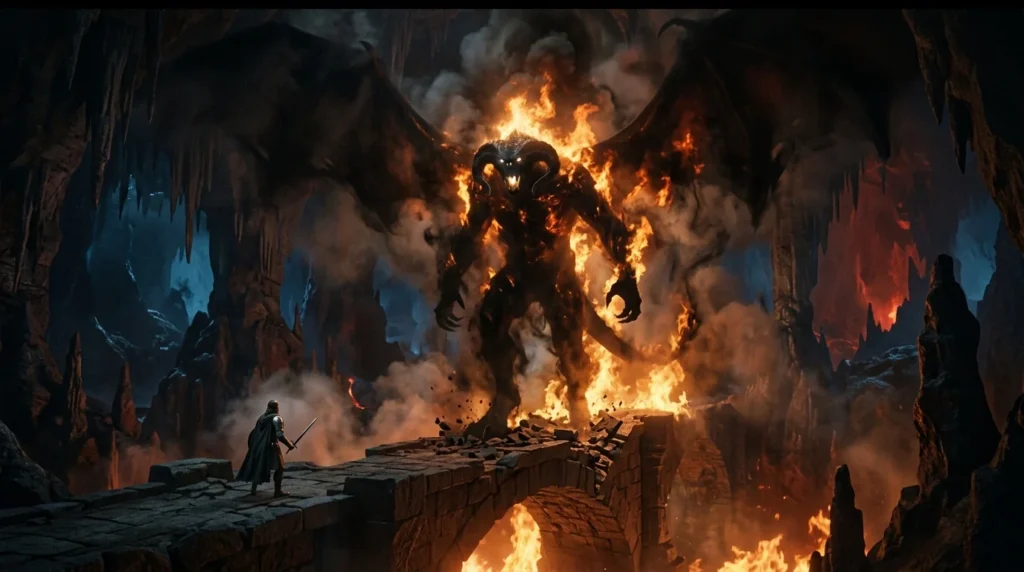
Demons of shadow and flame, wielding whip and sword, guarding ancient depths. Tolkien combines fire elemental and demonic imagery here without adapting any single prior mythological entity directly.
The famous ambiguity over whether Balrogs have wings, argued over by readers for decades based on close textual analysis, is itself evidence of real invention.
You don’t get that kind of obsessive, unresolved debate over physical details from a creature audiences already had a fixed cultural image of beforehand.
Ursula K. Le Guin’s Gebbeth
She Says She Hadn’t Read Jung Yet
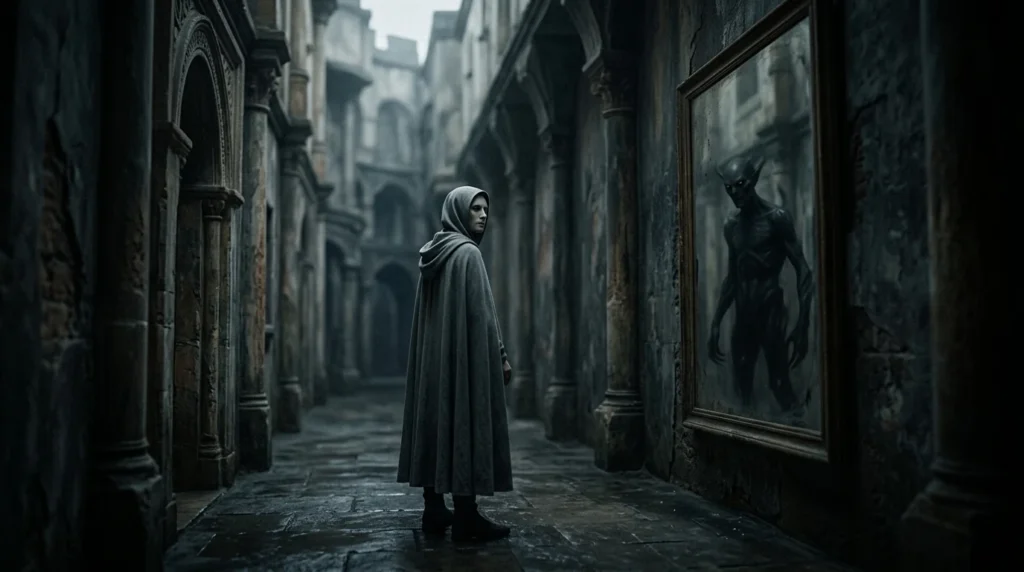
The shadow Ged releases in A Wizard of Earthsea, and the gebbeth, the puppet state it threatens to reduce him to, reads to most critics as a direct dramatization of Carl Jung’s shadow archetype, the repressed, denied parts of the self that must be integrated rather than fled.
The detail that makes this interesting rather than a simple case of literary influence.
Le Guin stated directly, in an essay published in Science Fiction Studies, that she’d never read a word of Jung when she wrote the book, and that a Freudian critic diving in regardless would find Jung’s Shadow anyway, purely because she’d arrived at the same underlying psychological truth independently.
Independent Convergence Is a Real Category
That’s a specific, citable claim from the author herself, not speculation. If accurate, Le Guin invented a functionally Jungian concept without the Jungian source material in front of her, which makes the Gebbeth a case of independent convergence rather than direct adaptation, arguably a stronger claim to originality than most entries on this list can make.
China Miéville’s Slake Moths
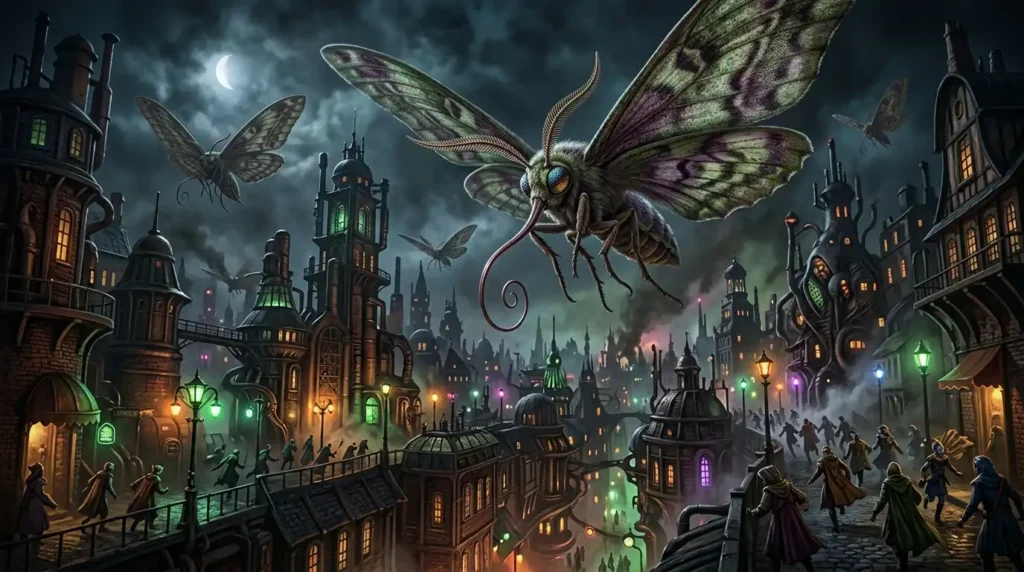
A Creature Built to Weaponize an Entire Sense
Perdido Street Station’s slake moths feed on dreams and consciousness directly, hypnotizing victims with patterned wings before draining their minds into a permanent vegetative state.
I don’t know of a specific prior mythological or folkloric creature this adapts. It’s closer to an original synthesis of insect biology and psychological horror, built specifically to serve New Crobuzon’s grimy, industrial thaumaturgy rather than drawn from an inherited tradition.
Terry Pratchett’s The Luggage
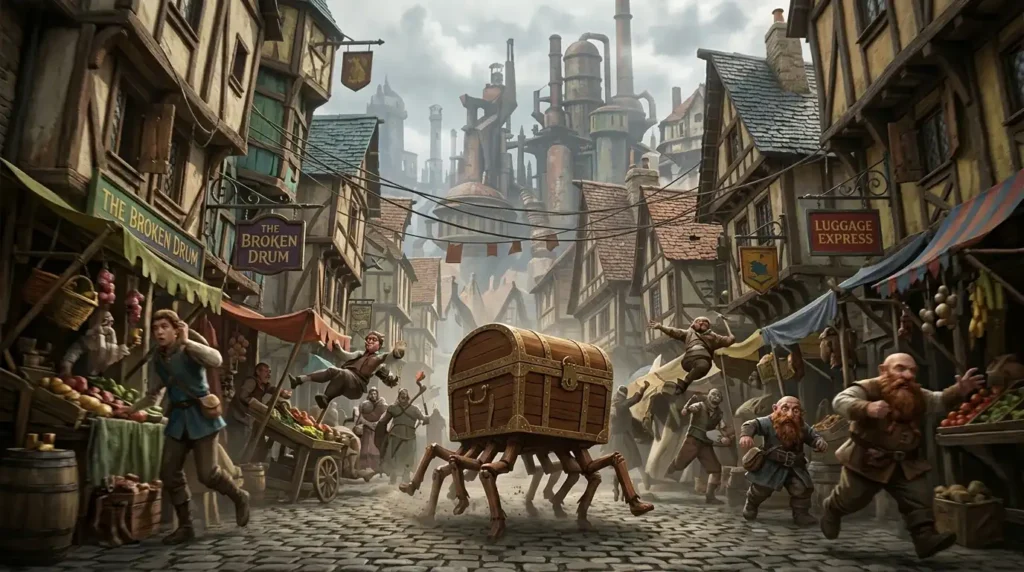
Possibly the Purest Invention on This Entire List
A sentient, many legged travel trunk that follows its owner everywhere, made of sapient pearwood, and disposes of threats with blunt, indiscriminate violence. I truly cannot identify a folkloric antecedent for this, and I don’t think one exists.
Pratchett built comedy and menace into an object category, furniture, that mythology across every tradition I’ve researched for this blog simply never bothered to animate with personality. That’s about as close to a true blank page invention as fantasy gets.
George R.R. Martin’s Others
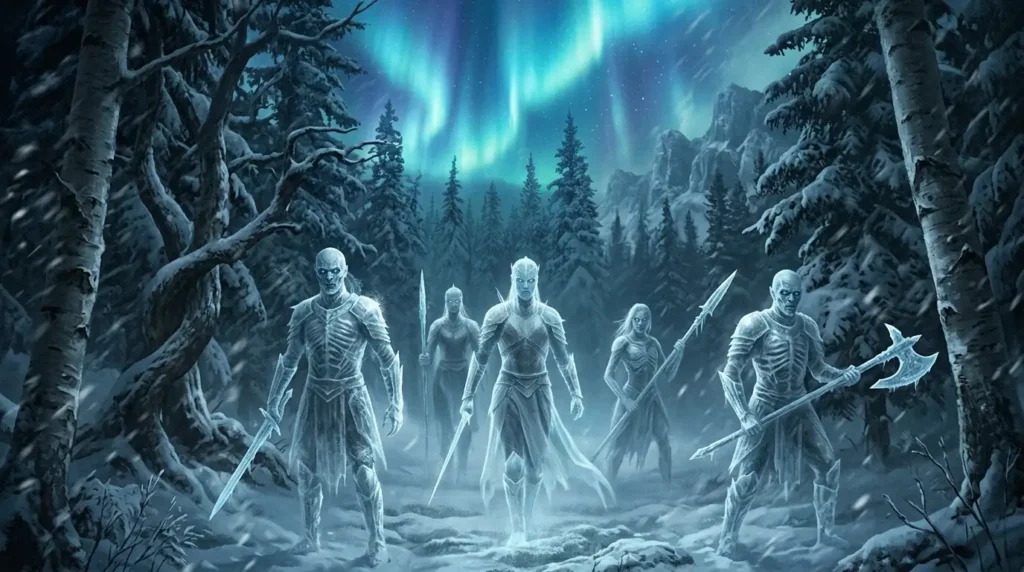
A Threat Built for a Specific Structural Purpose
The Others, the White Walkers of popular adaptation, function as an existential threat operating on a completely different register than the human political conflict occupying most of A Song of Ice and Fire.
Cold, undead adjacent beings exist broadly across world folklore in scattered forms, but Martin’s specific creation, tied to a precise seasonal cosmology and revealed gradually as a structural counterweight to the War of the Five Kings, is built for that book’s particular architecture rather than adapted from one identifiable prior source.
Brandon Sanderson’s Spren
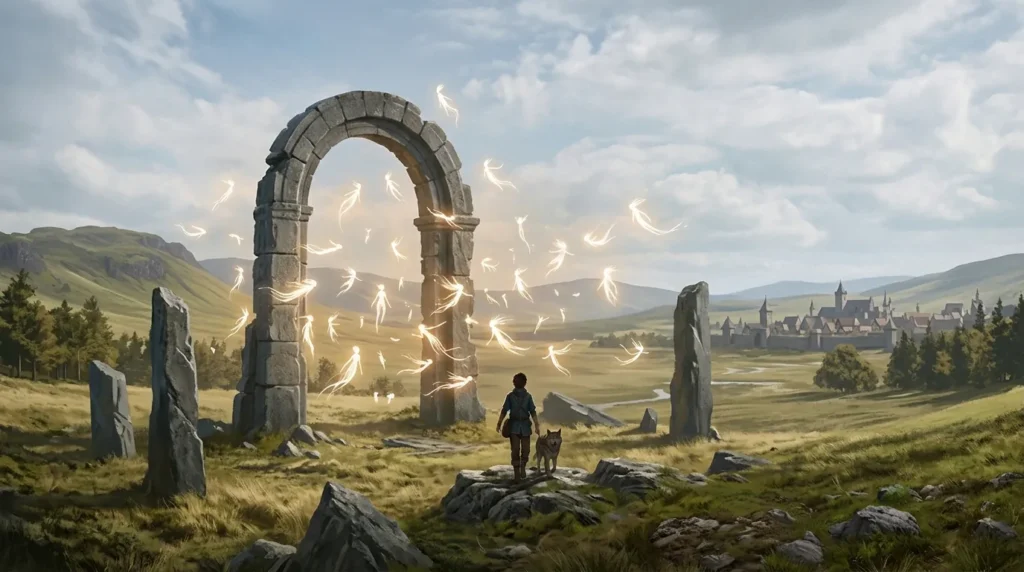
Concepts and Phenomena Given Physical Form
Stormlight Archive’s spren are small, often visible manifestations that appear in response to specific emotions, natural phenomena, or events, fearspren, gloryspren, windspren, tied directly into Sanderson’s broader cosmere magic system.
This draws loosely on the general cross cultural idea of nature spirits, present in many traditions in some form. What’s truly original is the specific mechanical precision, spren tied to particular triggers, integrated into a rigorously defined magic system rather than existing as folkloric flavor.
Philip Pullman’s Dæmons
The Honest Complication
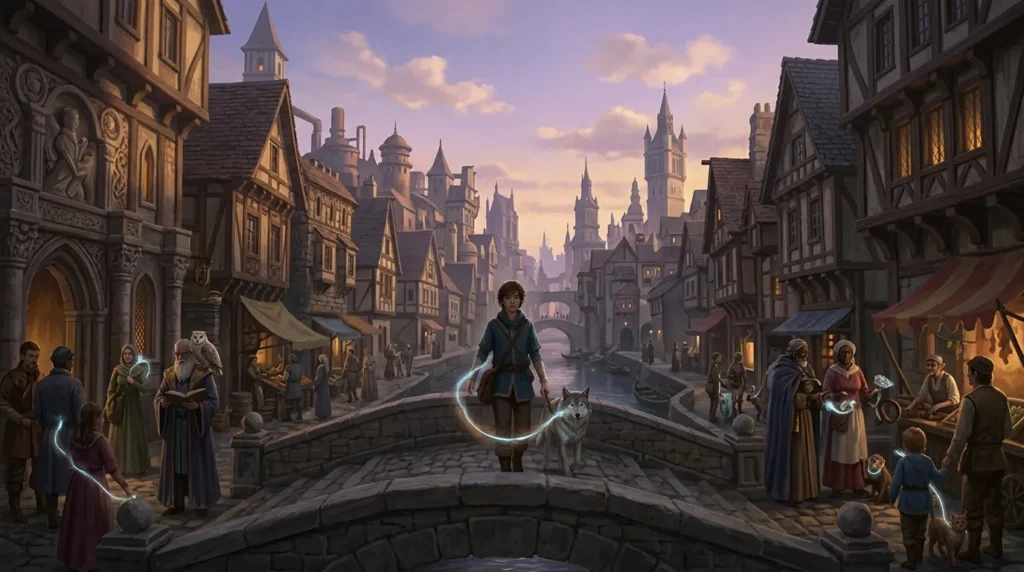
Every person in His Dark Materials has an external, animal shaped manifestation of their own soul, taking a fixed form at puberty that reflects their settled character.
I want to flag this one honestly rather than claim pure invention. Folklorists have documented a real, cross cultural motif sometimes called the external soul, where a person’s life force or vulnerability is stored outside their body in an object or creature, discussed at length in James Frazer’s The Golden Bough.
Pullman’s specific execution, a companion animal reflecting personality rather than a hidden vulnerability, is his own invention. The underlying premise, that a soul might exist somewhere outside the body, isn’t new to him at all.
Terry Pratchett’s Nac Mac Feegle
Invention Built on Top of Real Folklore Deliberately
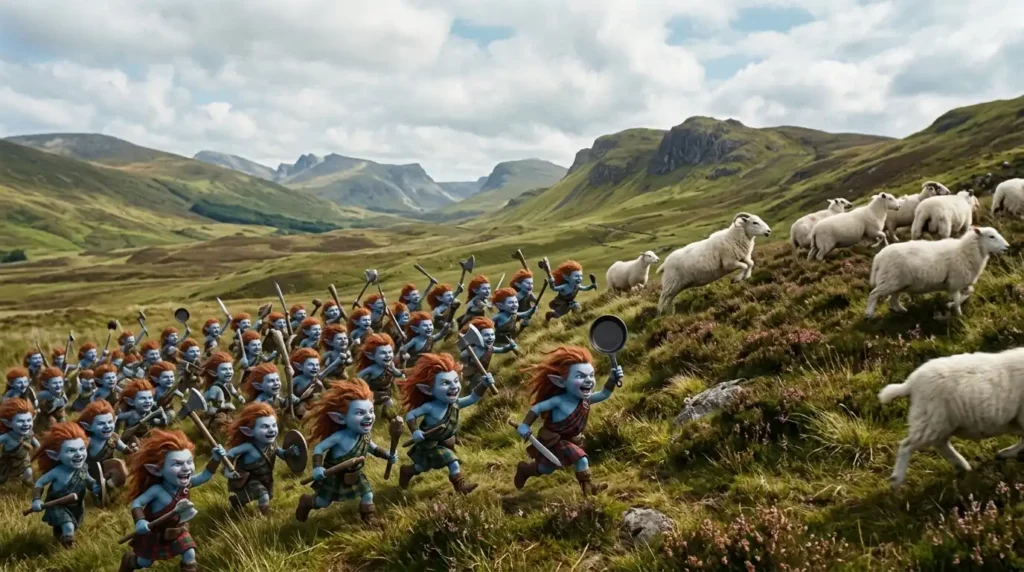
Tiny, blue skinned, aggressively drunk, kilt wearing warriors who consider being alive a temporary and regrettable state compared to the party waiting after death. This one I want to be direct about rather than overclaim.
Pratchett is explicitly riffing on real Scottish pictsie and fairy folklore stereotypes, exaggerating and inverting them for comic effect rather than inventing the underlying category from nothing.
The specific execution, the inverted afterlife logic, the aggressive miniature warrior culture, is his. The raw folkloric material he’s parodying is not.
What Makes an Invented Creature Work
The Substitution Test Applies With Extra Force Here
Whether a fantasy creature is doing real narrative work by imagining what changes if you swap it for something else. Invented creatures face a harsher version of that test, because they arrive with zero borrowed cultural weight to fall back on if the substitution reveals nothing.
A borrowed dragon still carries centuries of accumulated meaning even in a weak story. An invented creature with no narrative function is just an odd shape on the page, because there’s no inherited symbolism propping it up.
Every Successful Entry Here Passes That Test
Swap the Ents for ordinary soldiers and Fangorn’s entire ecological, patient temperament disappears. Swap the Luggage for a regular suitcase and half of Rincewind’s specific comic terror vanishes with it. Swap the Gebbeth for a generic monster and Le Guin’s entire psychological argument about self integration collapses.
None of these creatures are decoration. That’s precisely why they survived being invented from nothing in the first place.
These Nine Fantasy Monsters Are Not Completely Without Fault
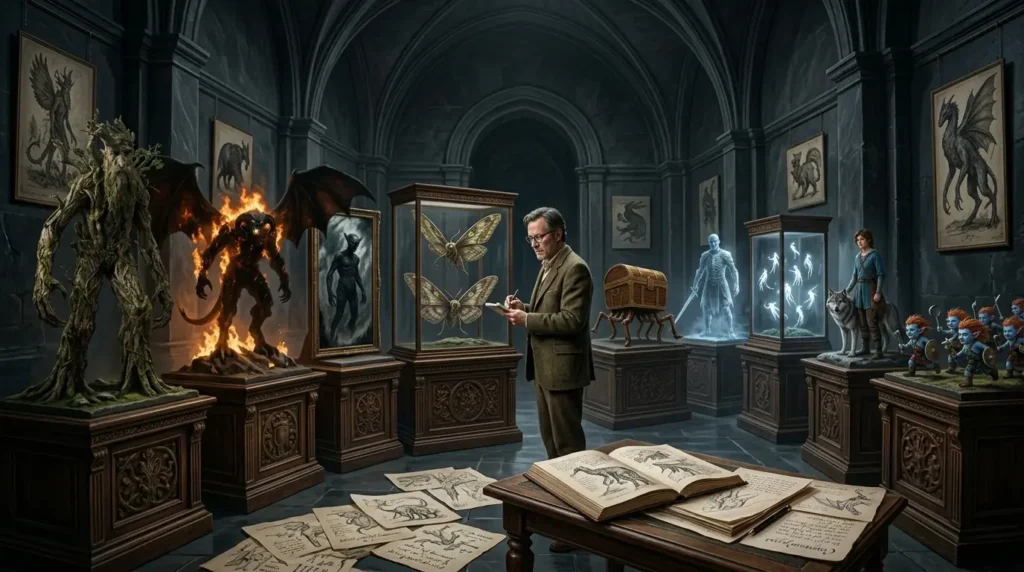
I want to complicate the framing of this whole list before closing it, because from scratch is doing more rhetorical work than it can fully support.
Every entry here draws on something that already existed, a real Old English word, a real psychological concept even if arrived at independently, real insect biology, real folkloric motifs about external souls or fairy stereotypes.
Human imagination doesn’t generate uncaused ideas. It recombines existing conceptual material in new configurations.
What I mean by invented from scratch, more precisely, is that no single prior named creature was adapted wholesale into any of these nine. That’s a real and meaningful distinction from how a dragon or a phoenix works.
It’s a narrower claim than pure creation from nothing, and I’d rather state that limitation directly than let the title’s framing oversell what these authors did.
Frequently Asked Questions
Did Tolkien ever explain where the specific idea of tree shepherds came from, beyond the Old English word?
Tolkien discussed regretting that trees in Shakespeare and other literature never got to march to war themselves, and has cited this specific frustration as part of what motivated the Ents, suggesting the concept grew from a literary complaint as much as from pure philological invention.
Is there a documented case of Le Guin discussing Jung’s work after writing Earthsea, once she became aware of the parallel?
Yes. Her essay acknowledging the resemblance was written after the fact, treating the coincidence as evidence that certain psychological truths are accessible independently rather than only through direct exposure to a specific theorist’s writing.
Do slake moths appear in any of China Miéville’s other Bas-Lag novels beyond Perdido Street Station?
They remain specifically associated with that first novel rather than recurring as an ongoing threat across the wider Bas-Lag setting, which Miéville has generally populated with new, distinct creatures in each subsequent book rather than reusing established ones extensively.
Has Brandon Sanderson stated directly whether nature spirit folklore influenced the spren concept?
Sanderson has discussed building the cosmere’s various magic systems and associated beings through his own systematic worldbuilding process rather than citing a specific folkloric tradition as direct inspiration for spren, treating the concept as original to his broader cosmere framework.
Is the external soul motif Pullman drew on limited to European folklore specifically?
No. Frazer’s documentation in The Golden Bough traces external soul beliefs across a wide range of global traditions, suggesting it’s a broadly recurring human idea rather than one confined to any single cultural or geographic origin point.
Final Thoughts
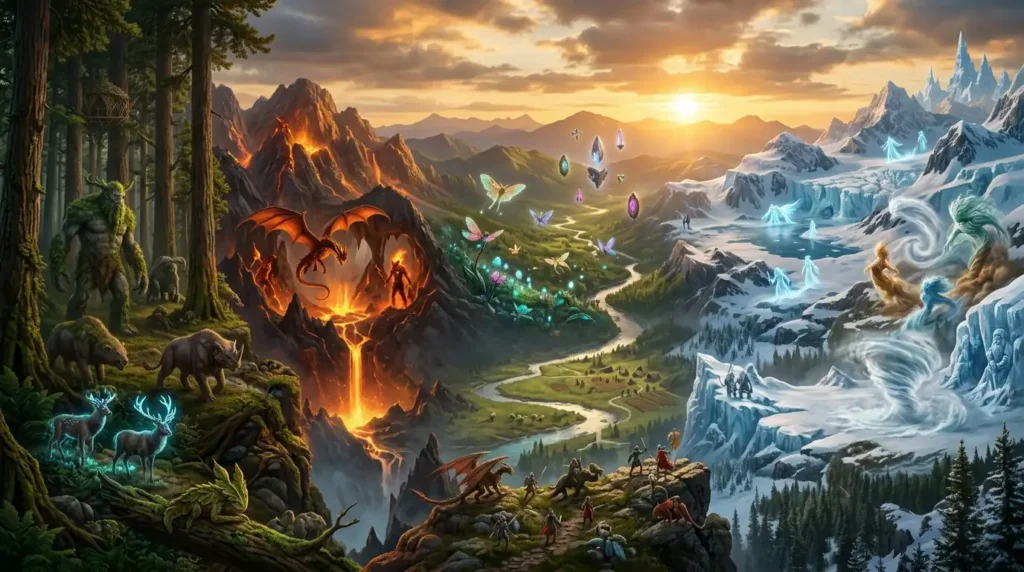
Nine creatures, and the honest version of this list admits that from scratch really means no single borrowed ancestor rather than true creation from nothing.
That’s still a genuinely higher bar than most fantasy creatures clear, and it’s worth noticing how much narrative weight every one of these entries had to earn entirely on its own, with no inherited mythology quietly doing the work for free.
Related Articles
- Dragon Mythology: How Dragons Are Depicted Across Cultures
- Why Fantasy is More Popular Than Ever Backed By Data
- 13 Overlooked Dragon Books Worth Reading in 2026
- Why Dragons Are The Most Beloved Fantasy Creatures
- Why Dragons Are Almost the Perfect Mythological Creature
- 9 Dark Fantasy Creatures That Turn Familiar Into Fear
- 15 Elemental Dragon Types in Fantasy: Fire, Ice & Beyond
- How Great Fantasy Writers Adapt Mythology Without Stealing
Written by Batin Khan, a curious free spirit who loves reading and exploring the worlds of fantasy, mythology, and ancient stories. Through this blog, Batin hopes to share that sense of wonder with readers while building an exciting future along the way.