
 By
Quick Takeaways:
- Zeus’s famous insult is real, but the same speech ends with Zeus ordering his son healed, so the contempt comes with a protective instinct.
- The Greeks treated Ares as the thing itself as much as a god. In the Iliad, “ares” can simply mean battle.
- His best known legal case, the killing of Halirrhothius, ended in acquittal and gave Athens its homicide court its name.
- The Spartans chained his statue, which I read as a way to keep the force they feared.
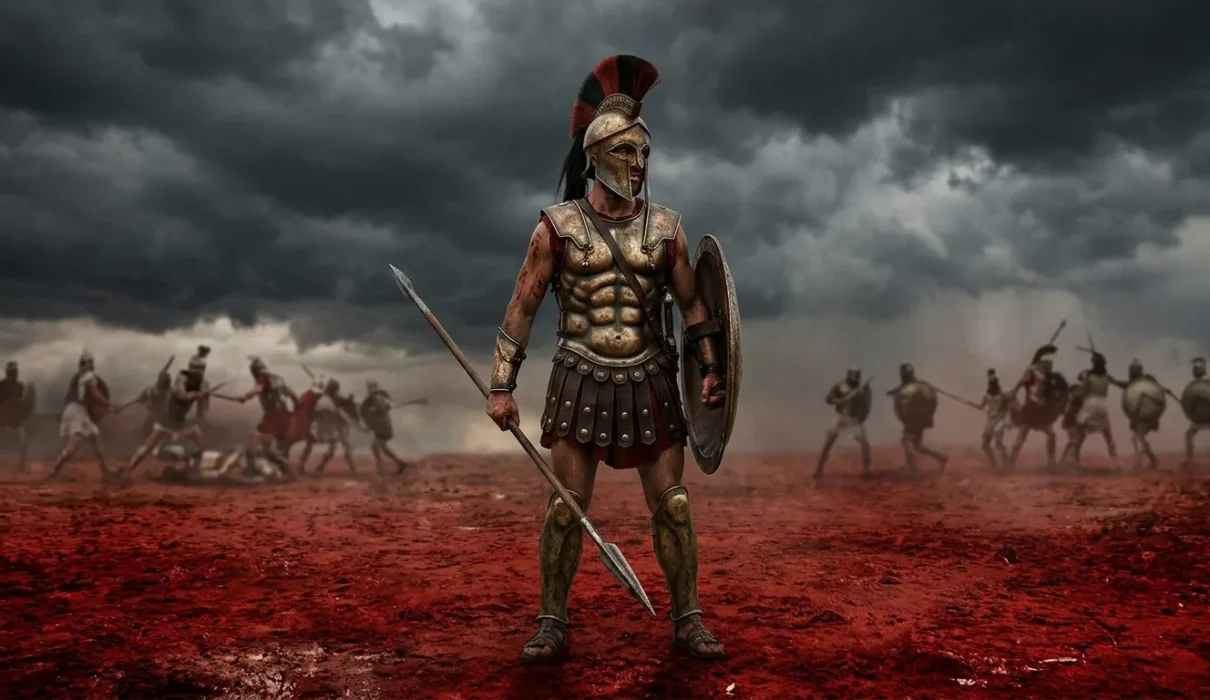
The scene I can’t shake is a wounded god limping into his father’s hall to complain.
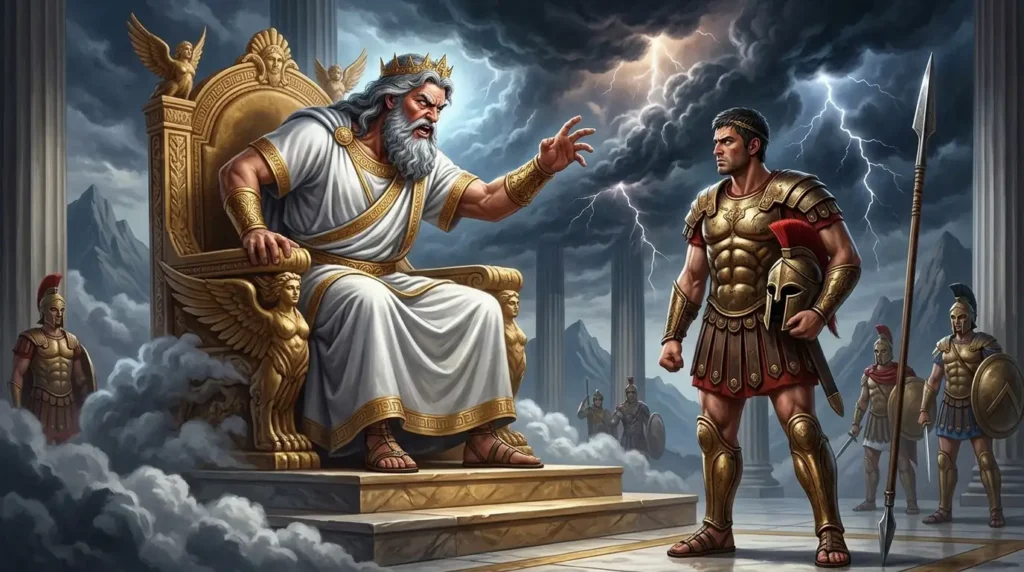
In Book 5 of the Iliad, Diomedes drives a spear into Ares with Athena guiding it. The war god bellows like ten thousand men and flies to Olympus, shows Zeus the ichor streaming from the wound, and expects sympathy. He gets the harshest line any god receives in Homer.
I’ve touched on this scene in my piece on the twelve Olympians. Here I want to read the whole speech, because most people quote only the insult.
What Zeus Actually Says
The Insult, in Full Context
Zeus tells him not to sit there whining. Of all the gods who hold Olympus, he says, war god is the most hateful to him, because strife and wars and battles are always dear to his heart.
Then comes the part that gets left out. Zeus says Ares has his mother’s stubborn, unbearable temper, which Zeus himself can barely control with words. Any other god’s child, he adds, would have been thrown below the Titans long ago.
And Then He Heals Him
Zeus finishes by saying he won’t let him suffer, because Ares is his offspring. He orders Paieon, the divine physician, to treat the wound, and the god of war is healed.
So I read the speech as exasperation rather than hatred. A father is furious at the child he can’t discipline and won’t abandon, and he blames the other parent, Hera, on the way out.
Ares Is the Thing Before He’s the God

A Word for Battle
In the Iliad, the word ares works as a common noun meaning battle or the heat of fighting. When a spear misses, the poet can say it didn’t find its ares.
The name also appears in Linear B, as a-re, in the Mycenaean tablets. Another Mycenaean name, Enyalios, shows up at Knossos, and later Greeks treated it either as a separate war god or as an alternative name for Ares himself.
Why That Changes the Insult
If the god’s name doubles as the word for the activity, then hating Ares is partly hating war. Zeus’s complaint reads less like a judgment of a person and more like a verdict on what the god stands for.
That’s my reading, and I’d flag it as an interpretation. The oldest evidence is too thin to say whether Ares was a god first or a concept first.
What Makes Him Different From Athena

No Loyalties, No Plan
In Book 5, Athena tells Diomedes that Ares has been playing both sides. He promised her and Hera he’d fight for the Greeks, and now he’s gone over to the Trojans and forgotten his word.
Compare that with the goddess I wrote about in my Athena article, whose whole identity is timing and judgment. Ares offers energy and no discipline, and the Iliad punishes him for it, repeatedly.
His Children Are Emotions
Hesiod makes Aphrodite the mother of Phobos, Deimos, and Harmonia by Ares. Phobos is Fear and Deimos is Terror, and the Iliad has them yoking his horses.
Eris, Strife, is called his sister and companion. Enyo, the city sacker, travels with him as well.
My Reading
Every member of his entourage is a feeling or a byproduct of fighting. Ares doesn’t arrive with a strategy. He arrives with panic, rivalry, and noise.
That explains why the Greeks could value military skill and still dislike him. What they disliked was the undirected version.
The Trial on the Hill

Why He Killed Halirrhothius
The one famous story where Ares acts with a clear motive is the killing of Halirrhothius. Halirrhothius, a son of Poseidon, assaulted Ares’s daughter Alcippe, and Ares killed him.
Poseidon demanded justice, and the gods sat in judgment on a hill below the Athenian Acropolis. Ares was acquitted, according to the traditional account, because the killing was justified.
The Name on the Court
That hill became the Areopagus, the Hill of Ares, and Athens later used it as the seat of its murder court. Aeschylus gives a different origin in the Eumenides, where Athena says the Amazons camped there and sacrificed to Ares.
I find the conflict useful, because it suggests the name was older than either explanation. It also means the god Zeus called hateful lends his name to the court where Athena breaks a tie for Orestes.
The Sympathetic Side
I’d add that this is the only myth I know where Ares behaves as a protective father rather than a berserker. The gods side with him, which complicates the picture of him as universally unwelcome.
How the Greeks Actually Worshipped Him

Few Temples, Late Evidence
The cult evidence is thinner than you’d expect for an Olympian. The numismatist Martin Jessop Price says Ares typified the traditional Spartan character but had no important cult in Sparta itself, and he never appears on Spartan coins.
Pausanias describes two cult places on the Spartan acropolis, both connected with a warlike Aphrodite, a link I covered in my article on her. An Athenian temple of Ares existed in the Roman period, and archaeologists connect it with an earlier building moved from elsewhere in Attica.
The Chained Statue
Pausanias mentions an archaic Spartan statue of Ares in chains, and says the point was to keep the spirit of war and victory in the city. He compares it to the Wingless Victory at Athens, which was made without wings so she couldn’t fly away.
Pausanias also says Spartan youths sacrificed a puppy to Enyalios before a ritual brawl at a place called the Phoebaeum. The night sacrifice of a dog to Enyalios later merged with the cult of Ares.
My Reading: They Bound What They Feared
Chaining a god’s statue is a strange thing to do to something you hate. It’s what you do to something you want to keep.
I think that fits the ambivalence in the Iliad. The Greeks disliked his chaos and didn’t want to lose his power. It’s an interpretation of Pausanias’s report, though, and the report itself is late.
Ares Among the Neighbors

Thrace and the Scythians
Greeks tended to place Ares at the edges of their world. In the Odyssey, after the humiliation of the net, he goes home to Thrace, and Herodotus reports that the Thracians worshipped Ares, Dionysus, and Artemis.
Herodotus also describes the Scythians worshipping a god he equates with Ares in the form of an old iron sword set on a mound of brushwood. They sacrificed cattle and horses to it, and one in a hundred prisoners of war.
The Myth of the Hekatomphonia
You’ll sometimes read that Greeks held an obscure rite called the Hekatomphonia, sacrificing a hundred enemies to Ares. Modern scholars say that’s a long standing error. The hekatomphonia was an animal sacrifice to Zeus.
I include it because it’s a good example of how a rumor about “barbarian” cults hardened into fact. If you’ve seen the claim, check the footnotes.
Dragons and Foundations
Ares also stands behind founding stories. The dragon Cadmus kills at Thebes is the war god’s creature, and Cadmus has to serve him for a long period as atonement, according to later mythographers like Apollodorus.
Cadmus then marries Harmonia, Ares’s daughter by Aphrodite. The Golden Fleece, in the Argonautic tradition, hangs in a grove of Ares guarded by a dragon.
For readers who like fantasy, the pattern is familiar: the war god’s sacred animal guards a treasure, and a hero pays a price to take it.
One Scene Isn’t a Cult

The Zeus speech is one moment in one epic, and the Iliad uses Ares as a foil for Athena. His humiliation serves the poem’s story, and it doesn’t prove that Greeks across centuries thought about him that way.
The Spartans and Thracians had reasons to revere him. A culture that prized martial skill wouldn’t have treated the god of battle as a joke.
“Despised” Overstates It
The title is catchy and I wrote the article around it, but ambivalent is closer to the evidence. Greeks feared him, mocked him, bound him, and also took his name for their most serious court.
Even Zeus’s line, which opens the article, is followed by healing. A hated god doesn’t usually get an immediate medical order from the king of the gods.
My Binding Theory Is Speculative
I’ve read the chained statue as a way to keep the force the Spartans feared. Pausanias supports a similar explanation, but he wrote in the second century CE about a very old image, and the original meaning may have been lost.
I’d rather you hold that reading lightly than take it as the ancient Spartan view.
What I Take From All This
Ares is the best argument I know that Greek religion wasn’t tidy about the things it valued. They honored courage and distrusted rage. They built courts and temples around a god they were embarrassed to be related to.
If you’ve only seen the insult, go back and read the next few lines. The king of the gods calls his son hateful, then tells the doctor to fix him.
Frequently Asked Questions
How did the Roman Mars differ from Ares?
Mars had a more dignified role. Cato’s handbook on farming preserves a prayer to Mars Pater for the protection of the farm, and Augustus dedicated a temple to Mars Ultor, Mars the Avenger, in 2 BCE.
Are the moons of Mars really named after Ares’s sons?
Yes. Asaph Hall discovered the two moons in 1877, and they were named Phobos and Deimos, after Fear and Terror, the sons who yoke Ares’s chariot in the Iliad.
Why were the Amazons called daughters of Ares?
Greek tradition made Ares the father of several Amazon queens, including Hippolyta and Penthesilea. In the ninth labor of Heracles, the belt he’s sent to fetch is said to be a gift from Ares to Hippolyta.
Who did Greek soldiers pray to for victory?
They had many options. Athena Nike, Zeus Tropaios, and Enyalios all received prayers, and armies sang a paean to Apollo before battle. Ares seems to have received less direct appeal than you’d expect.
What does Hesiod say about Ares?
Hesiod’s Theogony says Hera bore Hebe, Ares, and Eileithyia to Zeus, and that Aphrodite bore Phobos, Deimos, and Harmonia to Ares. The poem gives him almost no personality, so Homer remains the main source.
Final Thoughts
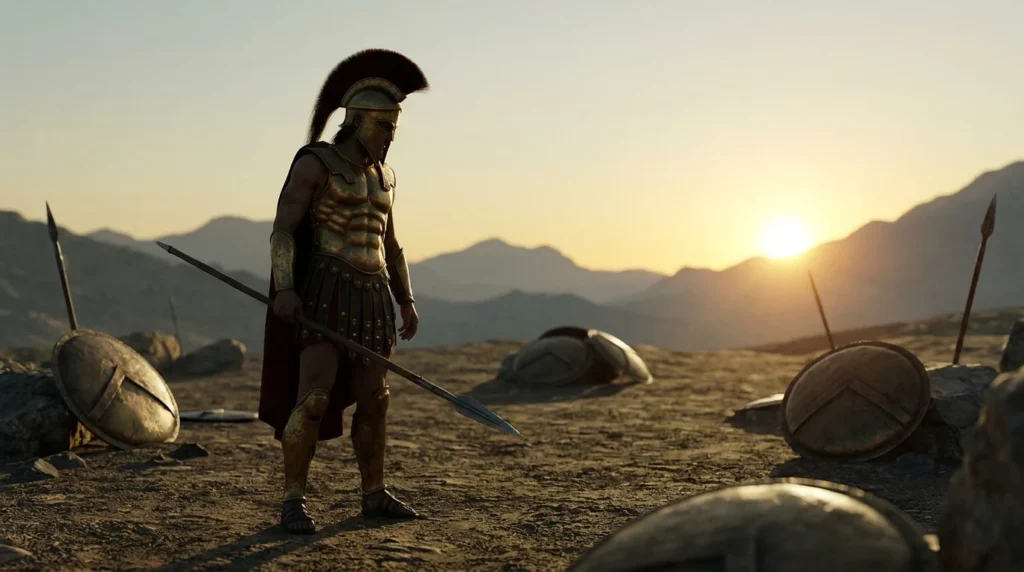
The wounded god in the Iliad is a bad patient, a worse ally, and a father’s constant headache.
What stays with me is that nobody on Olympus is willing to let him die. Zeus insults him, then heals him, which might be the most honest thing the Greeks ever said about war.
Related Articles
- Chaos: The Primordial Void Before the Greek Gods
- 13 Legendary Greek Heroes, Ranked by Their Feats
- Rhea: The Titaness Who Tricked a God-Eating Titan
- Hera: The Goddess Reduced to “Zeus’s Jealous Wife”
- Apollo: The God Who Brought Both Plague & Healing
- Artemis: The Hunt Goddess Who Never Bent Her Rules
- Hermes Stole Apollo’s Cattle Before He Was a Day Old
Sources & Further Reading
- Homer, Iliad
- Hesiod, Theogony – The Center for Hellenic Studies
- APOLLODORUS, THE LIBRARY BOOK 3 – Theoi Classical Texts Library
- A Pausanias Reader in progress: Description of Greece, Scrolls 1–10 – The Center for Hellenic Studies
- Herodotus – Histories, Books 3–5
Written by Batin Khan, a curious free spirit who loves reading and exploring the worlds of fantasy, mythology, and ancient stories. Through this blog, Batin hopes to share that sense of wonder with readers while building an exciting future along the way.