
 By
I want to name something directly before going any further. Loves is the word this title uses, and it’s the word popular mythology writing defaults to constantly. For several of the figures in this article, it’s the wrong one, and I’d rather tell you that upfront than let a euphemism carry weight it hasn’t earned.
What truly connects these stories isn’t romance. It’s a structural pattern worth taking seriously on its own terms.
What Zeus Governs

The Thunderbolt and the Oath
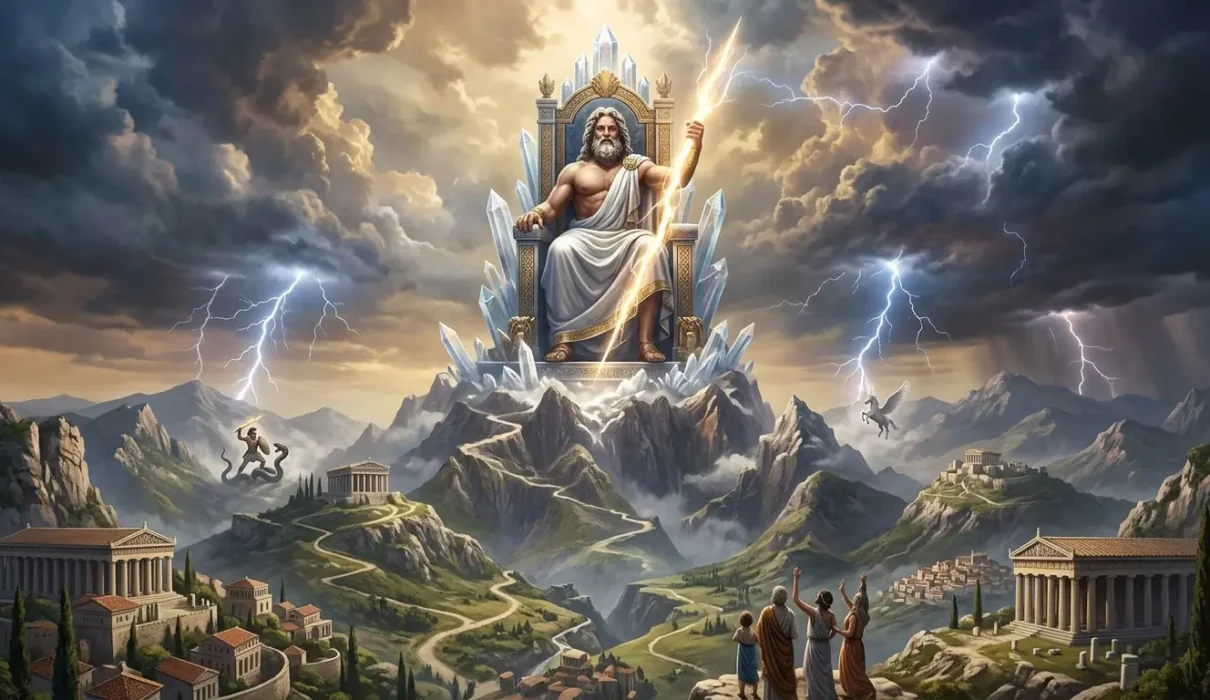
Zeus rules the sky, wields the thunderbolt, and enforces oaths and hospitality through his role as Zeus Xenios, protector of the guest host relationship that functioned as the closest thing the ancient Greek world had to international law between communities with no shared government.
Real Limits, Not Unlimited Power
He’s bound by fate in ways even his own authority can’t override. In the Iliad, he grieves over his son Sarpedon’s impending death and considers intervening, only for Hera to warn that doing so would unravel divine order entirely if every god started rescuing their own favorites. He lets Sarpedon die.
That constraint matters for understanding everything that follows. Zeus isn’t an unaccountable force moving through the world taking what he wants with no consequence attached. He operates inside a system, and even he answers to parts of it.
Why Disguise Shows Up in Nearly Every Story
Semele Asked to See the Truth
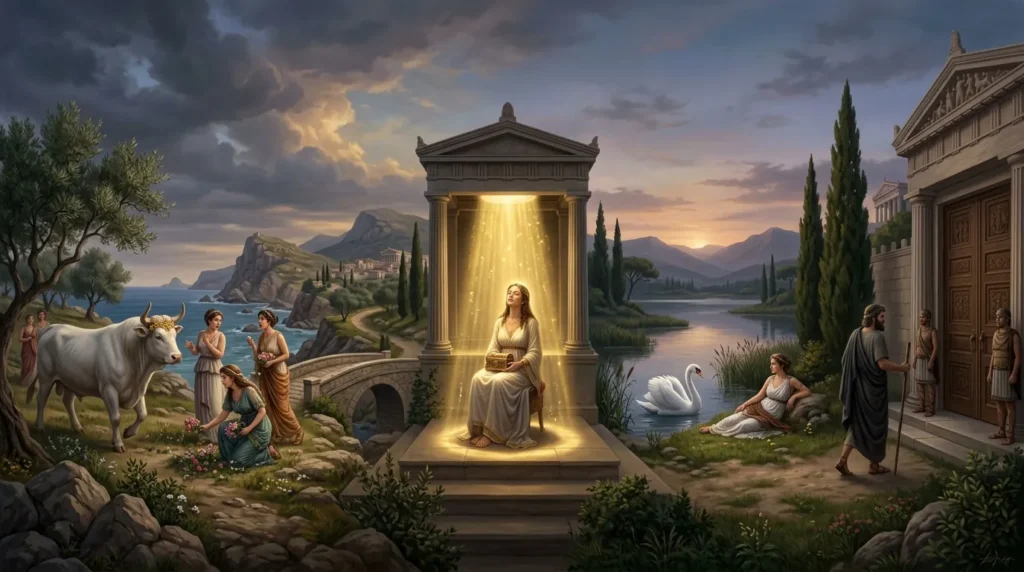
Semele, a Theban princess, became pregnant by Zeus, and Hera, disguised as an old confidante, convinced her to doubt whether her lover was really who he claimed. Semele demanded Zeus prove himself by appearing in his true divine form.
He tried to show her the smallest possible version of it. It wasn’t small enough. No mortal can survive confronting a god’s full nature directly, and Semele was incinerated instantly. Zeus saved the unborn Dionysus by sewing the fetus into his own thigh until it was ready to be born. [Apollodorus]
What This Myth Is Explaining
This is the detail that reframes nearly every other story on this list. Zeus doesn’t disguise himself with mortal women out of simple preference for subtlety. Semele’s death establishes, in the tradition’s own terms, that his true form is categorically incompatible with survival for anyone not divine.
A swan for Leda. A bull for Europa. Golden rain for Danae. Amphitryon’s own likeness for Alcmene. These transformations aren’t romantic flourishes. They’re the only mechanism the mythology gives him for approaching a mortal at all without killing her the way his true form killed Semele.
Where the Word Love Doesn’t Apply
Io and Callisto
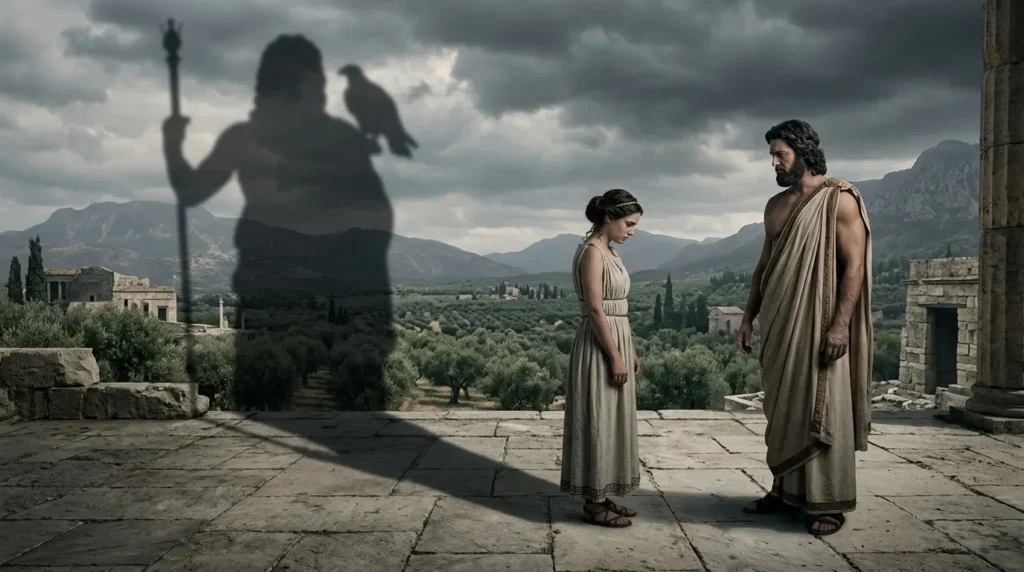
Io was transformed into a heifer, in most tellings by Hera specifically to punish and conceal Zeus’s pursuit of her, then driven across the world by a maddening gadfly. Callisto, a companion of Artemis sworn to chastity, was deceived by Zeus appearing in Artemis’s own form, then transformed into a bear once her resulting pregnancy was discovered.
Neither of these stories describes mutual affection. They describe deception, transformation used as both weapon and cover, and consequences that fall overwhelmingly on the woman rather than the god responsible.
Why This Matters for How You Read the Rest
I’m not arguing every story on this list fits the same shape. I am arguing that calling the whole category loves, uncritically, erases a real distinction the ancient sources themselves don’t erase.
Some of these unions are framed with mutual warmth in their surviving tellings. Others are framed, even by ancient standards, as something closer to what modern readers would call assault. Treating them identically does a disservice to both.
The Real Pattern: Genealogical Infrastructure
Nearly Every Major City Traces Back to One of These Unions
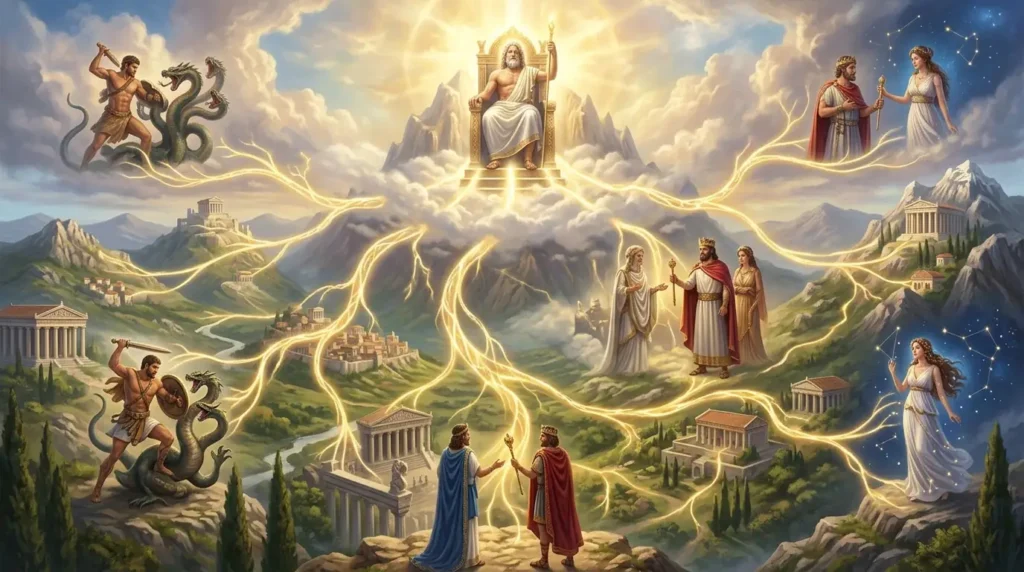
Here’s the structural thesis worth taking seriously. Europa’s union with Zeus produces Minos, whose name anchors the entire Minoan civilization on Crete. Leda’s produces Helen and the Dioscuri, Castor and Pollux, seeding the Trojan War directly.
Danae’s produces Perseus, eventual founder of Mycenae. Alcmene’s produces Heracles. Antiope’s produces Amphion and Zethus, who build the walls of Thebes.
That’s not a coincidental cluster of romantic subplots. That’s a genealogical infrastructure running underneath an enormous share of Greek civic identity, with Zeus functioning as the shared root nearly every major city or royal line could trace itself back to.
This Was Documented Political Practice, Not Just Story
The Spartan kings weren’t simply enjoying a colorful myth. They were called the Heracleidae specifically because they claimed direct descent from Heracles, who traced his own line back through Perseus to Zeus.
This genealogy functioned as true, operative political legitimacy, cited to justify the Dorian claim to the Eurotas valley in what tradition calls the Return of the Heracleidae.
A real royal dynasty built its right to rule on a documented claim of descent from one of these unions. That’s the pattern’s function, made concrete rather than staying purely symbolic.
Hera’s Side of This, Briefly
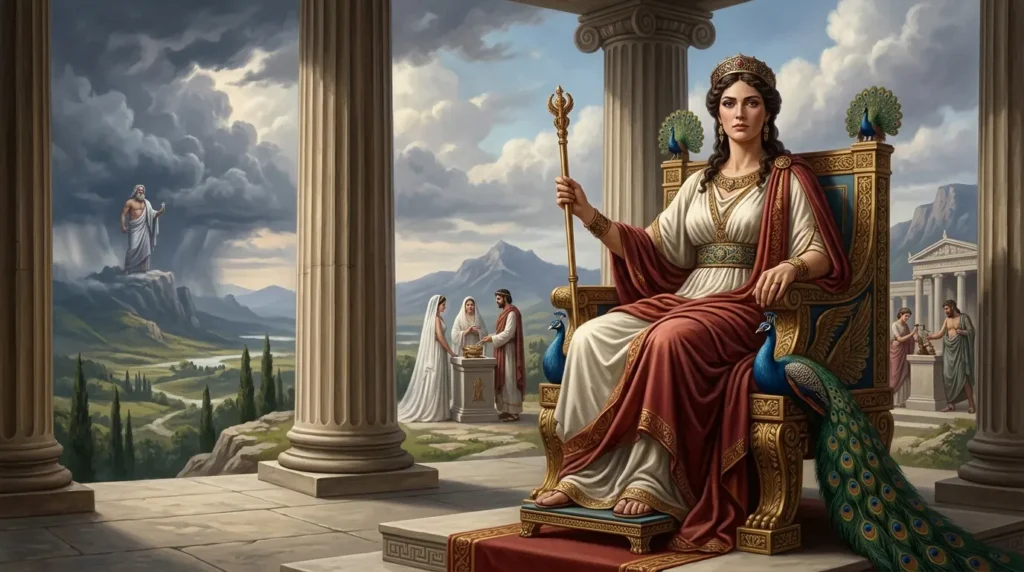
Hera’s consistent pattern of punishing Zeus’s partners and offspring rather than Zeus himself, and that pattern holds directly across this material too.
Io driven across the world. Callisto transformed. Semele’s own death arrives through Hera’s manipulation specifically, not through Zeus’s own direct action.
Worth adding one detail I haven’t covered before. After Semele’s death, her own sisters spread a rumor that she’d lied about Zeus’s paternity entirely to cover an affair with a mortal man, and most of her household refused to believe Dionysus was Zeus’s son.
The punishment didn’t stop at Hera’s intervention. It extended into Semele’s own family’s willingness to disbelieve and shame her even after her death.
An Honest Counterargument
I want to push back on my own reframing here, because flattening every one of these stories into a single modern moral category risks its own kind of distortion.
Ancient audiences didn’t necessarily read these myths through a single consistent lens either. Some stories, including several not covered in depth here, are framed with ambiguity about consent and feeling that doesn’t map cleanly onto either a pure romance reading or a pure assault reading by modern standards.
Imposing one contemporary framework onto the entire category risks erasing real variation and complexity that existed in how these stories were originally told and understood, the same flattening I’m specifically trying to avoid by naming Io and Callisto honestly in the first place.
The fair position, I think, sits between two bad extremes. Not romanticizing stories that are clearly, textually about coercion. And not assuming every single myth in this category must be read identically, when the actual surviving tradition itself doesn’t present them that way.
Frequently Asked Questions
Why did Zeus specifically choose to save Dionysus by sewing him into his thigh rather than another method?
The myth doesn’t explain the mechanism beyond stating it as fact, though scholars have connected the detail to Dionysus’s recurring association with being twice born, an origin story distinct from how any other major Olympian enters the world.
Are there other documented ancient royal lines besides the Spartan Heracleidae who claimed descent from one of Zeus’s unions?
Yes. Multiple regional Greek dynasties traced genealogies back through figures like Perseus, Minos, or Heracles specifically to claim legitimacy, a widespread pattern across the Greek world rather than a uniquely Spartan practice.
Did ancient Greek religious practice treat Semele as more than a mortal figure after her death?
Yes. She became part of the cult of her son Dionysus and was worshipped alongside him in some traditions, an unusual elevation for a mortal woman within Greek religious practice more broadly.
Is there a surviving ancient play that directly dramatizes the aftermath of the Semele myth?
Yes. Euripides’ The Bacchae opens with Dionysus explaining his birth and confronting his mother’s family, who had spread rumors denying his divine parentage, giving the aftermath of Semele’s death dramatic treatment on the Athenian stage.
How did Roman mythology handle Jupiter’s equivalent unions compared to the Greek Zeus tradition?
Roman tradition largely absorbed the same stories under Jupiter’s name with relatively minor adaptation, though Roman political use of divine descent claims, including the Julian family’s claimed descent from Venus through Aeneas, developed its own distinct emphasis separate from the Greek pattern.
Final Thoughts
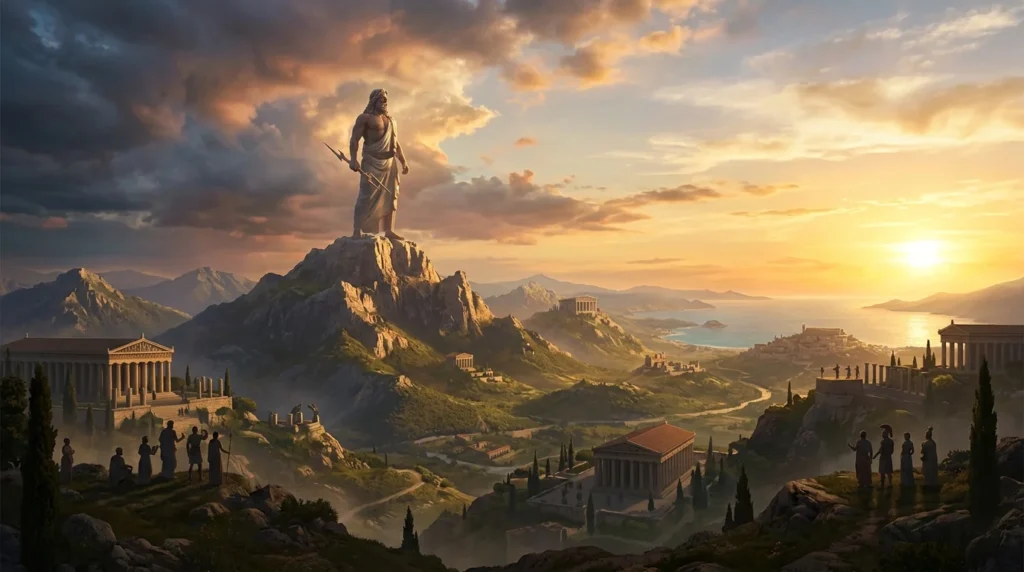
Zeus’s unions built the mythological scaffolding an entire civilization’s cities and royal houses stood on, which is a different claim than saying he loved widely.
Some of these stories carry real warmth in how they survive. Others carry real violence that the word love was never built to hold, and the honest version of this article has to make room for both without pretending they’re the same thing.
Related Articles
- The 12 Olympian Gods: Powers, Symbols & Key Stories
- Greek Mythology 101: Gods, Heroes & Monsters
- Who Were the Titans? Names, Powers & Their Downfall
- 13 Legendary Greek Heroes, Ranked by Their Feats
- Cronus: The Titan Who Feared His Own Children
- Gaia: Greek Mythology’s Original Mother Goddess
- Poseidon: The God of the Sea, Earthquakes & Horses
- Athena: Why the Goddess of Wisdom Was Also a Warrior
Sources & Further Reading
- Homer, The Iliad, Book16
- Apollodorus, Library, Book 3, Chapter 4
- Euripides, Bacchae
- Apollodorus, Library and Epitome, volume 1
- Herodotus, The Histories, Book 1
- The ‘colony of the Dorians’ and the Return of the Herakleidai (Chapter 1) – Myth and Territory in the Spartan Mediterranean
Written by Batin Khan, a curious free spirit who loves reading and exploring the worlds of fantasy, mythology, and ancient stories. Through this blog, Batin hopes to share that sense of wonder with readers while building an exciting future along the way.