

 By
By Lady Caroline Lamb described Lord Byron, after their affair ended badly, as mad, bad, and dangerous to know.
Lamb and Byron’s like specific combination, danger paired with true magnetism, has been romantic fiction’s most reliable engine for roughly two centuries now, and romantasy didn’t invent the morally grey love interest formula. It just gave it dragons.
Byron Built the Template Before the Genre Existed

A Real Person Became a Literary Type
The Byronic hero is named directly after Byron himself, drawing on both his own documented personality and characters he wrote, Childe Harold, Manfred, brooding, cynical, defiant of social convention, carrying a troubled past the narrative only partially explains.
What made this type stick wasn’t just the darkness. It was the specific combination of real danger and intellectual or emotional depth underneath it, someone you could plausibly believe was worth the risk rather than simply reckless to want.
Why This Specific Combination Outlasted Every Imitation
Pure villainy doesn’t generate longing. Pure safety doesn’t generate tension. The Byronic hero sits exactly between those two failure states, and romantasy’s current crop of morally grey love interests are working from that same exact position, two centuries later, with slightly better world building.
The Psychology Has a Name

The Dark Triad, Briefly Explained
Psychologists Peter Jonason, Norman Li, Gregory Webster, and David Schmitt published research in 2009 on what personality psychology calls the Dark Triad, narcissism, Machiavellianism, and psychopathy, examining how these traits relate to short term mating specifically.
Their findings, and a substantial body of research that followed it, show these traits correlating with a short term mating strategy, with confidence, social boldness, and a true willingness to take risks functioning as detectable, observable signals rather than invisible internal states.
What This Tells You, and What It Doesn’t
I want to be precise here, because this research gets misused constantly in casual discussion.
It describes correlation with short-term mating interest specifically, not a universal preference, and it doesn’t describe or endorse relationship outcomes with real people carrying these traits, which the same research literature consistently links to exploitation and real relational harm.
What it does usefully explain is why confidence, boldness, and a visible willingness to break rules read as attractive signals in the abstract, stripped of real world consequence.
Fiction is precisely that stripped down abstraction. A reader gets the signal, confidence, danger, intensity, with zero risk attached, which is a fundamentally different experience than real dating ever offers.
Why Fiction Is the Safer Container for This
This is worth stating plainly rather than letting it sit as implication. Cardan from Holly Black’s The Cruel Prince can be incredibly cruel on the page without costing a reader anything real.
Real cruelty from a real partner costs everything. Conflating the two, enjoying a fictional dynamic versus seeking out a real one, is exactly the mistake worth naming and avoiding directly.
Redemption Gives the Heroine Something to Do
Not Just Attraction, Agency
Here’s where romantasy specifically does something beyond simply reusing the Byronic template.
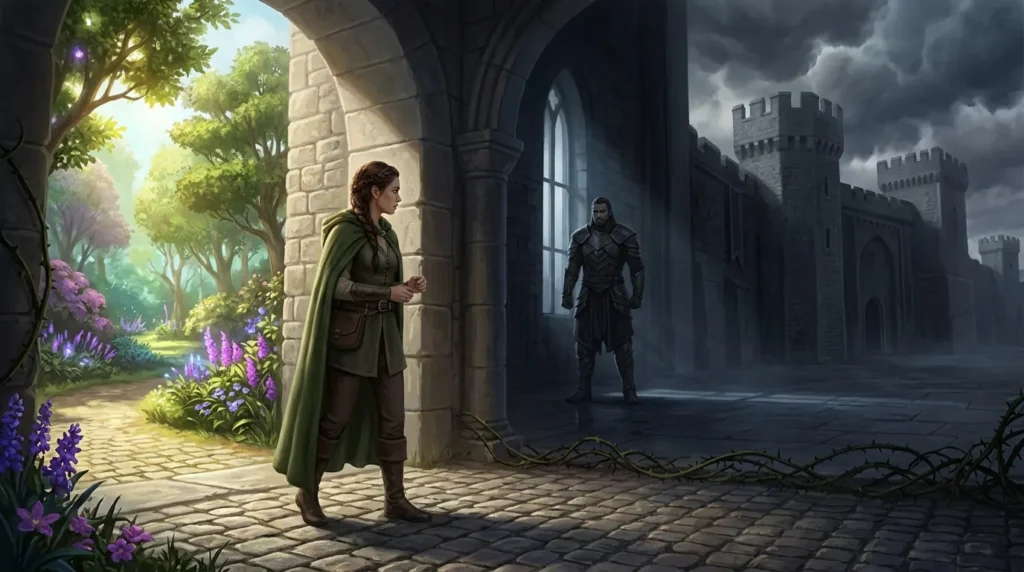
A morally grey love interest typically requires the protagonist’s influence, patience, or moral example to shift him, which gives her romantic choice narrative weight rather than making her purely a passive recipient of someone else’s interest.
Rhysand in Sarah J. Maas’s A Court of Thorns and Roses spends the first book functioning as something close to a villain through Feyre’s own limited perspective, and the later reveal that his cruelty was calculated protection rather than malice retroactively turns Feyre’s earlier judgment of him into something she has to actively revise, not simply something resolved for her by a plot twist.
Reader Culture Already Has a Name for the Failure Mode
Fan discussion has its own blunt shorthand for when this goes wrong: the “I can fix him” instinct, applied critically rather than approvingly, when a story asks readers to believe in redemption without earning it on the page.
Which is useful vocabulary because it names the exact difference between redemption as structure and redemption as wish fulfillment, with no real evidence to back it.
A love interest whose cruelty simply stops, with no visible cost or consistent internal logic explaining why, isn’t morally grey. He’s a plot convenience wearing morally grey as a costume.
What Separates Earned Grey From Lazy Grey
The Cost Has to Be Real
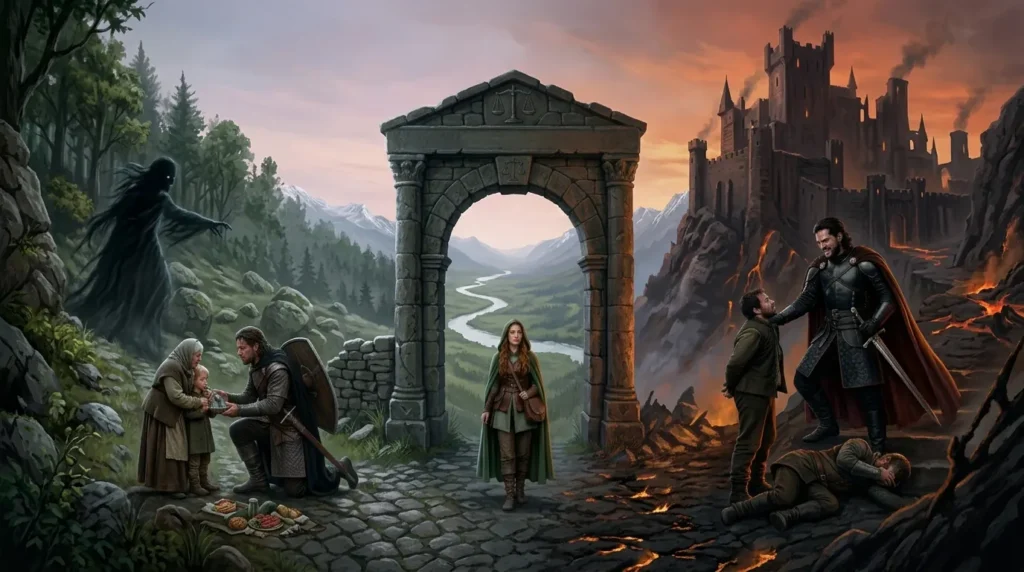
Cardan’s arc works specifically because his cruelty in early volumes has solid, lasting consequences inside the story, not softened retroactively once the romance resolves.
Jude’s own hard won power, built through real political maneuvering rather than simply being granted, keeps the relationship from reading as one person’s redemption absorbing the other’s agency.
The Danger Can’t Be Decorative
Xaden Riorson’s specific threat in Fourth Wing, that Violet’s own mother executed his father, isn’t resolved through a single conversation. It’s structural, inherited, and complicates the relationship for a sustained stretch of the book rather than functioning as a one-chapter obstacle.
The true craft test. Does the moral grayness cost the story something real or is it simply a mood applied to an otherwise conventional, risk-free romantic lead.
A Potential Risk Involved
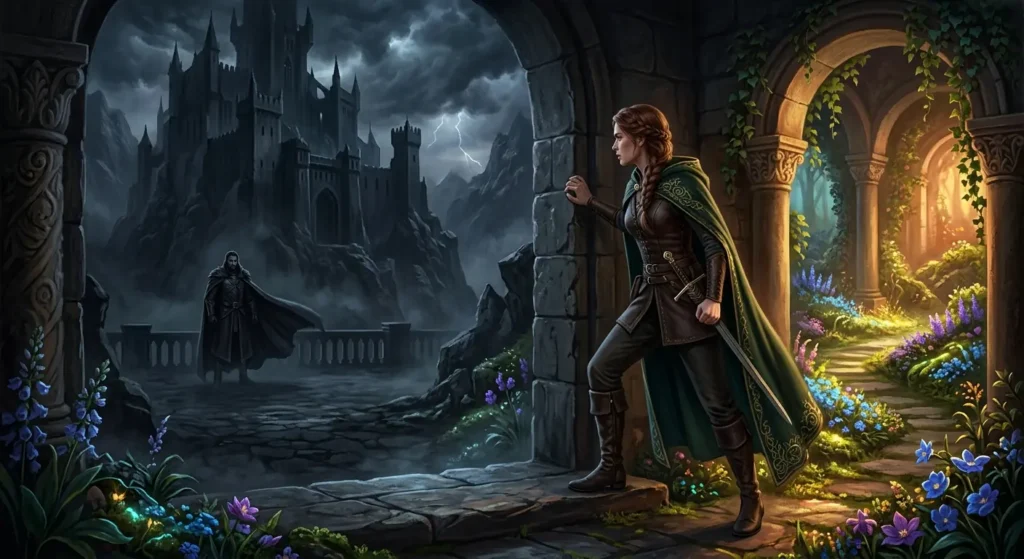
I want to take seriously the criticism that this entire trope risks something more troubling than bad writing.
The same Dark Triad research cited above documents real links between these traits and exploitation, deception, and relational harm in human relationships.
A persistent diet of fiction where danger reliably resolves into devotion, with no real risk of the darker version simply staying dark, could plausibly shape expectations in ways worth taking seriously rather than dismissing as harmless escapism.
I think the fair response isn’t to argue the trope should disappear. It’s to hold fiction to the standard I’ve described above: cost, consequence, genuine agency on the heroine’s part rather than passive endurance rewarded with a happy ending.
Byron himself never got redeemed in real life. Lady Caroline Lamb’s own verdict on him stood exactly as dangerous as she first called it. Fiction gets to imagine a different outcome specifically because it isn’t bound by what happened to the people who lived the real version first.
Frequently Asked Questions
Did Lord Byron’s own life actually follow anything like the redemption arc common in romantasy’s morally grey love interests?
No. Byron’s documented personal history shows no clean redemption arc, and his relationship with Lady Caroline Lamb ended in personal and public scandal rather than resolution, which is part of why he became the template for literary danger rather than literary reform.
Is there a difference between a morally grey love interest and a villain protagonist?
Generally yes. A villain protagonist typically remains the story’s central moral focus throughout, while a morally grey love interest usually exists in relation to a separate protagonist whose perspective and judgment of him drives the reader’s own evolving understanding.
Does Dark Triad research find any gender differences in attraction to these traits?
Yes. The original 2009 research and subsequent studies found the link between Dark Triad traits and short term mating success notably stronger for men than women, with considerably less research specifically examining how these traits function as attractors in women.
Why does Cardan’s arc in The Cruel Prince get cited so often as a strong example of this trope done well?
Because his early cruelty carries, lasting narrative consequence rather than being quietly forgotten once romance develops, and Jude’s own power is built independently rather than granted through the relationship, which keeps the dynamic from reading as pure wish fulfillment.
Is the Byronic hero considered the direct ancestor of every morally grey romantic archetype, or are there other literary roots?
Byron’s influence is widely cited as foundational, though Gothic fiction more broadly, including figures like Heathcliff and Rochester, contributed overlapping, independently developing versions of the same basic dangerous but compelling romantic figure around the same historical period.
Final Thoughts

Confidence, risk, and genuine depth underneath both is the actual formula, and it’s been running since a real woman called a real poet dangerous to know and meant it as a warning rather than a compliment.
Romantasy inherited the warning and decided to see what happens if the story lets someone survive loving him anyway. Whether that’s a healthier fantasy than the original is a fair question. Whether it’s an old one wearing new scenery isn’t really in dispute.
Related Articles
- Why Dragons Took Over Romantasy, Thanks to Fourth Wing?
- Why Fated Mates Are So Hard to Put Down
- Why Enemies To Lovers Works So Well in Romantasy
- Is Romantasy Actually a Genre or a Marketing Label?
- Why Romantasy Connects So Deeply With Female Readers
- Would You Be Able to Survive in the Fourth Wing World?
Sources and Further Reading
- Mad, Bad and Dangerous to Know: The Life of Lady Caroline Lamb – Sean Manchester
- Byron Contra Mundum | The Oxford Handbook of Lord Byron | Oxford Academic
- The Dark Triad: Facilitating A Short‐term Mating Strategy in Men – Jonason – 2009
- The Dark Triad Traits and Relationship Satisfaction: Dyadic Response Surface Analysis – PubMed
- The Cruel Prince – Holly Black
- A Court of Thorns and Roses – Sarah J. Maas
- Fourth Wing: The Empyrean – Rebecca Yarros
Written by Batin Khan, a curious free spirit who loves reading and exploring the worlds of fantasy, mythology, and ancient stories. Through this blog, Batin hopes to share that sense of wonder with readers while building an exciting future along the way.