
 By
By Dark fantasy creates a specific problem for itself. Once you commit to a world where magic won’t rescue anyone and institutions can’t be trusted, you’ve removed most of the machinery other fantasy uses to generate hope, resolution, and forward motion.
These seven dark fantasy tropes are the replacement machinery. Each one solves a structural problem the genre’s own commitments created, which is why they keep recurring across authors who otherwise share almost nothing.
The Mentor Who’s Using You
Bayaz Is the Genre’s Cleanest Example
Fantasy’s mentor traditionally performs two jobs at once. He teaches the protagonist how the world works, and he tells the reader that the protagonist’s journey matters. Gandalf doesn’t merely explain Middle-earth; his presence reassures us that someone understands the larger game.
Dark fantasy can keep the first function while destroying the second.
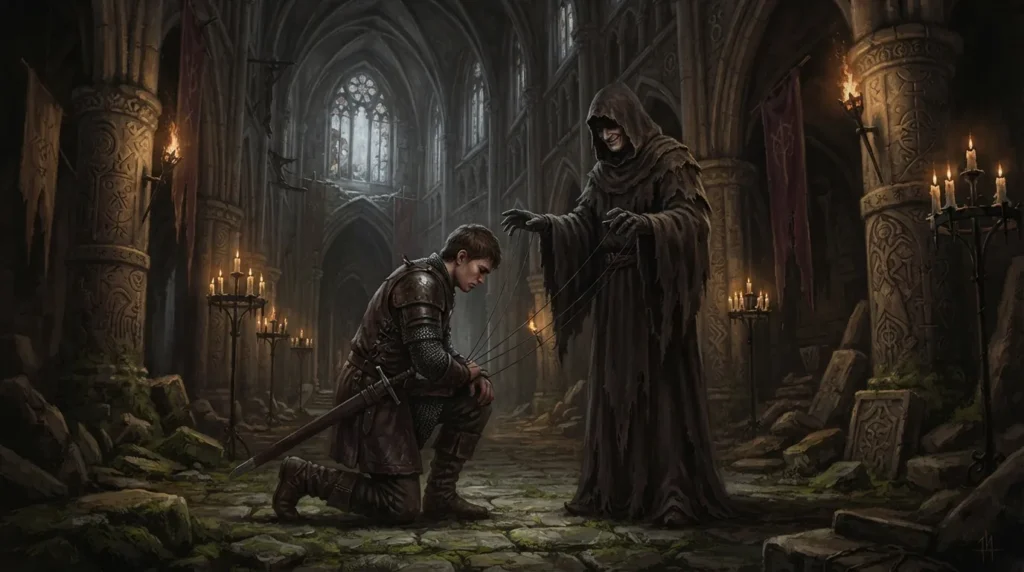
Bayaz in Joe Abercrombie’s First Law books is an unusually clean example because he initially looks almost archetypal. He’s ancient, knowledgeable, powerful, and apparently interested in assembling the right people for an important purpose. The party needs his knowledge, and the reader initially has little reason to doubt his authority.
The later revelation changes what that authority means. Bayaz wasn’t a wise man reluctantly guiding history toward a better outcome. He was pursuing his own centuries-long political struggle, and the protagonists were useful partly because they were available.
That’s more disturbing than simply giving the mentor evil motives. The important inversion is that the mentor remains competent. He still knows more than the protagonists. He still moves the plot forward.
He still explains the world. What disappears is the assumption that his knowledge exists for the hero’s benefit.
Moral Clarity Problem
Traditional fantasy uses the mentor to transfer knowledge and legitimize the hero’s path. Dark fantasy can’t use a trustworthy mentor without importing exactly the moral clarity it’s trying to avoid.
Corrupting the mentor keeps the structural function: someone who moves the plot and explains the world, while removing the reassurance that usually comes attached.
Magic That Charges Your Body Directly
Robin Hobb’s Skill Has a Medical Bill
Fantasy magic often gives characters an escape hatch. Once someone learns how to use it, a problem that would be impossible for an ordinary person can suddenly become solvable.
Robin Hobb’s Skill doesn’t remove that possibility. It makes the solution hurt.
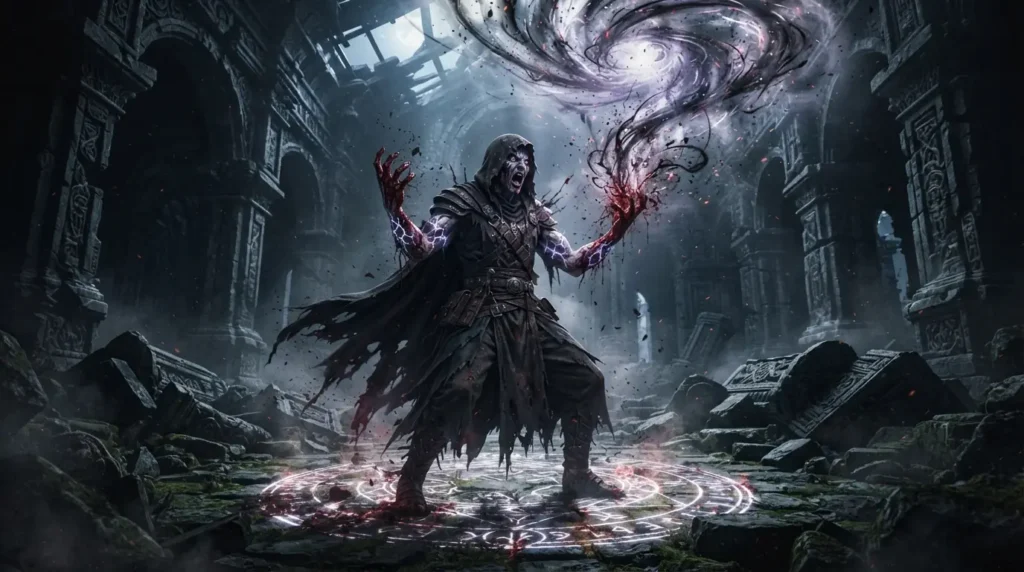
In the Farseer books, the Skill grants genuine telepathic and manipulative power, but using it can produce agonizing headaches and become dangerously consuming.
Skill users can lose themselves in the current entirely, and Fitz’s relationship with the ability increasingly resembles managing a dependency rather than wielding a convenient tool.
The important part is that the cost isn’t merely cosmetic. The magic makes Fitz more powerful while simultaneously making him more vulnerable.
Power Is Never Free
Dark fantasy is best defined by whether its magic protects characters from cost. Attaching a physical price to magic use is the most direct way to enforce that rule at the mechanical level.
The reader learns quickly that reaching for power is never free, which sustains tension in every scene where a character could theoretically solve a problem with magic and chooses not to.
The Narrator You Can Catch Lying
Severian’s Perfect Memory Is a Claim, Not a Fact
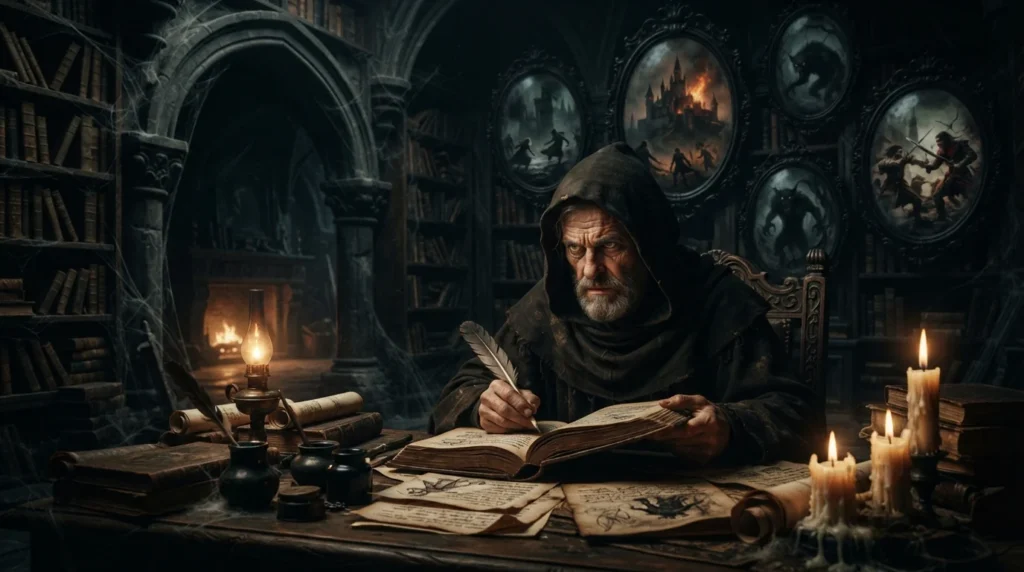
Gene Wolfe’s Severian, narrating The Book of the New Sun, states early that he never forgets anything. An attentive reader eventually notices him omitting, reshaping, and occasionally contradicting himself.
Wolfe never announces the unreliability. The text simply contains the evidence and trusts you to find it, which makes rereading the series a genuinely different experience from reading it once.
Need For Uncertainty Is Real
Dark fantasy wants dread that doesn’t resolve. A reliable narrator eventually explains everything, which caps how long uncertainty can survive.
Undermining the narrator itself pushes the uncertainty into the reading experience rather than the plot, where it can’t be resolved by any event on the page.
Prophecy That Somebody Planted on Purpose
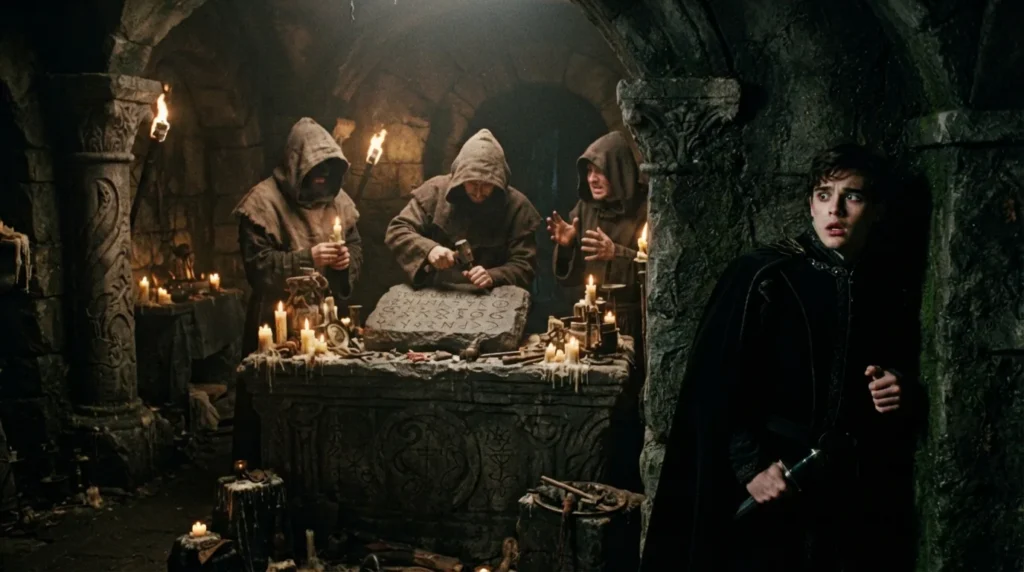
The Bene Gesserit Seeded Arrakis Deliberately
Frank Herbert’s Dune describes the Missionaria Protectiva, a Bene Gesserit program of implanting protective myths and prophecies among populations across the galaxy, specifically so that a Bene Gesserit stranded there later could exploit local belief for survival.
Lady Jessica recognizes these seeded patterns on Arrakis and uses them exactly as designed. The Fremen religious framework around Paul isn’t organic revelation. It’s a tool somebody left in place generations earlier.
Countering Unearned Significance
Straightforward prophecy hands a story unearned significance, which I’ve written about in my chosen one blog post as the specific thing readers actually resent about the chosen one narrative.
Engineered prophecy keeps prophecy’s structural usefulness (immediate stakes and a sense of destiny) while making it a political instrument rather than a cosmic promise. The prophecy still drives the plot. It just doesn’t validate anyone.
The Antagonist Whose Grievance Is Real
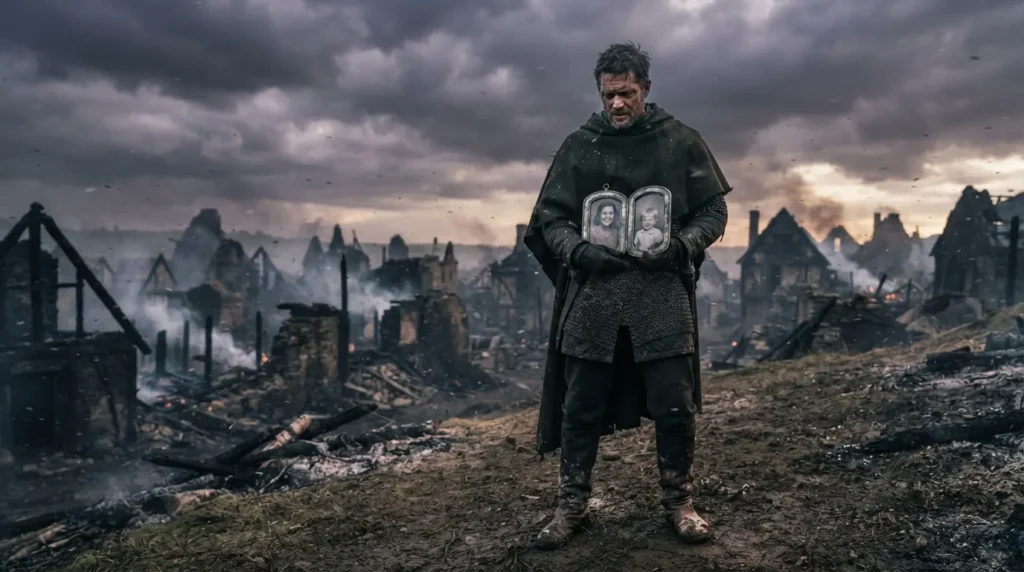
Altan’s Rage Has a Documented Cause
R.F. Kuang’s The Poppy War gives Altan Trengsin a grievance the text refuses to dismiss. His people, the Speerlies, were subjected to genocide, and his eventual descent into atrocity grows directly out of that history rather than arriving from nowhere.
The novel doesn’t excuse what he becomes. It also never lets the reader pretend his starting point was unreasonable.
The Moral Cover
An evil antagonist gives the protagonist moral cover. Dark fantasy generally doesn’t want its protagonist to have moral cover.
An antagonist with a legitimate claim forces every subsequent conflict to cost the reader something, because agreeing with the opposition’s premise while opposing their methods is a genuinely uncomfortable position to hold for four hundred pages.
The Found Family Built Specifically to Be Broken
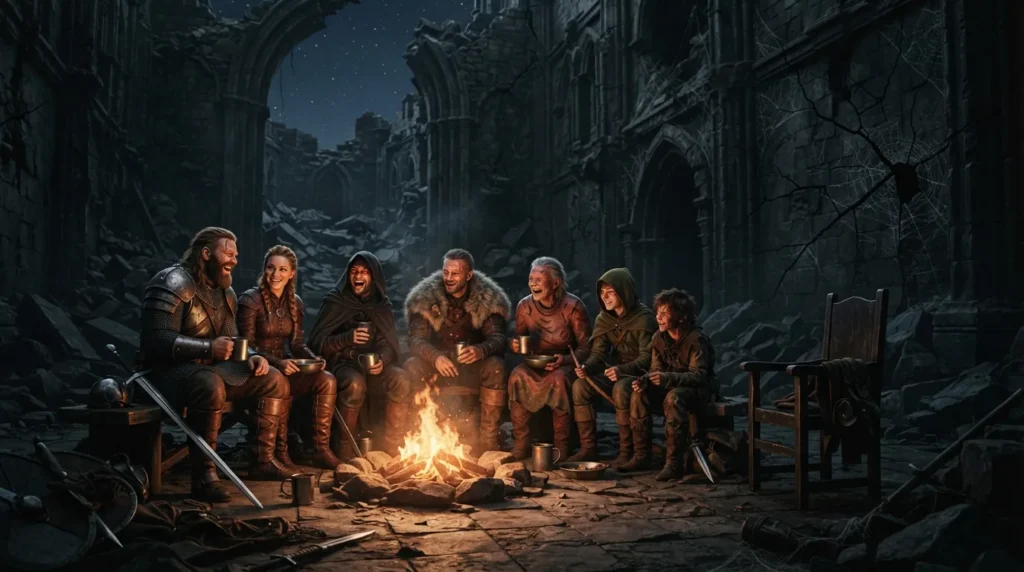
Erikson Makes You Love a Unit Before Dismantling It
Steven Erikson’s Malazan Book of the Fallen spends real page time making the Bridgeburners specific, funny, and worth caring about: named soldiers with distinct voices and running jokes.
Then the series does what war does to units. The affection the text built is precisely what makes the losses land, and Erikson clearly builds it for that purpose.
The Problem This Solves
A world this bleak needs something the reader wants to protect, or the darkness has nothing to press against and becomes monotonous.
Found family supplies that stake efficiently. It also gives the author a resource to spend, which is a genuinely different narrative economy than a story with nothing worth losing.
The Ancient War That Nobody Won
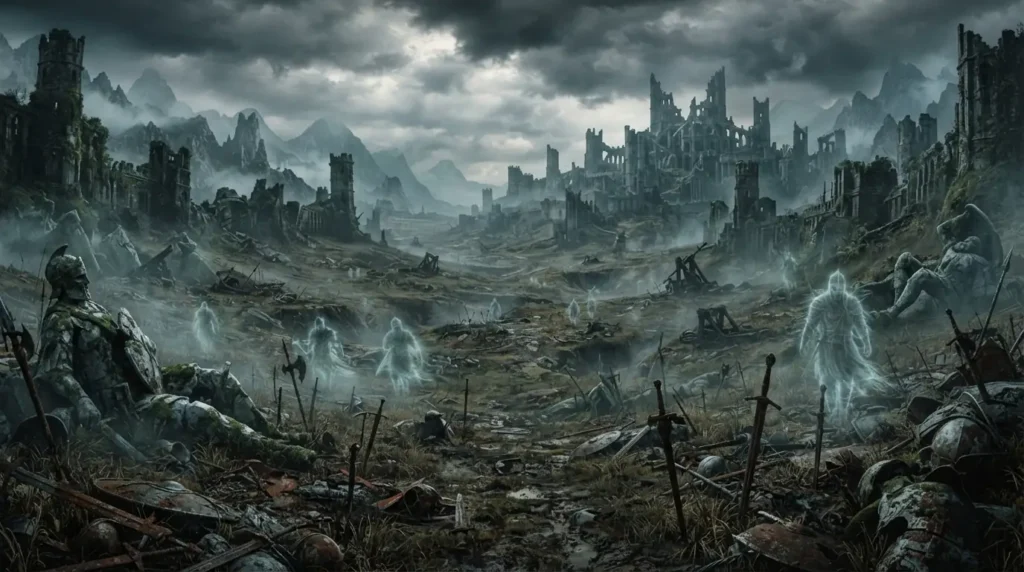
The Broken Earth Runs on an Unresolved Catastrophe
N.K. Jemisin’s Fifth Season trilogy sits in a world shaped by a catastrophe far in the past, with ruined civilizations scattered across the landscape and seasons of geological upheaval recurring on their own schedule.
Nobody won the ancient conflict. The present simply inherited its consequences, and the characters navigate wreckage they had no part in creating.
Handling the Promise of Resolution with Care
Traditional epic fantasy usually has a past golden age to restore or an ancient evil to finally defeat. Both offer the promise of resolution.
An unwon ancient war removes that promise entirely while keeping deep history’s texture and weight. The world feels old and consequential without offering any restoration to work toward.
Worth Noting About Dark Fantasy Tropes
Framing these as problem-solving machinery risks making dark fantasy sound like engineering, as though an author picks seven modules and assembles a novel.
That’s not how good books in this genre actually get written, and I’d push back on my own framing here. Hobb almost certainly wasn’t thinking about enforcing a definitional rule when she gave the Skill its headaches. She was writing a character with a dangerous gift and following the logic honestly.
The tropes are patterns visible in retrospect, not blueprints applied in advance. What separates strong execution from weak isn’t whether an author uses these devices. It’s whether the specific details (Severian’s particular omissions, Altan’s particular history) feel discovered through the story’s own logic rather than installed to fill a slot.
Frequently Asked Questions
Is dark fantasy inherently nihilistic?
No. Dark fantasy can reject easy hope without rejecting hope entirely. Its characters can still love, sacrifice, protect one another, or believe in something. The difference is that the story refuses to guarantee those choices will be rewarded.
What’s the difference between a morally gray villain and a justified antagonist?
A morally gray villain has understandable motives mixed with questionable choices. A justified antagonist goes further. The story gives you legitimate reasons to agree with the grievance itself, even while making the antagonist’s response indefensible.
Why does dark fantasy keep returning to found families?
Because bleak worlds need something worth losing. Found families create emotional stakes without requiring a trustworthy institution to provide them. The darker the world becomes, the more powerful that contrast becomes.
Why use an unreliable narrator instead of simply hiding information?
Because hidden information can eventually be revealed. An unreliable narrator creates a deeper problem. Even after the facts appear, the reader still has to decide what those facts mean and whether the person presenting them understands them correctly.
Why give the antagonist a legitimate grievance?
Because it removes moral distance. If the antagonist is simply evil, the protagonist’s opposition is easy to understand. A legitimate grievance forces the reader to separate the justice of the complaint from the horror of what the character does with it.
Are these tropes unique to dark fantasy?
No. Most of them appear across fantasy and other genres. What makes them particularly useful in dark fantasy is the function they perform. They preserve familiar fantasy machinery while removing the reassurance normally attached to it.
Final Thoughts
Seven devices doing seven different jobs, each one filling a gap the genre creates by refusing the comforts other fantasy relies on.
The mentor still provides knowledge but may be using you. Magic still provides power but takes something from the one who wields it. Prophecy still gives events significance, but may have been manufactured. The antagonist still has a motive, but that motive may be impossible to dismiss.
The found family still gives the characters something to fight for, but the story may be willing to take it away. Even the past can still give the world meaning without offering anything that can actually be restored.
That’s the deeper pattern connecting these tropes. Dark fantasy doesn’t become dark simply by adding more suffering. It becomes dark by removing the guarantees that make suffering bearable.
Notice what none of them are. None is a monster, a battle, or a body count. Dark fantasy’s actual toolkit is structural rather than gruesome, which is why the genre’s best entries can be genuinely disturbing without ever raising their voice.
Related Articles
- Grimdark vs Dark Fantasy: Are They One & The Same
- 12 Best Dark Fantasy Books 2026: You Should Never Miss Out
- How to Build a Dark Fantasy World That Actually Disturbs
- How Norse & Greek Mythology Built Modern Dark Fantasy
- 14 Dark Fantasy Books That Don’t Need a Sequel [2026]
- 13 Dark Fantasy Books That Show No Mercy [2026]
- Fate vs Free Will: Dark Fantasy’s Favorite Argument
- 7 Character Archetypes Every Dark Fantasy Needs
Written by Batin Khan, a curious free spirit who loves reading and exploring the worlds of fantasy, mythology, and ancient stories. Through this blog, Batin hopes to share that sense of wonder with readers while building an exciting future along the way.