
 By
By Quick Takeaways:
- Grimdark vs Dark Fantasy – Dark fantasy is defined by content and tone: dark themes, horror elements, morally complex material, and tragedy. It’s an old, broad term.
- Grimdark is defined by a specific philosophical stance: the deliberate deconstruction of heroic fantasy conventions and moral ambiguity as the default state rather than the exception
- The term “grimdark” comes from Warhammer 40,000’s 1987 tagline, and its migration into fantasy criticism gave it a much more specific meaning than “dark fantasy” ever carried
- The clearest test: does the story allow uncomplicated goodness or heroism to exist and matter, even within darkness? Dark fantasy often says yes. Grimdark rarely does without undercutting it.
- Every First Law novel is both dark fantasy and grimdark. Many dark fantasy classics, including Gene Wolfe’s Book of the New Sun, are not grimdark at all.
I hear these two terms used interchangeably constantly, and every time it happens, something in me winces a little.
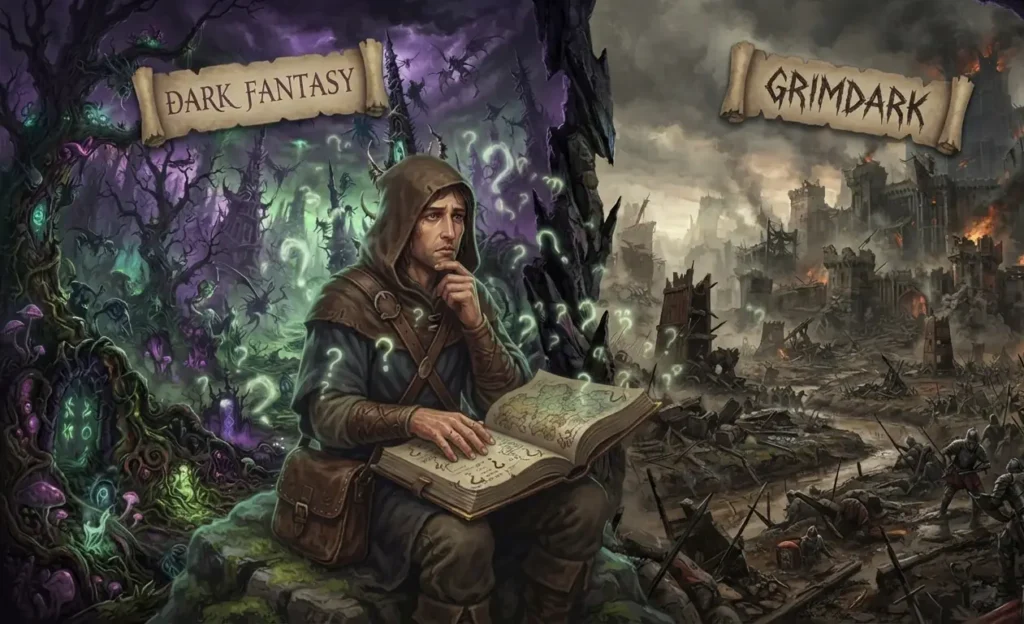
They’re related. They overlap substantially in practice. A huge number of books genuinely qualify as both. But they’re answering different questions, and conflating them causes real confusion when readers are trying to find what they actually want.
Dark fantasy asks: how dark is the content? Grimdark asks: what does this story believe about heroism? Those are different questions, and I presume the distinction matters more than most genre conversations acknowledge.
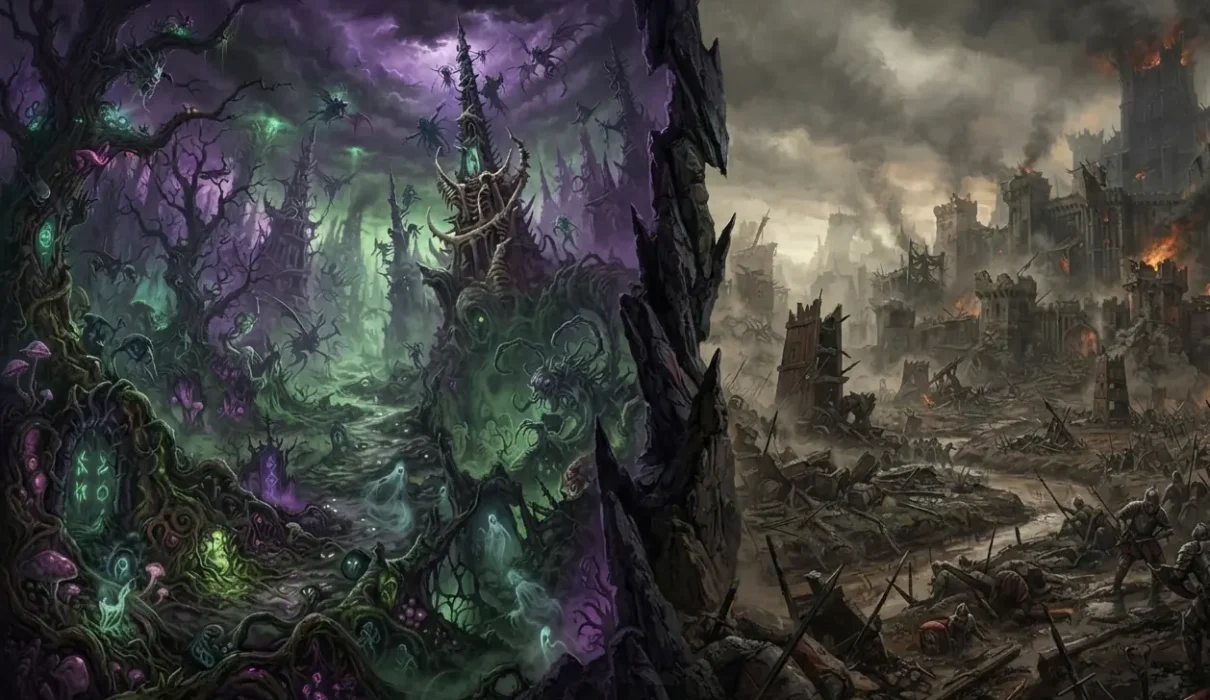
Grimdark vs Dark Fantasy: The Confusion These Terms Create
Why Readers Conflate Them
The surface similarity between grimdark and dark fantasy is obvious enough that conflating them feels natural. Both involve violence. Both involve moral complexity. Both reject the clean, uncomplicated heroism of traditional fairy-tale fantasy. A reader encountering either term for the first time reasonably assumes they’re describing the same thing.
The confusion has real consequences. A reader who wants dark fantasy’s atmospheric horror and tragic weight but not grimdark’s specific cynicism about heroism can end up disappointed by a book that technically fits the “dark fantasy” label but delivers a grimdark reading experience they weren’t looking for. And the reverse happens just as often.
Getting the distinction right isn’t pedantry. It’s the difference between finding what you want and getting something adjacent to it that leaves you unsatisfied.
Read: 13 Fantasy Genres Ranked: Which One Actually Suits You?
What Dark Fantasy Actually Means
An Older, Broader Category
Dark fantasy is the older term, and its lineage traces back through Gothic fiction, horror-adjacent fantasy, and the pulp tradition of authors like Clark Ashton Smith and later Karl Edward Wagner, whose Kane stories are frequently cited as an early explicit use of the “dark fantasy” label.
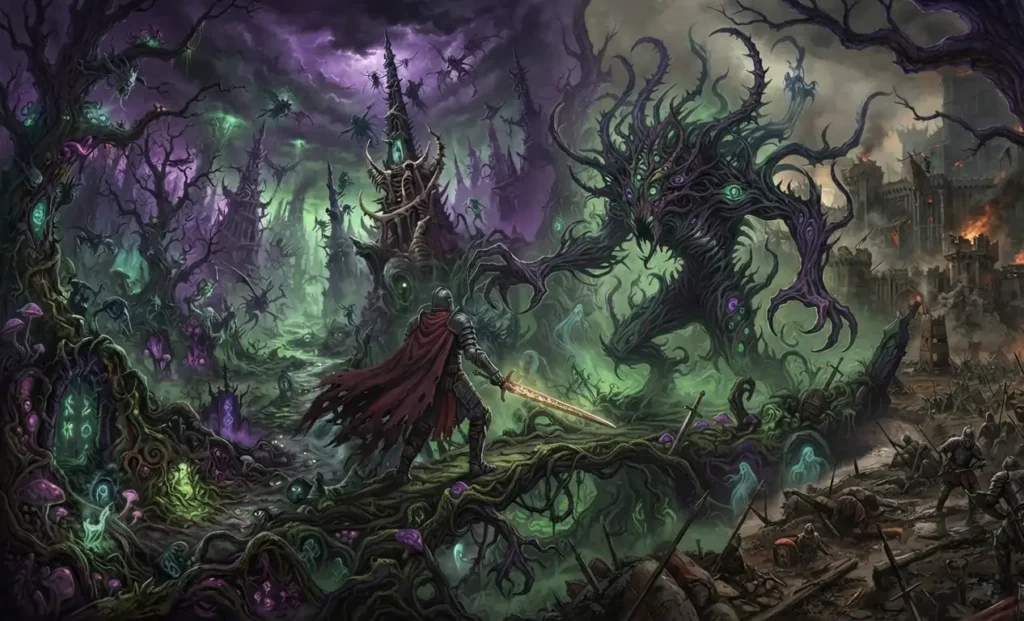
The defining quality of dark fantasy is content and tone. It’s fantasy that engages seriously with death, horror, tragedy, moral corruption, and disturbing material as central rather than incidental elements. The darkness can come from atmosphere, from horror-genre crossover elements, from tragic structure, or from unflinching engagement with violence and its consequences.
Crucially, dark fantasy doesn’t require a specific stance on whether heroism is possible or whether goodness matters. A dark fantasy novel can be genuinely horrifying in its content and still allow characters real moral clarity, real sacrifice that means something, and real goodness that isn’t undercut by the narrative’s cynicism.
Read: Why Millennials and Gen Z Love Dark Fantasy
What Dark Fantasy Looks Like in Practice
Gene Wolfe’s Book of the New Sun is dark fantasy of the most literary kind: psychologically dense, morally ambiguous, populated by characters who do genuinely terrible things. But the novel isn’t nihilistic about the possibility of meaning or redemption. Severian’s journey has real moral weight that the narrative takes seriously rather than mocking.
Guy Gavriel Kay’s Tigana deals with genocide, cultural erasure, and the deliberate unmaking of a people’s memory. The content is genuinely dark. But the novel is explicitly hopeful about sacrifice mattering, about resistance being worthwhile, and about love and loyalty surviving even devastating loss. This is dark fantasy that firmly rejects a grimdark reading of its own material.
R.F. Kuang’s The Poppy War confronts historical atrocity with unflinching honesty. It’s dark fantasy engaging directly with genocide and war crimes. Whether it drifts toward grimdark territory as the trilogy progresses is a genuinely debatable question, which itself demonstrates how the two categories can blend at the edges.
What Grimdark Actually Means
The Term’s Origin
Grimdark comes from a specific and traceable source: Games Workshop’s Warhammer 40,000 tabletop game, whose 1987 rulebook contained the now-famous tagline, “In the grim darkness of the far future, there is only war.”
That phrase captured a specific tone: a universe with no possibility of clean victory, no institution worth trusting, and no ideology that isn’t compromised or actively monstrous. When online fantasy communities, particularly around forums discussing A Song of Ice and Fire in the 2000s, needed a word for fantasy that shared this specific worldview, “grimdark” migrated from tabletop gaming vocabulary into fantasy criticism.
The Specific Philosophical Stance
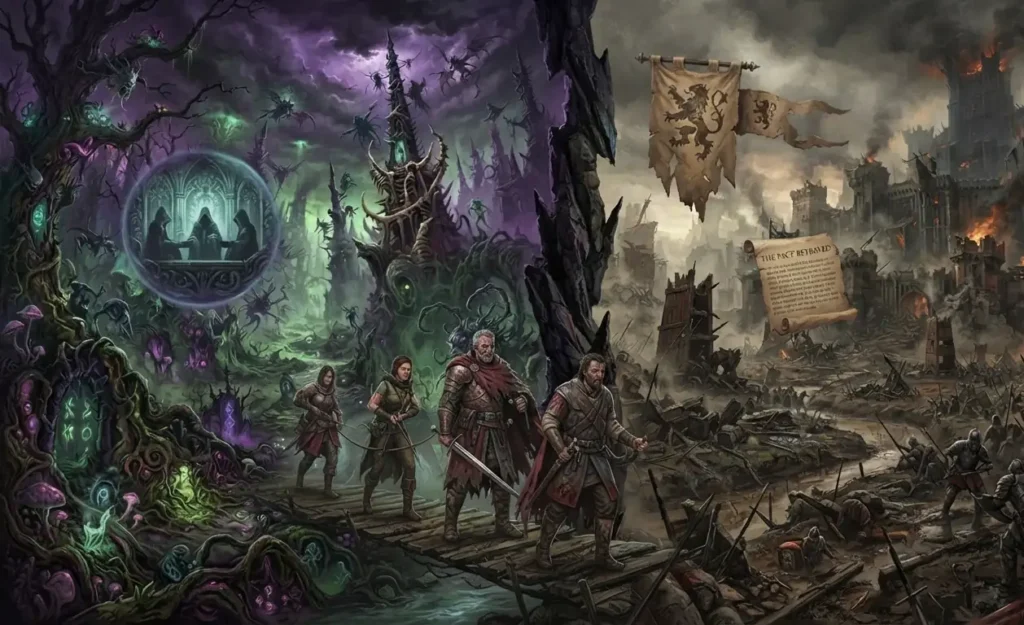
What makes grimdark distinct from dark fantasy generally is that it’s not simply describing dark content. It’s describing a specific stance the narrative takes toward heroism, institutions, and moral clarity.
Grimdark fantasy typically operates according to a consistent set of principles:
- Moral ambiguity is the default state, not the exception. Nobody is simply good. Every character’s virtue comes with genuine, narratively significant compromise.
- Institutions are corrupt or self-serving rather than flawed-but-worth-preserving. Kingdoms, religions, and orders of knighthood in grimdark fiction rarely turn out to deserve the loyalty characters give them.
- Traditional heroic fantasy conventions are deliberately subverted. The prophesied hero, the noble quest, and the clean victory are either denied entirely or revealed to have been illusions the narrative wanted you to believe in before pulling them apart.
- Violence has real, often ugly consequences that the narrative refuses to romanticize, even as it depicts that violence unflinchingly.
Grimdark is, in this sense, always in conversation with epic fantasy. It exists as a reaction to and deconstruction of the Tolkien-descended tradition of clear heroes, legitimate kings, and quests that resolve into meaningful victory. Dark fantasy doesn’t require that relationship with epic fantasy conventions at all.
What Grimdark Looks Like in Practice
Joe Abercrombie’s First Law trilogy is the clearest and most frequently cited grimdark text, and Abercrombie has embraced the label himself in interviews. Every character who looks heroic at the outset is systematically revealed to be more compromised than they initially appeared. The narrative structure exists specifically to deny readers the conventional epic fantasy payoff they’ve been trained to expect.
Mark Lawrence’s Prince of Thorns commits even more completely to the grimdark stance. Its protagonist, Jorg Ancrath, is a genuinely monstrous thirteen-year-old whose narration refuses to soften or excuse what he’s become. There’s no institution in the novel that offers moral refuge, and no character whose goodness survives scrutiny intact.
Scott Bakker’s Prince of Nothing takes the grimdark stance into explicitly philosophical territory, using its narrative to interrogate whether genuine self-knowledge or moral agency is possible at all. This is grimdark operating at its most intellectually ambitious.
Read: 12 Best Dark Fantasy Books 2026: You Should Never Miss Out
The Key Distinguishing Test
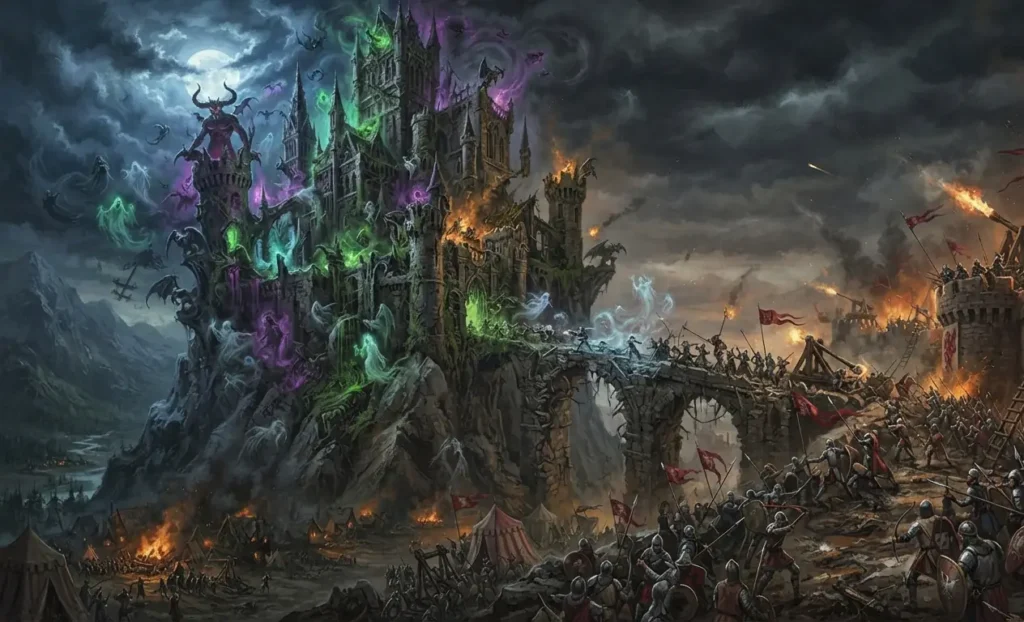
The Question That Separates Them
After years of reading across both traditions, here’s the test I actually use: does the story allow uncomplicated goodness or heroism to exist and matter, even amid darkness?
Dark fantasy frequently says yes. The content can be genuinely horrifying, the atmosphere genuinely bleak, and the moral situations genuinely complex, while the narrative still permits real sacrifice, real love, and real goodness to matter without being undercut or revealed as naive.
Grimdark, by its nature, rarely allows this without complication. When a grimdark narrative shows genuine goodness, it typically either punishes it, reveals a hidden cost, or uses it to demonstrate exactly how poorly such goodness survives contact with the world the story has built. The cynicism isn’t incidental. It’s structural.
A Second Useful Test
Is the story specifically in dialogue with, and reacting against, epic fantasy’s traditional conventions?
Grimdark almost always is. It exists because epic fantasy established certain expectations, chosen heroes, legitimate kingship, meaningful prophecy, that grimdark specifically sets out to subvert. Remove the epic fantasy tradition it’s reacting against, and grimdark loses much of its specific meaning.
Dark fantasy doesn’t need this relationship at all. Gothic horror-fantasy, tragic secondary-world fiction, and psychologically dense literary fantasy can all be dark without positioning themselves against epic fantasy’s conventions in any specific way.
Read: Is Dark Fantasy Horror? Where the Line Actually Falls
Where They Overlap
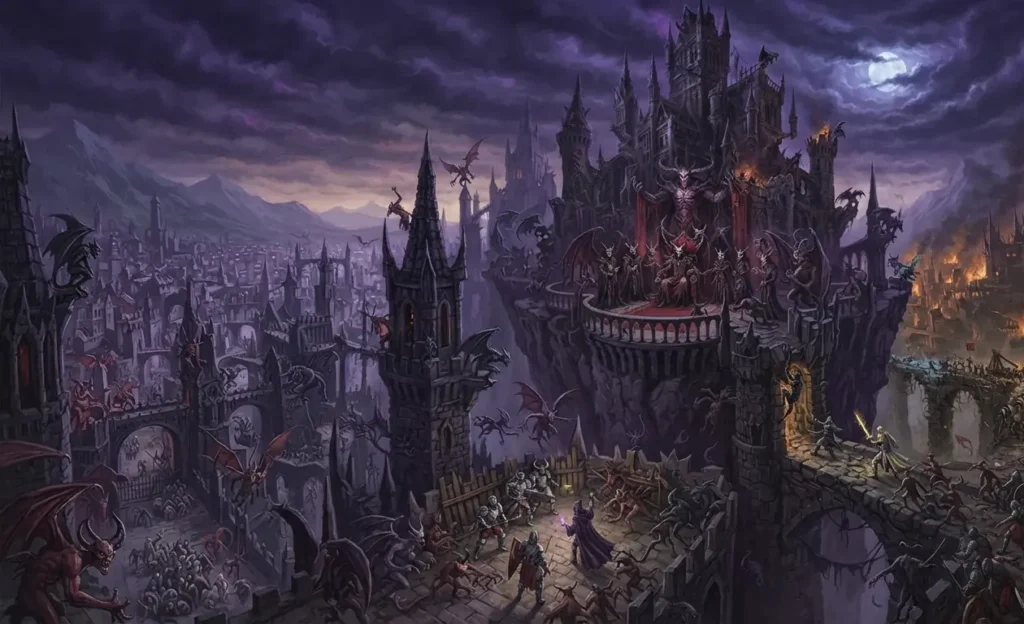
The Genuine Venn Diagram
A significant number of the genre’s most acclaimed works are legitimately both dark fantasy and grimdark simultaneously, and acknowledging this overlap matters as much as acknowledging the distinction.
The First Law trilogy is both: it has genuinely dark content (torture, war, violence with real consequences) and the specific grimdark philosophical stance (systematic deconstruction of heroic convention, institutional corruption, moral ambiguity as the default).
Richard K. Morgan’s The Steel Remains occupies similar overlapping territory: brutally dark in content and specifically grimdark in its treatment of heroism, sexuality, and institutional power.
The overlap exists because grimdark, as a specific philosophical stance, virtually always produces genuinely dark content as its natural expression. You can’t tell a story about moral ambiguity as the default state without depicting things that are dark. What doesn’t follow in the other direction: dark content doesn’t require the specific grimdark stance to accompany it.
Where They Diverge: Case Studies
Dark But Not Grimdark
The Book of the New Sun (Gene Wolfe) is genuinely disturbing in places. Severian is a torturer by profession and does things across the narrative that are difficult to read. But the novel’s underlying structure isn’t cynical about meaning, redemption, or the possibility of a coherent moral universe. It’s mysterious and morally complicated rather than nihilistic.
Tigana (Guy Gavriel Kay) deals with genocide and cultural erasure, subject matter as dark as anything in grimdark fiction. But the novel is explicit in its belief that resistance, memory, and sacrifice genuinely matter. It rejects the grimdark stance directly rather than by accident.
Malazan Book of the Fallen (Steven Erikson) is a genuinely contested case that illustrates the boundary well. It has enormous darkness: genocide, colonialism, catastrophic loss across ten volumes. But it also has consistent moments of real compassion and nobility that the narrative takes completely seriously rather than undermining. Most careful readers of the series would place it closer to dark epic fantasy than to grimdark specifically, because Erikson’s narrative doesn’t share grimdark’s core cynicism about whether goodness is real or whether it matters.
Grimdark and Nothing but Grimdark
Prince of Thorns (Mark Lawrence) doesn’t have a dark fantasy dimension separate from its grimdark stance. The entire novel is constructed around denying readers any comfortable moral position, and there’s no meaningful goodness in the narrative that survives scrutiny intact. This is grimdark in its purest and most uncompromising form.
Why the Distinction Matters for Readers
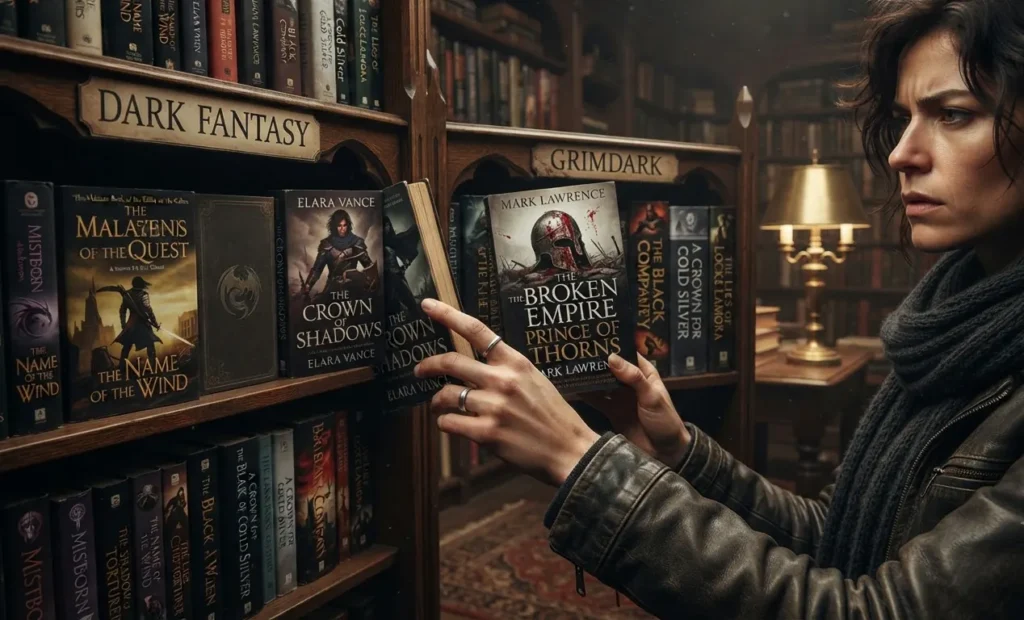
Finding What You Actually Want
If what you want is genuine darkness, tragedy, and moral complexity, but you also want the story to believe that goodness and sacrifice mean something, look specifically for dark fantasy that isn’t grimdark: Kay, Wolfe, and the more hopeful end of the Malazan spectrum.
If what you want is the specific experience of watching heroic fantasy conventions get systematically dismantled, of institutions revealed as corrupt, and of moral clarity denied at every turn, that’s the grimdark experience specifically: Abercrombie, Lawrence, Bakker.
Both are legitimate reading experiences. Neither is more sophisticated or more serious than the other, despite what some grimdark advocates and some grimdark critics both sometimes claim. They’re different answers to different questions about what fantasy is for.
Understanding What Authors Are Choosing
Knowing the distinction also helps you understand what a specific author is doing when they choose their narrative’s underlying philosophy.
When Kay writes Tigana with its genocide and cultural erasure but insists that resistance matters, he’s making a specific philosophical choice against the grimdark stance while still engaging fully with dark content. That choice is doing real work in the novel, and recognizing it as a choice rather than an accident of tone deepens the reading experience.
When Abercrombie systematically reveals every apparently heroic character’s compromise across the First Law trilogy, he’s making an equally specific choice, and recognizing the deliberateness of that structure changes how you read the eventual outcomes.
Frequently Asked Questions
Is grimdark just a more extreme version of dark fantasy?
Not exactly. Grimdark is defined by a specific philosophical stance toward heroism and institutions, not simply by intensity of darkness. Some dark fantasy is more disturbing in content than some grimdark fiction while maintaining a completely different relationship with whether goodness and heroism ultimately matter.
Can a story be grimdark without being dark fantasy?
In practice this is rare, since the grimdark stance toward heroism and institutions almost always produces genuinely dark content as its natural expression. Theoretically you could imagine a grimdark story with relatively mild content, but the term developed specifically alongside genuinely dark, violent fiction.
Who coined the term grimdark?
The term originates from Games Workshop’s Warhammer 40,000 tabletop game, specifically its 1987 tagline describing the setting as one where “there is only war.” Online fantasy communities, particularly around A Song of Ice and Fire discussions in the 2000s, adapted the term to describe fantasy sharing that specific cynical worldview.
Is Game of Thrones grimdark?
The television adaptation and the novels lean heavily grimdark, particularly in their systematic deconstruction of chosen-one and legitimate-kingship tropes and their consistent institutional cynicism. However, the novels also contain moments of genuine, uncomplicated heroism and loyalty that complicate a purely grimdark reading, placing the series near the overlap zone between dark fantasy and grimdark.
Does grimdark fiction ever have happy endings?
Rarely in the conventional sense, though grimdark endings can offer earned, complicated resolutions rather than purely bleak ones. The genre typically avoids clean victories or uncomplicated triumphs, preferring endings where survival, partial success, or ambiguous outcomes replace the decisive heroic resolution that traditional epic fantasy usually delivers.
Final Thoughts
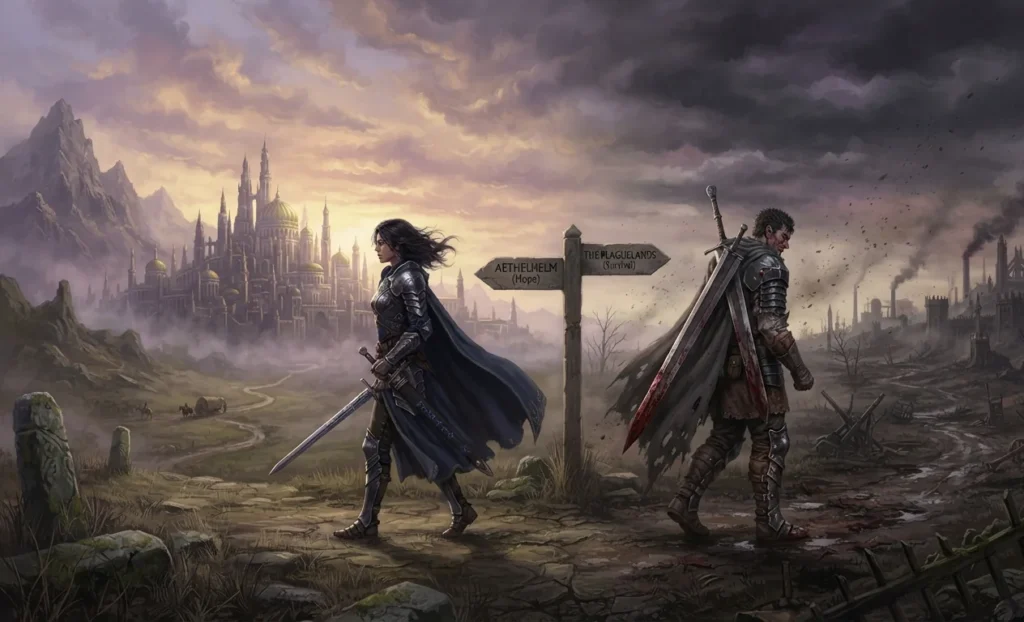
Dark fantasy and grimdark share enough territory that the confusion is understandable. They share violence, moral complexity, and a rejection of fairy-tale simplicity.
But they’re answering different questions. Dark fantasy asks how dark the content can go while still meaning something. Grimdark asks whether heroism, institutions, and moral clarity deserve to survive scrutiny at all, and answers, consistently, that they mostly don’t.
Both are legitimate, valuable ways to tell fantasy stories. Knowing which one you’re picking up, and which one an author actually intended, makes you a considerably better reader of both.
Further Reading & References
- Rhetorics of Fantasy – Wesleyan University Press
- The Encyclopedia of Fantasy – John Grant, John Clute
- Strategies of Fantasy – Attebery, Brian
- The Monster with a Thousand Faces: Guises of the Vampire in Myth and Literature – Brian J. Frost
- Tzvetan Todorov – The Fantastic: A Structural Approach to a Literary Genre
- The Encyclopedia of Fantasy – John Grant, John Clute
- Warhammer 40,000: Rogue Trader
Related Articles
- Why Fantasy is More Popular Than Ever Backed By Data
- Why Every Great Dark Fantasy Needs a Cursed Kingdom
- How to Build a Dark Fantasy World That Actually Disturbs
- Dark Fantasy vs Gothic Fantasy: Where’s the Line?
- How Norse & Greek Mythology Built Modern Dark Fantasy
- How Dark Fantasy Creates Dread Without Horror’s Tricks
- 7 Dark Fantasy Tropes That Make The Genre Work