
 By
By Quick Takeaways:
- Dragons appear in virtually every major world mythology, including traditions that developed without contact with each other, which suggests something genuinely fundamental about why humans are drawn to them
- Several specific scholarly theories explain the dragon’s universal appeal, including evolutionary psychology, Jungian archetypes, and the specific combination of animal features dragons typically possess
- Dragons have a moral flexibility no other fantasy creature matches: they can be monsters, gods, companions, guardians, or destroyers, depending on what the story needs
- The specific fantasy of being chosen by a dragon, of a being vastly more powerful than any human deciding to ally with you, is unique to dragons among fantasy creatures
- Understanding why dragons endure makes every dragon story you read more interesting, because you start noticing what each author is reaching for when they deploy a dragon
I’ve been following world mythology and fantasy fiction for more than few years, and I’ve asked the same question about a 80 times if not hundred in different ways: why dragons specifically?
Unicorns exist in multiple mythologies. So do sea monsters, giant serpents, griffins, and phoenix birds. None of them has achieved the global cultural presence that dragons have. None of them appears with such consistency across traditions that developed without contact with each other. None of them has the range of roles that dragons play in human storytelling.
The dragon is genuinely special. The reasons why are worth understanding specifically rather than simply asserting.
The Evolutionary Hypothesis: The Dragon We Were Born to Fear
Three Predators in One
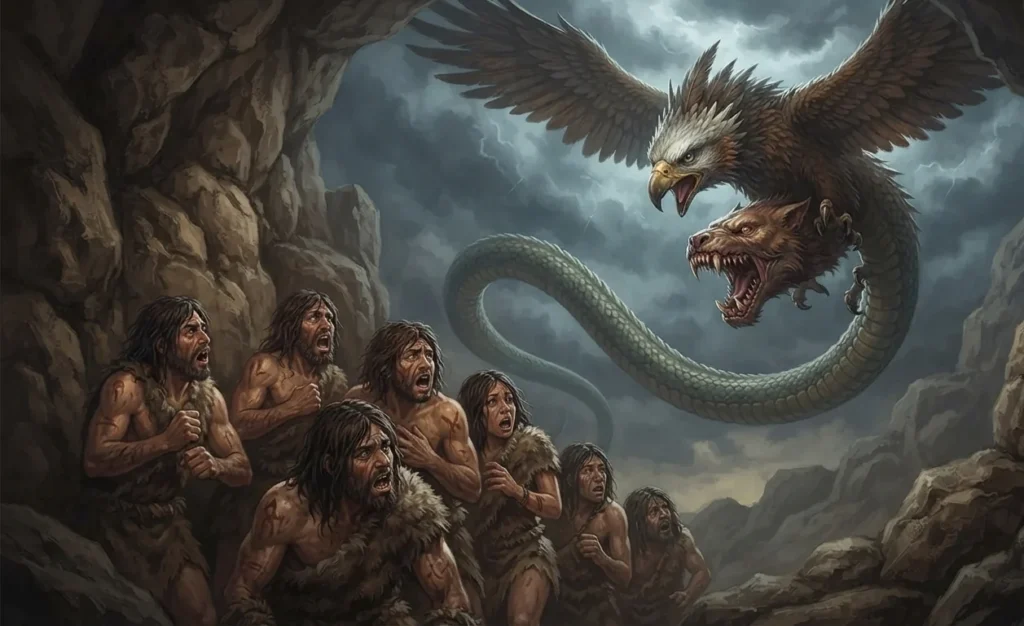
The most compelling scientific explanation for the dragon’s universal appeal comes from evolutionary psychology, and it begins with a specific observation: the composite dragon form combines features from the three categories of predator that most threatened our ancestors across millions of years of evolutionary history.
Large felids (lions, leopards, tigers) – predators that ambush from above or from concealment, that are faster than humans, and that represent the threat of being hunted and consumed by a more powerful terrestrial animal.
Large snakes – predators whose stealth, venom, and distinctive movement pattern trigger specific fear responses in primates that are documented even in primates without prior snake exposure.
Large raptors – birds of prey that represent the threat from above, the shadow that drops from the sky, which is one of the primate children’s most fundamental alarm triggers.
The dragon, in its most common composite forms, incorporates all three: a large predatory body (felid), a serpentine neck and tail (snake), and wings that enable attack from above (raptor). The evolutionary argument is that the dragon activates more ancestral fear responses simultaneously than any other creature because it is composed of the three categories of threat against which our biology has been calibrated the longest.
Why Fear Creates Fascination
The evolutionary predator explanation is sometimes used to explain why we fear dragons. But fear and fascination are close relatives in the emotional brain. The creature that activates our deepest threat responses also activates our deepest attention. What we’re most afraid of is also what we can’t look away from.
This is why the horror genre and the fantasy genre both reach for dragons. A creature that activates ancient alarm systems at multiple levels simultaneously is a creature that generates more visceral engagement than one that doesn’t. The dragon makes us feel something immediately and deeply, before any specific story has had time to develop an emotional case.
Read: Why Dragons Exist In Almost Every Culture On Earth
Scale: The Argument for Maximum Size
Why Biggest Matters
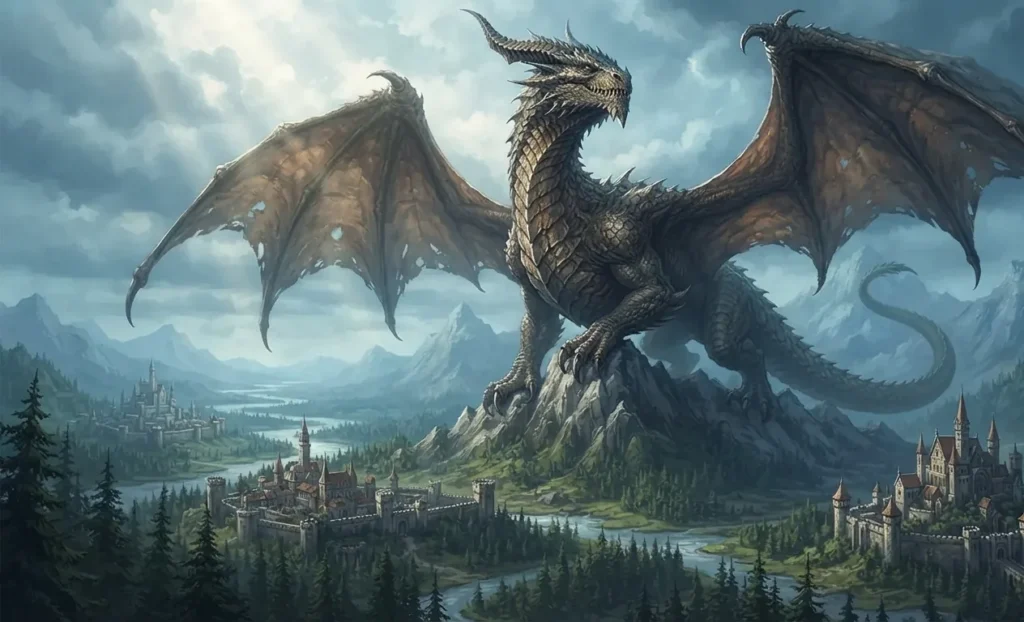
Dragons are almost always enormous. The scale matters, and it matters in ways that go beyond simple threat magnitude.
The human experience of being in the presence of something vastly larger than yourself is a specific kind of experience that philosophers call the sublime: the combination of terror and awe that arises from encountering something that exceeds the scale of ordinary human experience.
Standing at the base of a mountain, at the edge of the ocean, in a cathedral designed to make you feel small: these are sublime experiences.
A dragon at full mythological scale produces that experience at a biological rather than geological level. It’s not just large the way a mountain is large. It’s large and alive and looking at you.
The Awe Response
The awe response that scale activates is the same emotional register as religious experience, which is why dragons appear so frequently in religious and sacred mythology rather than only in adventure and monster stories.
Smaug looking at Bilbo with one enormous eye isn’t just a threat assessment scene. It’s a sublime experience: the encounter with something so much larger than yourself that ordinary categories of experience temporarily suspend.
This scale-generated awe is something only a few other beings in world mythology activate at the same intensity: the Leviathan of the Hebrew Bible, the world serpent Jormungandr of Norse mythology, the primordial Tiamat of Babylonian cosmology. Every tradition produces at least one being of this scale, and in most traditions that being is a dragon or dragon-adjacent figure.
Read: Dragon Mythology: How Every Culture Tells a Different Story
Moral Flexibility: The Dragon Can Be Anything
The Versatility Argument
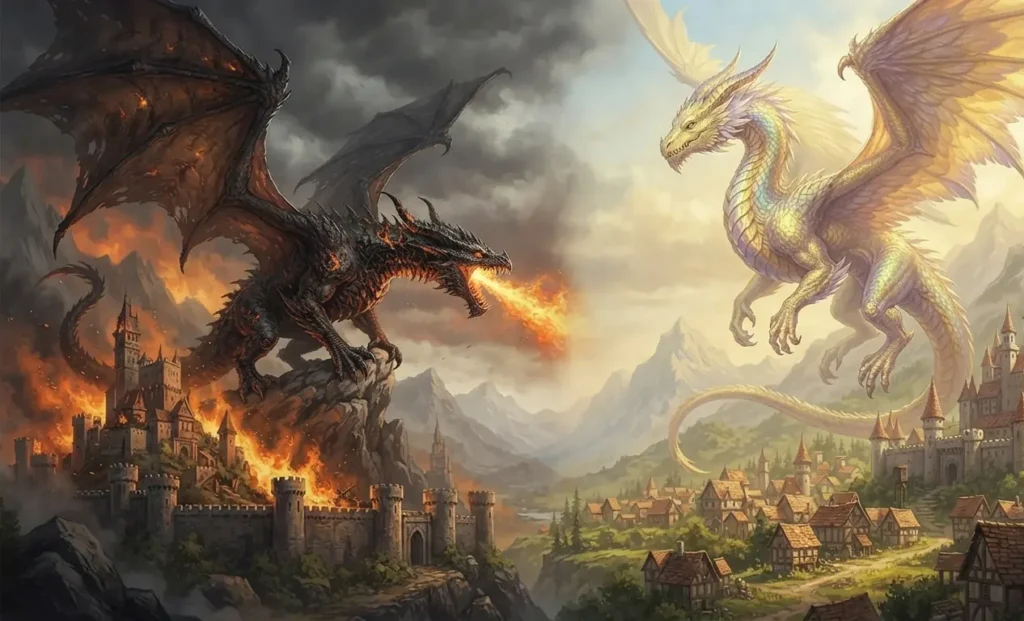
Here’s what I consider the most underappreciated reason for the dragon’s endurance: no other fantastic creature has the dragon’s moral range.
Unicorns are almost universally good. Their purity is definitional. A malevolent unicorn is so unusual it becomes a deliberate subversion.
Vampires are almost universally threatening, even in traditions where they can be allied with. The threat is structural.
Angels are benevolent by definition. Demons are malevolent by definition. Mermaids are ambiguous but narrowly so.
Dragons can be: the ultimate evil threatening civilization, the ultimate good protecting it, an ancient wisdom repository, a mindless natural disaster, a companion of profound loyalty, a god worthy of worship, a pest requiring extermination, a metaphor for greed, a metaphor for rebirth, and the symbol of imperial power. All of these appear in real mythological traditions.
What Flexibility Produces
A creature with this range of possible roles can serve any narrative purpose a storyteller needs. It can be the final antagonist or the oldest ally. It can represent what must be defeated or what can’t be defeated without destroying what you’re trying to protect.
This flexibility means dragons never become dated the way more narrowly defined creatures do. Every era, every culture, every author can find in the dragon the specific thing they need, because the dragon’s tradition is broad enough to support virtually any interpretation.
The dragon hasn’t endured because it means one thing consistently. It’s endured because it can mean almost anything with equal authenticity.
Read: Grimdark vs Dark Fantasy: Are They One & The Same
Ancient Wisdom: The Keeper of Accumulated Time
Dragons as the Oldest Things
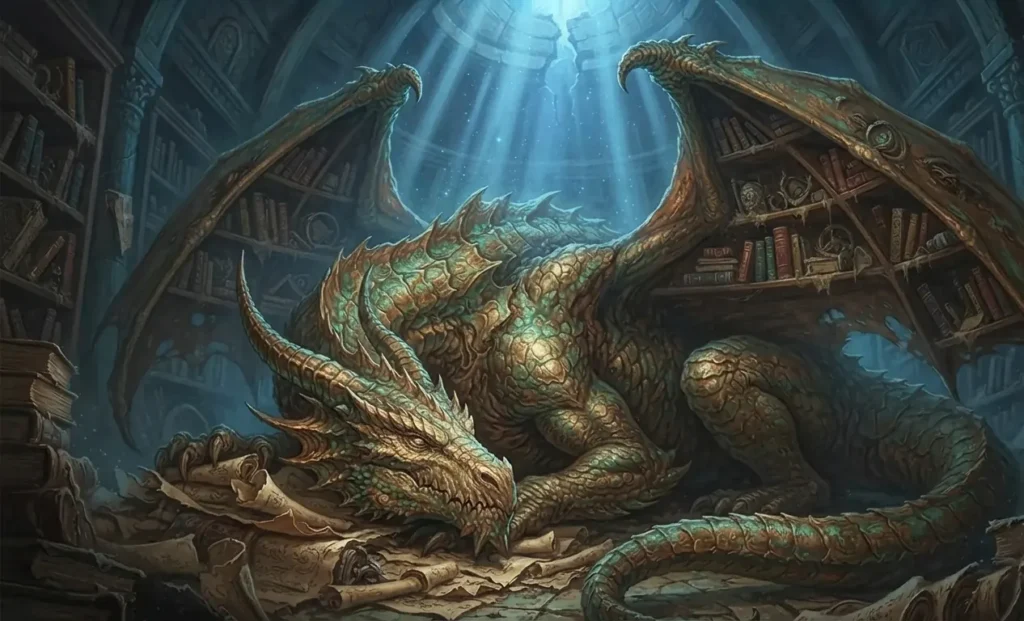
In virtually every tradition that has dragons, mature or ancient dragons are repositories of knowledge. They’ve been present long enough to remember what everything looked like before the present arrangement existed.
Smaug is 171 years old and knows the history of Erebor before the dwarves, before the battle, before the gold was gathered. The Dragon Kings of the East Sea have governed their domains since the world’s current arrangement was established. The dragon beneath Mount Fuji has been there since the mountain formed.
This antiquity gives dragons a specific kind of authority that no other fantasy creature has in the same way. An ancient dragon’s judgment carries the weight of everything it has seen. When a dragon tells you something, it’s telling you something it knows from experience that spans human lifetimes.
The Appeal of Accumulated Wisdom
The fantasy of access to genuinely ancient knowledge is one of the most persistent in human storytelling. Oracles, ancestors, gods who remember the world’s creation: these are all versions of the same desire for access to understanding that transcends ordinary human experience.
Dragons are the most physically impressive vessels for this desire. Consulting an oracle is passive. Meeting a dragon who has lived for centuries is terrifying and immediate. The dragon forces you to earn whatever wisdom it shares, which makes that wisdom feel genuinely different from information anyone could access.
The dragon-as-ancient-wisdom figure is one of the tradition’s most emotionally persistent elements precisely because it addresses something real: the human recognition that accumulated time produces understanding that cannot be rushed.
The Chosen One Dynamic: Being Selected by Something More Powerful
The Dragon Bond Fantasy
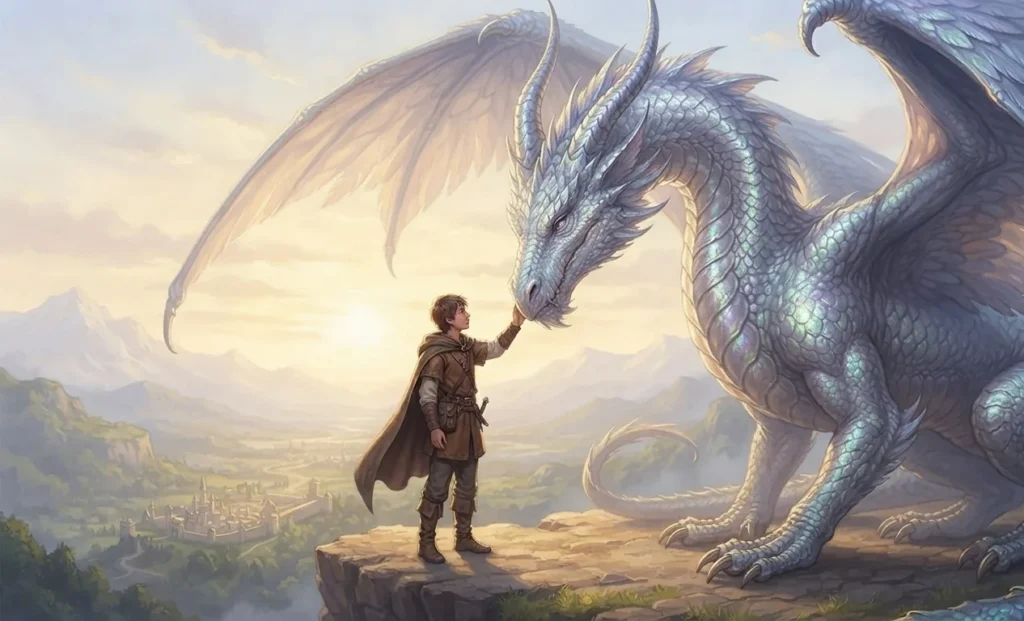
The dragon rider tradition across multiple cultures and multiple fantasy works returns consistently to a specific fantasy: the dragon chooses you.
Not because you’re the strongest fighter, though dragons sometimes choose warriors. Not because you’re the highest social rank, though dragons sometimes choose nobility. Dragons choose for reasons that are specific to the dragon’s own perception and judgment, and being chosen means that the most powerful being in the world has assessed you and decided you’re worth the association.
This is a specific and powerful fantasy that differs meaningfully from other power fantasies. Inheriting a magic sword is luck. Winning a tournament proves you’re the best fighter among those who competed. Being chosen by a dragon is a judgment from something that has seen everything and decided that you specifically matter.
Why This Resonates
The chosen one structure is common in fantasy broadly, but the dragon version has a specific character because of what the dragon is. Being chosen by a king is a political event. Being chosen by a god is a religious event. Being chosen by a dragon is a recognition by something ancient, powerful, and not particularly interested in human social structures that you have a quality worth this being’s attention.
The fantasy isn’t only about power acquisition. It’s about recognition by something genuinely exceptional. That combination of power and recognition from a source that doesn’t grant recognition easily is the specific emotional core of dragon rider narratives from Pern to the Temeraire series.
Read: Hard Magic vs Soft Magic: What Every Reader Should Know
Cross-Cultural Universality: The Dragon Across Every Civilization
The Distribution Problem
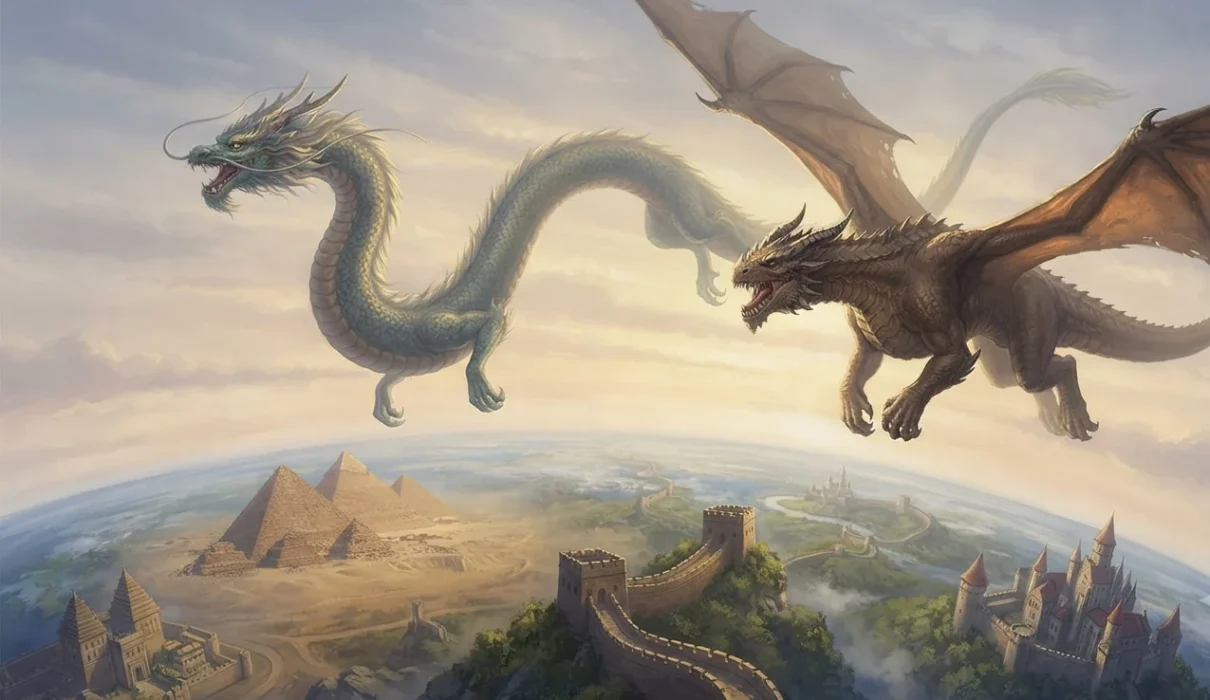
This is the fact about dragons that I find most intellectually compelling: they appear in traditions that couldn’t have borrowed from each other.
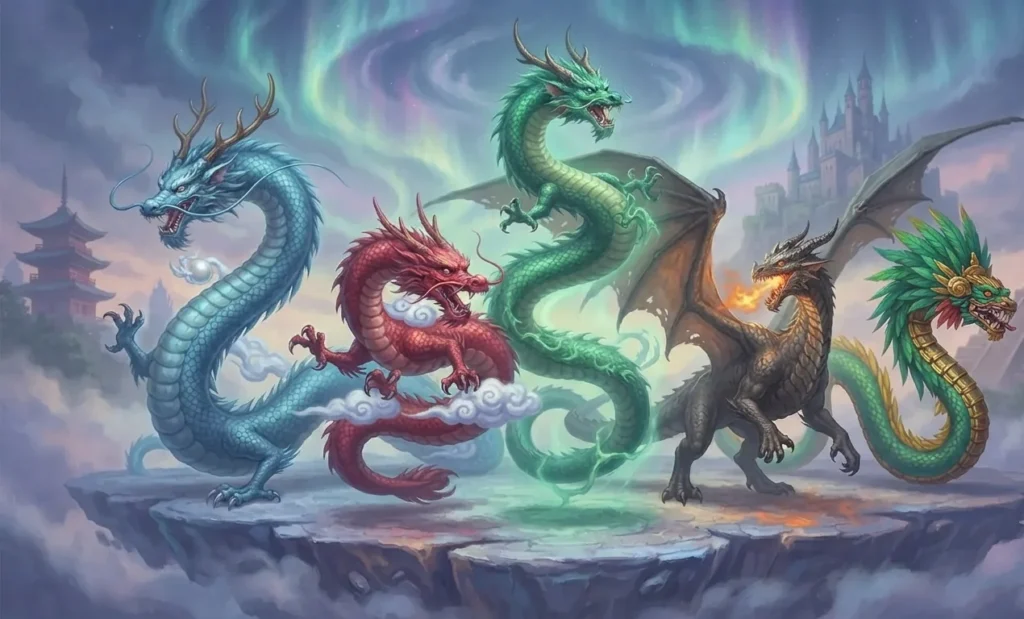
Chinese dragon mythology and European dragon mythology developed independently, producing creatures with completely different physical forms, moral characters, and cultural functions. Chinese dragons are serpentine, benevolent, and associated with water and rain. European dragons are leonine, malevolent, or ambivalent, associated with fire and destruction.
Yet both traditions independently produced a large, supernatural composite creature that controls a natural force, that occupies the highest tier of the animal hierarchy, and that has a specific relationship with human power: either supporting it or threatening it.
Indigenous traditions across the Americas, Africa, and Oceania produce their own dragon-adjacent beings independently. The specific forms differ. The structural position, the largest supernatural creature that controls nature and has a specific relationship with human civilization, appears repeatedly across unconnected traditions.
The Jungian Reading
Carl Jung’s concept of archetypes proposed that certain symbolic figures appear across human cultures because they represent genuine aspects of psychological reality rather than arbitrary cultural inventions. Whether or not you accept Jung’s theoretical framework, the empirical observation is real: the dragon keeps appearing.
Some anthropologists attribute this to common human experiences of real animals: the fossil bones of large extinct creatures interpreted as dragon remains, the specific predator combination theory, the psychological reality of the sky/earth/water combination in a single being. Others find the universality suggestive of something deeper in human symbolic processing.
Whatever the explanation, the cross-cultural universality is itself evidence of something. The creatures that appear everywhere aren’t there by accident.
Read: 15 Best Dragon Books for Adults [Dark & Epic Picks of 2026]
What Dragons Can Do That Nothing Else Can
The Unique Combination
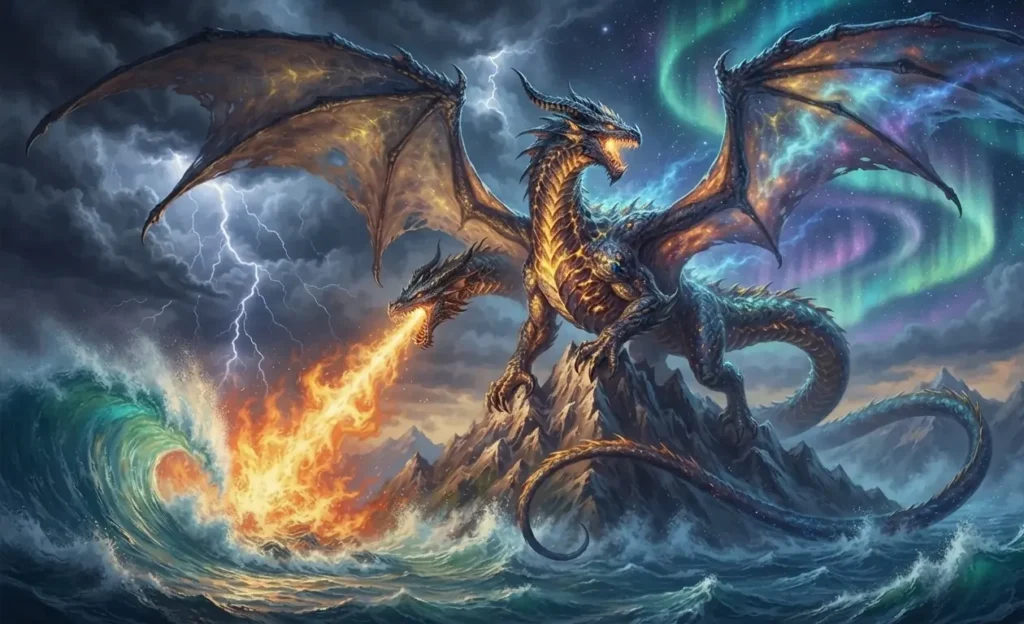
No other fantasy creature combines all of the following simultaneously:
- Scale: Genuinely enormous, activating the sublime response
- Elemental control: Usually fire, sometimes water, earth, or storm
- Ancient knowledge: Old enough to remember what humans cannot
- Moral range: Can serve any narrative role authentically
- Physical completeness: Can walk, swim, and fly simultaneously
- Relational potential: Can be enemy, ally, mount, god, or symbol equally
- Evolutionary resonance: Activates deep ancestral fear-and-fascination responses
Unicorns have some of these. Sea monsters have some. The phoenix has elements. No other creature has all of them simultaneously, which is why no other creature has the dragon’s range of narrative function or the dragon’s cross-cultural persistence.
The Dragon as Universal Symbol
The dragon endures because it’s the most complete symbol available in the mythological vocabulary.
Symbols work by compression: the most effective ones concentrate multiple meanings and multiple emotional registers into a single image. The dragon concentrates threat and wisdom, scale and intimacy, destruction and protection, the ancient past and immediate physical danger into a single recognizable form.
A story that needs to invoke maximum stakes reaches for a dragon because nothing else in the symbolic vocabulary carries as much weight simultaneously. That’s not cultural habit. That’s the dragon earning its place in every tradition that has produced one.
Frequently Asked Questions
Why do both Eastern and Western cultures have dragons if they developed independently?
The most supported explanation combines the predator hypothesis (dragons as composite of humanity’s three main evolutionary predators) with the fossil hypothesis (large dinosaur and prehistoric creature bones being interpreted as dragon remains across multiple cultures). The structural position, the most powerful supernatural creature controlling nature, may reflect universal human symbolic needs.
Are dragons the most popular fantasy creature in terms of media and merchandise?
By most commercial measures, yes. Dragon-themed merchandise, games, literature, and film consistently outperform equivalent products featuring other fantasy creatures. Fourth Wing’s dragon rider fantasy broke BookScan records in 2024. Game of Thrones generated unprecedented television viewership partially on the strength of its dragon content. The commercial evidence matches the mythological claim.
What makes dragons more compelling than other composite creatures like griffins or manticores?
Dragons combine more evolutionary threat categories simultaneously (large mammal, serpent, large bird). They also have greater moral flexibility than griffins (typically benevolent or neutral) or manticores (typically threatening). The dragon’s ability to serve any narrative role authentically is what griffins and manticores can’t match.
Why do children specifically seem drawn to dragons?
The scale and physical capability of dragons may appeal to children who are physically small in a world of larger adults. Dragons represent maximum physical capability, flight, fire, invulnerability, in a form that children can engage with imaginatively. The dragon-as-ally fantasy may specifically appeal to children who would benefit from a powerful protector or companion.
Has the dragon’s symbolic meaning changed across history?
Significantly. European medieval dragons were primarily threats requiring defeat, associated with sin and chaos in Christian symbolic frameworks. Renaissance and Enlightenment thought began reconsidering the dragon more ambivalently. Romantic literature began treating dragons with more nuance. Contemporary fantasy has fully rehabilitated the dragon to include all possible moral positions. The creature itself hasn’t changed; human symbolic needs have.
Final Thoughts
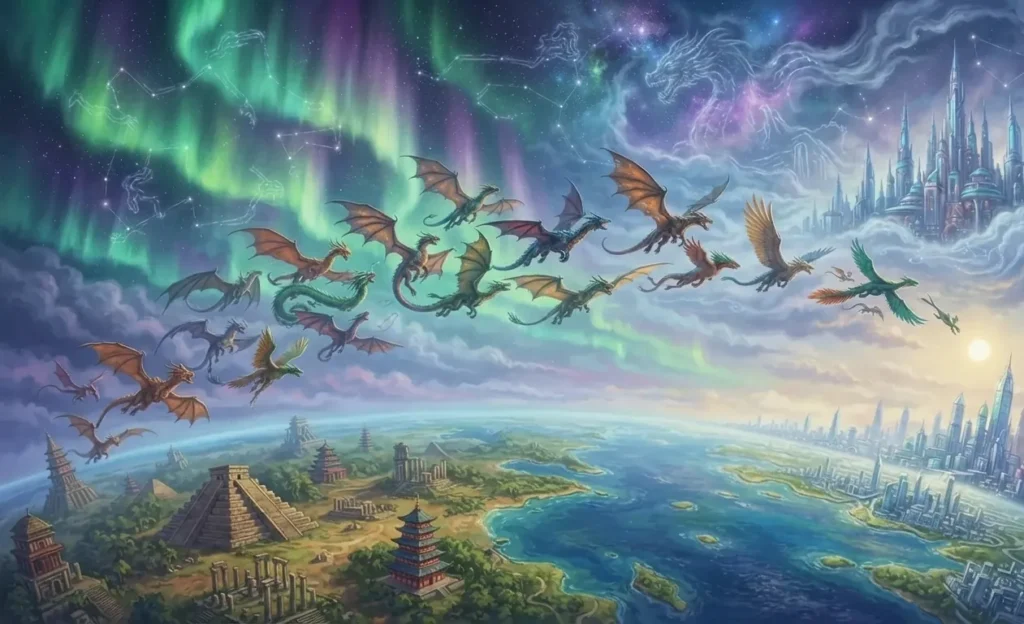
Most fantasy monsters represent one thing. The dragon represents everything.
It’s the maximum predator and the wisest ancient. It’s the ultimate threat and the ultimate protector. It’s the embodiment of pure destruction and the guardian of irreplaceable treasure. It flies, swims, and walks.
It burns and creates. It exists in every culture’s imagination because every culture needed something that could hold all of these things simultaneously, and the dragon was the form that emerged to hold them.
The dragon isn’t beloved because it’s scary or because it’s powerful or because it can be a companion. It’s beloved because no other figure in the mythological vocabulary can be all of those things at once.
That’s not accident. That’s the dragon being exactly what human storytelling needed.
Related Articles
- Why Dragons Are Almost the Perfect Mythological Creature
- What If Dragons Were Real? Here’s What Would Happen
- Why Do Dragons Hoard Gold? What Role Does Fafnir Play
- 14 Most Iconic Anime Dragons You Should Recognize
- Fourth Wing Review: Enjoyable, Not Groundbreaking
- Why Dragons Took Over Romantasy, Thanks to Fourth Wing?
- 15 Elemental Dragon Types in Fantasy: Fire, Ice & Beyond
- What Is the Largest Dragon in Mythology? [Real Answer]
Written by Batin Khan, a curious free spirit who loves reading and exploring the worlds of fantasy, mythology, and ancient stories. Through this blog, Batin hopes to share that sense of wonder with readers while building an exciting future along the way.