
 By
By Quick Takeaways:
- This list is specifically curated for adult readers who want the best dragon books for adults with sophisticated prose, complex themes, and mature narrative ambition rather than middle grade or YA dragon stories
- The ranking reflects three criteria: quality of craft, how substantively the dragons feature rather than serving as decoration, and overall reading sophistication
- The list spans genuine classics from the 1980s through current self-published epic fantasy, proving that adult dragon fiction has never stopped producing excellent work
- One entry on this list isn’t traditional fantasy at all. I’ve included it deliberately because it does something genuinely different with the dragon concept that adult readers should know about
- Countless days of binge reading fantasy across almost every era and subgenre produced this ranking, and every placement is a genuine opinion
Disclosure: As an Amazon Associate, I earn from qualifying purchases. This means I may receive a small commission if you buy through links on this site, at no extra cost to you. I appreciate your support
Adult dragon fiction gets less attention than it deserves because the conversation keeps returning to the same handful of famous titles. There’s an enormous body of genuinely sophisticated dragon fiction written specifically for adult readers that doesn’t get discussed nearly enough.
This list corrects that. Fifteen books, ranked by craft, by how meaningfully dragons feature in each story, and by how satisfying the overall reading experience is for an adult sensibility.
Ranking Criteria
Three things determined placement:
- quality of prose and structural craft
- substantive dragon presence rather than decorative dragon mentions
- reading sophistication appropriate to an adult audience rather than younger readers.
The 15 Best Dragon Books For Adults
1. The Dragonbone Chair – Tad Williams
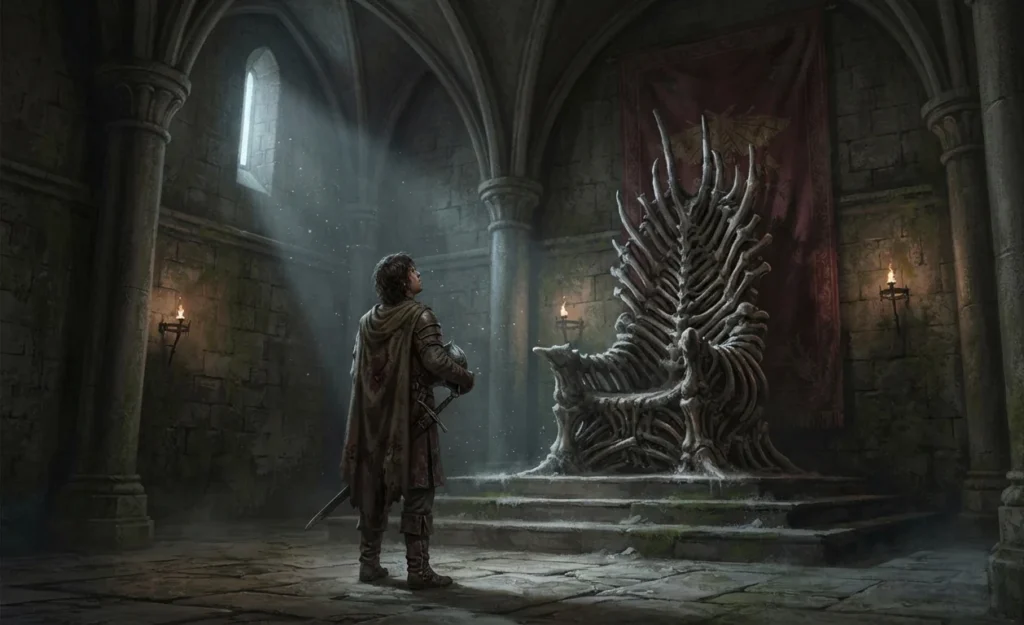
The book that influenced an entire generation of epic fantasy authors, including George R.R. Martin and Robert Jordan directly. Simon, a lowly kitchen boy, gets pulled into a sprawling political and supernatural conflict involving a fallen kingdom and ancient, dangerous magic.
The ice dragon Igjarjuk that appears deep in the narrative is genuinely formidable and genuinely earned, arriving only after Williams has built a world dense enough to make the encounter matter. This isn’t dragon-adventure fiction. It’s epic fantasy with a dragon serving as one of its most memorable set pieces.
Best For: Readers who want the foundational epic that shaped modern fantasy and are willing to invest in a slow, richly detailed opening.
2. Guards! Guards! – Terry Pratchett
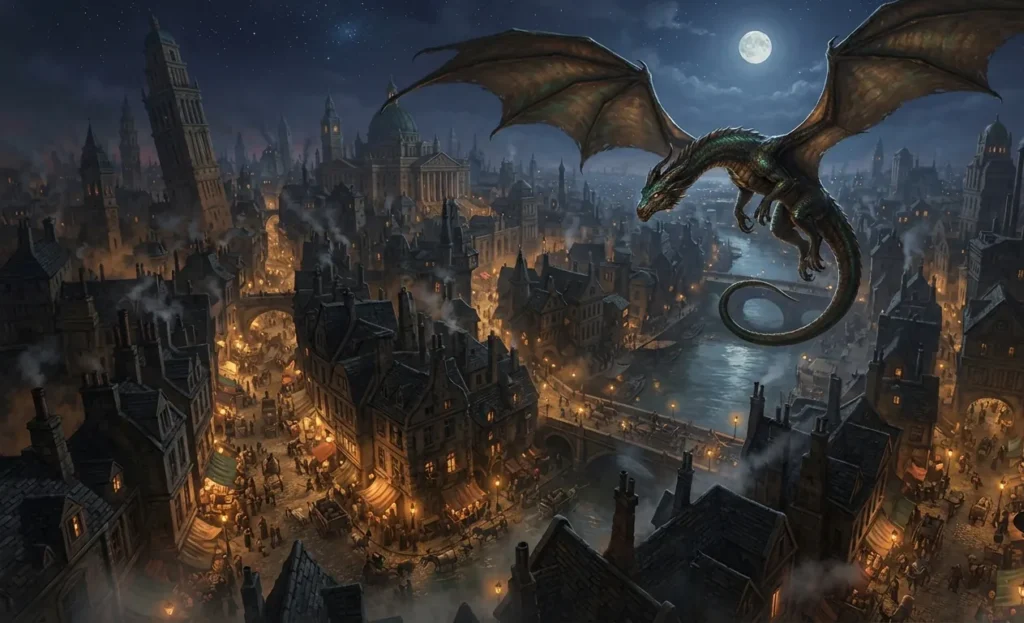
Pratchett’s eighth Discworld novel and the introduction of Sam Vimes and the Ankh-Morpork City Watch is also one of comic fantasy’s finest dragon stories. A secret brotherhood summons a dragon to terrorize the city and install a puppet king, and the Watch, a collection of drunks and misfits nobody respects, has to stop it.
The dragon itself is genuinely threatening even within Pratchett’s comic register, and the satire aimed at absolute power, mob psychology, and institutional dysfunction lands as sharply as anything in his catalog.
Best For: Readers who want a dragon story that’s genuinely funny and genuinely intelligent simultaneously.
3. The Dragon’s Path – Daniel Abraham
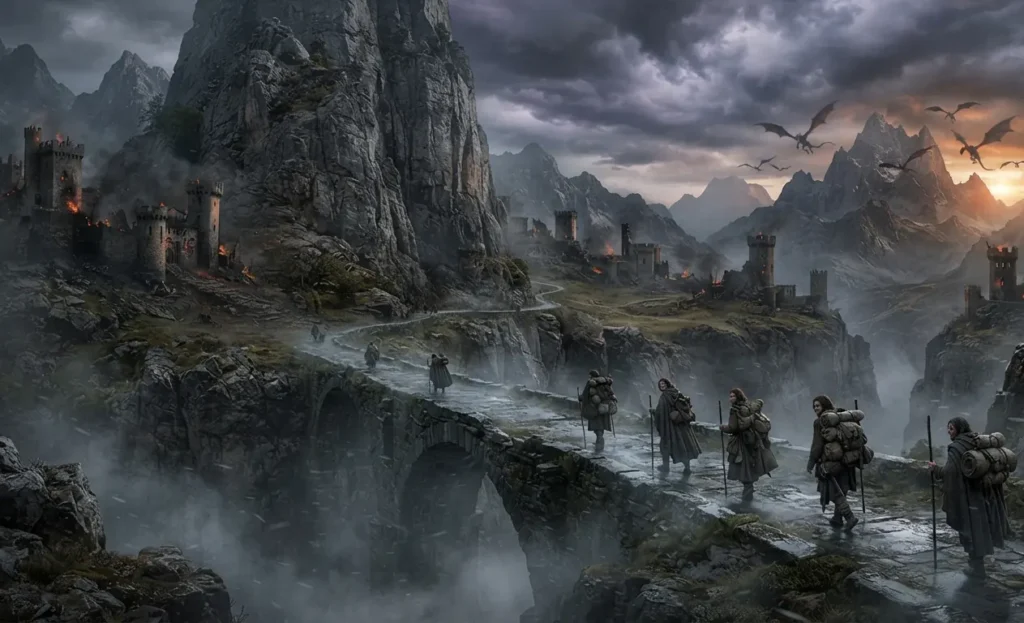
The opening volume of The Dagger and the Coin quintet does something no other book on this list attempts: it makes dragons ancient, extinct, and absent, their vanished civilization’s roads and ruins still shaping the world centuries later.
The story follows multiple viewpoints, including a banker’s apprentice whose economic maneuvering drives as much plot as any battle does. Abraham’s prose is clean and his political complexity is genuinely adult in a way that most epic fantasy doesn’t reach.
Best For: Readers who want dragons as history rather than presence, and genuinely sophisticated political and economic world-building.
4. The Dragons of Babel – Michael Swanwick
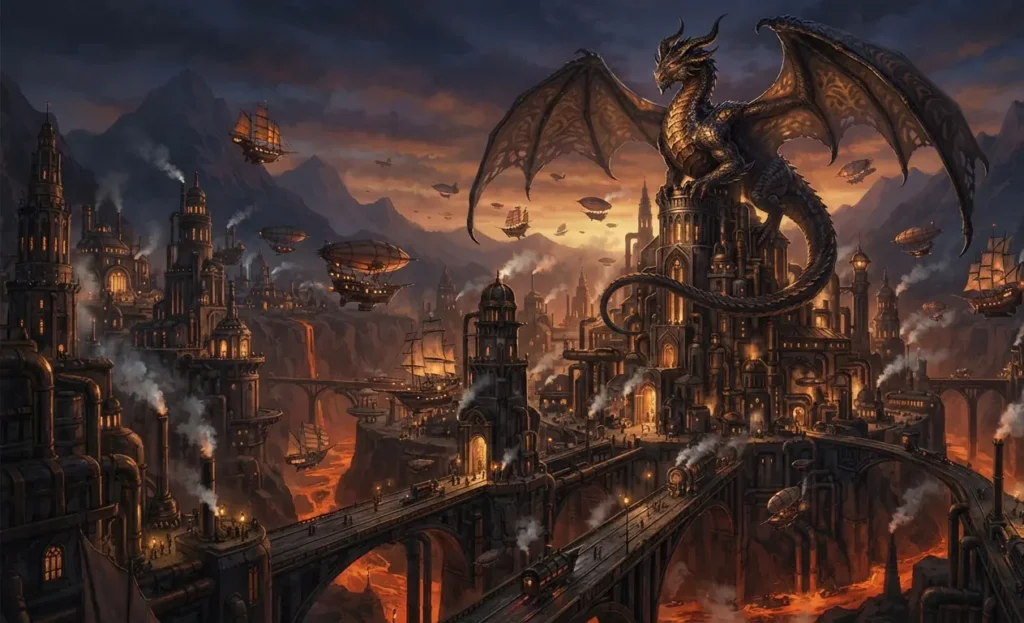
Swanwick’s industrial fantasy imagines dragons as war machines, something between fighter jets and living weapons, abandoned and half-sentient after a war that broke the world that made them. The novel follows a young man named Will who survives in the wreckage of that world and eventually journeys to the city of Babel itself.
This is genuinely strange, genuinely literary fantasy that treats its dragon as a psychologically damaged, manipulative machine-being rather than a straightforward monster or companion.
Best For: Readers who want the strangest and most inventive dragon concept on this entire list.
5. The Dragon Waiting – John M. Ford
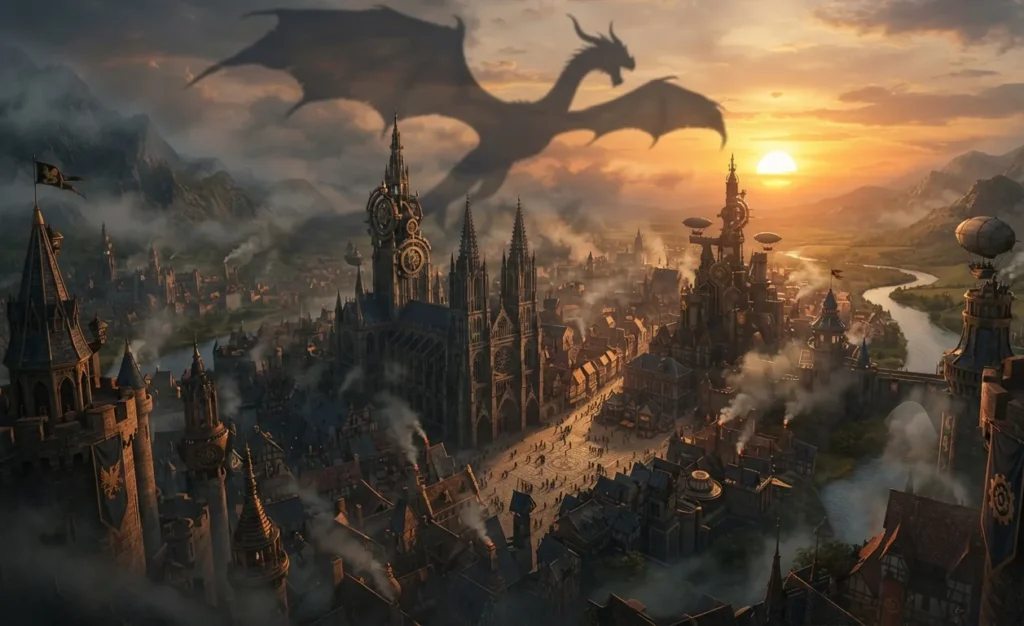
This 1983 World Fantasy Award winner is alternate history at its most ambitious: a world where Christianity never became dominant, vampires and wizards operate within genuine political intrigue, and the Byzantine Empire’s shadow falls across everything.
Dragons exist in this world’s texture rather than driving its plot directly, but Ford’s prose and structural sophistication make this one of the most genuinely literary entries in dragon-adjacent fantasy.
Best For: Readers who want dense, intellectually demanding fantasy and don’t need dragons front and center to be satisfied.
6. The Ice Dragon – George R.R. Martin
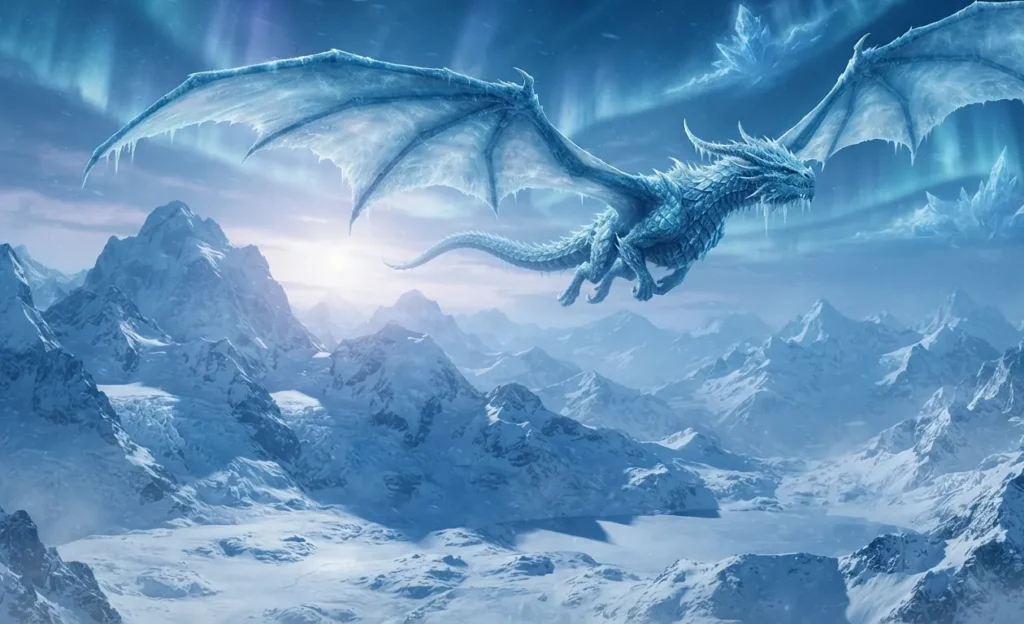
A short, quietly devastating novella about a girl named Adara whose affinity with cold and with a specific ice dragon sets her apart from her family and her world. Martin wrote this decades before A Song of Ice and Fire, and it carries an emotional clarity that his longer work sometimes trades for complexity.
It’s brief enough to read in an afternoon and precise enough to stay with you considerably longer than its length suggests it should.
Best For: Readers who want a complete, emotionally resonant dragon story without committing to a lengthy series.
7. The Rage of Dragons – Evan Winter
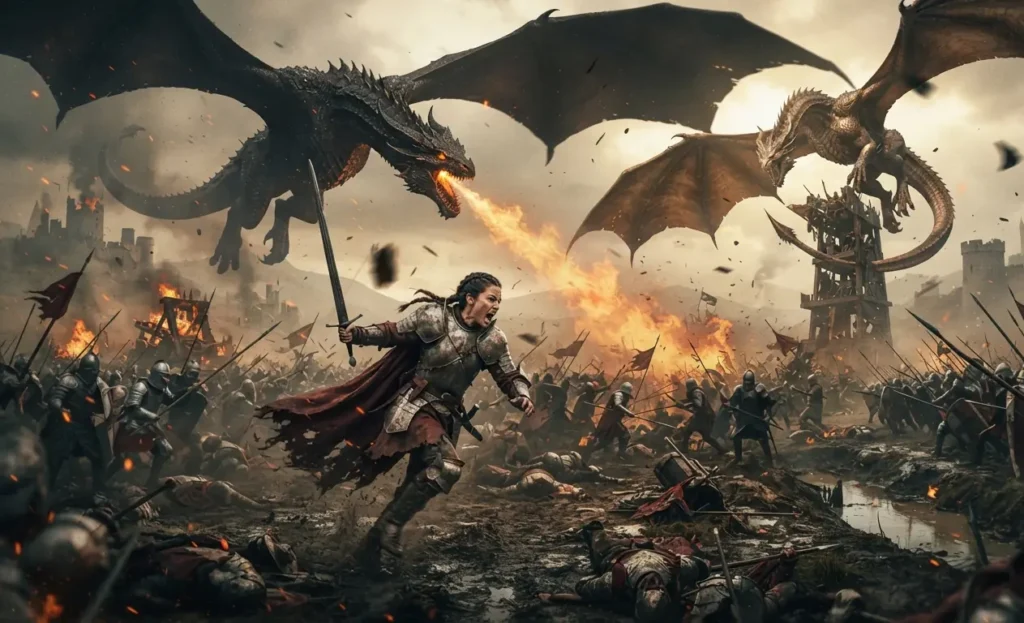
Winter’s debut, inspired by Southern African cultures rather than the European medieval default, follows Tau, a low-caste warrior seeking vengeance against the nobility who murdered his father, in a world locked in permanent war against an enemy that never sleeps.
The dragons here are war-beasts bound through blood magic to specific warriors, weapons in an endless conflict rather than companions. The revenge narrative is genuinely compelling and the world-building is refreshingly distinct from standard fantasy conventions.
Best For: Readers who want dragons as instruments of war within a fresh cultural setting and a genuinely propulsive revenge plot.
8. Dragon Weather – Lawrence Watt-Evans
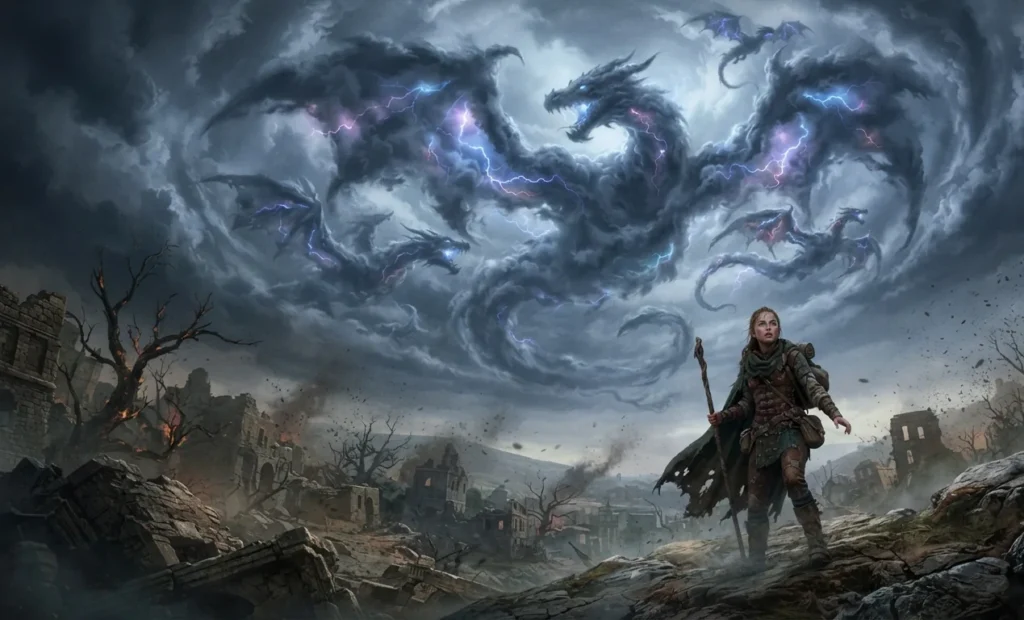
The opening volume of the Obsidian Chronicles follows Arlian, whose village is destroyed by marauding dragons, and who survives to build a life around understanding, exploiting, and eventually confronting the creatures that took everything from him.
Watt-Evans treats dragon venom and dragon nature with genuine world-building rigor, and Arlian’s slow transformation from survivor to something considerably more dangerous gives the trilogy real emotional weight.
Best For: Readers who want a classic revenge-and-transformation arc built specifically around dragon lore and dragon biology.
9. The Bound and the Broken: Of Blood and Fire – Ryan Cahill
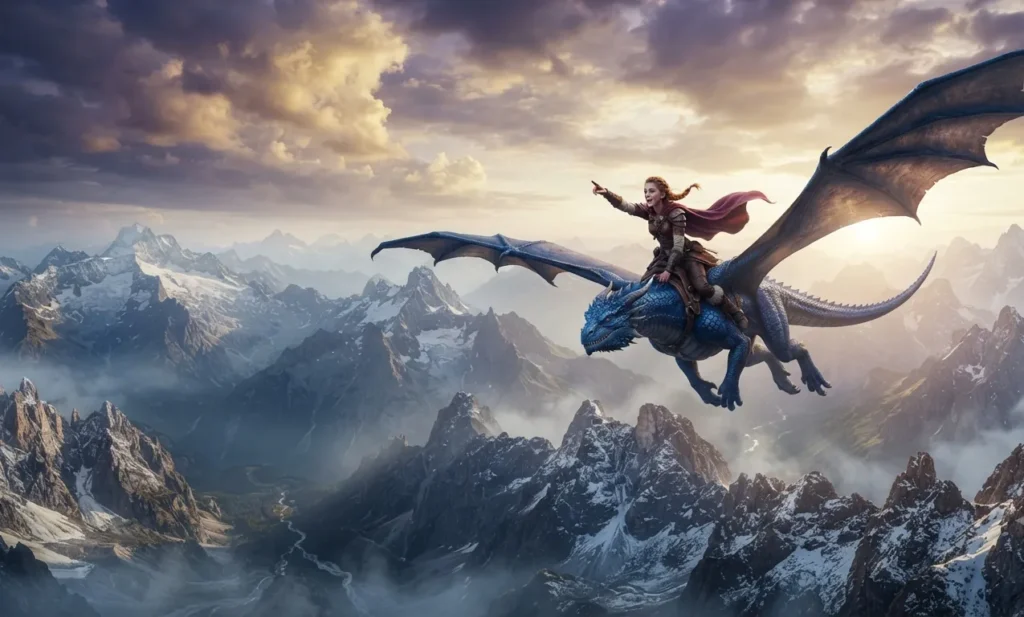
Cahill’s self-published epic fantasy became one of the genre’s genuine indie success stories, and its dragon rider bond between Calen and his dragon Aeson anchors a sprawling story of ancient evil returning and old alliances being tested.
The prose is accessible and the pacing is built for readers who want forward momentum, making this a strong entry point for anyone newer to adult epic fantasy who still wants genuine scale and stakes.
Best For: Readers who want a modern, actively continuing epic fantasy series with a strong dragon rider bond at its center.
10. The Dragon Crown War Cycle – Michael A. Stackpole
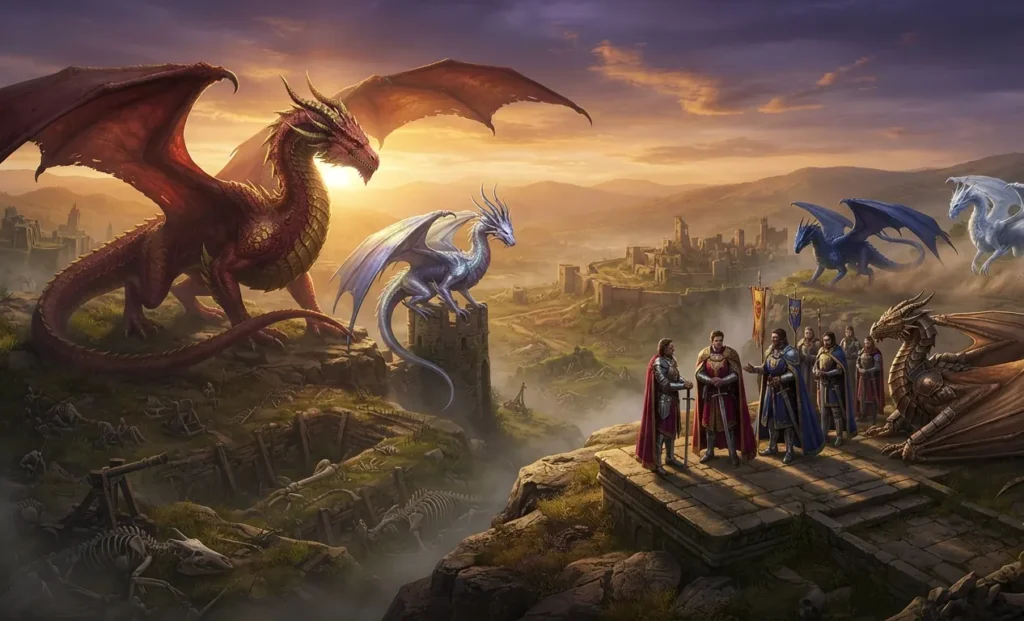
Stackpole’s 1990s trilogy is a genuine product of its era’s epic fantasy tradition: multiple kingdoms, ancient magical conflict, and dragons whose reappearance in the world signals the return of a threat that was thought settled generations earlier.
It’s less discussed today than it deserves, offering the specific pleasures of dense 1990s epic fantasy world-building for readers willing to seek it out.
Best For: Readers who want classic 1990s epic fantasy scale and are willing to explore a series that’s fallen out of the current conversation.
11. The Summer Dragon – Todd Lockwood
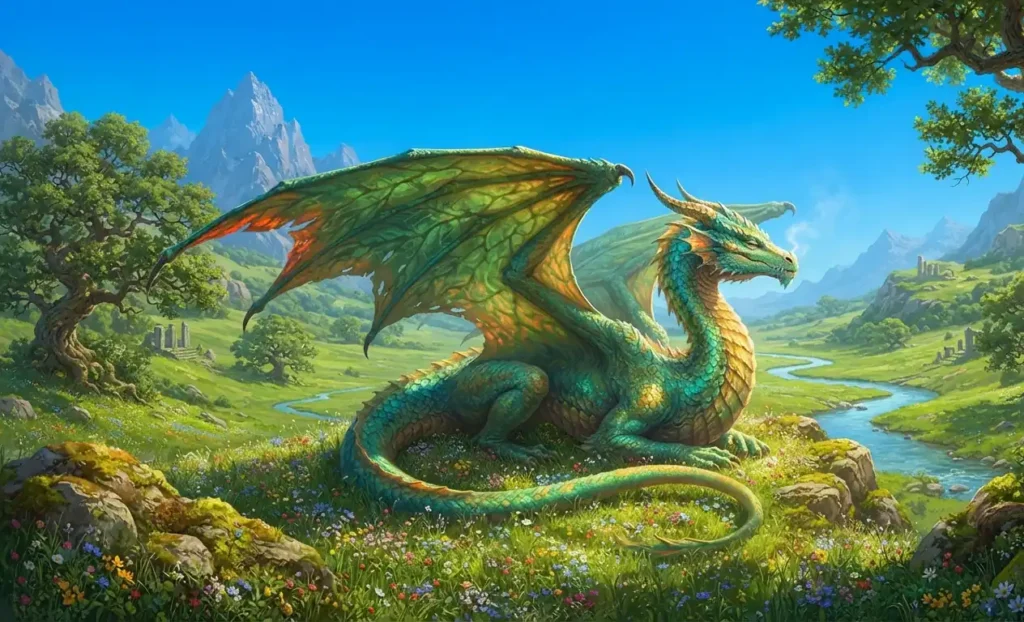
Lockwood, better known as a celebrated fantasy illustrator, brings a visual sensibility to this dragon rider story following Maia, whose family breeds war dragons in a fading empire threatened by forces beyond its understanding.
The dragon biology and breeding culture are rendered with the kind of specific, almost technical care you’d expect from an artist who has spent decades drawing these creatures, giving the world a tactile realism.
Best For: Readers who want dragon rider fantasy with unusually vivid, illustrator-informed attention to dragon physicality and culture.
12. The Dragon’s Banker – Scott Warren
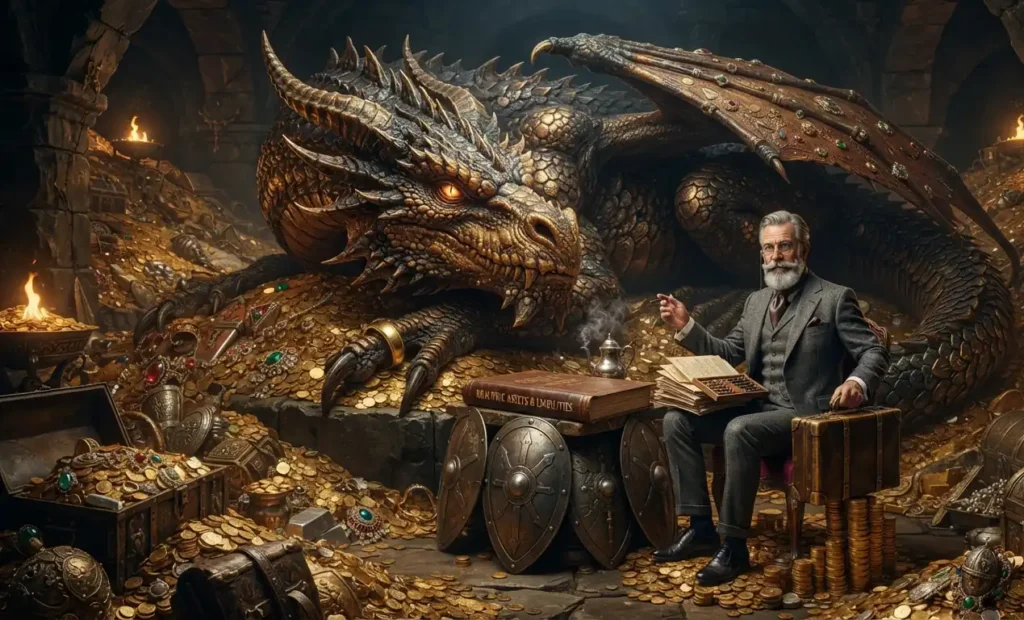
A genuinely novel premise: a struggling banker in a fantasy city forms a business relationship with a dragon looking to invest its hoard, and the resulting financial and political maneuvering becomes the story’s actual engine.
This is low fantasy in the truest sense, magic and dragons exist but the world otherwise runs on recognizable economic and social principles, and it’s one of the more purely fun entries on this list.
Best For: Readers who want something genuinely different: dragon fiction built around finance and negotiation rather than combat.
13. The Dragons of Dorcastle – Jack Campbell
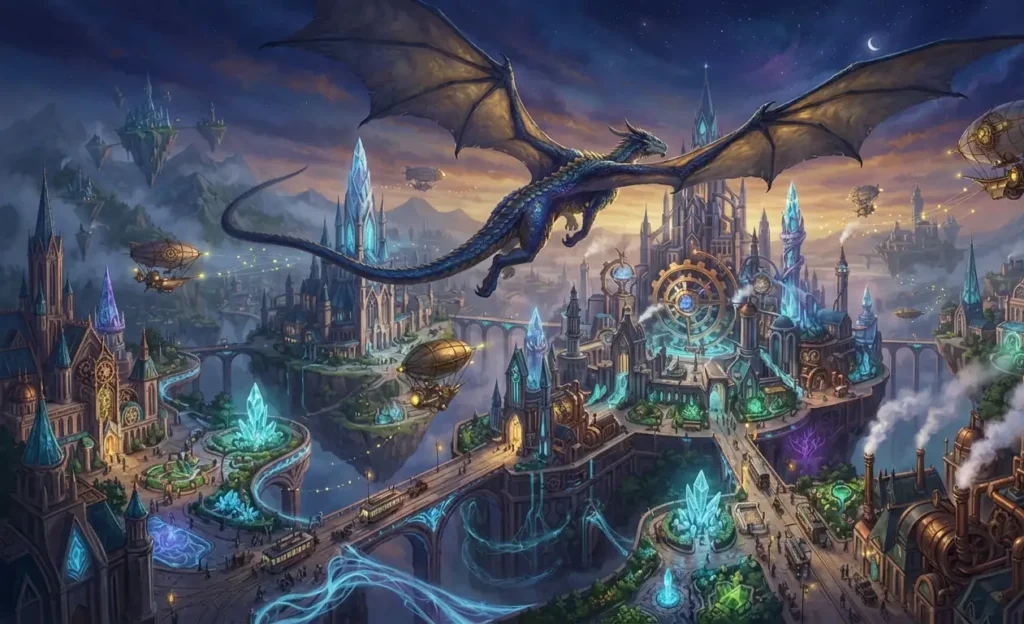
Campbell’s series imagines a world split between a rationalist, mechanist society and a magic-and-dragon-using culture that the mechanists consider primitive, and follows a young mechanist woman whose path forces her to bridge both worlds.
The technology-versus-magic framework gives the dragons in this series a specific ideological weight beyond their physical presence, since they represent an entire worldview the protagonist has been trained to distrust.
Best For: Readers who want dragons positioned against a genuine philosophical and technological rival system rather than existing in a purely magical vacuum.
14. The Echoes Saga
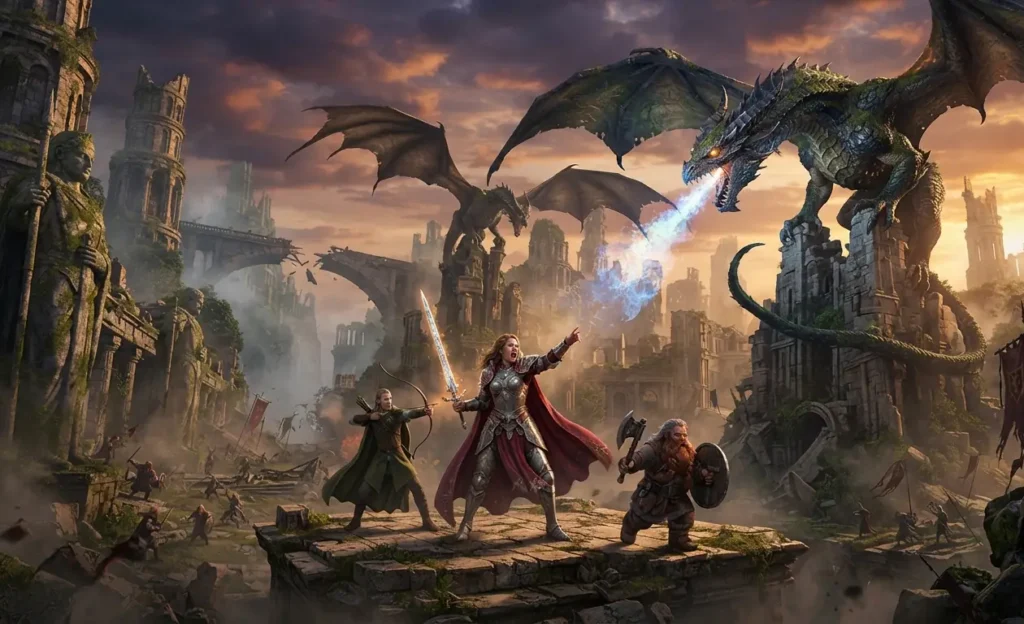
This entry represents the growing wave of independently published dragon rider fantasy that has found dedicated audiences without traditional publishing’s marketing infrastructure. Series in this space typically follow the bonded rider structure, with dragons as sentient partners whose relationship with their riders carries as much narrative weight as any external conflict.
If you’ve enjoyed the dragon bond mechanics of better-known series and want to explore what the wider self-published dragon fantasy space is producing, this corner of the genre rewards the search.
Best For: Readers who’ve exhausted the traditionally published dragon rider fantasy shelf and want to explore what independent authors are building in the same space.
15. The Dragon Factory – Jonathan Maberry
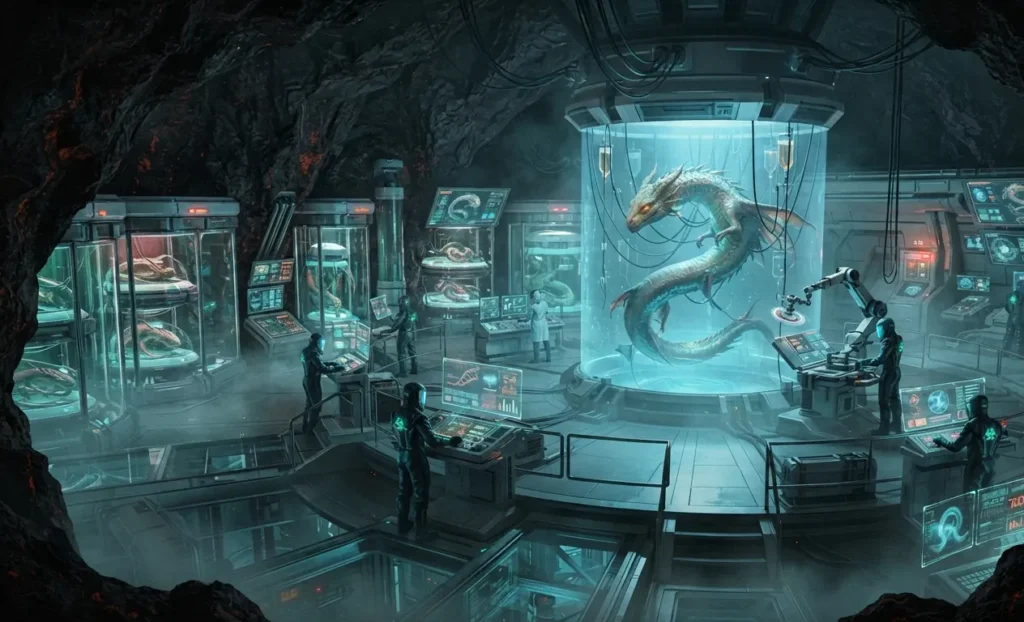
This entry needs an honest flag: it’s not traditional fantasy. Maberry’s Joe Ledger thriller involves a covert operative investigating a secretive organization engaged in genetic engineering, including the creation of dragon-like bioweapons among other monstrous creations.
I’m including it deliberately because it does something genuinely different with the dragon concept: treating it as a modern genetic horror rather than a mythological or magical being. For readers who want to see how the dragon idea translates into technothriller territory, this is worth knowing about.
Best For: Readers who want to see the dragon concept handled as genetic horror in a modern thriller setting, a genuine departure from everything else on this list.
Quick Reference Table
| Rank | Title | Author | Dragon Role | Best For |
|---|---|---|---|---|
| 1 | The Dragonbone Chair | Williams | Set piece | Foundational epic fantasy |
| 2 | Guards! Guards! | Pratchett | Central threat | Comic fantasy with genuine bite |
| 3 | The Dragon’s Path | Abraham | Ancient absence | Political and economic sophistication |
| 4 | The Dragons of Babel | Swanwick | Living machine | Strangest, most literary concept |
| 5 | The Dragon Waiting | Ford | World texture | Dense alternate history |
| 6 | The Ice Dragon | Martin | Emotional anchor | Complete short read |
| 7 | The Rage of Dragons | Winter | War beast | Fresh cultural setting, revenge plot |
| 8 | Dragon Weather | Watt-Evans | Antagonist/lore | Transformation arc |
| 9 | The Bound and the Broken | Cahill | Bonded rider | Accessible modern epic |
| 10 | The Dragon Crown War Cycle | Stackpole | Returning threat | Classic 90s scale |
| 11 | The Summer Dragon | Lockwood | Bred companion | Illustrator’s vivid detail |
| 12 | The Dragon’s Banker | Warren | Business partner | Finance-driven low fantasy |
| 13 | The Dragons of Dorcastle | Lallo | Ideological rival | Magic vs technology |
| 14 | The Echoes Saga | Various indie | Bonded rider | Self-published discovery |
| 15 | The Dragon Factory | Maberry | Genetic bioweapon | Genre-crossing thriller |
Frequently Asked Questions
Which book on this list is the best starting point for a first-time adult dragon fantasy reader?
The Dragonbone Chair is the strongest foundational starting point, though it requires patience with a slower opening. Guards! Guards! is a faster, more immediately entertaining entry point if you want something propulsive right away.
Is The Dragon Factory actually fantasy?
No. It’s a technothriller in the Joe Ledger series involving genetic engineering and bioweapons. It’s included because it treats the dragon concept in a genuinely different way, worth knowing about even though it sits outside traditional fantasy.
Which of these books has the most substantial, central dragon presence?
Guards! Guards!, The Rage of Dragons, Dragon Weather, The Summer Dragon, and The Bound and the Broken all feature dragons as central, active presences throughout. The Dragon’s Path and The Dragon Waiting use dragons more as world-texture than active plot drivers.
Are any of these books part of longer, still-continuing series?
The Bound and the Broken, The Summer Dragon, The Dragons of Dorcastle, and The Echoes Saga are all part of ongoing or multi-volume series. The Ice Dragon is a standalone. The Dragonbone Chair, Dragon Weather, and The Dragon Crown War Cycle are complete trilogies.
Which pick on this list is most different from typical dragon fantasy?
The Dragons of Babel is the strangest within the fantasy genre itself, treating dragons as damaged war machines. The Dragon Factory is the most different overall since it isn’t fantasy at all, reimagining dragons as genetic horror in a contemporary thriller setting.
Final Thoughts
Fifteen books. Every one written with an adult reader’s sophistication in mind, and every one doing something genuinely different with what a dragon can be in fiction.
From Williams’ foundational epic to Swanwick’s damaged war machines to Warren’s dragon investor negotiating hoards like a business partner, the range here proves that adult dragon fiction has never actually run out of new angles. It’s just been waiting for readers to look past the same five famous titles and find what else is there.
Related Articles
- 13 Overlooked Dragon Books Worth Reading in 2026
- 12 Best Dragon Books Ever Written [Updated 2026]
- 12 Best Dark Fantasy Books 2026: You Should Never Miss Out
- 15 Best YA Dragon Books for Your 2026 TBR List
- 11 Multi-Book Dragon Series Worth Starting in 2026
- 11 Best Dragon Fantasy Books With Female Leads [2026 Picks]
- Fourth Wing Review: Enjoyable, Not Groundbreaking