
 By
By Quick Takeaways:
- This list covers the full range of dragon fiction: from literary classics to romantasy record-breakers, from dragons as enemies to dragons as companions to dragons as fully realized protagonists
- Every book here treats its dragons with genuine creative seriousness rather than using them as decoration or as a default fantasy creature filling a narrative role
- The list is specifically updated to include current bestsellers alongside genre classics, which is why “ever written” and “Updated 2026” both appear in the title
- Dragon books that don’t contain the dragon as a genuinely significant creative element aren’t here, no matter how famous the book is otherwise
- This ranking reflects my years of fantasy reading and opinions rather than bestseller list aggregation
Disclosure: As an Amazon Associate, I earn from qualifying purchases. This means I may receive a small commission if you buy through links on this site, at no extra cost to you. I appreciate your support
Dragons have been central to human storytelling for longer than the written record runs. The Enuma Elish, the oldest creation myth we have, features a primordial dragon as the universe’s raw material. Beowulf’s final adversary is a dragon. The Shanhaijing catalogs dozens of dragon creatures. The oldest Japanese imperial records describe divine dragons shaping the nation’s founding mythology.
Every culture that has produced fantasy literature has produced dragon fiction, and the range of what a “dragon book” can mean is enormous. Some dragons are enemies. Some are companions. Some are gods. Some are ecological creatures with biology and behavior that the author has thought through carefully. Some are purely symbolic. Some are persons.
What Makes a Dragon Book Great
Before the list, one criterion worth stating directly:
A great dragon book takes its dragons seriously as a creative choice. The dragon isn’t there because dragons are a default fantasy creature. It’s there because this specific author had something specific to do with a dragon that they couldn’t do with anything else. Every book on this list meets that standard.
The 13 Best Dragon Books Ever Written
1. The Hobbit – J.R.R. Tolkien
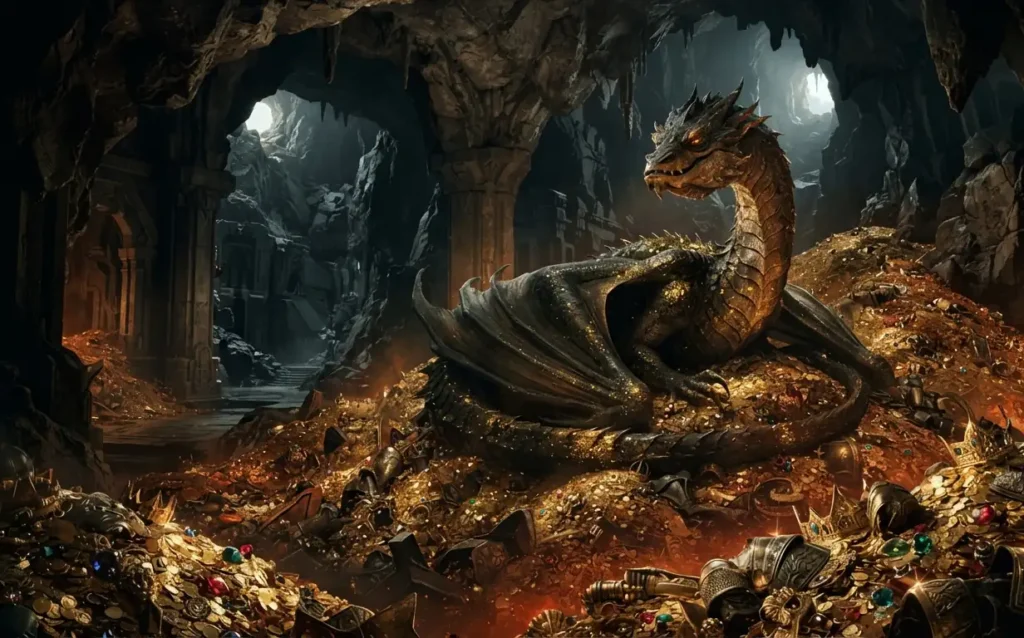
The Hobbit – J.R.R. Tolkien
Published: 1937 | Dragon: Smaug | Status: Complete standalone
You guessed it, The Hobbit is the obvious choice for me, this is the landmark, the peak everyone looks up to. Smaug, the dragon all subsequent dragons are implicitly measured against, and the standard he set in 1937 has proved remarkably durable.
What Tolkien did with Smaug that most dragon fiction before him hadn’t managed is give the dragon genuine intelligence, genuine personality, and genuine menace simultaneously. Smaug is vain, cunning, ancient, and wrong in specific and revealing ways. His conversation with Bilbo is one of literature’s finest examples of two very different intelligences feeling each other out, each trying to gain information without giving any.
The detail that has always struck me most: Smaug knows his treasure so thoroughly that he notices the single cup Bilbo takes. Not because he counts his gold obsessively. Because he feels his hoard the way you feel your own body, and a missing piece registers like a wound.
What Makes the Dragon Treatment Unique: Smaug is the first dragon in English literature with enough interior life to be genuinely deceived rather than simply fought. The battle of wits between Bilbo and Smaug is what puts this at the top of any dragon book list.
Best For: Every fantasy reader. This is the entry point.
2. Beowulf – Seamus Heaney Translation
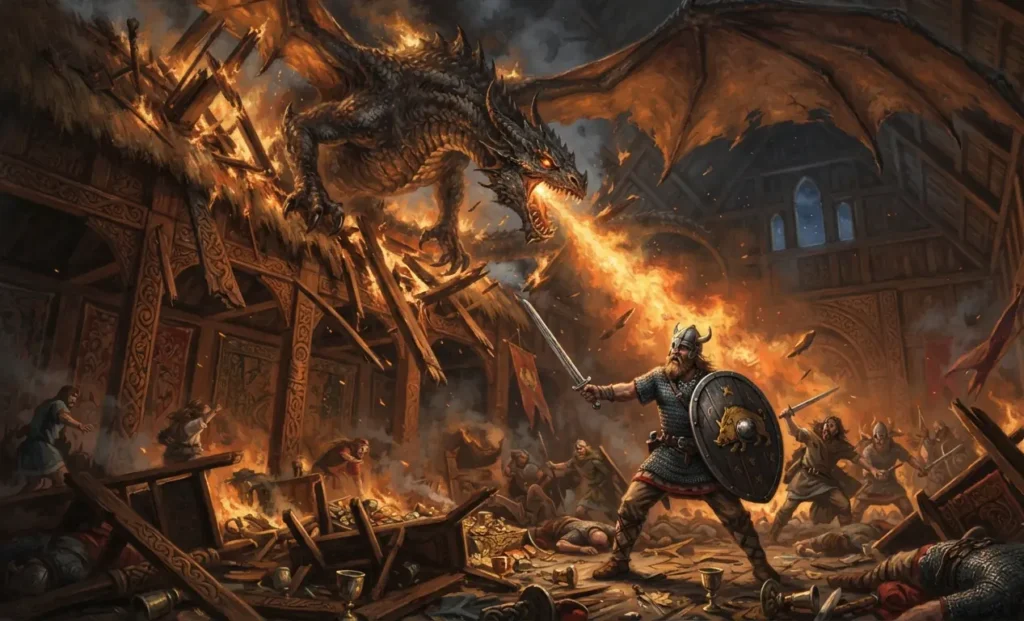
Beowulf Seamus Heaney TranslatiOn
Original: 8th to 11th century CE | Translation: 2000 | Dragon: The ancient worm
Heaney’s translation is the recommended starting point for the oldest dragon in English literature, and the dragon in Beowulf’s final section is a genuinely different kind of beast from Smaug’s descendant tradition.
The Beowulf dragon is less a character than a force. It has lived for three hundred years in its barrow, coiled around treasure that isn’t even originally its own. When a single cup is stolen, the dragon’s response is to burn everything for miles. The rage is territorial and ancient and completely without negotiation.
What makes the Beowulf dragon mythologically interesting is its role in the poem. Beowulf has defeated monsters before. The dragon is different because fighting it is explicitly described as the old king’s final act, and the poem knows it. The dragon doesn’t represent evil the way Grendel does. It represents something closer to time, to entropy, to the thing that waits at the end of every hero’s story.
What Makes the Dragon Treatment Unique: The oldest major dragon in English literature functions as a mythological force rather than a character, and Heaney’s translation makes the poem’s emotional weight completely accessible to modern readers.
Best For: Readers interested in dragon mythology’s literary origins, and anyone who wants to understand where the Western dragon tradition actually comes from.
3. His Majesty’s Dragon – Naomi Novik
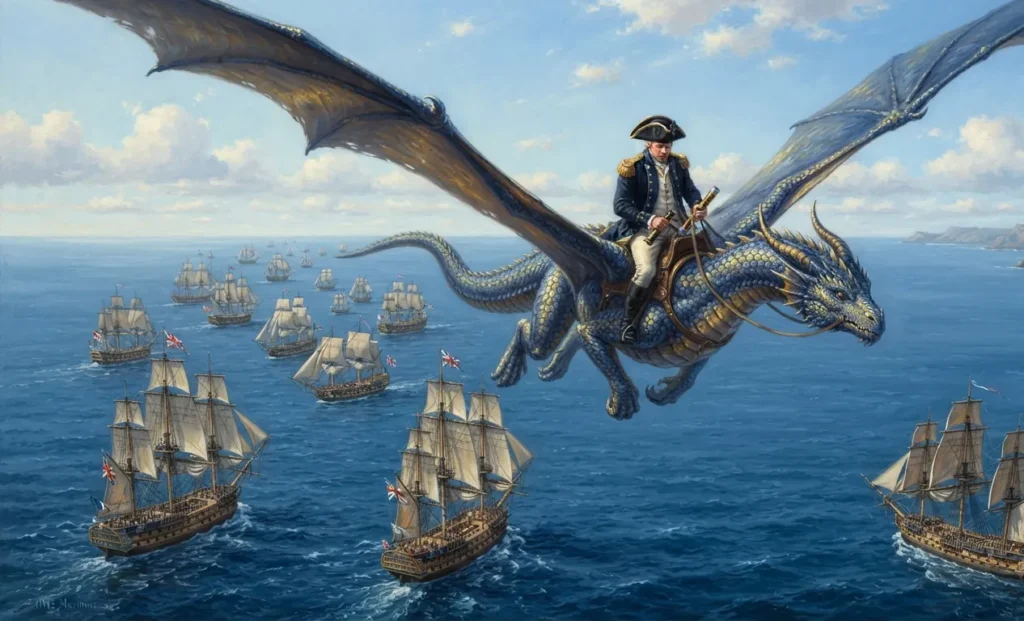
His Majesty’s Dragon – Naomi Novik
Series: Temeraire | Status: Complete (9 volumes) | Dragon: Temeraire
Naomi Novik’s Temeraire series is the most original premise in dragon fiction of the past thirty years: the Napoleonic Wars, but with dragons as aerial cavalry. The first volume, His Majesty’s Dragon, is the series at its most purely delightful.
Captain Laurence captures a French ship carrying a dragon egg that hatches on the voyage back to England. He names the dragon Temeraire. The dragon immediately demonstrates unusual intelligence and an unusual interest in Laurence’s company. What follows is simultaneously a Napoleonic naval-and-aerial military adventure and a study of the friendship between a man shaped by British naval tradition and a dragon who keeps asking philosophically inconvenient questions.
The questions Temeraire asks are the novel’s most interesting element. He wants to know why dragons in England have so few rights. He wants to know why the Chinese treatment of dragons is so different from the British one. He wants to know whether the established order is actually just, and he wants Laurence to agree with him.
What Makes the Dragon Treatment Unique: Temeraire is the series that most fully explores what a friendship between a human and a genuinely intelligent, genuinely curious dragon would actually look like and what it would demand of both parties.
Best For: Readers who want dragon companions rather than dragon enemies, history enthusiasts who want fantasy, and anyone who enjoys long-form friendship dynamics across a complete multi-volume series.
4. The Priory of the Orange Tree – Samantha Shannon
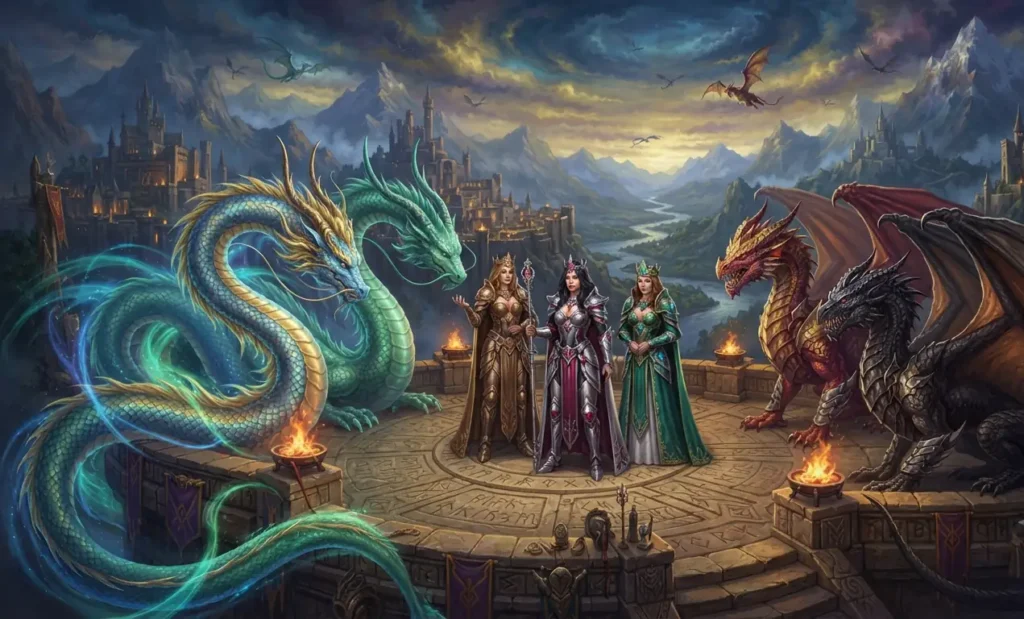
The Priory of the Orange Tree – Samantha Shannon
Published: 2019 | Status: Complete standalone | Dragon: Multiple, both Eastern and Western traditions
Shannon’s standalone epic is the most ambitious dragon world-building in recent fantasy, and it earns that ambition through genuine research into what Eastern and Western dragon traditions actually say about dragon nature.
The world contains two entirely different dragon traditions with different biology, different temperament, and different relationship to human civilization.
The Eastern dragons (Wyrms) are intelligent, divine, associated with water, and partnered with humans through deep mutual respect. The Western dragons (Wyverns) are territorial, destructive, and the central threat to human civilization. The contrast between these two traditions isn’t cosmetic. It’s the novel’s primary world-building achievement.
Shannon clearly did the research. The Eastern dragon tradition in Priory reflects genuine engagement with how East Asian mythology understood dragons rather than simply making the Eastern dragons nicer versions of Western ones. As a reader I found her handling of the material genuinely respectful.
What Makes the Dragon Treatment Unique: The only contemporary fantasy novel that takes both Eastern and Western dragon traditions seriously as distinct systems and builds a world-level conflict out of the difference between them.
Best For: Readers who want large-scale epic fantasy with genuinely creative dragon world-building and a diverse cast, and anyone interested in the East versus West dragon mythology comparison.
5. Dragon Keeper (Rain Wilds Chronicles) – Robin Hobb

Dragon Keeper (Rain Wilds Chronicles) – Robin Hobb
Series: Rain Wilds Chronicles | Status: Complete (4 volumes) | Dragon: Sintara and others
Robin Hobb’s Rain Wilds Chronicles is the most emotionally complex dragon fiction I’ve read, and it earns that distinction by doing something unusual: depicting the dragons as initially disappointing.
The dragon hatching in the first book produces creatures that are physically malformed, mentally stunted compared to the dragons of legend, and deeply bitter about the gap between what they know they’re supposed to be and what they actually are. They’re physically limited, they remember the memories of their ancestors and know what dragons can become, and they’re profoundly resentful of their current state.
This is an extraordinarily interesting creative decision. Sintara in particular is not a dragon you’ll immediately love. She’s proud in ways that aren’t earned by her current capabilities, she’s frequently cruel to the humans around her, and she demands respect she hasn’t demonstrated she deserves. She’s also completely comprehensible once you understand her situation.
She knows what she should be. She isn’t it yet. That gap is the series’ emotional engine.
What Makes the Dragon Treatment Unique: The only dragon series that explores what it would mean for a dragon to be born below its species’ potential and to know it, producing the most psychologically realistic dragon characterization in fiction.
Best For: Readers who want emotionally complex dragon relationships and are willing to spend time with dragons who aren’t immediately lovable. Existing Hobb readers who’ve read the Farseer and Liveship Traders sequences will get more from this.
6. Eragon – Christopher Paolini
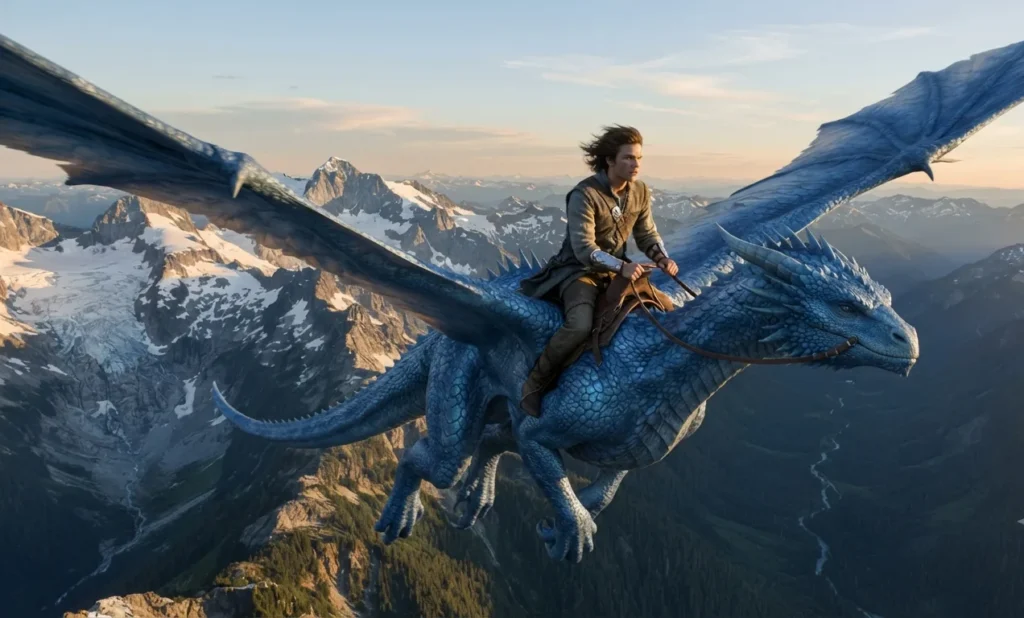
Eragon – Christopher Paolini
Series: Inheritance Cycle | Status: Complete (4 volumes) | Dragon: Saphira
Christopher Paolini wrote Eragon at fifteen and published it at seventeen, and the dragon rider tradition it inherits and extends has shaped what an entire generation expects dragon fiction to be.
The bond between Eragon and Saphira is the series’ core, and Saphira as a dragon personality is the books’ most consistent achievement. She’s wiser than her rider in specific ways, protective without being passive, and her experience of the world, flying, hunting, sensing the world differently from how humans do, is rendered with enough specificity to make her feel like a genuine individual rather than a wish fulfillment device.
The series’ faults are well-documented and don’t need recounting here. What matters for this list is what it does with its dragon, and what it does is give readers a Saphira who feels real enough that her relationship with Eragon has genuine emotional weight.
What Makes the Dragon Treatment Unique: Saphira is the dragon that defined the dragon companion for a generation of fantasy readers, and her characterization holds up better than the series’ reputation sometimes suggests.
Best For: Younger readers entering fantasy, adult readers who want dragon companion fiction without mature content, and anyone who wants to understand what the dragon rider subgenre looks like in its most accessible contemporary form.
7. A Natural History of Dragons – Marie Brennan

A Natural History of Dragons – Marie Brennan
Series: The Memoirs of Lady Trent | Status: Complete (5 volumes) | Dragon: Multiple species
Marie Brennan’s Lady Trent series takes a genuinely original approach to dragon fiction: it asks what would a Victorian naturalist do if dragons were real, and it answers that question with surprising rigor.
The protagonist, Isabella, is a naturalist writing her memoirs, describing her expeditions to study dragon species across different geographical regions. The framing as natural history memoirs rather than adventure fiction produces a specific tone: observational, curious, occasionally dry, and genuinely interested in how the dragons work rather than in what they represent or what defeating them would mean.
The dragons across the series are diverse in a way that reflects genuine biological thinking about how creatures in different environments would develop differently. They’re not all the same dragon at different scales. They’re different species with different biology, different behavior, and different relationships to the human communities they exist alongside.
What Makes the Dragon Treatment Unique: The only dragon series that approaches its subject with the framework of natural history rather than mythology or adventure, producing dragons that feel genuinely studied rather than imagined.
Best For: Readers who want intellectual engagement with dragon biology, those who enjoy historical fiction’s period voice, and anyone who’s ever wanted a fantasy novel that takes the question of how a dragon would actually work seriously.
8. Dragon Champion – E.E. Knight
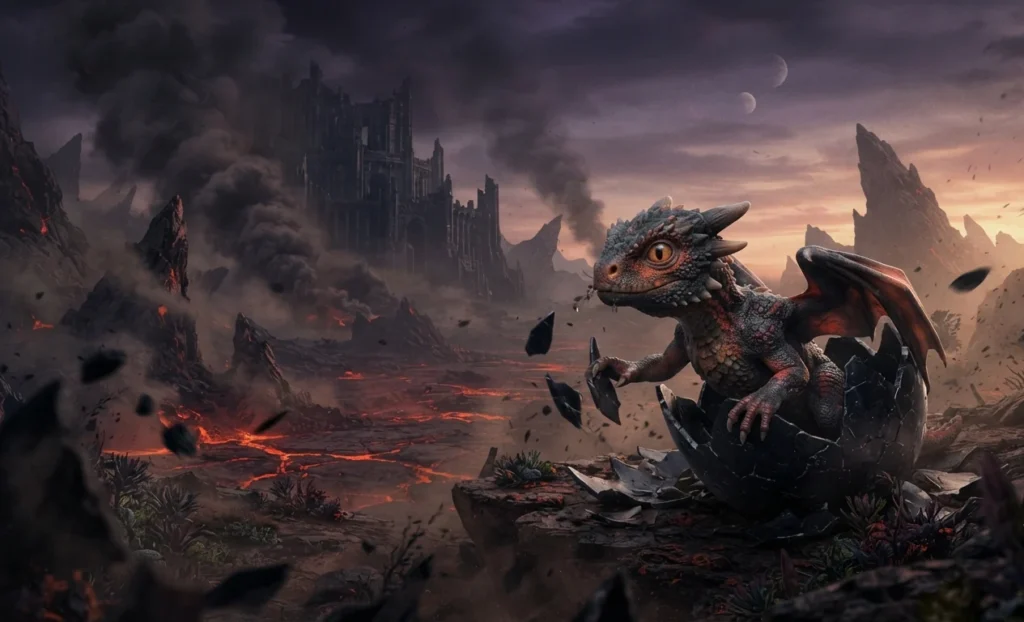
Dragon Champion – E.E. Knight
Series: Age of Fire | Status: Complete (6 volumes) | Dragon: AuRon (protagonist)
The Age of Fire series does something most dragon fiction doesn’t: it tells the story entirely from the dragon’s perspective, making a dragon the protagonist rather than the companion or the enemy.
AuRon is a grey dragon in a world where dragons are hunted, enslaved, or worse. His perspective on the human world is genuinely alien in the right ways: he understands humans well enough to navigate their societies but never stops experiencing them from the outside, as creatures with incomprehensible priorities and distressing habits.
The series develops dragon culture, dragon family dynamics, and dragon society with a consistency that few dragon-centric fantasy series manage. What dragons value, how they understand loyalty and territory, what they make of the human world’s conflicts: all of it is developed from within AuRon’s perspective rather than described from outside.
What Makes the Dragon Treatment Unique: The only major fantasy series structured entirely around a dragon protagonist experiencing human civilization from the outside, producing a genuinely alien perspective on standard fantasy world dynamics.
Best For: Readers who want the dragon to be the protagonist rather than the companion, and anyone who’s wondered what fantasy worlds look like from the dragon’s point of view.
9. Fire and Blood – George R.R. Martin
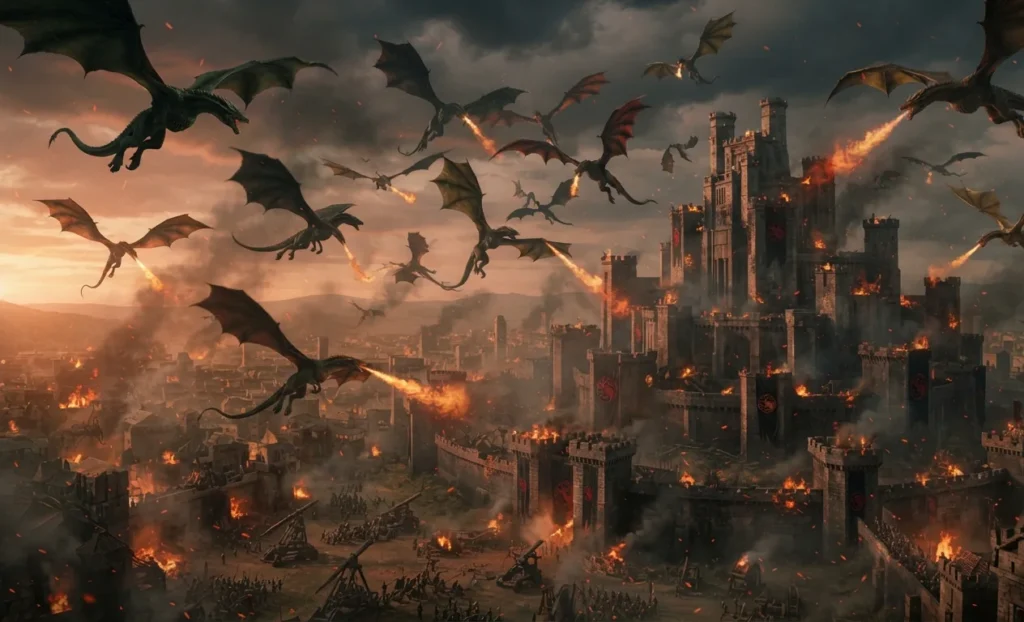
Fire and Blood – George R.R. Martin
Published: 2018 | Status: Standalone (within larger series) | Dragon: Balerion, Vhagar, Meraxes, and others
Martin’s history of the Targaryen dynasty is dragon fiction in the form of invented historical chronicle, and it contains some of the most genuinely frightening dragons in contemporary fantasy.
The dragons in Fire and Blood aren’t companions or characters in the conventional sense. They’re forces of nature that happen to be controllable, barely, by the right person at the right time. The history repeatedly shows what happens when control fails: not dramatic battles with rules, but the kind of catastrophic destruction that erases cities and ends wars in a single afternoon.
What Martin does with Balerion the Black Dread, the largest and oldest Targaryen dragon, is mythologize rather than characterize. Balerion doesn’t have conversations or a personality the way Smaug does. He has scale, age, and the specific weight of a creature that has been present for long enough to become part of history rather than just a participant in it.
What Makes the Dragon Treatment Unique: Dragons as historical forces rather than narrative characters, producing a dragon tradition where the relationship between humans and their dragons is political, military, and dynastic rather than personal.
Best For: Readers who want dragons integrated into detailed political history rather than personal adventure, and existing Martin readers who want more of the Targaryen material.
10. The Last Dragonslayer – Jasper Fforde
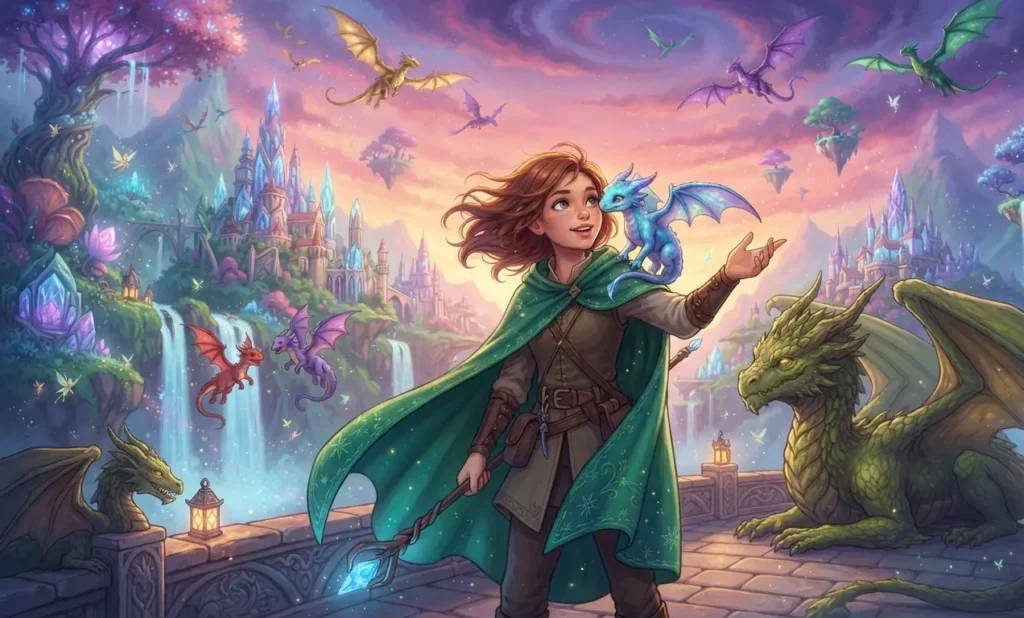
The Last Dragonslayer – Jasper Fforde
Series: The Chronicles of Kazam | Status: Complete (4 volumes) | Dragon: Maltcassion
Jasper Fforde’s approach to dragons is the funniest on this list and among the most philosophically interesting. The Last Dragonslayer is set in a contemporary-feeling England where magic is fading, managed by a government-regulated agency, and the last dragon is about to be killed on a specific day by a specific prophesied dragonslayer who turns out to be the teenage protagonist.
The dragon Maltcassion is the novel’s secret heart. He’s ancient, he’s resigned to his fate, and his understanding of what his death will mean for the world is considerably more nuanced than any human character’s. The novel’s comedy is sharp. Its sadness is genuine. Fforde uses humor the way the best comic writers do: as a vehicle for accessing emotions that a more earnest approach would handle less effectively.
What Makes the Dragon Treatment Unique: The only dragon novel where the comedic framework and the genuine sadness of the dragon’s situation work together rather than against each other, producing a dragon story that’s simultaneously the funniest and one of the most quietly moving on this list.
Best For: Readers who want comic fantasy with genuine emotional depth, younger readers (the book is accessible to older children and teens), and Fforde readers who haven’t yet discovered this series.
11. Tooth and Claw – Jo Walton
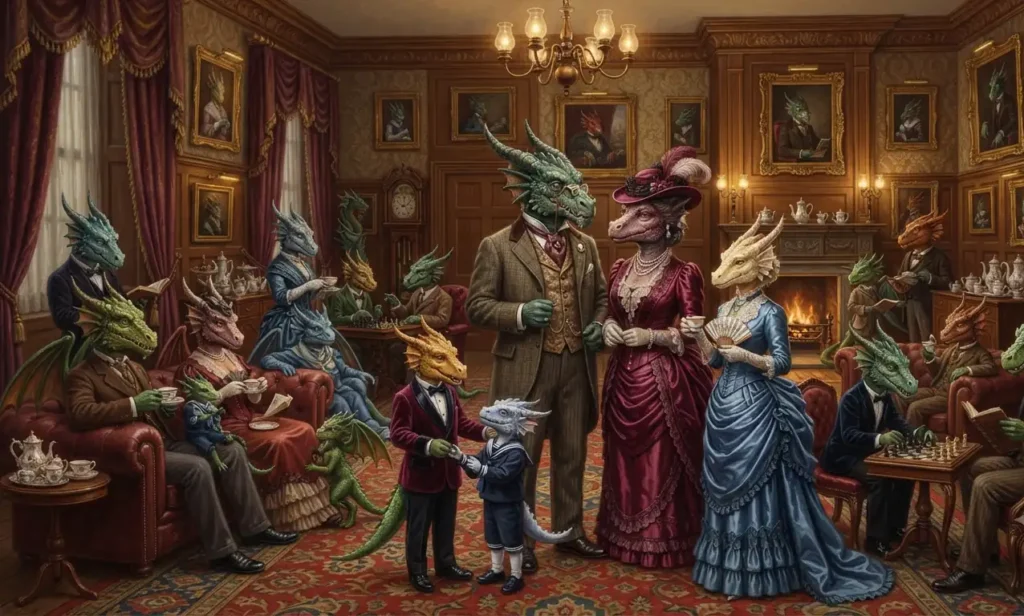
Tooth and Claw – Jo Walton
Published: 2003 | Status: Complete standalone | Dragon: All characters are dragons
Jo Walton’s Tooth and Claw is one of fantasy’s most audaciously original premises: a Victorian novel of manners, in the tradition of Anthony Trollope, where all the characters are dragons.
The social conventions, the inheritance disputes, the marriage concerns, the class conflicts, the questions of respectability and reputation: all of it is transposed into a dragon society where the social rules reflect dragon biology. Eating the weak is not merely permissible but socially appropriate under certain circumstances. The color and size of a dragon’s scales signal social status. The rules exist and are taken seriously and have consequences.
Walton won the World Fantasy Award for this novel, and the win is deserved. The premise could have been a one-joke exercise. It isn’t. The novel is a complete Victorian society novel that happens to be populated by dragons, and the dragons’ biology informing the social structure produces insights about Victorian social convention that a straight historical novel wouldn’t access.
What Makes the Dragon Treatment Unique: The only novel where dragons are the entire society rather than exceptional figures within a human one, using dragon biology to produce genuine social satire.
Best For: Readers who enjoy literary fantasy and period fiction, anyone interested in what genre fiction can do with social satire, and Walton readers who haven’t found this yet.
12. Seraphina – Rachel Hartman
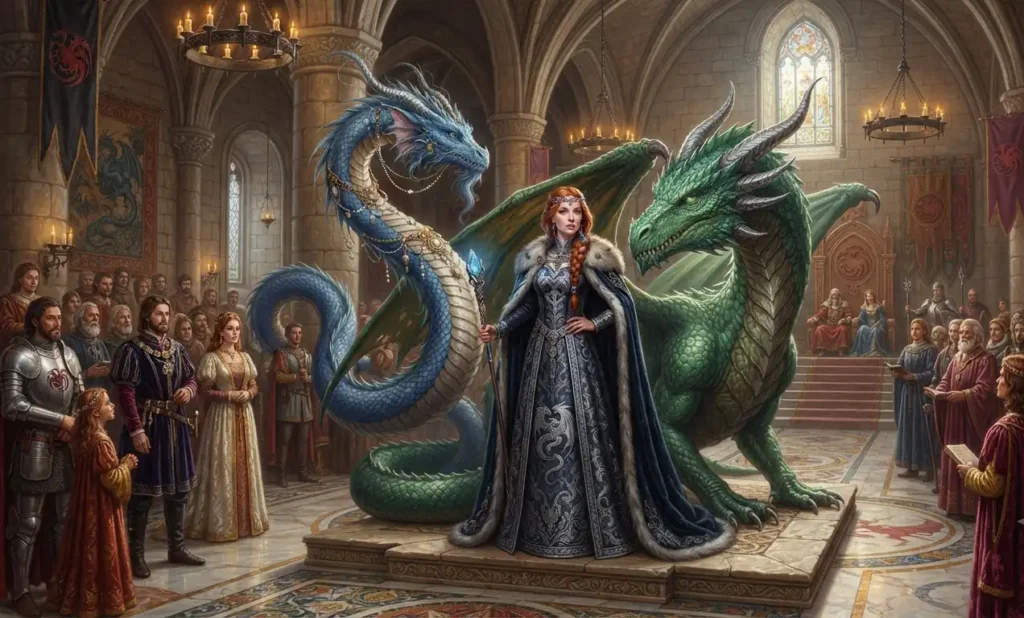
Seraphina – Rachel Hartman
Series: Seraphina | Status: Complete (2 volumes) | Dragon: Orma and others | Status: Clean
Rachel Hartman’s Seraphina is the most emotionally intelligent entry on this list and the one I find myself recommending most consistently to readers who aren’t sure they’re ready for the genre’s more demanding works.
The world has integrated dragons and humans into an uneasy coexistence through a peace treaty, with some dragons able to take human form to interact with human society. Seraphina, the protagonist, has a secret involving her own nature and dragon heritage. The novel’s central dragon, Orma, is her uncle, a dragon in human form who has deliberately suppressed his emotional responses because dragons in this world are taught to consider emotion irrational.
The relationship between Seraphina and Orma is the novel’s finest achievement: the dragon who is trying not to feel things and the young woman who sees through the performance, and the specific way that relationship develops across the two books, is some of the finest dragon-human emotional work in the genre.
What Makes the Dragon Treatment Unique: The integration of dragons into a human society through negotiated peace rather than conquest, and the exploration of what it costs a dragon to suppress its nature in order to participate in that society.
Best For: Readers who want emotional complexity in their dragon fiction without mature content, younger adult readers, and anyone who wants a dragon-human relationship built on genuine understanding rather than bonding mechanics.
Quick Reference Table
| Rank | Title | Author | Dragon Type | Best For |
|---|---|---|---|---|
| 1 | The Hobbit | Tolkien | Enemy, iconic | Everyone |
| 2 | Beowulf | Heaney (trans.) | Mythological force | Origins readers |
| 3 | His Majesty’s Dragon | Novik | Companion, intelligent | History fans |
| 4 | The Priory of the Orange Tree | Shannon | Eastern and Western | Epic fantasy fans |
| 5 | Dragon Keeper | Hobb | Emotionally complex | Literary fantasy readers |
| 6 | Eragon | Paolini | Classic companion | Young readers |
| 7 | A Natural History of Dragons | Brennan | Naturalist subject | Intellectual readers |
| 8 | Dragon Champion | Knight | Protagonist | Dragon’s-eye readers |
| 9 | Fire and Blood | Martin | Historical force | Politics fans |
| 10 | The Last Dragonslayer | Fforde | Comic, poignant | Humor fans |
| 11 | Tooth and Claw | Walton | All characters | Literary satire fans |
| 12 | Seraphina | Hartman | Integrated, emotional | Emotional depth readers |
Frequently Asked Questions
Which dragon book should I start with if I’ve never read dragon fantasy?
The Hobbit is the correct starting point for virtually everyone. It’s short, it’s brilliant, and Smaug sets the standard against which every subsequent dragon is measured. If you want a contemporary entry point instead, Eragon is accessible and Seraphina is emotionally engaging without demanding prior genre knowledge.
Are there good dragon books that are teen-friendly?
Most books on this list are clean or close to it. The Hobbit, Beowulf, His Majesty’s Dragon, Eragon, A Natural History of Dragons, Dragon Champion, The Last Dragonslayer, Tooth and Claw, and Seraphina are all appropriate for teen readers and adults who prefer clean content.
What’s the best dragon book for someone who loves the mythology angle?
The Priory of the Orange Tree is the strongest choice because it consciously draws on both Eastern and Western dragon mythology. Beowulf is the primary text for Western dragon mythology origins. For readers interested in Eastern dragon tradition specifically, the mythology content on this blog supplements any of these reading choices.
Which dragon series is complete and won’t leave me with unfinished stories?
The Hobbit (standalone), His Majesty’s Dragon and the Temeraire series (9 volumes, complete), The Priory of the Orange Tree (standalone), Dragon Keeper and the Rain Wilds Chronicles (complete), Eragon and the Inheritance Cycle (complete), A Natural History of Dragons and the Lady Trent series (complete), Tooth and Claw (standalone), and Seraphina (complete duology) are all fully finished.
What makes a great dragon book?
A great dragon book combines memorable dragons, engaging characters, exciting adventures, and a rich fantasy world. The best stories make dragons feel important to the plot rather than just magical creatures.
Final Thoughts
Twelve books. Twelve genuinely different answers to what a dragon can be in fiction.
Smaug as the intelligence that destroys you through conversation. The Beowulf dragon as the thing that waits at the end of every story. Temeraire as the companion who asks the questions you’d rather not answer. The Rain Wilds dragons as creatures who know what they should be and aren’t. Maltcassion as the last of his kind who faces his end with a clarity the humans around him can’t match.
Dragon fiction at its best isn’t about the dragon’s power. It’s about what the dragon reveals: about greed, about friendship, about history, about what gets lost when something ancient and irreplaceable is gone.
Every book on this list understands that. That’s why they’re here.
Related Articles
- Dragon Mythology: How Dragons Are Depicted Across Cultures
- 13 Overlooked Dragon Books Worth Reading in 2026
- Why Dragons Dominate Every Fantasy Tradition on Earth
- 15 Best Dragon Books for Adults [Dark & Epic Picks of 2026]
- 15 Best YA Dragon Books for Your 2026 TBR List
- 11 Multi-Book Dragon Series Worth Starting in 2026
- 11 Best Dragon Fantasy Books With Female Leads [2026 Picks]
- Fourth Wing Review: Enjoyable, Not Groundbreaking