
 By
By Quick Takeaways:
- Why fantasy is more popular than ever? – The global fantasy books market was valued at $17.17 billion in 2024 and is projected to reach $26 billion by 2033, representing a CAGR of 4.7%
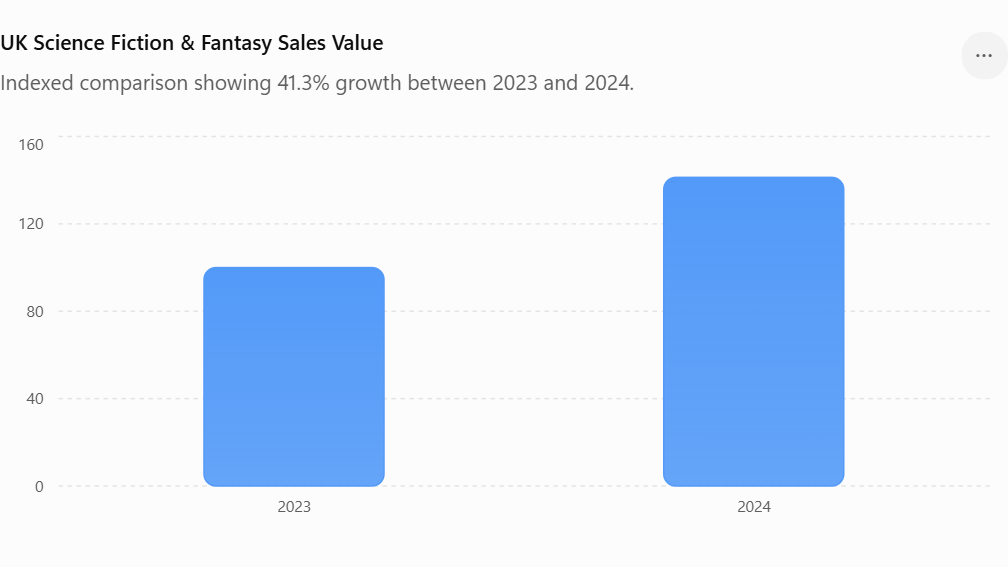
- Sci-Fi and fantasy book sales surged 41.3% in value between 2023 and 2024 in the UK, achieving the highest number of weekly chart number ones since records began
- Adult fiction rose 4.8% in unit sales in 2024, with fantasy and romantasy identified as the primary drivers
- BookTok on TikTok produced nearly 20% sales growth for authors whose books gained traction on the platform in 2024
- The growth isn’t just commercial: fantasy is attracting new demographic groups, breaking into emerging markets, and generating cultural conversation at a scale the genre hasn’t achieved before
I’ve been reading fantasy and following world mythology for years. I want to be honest about something: even I didn’t fully anticipate how dramatically the numbers were going to move.
Fantasy has been quietly building toward this for years. The genre has been growing, the readership has been expanding, and the cultural conversation around it has been intensifying. But the 2024 data confirmed what anyone paying attention already sensed: fantasy isn’t just the most popular genre right now. It’s actively reshaping the broader publishing industry.
The evidence is specific, it’s verifiable, and it’s worth understanding properly.
The Numbers: What the Data Actually Shows
The Market Size
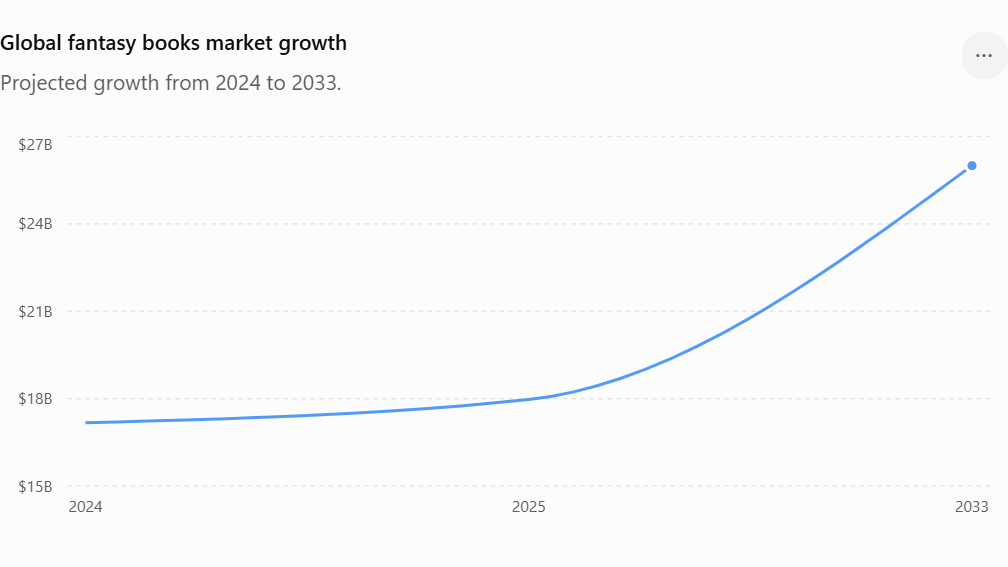
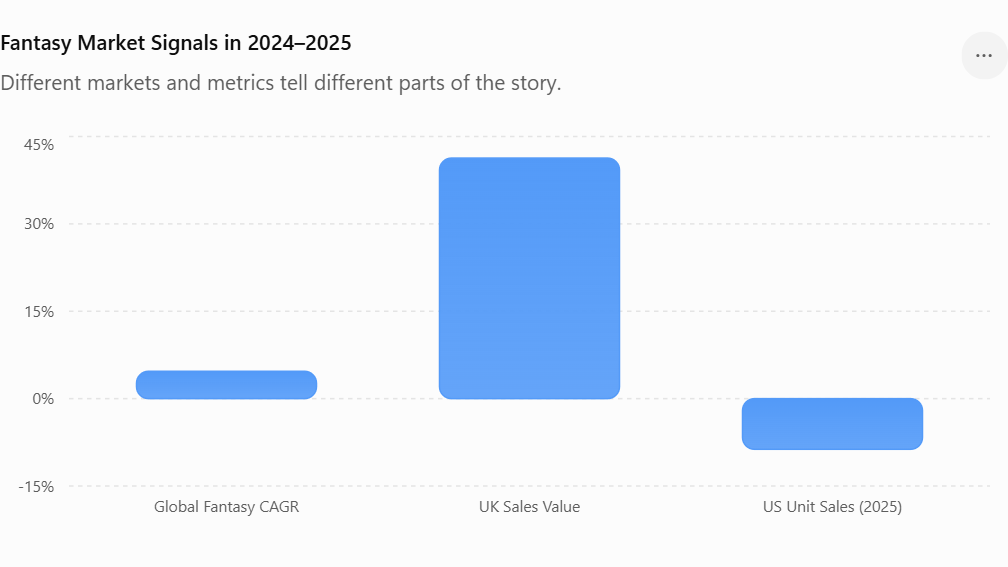
The global fantasy books market was valued at $17.17 billion in 2024 and is projected to reach $26 billion by 2033, growing at a compound annual growth rate of 4.7%.
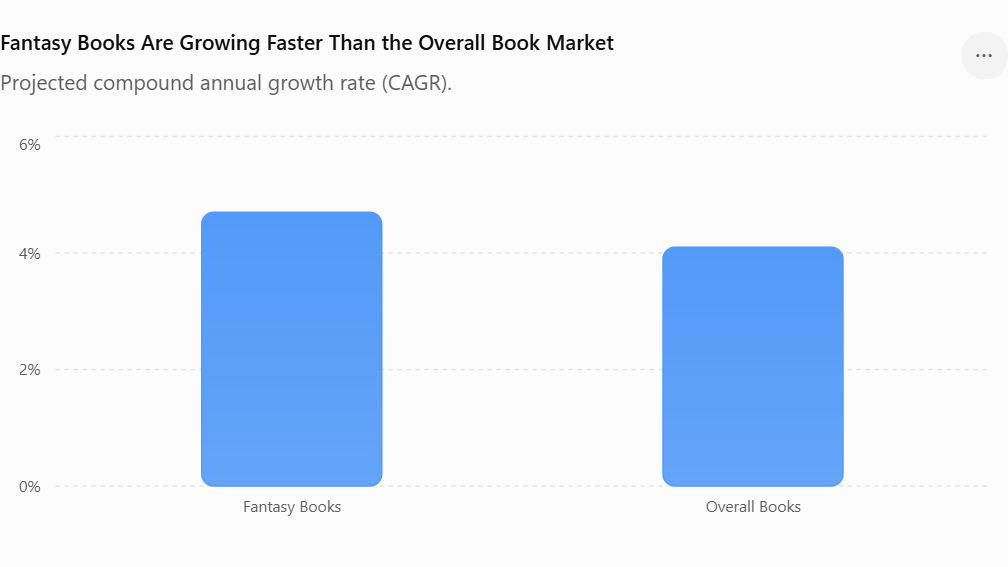
To put that growth rate in context: the broader global books market is projected to grow at a CAGR of around 4.1%. Fantasy is outpacing the overall market. This isn’t a genre riding a wave. It’s a genre generating one.
The fantasy books market specifically is projected to grow from $17.97 billion in 2025 to $26 billion by 2033. These are projections with the usual caveats that projections carry. But they’re grounded in real current performance, not in optimism alone.
The 2024 Sales Surge
The 2024 data is the most striking single data point in the genre’s recent history.
Sales of science fiction and fantasy books in the UK surged by 41.3% in value between 2023 and 2024, achieving the highest number of weekly chart number one positions since records began.
A 41.3% value increase in a single year is not incremental growth. It’s a structural shift in what the reading public is buying. When a genre dominates the bestseller chart at record levels in the same year its market value jumps by more than 40%, something genuinely significant is happening.
Adult fiction was a primary driver of growth in 2024, with unit sales rising by 4.8%, with romance and fantasy identified as the key contributors, fueled by platforms like BookTok.
Fantasy’s Share of What People Actually Buy
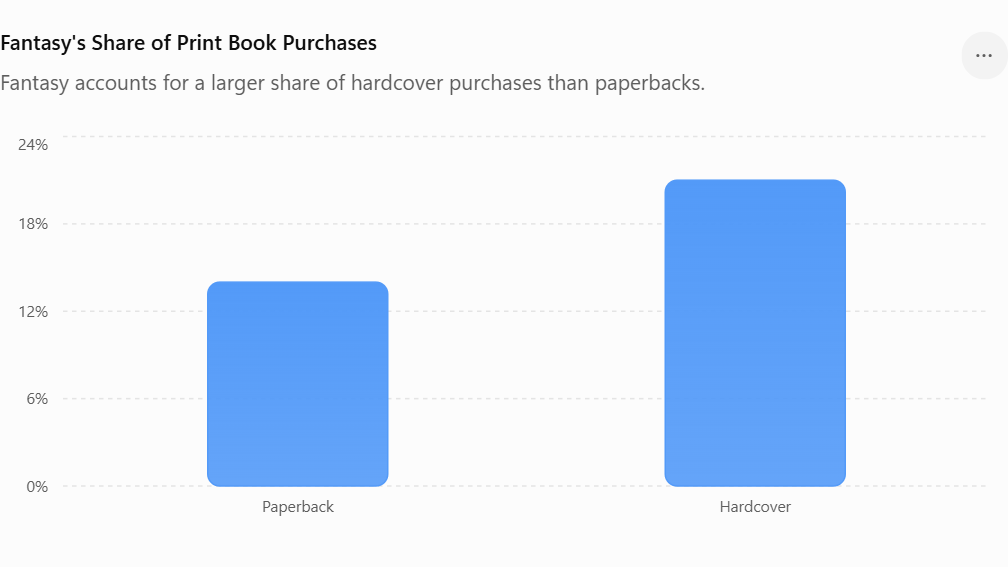
Fantasy is the most popular fiction subject among print book buyers, accounting for 14% of paperback purchases and 21% of hardcover purchases.
The hardcover figure is particularly telling. Hardcovers are the higher-commitment, higher-cost purchase. When readers are willing to pay hardcover prices for a genre at 21% of the market, that’s not casual interest. That’s devoted readership actively supporting the genre they love.
Read: 12 Best Dragon Books of 2026 [From the Hobbit to Seraphina]
The Romantasy Phenomenon
A Subgenre That Broke Records
The romantasy subgenre, blending romance and fantasy, has been the genre’s most spectacular commercial story of recent years.
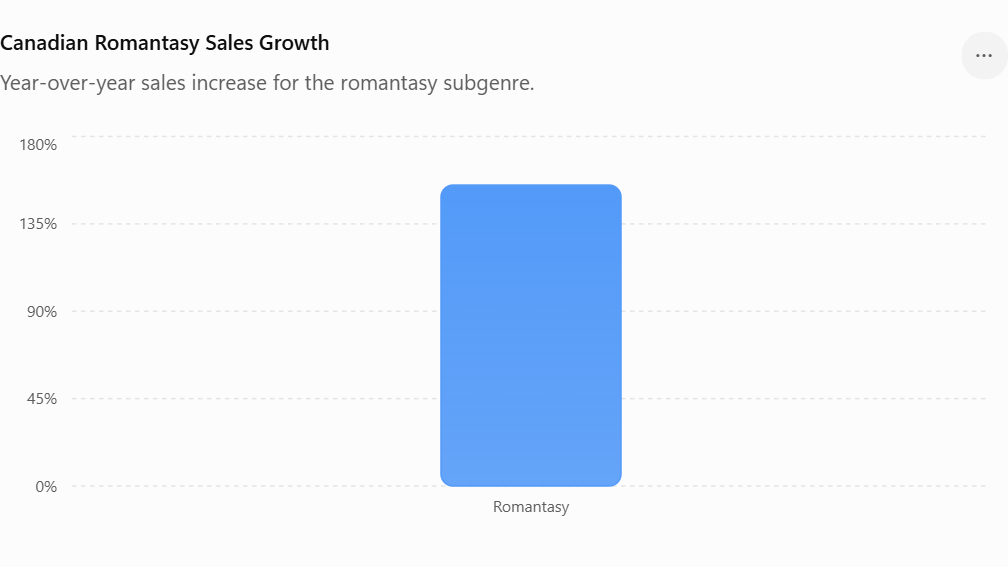
Romantasy titles saw a 155% year-over-year sales increase in Canada, with younger readers aged 13 to 34 identified as the key demographic. A 155% sales increase isn’t a trend. It’s a rupture in the market’s normal patterns.
The individual sales records are equally striking. Rebecca Yarros’s Onyx Storm set a record for the fastest-selling adult title in BookScan’s history, selling over one million copies in its first week.
What Romantasy’s Success Reveals
I want to be specific about what romantasy’s success actually tells us, because I think it’s being misread in some quarters.
The argument sometimes made is that romantasy’s growth proves that fantasy is only popular when it’s softened with romance. That’s not what the data shows. Epic fantasy, grimdark, and literary fantasy continued to perform across the same period. What romantasy’s success reveals is that fantasy’s appeal is broad enough to sustain multiple simultaneous subgenre booms without one cannibalizing another.
The genre expanded to absorb a new demographic, particularly younger female readers, without losing its existing audience. That’s a sign of genuine health, not of the genre chasing a single demographic at the expense of others.
Check: Grand View Research Statistics
BookTok: The Platform That Changed the Game
What BookTok Actually Did
TikTok’s BookTok community is the single most significant distribution development in fantasy publishing in the past decade, and it’s worth understanding specifically rather than gesturing at vaguely.
BookTok authors saw nearly 20% growth in sales in 2024, as the platform became critical for book discovery and amplification.
The specific mechanism matters. BookTok didn’t create demand for fantasy from nothing. It created the conditions under which readers who were already interested in fantasy could find specific books that matched their interests, communicate that interest to large audiences, and drive purchasing decisions in communities that moved faster than traditional publishing’s marketing infrastructure could track.
The Discovery Problem and Its Solution
One of the genuine structural problems for readers in any well-developed genre is discovery. The fantasy genre is enormous. Finding the specific kind of fantasy that matches your reading needs in a market with thousands of titles requires a filtering mechanism.
BookTok provided that filtering mechanism at enormous scale. User-generated content that showed why a specific reader loved a specific book reached other readers with similar interests more efficiently than almost any previous discovery mechanism had managed.
The BookTok community on TikTok has significantly influenced bestseller lists, driving sales for many authors and titles. That influence isn’t simply amplification of what would have sold anyway. It’s a genuine reordering of which books reach which audiences.
Read: 13 Fantasy Genres Ranked: Which One Actually Suits You?
The Global Picture
Fantasy’s International Expansion
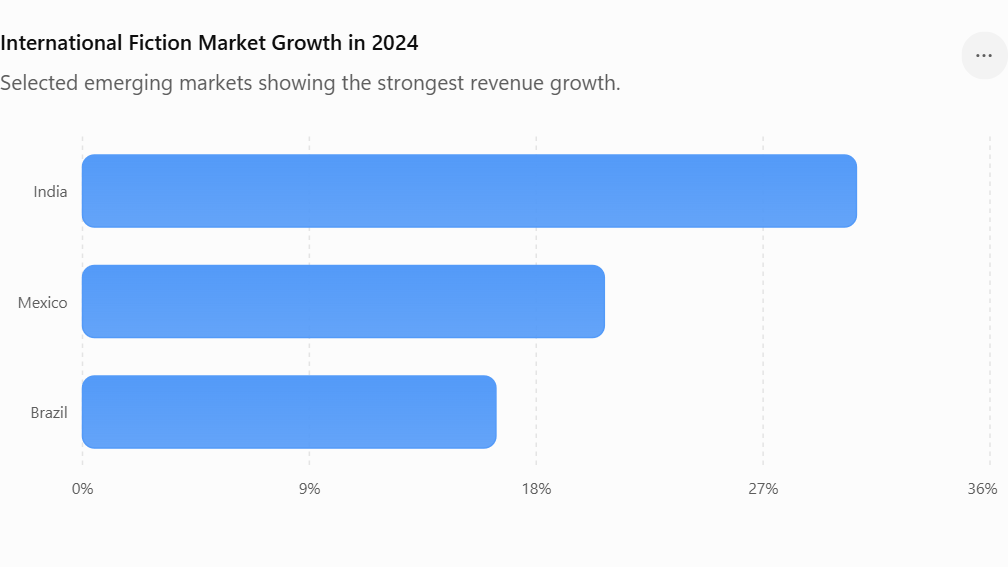
The fantasy growth story isn’t just a US and UK phenomenon. Sixteen out of eighteen international territories analyzed reported significant revenue growth in fiction in 2024, with emerging markets seeing the most substantial increases. India recorded 30.7% growth, Mexico 20.7%, and Brazil 16.4%.
These are markets where fantasy’s growth reflects genuine new readership rather than price increases in established markets. When India’s book market grows at 30.7% with fiction, and specifically fantasy and romance identified as the drivers, that’s an entirely new demographic entering the genre.
Source: Accio
The implications are considerable. A global fantasy readership is qualitatively different from a primarily Anglo-American one. It means the genre’s conventions, its default aesthetics, and its narrative assumptions will face genuine pressure to diversify as authors from different cultural traditions gain readership and influence.
I find this development exciting. the most interesting fantasy is the kind that draws on traditions other than European medieval convention. A truly global fantasy readership creates commercial incentive for exactly that kind of diversity.
Audiobooks as Fantasy’s Growth Vector
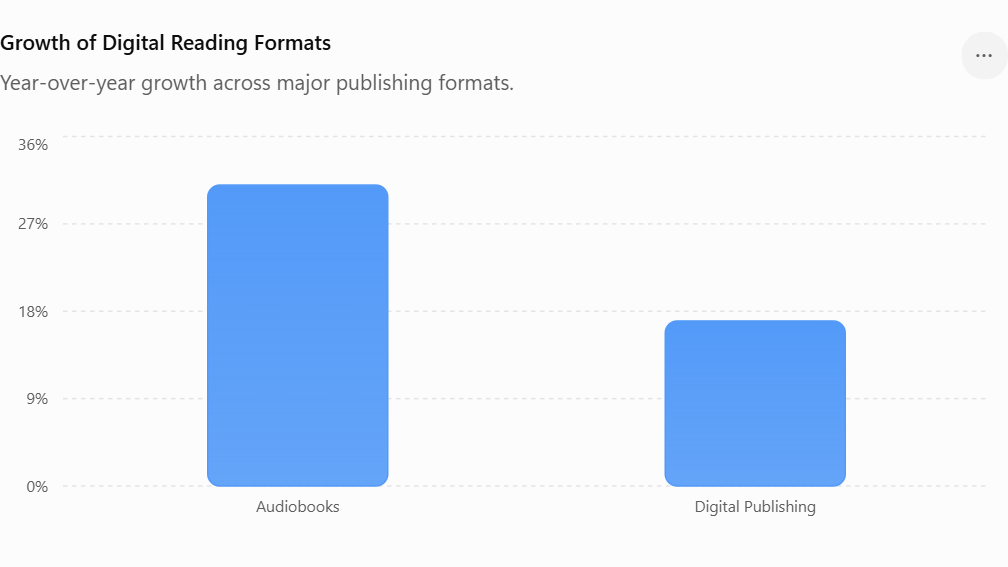
Audiobook adoption is accelerating, with UK audiobook revenues surging by 31% between 2023 and 2024, reaching $370.84 million.
Fantasy benefits from the audiobook growth particularly because of the genre’s relationship with immersion. An audiobook narrated well can deliver the secondary world immersion that fantasy readers seek through a completely different sensory channel. Commuters, exercisers, and people who want to read but can’t hold a book now have access to the same content.
Digital publishing revenue grew 17% to $782.99 million, indicating the increasing importance of audio and e-books. The genre’s growth isn’t confined to print. Fantasy is expanding across every delivery format simultaneously.
Why This Is Happening: The Deeper Reasons
The data tells you what is happening. Understanding why requires something beyond market reports.
Escapism That Earns the Label
The word “escapism” gets used dismissively when applied to fantasy, as though escaping into an impossible world is a lesser form of reading than engaging with realistic fiction. The data suggests readers have stopped accepting that framing.
Fantasy at its best doesn’t escape from difficult realities. It engages with them through a medium that allows a different kind of honesty than realistic fiction typically can. The exploration of power, of moral complexity, of loss, of what it costs to live with genuine beliefs in a world that doesn’t reward them: these are serious concerns that serious fantasy handles with genuine sophistication.
The demand for escapism and storytelling was driven by global challenges, with readers turning to fantasy and romance for immersive worlds and emotional storytelling. That’s accurate but undersells the quality of what readers are escaping into. They’re not escaping from difficulty. They’re finding a different angle of approach to it.
Age Demographics and Fantasy’s Expansion
The 18 to 24 age group is a key demographic for book consumption, heavily influenced by social media and peer recommendations, with a strong preference for genres including fantasy and science fiction.
Younger readers choosing fantasy as their primary genre is a structural positive for the genre’s long-term health. Readers who develop deep genre loyalty in their early reading years tend to maintain it. The fantasy readership being replenished by genuinely enthusiastic younger readers rather than aging without replacement is significant.
The romantasy boom specifically reached readers who might not have entered the genre through traditional epic fantasy pathways. A 155% increase in Canadian romantasy sales means a substantial number of new readers who weren’t previously part of the fantasy readership community. Some percentage of those readers will expand their genre exploration.
Cross-Media Reinforcement
Fantasy’s book success doesn’t exist in isolation. Screen adaptations in fantasy have generated investment at a scale no other genre receives.
Amazon’s investment in The Rings of Power (reported at over $1 billion for the first series) and the sustained cultural footprint of Game of Thrones, House of the Dragon, and The Witcher adaptations all created a cultural environment in which fantasy as a category received more mainstream attention than it had previously commanded.
Screen adaptations create book sales spikes. Readers who encounter fantasy through screens and then seek the source material represent genuine new genre entrants. The cross-media reinforcement is cumulative: each successful adaptation adds to the cultural legitimacy of fantasy as a serious storytelling mode.
Read: 13 Overlooked Dragon Books Worth Reading in 2026
The Nuance the Data Doesn’t Show
Good analysis requires honesty about what the numbers don’t tell you, not just what they do.
Despite overall fiction strength, fantasy sales in the US declined by 8.7% to 24.1 million units in 2025. This is a real data point that complicates the growth narrative, and it deserves acknowledgment.
What the unit sales decline alongside the value increase tells you is that the fantasy market is experiencing price increases that are generating revenue growth even as some unit volume softens. This is consistent with broader publishing trends: fewer units, higher prices, similar or greater revenue.
The global picture and the UK’s 41.3% value surge suggest the US unit decline is a market-specific fluctuation rather than a structural reversal. But dismissing contradictory data because it doesn’t fit the narrative would be intellectually dishonest.
The genuine picture is: fantasy’s global expansion and value growth are real and substantial. Individual market unit fluctuations are also real. Both can be true simultaneously.
Frequently Asked Questions
What is romantasy and why is it growing so fast?
Romantasy blends fantasy world-building with central romantic relationships. Its growth reflects fantasy expanding into demographics that romance fiction had previously captured. Younger readers aged 13 to 34 are the primary demographic. BookTok dramatically accelerated discovery and sales. The 155% Canadian year-over-year sales increase reflects genuine new readership entering fantasy.
Is fantasy actually the most popular book genre?
By certain measures yes. Fantasy accounts for 14% of paperback and 21% of hardcover purchases. Sci-Fi and fantasy led fiction growth in 2024 alongside romance. However, romance as a broader category generates higher total unit sales. Fantasy’s dominance is clearest in hardcover and in cultural conversation around specific titles.
How much did fantasy book sales grow in 2024?
UK Sci-Fi and fantasy book sales value grew 41.3% between 2023 and 2024. Global fantasy market value was $17.17 billion in 2024. Adult fiction unit sales rose 4.8% with fantasy as a primary driver. Romantasy specifically saw 155% year-over-year growth in Canadian markets.
Why is BookTok specifically important for fantasy rather than other genres?
Fantasy’s discovery problem is more acute than most genres due to series length and reader commitment required. BookTok’s ability to communicate why a specific series creates a specific emotional experience makes it particularly effective for fantasy. Readers can assess fit before committing to a multi-volume series through community discussion.
Will fantasy’s growth continue beyond 2026?
Market projections suggest yes. The fantasy books market is projected to reach $26 billion by 2033 at a 4.7% CAGR. Emerging markets including India, Mexico, and Brazil are showing growth rates that suggest genuine new readership expansion. Structural factors including audiobook growth and global platform access support continued long-term growth.
Final Thoughts
Fantasy has always offered something that serious readers needed: impossible worlds taken seriously, difficult questions approached through a medium that allows genuine honesty about power and loss and what it costs to maintain your values under pressure. That the genre is now commercially dominant reflects a broader cultural recognition of what it was always capable of.
The 41.3% value surge. The record-breaking first-week sales. The 155% romantasy growth. The 16 out of 18 international markets reporting fiction revenue growth with fantasy as a driver. These aren’t flukes or marketing artifacts.
They’re the reading public voting with its money for the genre that gives them what they came for.
References & Sources
- The Bookseller industry reports.
- Grand View Research. Fantasy Books Market Size, Share & Trends Report.
- Circana BookScan. U.S. Print Book Sales Reports.
- UK Publishers Association. Yearbook 2024.
- Nielsen BookData. UK Book Market Statistics.
- International Publishers Association. Global Publishing Industry Report.
- Canadian BookNet / BookScan reports on genre sales.
- BookTok: A Narrative Review of Current Literature and Directions for Future Research – Dera – 2024
Related Articles
- 12 Best Cultivation Novels [Ranked by Genre Fans]
- 7 Female MC Cultivation Novels Where the Female MC Shines [2026]
- 9 Best Progression Fantasy Books 2026 [Ranked List]
- How Fantasy World-Building Actually Works [Full Breakdown]
- High vs Low Fantasy: Why the Distinction Actually Matters
- Why Dragons Dominate Every Fantasy Tradition on Earth
- 15 Best Dragon Books for Adults [Dark & Epic Picks of 2026]