
 By
By Quick Takeaways:
- What is Fantasy? Fantasy as a genre is considerably harder to define precisely than most readers assume, and the definitions that hold up best are broader than the Western medieval default suggests
- Cultivation novels share the essential qualities that make something fantasy: impossible elements taken seriously within an internally consistent world, and narrative concern with powers and realities beyond ordinary human experience
- The strongest case against cultivation novels being “fantasy” is actually a case for them being a distinct literary form with their own genre conventions, not a case against their fantastic nature
- Western readers sometimes perceive cultivation novels as “not really fantasy” because they’re measuring against specifically Western fantasy conventions rather than against the genre’s actual defining characteristics
- Understanding what fantasy is and where cultivation novels sit within it helps you read both traditions more clearly
The question usually comes from one of two directions. Western fantasy readers who’ve encountered cultivation novels for the first time and find the experience disorienting enough to wonder whether they’ve wandered into a different genre entirely. And cultivation novel readers who’ve never thought of their reading as “fantasy” because the word conjures images of European medieval settings and dragon-slaying heroes that have nothing to do with what they love.
Both groups deserve a proper answer. Let me try to give one.
What Fantasy Actually Is
The Problem With the Common Definition
Most casual definitions of fantasy go something like this: fantasy is fiction that contains magical or supernatural elements that don’t exist in the real world.
This definition is true as far as it goes, but it doesn’t go very far. By this definition, fairy tales are fantasy. Magical realism is fantasy. The Iliad with its divine interventions, is fantasy. Religious texts with miracle accounts are fantasy. Horror with supernatural elements is fantasy.
The definition is so broad it loses most of its descriptive power. We need something more specific.
Tolkien’s Definition
J.R.R. Tolkien’s essay On Fairy-Stories (1947) remains one of the most thoughtful attempts to define what fantasy does rather than just what it contains. Tolkien’s key concept is “sub-creation”: the fantasy author creates a Secondary World with its own internal laws, a world complete enough that the reader can enter it imaginatively and find it believable on its own terms.
For Tolkien, what matters isn’t the presence of impossible elements but the internal coherence and creative seriousness with which those elements are treated. A Secondary World whose magic operates consistently, whose history is developed, whose cultures follow from their premises, and whose author takes it seriously as a world rather than as a backdrop, that’s what Tolkien’s definition points toward.
This is a significantly more demanding definition than “contains magic.” And it’s a more useful one.
Le Guin’s Definition
Ursula K. Le Guin, in her essays collected in The Language of the Night and later works, emphasized that fantasy is the genre most concerned with the inner life and with the symbolic expression of psychological and spiritual truths. Fantasy doesn’t escape reality; it approaches realities that realistic fiction can’t access directly.
Her definition connects fantasy to myth and to the human need for stories that engage with powers greater than ordinary human experience.
The Commercial Definition
The publishing industry has its own working definition, which is purely commercial: fantasy is fiction marketed and shelved in the fantasy section. This definition is circular but practically important, because it determines what readers find next to what and therefore how genre communities form.
The commercial definition in Western publishing has historically centered on secondary world fantasy with European medieval aesthetics, magic systems, and quest structures. This is a cultural artifact of where the commercial genre developed, not a theoretical necessity.
The Specific Elements That Make Something Fantasy
Setting aside definitions, there are recurring elements that most critics and readers agree mark a work as fantasy rather than as some other genre:
The impossible is taken seriously. Not winkingly acknowledged as metaphor, not explained away as a character’s delusion, but treated as genuinely real within the story’s world. A dragon that is treated as a real creature with its own biology, ecology, and cultural significance is fantasy. A dragon that represents a character’s inner fear is symbolism.
The world has internally consistent rules. Magic in strong fantasy operates by rules, even if those rules aren’t fully explained to the reader. This consistency is what allows tension: we believe the constraints are real, so we believe the challenges are real.
The story is concerned with power beyond ordinary human scale. Whether that’s divine power, magical power, elemental power, or cosmological power, fantasy is fundamentally interested in what it means to encounter realities larger than ordinary human experience.
The narrative engages with questions of meaning and value. Fantasy at its best isn’t escapism from meaning but a different route into it. The best fantasy uses impossible elements to access truths about courage, loss, power, identity, and the human relationship with the cosmos that realistic fiction can’t reach as directly.
These four elements are present in the best fantasy regardless of cultural origin, historical period, or commercial category.
What Cultivation Novels Actually Are
The Form Itself
Cultivation novels are a form of Chinese web fiction that emerged from online publishing platforms, primarily from the late 1990s onward, and developed into one of the most widely read literary forms in the world by readership numbers.
The central premise is consistent: a protagonist in a world with a specific cultivation system, typically involving the cultivation of internal energy (qi, spiritual power, or equivalent), progresses through a hierarchy of power stages while navigating a world where power is the fundamental currency of social, political, and cosmological reality.
The typical cultivation novel world includes:
- A tiered power system with named stages that characters advance through
- Martial cultivation as the primary path to power and social advancement
- A cosmological framework where the universe has structured levels of reality corresponding to cultivation levels
- A landscape populated by sects, empires, ancient ruins, and supernatural entities
- A protagonist who starts from a low or disadvantaged position and advances through talent, hard work, and occasional external assistance
What Makes Them Distinct
Several features of cultivation novels distinguish them from Western fantasy conventions in ways that can make them feel like a different genre to readers expecting European conventions:
The cosmological framework is Chinese rather than European, drawing on Daoist cultivation concepts, Chinese Buddhist cosmology, and the divine court tradition that runs through Chinese mythology. The internal logic of the universe operates on Chinese cosmological assumptions rather than Western ones.
The progression structure is more explicit and more central than in most Western fantasy. The reader knows the power hierarchy in detail and tracks the protagonist’s position within it throughout the story. This gives cultivation novels a relationship with their power system that Western fantasy rarely develops to the same degree.
The narrative pace is typically faster in terms of power advancement, and the series are typically much longer in total word count, reflecting their origin in serialized web publication rather than traditional book publishing.
The Case for Cultivation Novels as Fantasy
They Meet Tolkien’s Standard
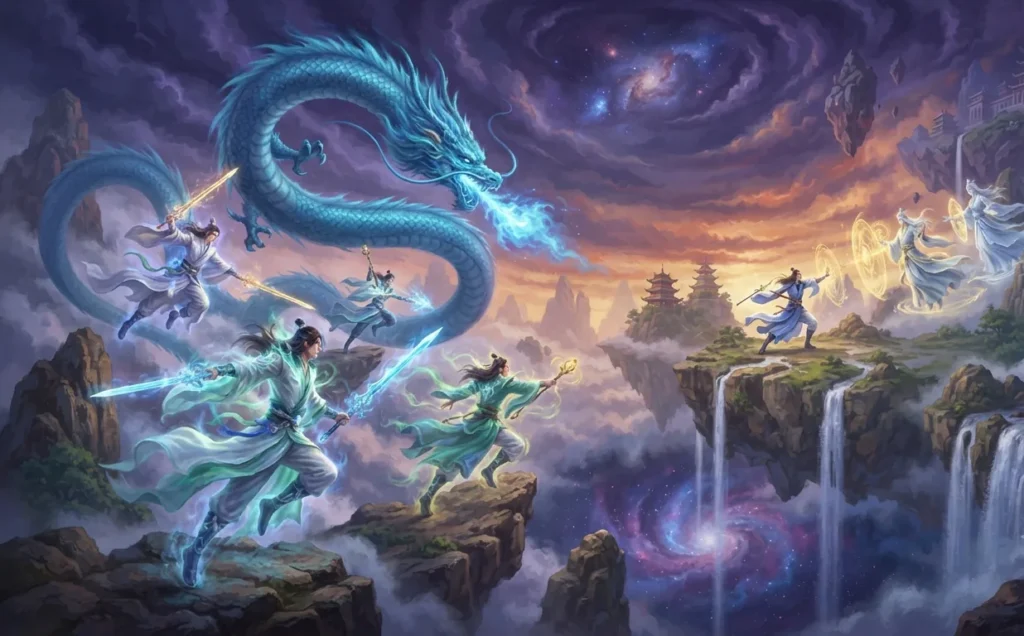
By Tolkien’s definition, the strongest cultivation novels like I Shall Seal The Heavens and Coiling Dragon are clearly fantasy. They create Secondary Worlds with extraordinary completeness: detailed cultivation systems with internal logic, cosmological hierarchies that operate consistently across thousands of chapters, and cultural and historical depths that rival the most world-built Western fantasy.
The best cultivation authors like Er Gen are serious sub-creators. They’ve built worlds whose rules are consistent, whose implications are followed through, and whose impossible elements are treated as genuinely real rather than as decoration.
If internal consistency and creative seriousness are the test, cultivation novels pass it.
They Meet Le Guin’s Standard
The cultivation novel’s concern with power beyond ordinary human scale, with what it means to approach cosmic reality through sustained effort, and with the relationship between individual development and the universe’s fundamental nature, connects directly to what Le Guin identified as fantasy’s deepest concerns.
The Daoist cultivation philosophy underlying the genre is genuinely about the same things that Le Guin thought fantasy was about: the individual’s relationship with powers greater than themselves, the search for genuine wisdom rather than mere capability, and the story of a self that can grow toward something it couldn’t previously comprehend.
The fact that this philosophical framework is Chinese rather than European doesn’t make it less fantastic. It makes it differently fantastic.
The Impossible Is Taken Seriously
Cultivation novels take their impossible elements with complete seriousness. Qi cultivation is treated as a real phenomenon with real mechanics. The cosmological hierarchy is real and has real consequences. Sect elders who’ve cultivated for centuries are genuinely formidable in ways the story consistently represents.
There’s no ironic distancing from the premise, no suggestion that the cultivators might be deluded. The world is what it appears to be, and the impossibility of it, by real-world standards, is the point.
The Case for Cultivation Novels Being Their Own Thing
The Genre Conventions Are Genuinely Different
Here’s where I want to be honest rather than simply advocate for one position.
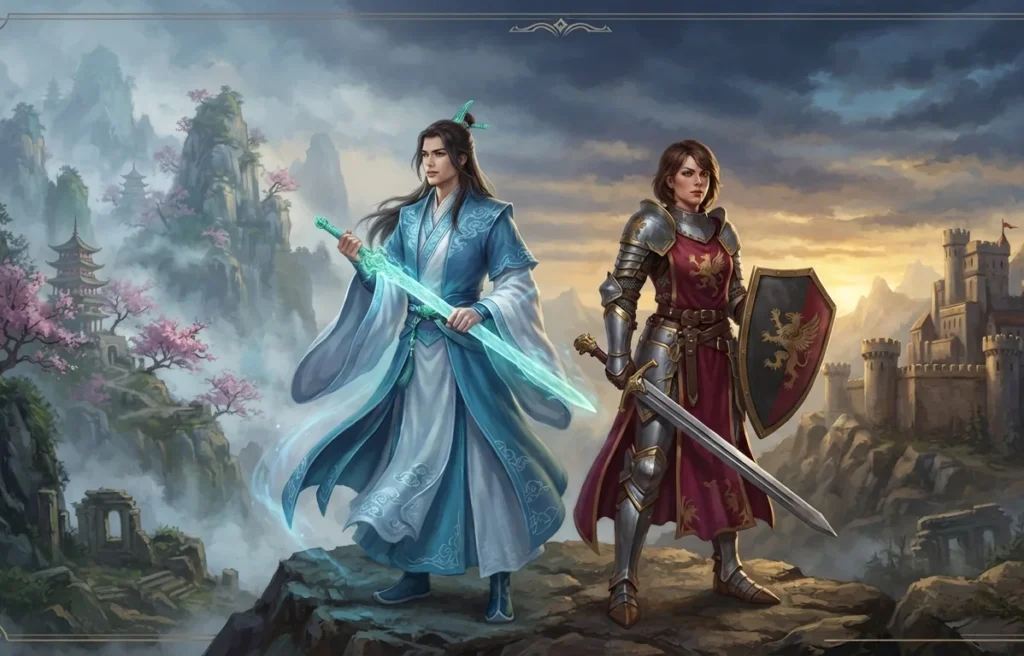
The strongest argument against lumping cultivation novels into “fantasy” isn’t that they aren’t fantastic. It’s that their genre conventions are different enough from Western fantasy conventions that treating them as the same thing causes confusion in both directions.
Western fantasy readers who pick up a cultivation novel expecting Tolkien-style world-building, character interiority, and literary prose will be confused by the pace, the explicit power progression, and the narrative priorities.
Cultivation novel readers who pick up Tolkien expecting the progression satisfaction and power fantasy elements of their preferred form will be equally confused.
The genres share the fundamental category of “impossible things taken seriously” but they have very different narrative priorities, very different relationships with their worlds, and very different reader contracts.
The Literary Tradition Is Different
Western fantasy developed primarily from European folklore, medieval romance, and 19th century literary romanticism. Its conventions, its default aesthetics, and its narrative grammar come from those sources.
Cultivation novels developed from Chinese classical literature, Buddhist and Daoist philosophical traditions, Chinese mythology and folklore, and 20th century wuxia fiction. Their conventions come from entirely different cultural roots.
These are different literary traditions that both happen to take impossible things seriously. Calling them both “fantasy” is accurate at the most general level but loses the specific character of each.
The Reader Experience Is Distinct
Part of what readers are actually asking when they ask “is this fantasy” is: will my expectations from other fantasy apply here? And the honest answer is: only partially.
The cultivation novel reader contract involves progression satisfaction (the advancement through power stages), long-form serialized narrative (thousands of chapters with ongoing development), specific genre tropes (the trash protagonist who rises, the arrogant young master who needs defeating), and a relationship with the power system that Western fantasy doesn’t typically develop.
Knowing this helps readers approach cultivation novels more productively. They’re not bad fantasy if they don’t meet Western fantasy expectations. They’re a different thing that shares fantasy’s fundamental nature.
The Honest Verdict
Yes, With Important Qualifications
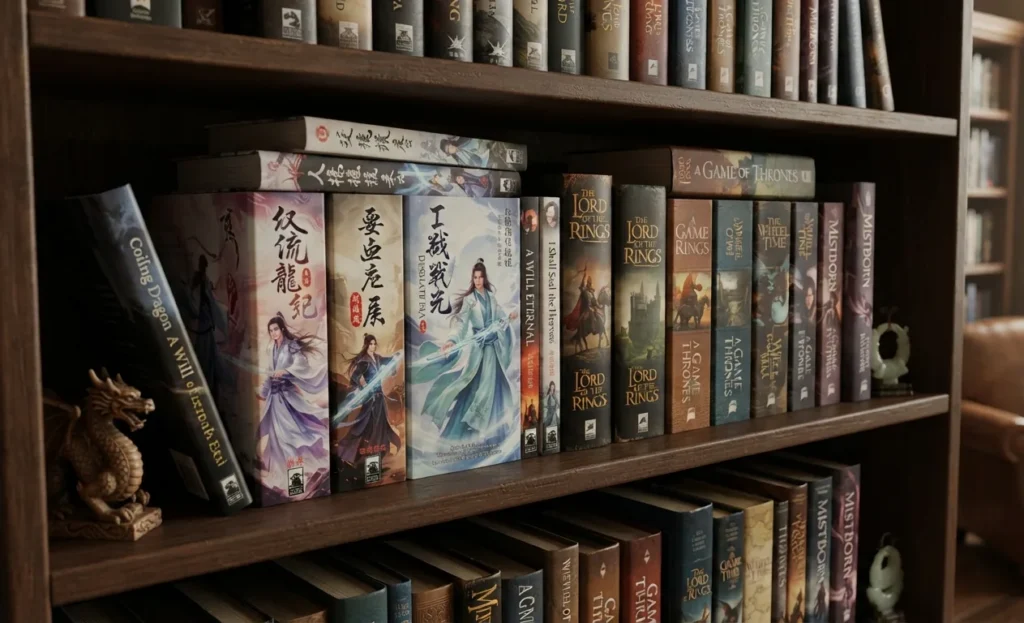
Cultivation novels are fantasy. They take impossible things seriously. They create internally consistent worlds. They concern themselves with powers beyond ordinary human scale. They use those impossible elements to engage with genuine questions about development, power, wisdom, and the individual’s relationship with the cosmos.
By any definition of fantasy that captures what the category actually is rather than what Western commercial genre publishing happens to have grouped together, cultivation novels qualify.
The qualification is equally important: they’re a specific form of fantasy with its own conventions, its own literary history, its own narrative priorities, and its own reader contract. Understanding them as “Chinese web fantasy with specific genre conventions” rather than as “fantasy set in China” is the more accurate frame.
What the Question Actually Reveals
The readers who ask whether cultivation novels are really fantasy are often noticing something real: these don’t feel like what I expected when I picked up something called fantasy.
That feeling reflects genuine genre difference. The cultivation novel’s relationship with its power system, its serialized pace, its specific tropes, and its philosophical foundations all produce a reading experience that differs meaningfully from Western epic fantasy, portal fantasy, or grimdark.
The question “is this fantasy” sometimes means “does this qualify as the thing I love.” The honest answer to that version of the question is: it depends what you love about fantasy. If you love impossible worlds taken seriously and the exploration of powers greater than ordinary human experience, cultivation novels are absolutely fantasy and absolutely capable of giving you that.
If you specifically love the aesthetics, narrative grammar, and conventions of Western commercial fantasy, cultivation novels are fantasy but a significantly different kind.
Both readers are right to notice the difference. The difference is real. So is the shared nature underneath it.
The Western Bias in Genre Classification
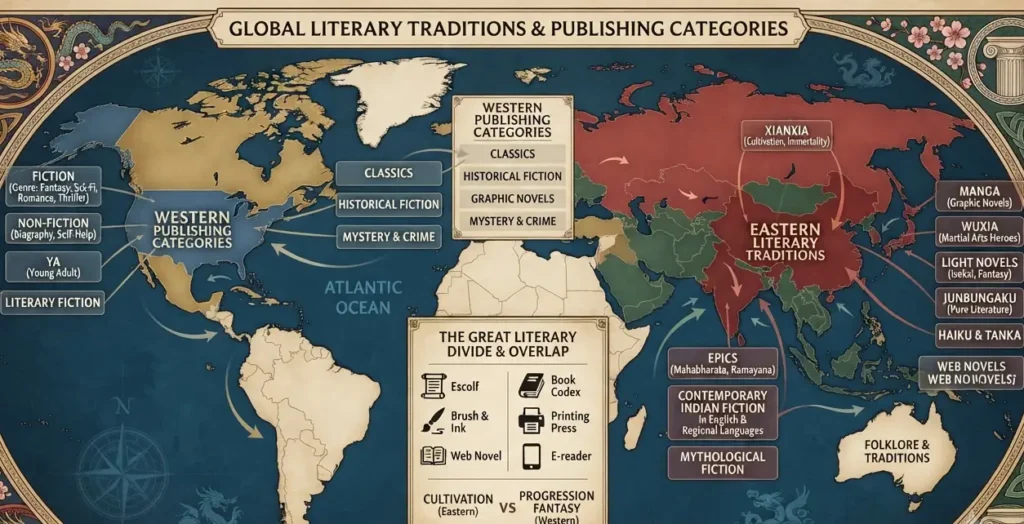
One thing worth naming directly is that the perception that cultivation novels “aren’t really fantasy” is partially a product of how genre categories developed in English-language publishing and criticism.
Fantasy as a commercial category was defined primarily by Western publishers, Western critics, and Western readers. The canonical texts used to establish what fantasy is (Tolkien, Le Guin, Lewis, Leiber, Howard) are all Western. The genre’s default assumptions about setting, narrative structure, and magic systems are all products of Western literary tradition.
When a Chinese literary form that does the same fundamental thing differently shows up, the genre’s Western-defined conventions make it feel “off” rather than just “different.” The disorientation is real, but it tells us something about the limits of the Western genre category, not something about whether cultivation novels are genuinely fantastic.
Fantasy is a human thing, not a Western thing. Cultures have been creating fantastic literature, impossible worlds taken seriously, across recorded history and across every continent. The genre category that emerged from Western commercial publishing in the 20th century doesn’t have exclusive rights to the territory.
Frequently Asked Questions
Is there a difference between cultivation novels and progression fantasy?
Yes, meaningfully. Cultivation novels are a Chinese literary form with specific cultural, philosophical, and genre roots in Daoist tradition and Chinese web publishing. Progression fantasy is an English-language genre category emphasizing power advancement mechanics. The categories overlap but aren’t identical. Some cultivation novels fit progression fantasy conventions; some don’t.
Why do some Western readers feel cultivation novels “don’t count” as fantasy?
Primarily because Western fantasy genre conventions are culturally specific, and cultivation novels developed from entirely different cultural roots. When the narrative priorities, aesthetic defaults, and genre tropes differ this significantly, the unfamiliar form can seem like a different genre rather than a different cultural expression of the same fundamental type.
Can someone who loves Western fantasy enjoy cultivation novels?
Many do, but genre expectation management matters. Cultivation novels prioritize explicit power progression, long-form serialized development, and specific genre tropes that Western fantasy doesn’t typically emphasize. Readers who approach them as a different form within a shared category rather than as fantasy that should meet Western expectations tend to find the transition more rewarding.
What makes something fantasy rather than science fiction when impossible things appear in both?
The source of the impossibility is the traditional distinction: fantasy attributes impossible elements to magic, supernatural forces, or powers beyond scientific explanation, while science fiction attributes them to sufficiently advanced technology or scientific principles. This distinction blurs regularly, but the cultural and narrative frameworks in which the impossible is presented differ enough to make the categories meaningful.
Are cultivation novels more like mythology than Western fantasy?
There’s something to this. Cultivation novels draw extensively from Chinese mythology, Daoist philosophy, and classical Chinese religious cosmology. Their impossible worlds are built on mythological foundations that are culturally specific and philosophically rich in ways that parallel how mythology works rather than how commercial fantasy works. This doesn’t make them mythology, but it does make them more mythologically embedded than most Western fantasy.
Final Thoughts
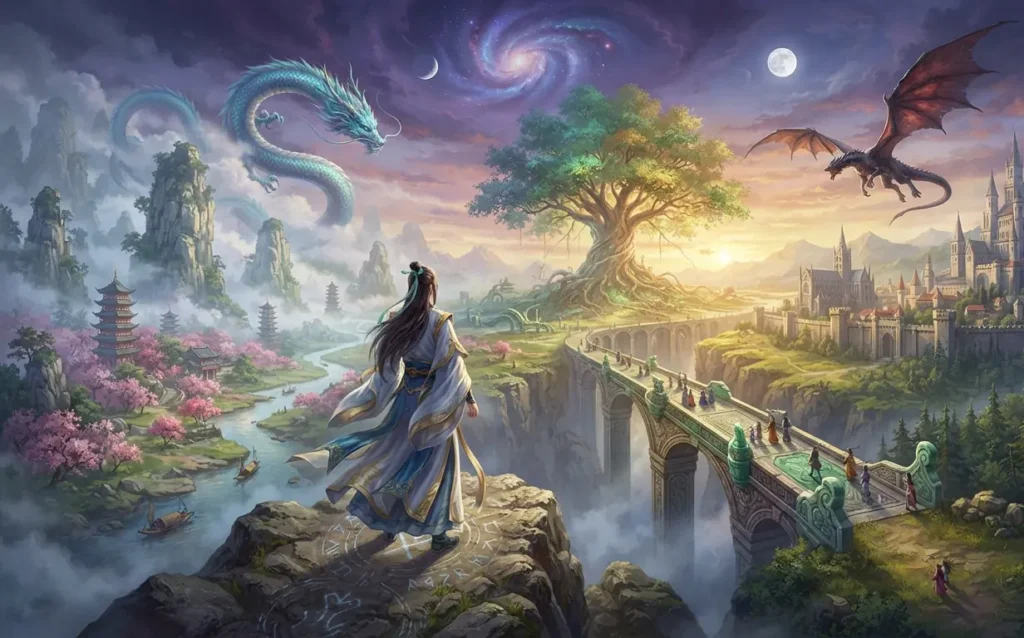
Fantasy is a broad category that specific cultural traditions have filled in very different ways. The Western commercial genre, for all its excellence and for all that it deserves to be taken seriously on its own terms, doesn’t define the category’s full extent.
Cultivation novels are genuinely fantastic. They take impossible things seriously. They build worlds with internal consistency. They engage with powers beyond ordinary human scale. They use those impossibilities to explore questions about development, wisdom, power, and the cosmos that genuinely matter.
They’re also their own thing. Their genre conventions are Chinese rather than Western. Their philosophical foundations are Daoist rather than European. Their narrative priorities are different. Knowing this makes them easier to approach productively.
The short answer to whether cultivation novels qualify as fantasy is yes. The more interesting answer is that asking the question reveals something worth knowing: these two traditions are doing the same fundamental thing in ways so culturally different that recognizing what they share requires understanding what each of them actually is.
That’s worth figuring out.
Sources & References
- Tolkien – On Fairy-Stories
- Le Guin – The Language of the Night
- Mendlesohn – Rhetorics of Fantasy
- Hume – Fantasy and Mimesis
- Mapping globalised Chinese webnovels: Genre blending, cultural hybridity, and the complexity of transcultural storytelling – Xiang Ren, 2024
- Internet Literature in China – Michel Hockx
Recommended Reading
- The Cambridge Companion to Fantasy Literature
- Journey to the West by Wu Cheng’en: Wu Cheng’en
- Dao De Jing
- Zhuangzi
Written by Batin Khan, a curious free spirit who loves reading and exploring the worlds of fantasy, mythology, and ancient stories. Through this blog, Batin hopes to share that sense of wonder with readers while building an exciting future along the way.