
 By
By Quick Takeaways:
- Korean dragon legends range from royal founding myths documented in official historical chronicles to regional folk traditions that survived through oral transmission across centuries
- Several legends on this list involve dragons protecting specific Korean kingdoms, making them deeply political as well as mythological
- The most distinctly Korean concept in this tradition is the Imugi, the pre-dragon being working toward transformation, which appears in multiple regional legend variants
- Korean shamanic tradition (musok) preserved dragon legends that classical Buddhist and Confucian scholarship might have overlooked or dismissed
- Some of these legends are attached to real historical sites you can visit today in South Korea
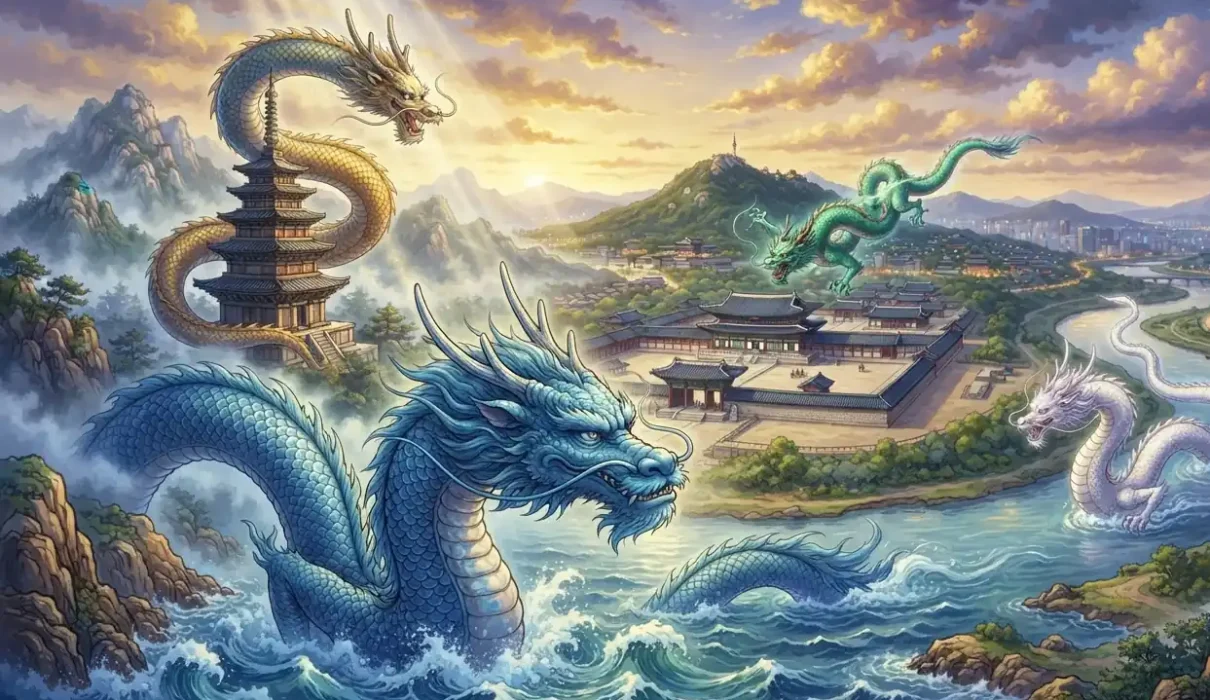
Korean dragon mythology operates differently from what most readers expect. It’s less cosmologically systematic than Chinese tradition and less narratively elaborate than Japanese tradition. What it offers instead is something I’ve come to value more with time: a mythological tradition that stayed close to specific landscapes, specific communities, and specific moments in Korean history.
These seventeen legends survived not because they were codified in official texts, though some were. They survived because they attached themselves to places, to royal lineages, to the practices of fishing communities, and to the founding stories of religious sites. They became part of how Korean communities understood where they were and what it meant to be there.
Twenty years of following mythology has taught me that legends with that kind of rootedness are the hardest to kill.
1. The Dragon Ancestor of Wang Geon
Why This Legend Refuses to Disappear
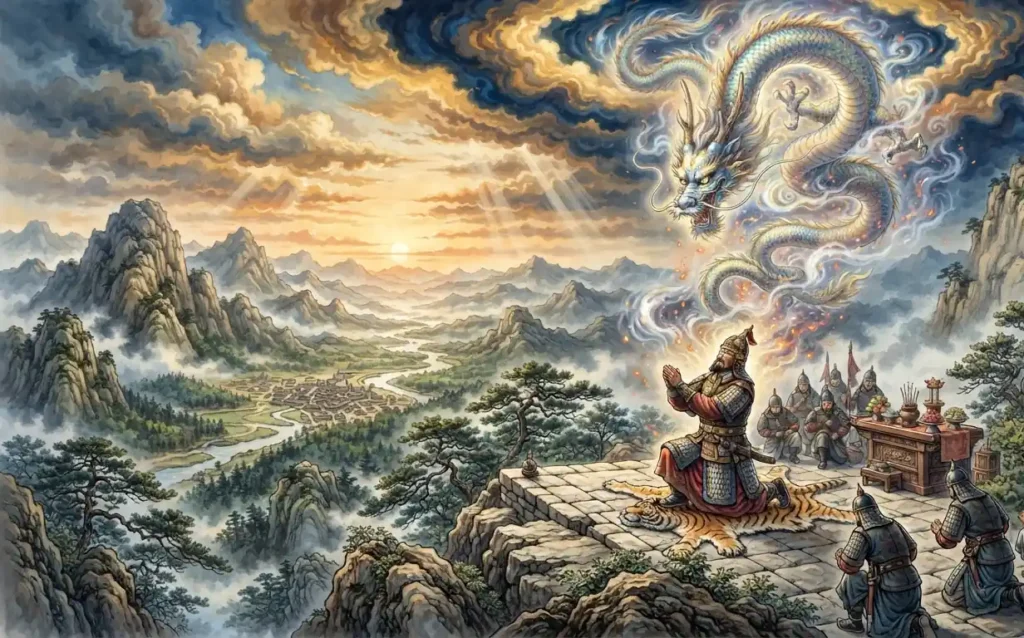
Wang Geon, the founder of the Goryeo Dynasty (918 to 1392 CE), had dragon ancestry written directly into his founding mythology.
The story, documented in the Goryeo-sa (History of Goryeo), Korea’s official dynastic chronicle, describes Wang Geon’s grandfather encountering a dragon figure whose connection to the family established a lineage of dragon descent. Wang Geon’s subsequent founding of Korea’s most significant dynasty gave this dragon ancestry narrative a political weight that no amount of Confucian skepticism could fully erase.
The dragon ancestry wasn’t decorative symbolism. It was a legitimacy claim. The dynasty that would rule Korea for nearly five centuries needed its founding to be cosmically sanctioned, and the dragon provided exactly that sanction in the mythological vocabulary available.
This legend refused to be forgotten because it was embedded in official historical records and because the dynasty it legitimized was real and consequential.
2. Munmu the Sea Dragon King
The King Who Became a Dragon
This is one of Korean mythology’s most specific and most affecting legends, and the one I return to most often when thinking about what Korean dragon mythology does uniquely well.
King Munmu of Silla (reigned 661 to 681 CE) unified the Korean peninsula for the first time, defeating rival kingdoms and Chinese Tang Dynasty forces in a series of military campaigns that changed Korean history. On his deathbed, he made a specific request: he wanted to be cremated and his ashes scattered in the East Sea, so that he could become a sea dragon and protect Korea from Japanese invasion.
The request was honored. His ashes were scattered at sea near Daewangam Rock off the coast of Gyeongju. The location is real, is documented in the Samguk Sagi (History of the Three Kingdoms), and is a designated historical site in South Korea today.
The legend that followed holds that Munmu became the Dragon King of the East Sea and that his dragon form continued to protect the Korean coast. A subsequent legend describes his son, King Sinmun, receiving a divine gift through a reed that appeared at the location of the dragon’s transformation, from which the famous Manpasikjeok flute was made.
I find this legend genuinely moving because it connects a real historical figure’s documented dying wish to the mythological tradition so directly. Munmu didn’t just become associated with dragons after his death. He asked for the transformation himself.
3. The Dragon of Hwangnyongsa Temple
The Dragon That Guarded Korea’s Greatest Temple
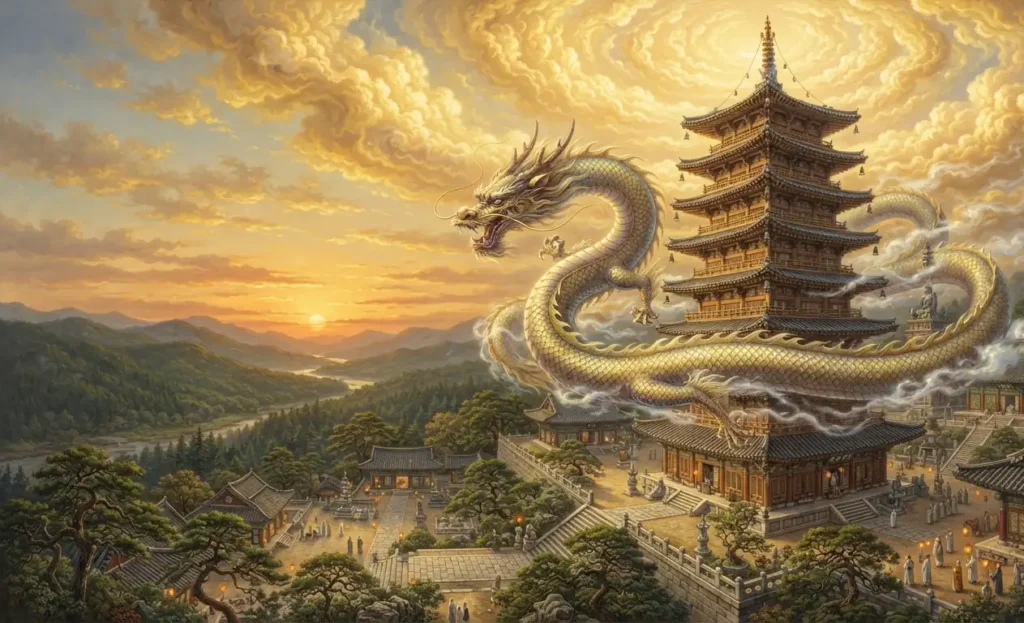
Hwangnyongsa (Temple of the Yellow Dragon) was Silla Korea’s most important Buddhist temple, reportedly the largest wooden structure in East Asian history during its peak. It was burned by the Mongol invasions in 1238 and never rebuilt.
Its founding legend involves a dragon. When King Jinheung of Silla began construction of a royal palace on the chosen site, a yellow dragon appeared in the foundations. The appearance was interpreted as a divine sign that the location should be used for religious rather than royal purposes. The temple was built instead of the palace, taking its name directly from the dragon that appeared at its founding.
The temple subsequently maintained a guardian dragon tradition: a specific dragon was understood to inhabit the site and protect it. When the temple was destroyed, the loss of its guardian dragon was treated as cosmologically significant, not merely as an architectural loss.
The legend persists because the temple’s destruction was one of the defining tragedies of Korean cultural history, and the dragon’s presence at the founding gives the loss a mythological dimension that pure architectural history wouldn’t have.
4. The Three Dragons of Silla’s Founding
Dragons at the Birth of a Kingdom
The founding mythology of the Silla Kingdom, one of Korea’s three ancient kingdoms, includes specific dragon figures at moments of cosmological significance.
The Samguk Yusa documents traditions connecting Silla’s royal establishment to dragon imagery in ways that gave the kingdom’s legitimacy a specifically draconic sanction. The founding mythology isn’t a single clean narrative but a cluster of stories involving water, dragons, and the supernatural emergence of royal authority from circumstances that exceeded ordinary human agency.
What makes this legend cluster worth knowing is how consistently Korean royal founding mythology reaches for dragon figures to mark moments of legitimacy establishment. Goryeo has its dragon ancestor. Silla has its founding dragon traditions. The pattern reveals something about how Korean political culture understood the connection between legitimate authority and cosmic sanction.
5. The Dragon of Anapji Pond
The Royal Pond’s Eternal Guardian
Anapji, now called Donggung and Wolji Pond in Gyeongju, was the garden pond of the Silla royal palace complex. Archaeological evidence confirms its historical importance. The dragon guardian tradition attached to it is documented in Silla-era accounts.
The royal pond’s dragon wasn’t simply a decorative mythological concept applied to a nice location. In the religious and cosmological understanding of the period, significant bodies of water associated with royal power had specific supernatural presences. The Anapji dragon’s guardianship connected the physical site of royal governance to the dragon tradition’s protective associations.
Artifacts recovered from the Anapji excavation, including objects bearing dragon imagery, confirm that the dragon’s association with this site was taken seriously in material culture as well as in mythology. The legend persists partly because the physical site persists, allowing a continuous connection between the mythological tradition and an actual location in the landscape.
6. Kim Suro and the Dragon Kingdom of the Sea
The Gaya Founder’s Dragon Connection
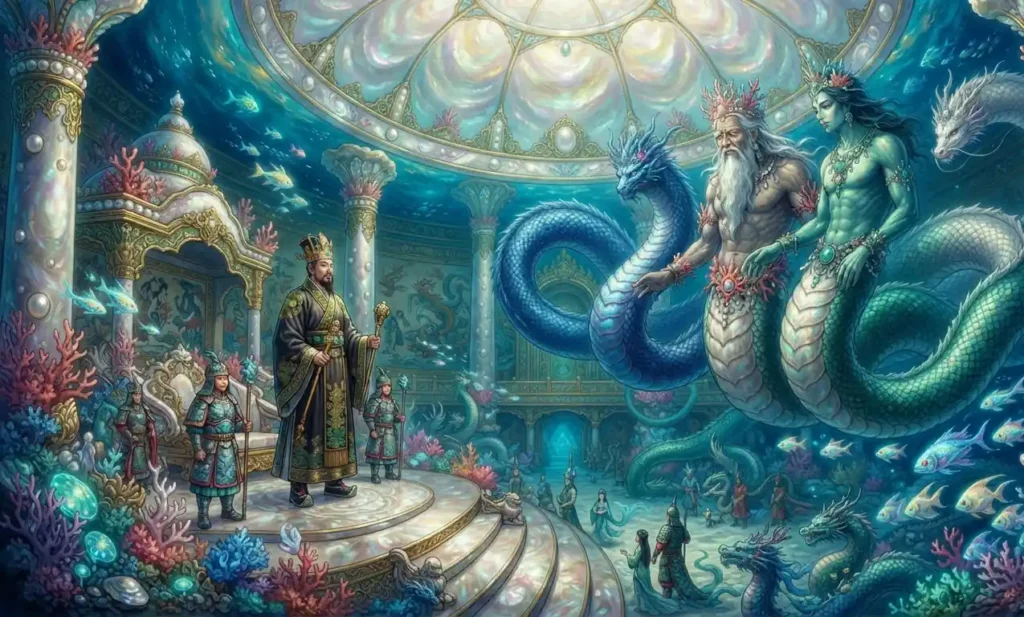
Kim Suro, the legendary founder of the Gaya Kingdom (which eventually became a significant political force in the southeastern Korean peninsula), has his own dragon connection in the traditions preserved about the Gaya Confederacy.
The founding mythology involves Kim Suro’s origins being connected to supernatural signs and cosmic sanction that the dragon tradition helped provide. His wife, Heo Hwang-ok, is described as a princess who arrived by ship from a distant kingdom, and the journey and arrival are surrounded by supernatural imagery that includes water-related divine figures.
The Gaya traditions are documented less completely than Silla and Goryeo traditions, partly because Gaya was absorbed by Silla before leaving extensive written records. What survives reflects a dragon tradition that was present in the region’s founding mythology even if it’s less elaborated than the other royal traditions.
7. The Imugi of Mount Seorak
The Patient Transformation
Mount Seorak in Gangwon province, one of Korea’s most dramatic mountain landscapes, has its own specific Imugi tradition. The legend describes an Imugi that has inhabited the mountain’s valleys and river systems for centuries, patient in its thousand-year wait for the Yeouiju pearl that will complete its transformation.
What makes regional Imugi legends like this one interesting is the specific geography they attach to. The Imugi of Mount Seorak isn’t a generic pre-dragon being. It’s the specific supernatural inhabitant of a specific landscape, with a presence that local tradition associated with particular waterfalls, specific pools, and identifiable features of the terrain.
This kind of geographical specificity is what transforms a mythological concept into a living local legend. People who lived near Seorak didn’t just know about the Imugi as a category. They had a specific sense of where their Imugi was and what its presence meant for the water systems they depended on.
8. The Haenyeo and the Sea Dragon of Jeju
Divers and Their Dragon Relationship
The haenyeo (female free divers) of Jeju Island maintained their own specific traditions regarding sea dragons, rooted in the practical reality of their diving practice.
The Jeju sea dragon tradition isn’t documented in classical texts the way royal founding myths are. It’s a folk tradition preserved through the haenyeo community’s own practices, including the ritual of yeongdeunggut performed in the second lunar month to maintain right relations with sea supernatural forces.
The sea dragon figure in haenyeo tradition is neither wholly benevolent nor threatening. It’s a powerful presence that requires specific respect, specific ritual attention, and specific conduct when working in its domain. Getting this wrong had consequences. Getting it right meant the sea would yield what the divers needed.
I find this legend category particularly interesting because it represents dragon mythology from the perspective of the people most directly affected by the sea’s supernatural dimension. Not kings claiming legitimacy, not monks founding temples. Working women whose safety depended on maintaining right relations with what lived in the water beneath them.
9. The Dragon of the Han River
Seoul’s Ancient Guardian
Before Seoul was Korea’s capital, the Han River was already one of the peninsula’s most important waterways. The river’s dragon guardian tradition predates the Joseon Dynasty’s founding of Seoul as a capital city and continued through the centuries of the city’s subsequent development.
The Han River dragon is specifically a local water dragon rather than a Dragon King of cosmic scope. Its guardianship is of this specific river, this specific stretch of water that communities on both banks depended on for fishing, transportation, and the fundamental agricultural support that river access provided.
The legend persists in part because the Han River persists. The river runs through the center of modern Seoul, and while the dragon guardian tradition is no longer part of daily religious practice for most residents, the legend remains attached to one of the most visible geographical features of Korea’s capital city.
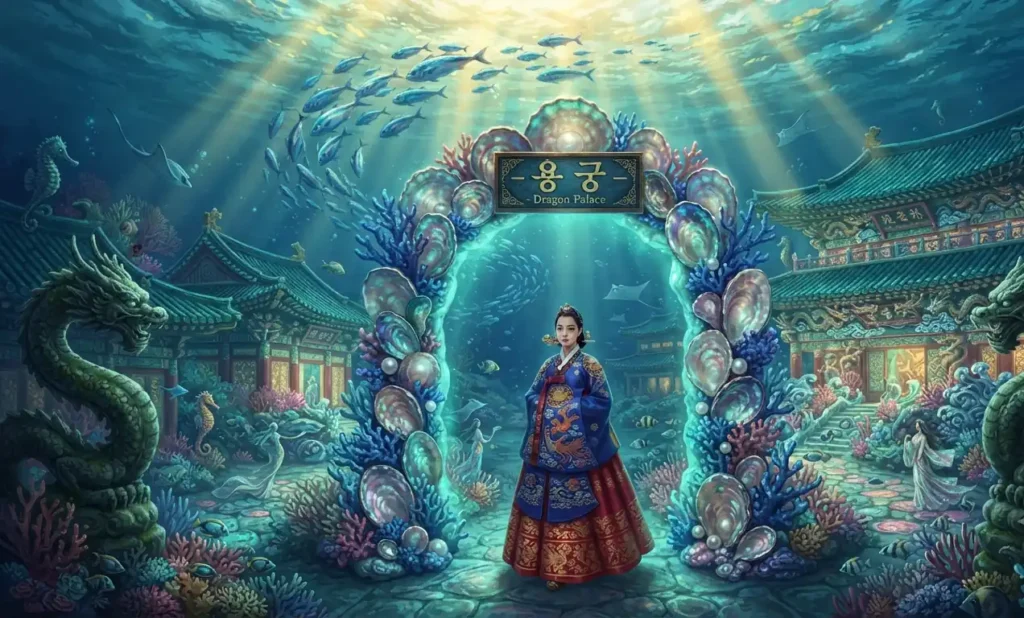
10. Bari Gongju and the Dragon Palace
The Shamanic Princess
Bari Gongju (Princess Bari) is one of Korean shamanism’s most important mythological figures, a divine figure whose story involves her journey to the underworld and beyond to retrieve life-restoring water for her dying parents.
Her journey takes her through territories that include dragon-adjacent supernatural presences, including water realms that share characteristics with the Dragon King’s underwater palace tradition. The shamanic tradition that preserved her story maintained it as a living narrative used in specific ritual contexts, particularly funerary rites.
The Bari Gongju legend refused to be forgotten because it remained embedded in active shamanic practice rather than merely literary tradition. When a mudang (shaman) performed the specific ritual connected to her story, the legend was being enacted rather than just remembered.
11. The Dragon That Became Namsan Mountain
Transformation Running Both Directions
Most dragon transformation legends move in one direction: a being of lesser nature (a carp, an Imugi) transforms into a dragon through cultivation and the right conditions.
The Namsan Mountain dragon legend in the Gyeongju region moves the other direction. The tradition describes a dragon figure whose presence in the landscape became fixed in physical form, the mountain itself being understood as the material expression of a dragon’s presence rather than as rock that merely reminded people of a dragon.
This cosmological understanding of landscape, in which significant geographical features are expressions of dragon energy or dragon presence, is connected to the feng shui dragon vein tradition while also being specifically Korean in how it attaches to named locations with their own particular histories and sacred associations.
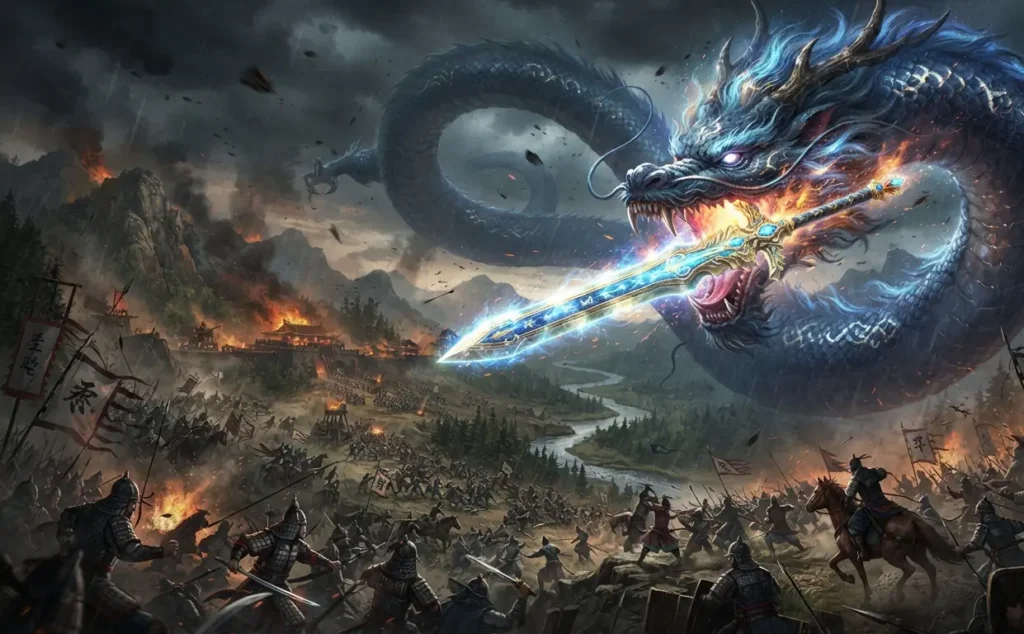
12. The Dragon That Swallowed the General’s Sword
Power Recognized and Returned
This folk legend exists in regional variations across several Korean provinces, centering on a general or warrior who encounters a dragon in battle or at a significant moment and whose weapon is taken by the dragon rather than used against it.
The consistent elements across versions are: the general has a sword of unusual quality or supernatural connection, the dragon takes or demands the sword, and some form of exchange or recognition occurs that marks the encounter as a moment of power meeting power rather than predator meeting prey.
The sword is sometimes returned with an enhancement. Sometimes the taking of the sword is itself the dragon’s gift, removing a weapon that would have caused the general harm if kept. The variation in outcomes reflects the regional folk tradition’s freedom with narrative specifics while maintaining the core concept: dragons recognize genuine power and respond to it.
13. The Nine-Dragon Waterfall (Kuryong Falls)
Geography as Dragon Legend
Kuryong Falls (Nine-Dragon Waterfall) in the Diamond Mountains is one of Korea’s most celebrated natural landmarks. The legend giving it its name involves nine dragons that inhabited the pool at the waterfall’s base.
The nine dragons were associated with the waterfall’s power and its pool’s depth, with the number nine carrying its cosmological significance as the supreme yang number. The falls’ dramatic beauty made the legend feel immediately appropriate: this was clearly a location where extraordinary natural beings would choose to live.
The Diamond Mountains’ general landscape accumulated dragon legends at multiple specific points because the landscape itself seemed to demand supernatural explanation. Waterfalls of that power, pools of that depth, peaks of that height, these were not features that fit comfortably within purely naturalistic understanding.
14. The Dragon Bridge of Cheonggyecheon
The Dragon Embedded in Urban Space
The Cheonggyecheon stream in what is now central Seoul has dragon associations attached to specific bridge locations along its course.
The Dragon Bridge tradition associated with this urban waterway reflects how dragon mythology attached itself to specific infrastructure rather than remaining purely in natural settings. A bridge over a water dragon’s domain required acknowledgment of the dragon’s presence. Specific bridge locations along the stream were understood to be points where the water’s supernatural dimension was most concentrated.
This urban dragon legend refused to be forgotten partly because the stream and its crossings remained features of the city’s daily life, and the legends attached to them traveled with the infrastructure.
15. The Dragon and the Buddhist Monk
Conversion as Dragon Legend
Korean Buddhist tradition contains numerous legends of monks encountering dragons, with the encounter typically resulting in the dragon’s conversion to Buddhist practice and its subsequent role as a temple guardian.
The most persistent versions involve a dragon initially hostile or disruptive to a temple’s founding or operation. The monk, through a combination of Buddhist teaching and personal virtue, convinces the dragon that its power would be better directed toward protection than disruption. The dragon becomes the temple’s guardian rather than its adversary.
This legend type persisted because it was functionally useful: it explained why temples had dragon imagery in their architecture and grounds, gave communities a narrative for the transition from pre-Buddhist supernatural belief to Buddhist-adjacent supernatural belief, and showed dragon power being redirected toward religious protection.
16. The Wishing Dragon of Jeju’s Yongduam Rock
The Dragon Frozen in Stone
Yongduam Rock (Dragon’s Head Rock) at Jeju Island’s coast is a basalt formation that genuinely resembles a dragon’s head emerging from the sea. The rock is real, the resemblance is clear, and the legend attached to it is specific.
The tradition holds that the rock is a dragon that attempted to ascend to heaven but was struck down by the Jade Emperor for some transgression and was turned to stone at the moment of attempted flight. The dragon’s head is perpetually raised toward the sky it never reached, in a posture of permanent aspiration.
The legend refuses to be forgotten because the rock won’t let it. Every visitor to Yongduam sees the dragon’s head immediately. The legend doesn’t need to be actively transmitted; it’s embedded in the landscape in a form that reasserts itself every time someone looks at the coast.
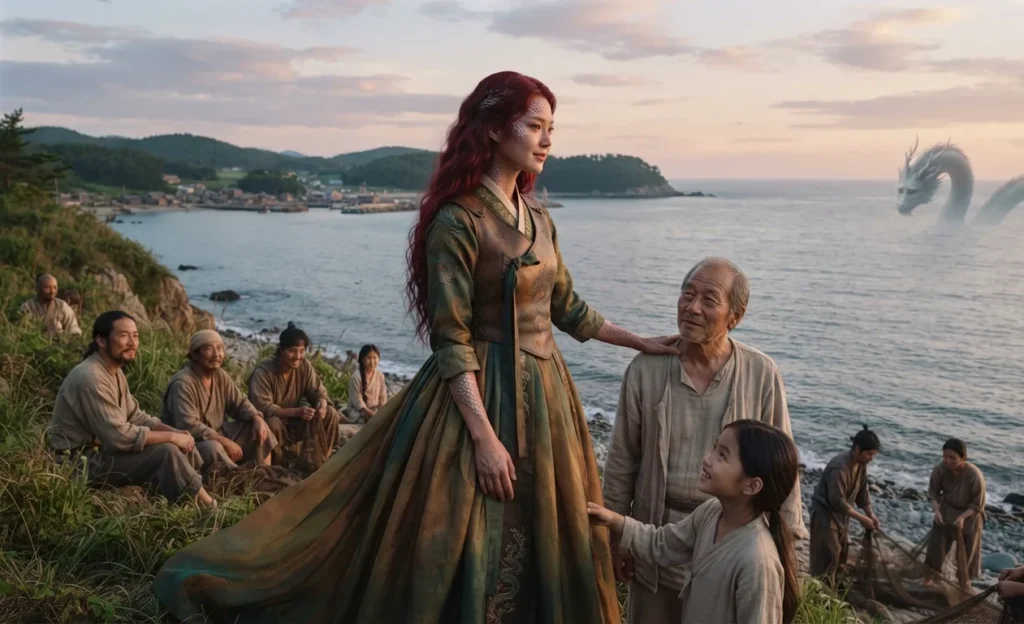
17. The Dragon King’s Daughter Who Stayed
The Dragon Bride Reversed
Most Korean dragon bride legends follow a familiar pattern: a Dragon King’s daughter interacts with a mortal, there’s a period of connection, and the dragon returns to her original realm. The relationship ends because the two natures can’t permanently coexist.
This regional legend, preserved in several folk tale collections, reverses that ending. A Dragon King’s daughter who has been living in the human world, through circumstances that vary by telling, chooses not to return when the opportunity arises. She has made her life in the human world. The sea is her origin but it’s no longer her home.
The legend refuses to be forgotten because it offers a different kind of resolution than most supernatural bride stories. Instead of the inevitable separation that usually ends these tales, this dragon daughter’s choice is to stay and what that means for who she becomes occupies the legend’s most interesting territory.
It’s a quieter legend than most on this list. But twenty years of mythology has taught me that quiet legends that turn on a character’s choice often have more staying power than spectacular ones that turn on extraordinary events.
Frequently Asked Questions
Which Korean dragon legend is best documented in historical sources?
The legend of King Munmu becoming a sea dragon is best documented, appearing in the Samguk Sagi (1145 CE) with specific historical detail about his death, cremation, and ash scattering. Wang Geon’s dragon ancestry in the Goryeosa is similarly well-documented in official chronicles.
Can I visit locations connected to these legends in South Korea today?
Yes. Daewangam Rock (Munmu’s sea dragon site) near Gyeongju, Yongduam Rock at Jeju, Donggung and Wolji Pond (Anapji) in Gyeongju, Kuryong Falls in Gangwon province, and the Hwangnyongsa site in Gyeongju are all accessible historical and heritage sites.
What is the Samguk Yusa and why is it important for Korean dragon legends?
The Samguk Yusa (Memorabilia of the Three Kingdoms) was compiled by the Buddhist monk Iryeon in the 13th century CE. It preserved legends, folk traditions, and supernatural accounts that the more official Samguk Sagi often excluded. Many of Korea’s most important mythological narratives exist today because Iryeon chose to record them.
Are Korean dragon legends still part of living religious practice?
Some are. The haenyeo diving community’s sea-related rituals continue in Jeju and are UNESCO-recognized. Shamanic (musok) practices that involve dragon-related traditions persist, particularly in coastal communities. Buddhist temples maintain dragon guardian imagery as active religious iconography rather than purely decorative historical reference.
What’s the most uniquely Korean idea in this list of legends?
The Imugi concept, the pre-dragon being in patient transformation, is the most distinctly Korean contribution to East Asian dragon mythology. It appears in multiple regional legend variants and represents a specifically Korean understanding of transformation as requiring both internal development and external conditions aligning, with no guarantee of the timing.
Final Thoughts
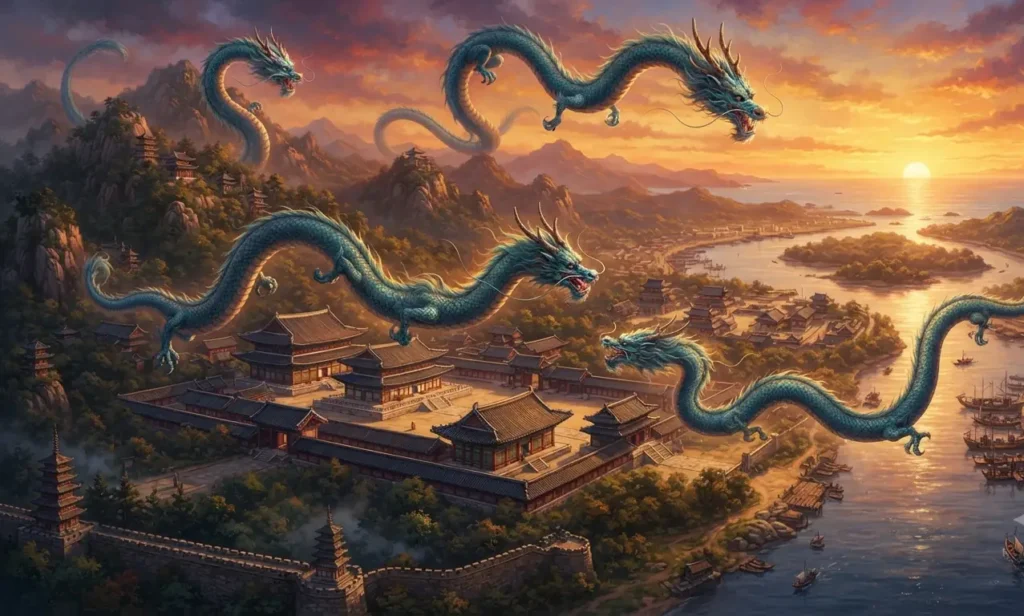
Seventeen legends. Each one attached to something specific: a real historical figure, a named mountain, a real rock formation, a community’s living practice, a documented dynasty’s founding claim.
That’s the pattern that explains why these legends refused to be forgotten. They weren’t free-floating stories. They were anchored to places and people and practices that continued to exist long after the stories were first told. The Han River kept flowing. Daewangam Rock kept standing in the East Sea. The haenyeo kept diving. The legends traveled with everything they were attached to.
Mythology survives that way. Not through force or official preservation alone, but through the stubborn persistence of the landscapes and communities it calls home.
Related Articles
- Dragon Mythology: How Dragons Are Depicted Across Cultures
- Western Dragon vs Eastern Dragon [Myth, Power & Origin]
- Chinese, Japanese & Korean Dragons: How They Actually Differ
- 7 Best Dragon Rings For Men That Look Premium
- 12 Famous Japanese Dragons and the Legends Behind Them
Written by Batin Khan | Mythology and philosophy reader across world cultures (20 years), Fantasy reader for the past 10 years | Specialist in Xianxia, Eastern and Western mythological traditions, fantasy, and Sci-Fi.