
 By
By Quick Takeaways:
- Chinese Dragons, Japanese Dragons, and Korean dragon traditions are distinct mythological systems, not regional variations of the same creature
- The toe count is the most reliable single visual marker for distinguishing them: five toes for Chinese imperial, four for Korean, three for Japanese
- Chinese dragons are the most elaborately cosmological. Korean dragons are the most closely tied to national founding mythology. Japanese dragons show the strongest Buddhist Naga influence
- All three traditions share Chinese cultural roots but developed independently enough to produce genuinely different characters, roles, and symbolic functions
- The moral character, size, typical setting, and relationship with humans differ meaningfully across all three traditions
This is one of the questions I get asked most often, and it deserves a proper answer rather than the usual “they’re similar but different” response that most accounts settle for.
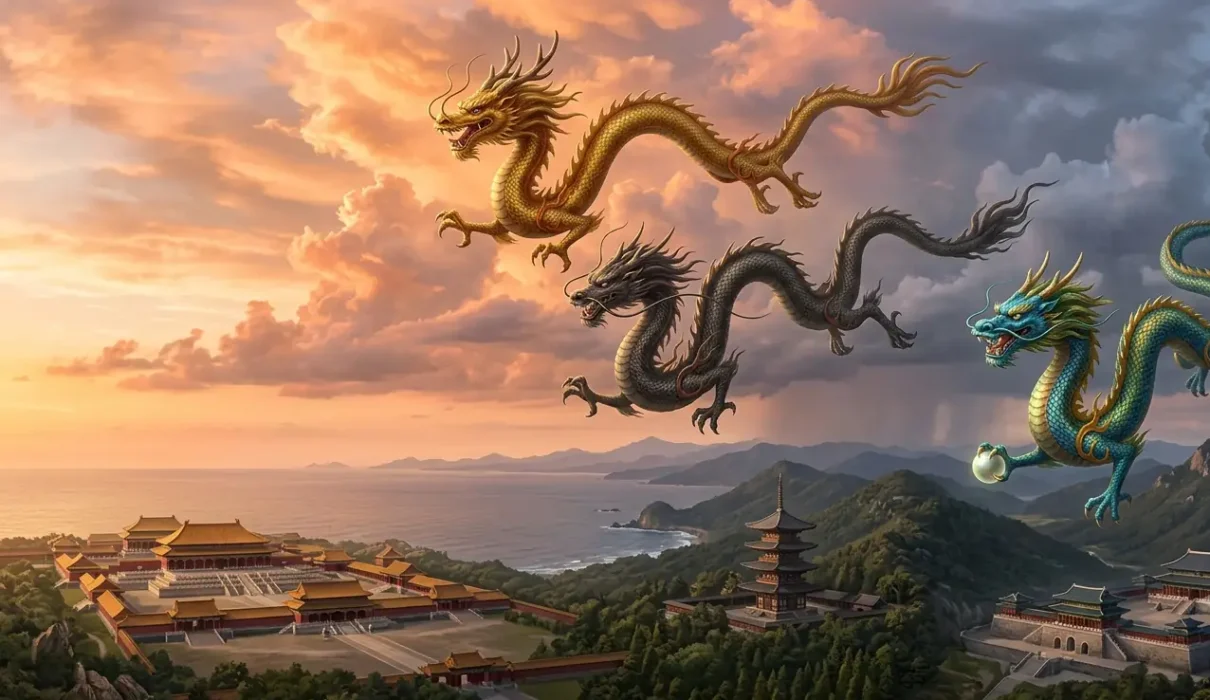
Chinese, Japanese, and Korean dragon traditions are all related. Chinese cultural influence spread dragon mythology to both Korea and Japan over centuries of documented cultural exchange. But what each culture did with that inheritance produced three genuinely distinct traditions. They have different physical characteristics, different moral personalities, different cosmological roles, and different relationships with the human communities that honored them.
Here is the comparison that actually gives you the tools to tell them apart and understand why they’re different.
The Shared Foundation: Where They All Come From
China as the Origin Point
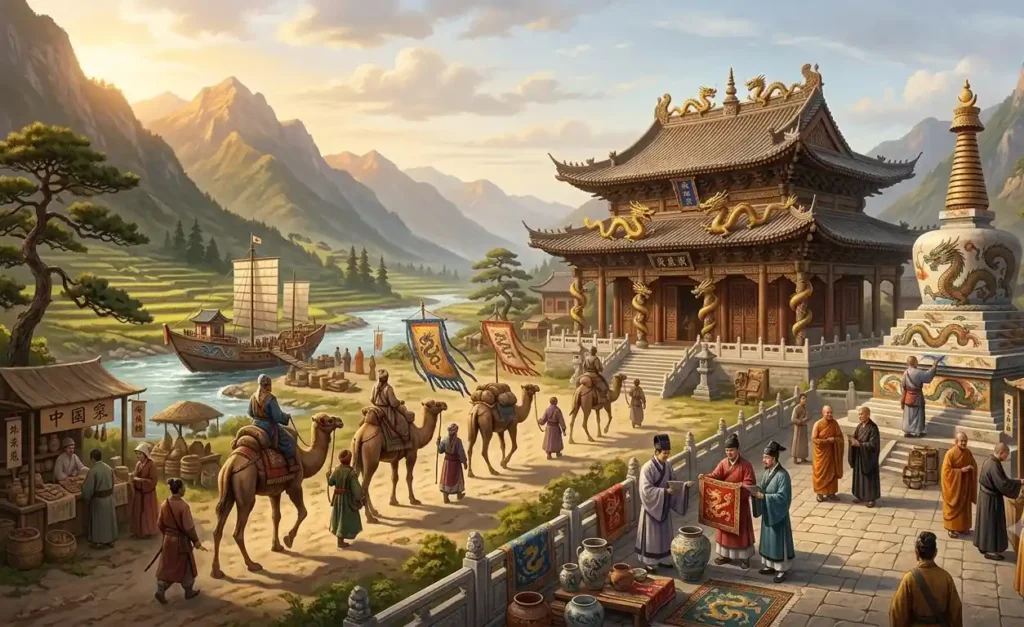
All three traditions trace back to Chinese dragon mythology. The Loong of Chinese tradition was transmitted to Korea as the Yong, and to Japan as the Ryu or Tatsu, through centuries of documented cultural contact.
The transmission happened through multiple channels: Buddhist monks carrying texts and iconographic traditions, diplomatic exchanges that included gifts featuring dragon imagery, and the broader pattern of Chinese cultural influence across East Asia during the Tang and Song Dynasties.
But transmission is not the same as replication. Each culture received the Chinese dragon mythology and adapted it to its own cosmological framework, historical needs, and existing spiritual traditions. What came out was genuinely different in each case.
The Same Characters, Different Meanings
All three traditions use the same or equivalent Chinese characters for dragon. All three associate dragons with water in some form. All three have primarily benevolent rather than adversarial dragons.
Within those shared points, the specific character, function, and cultural weight of each tradition’s dragons diverges significantly. The shared starting point makes the differences more interesting, not less. You’re looking at what happens when the same concept gets filtered through three different cultural personalities.
Read: 13 Overlooked Dragon Books Worth Reading in 2026
The Chinese Long: Cosmic Administrator and Imperial Symbol
Physical Description
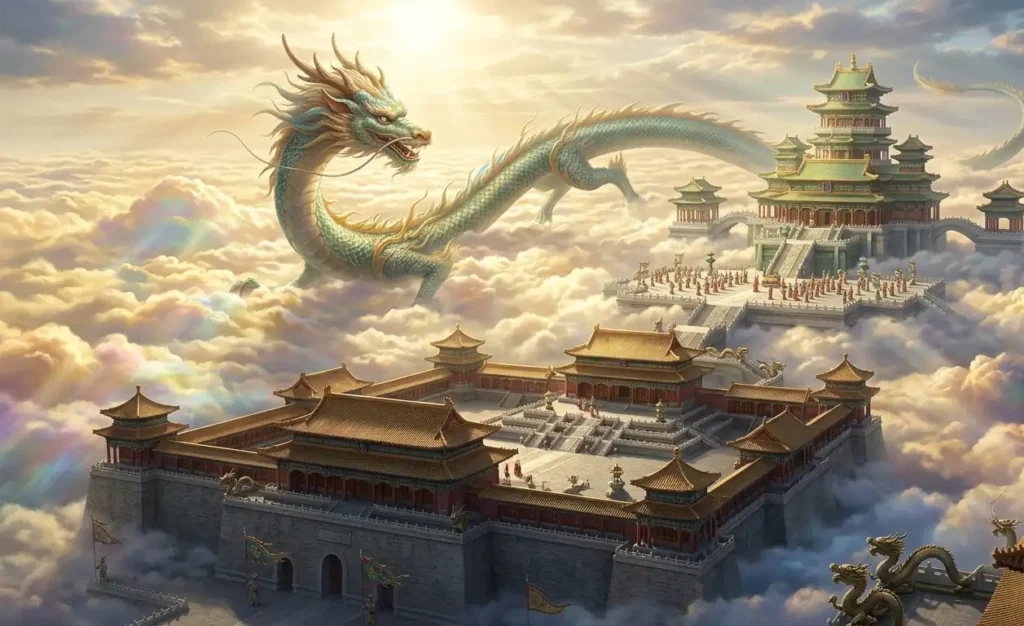
The Chinese Loong is the most elaborately described of the three, with its composite form drawn from nine animals: camel head, deer antlers, demon eyes, snake neck, clam belly, carp scales, eagle claws, tiger paws, and cow ears. This composite nature is philosophically deliberate, encoding multiple natural power domains in a single being.
The imperial five-clawed Long is the most familiar form. The five toes are not a stylistic choice but a regulated hierarchy marker. During the Ming and Qing Dynasties, unauthorized display of five-clawed dragons was treated as an imperial usurpation.
The Long is typically depicted without wings, flying through clouds by virtue of a pearl or ridge (chi mu) at the top of its head rather than through conventional flight. The wing-bearing Yinglong is a distinct type with documented classical sources, but the wingless form is the dominant visual tradition.
Character and Moral Nature
The Chinese Long’s most important characteristic is its fundamental benevolence directed toward cosmic order. Dragon Kings of the Four Seas govern rainfall, rivers, and weather through a comprehensive divine bureaucracy. They can be prayed to, petitioned, and formally accused of negligence when they fail their rainfall governance responsibilities.
The bureaucratic accountability is specifically Chinese. Dragon Kings aren’t simply powerful beings doing what they want. They’re officials with job descriptions, serving in a divine administrative structure that parallels the human imperial government.
This bureaucratic model makes the Chinese Long different from any other dragon tradition globally. It’s less a supernatural being living outside human structures and more a divine official operating within a cosmic governance framework that mirrors earthly administration.
Cosmological Role
The Chinese dragon tradition has the most elaborate cosmological architecture. The Four Dragon Kings govern four seas and four cardinal directions. The Azure Dragon (Qinglong) is one of the four holy beasts governing the eastern sky’s lunar mansions. The Yellow Dragon (Huanglong) governs the cosmic center.
The Long’s associations span direction, season, element, color, and cosmic governance simultaneously. No other East Asian dragon tradition builds this level of cosmological systematization around its dragons.
The Imperial Connection
The Chinese emperor was the True Dragon, Son of Heaven. Dragon imagery on imperial robes, thrones, and architecture encoded the emperor’s cosmic mandate. Five claws meant imperial. Four claws meant nobility. Three claws meant lesser status.
This imperial symbolism gave the Chinese dragon a political dimension no other East Asian tradition matched in intensity. The dragon wasn’t just cosmologically significant. It was constitutionally significant, embedded in the symbolic vocabulary of legitimate governance itself.
The Japanese Ryu: Buddhist Naga Heir and Cultural Adapter
How Japan Received the Dragon
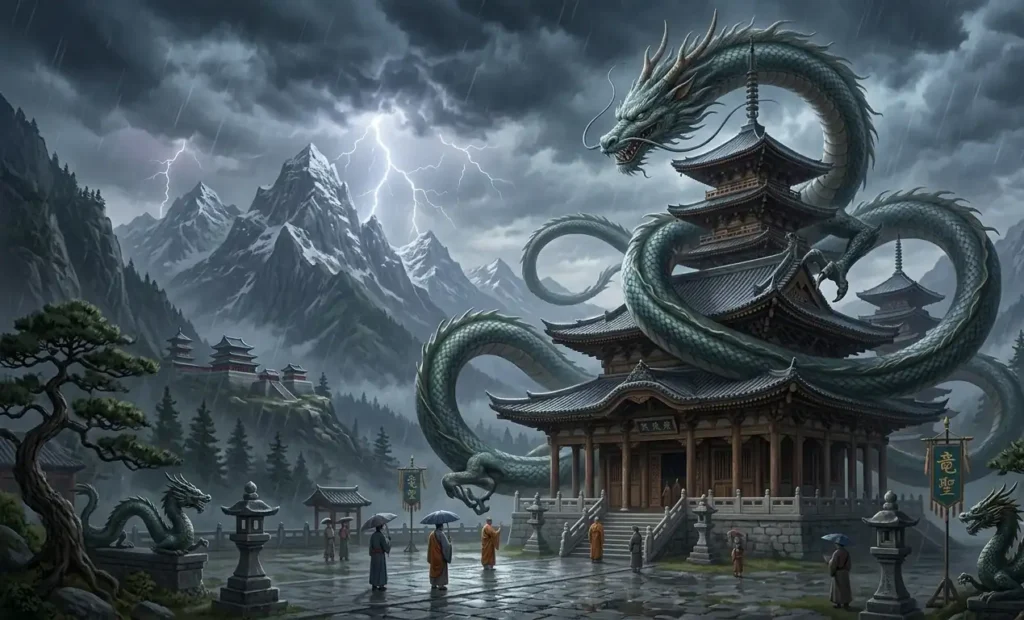
Japan received dragon mythology primarily through two channels: direct Chinese influence and Buddhist transmission from the Indian Naga tradition through Central Asian and Chinese Buddhist networks.
This double inheritance gave Japanese dragon tradition a specifically Buddhist flavor that Chinese tradition had but in a less defining way. The Japanese Ryu incorporates Naga imagery more prominently than Chinese tradition does, producing a dragon tradition that feels simultaneously Chinese-adjacent and distinctively Japanese.
Physical Description
The Japanese Ryu shares the Chinese Long’s serpentine elongated form but has one immediately distinctive physical marker: three toes. Not four (Korean), not five (Chinese imperial). Three.
This toe count became a stable, specifically Japanese convention across centuries of dragon art. It wasn’t accidental or arbitrary. It marked Japanese dragons as related to but distinct from Chinese imperial dragons, a visual indicator of cultural inheritance without cultural subordination.
The Japanese dragon tradition also shows a stronger influence from the Indian Naga in its multi-headed forms. Yamata no Orochi, the eight-headed serpent of the Kojiki, has no direct Chinese equivalent and likely reflects either independent Japanese mythology or Naga-influenced Buddhist transmission.
Read: Why Eastern Dragons Don’t Have Wings Yet Can Fly [Real Myth]
Character and Moral Nature
Japanese dragons range more widely in moral character than Chinese tradition does. The benevolent water-associated Ryu exists. So does the clearly adversarial Yamata no Orochi.
Ryujin, the Dragon King of the Sea, is benevolent and divine, possessing tide jewels that control the ocean’s movement. His palace beneath the sea is a fully realized mythological setting with its own court and treasures.
But Yamata no Orochi demanded human sacrifice, specifically the yearly killing of the daughters of a local couple, and was defeated only through the storm god Susanoo’s cunning. This adversarial dragon type doesn’t fit the general benevolence pattern that Chinese and Korean traditions predominantly maintain.
The wider moral range in Japanese tradition gives it a different narrative texture. The question “is this dragon safe?” is a genuine question in Japanese mythology in ways that it usually isn’t in Chinese folk religion.
The Shintoism and Buddhism Combination
Japanese dragon mythology sits at the intersection of Shinto and Buddhist traditions in a way that produces a distinct character.
Shinto tradition contributed the indigenous Japanese relationship with powerful natural beings (kami), including serpentine water spirits that the Buddhist Naga tradition merged with when Buddhism arrived. Buddhist tradition contributed specific Naga iconography, the multi-headed dragon forms used in temple architecture, and the specific soteriological framework within which dragons could be protective rather than threatening.
The result is a dragon tradition that feels more spiritually eclectic than either Chinese or Korean tradition, drawing from more diverse sources and integrating them less systematically.
Famous Legends
Ryujin and the tide jewels: The Dragon King of the Sea possesses kanju and manju, tide jewels that control ocean movement. Their theft and return is a narrative thread connecting divine and human worlds.
The Urashima Taro story: A fisherman who rescues a turtle is taken to Ryujin’s palace beneath the sea, where he spends what feels like days but emerges to find centuries have passed. This time-dilation undersea dragon palace story has no close parallel in Chinese or Korean tradition.
Toyotama-hime: The Dragon King’s daughter who marries a mortal hero but is seen in her true dragon form during childbirth, after which she returns permanently to the sea. The dragon bride who cannot remain in the human world after her true nature is witnessed.
Read: 15 Japanese Dragon Legends Hollywood Has Been Ignoring
The Korean Yong: National Ancestor and Four-Toed Guardian
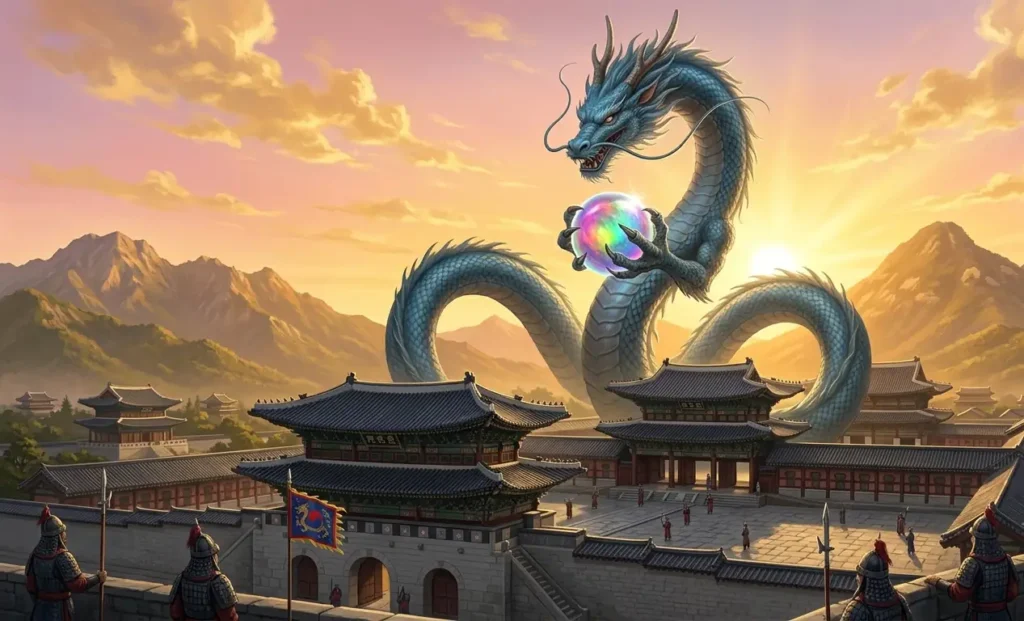
How Korea Received the Dragon
Korea received dragon mythology through direct Chinese cultural influence, which was substantial and documented across multiple dynasties of cultural and diplomatic exchange. Korean Buddhist networks also brought elements of the Naga tradition, though less prominently than in Japan.
What Korea did with the inheritance is the interesting story. The Korean dragon tradition incorporated Chinese dragon concepts into specifically Korean national mythology in ways that made the dragon integral to Korean cultural identity rather than simply a borrowed cosmological concept.
Physical Description
Korean dragons have four toes. This single detail is specific, consistent, and precisely positioned between the Chinese imperial five and the Japanese three, reflecting Korea’s historical position as a cultural bridge between its two great neighbors.
The Korean Yong shares the Chinese Long’s elongated serpentine form and is generally depicted without wings. Its color associations and general visual vocabulary align more closely with Chinese tradition than Japanese tradition does, reflecting the more direct channel of Chinese cultural transmission to Korea.
The Imugi: A Uniquely Korean Concept
The most distinctively Korean contribution to East Asian dragon mythology is the Imugi, a concept without a precise equivalent in Chinese or Japanese tradition.
An Imugi is a large serpentine creature that has not yet completed the transformation into a full Yong dragon. It must live for a thousand years and catch a heavenly dragon pearl (Yeouiju) as it falls from the sky. Only then does it complete its transformation.
The Imugi is not a failed dragon. It’s a patient one, on the path to completion. This concept of an intermediate category between serpent and full dragon, with specific requirements for completion that include both time and the right moment, is a specifically Korean mythological innovation.
The Imugi tradition encodes a Korean cultural value around patient preparation and the recognition that transformation requires both internal development and external conditions aligning correctly. It’s a philosophically distinct take on the dragon-transformation concept that Chinese and Japanese traditions don’t replicate.
Read: 9 Eastern Dragon Myths That Sound Too Strange To Be True
National Founding Mythology
The most significant difference between Korean dragon mythology and the other two traditions is the dragon’s role in Korean national founding mythology.
The founder of the Goryeo Dynasty, Wang Geon, was said to have dragon ancestry. Multiple Korean royal lineages included dragon figures in their genealogies. The connection between dragons and Korean royal legitimacy is more explicitly genealogical than the Chinese imperial association, which is more symbolic.
Korean folk and royal tradition also includes the figure of the Dragon King as a direct participant in the founding stories of the Korean state, not merely as a cosmological backdrop. This intimate connection between the dragon tradition and Korean national identity gives Korean dragon mythology a specifically nationalistic character that neither Chinese nor Japanese tradition matches in the same way.
The Goguryeo Tomb Murals
Korea’s most significant contribution to the visual record of East Asian dragon mythology is the Goguryeo tomb mural tradition, UNESCO World Heritage-designated paintings from approximately the 4th through 7th centuries CE.
These murals show all four guardian beasts, including the Korean Yong equivalent in the eastern position, with a visual style that is distinctly Korean in energy and execution. The dynamic, energetic Hyeonmu (the Korean Black Tortoise) and the guardian dragon figures in these murals are not simply copies of Chinese models. They’re Korean artistic interpretations with their own character.
This visual tradition is one of the clearest demonstrations that Korean dragon mythology, while sharing Chinese roots, had developed its own distinctive artistic and cultural expression well before the dynasties that would formalize Korean national identity.
Read: 17 Korean Dragon Legends Still Told After a Thousand Years
Side-by-Side Comparison
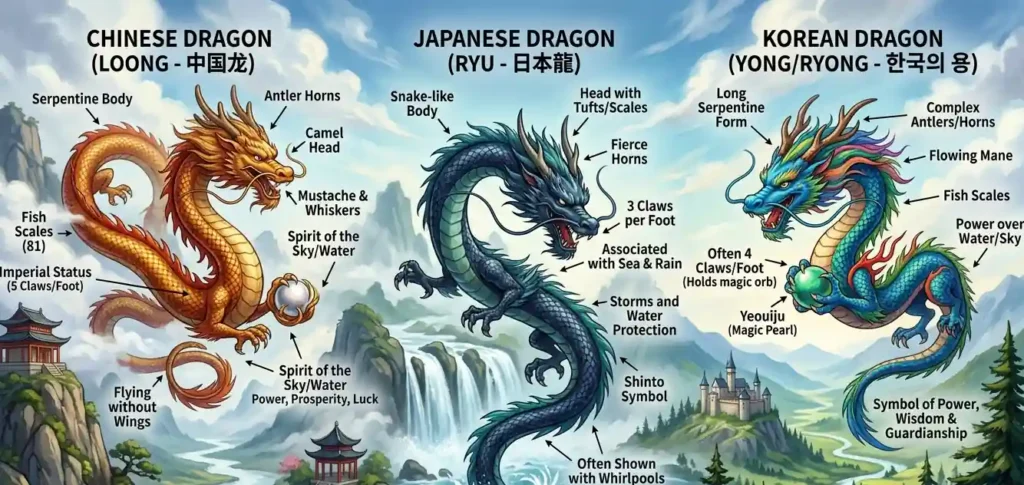
Physical Differences
| Feature | Chinese Long | Japanese Ryu | Korean Yong |
|---|---|---|---|
| Toe count | 5 (imperial), 4 or 3 lower ranks | 3 | 4 |
| Wings | Usually absent (Yinglong exception) | Usually absent | Usually absent |
| Multi-headed forms | Rare in mainstream tradition | Present (Yamata no Orochi) | Rare |
| Primary color associations | Multiple, elemental | Blue-green common | Blue-green, black common |
| Body type | Long, serpentine, composite | Long, serpentine | Long, serpentine |
Cultural and Mythological Differences
| Dimension | Chinese Long | Japanese Ryu | Korean Yong |
|---|---|---|---|
| Primary function | Cosmic governance, rainfall | Water, Buddhist protection | Water, royal legitimacy |
| Moral character | Predominantly benevolent | Ranges from benevolent to adversarial | Predominantly benevolent |
| Political role | Imperial symbol | Less directly imperial | Royal ancestry, genealogical |
| Intermediate category | None | None | Imugi (pre-dragon category) |
| Buddhist influence | Present but secondary | Prominent, Naga-influenced | Present, moderate |
| Most famous legend | Dragon Gate transformation | Yamata no Orochi; Ryujin palace | Yong and national founding |
Why the Differences Matter
Understanding these differences matters for several reasons beyond simple trivia.
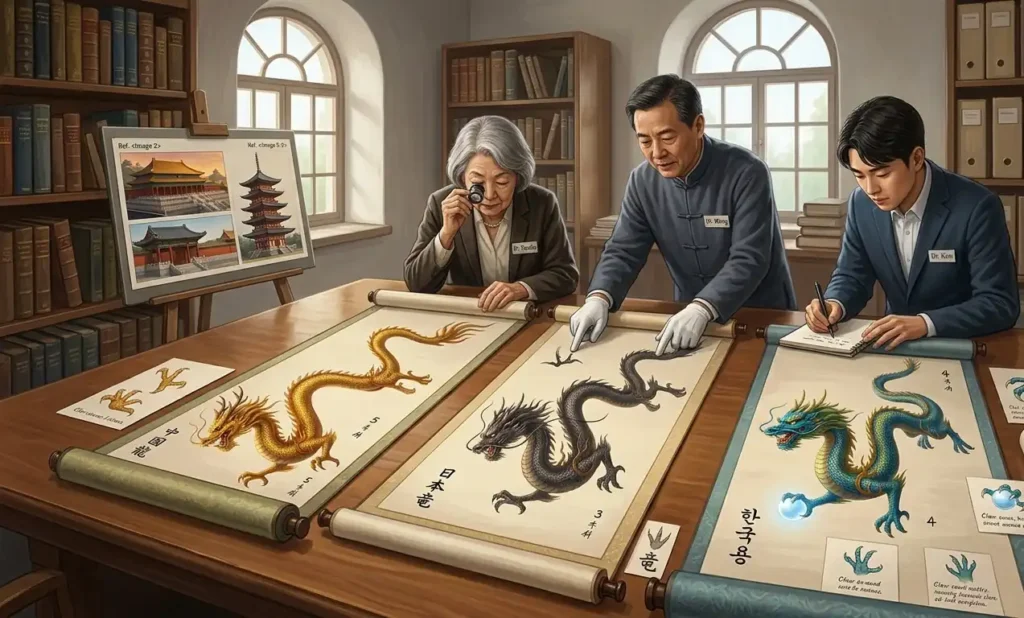
When looking at East Asian art, the toe count tells you immediately which cultural tradition produced the object. A three-toed dragon on a ceramic piece is Japanese. A five-toed dragon on imperial textile is Chinese. A four-toed dragon on Korean court art is Korean. The distinction is encoded in the physical feature most reliably preserved across artistic traditions.
When reading about East Asian mythology, lumping all three traditions together produces misreadings. The Imugi concept doesn’t exist in Chinese tradition. Yamata no Orochi’s adversarial character doesn’t fit the predominantly benevolent Chinese dragon framework. The Korean genealogical royal connection is different from the Chinese symbolic imperial connection.
And when thinking about the relationship between these cultures, the differences in the dragon reveal something about how cultural transmission actually works. Korea and Japan both received the Chinese dragon mythology. What they did with it reflects their own cultural identities, historical circumstances, and spiritual frameworks. The shared origin makes the divergence more informative, not less.
Read: 9 Chinese Dragon Colors & What Each One Means in Mythology
Frequently Asked Questions
Why do Japanese dragons have three toes while Chinese dragons have five?
Toe count developed as a cultural marker distinguishing national traditions. Chinese imperial five-toed dragons were legally restricted to imperial use. Japanese and Korean traditions developed their own distinct counts as cultural identity markers. Three toes specifically marks a dragon image as Japanese in origin.
Is the Korean Imugi considered a dragon or something different?
The Imugi is a distinct intermediate category unique to Korean mythology: a serpentine being on the path to becoming a Yong dragon, requiring a thousand years and a heavenly pearl to complete the transformation. It’s not a lesser dragon but a pre-dragon being with its own specific character.
Which dragon tradition is oldest?
Chinese Long mythology is oldest, with evidence stretching to at least the Hongshan culture circa 4700 BCE. Korean and Japanese traditions received dragon mythology through documented Chinese cultural influence, with the transmission accelerating during the Tang Dynasty period of intensive East Asian cultural exchange.
Do all three traditions associate dragons with water?
Yes, water association is the shared foundation across all three. However, water’s specific role differs. Chinese Dragon Kings govern rainfall bureaucratically. Japanese Ryujin governs tides with specific magical objects. Korean Yong connects more directly to rivers and springs as localized protective presences.
Can you tell Chinese, Japanese, and Korean dragon art apart visually?
Toe count is the most reliable single marker. Artistic style also differs significantly: Chinese dragon art tends toward elaborate detail and formal composition; Japanese dragon art shows stronger Naga influence and Buddhist iconographic conventions; Korean dragon art has its own dynamic quality visible in the Goguryeo mural tradition.
Final Thoughts
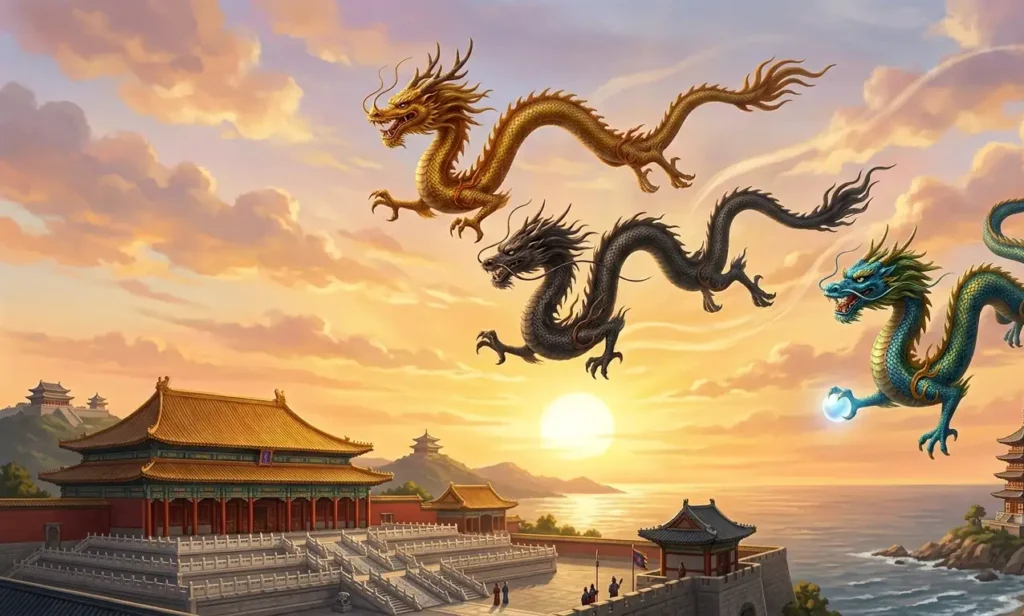
Three traditions. One shared origin. Three genuinely different outcomes.
The Chinese Long built a cosmic bureaucracy. The Japanese Ryu absorbed Buddhist Naga imagery and produced the widest moral range. The Korean Yong became a national ancestor figure with its own unique intermediate category of being.
The differences aren’t accidental. They reflect what each culture needed its dragon to be, shaped by geography, history, religion, and the specific values that each civilization developed independently over centuries. That’s what makes comparative mythology genuinely rewarding to study: the same starting point, and three completely different destinations.
Related Articles
- Dragon Mythology: How Dragons Are Depicted Across Cultures
- 9 Sons of the Dragon: What Each One Guards in Chinese Myth
- 10 Famous Japanese Dragons and the Legends Behind Them
- 12 Best Dragon Books of 2026 [From the Hobbit to Seraphina]
- Why Dragons Dominate Every Fantasy Tradition on Earth
- Why Dragons Are Almost the Perfect Mythological Creature
- 14 Most Iconic Anime Dragons You Should Recognize
- Zhulong: The Chinese Dragon Who Ruled Time Itself
References
- Allan, Sarah. The Shape of the Turtle: Myth, Art, and Cosmos in Early China. SUNY Press, 1991.
- Yang, Lihui, Deming An & Jessica Anderson Turner. Handbook of Chinese Mythology. Oxford University Press, 2005.
- Birrell, Anne. Chinese Mythology: An Introduction. Johns Hopkins University Press, 1993.
- Valérie Hansen. The Open Empire: A History of China to 1800.
- Imperial Chinese robes : from the forbidden city / edited by Ming Wilson, with the Palace Museum, Beijng | Smithsonian Institution
- Journey to the West by Wu Cheng’en: Wu Cheng’en
- The Huainanzi: A Guide to the Theory and Practice of Government in Early Han – An Liu
- Kojiki: Translated with an Introduction and Notes by Donald L. Phillipi – Kojiki
- Nihongi: Chronicles of Japan from the Earliest of Times to A.D. 697
- Buddhism in Practice – Donald S. Lopez
- Korea: A Religious History – James Huntley Grayson
- Samguk Yusa: Legends and History of the Three Kingdoms of Ancient Korea
- Shan Hai Jing – Chinese Text Project
- Complex of Koguryo Tombs – UNESCO World Heritage Centre
Written by Batin Khan, a curious free spirit who loves reading and exploring the worlds of fantasy, mythology, and ancient stories. Through this blog, Batin hopes to share that sense of wonder with readers while building an exciting future along the way.