
 By
By Quick Takeaways:
- Several major Chinese dragon myths appear to have developed as explanatory frameworks for genuinely observed natural phenomena
- Earthquakes, floods, droughts, fossil discoveries, and even typhoons all have associated dragon mythology that scholars connect to real, documented events and patterns
- These connections are scholarly interpretations rather than confirmed historical certainty, and this article presents them as such
- The Yellow River’s documented history of flooding and course changes is the single most significant real-world phenomenon behind multiple distinct dragon myths
- Understanding these connections doesn’t diminish the mythology. It reveals how ancient observers built coherent explanatory frameworks around genuinely unpredictable and terrifying natural events
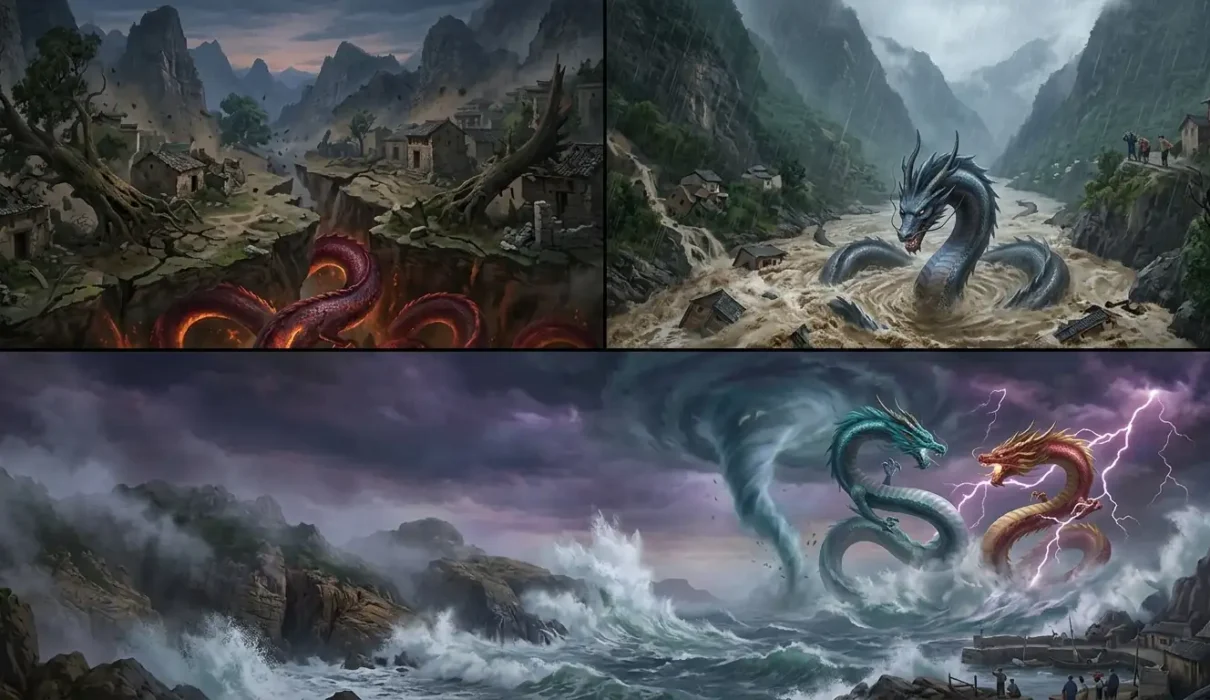
One of the things that drew me deeper into Chinese mythology after the first several years of casual interest was noticing how often the dragon myths lined up with documented natural events. Not vaguely. Specifically. A particular myth, a particular type of geological or meteorological phenomenon, and a documented historical record that connects them.
In my post today, I will cover nine of those connections. I want to be honest upfront about something important: these are scholarly interpretations and reasonable historical inferences, not proven facts. Nobody can verify with certainty that any specific myth originated from any specific event. What we can do is look at the documented patterns of natural phenomena in the regions where these myths developed and notice how closely the mythology tracks the real environmental experience.
1. Fucanglong and Seismic Activity
The Myth
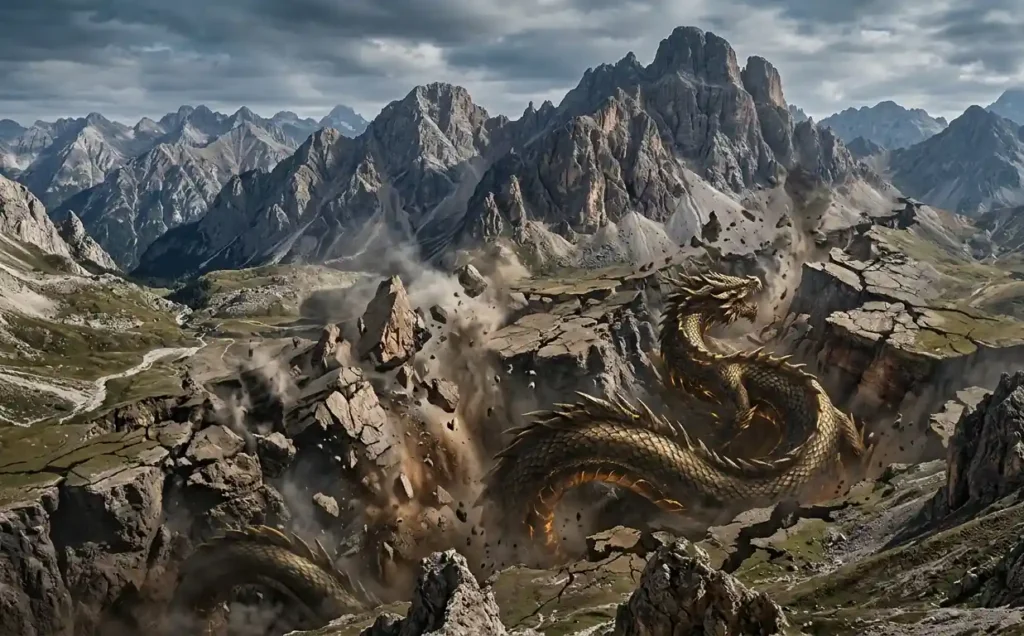
The Fucanglong (Hidden Treasure Dragon) lives underground, guarding mineral deposits. When it finally erupts from the earth after a long period of dormancy, the emergence is accompanied by ground shaking, sometimes volcanic activity, and dramatic alteration of the landscape.
The Connection
China’s seismically active regions, particularly along major fault lines in the western and southwestern provinces, experience genuine earthquakes that produce exactly the kind of sudden, violent ground disruption the Fucanglong myth describes. Volcanic regions in northeastern China, including areas near Changbai Mountain, have documented historical eruptions.
A culture without seismological science needed an explanatory framework for why the ground would suddenly shake or burst open without warning. A dragon dormant beneath the surface, occasionally stirring, fits the unpredictability and the violence of genuine seismic events.
2. The Great Flood and the Taming of the River Dragon
The Myth
Chinese mythology’s flood narrative centers on Yu the Great, who spent years controlling devastating floods by channeling rivers rather than building dams, eventually taming the flood waters and earning the right to found the Xia Dynasty. Dragon-adjacent flood beings appear throughout the various versions of this narrative.
The Connection
This is the clearest and best-documented connection on this list. The Yellow River has flooded catastrophically throughout recorded Chinese history, with documented major flood events occurring repeatedly across millennia. The river’s nickname, “China’s Sorrow,” reflects this genuine and devastating historical pattern.
The flood myth’s emphasis on channeling rather than blocking water reflects accumulated practical engineering wisdom about river management that Chinese civilization genuinely developed over centuries of dealing with the Yellow River’s flooding. The mythology and the documented engineering history align closely enough that scholars generally accept a direct relationship between them.
3. Dragon Veins and Earthquake Patterns
The Myth
Feng shui tradition describes dragon veins (lóngmài) as energetic pathways running through the landscape that determine a location’s auspiciousness. Disruption of a dragon vein, whether through construction or natural events, was understood to produce negative consequences, including earthquakes.
The Connection
The dragon vein concept maps with notable consistency onto actual geological fault lines and tectonic features. Regions identified in classical feng shui practice as having significant dragon vein activity frequently correspond to areas with documented geological fault systems.
This doesn’t mean ancient practitioners had scientific understanding of plate tectonics. It means they observed, over generations, which locations experienced ground instability and developed a consistent symbolic vocabulary to describe and predict that instability. The dragon vein system functioned as an empirically developed hazard-mapping tradition, expressed in mythological rather than geological language.
Read: Chinese, Japanese & Korean Dragons: How They Actually Differ
4. The Dragon King’s Anger and Drought Cycles
The Myth
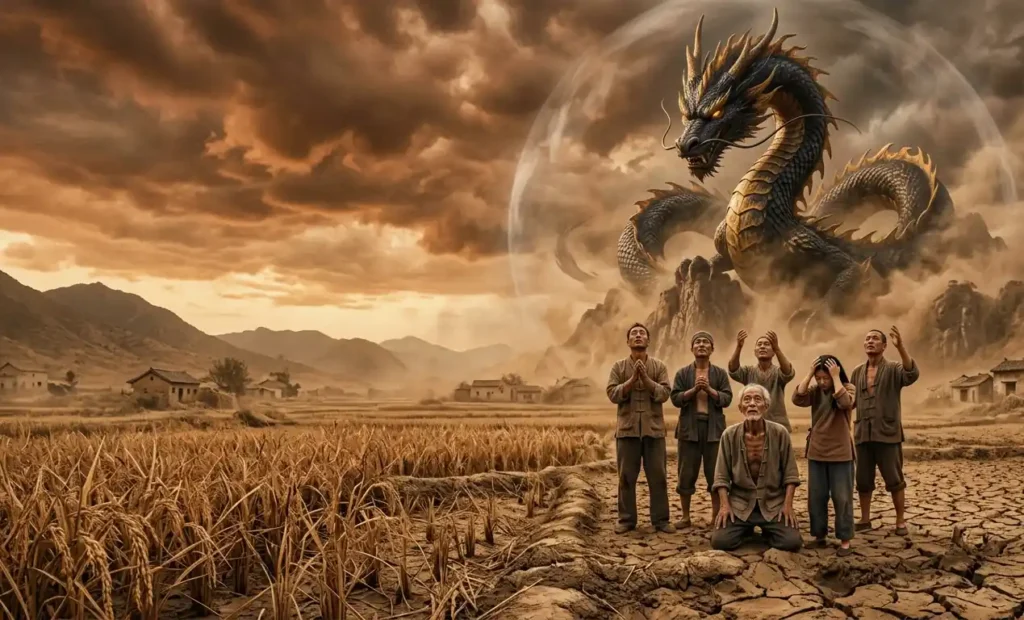
When rain failed to arrive during agricultural seasons, the explanation in Chinese folk religion was frequently the Dragon King’s anger or negligence, requiring specific propitiation rituals to correct.
The Connection
China’s monsoon-dependent agricultural regions experience genuine, documented cyclical drought patterns connected to broader climate systems. Historical Chinese records, including imperial court documentation, track drought years with specific consistency across multiple dynasties.
The Dragon King drought mythology gave communities a framework for understanding and responding to a genuinely cyclical and partially unpredictable phenomenon. The ritual escalation traditions, where communities would progress from prayer to more confrontational measures against an unresponsive Dragon King, reflect the genuine desperation that recurring drought produced in agricultural communities whose survival depended on rainfall timing they couldn’t control or predict.
5. Jiaolong and Flash Flooding
The Myth
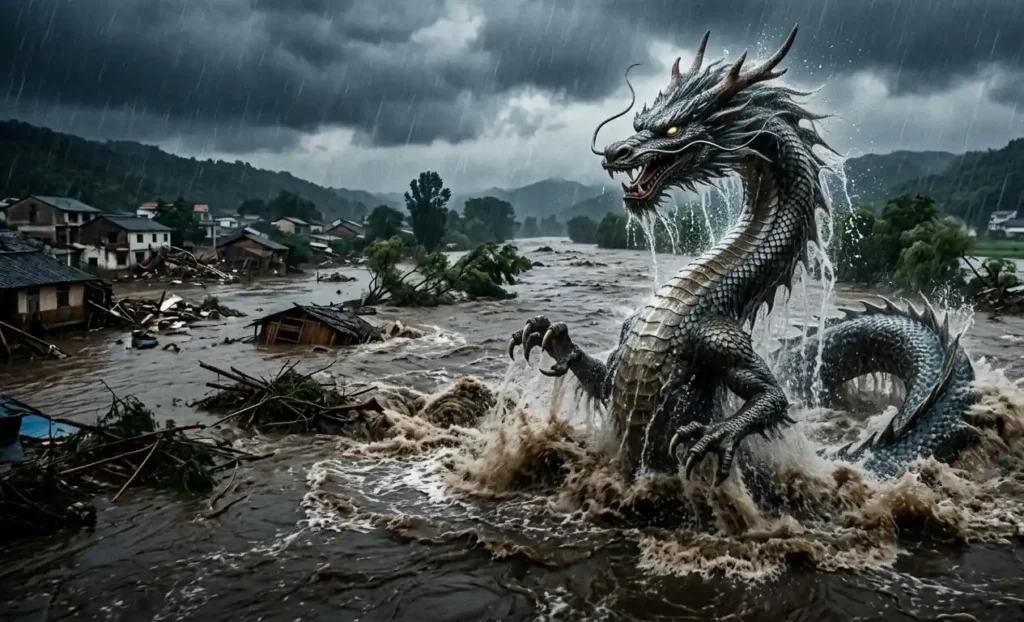
The Jiaolong, associated specifically with sudden and devastating floods, appears in mythology connected to rivers that could rise with catastrophic speed and force.
The Connection
China’s monsoon climate produces genuine flash flooding patterns, particularly in mountainous regions where sudden intense rainfall can transform a manageable stream into a destructive torrent within hours. This is a documented and recurring meteorological pattern across multiple Chinese regions.
The specific danger profile that flash floods present, sudden onset, overwhelming force, minimal warning, matches the mythological character given to the Jiaolong with notable precision. A creature that can transform a calm river into devastating force without warning is the mythological equivalent of the meteorological reality that flash flooding actually presents.
6. Dilong and the Yellow River’s Course Changes
The Myth
The Dilong (Earth Dragon) is described as having the power to change a river’s course, with its movements explaining sudden and dramatic shifts in where a waterway flows.
The Connection
The Yellow River has documented historical course changes of extraordinary magnitude, including major shifts that moved its mouth by hundreds of kilometers across different historical periods. These course changes were catastrophic events for the populations affected, destroying existing agricultural infrastructure and producing massive social disruption.
A river that could fundamentally relocate itself, sometimes within a relatively short period, needed an explanatory framework that matched the scale of the disruption. The Dilong, whose movement beneath the earth’s surface could produce exactly this kind of dramatic surface change, provided that framework.
7. Typhoon Battles and Coastal Dragon Mythology
The Myth
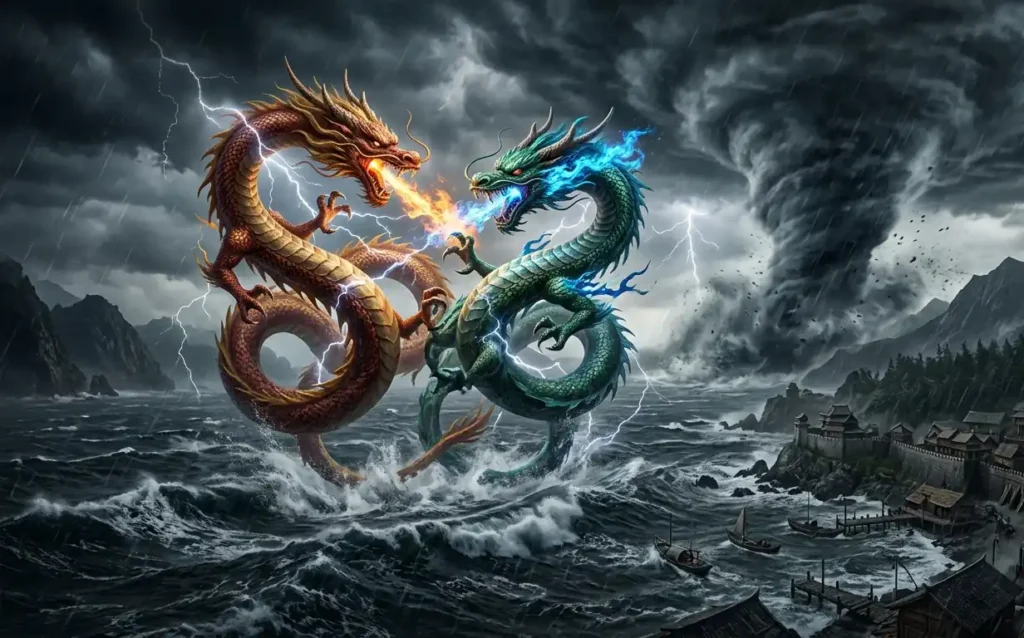
Coastal Chinese folk traditions, particularly in southeastern China, include mythological narratives describing dragon battles or dragon disturbances coinciding with the most severe storm seasons.
The Connection
Southeastern China experiences a genuine and well-documented typhoon season with predictable seasonal timing but unpredictable individual storm intensity and trajectory. Coastal communities’ historical experience of devastating typhoon damage created a real need for explanatory and ritual frameworks around these events.
The dragon mythology conflict producing the most severe storms gave coastal communities a way to understand why some storm seasons were dramatically worse than others, attributing the variation to specific divine conflict rather than to meteorological factors, which they had no framework to understand.
8. Dragon Bones and Fossil Discoveries
The Myth
Throughout Chinese history, large bones discovered in the ground, including what modern paleontology identifies as dinosaur and prehistoric megafauna fossils, were classified as dragon bones (lónggǔ) and incorporated into both mythological understanding and traditional pharmacology.
The Connection
This is the most directly verifiable connection on the list, because the physical evidence still exists and modern paleontology has documented it extensively. China contains significant dinosaur fossil deposits, and historical accounts describe these discoveries being classified and used as dragon bones for centuries before paleontological science existed.
The discovery of genuinely enormous, genuinely ancient bones, with no available framework for understanding extinct prehistoric animals, naturally produced dragon mythology as the most coherent available explanation. Large bones meant large creatures. The mythology already had a category for enormous ancient beings. The fossils fit the category.
Read: Why Dragons Exist In Almost Every Culture On Earth
9. Comet Sightings and Dragon Appearances
The Myth
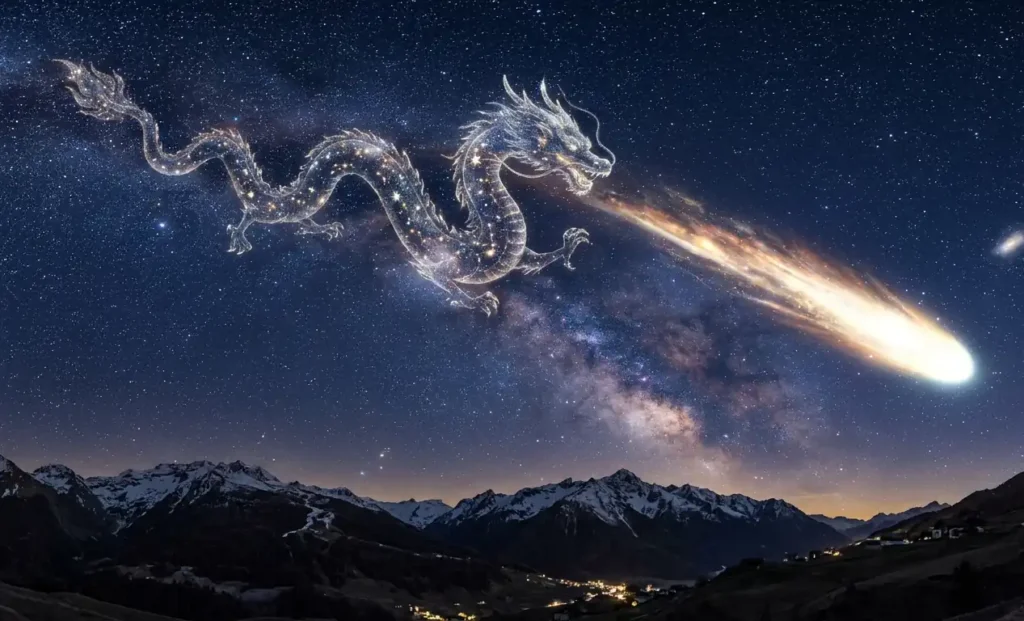
Classical Chinese astronomical and historical records include accounts of dragon sightings in the sky, often described with details consistent with luminous, elongated, moving celestial phenomena.
The Connection
Chinese astronomical record-keeping was remarkably systematic across multiple dynasties, and these records include documented comet appearances with specific dates that historians can cross-reference against modern astronomical calculations of historical comet visibility.
Several documented “dragon sighting” entries in classical records correspond closely to dates when comets would have been visible according to retrospective astronomical calculation. A comet’s appearance, an elongated luminous form moving across the night sky, matches the descriptive vocabulary used for celestial dragon sightings closely enough that historians of Chinese astronomy generally accept the connection in multiple specific cases.
What This Tells Us About the Mythology
These nine connections don’t reduce Chinese dragon mythology to simple natural disaster explanation. The Dragon Kings have far richer mythological roles than disaster explanation alone would require. Nüwa’s creation mythology, the Yellow Dragon’s cosmological significance, the nine sons’ architectural functions: none of these reduce neatly to a documented natural phenomenon.
What the disaster connections do show is that mythology and lived environmental experience were never separate domains for the cultures that produced these traditions. The dragon mythology developed in genuine dialogue with the actual unpredictable, often terrifying natural world that ancient Chinese communities navigated without modern scientific frameworks.
Twenty years of studying this material has convinced me that this dialogue between observed reality and mythological explanation is one of the most genuinely impressive achievements of pre-scientific human thought. The Yellow River’s flooding history, the documented earthquake patterns, the genuine fossil discoveries: all of it got processed into a coherent, internally consistent mythological system that helped communities make sense of and respond to their environment.
That’s not primitive thinking. That’s a sophisticated explanatory framework built from generations of careful observation, expressed in the symbolic vocabulary available to the cultures that built it.
Frequently Asked Questions
Are these connections definitively proven by historians?
No. These are scholarly interpretations based on geographic, historical, and pattern correlation. Direct proof connecting specific myths to specific events generally doesn’t exist. The connections are reasonable, well supported by documented patterns, but should be understood as informed interpretation rather than established fact.
Which connection has the strongest historical evidence?
The dragon bone fossil connection is the most directly verifiable, since the physical fossils and historical pharmacological records both still exist. The Yellow River flooding connection is also extremely well documented through multiple independent historical sources spanning centuries.
Did ancient Chinese people believe these myths literally explained the disasters?
Most likely yes, within their own framework of understanding. Without scientific geology or meteorology, dragon mythology provided a coherent causal explanation that also offered ritual responses, like propitiation, giving communities a sense of agency over otherwise unpredictable events.
Do other cultures have similar disaster-derived mythology?
Yes, extensively. Many cultures develop mythological explanations for earthquakes, floods, and storms based on locally observed natural phenomena. This pattern of myth-as-explanatory-framework for natural disasters appears across world mythology, not only in Chinese tradition.
Does this mean dragons aren’t real beings in Chinese religious tradition?
That’s a separate question from the disaster connection. Many practitioners hold genuine religious belief in dragon deities regardless of scholarly theories about historical mythological origins. The natural disaster connections explain a plausible developmental pathway without making claims about religious truth or falsehood.
Final Thoughts
Nine myths. Nine documented natural phenomena. The connections between them reveal something genuinely impressive about how ancient Chinese communities built coherent understanding from observed reality, using the explanatory tools available to them.
The dragon mythology that resulted wasn’t simple superstition layered over ignorance. It was a working model, refined across generations of observation, that helped communities anticipate, respond to, and find meaning in a natural world that genuinely could shake, flood, dry out, and storm without warning.
That’s worth remembering the next time you encounter a dragon myth that seems, on the surface, purely fantastical. There’s often something real underneath it.
Related Articles
- Dragon Mythology: How Dragons Are Depicted Across Cultures
- 11 Chinese Dragon Types & the Legends Behind Their Powers
- Loong: Chinese Dragon Myths, Symbolism & Sacred Power
- 9 Chinese Dragon Colors & What Each One Means in Mythology
- Four Dragon Kings: Guardians of China’s Seas & Weather
- 9 Rare Chinese Dragon Creatures Most People Never Encounter
Written by Batin Khan | Mythology and philosophy reader across world cultures (20 years), Cultivation novels reader for the past 10 years | Specialist in Xianxia, Eastern and Western mythological traditions, and fantasy worldbuilding