
 By
By Quick Takeaways:
- Korean dragon mythology is distinct from Chinese and Japanese traditions, with its own unique concepts, including the Imugi, the royal founding lineages, and the Yongwang sea sovereign tradition
- Korean dragons are consistently associated with water in a more intimate, local way than Chinese Dragon Kings, with specific rivers, ponds, and coastal waters each having guardian dragon traditions
- The Imugi concept, a pre-dragon intermediate being that must complete specific conditions to transform, has no precise equivalent in Chinese or Japanese dragon mythology
- Korean royal mythology connected dragon ancestry to the legitimacy of several dynasties, making the dragon more genealogically central to Korean national identity than to Chinese or Japanese
- Several traditions on this list are regional folk traditions rather than canonically documented classical figures, and this article is honest about that distinction
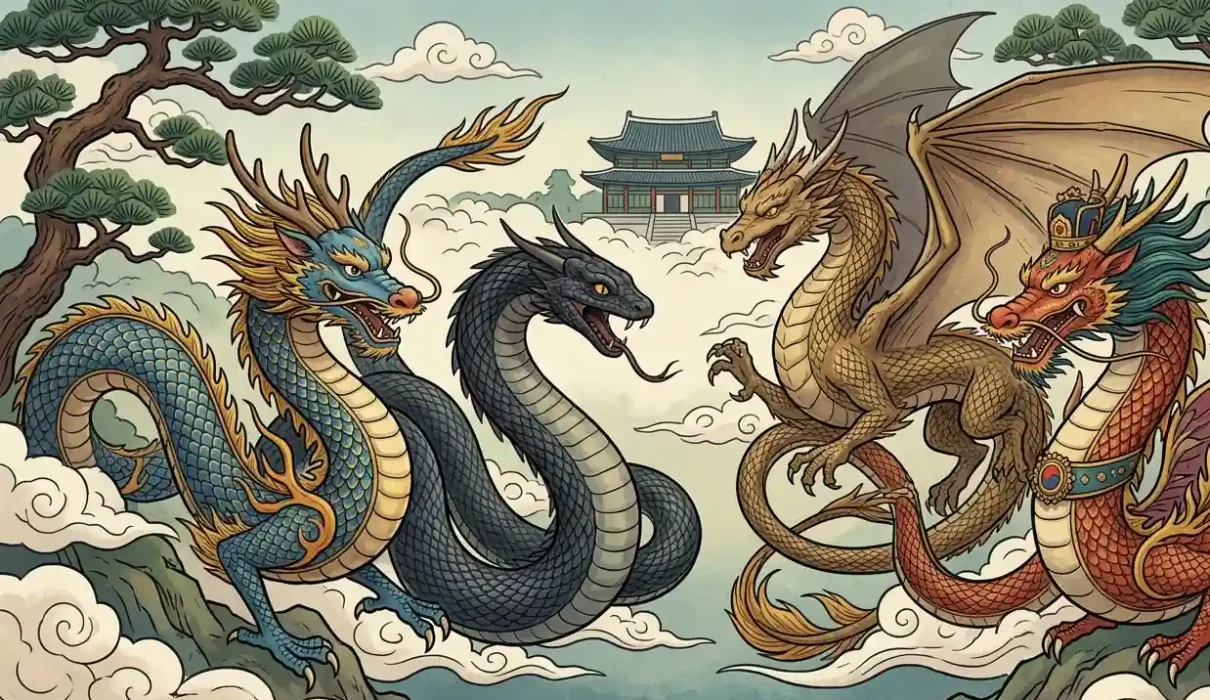
Korean dragon mythology sits in an interesting position. It shares Chinese roots but developed independently enough to produce concepts, stories, and dragon types that you simply won’t find in Chinese tradition. At the same time, it’s less thoroughly documented in English language scholarship than either Chinese or Japanese dragon mythology, which means accessing the genuine tradition requires working harder than most readers expect.
What the Korean dragon tradition offers on its own terms. It’s not a simplified version of Chinese dragon mythology. It’s a distinct tradition with its own most interesting ideas.
1. Yongwang: The Korean Sea Sovereign
What Makes This Dragon Unique
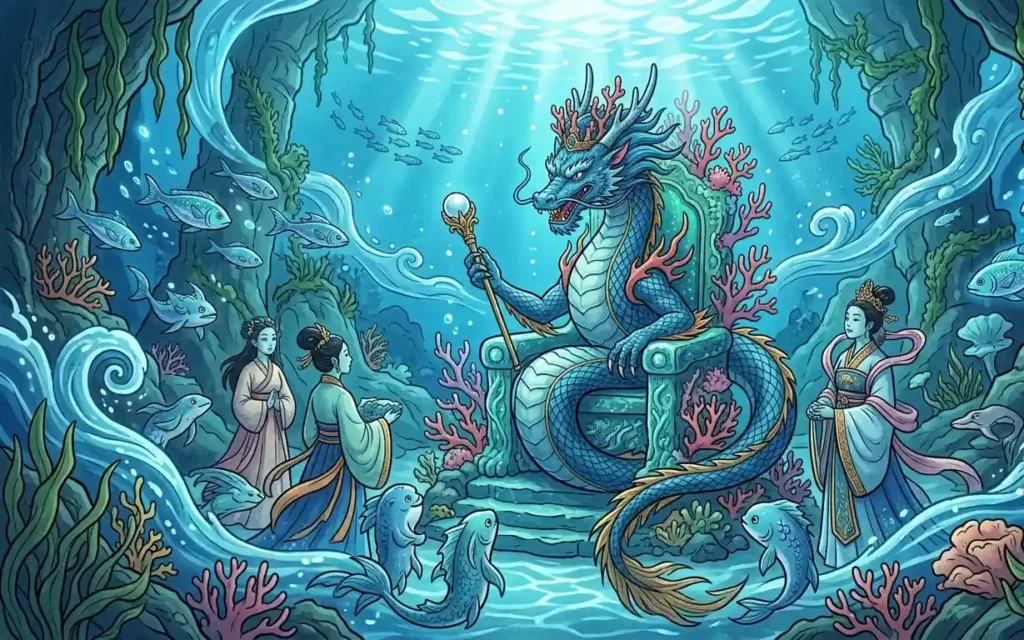
The Yongwang (Dragon King) is the Korean sea deity and the closest Korean equivalent to the Chinese Dragon Kings of the Four Seas. But the Korean Yongwang has a specifically local character that distinguishes it from the cosmologically elaborate Chinese tradition.
Where Chinese Dragon Kings operate within a comprehensive divine bureaucracy with defined jurisdiction over specific seas, the Korean Yongwang is more immediately present in coastal folk religious practice. Fishing communities maintained direct devotional relationships with the Yongwang through specific rituals, offerings, and shamanic practices that Chinese Dragon King worship, while also present in folk religion, didn’t emphasize in quite the same way.
The Shamanic Connection
The distinctive feature of Korean Yongwang worship is its integration with Korean shamanism (musok). The mudang (shaman) served as an intermediary between coastal communities and the Yongwang, performing rituals (gut) that maintained the relationship between human communities and their sea dragon sovereign.
This shamanic interface gives Korean Yongwang worship a different character from Chinese Dragon King temple worship. The Chinese tradition primarily uses temple ritual and petition. The Korean tradition centrally involves the shaman as an active intermediary whose role is as important as the ritual itself.
The Yongwang in Korean shamanic tradition is both more immediately accessible through the shaman and more personally responsive to the specific needs of specific communities than the bureaucratic Chinese Dragon King model allows.
The Undersea Palace
Like its Chinese counterpart, the Korean Yongwang inhabits a palace beneath the sea. Korean folk tales describe mortals who visit this palace, encounter the dragon king, and return to the surface world changed by the experience.
The Korean undersea palace tradition has its own distinctive features: specific descriptions of the court’s composition, of the treasures it contains, and of the consequences for mortals who enter it without proper circumstances. The palace is both a real mythological location and a boundary between ordinary and extraordinary experience.
2. Imugi: The Aspiring Pre-Dragon
What Makes This Dragon Unique
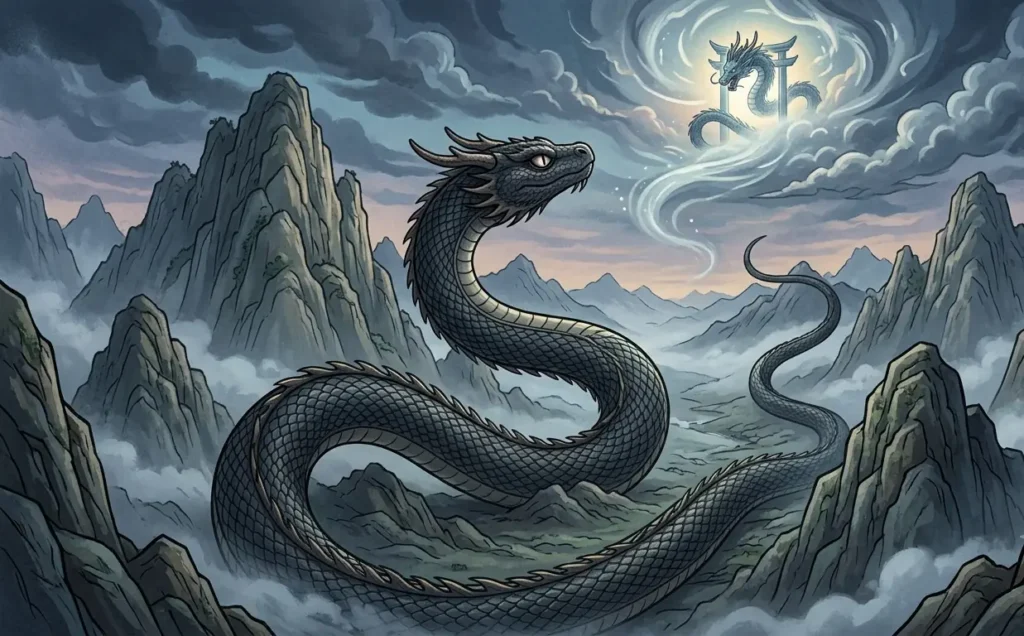
The Imugi is Korean dragon mythology’s most genuinely original contribution to the East Asian tradition. There’s nothing quite like it in Chinese or Japanese mythology, and that uniqueness makes it worth understanding carefully.
An Imugi is a large serpentine creature that has been on the path toward becoming a full Yong dragon but has not yet completed the transformation. To complete it, the Imugi must live for 1,000 years and catch a Yeouiju (heavenly dragon pearl) as it falls from the sky.
What the Imugi Is Not
The most common misrepresentation of the Imugi is calling it a failed dragon. This misses the tradition’s actual content.
A failed dragon would be a dragon that tried to transform and couldn’t. The Imugi isn’t that. It’s a being that is on the path to transformation and hasn’t yet completed the specific conditions required. The difference matters because the Imugi isn’t a lesser being. It’s a patient one, a being of considerable power in its own right whose transformation is genuinely possible, not merely theoretical.
The 1,000-year waiting period isn’t a punishment or a limitation. It’s the preparation period that the transformation requires.
The Pearl as External Catalyst
The Yeouiju requirement is philosophically interesting. The Imugi must develop internally for 1,000 years, but the transformation also requires an external event, the pearl falling at the right moment, that the Imugi cannot fully control.
This means the Imugi’s path to dragonhood requires both internal development (the thousand years) and external alignment (the pearl’s availability and the Imugi’s ability to catch it). The transformation isn’t purely self-generated or purely externally granted. It’s both simultaneously.
This nuanced understanding of transformation as requiring both internal readiness and external conditions aligning is a specifically Korean mythological contribution to how the broader tradition thinks about becoming rather than simply being.
Read: 12 Best Dragon Books of 2026 [From the Hobbit to Seraphina]
3. Cheongnyong: The Blue-Green Eastern Guardian
What Makes This Dragon Unique
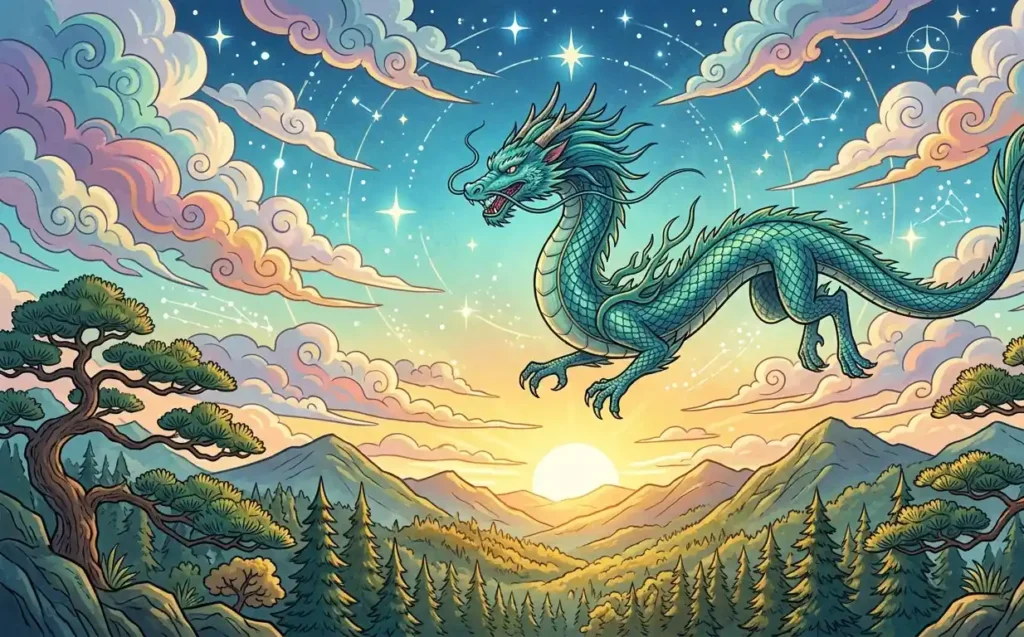
The Cheongnyong (Blue Dragon or Azure Dragon) is the Korean version of the Chinese Qinglong, one of the four guardian beasts. But the Korean tradition gave this figure its own cultural weight distinct from the Chinese astronomical context from which it originated.
In Chinese tradition, Qinglong is primarily an astronomical figure: the guardian of the eastern sky’s seven lunar mansions. In Korean tradition, Cheongnyong integrates into a broader system of directional protection that connects to both the Chinese cosmological inheritance and indigenous Korean understandings of directional spirit power.
Korean Directional Spirit Integration
The four guardian beasts in Korean tradition (Cheongnyong for east, Baekho for west, Jujak for south, Hyeonmu for north) were integrated into Korean Buddhist and shamanistic frameworks in ways that gave each figure a more active protective function than the purely astronomical Chinese framework emphasized.
Cheongnyong appears in Korean Buddhist temple architecture and in tomb murals as an active protective presence. The Goguryeo tomb murals (UNESCO World Heritage-designated) show the Blue Dragon guardian with a dynamic, energetic quality that is distinctively Korean in artistic expression rather than being a simple copy of Chinese models.
The Goguryeo murals are worth specific attention because they’re among the finest surviving examples of early Korean dragon art, created independently enough from Chinese models to reveal Korean artistic personality in how the dragon is conceived and depicted.
4. Hyeonmu: The Serpent-Tortoise North Guardian

What Makes This Dragon Unique
Hyeonmu is technically the Black Tortoise-Serpent, not a dragon in isolation. But the serpent component of the Hyeonmu figure gives it significant dragon-adjacent status, and the Korean treatment of this guardian figure has specific characteristics worth knowing.
In Chinese tradition, Xuanwu (the Chinese equivalent) is the Black Tortoise, a tortoise intertwined with a serpent. In Korean tradition, the same figure is called Hyeonmu, and the Goguryeo tomb mural depictions of it have a specifically Korean visual energy: more dynamic, more visually active than the more serene Chinese equivalents.
The Korean Visual Tradition
The Hyeonmu in Goguryeo tomb murals shows the serpent component with particular vitality, its coiling energy expressed with a dynamism that Korean art historians recognize as distinctively Korean in execution.
This visual distinctiveness is itself mythologically significant. It suggests that Korean artists working within a Chinese-derived cosmological framework were making genuinely creative choices about how to represent these guardian figures, not simply copying Chinese models.
The serpent component of Hyeonmu connects it to the broader Korean dragon tradition because serpents in Korean mythology frequently carry dragon-associated qualities, particularly the capacity for transformation and eventual full dragonhood.
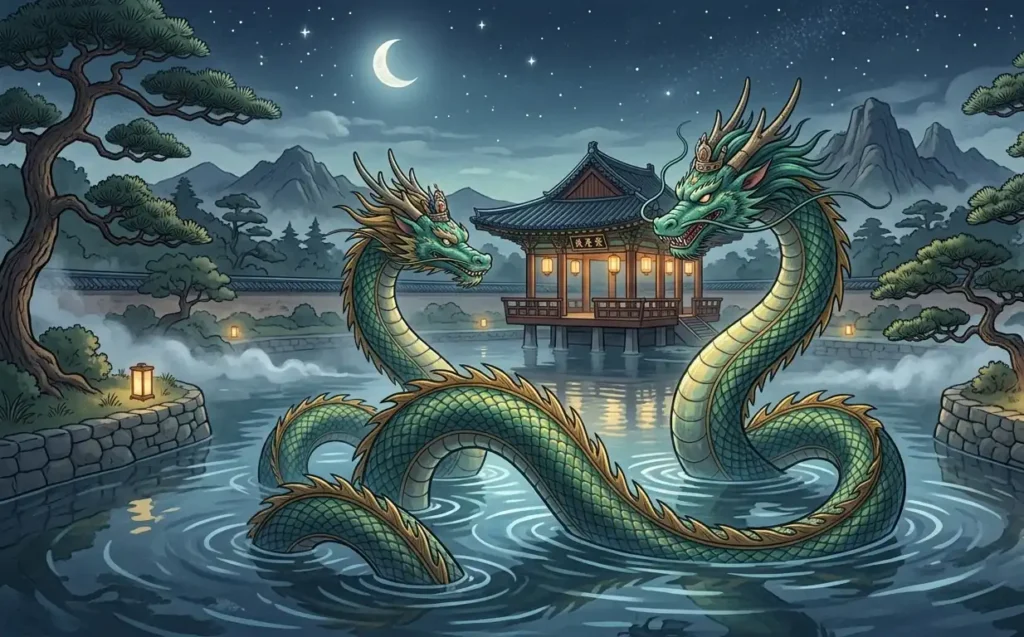
5. The Dragon of Anapji Pond: The Royal Pond Guardian
What Makes This Dragon Unique
Anapji, now called Donggung and Wolji Pond, in Gyeongju was the royal garden pond of the Silla Kingdom (57 BCE to 935 CE). It has its own specific dragon guardian tradition that’s distinct from the general water dragon folklore applied to ordinary ponds.
The Royal Pond Dragon is a court dragon: a guardian specifically associated with the royal family, the seat of governance, and the legitimacy of Silla royal power. This is dragon mythology in a specifically political context.
The Silla Royal Dragon Connection
The Silla Kingdom’s relationship with dragon mythology is among the most elaborate of any Korean dynasty. Multiple Silla founding and legitimacy narratives involve dragons, and the royal pond’s dragon guardian tradition extends this connection to the physical site of royal power.
Dragon imagery at Anapji wasn’t simply decorative. Architectural elements of the pond complex incorporated dragon imagery as active protective and legitimizing symbols. The pond itself was understood to have a specific supernatural presence that protected the royal complex and by extension the kingdom it served.
Excavations of the Anapji site have recovered artifacts including dragon-related objects that confirm the centrality of dragon symbolism to Silla royal culture in a way that goes beyond purely literary documentation.
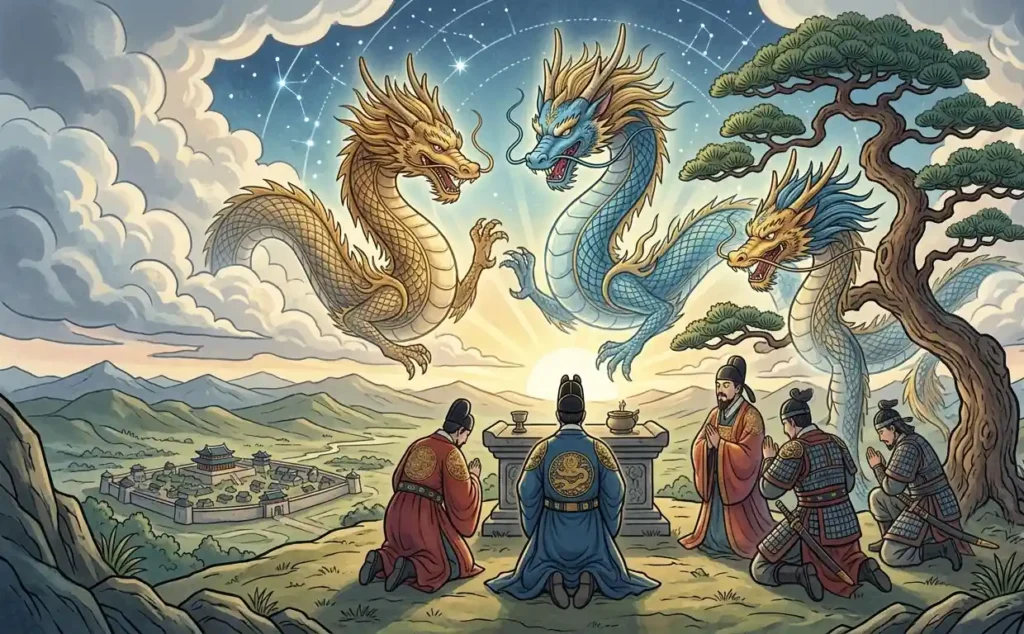
6. The Dragon Ancestors of Goryeo Founders
What Makes This Dragon Unique
The Goryeo Dynasty (918 to 1392 CE) that gave Korea its current name had specific founding mythology connecting Wang Geon, the dynasty’s founder, to dragon ancestry.
The Wang Geon founding mythology describes his family’s connection to a dragon figure in terms that made dragon ancestry a component of the legitimate claim to govern. This isn’t simply using dragon imagery symbolically the way the Chinese emperor used dragon symbols. It’s genealogical: the dynasty’s founder had actual dragon in his family’s history.
Genealogical Dragon Ancestry
This genealogical approach to dragon connection is distinctive. The Chinese emperor was symbolically the True Dragon. Korean royal mythology sometimes went further: the ruler had dragon ancestors.
The distinction reflects something about how Korean royal legitimacy mythology worked. Where Chinese imperial legitimacy emphasized the mandate of heaven (a current cosmic sanction), Korean royal mythology sometimes reached back to ancestral connection to dragon power as a component of inherent right to rule.
The Wang Geon dragon ancestry tradition is documented in the Goryeo-sa (History of Goryeo), the official Korean historical chronicle, which gives it more formal documentation than purely folk traditions.
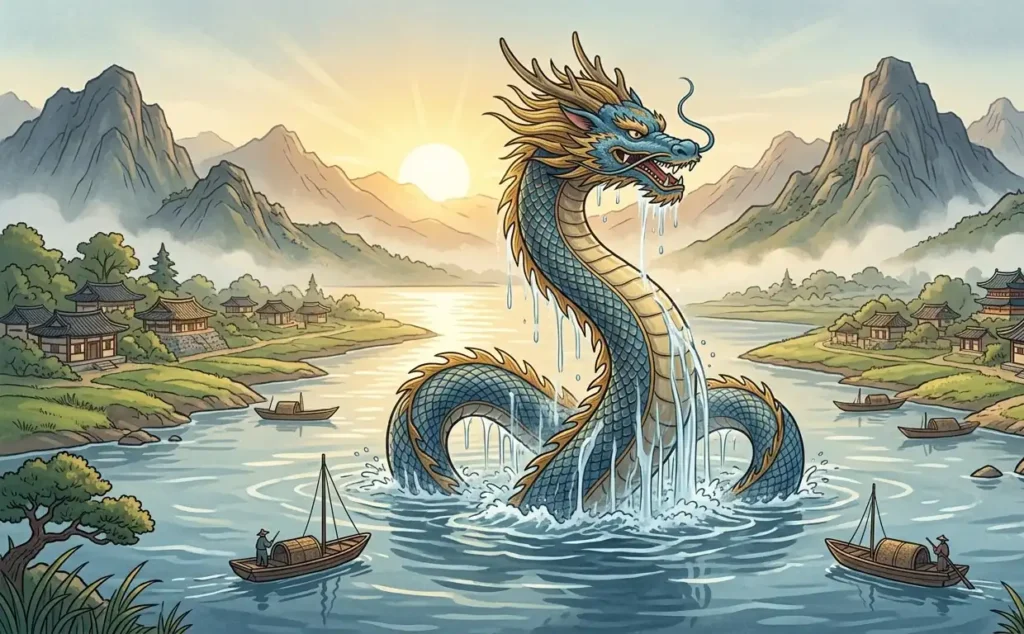
7. The Dragon of the Han River
What Makes This Dragon Unique
The Han River has its own dragon guardian tradition that predates the modern city of Seoul and persists as a folk tradition connected to one of Korea’s most important waterways.
The Han River Dragon is a specifically local guardian tradition: not a cosmological Dragon King governing a sea but a specific supernatural presence associated with this specific river and the communities that depended on it.
Local Water Dragon Traditions
What distinguishes Korean local water dragon traditions from Chinese equivalents is their integration with Korean shamanistic practice. The Han River’s dragon guardian was not simply prayed to at a temple. It was approached through specific shamanic rituals, through the mudang’s intermediary role, and through community practices that maintained the relationship between riverside communities and their river’s supernatural presence.
The Han River Dragon tradition also reflects the Korean understanding that significant waterways have individual supernatural identities, not just cosmic dragon governance delegated to all waterways simultaneously. The Han River’s dragon is specifically the Han River’s dragon, with a particular character that other rivers’ dragon guardians don’t share.
This localization of dragon identity is a characteristic feature of Korean water dragon tradition that distinguishes it from the more systematized Chinese Dragon King bureaucratic model.
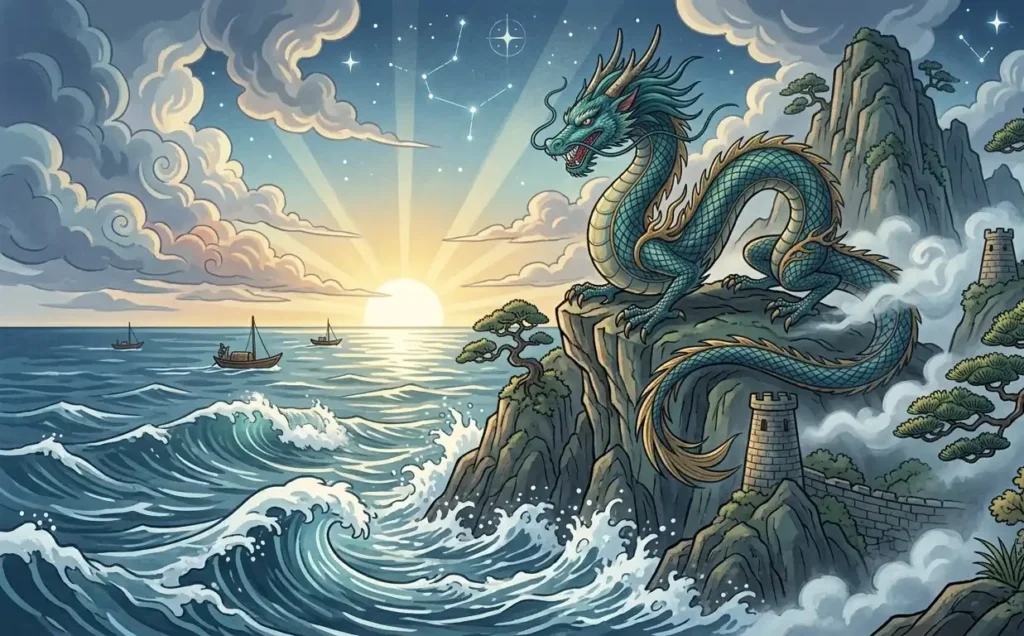
8. The Dragon of the East Sea
What Makes This Dragon Unique
Korean mythology and folk tradition describe the East Sea (the sea between Korea and Japan) as having its own specific dragon presence, connected to but distinct from the generic Yongwang tradition.
The East Sea Dragon appears in specific Korean folk tales and shamanic traditions as a particularly powerful and sometimes capricious presence, reflecting the East Sea’s genuine character as a sometimes difficult and unpredictable body of water for Korean coastal communities.
Coastal Community Dragon Relationships
The East Sea Dragon tradition is most alive in the fishing and diving communities of Korea’s eastern coast, particularly in regions like Gangwon province where dependence on the sea was historically most intense.
The relationship between these communities and their sea dragon wasn’t simply reverential. It was actively negotiated through ritual, through proper conduct when at sea, through specific prohibitions about what could and couldn’t be done in specific circumstances. The dragon was a presence you maintained a relationship with, not simply one you prayed to from a distance.
The haenyeo (female sea divers) of Jeju Island have their own specific dragon-related traditions connected to their diving practice, with offerings and rituals specifically designed to maintain proper relations with the sea’s supernatural guardians.
9. Mireuk and the Dragon in Korean Buddhism
What Makes This Dragon Unique
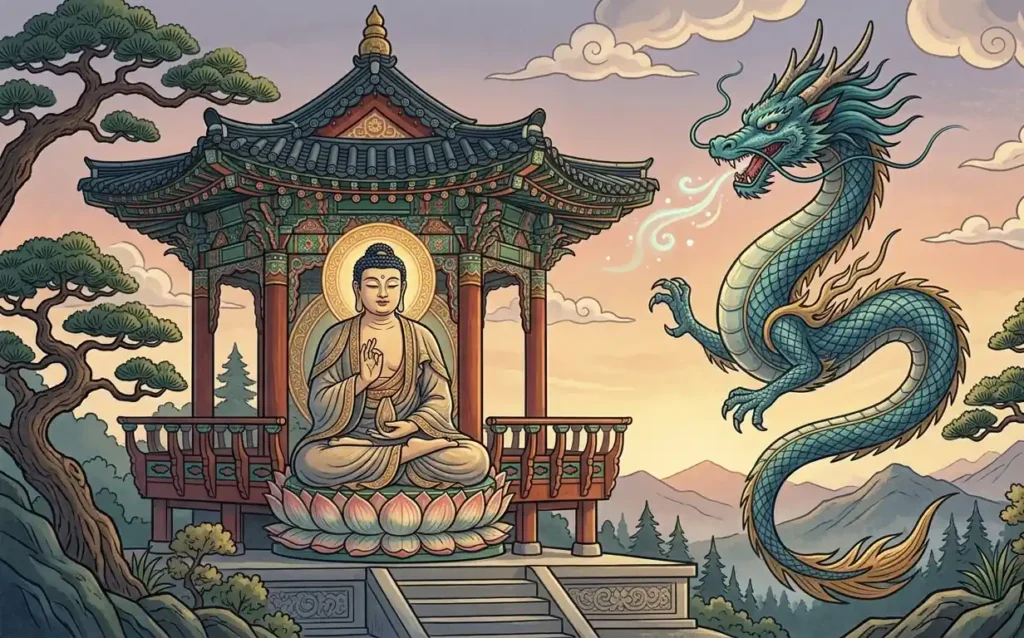
Korean Buddhism developed its own traditions of dragon-Buddha interaction that reflect both Indian Buddhist Naga tradition and Korean dragon mythology, producing a specifically Korean Buddhist dragon character.
The Mireuk (Maitreya Buddha) tradition in Korean Buddhism includes specific connections to dragon imagery and dragon-related legends that differ from Chinese Buddhist dragon traditions.
Korean Buddhist Dragon Integration
When Buddhism arrived in Korea (officially recognized in the 4th century CE), it encountered an existing shamanic tradition with well-developed water spirit and serpent beliefs. The resulting integration produced Buddhist dragon traditions with specifically Korean characteristics.
Dragon carvings on Korean Buddhist temple architectures serve protective functions similar to but distinct from both Chinese Buddhist temple dragons and Indian Naga temple imagery. The specifically Korean synthesis produced a Buddhist dragon tradition where the protective function integrates with shamanic concepts of guardian spirits in ways that Chinese Buddhist tradition didn’t develop in the same direction.
Specific Korean Buddhist temples have founding legends involving dragon figures: dragons that appeared at auspicious locations to signal where temples should be built, dragons that tested monks’ virtue, dragons that were converted by Buddhist teaching and became temple protectors.
10. Jajangnyong: The Buddhist Monk’s Dragon
What Makes This Dragon Unique
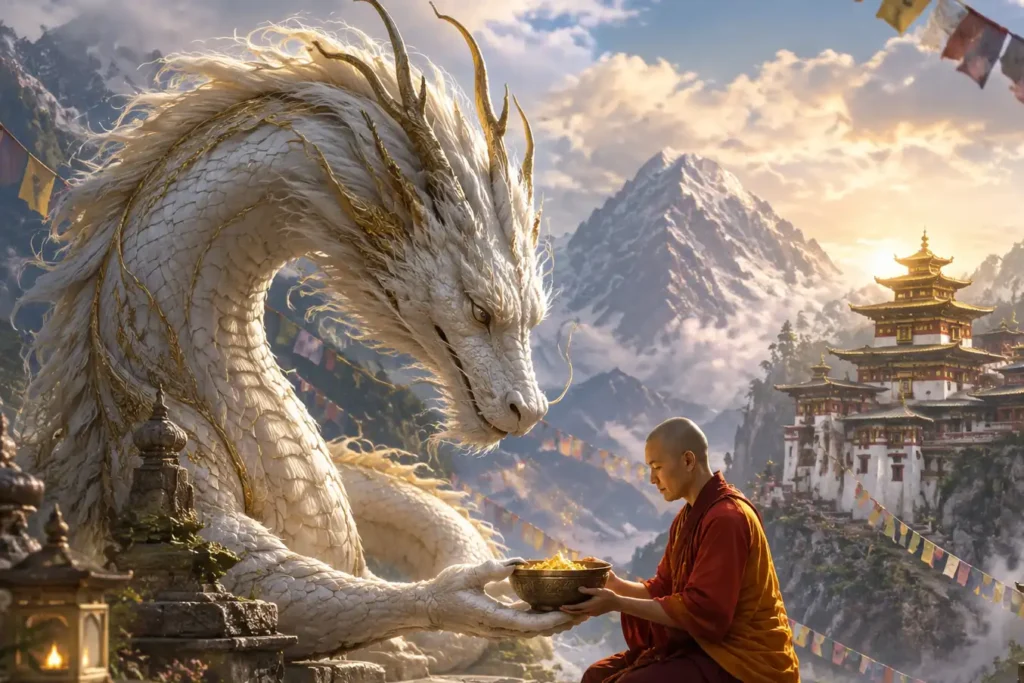
The monk Jajang (590 to 658 CE), one of the most important figures in Korean Buddhist history, has a specific dragon in his founding legends.
When Jajang was establishing Tongdosa temple in South Gyeongsang province, one of Korea’s most significant Buddhist temples, a dragon is documented in the temple’s founding mythology. The dragon’s connection to the site’s sacred geography is part of how the temple’s legitimacy is established.
The Dragon as Sacred Geography Marker
The Jajangnyong tradition reflects a specifically Korean Buddhist use of dragon mythology: the dragon as a marker of sacred geography. When a dragon is associated with a specific location in Korean Buddhist tradition, it often signals that the location has particular spiritual power.
This function of the dragon as identifier of sacred sites is distinct from the more cosmologically elaborate roles dragons play in Chinese tradition. The Korean Buddhist dragon is more immediately present in specific landscapes, more directly connected to the human religious activity occurring at specific sites.
11. The Dragon of the Haenyeo
What Makes This Dragon Unique
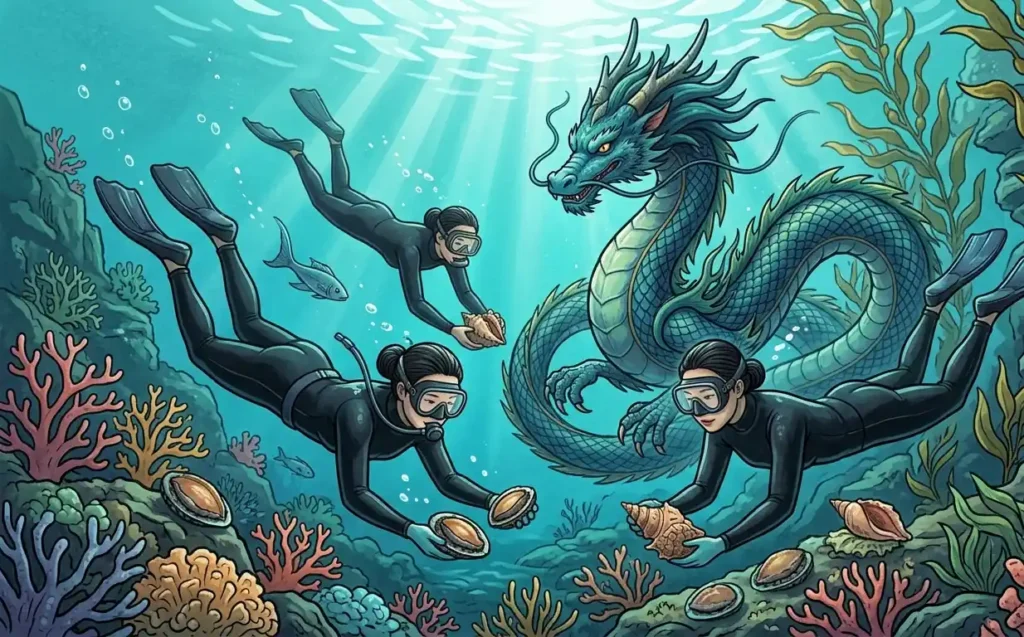
The haenyeo, the female free divers of Jeju Island whose diving culture is UNESCO-recognized, maintain their own specific dragon-related traditions that are among the most uniquely Korean dragon traditions on this list.
The Haenyeo Dragon tradition is directly connected to the practice of diving into deep water and the specific relationship with the sea that this practice creates. When you spend your working life diving into the ocean’s depths, you develop a specific relationship with the sea’s supernatural dimension.
Ritual and Practice
Haenyeo communities historically maintained specific rituals related to sea guardians, including dragon-associated figures, through a practice called yeongdeunggut, a ritual performed in the second lunar month to welcome and send off Yeongdeung, a goddess associated with spring winds and safe diving conditions.
The dragon figures in haenyeo tradition are specifically connected to the risks and gifts of the diving practice: the danger of deep water, the unpredictability of ocean conditions, the need for the sea to yield up the shellfish and seaweed that diving communities depended on.
This practical, work-connected relationship with dragon-adjacent sea supernatural figures is different in character from either the cosmological Dragon King tradition or the royal legitimacy dragon traditions. It’s the dragon mythology of people whose lives are most directly affected by the sea’s supernatural dimension on a daily basis.
Frequently Asked Questions
Is the Imugi unique to Korean mythology or does it appear elsewhere?
The Imugi as a specific category of pre-dragon being requiring 1,000 years and a heavenly pearl is specifically Korean. Chinese and Japanese traditions have dragon transformation stories but no equivalent intermediate category with these specific requirements. It’s Korean mythology’s most original contribution to East Asian dragon tradition.
Are these dragons still actively worshipped in Korea?
Some traditions remain active. Yongwang shamanic rituals persist in coastal communities. Haenyeo ritual practices continue in Jeju, receiving UNESCO recognition. Buddhist temple dragon traditions continue in active temples. Others exist primarily as folk tradition and cultural heritage rather than active religious practice.
Which Korean historical dynasty had the strongest dragon mythology?
The Goryeo Dynasty’s founding mythology with Wang Geon’s dragon ancestry is most elaborately documented in historical chronicles. The Silla Kingdom’s connection to Anapji and its royal dragon traditions is supported by archaeological evidence. Both dynasties used dragon mythology more explicitly than later Korean dynasties.
What is the Yeouiju and why is it important?
The Yeouiju is the heavenly dragon pearl that an Imugi must catch to become a full Yong dragon. It’s sometimes described as wish-granting and always as transformative. Its celestial origin means the Imugi cannot produce or control it but must be ready when it falls.
How does Korean dragon mythology compare to Japanese dragon mythology?
Korean dragon mythology maintains stronger Chinese cosmological connections while developing more distinctly national founding mythology. Japanese tradition shows a stronger Buddhist Naga influence. Korea’s unique Imugi concept has no Japanese equivalent. Japanese dragon mythology ranges more widely in moral character than Korean tradition typically does.
Final Thoughts
Korean dragon mythology rewards serious attention. It’s smaller in scale than Chinese tradition, less exhaustively documented in English, and partly accessible only through regional folk practice and specialized Korean scholarship.
But what it offers on its own terms is genuinely distinctive. The Imugi’s patient transformation. The genealogical dragon ancestry of royal founders. The shamanic intermediary relationship between communities and their local water dragons. The haenyeo’s practical, work-connected dragon traditions.
These aren’t Chinese dragon mythology with Korean names. They’re a genuine tradition with its own most interesting ideas, shaped by Korean history, Korean shamanism, Korean Buddhism, and the specific Korean landscape, particularly its extensive coastlines and its rivers, that dragon mythology naturally responds to.
That’s worth knowing.
Sources & Further Reading
- Korea: A Religious History – James Huntley Grayson
- Samguk Yusa: Legends and History of the Three Kingdoms of Ancient Korea
- The Samguk Sagi and the Unification Wars – John Charles Jamieson
- Goryeo Dynasty: Korea’s Age of Enlightenment, 918-1392 – Kumja Paik Kim
- Complex of Koguryo Tombs – UNESCO World Heritage Centre
- Jeju Chilmeoridang Yeongdeunggut – UNESCO Intangible Cultural Heritage
- Culture of Jeju Haenyeo (women divers) – UNESCO Intangible Cultural Heritage
- National Museum of Korea, Journal of Korean Art and Archaeology
Related Articles
- Dragon Mythology: How Dragons Are Depicted Across Cultures
- Western Dragon vs Eastern Dragon [Myth, Power & Origin]
- Chinese, Japanese & Korean Dragons: How They Actually Differ
- 7 Best Dragon Rings For Men That Look Premium
- 17 Korean Dragon Legends Still Told After a Thousand Years
- 12 Famous Japanese Dragons and the Legends Behind Them