
 By
By Quick Takeaways:
- Qinglong, the Azure Dragon, is one of the Four Symbols of Chinese astronomy, governing the eastern quadrant of the sky across seven specific lunar mansions
- Its color, qing, sits between blue and green and specifically encodes the Wood element, the eastern direction, and the season of spring in the Wu Xing system
- Qinglong is a genuinely ancient figure, with archaeological evidence including Han Dynasty tomb tiles and bronze mirrors showing the creature already in its recognizable form over two thousand years ago
- This dragon is distinct from the administrative Dragon Kings who govern rainfall, and confusing the two is one of the most common mistakes in popular accounts of Chinese dragon mythology
- Qinglong remains genuinely present today in Chinese architectural placement, martial arts naming, and place names across the country
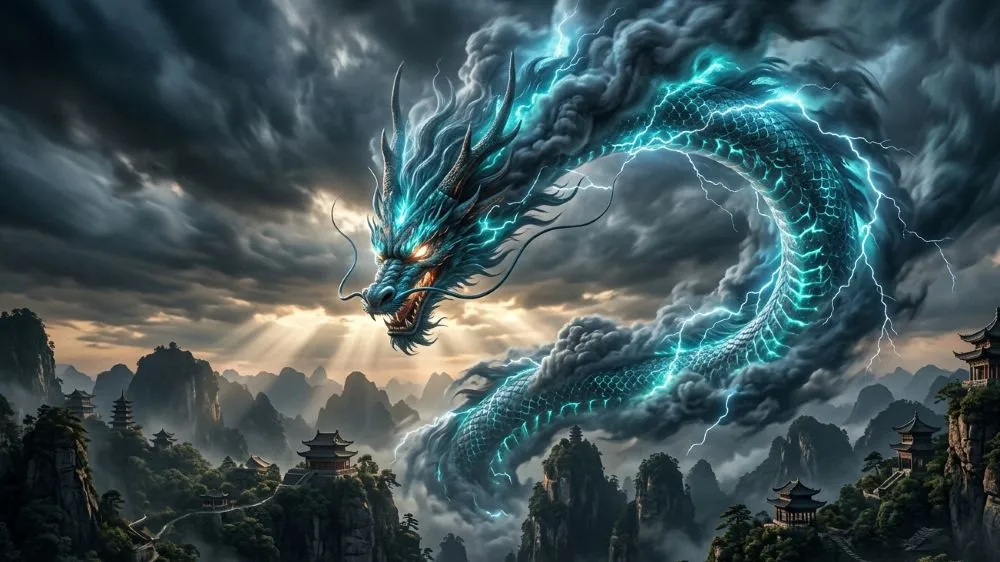
Qinglong, the Azure Dragon, is often introduced in a single sentence: the eastern guardian and one of the Four Symbols of Chinese mythology. While technically correct, that description barely scratches the surface.
Qinglong is far more than a symbolic dragon assigned to the east. It represents the season of spring, the Wood element, and seven lunar mansions that ancient Chinese astronomers mapped across the eastern sky.
For over two thousand years, it has occupied a central place in Chinese cosmology, appearing in tombs, temples, martial arts, and traditional architecture as a guardian of order, renewal, and the natural cycle of the heavens.
This guide explores who Qinglong really is, how it differs from the Dragon Kings, why it was mapped among the stars, and what its enduring symbolism reveals about traditional Chinese thought.
Who Qinglong Actually Is
The Azure Dragon Among the Four Symbols
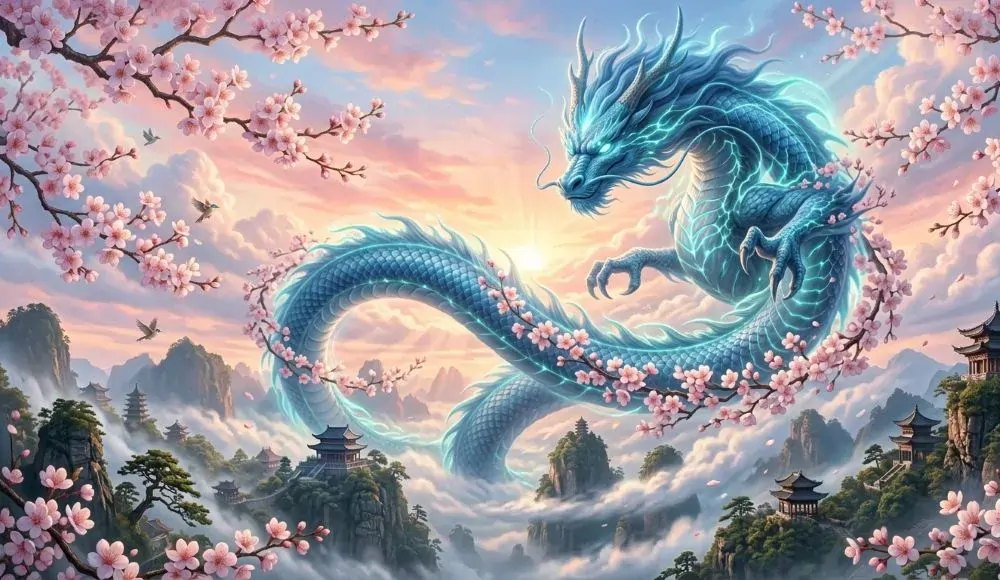
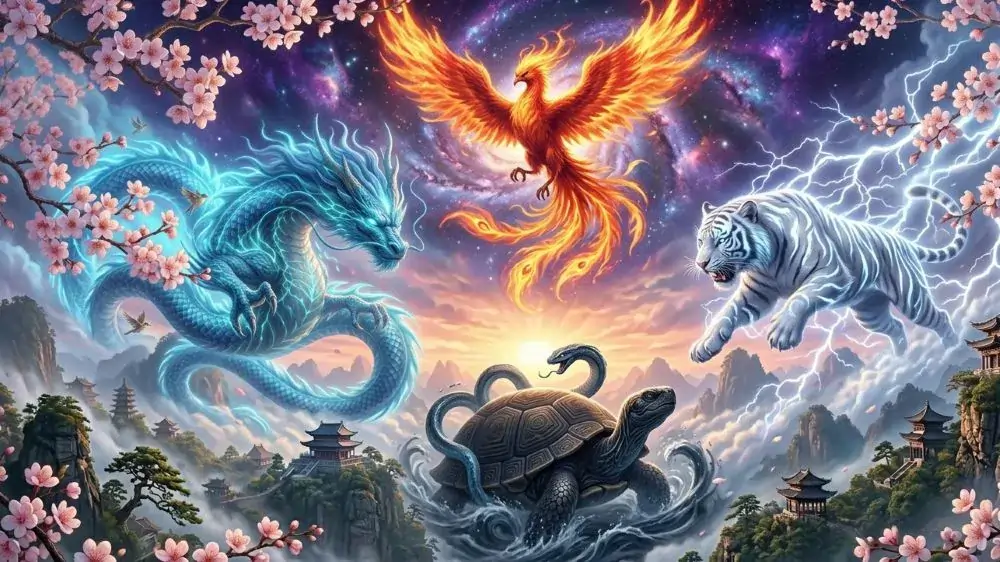
Qinglong, the Azure Dragon, is one of the Four Symbols, sometimes called the Four Holy Beasts, in traditional Chinese astronomy and cosmology. The other three are Baihu, the White Tiger of the west, Zhuque, the Vermilion Bird of the south, and Xuanwu, the Black Tortoise, sometimes shown entwined with a serpent, of the north.
Each of these four governs one cardinal direction, one season, one element in the Wu Xing system, and a specific set of star groupings visible in that quadrant of the sky. Qinglong holds the east, spring, and the Wood element, making it the guardian associated with new growth and the beginning of the year’s cycle.
Not the Same as the Dragon Kings
This distinction matters enough that I want to state it plainly before going further. Qinglong is not one of the Dragon Kings of the Four Seas, the administrative rain-governing officials who serve within the Jade Emperor’s divine court. Those figures, Ao Guang, Ao Qin, Ao Run, and Ao Shun, belong to a different mythological system entirely, one built around bureaucratic governance of weather and water.
Qinglong belongs to the older astronomical and directional framework, tied to the sky itself rather than to a court appointment. Popular accounts frequently blur these two traditions together, which flattens both of them.
The Seven Mansions Qinglong Actually Governs
What a Lunar Mansion Is
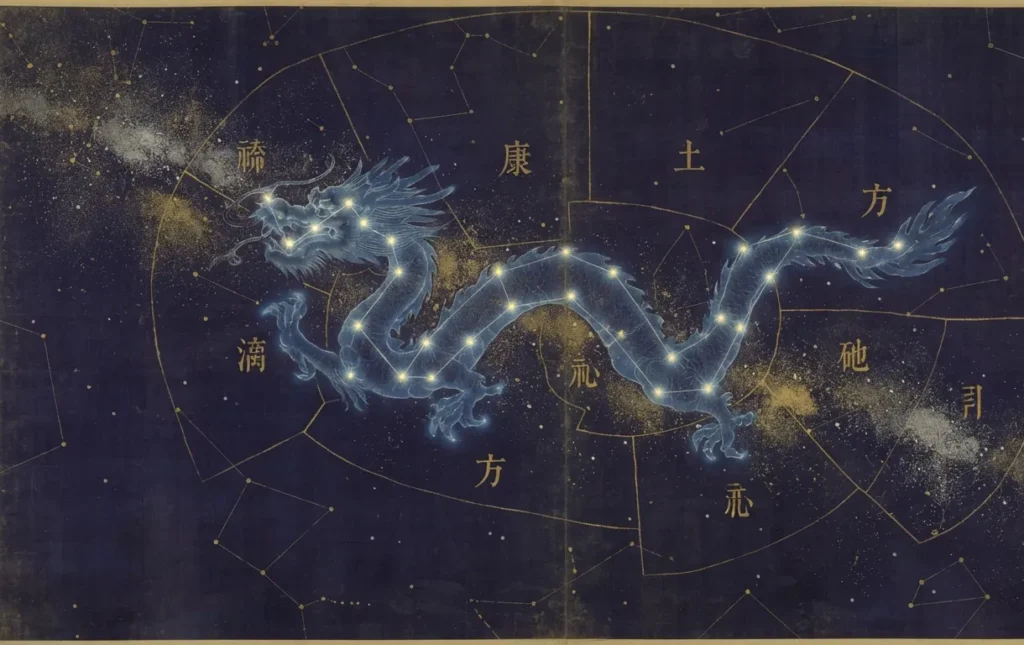
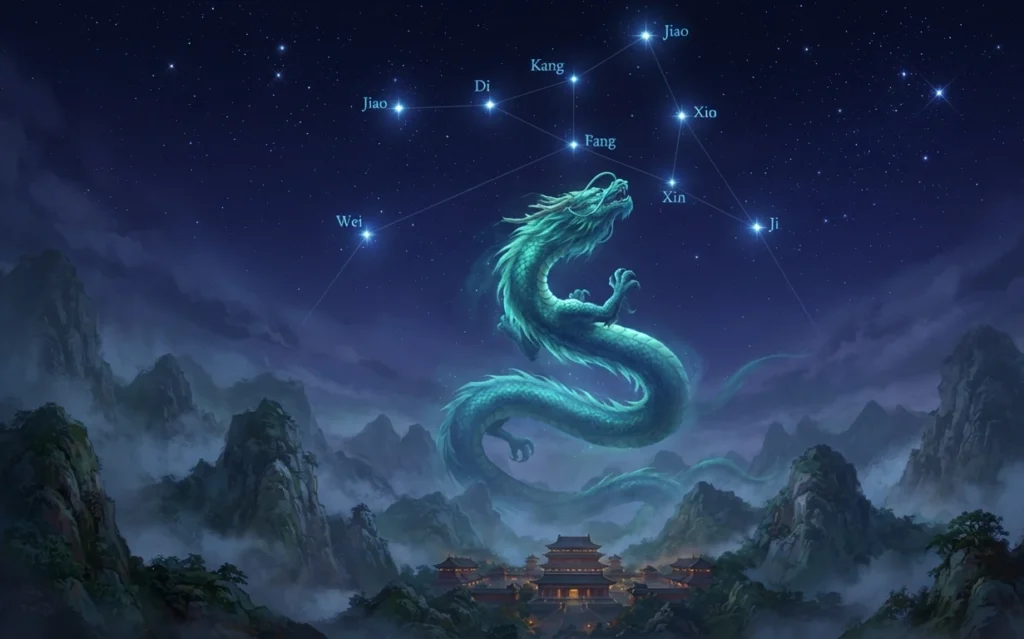
Chinese astronomy divided the night sky into twenty eight lunar mansions, xiu, grouped into four sets of seven, one set for each of the Four Symbols. This system tracked the moon’s roughly monthly path against the fixed stars and dates back to observational astronomy recorded well before the Han Dynasty.
Qinglong’s seven eastern mansions are named Jiao, Kang, Di, Fang, Xin, Wei, and Ji. Traditional star charts and later folk imagination read the outline formed by these seven groupings as tracing the shape of a dragon’s body across the eastern sky, with different mansions corresponding to different anatomical parts, horn, neck, chest, and so on down the body.
Why This Matters
This is the detail that most popular dragon content leaves out entirely, and it’s the single most important fact for actually understanding Qinglong. This isn’t simply a mythological dragon assigned to a direction as decoration. It’s a dragon whose body was mapped directly onto real, observable star positions by working astronomers, which gave the creature a literal, trackable presence in the sky that ordinary people could point to and identify on any clear night.
Studying comparative mythology has made me fond of traditions that do this, mythology and observational science operating as the same activity rather than as separate categories. Qinglong is one of the clearest examples in any culture of a constellation and a sacred animal being treated as the exact same thing.
The Color and What It Actually Encodes
Qing Is Not Simply Blue
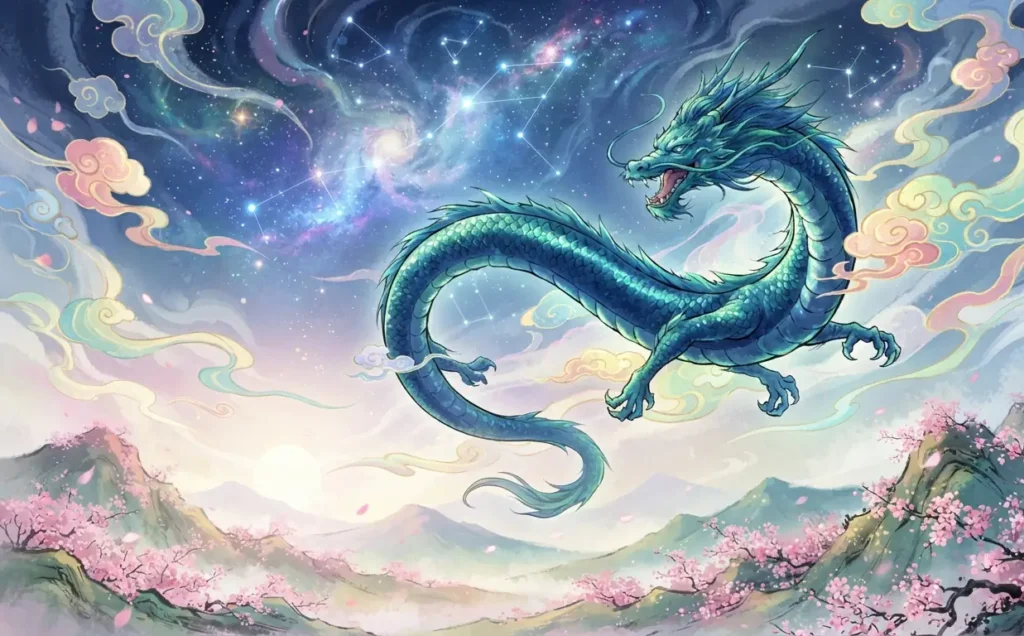
The character qing, 青, doesn’t map cleanly onto either blue or green in English. It occupies a space between the two, closer to the color of new spring foliage or a clear morning sky than to either pure hue. This is a genuinely important translation point, since English language sources render Qinglong as both the Blue Dragon and the Green Dragon depending on the source, and both are only partially accurate.
The Wu Xing Correspondence
In the Wu Xing, the Five Phase system that underlies a huge amount of traditional Chinese thought, qing corresponds specifically to the Wood element. Wood governs the eastern direction, the season of spring, and the general quality of upward, expanding, generative growth, the specific feeling of a plant pushing through soil after winter.
Qinglong’s color, then, isn’t an aesthetic choice. It’s a direct visual encoding of an entire cosmological category, wood, growth, spring, morning, the direction the sun rises from, compressed into a single recognizable creature. Every element of the figure, once you know the system, is doing specific symbolic work rather than existing for decoration.
The Archaeological Record
Older Than You’d Expect
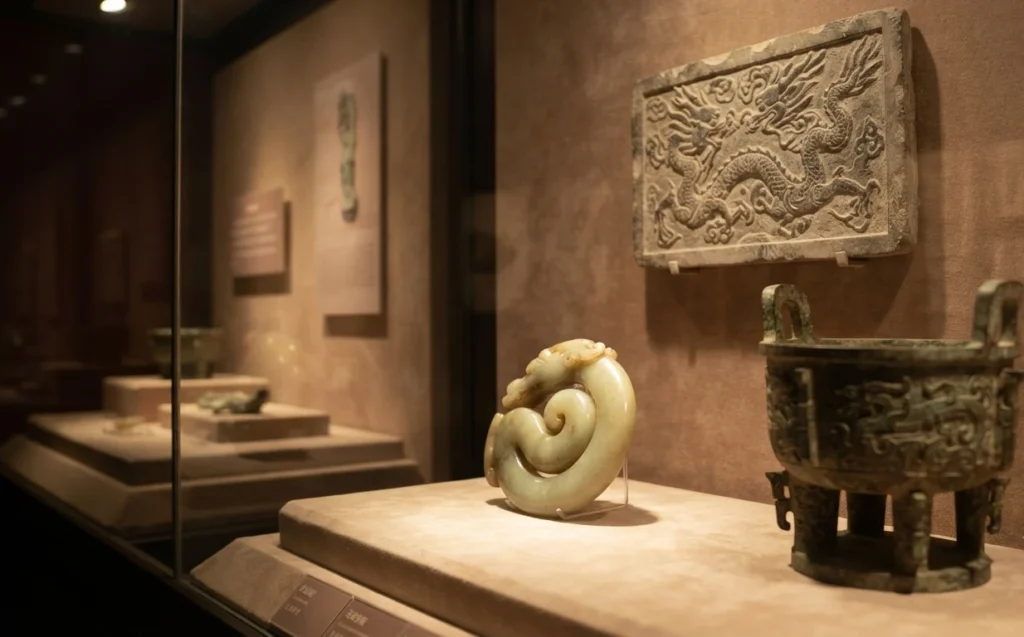
Qinglong’s imagery appears in the archaeological record considerably earlier than most people assume. Han Dynasty tomb tiles, roof end tiles, and bronze mirrors dating from roughly the third century BCE through the third century CE regularly depict the Four Symbols together, Qinglong paired opposite Baihu, Zhuque opposite Xuanwu, in compositions clearly meant to represent the complete cosmic order in miniature.
These aren’t isolated finds. The pattern of depicting all four creatures together, oriented to their correct cardinal positions, is consistent enough across Han Dynasty tombs and temple architecture that scholars treat it as an established and widely understood visual convention by that period, meaning the underlying belief system was almost certainly older still.
What the Placement Tells Us
Tombs specifically used this four direction system to orient the deceased correctly within the cosmos, with Qinglong typically placed on the eastern wall or the left side of a south facing structure. This wasn’t decorative flourish. It reflected a genuine belief that correct cosmic orientation mattered for the deceased’s continued wellbeing, placing Qinglong’s protective function squarely within some of the highest stakes contexts available in the culture.
Qinglong in Daoist and Ritual Tradition
The Green Dragon in Alchemy and Practice
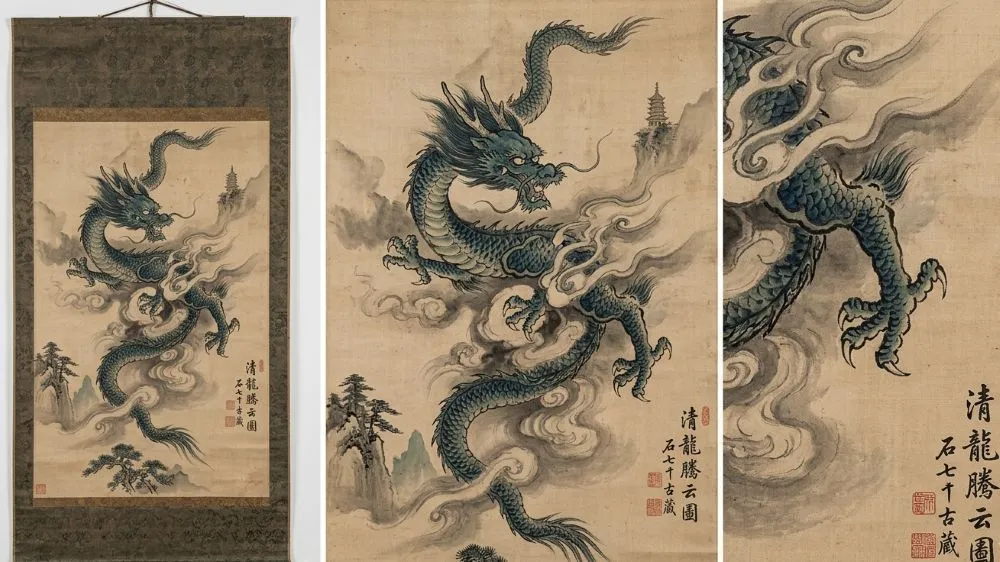
Daoist internal alchemy and ritual tradition frequently invoke Qinglong alongside the other three symbols as part of a complete cosmological toolkit for ritual practice, meditation, and the construction of sacred space. The eastern direction and its associated dragon carry specific protective and generative associations that Daoist practitioners drew on when orienting rituals, temples, and practice spaces.
Martial Arts Naming
Qinglong’s name and imagery show up throughout traditional Chinese martial arts terminology, with specific stances, forms, and weapon techniques named after the Azure Dragon to invoke qualities of fluid, coiling power.
This isn’t unique to Qinglong specifically, since Chinese martial vocabulary draws heavily on animal and mythological imagery generally, but the Azure Dragon’s association with spring growth and generative Wood energy made it a particularly natural fit for techniques built around continuous, flowing movement rather than sudden, static force.
Where Qinglong Shows Up Today
Architecture and Placement
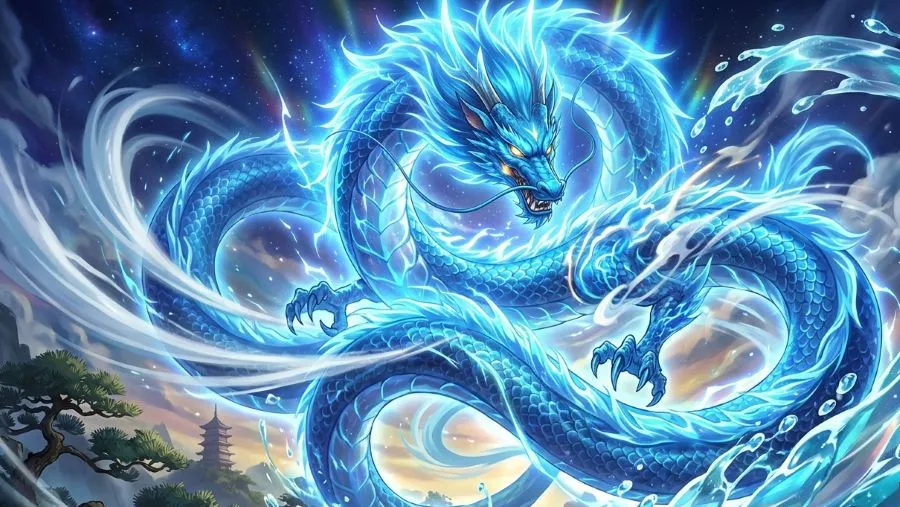
Traditional Chinese architecture, particularly temples, palaces, and significant tombs, continued the ancient practice of placing Qinglong imagery on the eastern side of a structure, paired with Baihu on the west.
This convention persists in restored historical sites and in newly built traditional style temples across China and the Chinese diaspora, meaning you can genuinely still find correctly oriented Qinglong imagery on buildings constructed within the last few decades.
Place Names and Cultural Presence
Qinglong’s name appears attached to mountains, rivers, and towns across China, a naming pattern that reflects the dragon’s deep integration into how Chinese geography has been understood and labeled for centuries.
This kind of toponymic presence, a mythological figure’s name becoming a literal place name that millions of people use daily without necessarily thinking about its origin, is one of the clearest markers of how thoroughly a piece of mythology has been absorbed into ordinary cultural life.
Popular Culture
Qinglong remains a recognizable figure in contemporary Chinese popular culture, appearing in visual art, decorative design, and as a recognizable symbolic shorthand for the eastern direction or for spring specifically, wherever the Four Symbols framework is invoked as a design or thematic choice.
How Qinglong Relates to the Other Three Symbols
A Complete System, Not Four Separate Figures
Qinglong only fully makes sense in relation to Baihu, Zhuque, and Xuanwu, since the four were conceived as a single interlocking cosmological system rather than four independent creatures that happen to share a category. Each governs one direction, one season, one element, and one segment of the sky, and together they describe a complete cosmic order with no gaps.
The Four Symbols at a Glance:
- Qinglong, Azure Dragon: East, spring, Wood element, seven eastern lunar mansions
- Zhuque, Vermilion Bird: South, summer, Fire element, seven southern lunar mansions
- Baihu, White Tiger: West, autumn, Metal element, seven western lunar mansions
- Xuanwu, Black Tortoise: North, winter, Water element, seven northern lunar mansions
Why the East Comes First
Qinglong is conventionally listed first among the four in most traditional presentations, and this isn’t arbitrary. Spring is the season associated with beginnings in Chinese cosmological thought, the point where the yearly cycle restarts, and the east is the direction the sun rises from each morning. Placing the Azure Dragon first reflects this sense of the eastern quadrant as the natural starting point for describing the complete cosmic wheel.
What Qinglong Actually Represents
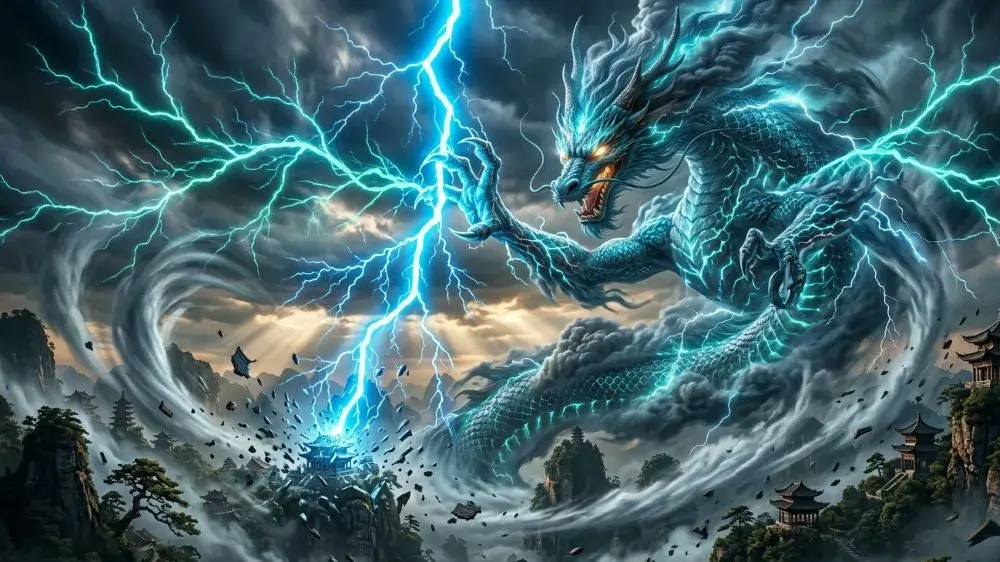
Beginnings, Growth, and Legitimate Renewal
Pulling all of this together, Qinglong’s deepest symbolic meaning centers on legitimate, natural renewal, the specific kind of growth that follows correctly from what came before it rather than growth that’s forced or premature. Spring following winter, morning following night, new wood growth following dormancy: Qinglong sits at exactly this transition point in every framework it appears in.
A Guardian, Not a Ruler
Unlike the Dragon Kings, who hold administrative authority over specific domains within a heavenly court, Qinglong’s role is fundamentally protective and structural. It doesn’t govern rainfall or issue decrees. It holds a position, quite literally a position in the sky and a position on a building’s eastern wall, that maintains cosmic and architectural order simply by being correctly present where it belongs.
That distinction, between a dragon who administers and a dragon who anchors, is one of the more genuinely interesting things Chinese mythology does with its dragon figures, and Qinglong is the clearest example of the anchoring type.
Frequently Asked Questions
Is Qinglong the same as the Chinese zodiac dragon?
No. The Chinese zodiac dragon is one of twelve animals in a completely separate twelve year cycle system unrelated to the Four Symbols. Qinglong belongs to the four direction, seven mansion astronomical framework, a different and older cosmological structure entirely.
Why is Qinglong sometimes called blue and sometimes called green in English?
The Chinese character qing describes a color between blue and green that English doesn’t have a single equivalent word for, closer to the color of spring foliage or a clear sky than either pure hue, which is why translators render it differently depending on context.
Is Qinglong one of the Dragon Kings of the Four Seas?
No, and this is a common confusion. The Dragon Kings, Ao Guang and the others, belong to a separate administrative mythology governing rainfall and the seas under the Jade Emperor’s court. Qinglong belongs to the older astronomical Four Symbols system tied to direction and season.
How old is the Qinglong tradition?
Archaeological evidence including Han Dynasty tomb tiles and bronze mirrors, dating from roughly the third century BCE onward, shows Qinglong already established in its recognizable form and paired with the other three symbols, suggesting the underlying belief system was already old by that period.
Can I still find Qinglong depicted correctly in modern buildings?
Yes. Traditional style temples, restored historical sites, and newly constructed buildings following classical conventions in China and across the Chinese diaspora still place Qinglong imagery on the eastern side of structures, continuing a placement practice documented for well over two thousand years.
What is Seiryu?
Seiryu is the Japanese name for the Azure Dragon, one of the Four Symbols, representing the East, spring, and the wood element in East Asian mythology.
Is the Azure Dragon a god or a symbol?
The Qinglong is primarily a mythological symbol and celestial guardian, though it is sometimes depicted with divine or god-like attributes in folklore.
Final Thoughts
After spending countless hours on this material, Qinglong remains one of the figures I most enjoy explaining properly, because the popular one-line summary genuinely undersells what’s actually going on. This isn’t a mythological dragon assigned a direction for tidiness.
It’s a dragon whose body was mapped directly onto the eastern sky by real observational astronomers, whose color encodes an entire seasonal and elemental philosophy, and whose correct placement on a building’s eastern wall was considered a genuine matter of cosmic order rather than decoration.
Next clear spring evening, look east after sunset. Somewhere up there, seven ancient star groupings are still tracing the outline that Chinese astronomers first read as a dragon’s body more than two thousand years ago. It’s still exactly where it’s always been.
Related Articles
- The Four Holy Beasts: Baihu, Qinglong, Zhuque & Xuanwu
- Byakko: White Tiger Symbolism, Myths & Sacred Meaning
- Suzaku Meaning: The Vermilion Bird Myth, Symbolism & Powers
- Xuanwu: Black Tortoise of the North Symbolism & Mythology
- Yellow Dragon: Myths, Symbolism & the Forgotten Fifth Beast
References
- Birrell, Anne. Chinese Mythology: An Introduction.
- Eberhard, Wolfram. A Dictionary of Chinese Symbols.
- Major, John. Heaven and Earth in Early Han Thought.
- The Chinese Sky
- Lewis, Mark Edward. The Construction of Space in Early China.
- Kohn, Livia. Daoism and Chinese Culture.
- Allan, Sarah. The Shape of the Turtle.Hanshu (Book of Han).
- Shiji (Records of the Grand Historian).
- Shanhaijing (Classic of Mountains and Seas).