
 By
By Quick Takeaways:
- Dragons exist on every inhabited continent in traditions with no historical contact, not because the myth spread, but because something in the human mind independently produces it
- The best explanation combines evolutionary biology (we’re wired to fear certain predator combinations) with cultural elaboration (each tradition builds something different on the same biological foundation)
- A dragon’s composite form, serpentine body, aerial dominance, and predatory face map precisely onto the three main predators that shaped primate evolution for millions of years
- What each culture does with its dragon reveals what that culture most needs its supreme cosmic power to be rain-bringer, adversary, ancestor, creator
- Once you understand why the figure is universal, every individual dragon tradition becomes more interesting, not less
Here’s the question that’s sat at the back of my mind for most of my mythological quest for the last 20 years. Why are there dragons everywhere?
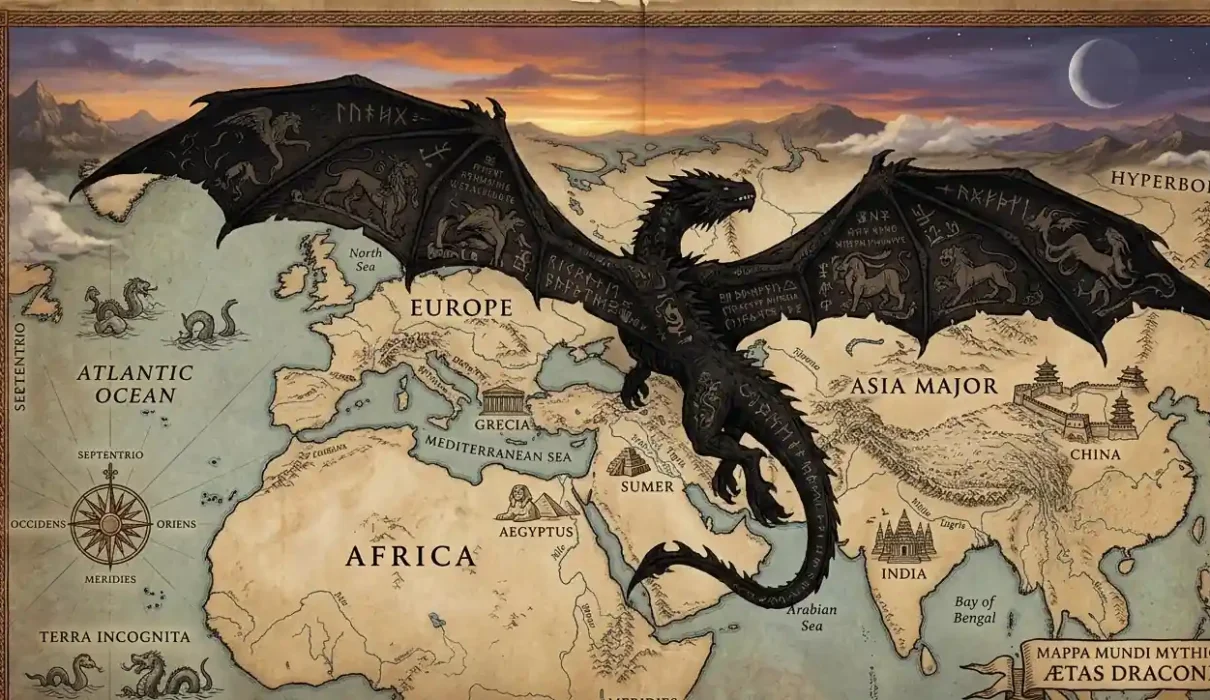
Not just in China, where the Long is a divine rain-bringer. Not just in medieval Europe, where it’s a fire-breathing adversary for heroes to overcome. Everywhere. Aboriginal Australia, Mesoamerica, West Africa, Scandinavia, ancient Babylon, and pre-Columbian Peru. Traditions with no historical contact, separated by oceans and millennia, all producing some version of the same figure, a great serpentine being of extraordinary power that sits at the center of their mythological imagination.
I’ve spent twenty years following mythology across cultures, and this convergence is one of the things that never stops being genuinely astonishing to me. It demands a real explanation.
Where Dragons Exist – A World Tour of Dragons
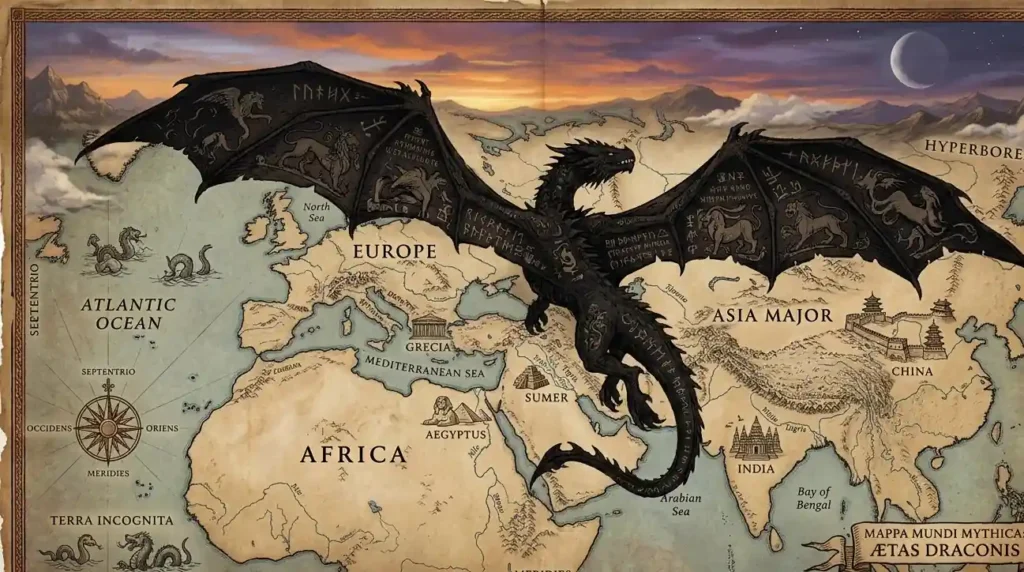
Before getting to the explanation, let me show you what I mean by “everywhere” because the breadth of the distribution is the thing that makes this genuinely interesting.
The Old World Traditions
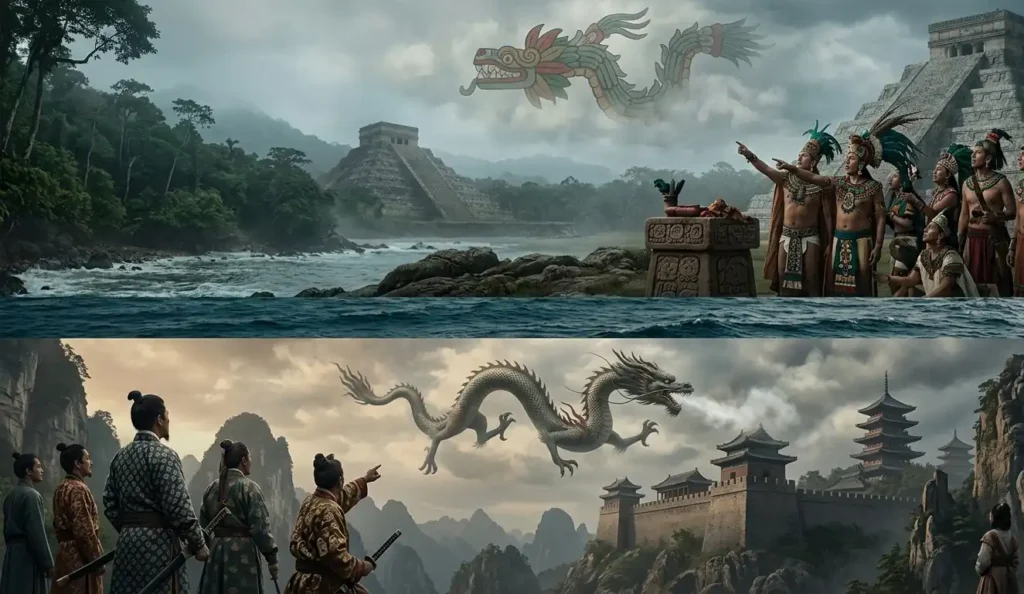
China gives us the Long, a composite creature with the scales of a carp, the claws of an eagle, the antlers of a deer, and the benevolent power of a celestial rain-bringer. The Chinese dragon doesn’t breathe fire. It controls water. It’s the imperial symbol, the cosmological guardian of the east, the figure that farmers prayed to for rainfall.
Ancient Babylon gives us Tiamat, the primordial salt-water dragon from the Enuma Elish creation epic, whose body becomes the world when the storm god Marduk defeats her. One of the oldest named dragon figures in any written record.
Ancient Greece gives us a family of drakones, Python at Delphi, Ladon guarding the golden apples, and the Lernaean Hydra. All serpentines. All guardians of something sacred or dangerous.
Norse mythology gives us three completely different dragon figures in a single tradition: Nidhogg gnawing at the roots of the World Tree, Jormungandr encircling the entire world in the ocean, and Fafnir who became a dragon through the corruption of greed.
Medieval Europe gives us the fire-breathing adversary of hero and saint narratives, Saint George’s dragon, the Beowulf poet’s wyrm, the treasure-hoarding monster that heroism is measured against.
The Traditions That Can’t be Explained by Borrowing
Here’s where it gets genuinely interesting to me. The Old World traditions might have influenced each other through trade routes, cultural contact, shared Indo-European mythological inheritance.
But then there’s the rest.
Aboriginal Australia has the Rainbow Serpent, a great serpentine being that created the landscape by moving through it during the Dreamtime, whose body carved the rivers and whose presence still governs the sacred waterways. Rock art depicting serpentine figures in Australia has been dated to thousands of years ago. Zero contact with Chinese or European dragon traditions.
Mesoamerica has Quetzalcoatl, the Feathered Serpent of the Aztec and Maya, a creator deity who taught humanity agriculture and writing, who departed east on a raft of serpents and promised to return. Feathered. Serpentine. Divine. Completely independently developed.
West Africa has Ninki Nanka, the great river serpent of the Gambia region, enormous and dangerous, associated with the waterways that govern life and death in that landscape.
The indigenous Americas broadly have the Horned Serpent, a great aquatic serpent being that appears in the mythologies of dozens of separate indigenous North American cultures, governing underwater realms and representing a specific kind of supernatural power.
These traditions didn’t borrow from each other. They couldn’t have. They’re separated by oceans, by millennia, by complete cultural isolation. And yet here’s the same figure, large, serpentine, cosmologically significant, supernatural, appearing independently in all of them.
That’s the puzzle that needs explaining.
Why Cultural Borrowing isn’t the Answer
The most obvious explanation is the one that doesn’t work: that one culture invented the dragon and others borrowed it.
This isn’t implausible for some traditions. Chinese dragon iconography directly influenced Japanese, Korean, and Vietnamese traditions, which is straightforward cultural transmission through documented historical contact. Babylonian dragon mythology almost certainly influenced Hebrew and Greek dragon traditions through the ancient Near Eastern cultural exchange network.
But borrowing can’t explain the Aboriginal Rainbow Serpent. It can’t explain Quetzalcoatl. It can’t explain the Horned Serpent traditions of Native North America. These traditions developed in genuine isolation.
What you need to explain the universality is something that operates independently of cultural contact, something present in every human mind, regardless of where that mind developed.
The Answer Hiding in Evolutionary Biology
This is where twenty years of following comparative mythology eventually led me, and I find it genuinely satisfying as an explanation.
Our Ancestral Predator Problem
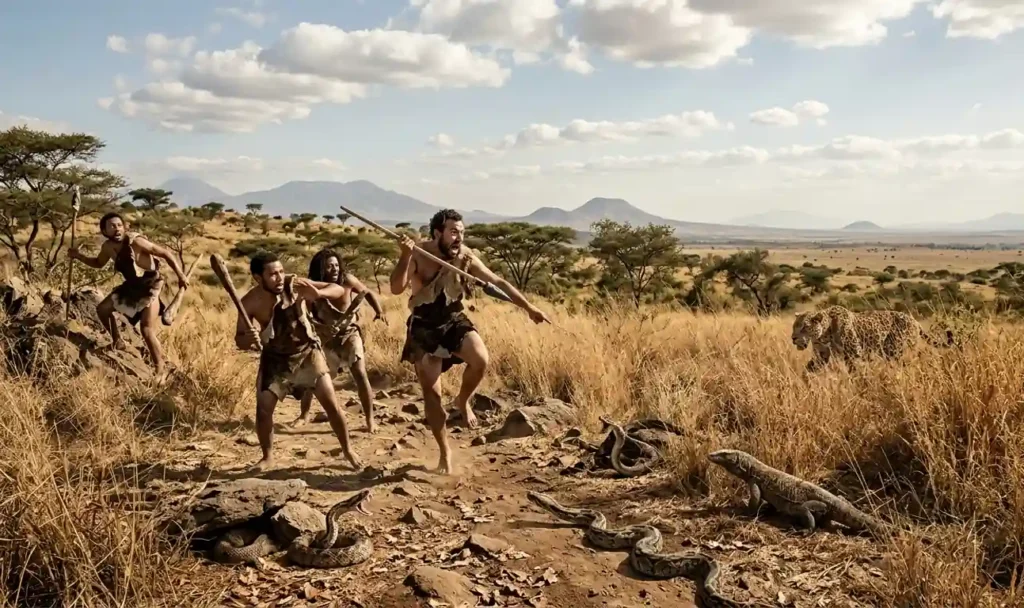
For millions of years, primates lived in environments where they faced three primary categories of predators. Not the same specific species in every location, but the same three categories of threat, everywhere primates evolved:
- Large ground predators: Big cats, large carnivorous mammals, the threat from the front, from ambush, from the same level as the prey
- Large aerial predators: Eagles, large hawks, the threat from above, sudden and fast
- Large serpents: Pythons, boas, cobras, and their extinct relatives, the threat from below, from concealment, from the hidden place
Evolution doesn’t respond to categories. It responds to specific physical signatures. What primates evolved was rapid, pre-conscious threat-detection for the specific sensory signatures of each predator type:
- The movement pattern and body shape of a large feline
- The shadow shape and descent trajectory of a large raptor
- The sinuous movement and scale pattern of a large serpent
These responses are documented in modern humans and in other primates. Infants respond to serpentine patterns with heightened alertness before they’ve had any experience of snakes. Chimpanzees who have never encountered an eagle respond to raptor-shaped shadows with the species-specific raptor alarm. The fear is wired, not learned.
The Composite That Produces a Dragon
Here’s the part that clicked for me when I first encountered it.
A dragon is a composite creature. It has:
- A serpentine body – the large serpent’s body plan and movement pattern
- Wings and aerial capability – the raptor’s aerial dominance
- A predatory face, claws, and mass – the large predatory mammal’s frontal threat
Look at that list again. A dragon combines the physical signature of all three of humanity’s primary ancestral predator categories into a single figure.
This means that when a human nervous system encounters a dragon, even a symbolic, artistic, or fictional dragon, it activates not one but all three of the deep predator-detection systems simultaneously. The fear response isn’t additive. It’s exponential. The figure produces a fear that exceeds what any single-predator figure could generate, because it’s triggering three separate deeply-wired alarm systems at once.
And when something produces a fear response that exceeds what any known natural predator can account for, the explanation available to a pre-scientific mind is: this thing is more than natural. It’s supernatural. It has cosmic power.
Why This Produces the Same Figure Everywhere
The beauty of this explanation is that it doesn’t require any cultural contact between traditions.
Every human being has the same primate nervous system. Every human nervous system has the same ancestral predator-detection architecture. When any culture anywhere, any time reaches for a figure to represent maximum cosmic power, maximum supernatural danger, or the most formidable possible challenge, the same neural architecture points toward the same composite form.
Serpentine body. Aerial dominance. Predatory presence. Dragon.
What The Fossils Add
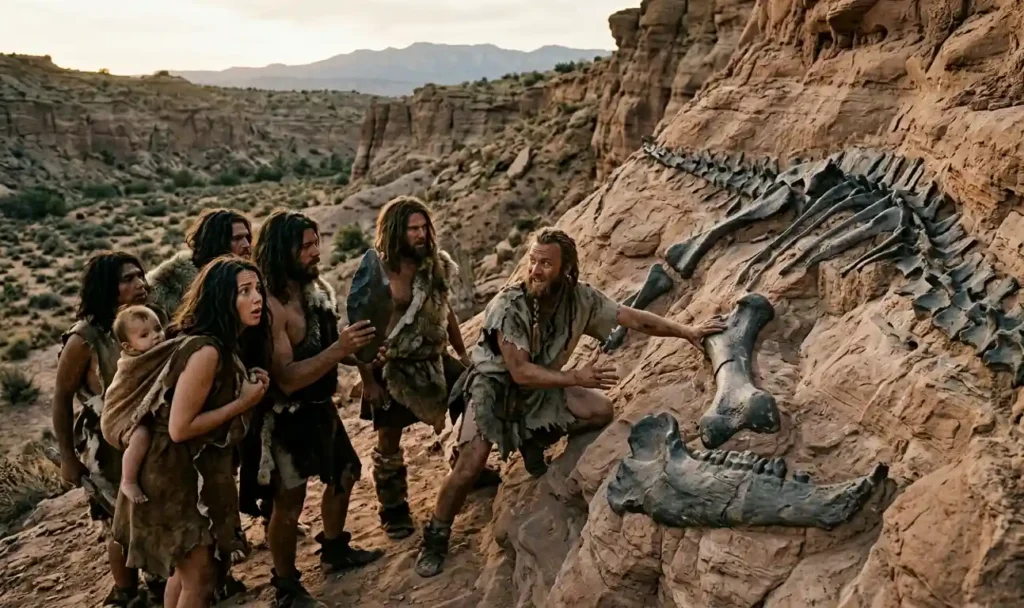
I want to give proper credit to another piece of the explanation that I think contributes to specific dragon traditions, even if it can’t carry the full weight of the universality question.
The paleontologist and folklorist Adrienne Mayor has made a compelling case that many specific dragon traditions were shaped by encounters with large fossil bones.
The evidence is suggestive in several traditions:
- Gobi Desert Protoceratops fossils abundant along ancient Silk Road trade routes have been proposed as the origin of griffin mythology, and their dragon-adjacent form is striking
- Large sauropod vertebrae found in China would have been interpreted as dragon bones by people with no framework for dinosaurs
- Plesiosaur and mosasaur fossils in European chalk deposits look exactly like sea serpent remains to anyone who doesn’t know what a marine reptile is
Fossil discovery doesn’t explain the universality. There aren’t relevant fossils everywhere dragons appear. But it helps explain why some traditions built such specific and detailed dragon mythology on the biological substrate. Finding the bones makes the living creature feel more real.
What Each Culture Does with its Dragon
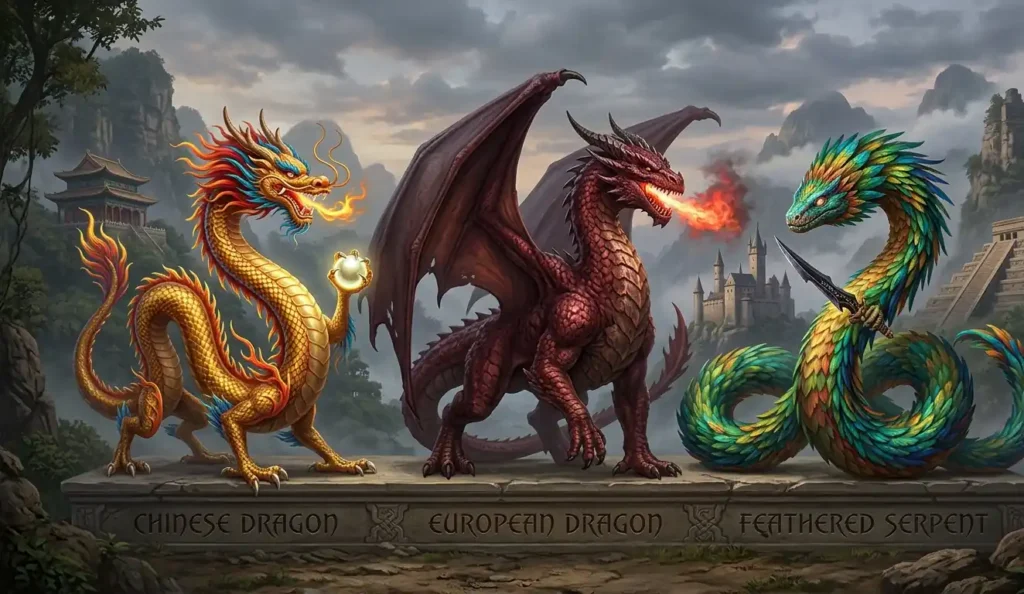
Once you understand why every culture has a dragon, the cultural variation becomes the interesting question. And the variation tells you something specific about each tradition’s needs and values.
When You Need Rain: The Benevolent Dragon
The East Asian traditions, China, Japan, Korea, and Vietnam, all produce benevolent dragons. The Long controls water. The Dragon Kings govern the seas and the rain. The Imugi of Korean mythology aspires to become a true dragon by catching a heavenly pearl.
These are agricultural civilizations whose survival depends on monsoon rainfall arriving at the right time in the right quantity. The culture that most needs a benevolent water-controlling cosmic power will produce a dragon tradition that makes the greatest supernatural figure into exactly that.
The biological fear substrate is still there. The Long is vast, cosmologically powerful, not to be trifled with. But the cultural elaboration redirects that power toward cooperation and beneficence.
Want to understand the Chinese Heavenly Court clearly? Read my complete guide here
When You Need a Hero: The Adversarial Dragon
The European, Greek, and Norse traditions produce adversarial dragons. They’re obstacles. They hoard gold, demand sacrifices, burn villages. They exist to be defeated by exceptional individuals.
The Indo-European dragon-slaying myth structure appears in Sanskrit (Indra slaying Vritra), Greek (Apollo slaying Python, Zeus defeating Typhon), Norse (Thor and Jormungandr), and Old English (Beowulf’s wyrm). These traditions needed the cosmic power to be something that heroism is measured against, the adversary whose defeat proves the hero’s worth.
When You Need a Creator: The Cosmogonic Dragon
The Aboriginal Rainbow Serpent and Mesoamerican Quetzalcoatl both make the great serpentine being into a creator figure. The Rainbow Serpent shaped the landscape. Quetzalcoatl made the human race.
This is, I think, the most philosophically sophisticated use of the figure. The thing that activates the deepest fear responses becomes the source of existence itself. What you’re most wired to fear is the thing that made you.
The Fascination Problem: Why We Can’t Look Away
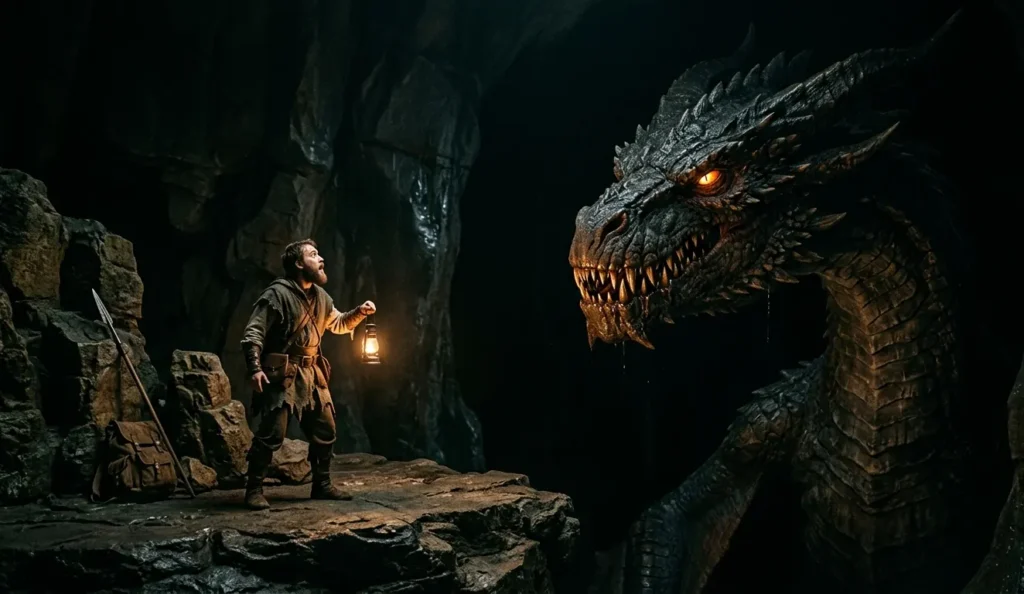
There’s one more piece of the explanation I want to address, because it’s the part that I find most personally interesting.
Dragon mythology isn’t just about fear. It’s always about fascination too. Every tradition that produces a dragon also produces stories about heroes who seek dragons, sages who befriend them, emperors who claim descent from them. Nobody just runs from the dragon.
This isn’t a paradox. It follows directly from the evolutionary mechanism.
The predator-detection system doesn’t produce a simple flee response. It produces a complex response that includes sustained monitoring because understanding a predator’s behavior is adaptive, and you can’t understand behavior you’re not watching. The impulse to track the threat is as strong as the impulse to flee it.
This dual response of fear and fascination simultaneously is the emotional signature of every great dragon mythology. The dragon is terrifying and magnificent. It repels and attracts in equal measure. Every culture that produces one also produces a tradition of engaging with it, not just avoiding it.
That’s not a cultural decision. It’s a biological one. And it’s why every dragon mythology in the world has heroes in it, not just victims.
Frequently Asked Questions
Did dragons ever really exist?
Not as the fire breathing, flying creatures of mythology. But the animals that shaped the dragon archetype were very real. Large serpents, raptors, and predators triggered deep survival fears in our ancestors. In that sense, dragons exist in the human nervous system as a composite of ancient predator instincts.
Why do Eastern and Western dragons look so different?
The biological foundation is the same, but cultures shaped dragons for different symbolic roles. Eastern traditions emphasized serpentine, water linked, and benevolent qualities because dragons represented cosmic balance and rainfall. Western dragon traditions emphasized fire, violence, and destruction because dragons served as enemies to conquer. Same underlying archetype, different cultural priorities.
Isn’t the “predator hypothesis” just a theory?
Yes, and that distinction matters. Fear of serpents, raptors, and large predators is well documented in humans and other primates. The idea that dragons emerged by combining those ancient threat patterns is compelling and fits the cross cultural evidence, but it remains a hypothesis rather than a proven scientific conclusion.
What about the fossil explanation?
I think the fossil hypothesis contributes to specific dragon traditions, particularly in regions with accessible large fossil deposits along established trade routes. But it can’t explain the universality, because the relevant fossils aren’t found everywhere dragons appear. It’s a contributing factor in some traditions rather than the primary explanation.
Is the dragon always a reptile?
In almost every tradition, yes, the reptilian or serpentine quality is the most consistent visual feature of dragon figures worldwide. The Rainbow Serpent is purely serpentine. The Long has the scales of a fish and the body of a serpent. Even the more mammalian-looking European dragon retains its scales. The serpentine quality is the most deeply-wired of the three predator-detection triggers, which is probably why it’s the most consistently preserved across traditions.
Final Thoughts
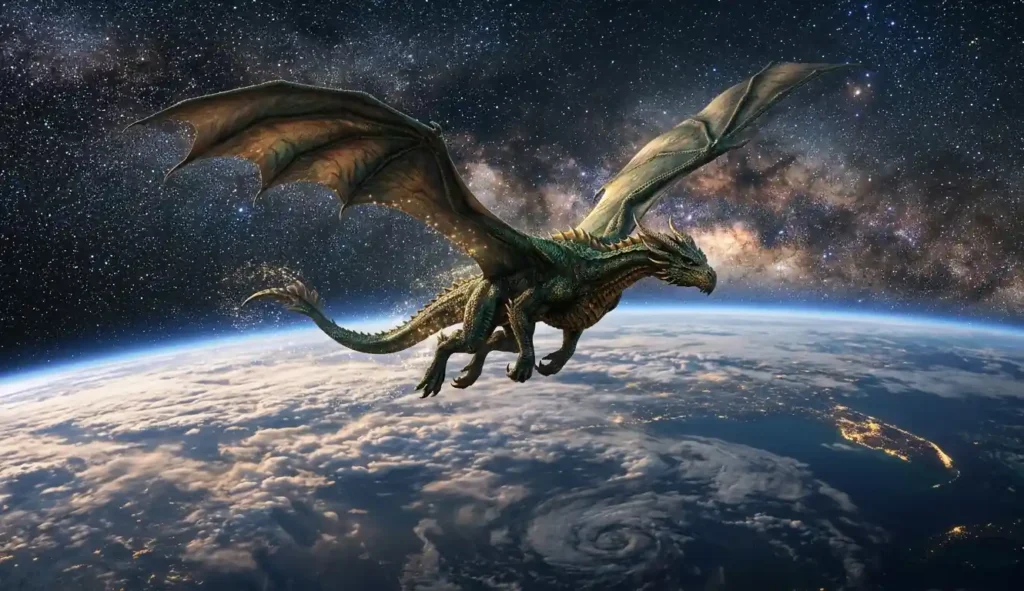
Twenty years of studying mythology has brought me to a place where I’m deeply suspicious of simple explanations for cultural universals. When something appears everywhere, in traditions with no contact, the explanation has to be something universal about human beings, not something particular about any specific culture.
The dragon is everywhere because of what human beings are. We’re primates who evolved in environments with large serpents, large raptors, and large predatory mammals. We carry the neural architecture shaped by millions of years of encounters with those threats. And when we reach for a figure to represent maximum power, maximum danger, maximum cosmic significance, that architecture points us toward the same composite form, the one that combines all three threat signatures in a single impossible creature.
Of course, sometimes I do imagine a more fantastical scenario, but that is a story for another time.
What’s remarkable isn’t that every culture has a dragon. What’s remarkable is what each culture does with it. The Chinese rain-bringer and the Norse world-encircler and the Aboriginal landscape creator and the Greek hero-challenger are all built on the same biological foundation, shaped by millions of years of primate evolution, elaborated into something completely different by the specific needs and values of each tradition.
The dragon is where biology and culture meet. And that intersection, in twenty years of following it, has never stopped being one of the most interesting places in mythology.
Related Articles
- Dragon Mythology: How Dragons Are Depicted Across Cultures
- Qinglong: Azure Dragon Symbolism, Myths & Sacred Meaning
- Western Dragon vs Eastern Dragon [Myth, Power & Origin]
- Loong: Chinese Dragon Myths, Symbolism & Sacred Power
- 11 Chinese Dragon Types & the Legends Behind Their Powers
- 9 Eastern Dragon Myths That Sound Too Strange to Be True
- 9 Chinese Dragon Colors & What Each One Means in Mythology
Written by Batin Khan | Mythology and philosophy reader across world cultures (20 years), Cultivation novels reader for the past 10 years | Specialist in Xianxia, Eastern and Western mythological traditions, and fantasy worldbuilding