
 By
By Quick Takeaways:
- Jianghu (江湖, literally “rivers and lakes”) is the name for the parallel society of martial artists, wanderers, outlaws, monks, and merchants that operates outside the official imperial order in wuxia fiction
- It’s not a place, it’s a social world with its own laws, hierarchy, ethics, and currency of honor and reputation that exists alongside and often in tension with imperial government
- Entering the jianghu is a life-altering commitment, and most wuxia novels are stories about what that commitment means and what it costs
- The Jianghu’s internal code, the Xia ethics of loyalty, chivalry, and the honoring of debts, is the genre’s moral framework, and violations of that code drive most wuxia conflicts
- Jin Yong and Gu Long are the two great architects of the Jianghu as a literary world, and understanding their different approaches illuminates everything interesting about wuxia as a genre
If you’ve read more than one wuxia novel, you’ve encountered the word Jianghu. Characters enter it, are exiled from it, are bound by its rules, betray its codes, and spend entire novels navigating its politics. It’s as constant a presence in wuxia fiction as the cultivation system is in xianxia.
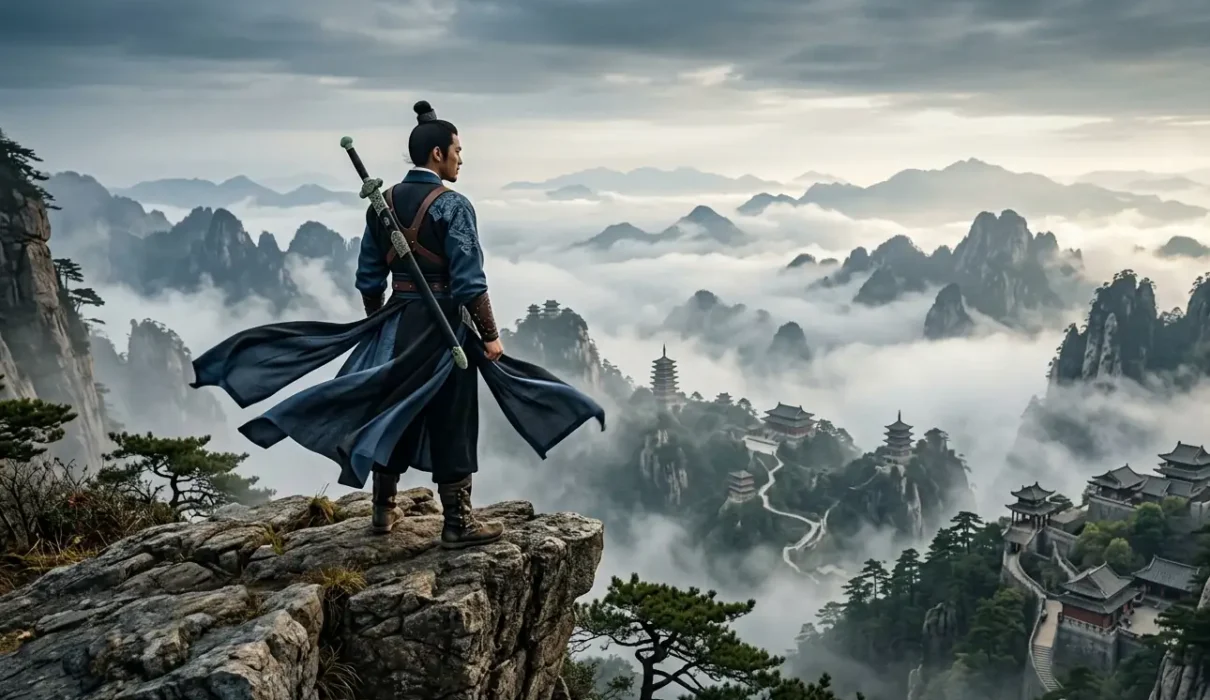
But Jianghu is harder to explain than a cultivation system, because it’s not a mechanism, it’s a world. A social world, specifically. One with its own geography, hierarchy, ethics, currency, and way of life that sits alongside the official imperial order without quite belonging to it.
After years of reading wuxia alongside Xianxia, I’ve come to think Jianghu is the single concept that makes wuxia work as a genre and the one that most needs proper explanation for readers coming to it fresh.
What is Jianghu Meaning
The characters are 江湖 – jiāng hú, meaning “rivers and lakes.”
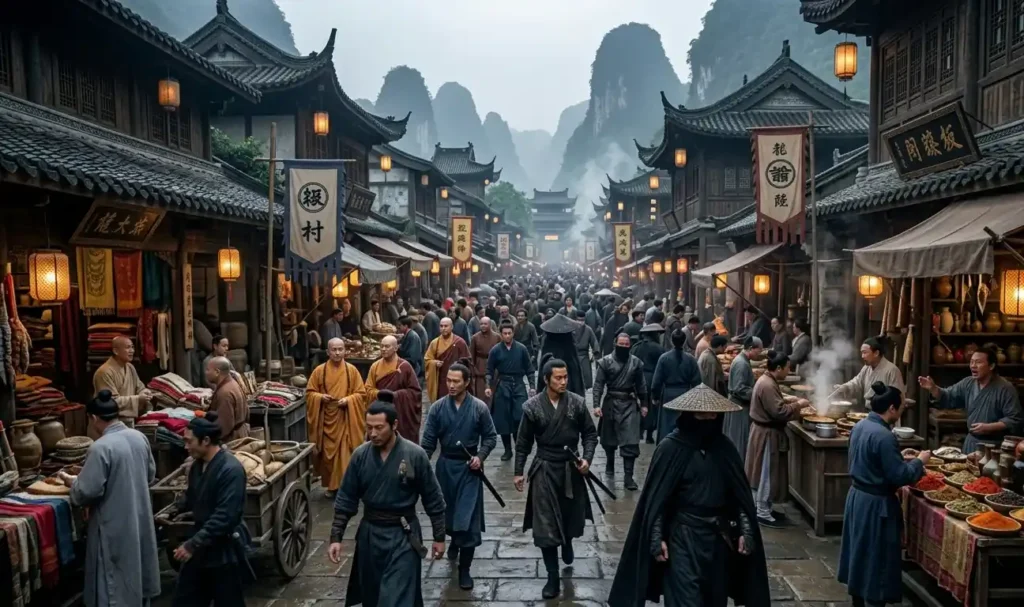
That’s the literal translation, and it’s genuinely where the concept comes from. In early Chinese history, the phrase described the network of waterways, river towns, and lake regions of southern China, places outside the centers of imperial power, where merchants, fishermen, wanderers, refugees, and those who preferred to avoid official attention gathered and moved.
The geography created the sociology. Rivers and lakes meant mobility. Mobility meant freedom from the land-tied obligations of peasant life. Freedom from official notice meant the development of alternative social structures, networks of mutual obligation, informal hierarchies, and codes of conduct that didn’t derive their authority from the imperial state.
By the time the phrase entered literary usage, jiang hu had already acquired its extended meaning, not just the physical waterways but the entire social world of people who operated outside official society. Wanderers, martial artists, monks, entertainers, merchants, brigands, and anyone else whose life took them along the rivers and lakes rather than in the settled, hierarchical world of gentry and officials.
The evolution from literal to metaphorical is gradual and, honestly, one of the more satisfying examples of how geography shapes culture.
How Jianghu Became a Concept
The jiang hu, as a literary and social concept, crystallized during several periods of Chinese history when the tension between official order and unofficial freedom was particularly acute.
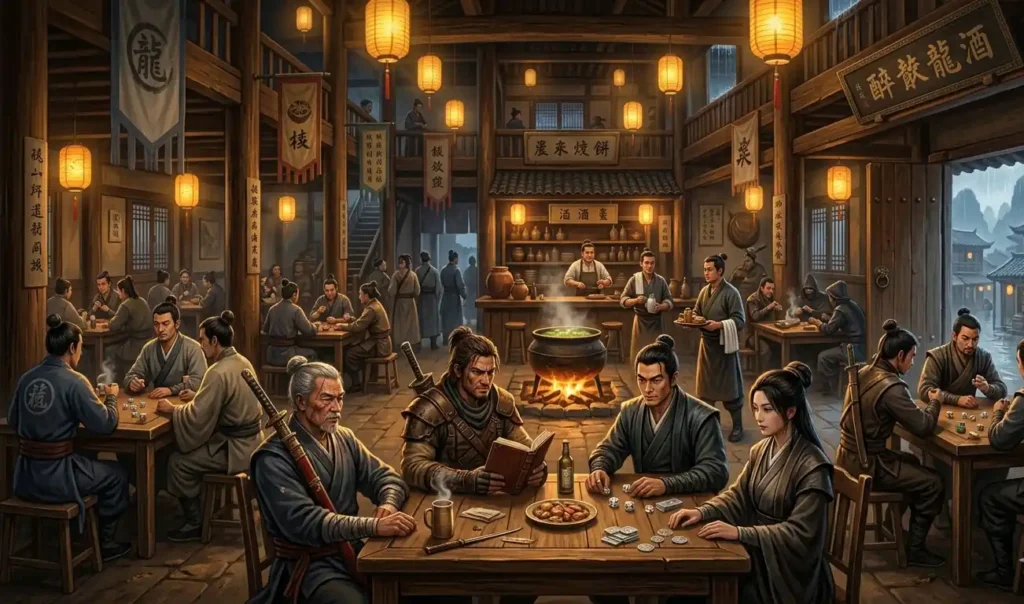
The Song Dynasty (960–1279 CE) is probably the most important historical context for the jianghu’s development as a social concept. The Song period saw the flourishing of popular literature, urban entertainment culture, and the storytelling traditions that would eventually produce wuxia fiction. The professional storytellers of Song Dynasty city markets told tales of wandering heroes, outlaws, and martial artists, and the world those heroes inhabited was the Jianghu.
The outlaw tradition is central to understanding the jianghu. The great Chinese outlaw narrative Water Margin (水滸傳, also known as Outlaws of the Marsh), written in the 14th century, is essentially an epic of 108 heroes who operate outside official society, who have their own hierarchy and code, and whose relationship with the imperial order is the source of constant dramatic tension. Water Margin is one of the foundational texts of Chinese popular literature, and its influence on wuxia fiction is direct and pervasive.
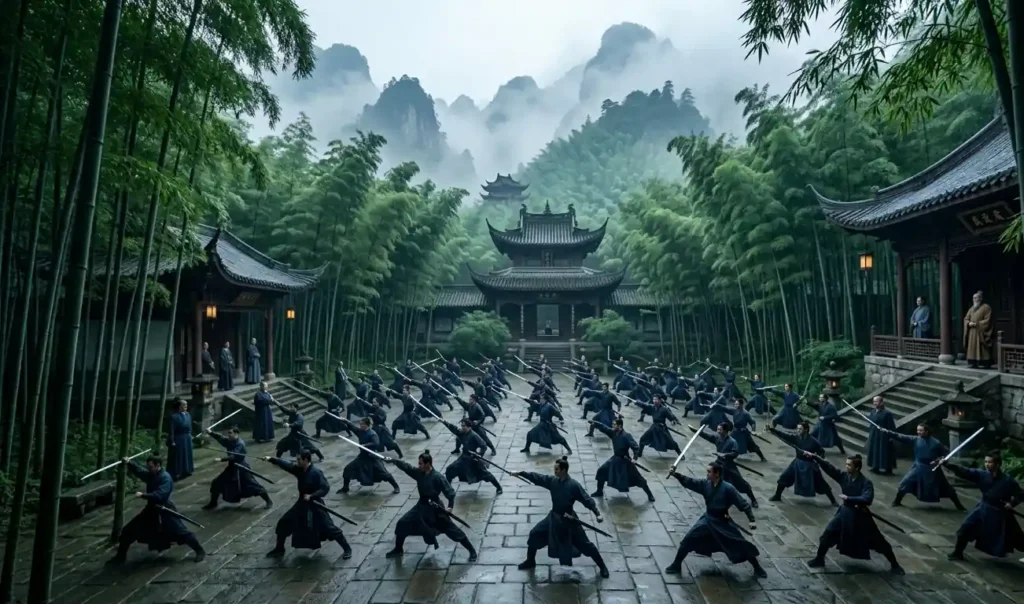
The martial arts culture that developed alongside these literary traditions gave the jianghu its specific physical dimension. Martial arts schools, training lineages, and the network of practitioners who moved between them created a real social infrastructure that the fictional jianghu both reflected and elaborated.
A martial artist’s identity was inseparable from their school affiliation, their teacher’s reputation, and their own standing in the martial arts community, the wulin, or martial forest, that forms the Jianghu’s most specific institutional expression.
The Structure of the Martial World
It isn’t a flat, undifferentiated world of wandering heroes. It has an informal, contested, and constantly shifting structure, but structure nonetheless. Understanding it is essential for making sense of wuxia plots.
The Wulin: The Martial Forest
The wulin (武林, “martial forest”) is the jianghu’s most specifically martial component, the community of martial artists and their organisations. If the jianghu is the entire parallel society, the wulin is its fighting class. Most wuxia protagonists are wulin members, and most wuxia conflicts are wulin conflicts.
The wulin has its own informal hierarchy based on:
- Martial skill: The most fundamental currency. A warrior of sufficient skill commands respect regardless of other status markers.
- Seniority and lineage: Whose student you are matters enormously. Lineage traces martial arts transmission the way aristocracy traces bloodlines.
- Reputation: What you’ve done, who you’ve defeated, whether you’ve honoured your debts and kept your word.
- Sect affiliation: Which school or organisation you belong to, and where that organisation sits in the wulin hierarchy.
The Major Factions
Every wuxia novel has its own specific world geography, but certain types of faction appear consistently:
The great orthodox sects – organizations like the Shaolin Temple and Wudang Sect in Jin Yong’s novels represent the “righteous” martial world. They’re powerful, historically significant, and self-appointed guardians of wulin morality.
The heterodox or demonic sects – organizations that operate outside orthodox wulin morality, often with different ethical frameworks, secret practices, or power structures that the orthodox world finds threatening.
The beggar clans – a jianghu institution I find genuinely fascinating. In Jin Yong’s world, the Beggar Clan is the largest single organization in the jianghu, its membership comprising the wandering poor across the entire country. Information networks, mutual aid, and a surprisingly sophisticated internal hierarchy make the Beggar Clan a recurring structural element in wuxia fiction.
The independent wanderers – heroes (and villains) who belong to no organization, operating on personal ability and reputation alone. These are often the most dramatically interesting figures, because they navigate entirely through personal code rather than institutional backing.
The Hierarchy in Practice
The hierarchy isn’t fixed, it’s contested, renegotiated, and occasionally turned entirely upside down by the emergence of a new dominant force.
This is actually one of wuxia’s most reliable plot engines. The contest for supremacy in the jianghu. Which sect leads the righteous alliance? Who commands the demonic world? Can a lone wanderer overturn the established order through sheer ability? drives the overarching plots of most major wuxia novels.
The Code of the Wuxia World
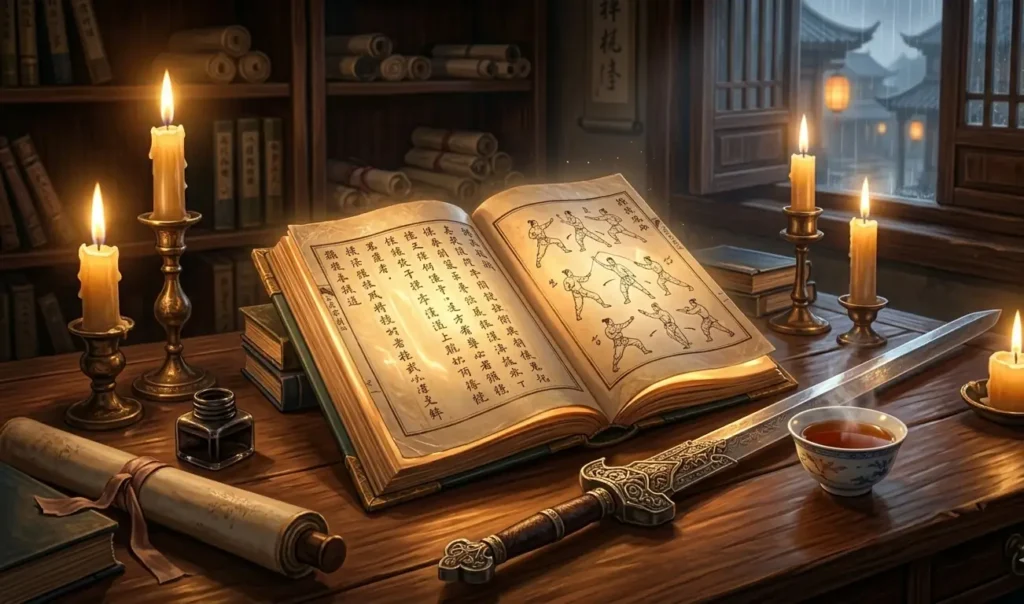
If the jianghu’s structure is what makes it a world, its code is what makes it interesting. The ethics of the jianghu are what distinguish wuxia from simple martial arts action fiction.
Xia: The Chivalric Ideal
The word Xia in wuxia roughly translates as “chivalrous hero,” but the translation loses the concept’s specific weight. Xia describes a person who uses their martial ability in the service of justice, who honors their word, who defends the weak, and who operates by a personal ethical code that may sometimes conflict with official law.
The Xia ideal is the highest expression. A true Xia is:
- Loyal to their friends, teachers, and sworn brothers
- Honourable in keeping commitments and acknowledging debts
- Just in defending those who cannot defend themselves
- Courageous in facing threats regardless of personal risk
- Free from the corruption of official power or pure self-interest
This is the ethical framework that separates wuxia protagonists from mere criminals or mercenaries. They fight, they kill, they operate outside the law, but they do so according to a code that the narrative endorses even when official society doesn’t.
The Debt System
One of the Jianghu’s most structurally important ethical features is the debt system, the obligation created by significant acts of aid, rescue, or kindness.
In jianghu culture, a life saved creates a life debt. A significant favor creates an obligation. These debts are real, binding, and sometimes last for generations. They’re not just social niceties. They’re the jianghu’s version of contract law, carrying the same binding force that official legal contracts carry in the imperial world.
This creates enormous dramatic potential. Debts can be honored at terrible personal cost. Debts can be exploited. Debts can conflict, what happens when honoring one debt requires violating another? Some of wuxia’s most agonizing moral dilemmas emerge from debt conflicts.
Face, Reputation, and the Public Nature
The wuxia world operates largely in public. Challenges are issued openly. Victories and defeats are witnessed. Promises are made before witnesses.
This means face (面子, miànzi) and reputation (名聲, míngshēng) are concrete social currencies. A warrior who breaks their word, who retreats dishonorably, who violates the code publicly, loses something real. The social credibility that makes everything else in the jianghu possible.
This public accountability is what makes the world feel like a real society rather than a setting for individual heroics. Every action has witnesses. Every breach of code has consequences. The community is always watching.
Jianghu Versus the Imperial World
The relationship between the jianghu and the official imperial order is wuxia’s most fundamental structural tension, and it’s what gives the genre its political dimension.
The jianghu is, by definition, a world that operates outside official governance. Its hierarchy isn’t appointed by the emperor. Its laws aren’t codified by officials. Its justice is administered by martial ability and communal consensus rather than by magistrates and courts.
This creates a persistent, productive tension:
The jianghu claims the right to self-governance. It has its own leadership, its own code, its own methods of enforcing that code. It doesn’t recognise the imperial government’s authority within its boundaries.
The imperial government claims authority over everyone. Wandering warriors who kill people, even criminals, are still killers in the eyes of the law. Organisations with hierarchies and armies are potential threats to imperial stability.
Most wuxia protagonists live in this tension. They operate by jianghu code rather than imperial law. This means they’re frequently in conflict with official authority, accused of crimes by officials who don’t recognize the Jianghu justice that motivated the act.
The best wuxia stories don’t resolve this tension cleanly. They sit in it, examining what it means to be a person of honor in a world where honor and law don’t always agree.
Jin Yong’s The Smiling Proud Wanderer is the most explicit exploration of this dynamic I’ve encountered in a novel about what happens when the jianghu’s power politics mirror the imperial court’s power politics so exactly that the distinction between them becomes meaningless. It’s a devastating piece of political allegory, and it only works because the jianghu-versus-official tension is so carefully established.
The Great Stories
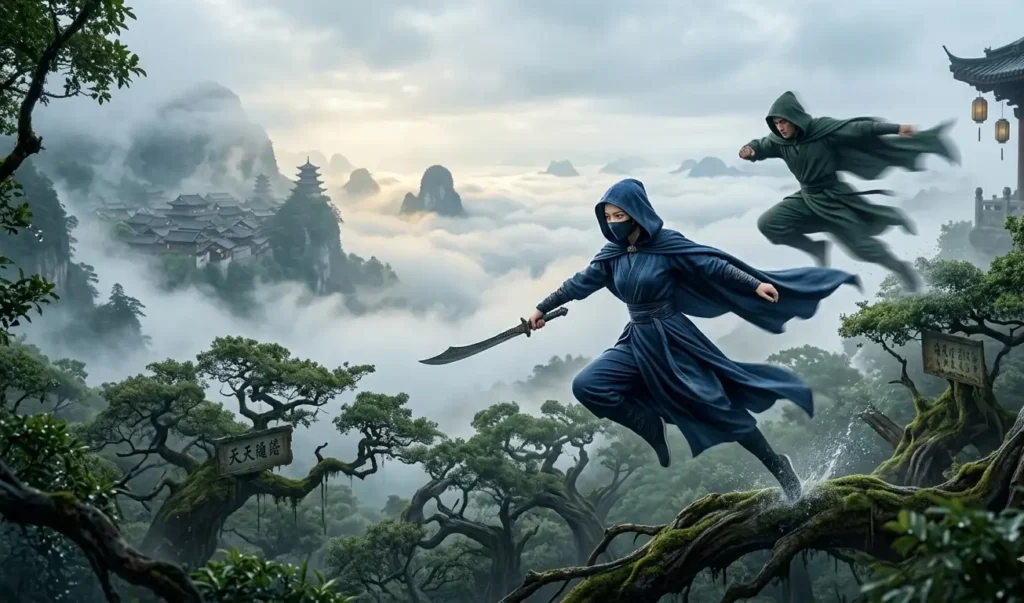
Two authors above all others shaped the literary jianghu: Jin Yong (金庸, also known as Louis Cha) and Gu Long (古龍). Understanding their different approaches is the quickest way to understand the range of what wuxia fiction can do.
Jin Yong’s Jianghu: History, Community, and Moral Weight
Jin Yong’s jianghu is vast, historically grounded, and morally serious. His novels are set in specific historical periods, the Song Dynasty, the Ming Dynasty, the early Qing Dynasty, and the Jianghu’s politics intersect with actual historical events in ways that give the martial world real historical weight.
His protagonists are almost always drawn into jianghu politics larger than themselves, and the novels are as much about the community of the jianghu, its factions, its traditions, its collective moral struggles, as they are about individual heroes.
The Legend of Condor Heroes trilogy is the most elaborate expression of this. A world shaped by the Mongol invasion, by the competing loyalties of different sects, by the question of what martial honor means in a world where the nation is under existential threat. The Jianghu here isn’t the background. It’s the lens through which Chinese history and moral philosophy are examined.
Gu Long’s Jianghu: Loneliness, Existential Weight, and Style
Gu Long’s world is less historically grounded and more existentially intense. His heroes are often loners operating in a Jianghu that feels darker, more morally ambiguous, and more psychologically weighted than Jin Yong’s.
Where Jin Yong’s protagonists are embedded in communities and traditions, Gu Long’s tend toward the isolated figure who must work out their own moral code in a jianghu that doesn’t always reward conventional virtue.
His prose style is also dramatically different, spare, fragmented, cinematic in a way that influenced the Hong Kong action film tradition directly. Chu Liu Xiang and The Eleventh Son demonstrate a world that’s as much about mood and psychological depth as about martial arts choreography.
The contrast between Jin Yong’s dense, historically rooted jianghu and Gu Long’s sparse, existentially intense jianghu defines the range of what wuxia fiction can be.
Why it Resonates
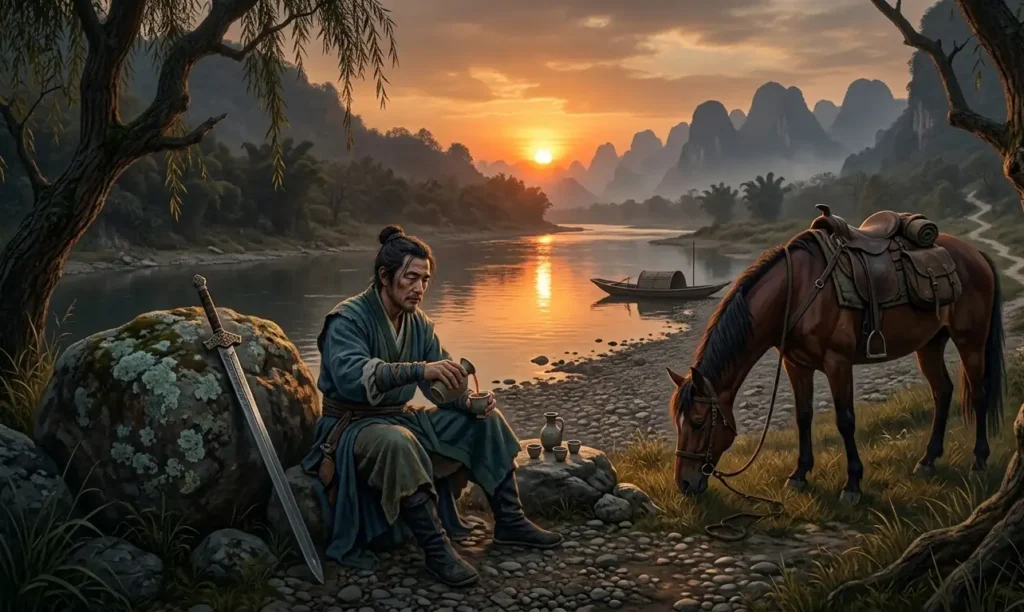
I’ve spent ten years reading wuxia alongside xianxia, and the question I keep returning to is why the Jianghu is such a durable fictional world.
Part of the answer is the freedom it represents. The jianghu is a world where your standing is determined by your abilities and your code, not by your birth, your connections, or your official position. For readers in any society where birth and connection feel like the real determinants of success, the jianghu’s meritocracy of martial skill and personal honour is powerfully appealing.
Part of the answer is the specificity of its ethical world. It has real rules, with real consequences. This makes its ethical dilemmas genuine rather than abstract. When a character faces a debt conflict or a choice between Jianghu code and official law, the stakes are specific and comprehensible.
And part of the answer is the particular quality of freedom the martial world offers, not freedom from all obligation, but freedom from the obligations of an unjust official order, in exchange for the obligations of a personal code of honor. That’s a very specific and very appealing trade.
The jianghu says you can live outside the corrupt official world if you’re willing to live by a harder, more personal, more demanding code. Most people, reading that, find the offer attractive even when the protagonists who take it suffer enormously for doing so.
Frequently Asked Questions
What’s the difference between jianghu and wulin?
The jianghu is the broader world outside official society, including wanderers, merchants, monks, entertainers, and martial artists. The wulin is the martial arts community within it. Everyone in the wulin belongs to the jianghu, but not everyone in the jianghu is part of the wulin.
Is the jianghu a real historical institution?
It existed in reality through networks of wanderers, martial artists, secret societies, and others outside official society. But the fully developed world with its own hierarchy, codes, and culture is largely a literary creation shaped by modern wuxia fiction. The historical and fictional jianghu continuously influence each other.
What does “entering the jianghu” mean?
It means committing to the martial world and its code, accepting the risks, obligations, and freedoms of martial life. In wuxia stories, entering the jianghu is usually irreversible. Characters cannot easily return to ordinary life because the debts, enemies, and reputations they gain continue to follow them.
Who are the most important wuxia authors for understanding the jianghu?
Jin Yong and Gu Long are the two essential starting points. For Jin Yong, The Legend of Condor Heroes is the most elaborate jianghu world and The Smiling Proud Wanderer is the most politically sophisticated. For Gu Long, Chu Liu Xiang showcases his distinctive style. Liang Yusheng is the third major classical wuxia author worth knowing.
How is the jianghu different from xianxia’s cultivation world?
The cultivation world of Xianxia has a cultivation system, qi, realms, spiritual roots, and immortality as the ultimate goal. The jianghu operates within mortal human limits. Its hierarchy is based on martial skill and reputation rather than cultivation realm. Its ethics are horizontal (the debts and codes between equals) rather than the cultivation world’s vertical hierarchy of power. Wuxia is fundamentally human-scaled in a way xianxia usually isn’t.
Final Thoughts
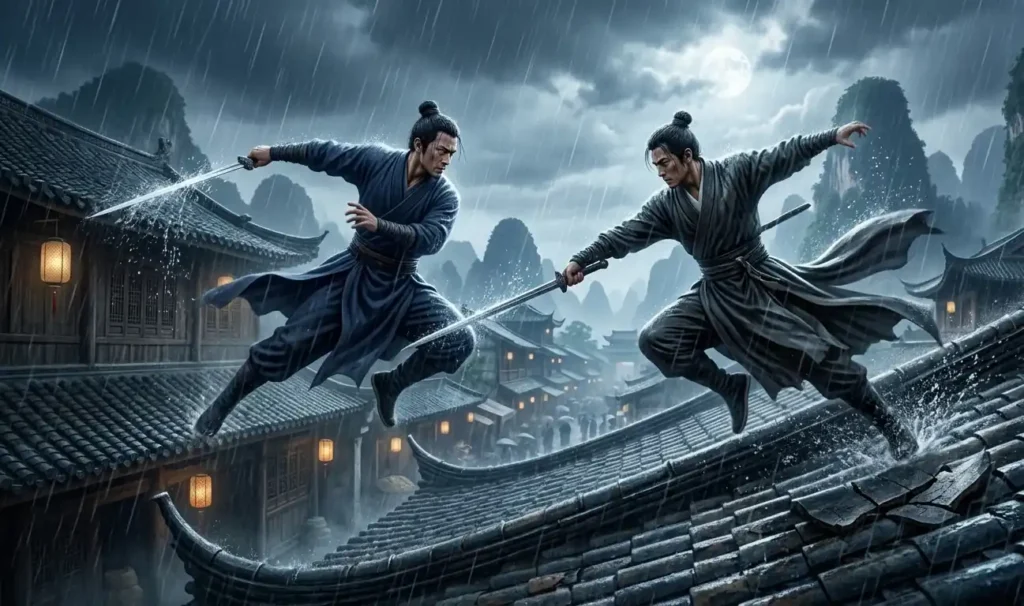
Every wuxia novel, every wuxia film, every wuxia story is built on the jianghu, the parallel martial world with its own laws, its own hierarchy, its own ethics, and its own way of measuring what a person is worth.
Understanding the jianghu properly transforms the experience of reading wuxia. The faction conflicts that drive the plot stop being arbitrary and start being expressions of the jianghu’s internal power dynamics. The ethical dilemmas the protagonist faces stop being convenient plot complications and start being genuine expressions of what it costs to live by a code in a world that doesn’t always reward it.
The jianghu isn’t the background. It’s the argument the genre is making about freedom, about honor, about what it means to choose a harder and more personal ethical code over the easier, more comfortable compliance with official order.
The jianghu is one of fiction’s most durable invented social worlds precisely because it’s built on something real: the persistent human desire to live by a code of your own making, in a community of people who share that code, outside the reach of powers you didn’t choose and don’t respect.
2 Comments