
 By
By Quick Takeaways:
- Female dragons and dragon-adjacent divine females are genuine and documented presences in classical Chinese mythology, not modern reinterpretations
- Nüwa, creator of humanity and repairer of heaven, is specifically described in classical texts as having a serpentine body, placing her within the dragon tradition
- The Dragon King’s daughters appear as fully realized mythological figures in their own right in classical literature
- Female dragon figures were largely erased from popular mythology accounts through a combination of imperial masculine symbolism and Western translation choices that stripped the dragon nature from serpentine female deities
- Recovering these figures makes the Chinese dragon tradition considerably richer and more complete
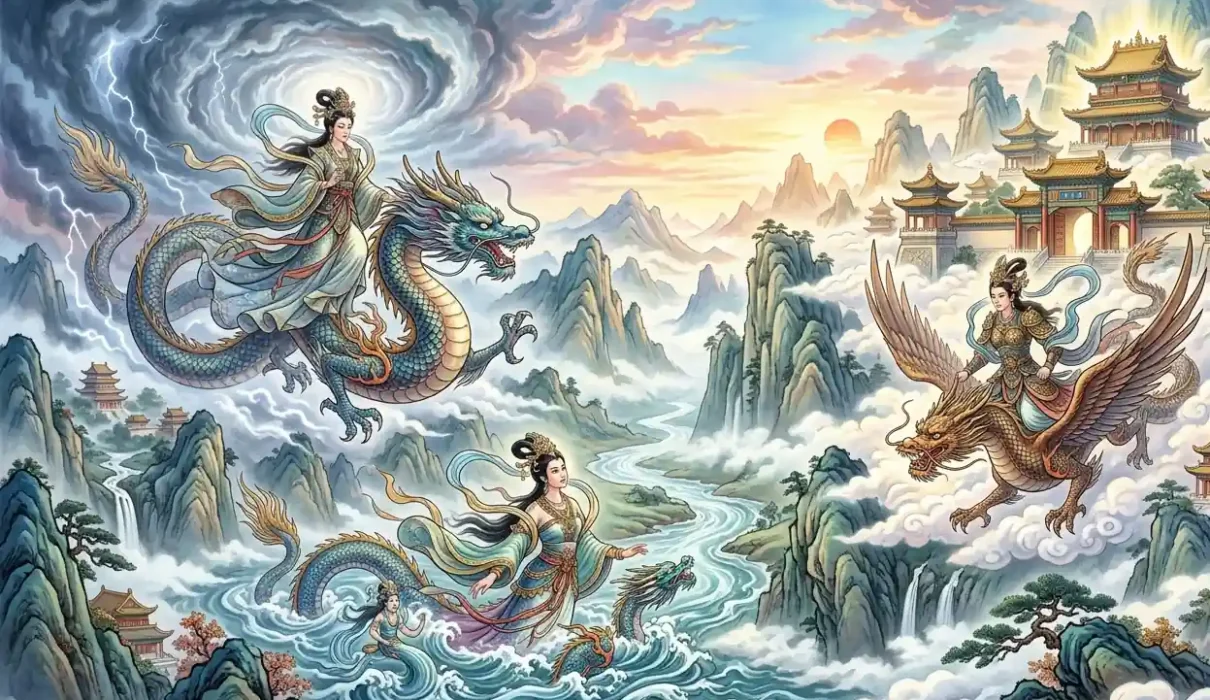
One of the recurring frustrations of studying Chinese mythology for 10 years is watching the same narrowing happen repeatedly: a tradition that was genuinely diverse gets filtered through particular lenses until only certain figures remain visible. The masculine imperial dragon is everywhere. Female dragons and serpentine female divine figures are almost nowhere in popular accounts.
This isn’t because they don’t exist in the classical sources. They’re there, well documented and genuinely significant. The erasure is a product of which stories got told in translation, which imperial period imagery dominated public consciousness, and which scholarly frameworks shaped how Western audiences encountered this tradition.
Here’s the fuller picture.
Nüwa: The Dragon Goddess Hiding in Plain Sight
Who She Actually Is
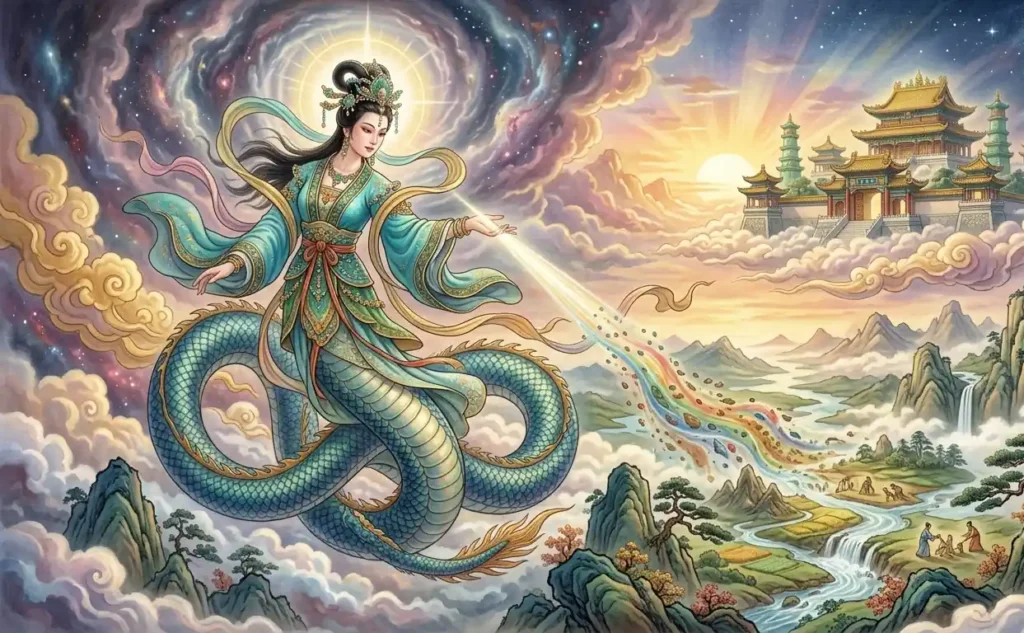
Nüwa is the most important female divine figure in classical Chinese mythology, credited with creating humanity, repairing heaven after a catastrophe nearly destroyed it, and establishing the institutions of marriage. She’s discussed constantly in Chinese mythology accounts.
What those accounts frequently omit is her body.
Classical texts are specific about Nüwa’s physical form. The Shuowen Jiezi, the Han Dynasty dictionary compiled by Xu Shen, describes Nüwa as having a human head on a serpent’s body. The Shanhaijing contains depictions and descriptions consistent with this. Multiple Han Dynasty tomb murals show Nüwa and her consort Fuxi together, both with serpentine lower bodies, their tails intertwined.
This serpentine body is the same fundamental physical characteristic that defines the Chinese Long dragon. Nüwa is not a goddess who happens to look like a dragon. Her serpentine form is her classical form, documented in the tradition’s most authoritative sources.
Why This Matters
The decision to translate and discuss Nüwa as a “goddess” rather than a “dragon goddess” or “serpent deity” strips away the most important thing about her physical identity. When Western readers encounter Nüwa as simply a creator goddess, they don’t connect her to the dragon tradition at all.
When you understand her as a serpentine divine being, the connection to the Long tradition becomes clear. She predates the masculine Dragon King tradition by a significant period. She’s a creator figure. She repairs heaven using five-colored stones, an act of cosmic restoration that places her at the highest level of cosmological significance.
The most powerful female serpentine divine figure in Chinese mythology is also accurately understood, among the most ancient and significant dragon-adjacent beings in the entire tradition.
The Dragon King’s Daughters: Figures With Their Own Mythology
Beyond supporting characters
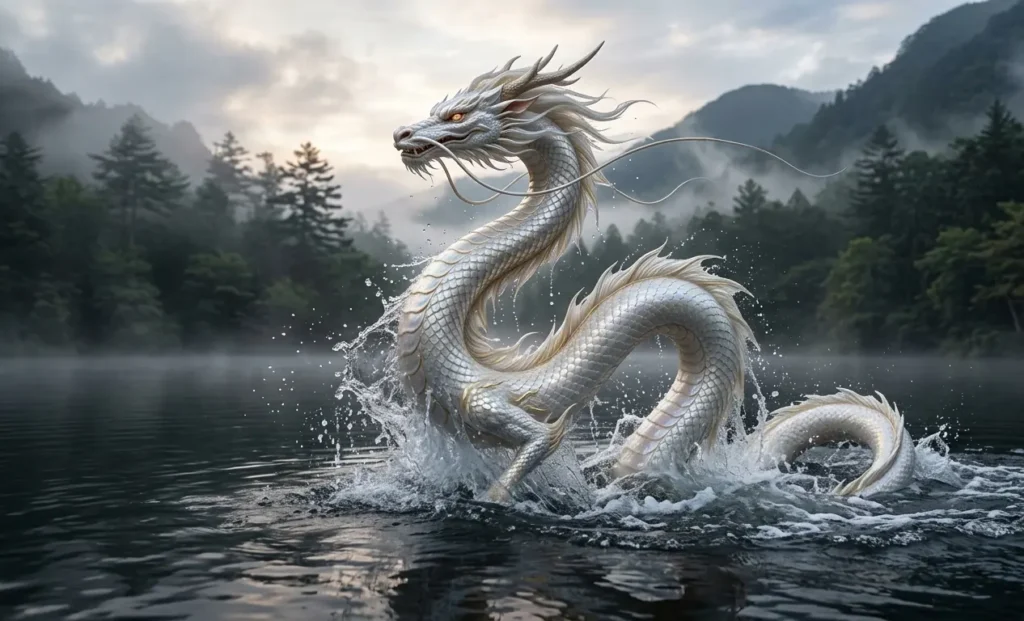
The Dragon Kings of the Four Seas are the dominant figures in popular dragon mythology. Their daughters receive considerably less attention. This is a loss, because several of the Dragon King’s daughters have their own mythological traditions that are worth knowing on their own terms.
The most significant is the figure at the center of the Liu Yi legend, one of Chinese literature’s most sustained and developed dragon daughter narratives.
The Liu Yi story
The Liu Yi Zhuan (Tale of Liu Yi), written by Li Chaowei during the Tang Dynasty, tells the story of a scholar named Liu Yi who encounters a weeping young woman on the road to Jingzhou. She asks him to deliver a letter to her father, the Dragon King of the Dongting Lake, on her behalf. She is the Dragon King’s daughter, married to a son of the River Jing’s Dragon King who treats her cruelly.
Liu Yi makes the journey to Dongting Lake, delivers the message, and witnesses the Dragon King’s response: her uncle (the Dragon King of the Qiangtang River) immediately goes to rescue her with an army of dragon soldiers.
The daughter in this story is not simply a passive figure. She’s resourceful enough to arrange her own rescue through a mortal intermediary when direct action wasn’t available to her. Her uncle’s response to her mistreatment is immediate and military.
In the story’s later versions and literary adaptations, the Dragon King’s daughter and Liu Yi are eventually married, she having revealed her full divine nature. The story became one of Chinese literature’s most reprinted and adapted narratives.
Other Dragon King Daughters
Regional Chinese folk traditions include numerous accounts of Dragon King daughters who interact with mortals in various ways: as benefactors, as objects of misguided pursuit, as figures who test human moral character, and occasionally as teachers of specific skills or knowledge.
The daughter figures in these traditions have far more narrative agency than the popular image of passive decorative daughters at the Dragon King’s court would suggest. They make choices. Their choices have consequences. Their dragon nature expresses itself in specific ways when circumstances demand it.
Read: Chinese, Japanese & Korean Dragons: How They Actually Differ
Female Dragons in the Shanhaijing
The Shanhaijing (Classic of Mountains and Seas), Chinese mythology’s most ancient compendium of supernatural beings, includes several female serpentine divine figures alongside its more famous male entries.
Nüba (the female drought deity) is described in terms that connect her to drought-causing supernatural forces associated with serpentine or dragon-adjacent beings. When she appears, the rain stops. Her presence in a region causes crop failure. The Yellow Emperor’s campaigns against Chi You involved her, and she subsequently became associated with the droughts that followed.
Regional water goddesses in the Shanhaijing and related classical texts frequently have serpentine characteristics described alongside their female divine status. The overlap between female divine water beings and serpentine form is consistent enough across these accounts to suggest a broader tradition of female dragon-adjacent water deities that the imperial-period masculine dragon tradition subsequently overshadowed.
The Empress Tradition: Female Dragon Symbolism in Imperial China
The Fenghuang and the Dragon Pair
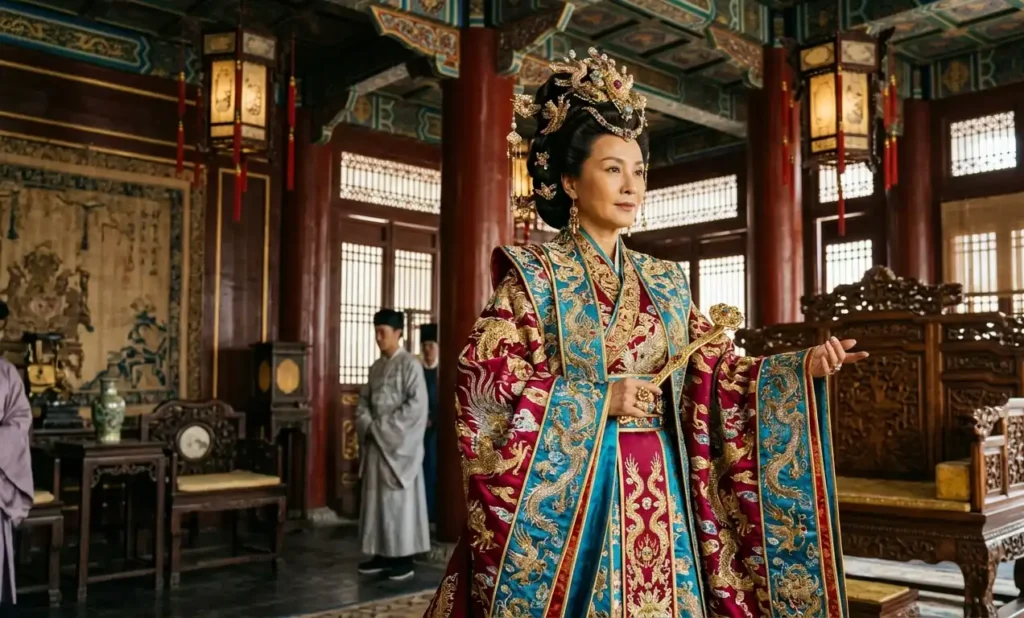
The most widely visible female dragon-adjacent figure in Chinese imperial tradition is the Fenghuang, the divine composite bird that was paired with the dragon as the empress’s cosmic symbol opposite the emperor’s dragon symbol.
The Fenghuang is not technically a dragon. But the dragon-Fenghuang pairing creates a symbolic system in which the most powerful male and female cosmic symbols are explicitly complementary. The dragon without the Fenghuang is incomplete. The Fenghuang without the dragon is incomplete. Together they constitute the cosmic whole.
This pairing structure acknowledges the necessity of the female cosmic principle even as it channels it through a non-dragon symbol. The empress’s power is real and symbolically significant. It’s expressed through the Fenghuang rather than through dragon imagery directly.
Empress Dragon Seals and Court Usage
Imperial records include examples of empresses using specific dragon imagery in their personal seals and court documents, typically with four-clawed rather than five-clawed dragons to mark the distinction from the emperor’s exclusive five-clawed form.
This usage demonstrates that female access to dragon symbolism was documented and regulated within the imperial system. The regulation itself confirms that empresses had legitimate claim to dragon-related symbolic authority, carefully differentiated from but not absent from the imperial visual vocabulary.
Why Female Dragons Became Forgotten
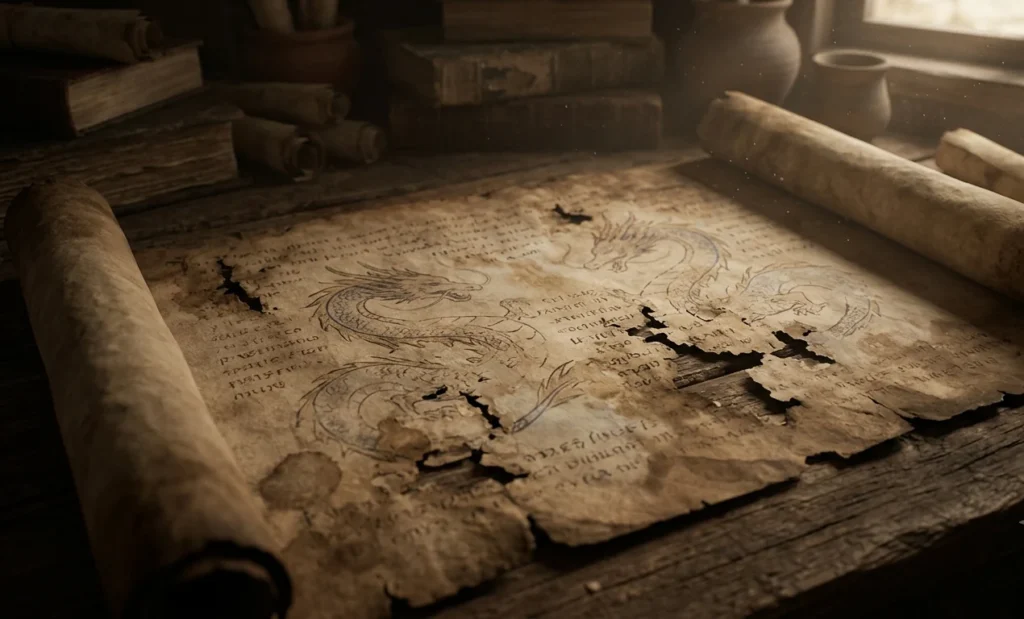
The Imperial Period’s Masculine Emphasis
The systematic association of the five-clawed imperial dragon with the emperor specifically created a visual vocabulary in which dragon imagery was overwhelmingly masculine in its most publicly visible expressions.
Imperial Chinese art produced for public spaces, for temple decoration, for diplomatic gifts and official objects, consistently foregrounded the masculine imperial dragon. Female dragon figures, which existed in regional folk traditions, in classical literary narratives, and in the older mythological record, simply received less institutional support for their transmission.
What gets reproduced becomes what’s remembered. What gets remembered becomes what’s considered part of the tradition. Female dragon figures were real and documented, but they weren’t the ones being painted on imperial robes and carved into imperial architectural programs.
The Translation Problem
Western scholarly engagement with Chinese mythology developed primarily during the 19th and early 20th centuries, a period when the masculine imperial dragon tradition was the most accessible and most extensively studied aspect of the dragon mythology.
Translators and mythographers who encountered Nüwa in classical texts consistently classified her as a “goddess” without noting the serpentine form that connects her to the dragon tradition. This translation choice, made for understandable reasons of accessibility, had lasting consequences for how Western readers understood the Chinese divine female tradition.
A Western reader who knows Nüwa as a creator goddess doesn’t look for her in dragon mythology discussions. A reader who knows her as a serpentine divine creator finds her immediately relevant to understanding the full range of Chinese dragon tradition.
The Folk Tradition gap
Female dragon figures survived more robustly in regional folk traditions than in the centrally transmitted literary and imperial traditions that dominated scholarly attention. Folk traditions are harder to document, less likely to have been translated, and more susceptible to being classified as peripheral rather than central to the tradition.
The water goddesses, the Dragon King’s daughters in regional story variants, the local female serpentine protective figures in river communities: these were genuine and living expressions of female dragon-adjacent divine presence in Chinese culture. Their relative invisibility in English language mythology accounts reflects a documentation gap rather than an absence in the tradition.
What The full Picture Looks Like
A More Complete Tradition
The Chinese dragon tradition with female figures properly included looks genuinely different from the version most people know.
It starts with Nüwa, a serpentine creator goddess of ancient origin, whose act of repairing heaven is the tradition’s most significant cosmological restoration. It includes Dragon King daughters who possess their own agency and their own mythological narratives in classical literature. It includes regional female serpentine water deities who governed the same water domains that the Dragon Kings were understood to govern at the cosmic level. And it includes the implicit female dragon presence in the empress’s symbolic complementarity to the emperor’s dragon.
None of this was invented after the fact. All of it exists in the tradition’s classical sources. The work of recovering it is the work of reading more broadly rather than reading differently.
Frequently Asked Questions
Is Nüwa really considered a dragon figure in classical Chinese mythology?
Her serpentine body is documented in multiple classical sources including the Han Dynasty dictionary Shuowen Jiezi and Han tomb murals. Whether to classify her as a dragon figure depends on definition, but her physical form places her firmly within the serpentine divine tradition that the Long dragon belongs to. Most scholarly accounts that engage with her physical description acknowledge the dragon connection.
Are there female Dragon Kings in classical tradition?
The four canonical Dragon Kings of the Four Seas are male figures in the dominant classical tradition. Female dragon figures appear primarily as Dragon King daughters and wives in the literary tradition rather than as sea sovereigns themselves. Regional folk traditions include local female water dragon figures who govern specific rivers and lakes, but these don’t have the canonical status of the Four Dragon Kings.
Why did the Dragon King daughters become more prominent in literature than in religious practice?
Literary tradition gave the Dragon King daughters narrative space to develop as characters in ways that religious ritual practice didn’t require. Ritual practice focused on petitioning the Dragon King for rain and water governance. Literary tradition was interested in the human-dragon interface, which produced the daughter-as-mediator figure in stories like Liu Yi. The two traditions tracked different aspects of the same mythology.
Why are female dragons less well known?
Many ancient stories focused on male dragon kings and rulers. As a result, female dragons received less attention in written records, even though they played important roles in various regional traditions.
Did female dragons have different appearances from male dragons?
Not always. In many stories, female dragons looked similar to male dragons, although some tales described them as more elegant or adorned with symbolic features reflecting their status.
Final Thoughts

The Chinese dragon tradition with female figures restored to visibility is a richer, more complete tradition than the one most people encounter. Nüwa repaired heaven. The Dragon King’s daughters arranged their own rescues. Regional water goddesses governed local waterways. The empress paired with the dragon as its cosmic complement.
These figures were always there. Finding them requires reading the classical sources carefully enough to see past the imperial period’s masculine emphasis and the translation choices that stripped serpentine female deities of their dragon nature.
Twenty years of studying this tradition has made me increasingly convinced that what gets called “forgotten” was usually just awaiting readers willing to look in the right places.
Related Articles
- Dragon Mythology: How Dragons Are Depicted Across Cultures
- 11 Chinese Dragon Types & the Legends Behind Their Powers
- Loong: Chinese Dragon Myths, Symbolism & Sacred Power
- 9 Chinese Dragon Colors & What Each One Means in Mythology
- Four Dragon Kings: Guardians of China’s Seas & Weather
- 9 Chinese Dragon Myths Born From Real Natural Disasters
- 9 Rare Chinese Dragon Creatures Most People Never Encounter
Written by Batin Khan | Mythology and philosophy reader across world cultures (20 years), Cultivation novels reader for the past 10 years | Specialist in Xianxia, Eastern and Western mythological traditions, and fantasy worldbuilding