
 By
By Quick Takeaways:
- Eastern dragon mythology contains specific stories that are far stranger than the general “benevolent rain-bringer” summary suggests
- Several of these myths involve surprisingly mundane interactions between dragons and humans, lawsuits, bureaucratic complaints, and personal offences
- Some involve specific physical vulnerabilities that seem almost absurd given how cosmically powerful Eastern dragons are supposed to be
- All nine are documented in classical texts or living mythological traditions. None are invented or exaggerated
- The strangeness in each case reveals something genuinely interesting about how the traditions actually understood dragon nature
Twenty years of studying mythology has produced a specific pleasure that I don’t think has a good name: the moment when a tradition you thought you understood hands you something completely unexpected.
Eastern dragon mythology does this to me regularly. I know the general framework of benevolent rain-bringers, cosmological guardians, and water sovereigns. And then I find a myth where a human successfully sues a Dragon King in a heavenly court, or where dragons are genuinely terrified of iron, and I have to read it twice to make sure I’m not misunderstanding the source.
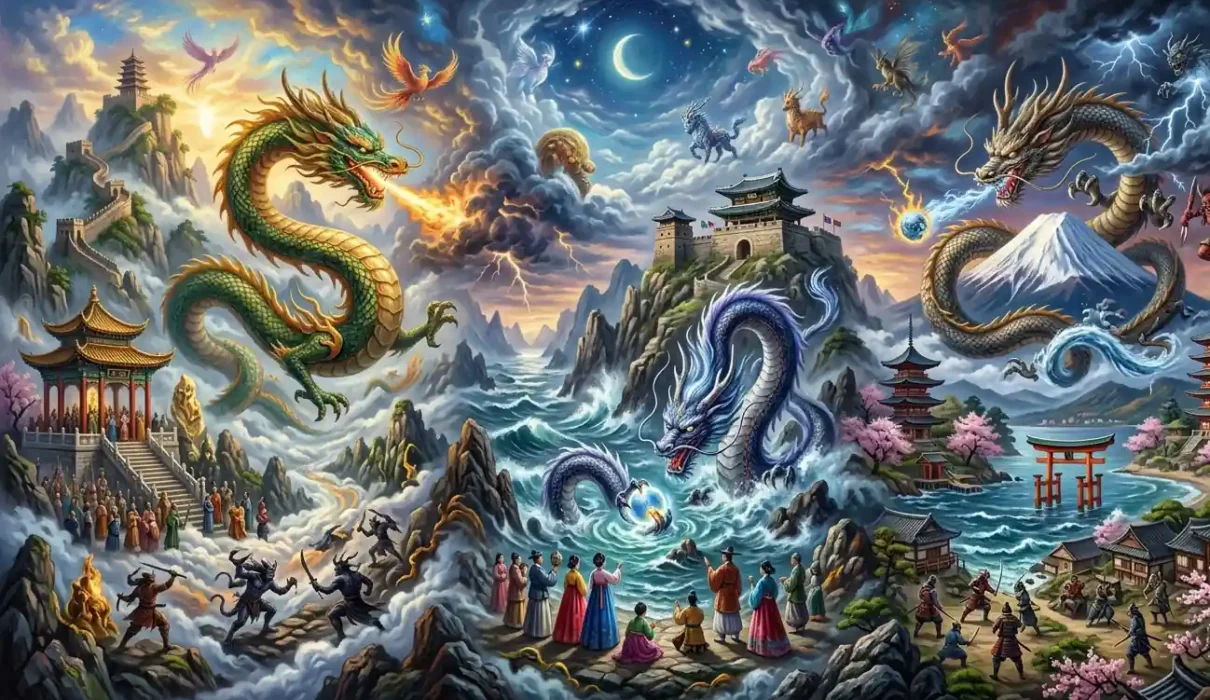
Here are nine Eastern dragon myths that gave me that experience. Each one is real. Each one is strange. And each one reveals something specific about the tradition once you dig into why it exists.
Myth 1: You Can Sue a Dragon King – And Win
The Story
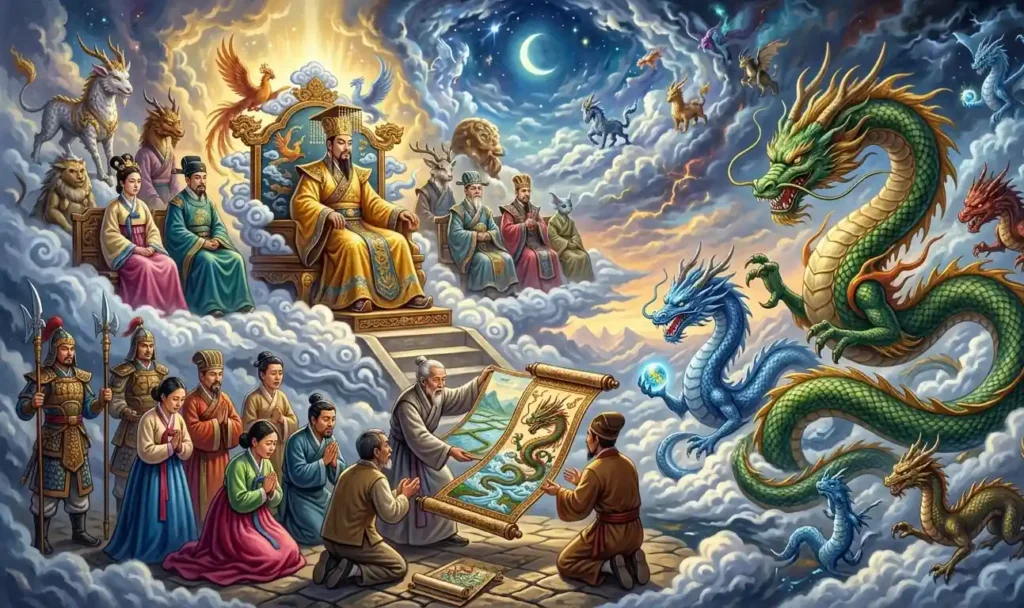
Chinese folk religious tradition includes an established legal mechanism for filing complaints against Dragon Kings when they fail their rain-governance responsibilities. During droughts, communities didn’t just pray. They could formally accuse the responsible Dragon King of dereliction of duty and take the complaint through the divine court system.
The procedure was documented and ritual: a formal accusation was written, witnesses were gathered, and the petition was submitted through the appropriate divine officials. If the Dragon King remained unresponsive after formal accusation, communities could perform rituals of deliberate disrespect, exposing the Dragon King’s temple idol to the sun to let it suffer the drought it was causing.
Why This is Real
Classical Chinese religious practice treated divine beings as bound by the same accountability structure that governed human officials. The Dragon King’s rain governance was a job responsibility, not a voluntary benevolence. Failure to perform it warranted exactly the same institutional response that a human official’s negligence would warrant.
Dragon King temple records across multiple dynasties document formal drought accusation rituals. This isn’t folk invention. It’s documented religious practice that treated cosmic accountability as a genuine legal framework.
The strange part: The most powerful beings in the cosmos could be dragged into divine court by farmers. And the tradition took this seriously.
Myth 2: Chinese Dragons Are Genuinely Afraid of Iron
The Story
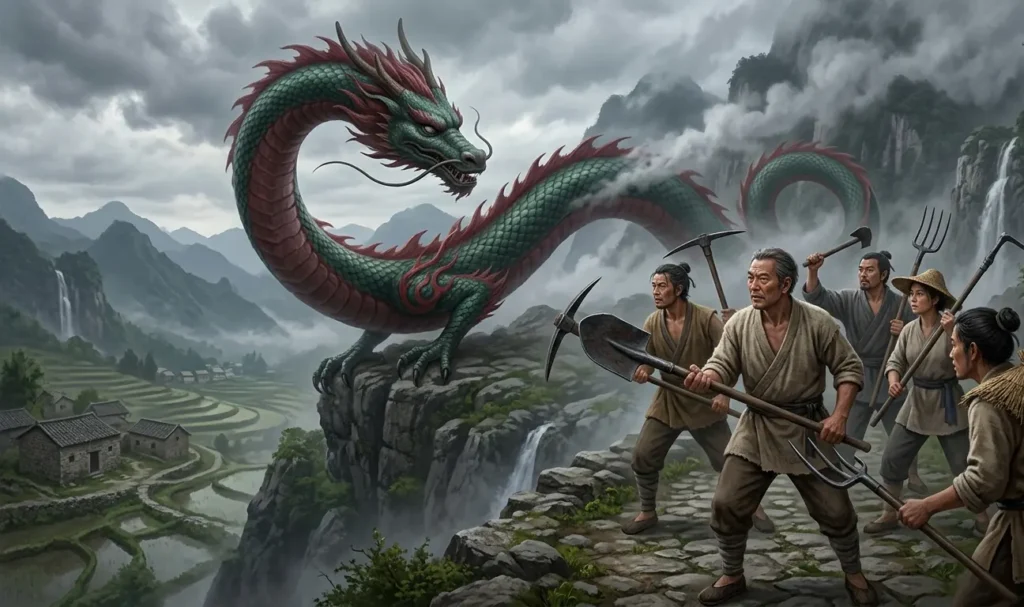
Across multiple Chinese classical texts and folk traditions, iron is described as one of the few materials that Eastern dragons find genuinely threatening. The Long cosmological sovereign of water and rain will avoid locations where significant iron is present.
This isn’t a minor mythology detail. It shows up in practical folk practice: iron nails driven into riverbanks to prevent flooding were understood as working by literally driving the dragon away from that location. Iron tools thrown into wells were understood as protective against dragon interference with water supplies.
Why This is Real
The iron-dragon aversion appears in texts spanning multiple dynasties and in folk traditions across different regions of China. The consistency across sources suggests it’s not local invention but a systematic belief embedded in the broader dragon tradition.
The most interesting explanation offered in classical commentary: dragons were associated with the Water element, and iron, a product of Fire-element smelting, is the elemental adversary of Water in the Wu Xing controlling cycle. The dragon doesn’t fear iron arbitrarily. It fears the elemental principal iron embodies.
The strange part: The being that controls rain and can summon floods flinches from a nail. The power and the vulnerability exist simultaneously without apparent contradiction in the tradition.
Myth 3: Korean Dragons Die If Seen by a Woman While Ascending
The Story
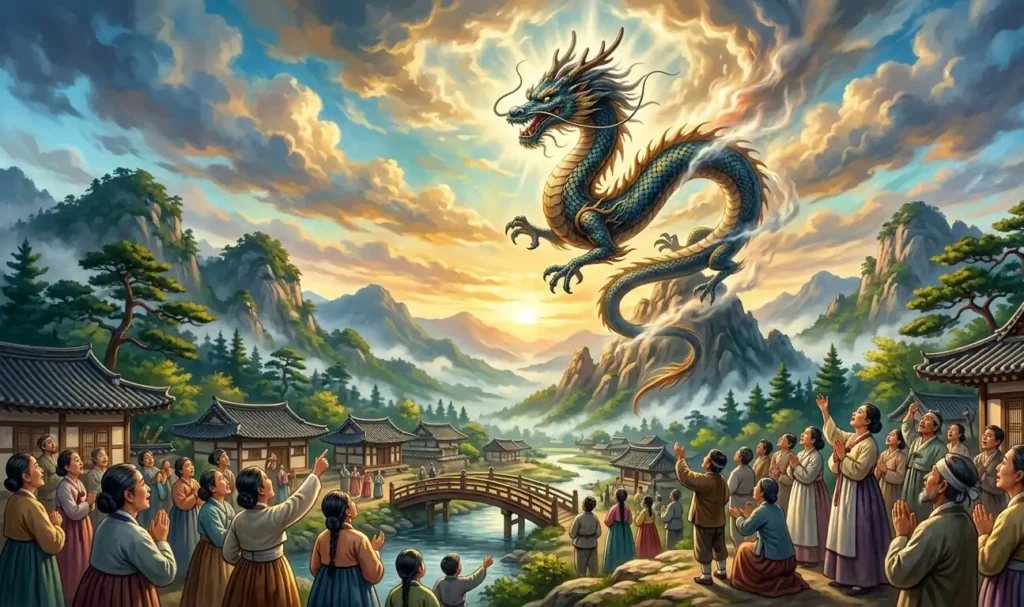
Korean dragon mythology includes a specific and unusual vulnerability: when a dragon is in the process of ascending to heaven, completing the transformation that elevates it from an earthly creature to a celestial being, being seen by a woman during that ascent will kill it or cause it to fall.
This vulnerability specifically affects the ascension moment, not the dragon in ordinary circumstances. A Korean dragon (Yong) that has completed the requirements for heavenly ascent must complete that ascent without being observed by a woman or the entire transformation fails fatally.
Why This is Real
This belief appears in multiple Korean folk tales and is connected to the broader Korean tradition around the Imugi, the proto-dragon that spends vast time preparing for its ascension. The vulnerability during transformation reflects a specific understanding of how the ascension process works: during the transformation, the dragon is in a liminal state between its earthly and celestial nature, and certain conditions during this state can cause the transition to fail.
The specific gender element has been interpreted as reflecting the yin-yang dynamics of the transformation, the rising yang energy of the ascending dragon being disrupted by yin presence in a specific way during the most critical moment.
The strange part: A being working toward cosmic celestial status for potentially thousands of years can have the entire project ended by being seen at the wrong moment by the wrong person.
Myth 4: An Emperor Personally Offended the Dragon King and Nearly Caused a Drought
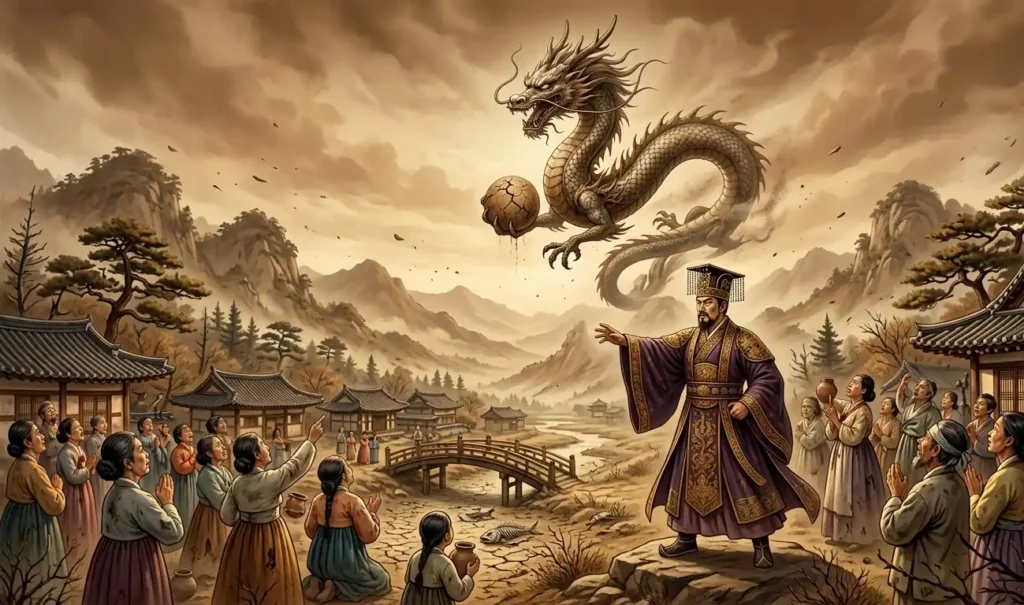
The Story
Tang Dynasty records include an account of Emperor Xuanzong coming dangerously close to causing a severe drought through a personal slight to the Dragon King. During a palace festival, a performance was staged that included a mock battle between divine forces, and the Dragon King’s forces were depicted as losing.
The Dragon King found this disrespectful. Rain subsequently failed to appear in the region despite the appropriate season. Court Daoist advisors identified the connection and recommended specific propitiation rituals involving public acknowledgment that the stage performance was inappropriate and formal apology to the Dragon King’s spirit.
Why This is Real
This story appears in Tang Dynasty court records and reflects the period’s genuine belief that the Dragon Kings were beings with personal dignity that required maintenance through appropriate respect. The court’s response, taking the connection seriously and performing propitiation, demonstrates that this wasn’t dismissed as superstition by the educated class.
The Tang Dynasty had multiple instances of court actions taken in response to perceived Dragon King displeasure. The dragon wasn’t just a cosmological symbol. It was treated as a being with personal feelings about how it was depicted and discussed.
The strange part: Imperial entertainment choices had direct weather consequences. Stage directors were, in a sense, responsible for drought prevention.
Myth 5: Cutting a Dragon’s Beard Causes Nine Years of Drought
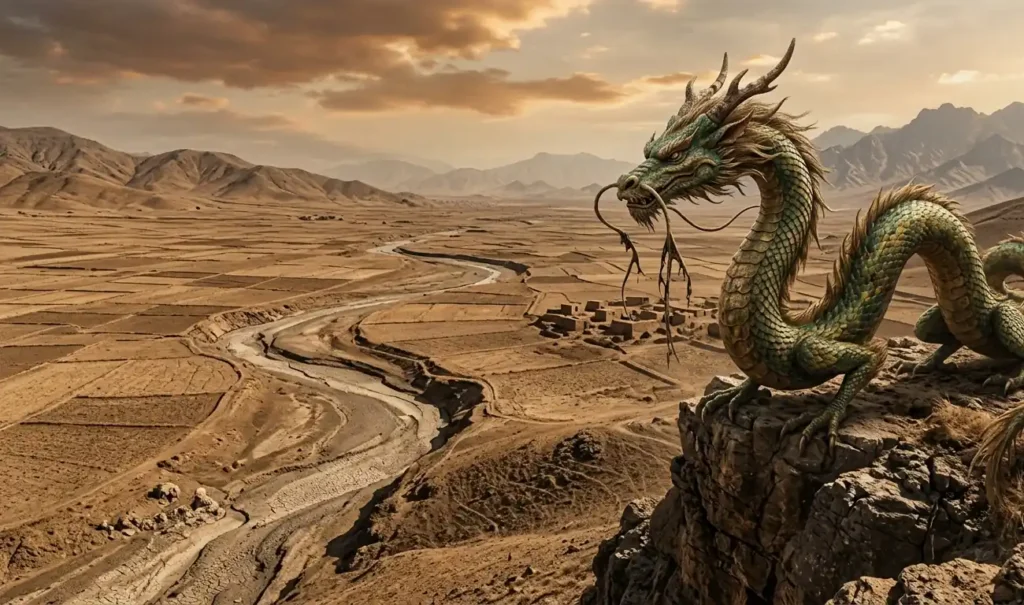
The Story
A specific Vietnamese dragon legend describes the consequences of cutting a dragon’s beard in detail so precisely that it reads almost like a legal statute. A person who cuts or damages a dragon’s beard through accident, carelessness, or deliberate action will cause a drought lasting exactly nine years in the affected region.
The legend includes specific accounts of this happening: fishermen who accidentally caught dragon whiskers in their nets and cut them free, officials who unknowingly entered sacred waters during specific astronomical periods, and common people who encountered a dragon in disguised human form and violated specific social protocols.
Why This is Real
The beard or whisker of the Eastern dragon carries specific symbolic significance across multiple traditions. It’s one of the nine animal components of the composite dragon form and represents wisdom accumulated across vast time. Damaging this specific feature isn’t merely physical harm. It’s an attack on the dragon’s accumulated wisdom and cosmological dignity.
The nine-year duration is cosmologically precise. Nine is the supreme yang number in Chinese-influenced Vietnamese cosmology, making nine years of drought the maximum possible punishment for a mortal’s offence against a divine being.
The strange part: The precision of the punishment, specifically nine years, specifically triggered by specifically the beard, suggests a tradition with detailed internal accounting for how divine offences are calibrated.
Myth 6: Dragons Can Fold Themselves Small Enough to Fit in a Wooden Box
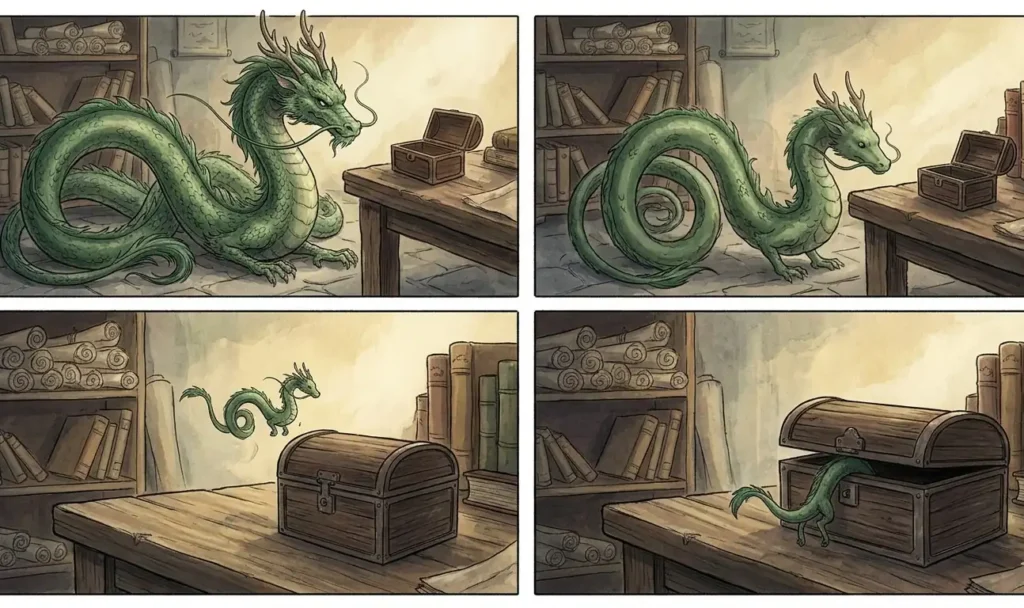
The Story
Chinese classical texts include the account of a dragon that had been captured or voluntarily reduced itself to fit within a small wooden container. This isn’t metaphorical. The texts describe specific instances of dragon transportation in sealed containers. The contents are treated with the same precautions as any extremely dangerous living cargo.
The Fucanglong (Hidden Treasure Dragon) tradition in particular includes accounts of dragons that coil themselves to fit within specific containers associated with treasure hoards, the guardian fitting itself to the size of what it guards rather than the other way around.
Why This is Real
The size-changing capability of Eastern dragons, able to be as large as filling the sky or as small as a silkworm, is documented across multiple classical sources as a specific dragon power rather than a narrative convenience. The Long isn’t fixed at one size. It manifests at whatever scale the situation requires.
The wooden box accounts appear in texts dealing with dragon capture during drought. Magical practitioners who successfully confined a Dragon King to force rain-release described the containment process in these terms.
The strange part: The cosmological sovereign of water, capable of filling the sky, choosing to fit in a box. The scale-shifting is presented as completely unremarkable, just one of the things dragons can do.
Myth 7: The Point Under a Dragon’s Chin is its Control Point
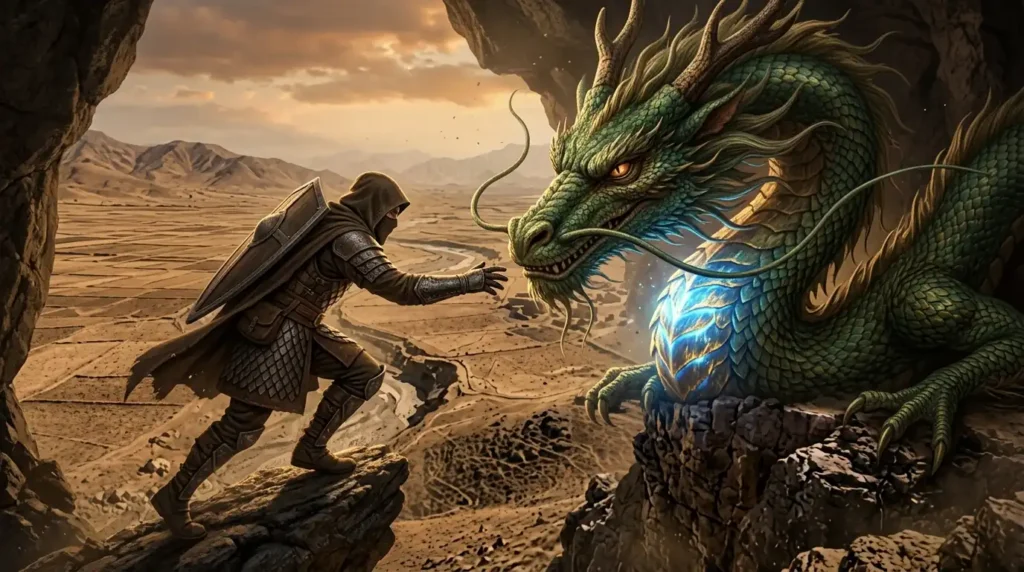
The Story
Chinese mythology describes a specific physical location on the dragon’s body, the scales under its chin, as a reverse-scale (nì lín, “reverse scale”) that, if touched, immediately enrages the dragon beyond control. But a different tradition describes a specific point also under the chin as the location that, if properly accessed, allows a skilled practitioner to control the dragon entirely.
The reverse scale tradition is well-known. Less discussed is the control-point tradition: specific Daoist practitioners were described as knowing techniques to access the dragon’s single submissive point, after which the dragon would follow any instruction.
Why This is Real
The reverse scale concept appears in classical Chinese political philosophy. The phrase “touching the reverse scale of the ruler” became a standard idiom for offending a sovereign in their most sensitive aspect. The dragon’s physical vulnerability became a political metaphor with a life extending far beyond mythology.
The control-point tradition appears in specific Daoist practitioner accounts and reflects the broader Daoist understanding that everything, including cosmically powerful beings, has a specific point of maximum vulnerability accessible to those with sufficient knowledge.
The strange part: The same location on the dragon’s body is simultaneously its greatest danger (the reverse scale) and its greatest vulnerability (the control point). The tradition is precise about this being the same general location experienced from different angles.
Myth 8: Japanese Dragons Must Grant One Wish Before Leaving a Location They’ve Been Observed In
The Story
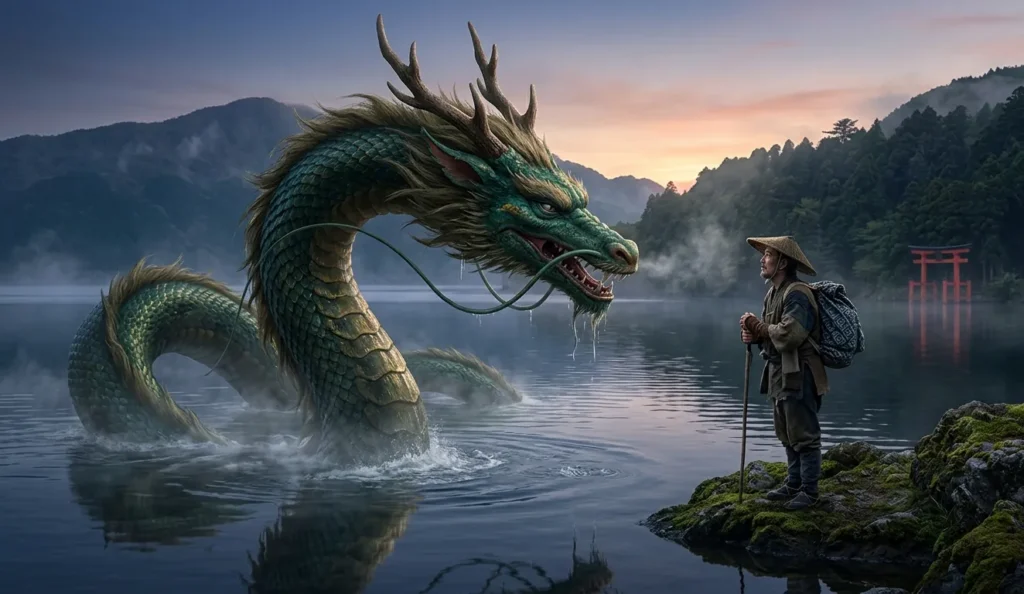
A specific Japanese dragon tradition holds that once a dragon has been directly observed by a human in its true form at a specific location, it incurs an obligation to grant one request to the observer before departing. Failure to honor this obligation means the dragon is bound to the location until the obligation is discharged.
This creates a specific mythological dynamic: knowing where a dragon has been seen in its true form gives you a form of leverage over it. Knowledgeable humans in the tradition were said to specifically seek locations where dragon sightings had been recorded.
I guess this is where the inspiration for Dragon Ball comes from.
Why This is Real
This tradition appears in specific regional Japanese folk tales and reflects the broader pattern in Japanese mythology of supernatural beings (oni, kitsune, and others) incurring obligations when observed or encountered in specific circumstances. The Japanese mythological tradition consistently emphasizes that supernatural power comes with binding obligations, and being seen creates accountability.
The dragon’s obligation when observed is the cosmic version of this principle applied to the most powerful being in the aquatic tradition.
The strange part: Seeing a dragon gives you power over it. The traditional understanding runs the opposite way from Western dragon mythology, where seeing a dragon means you’re in danger. In this tradition, you’re the one holding leverage.
Myth 9: The Dragon King Once Tried to Sue the Monkey King – And Lost on a Technicality
The Story
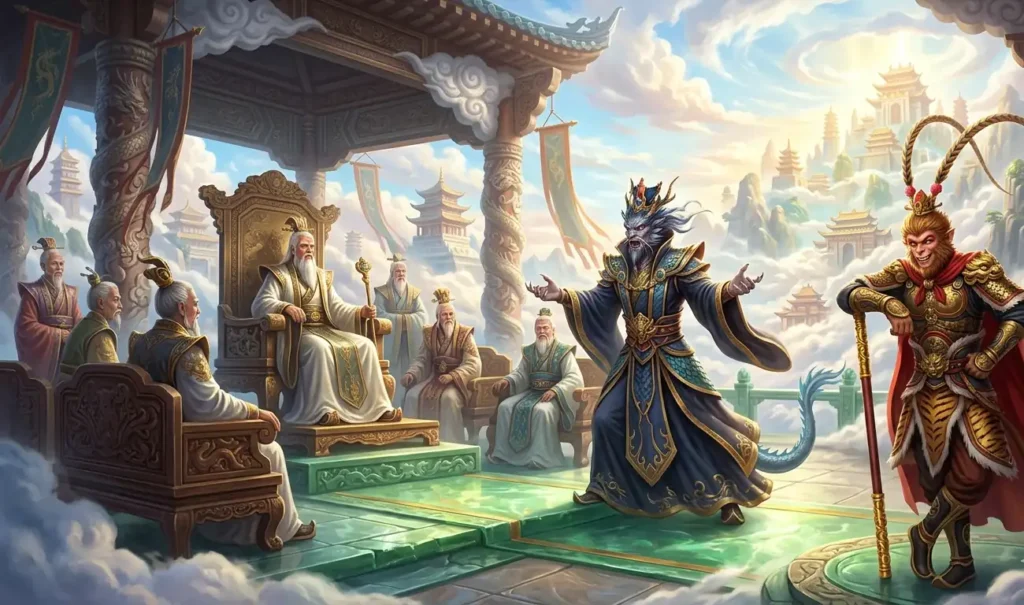
In Journey to the West, after Sun Wukong takes the Ruyi Jingu Bang from the Dragon King’s underwater palace, the Dragon King files a formal complaint with the Jade Emperor against the Monkey King. This is presented as a standard divine court procedure. The Dragon King uses the legitimate legal mechanism to seek redress.
The complaint doesn’t go well for the Dragon King. The Jade Emperor reviews the case and essentially determines that the circumstances make formal punishment difficult to implement, partly because Sun Wukong’s rebellion is already creating larger problems, and partly because the initial interaction was, technically, the Dragon King’s own failure to simply say no effectively.
Why This is Real
This episode in Journey to the West reflects the same legal accountability structure that allowed humans to sue Dragon Kings in the opposite direction. The divine court system was genuinely bidirectional. Humans could complain about divine neglect, and divine beings could complain about human (or divine monkey) interference.
The Dragon King losing on something approaching a technicality reveals the court system’s complexity: raw power doesn’t determine outcomes. Procedural legitimacy and the specific circumstances of the complaint do.
The strange part: The most powerful water sovereign in mythology goes through small claims court against a monkey. And doesn’t clearly win. The divine legal system treating both parties as equally subject to its procedures is the tradition’s most quietly radical feature.
Frequently Asked Questions
Are these myths from specific classical texts or folk tradition?
Both. Myths 1, 7, and 9 are documented in classical texts (folk religious records, classical literature, and Journey to the West, respectively). Myths 2, 3, 5, 6, and 8 appear in regional folk traditions documented in folklore collections. Myth 4 appears in the Tang Dynasty court records. Myth 3 is from Korean folk tradition. All have documented sources rather than being mythology trivia invented for entertainment.
Is the “suing a Dragon King” tradition still practiced?
Elements of it persist in modified form in some Chinese folk religious traditions. The formal drought accusation ritual has largely disappeared, but the underlying principle that divine beings have responsibilities they can be held accountable for remains present in Chinese folk religion’s practical orientation toward divine figures.
Do all Eastern dragon traditions share the same myths?
The eleven myths here come from Chinese, Japanese, Korean, and Vietnamese traditions, but they are not shared across all four. Iron aversion is mainly Chinese, the woman watching vulnerability is Korean, and the wish-granting obligation appears in specific Japanese regional traditions. Eastern dragon mythology is diverse rather than unified.
Are Eastern dragons considered good or evil?
Eastern dragons are generally viewed as benevolent, wise, and powerful beings associated with water, prosperity, and protection, though specific portrayals vary by tradition.
Why are Eastern dragons associated with water?
Many Eastern traditions link dragons to rivers, lakes, rainfall, and the sea, making them important symbols of weather, agriculture, and natural balance.
Final Thoughts

Twenty years of mythology has a way of making you comfortable with the idea that you know a tradition fairly well, and then the tradition produces something like “you can sue a Dragon King” or “dragons are afraid of iron nails,” and the comfort dissolves pleasantly.
What I find most interesting about all nine of these myths isn’t the strangeness itself. It’s what the strangeness reveals. The lawsuit tradition reveals that Chinese culture understood even the most powerful beings as subject to accountability. The iron aversion reveals that elemental relationships shaped vulnerability even at cosmic levels. The ascension vulnerability reveals that transformation is a moment of maximum risk, not maximum power.
None of these are arbitrary strange details. They’re all strange in ways that illuminate the traditions that produced them. That’s what the best mythology does. It surprises you, and then the surprise teaches you something.
Related Articles
- Dragon Mythology: How Dragons Are Depicted Across Cultures
- Yellow Dragon: Myths, Symbolism & the Forgotten Fifth Beast
- Qinglong: Azure Dragon Symbolism, Myths & Sacred Meaning
- Western Dragon vs Eastern Dragon [Myth, Power & Origin]
- 11 Chinese Dragon Types & the Legends Behind Their Powers
- Why Dragons Exist In Almost Every Culture on Earth
- Loong: Chinese Dragon Myths, Symbolism & Sacred Power
Written by Batin Khan | Mythology and philosophy reader across world cultures (20 years), Cultivation novels reader for the past 10 years | Specialist in Xianxia, Eastern and Western mythological traditions, and fantasy worldbuilding