
 By
By Sort dragons by element and it feels like you’re tapping into something ancient. Mostly you’re tapping into a specific rulebook. Gary Gygax and Dave Arneson’s original Dungeons and Dragons white box set, released in 1974, introduced five colored dragons with distinct breath weapons, and the whole convention of a symmetrical elemental taxonomy grew outward from that single design decision rather than from inherited world mythology.
Real mythology never organized dragons this cleanly. Chinese Long are overwhelmingly water associated regardless of color variation. western dragons lean fire without a matching, formally catalogued ice or lightning counterpart standing in equal relation.
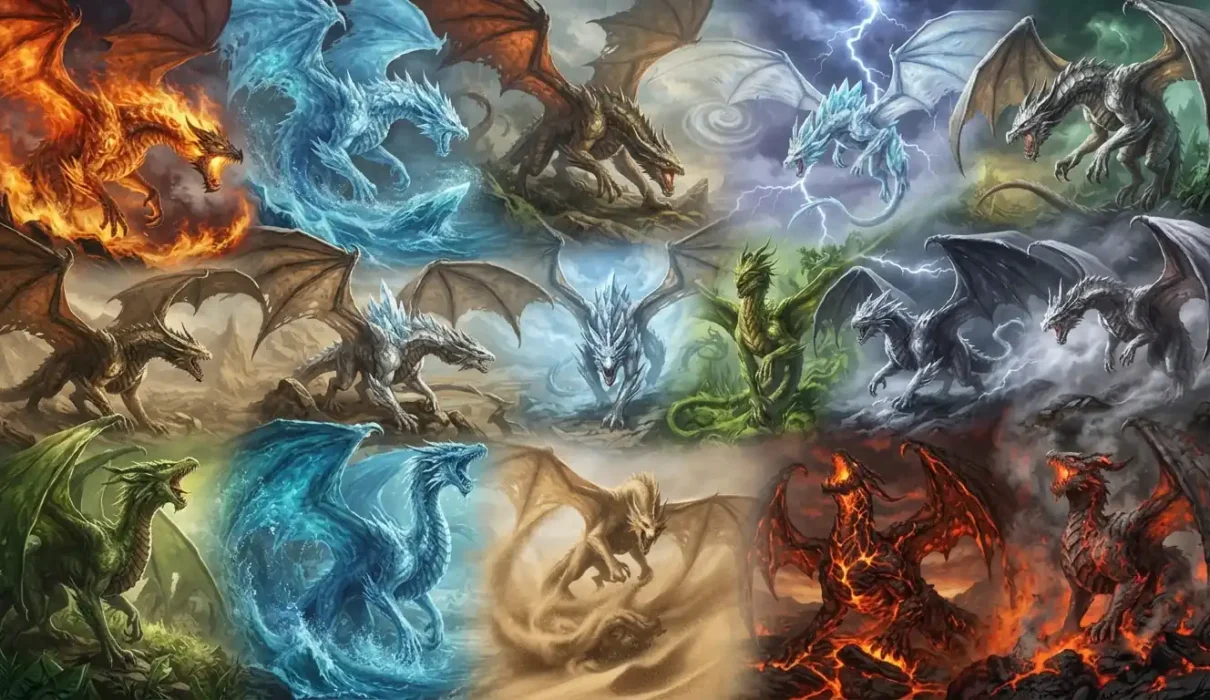
What follows are fifteen elemental dragon types of fantasy that have since been built, some with real mythological roots beneath the gaming structure, others invented largely for narrative variety. Of course, one thing to make clear is that there are more than just 15 elemental dragon types in fantasy.
Fire Dragon
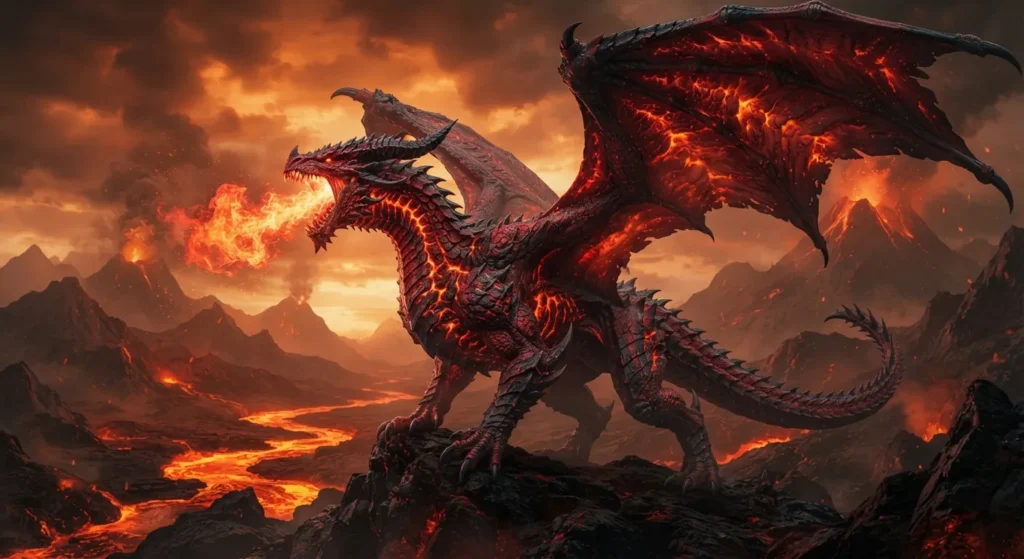
The almost default setting for the entire species in Western literature, and the version with the deepest textual roots. The unnamed dragon in Beowulf, generally considered the earliest fire-breathing dragon documented in European literature, established this association well before any formal taxonomy existed to organize it.
Fire dragons typically claim volcanic peaks or arid desert territory, environments that reinforce their own destructive nature through setting alone. The symbolic logic is straightforward: a creature whose breath matches the landscape it’s chosen to dominate.
Narratively, fire dragons carry the least ambiguity of any type on this list. They’re rarely written as tragic or misunderstood. The element itself signals immediate, uncomplicated danger.
Ice Dragon
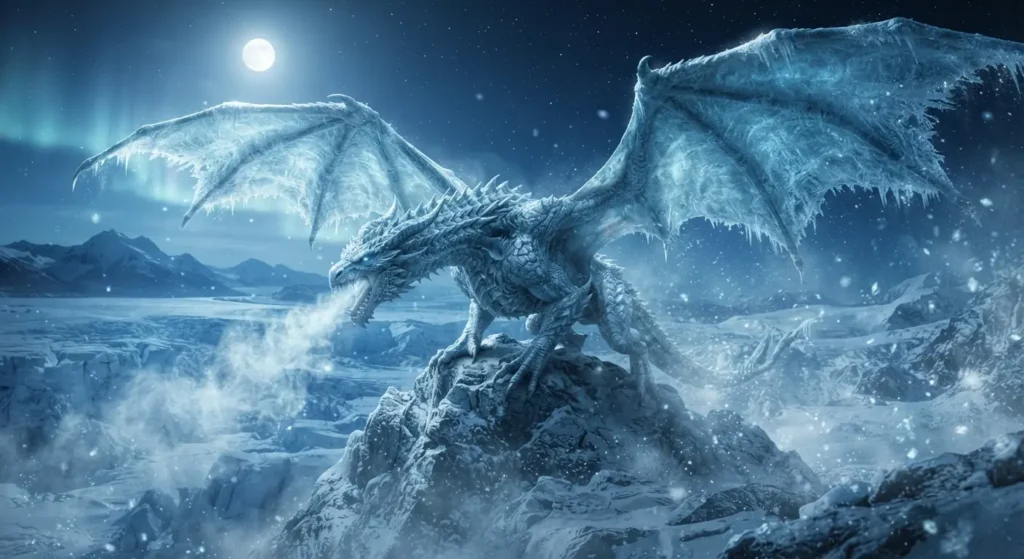
George R.R. Martin gave this type real independent literary weight in his standalone novella The Ice Dragon, first published in 1980, featuring a massive, largely silent creature whose presence brings killing frost, bonded to a girl born during the coldest winter anyone remembers.
Where fire dragons signal immediate aggression, ice dragons more often carry a thematic weight closer to stillness and inevitability. Cold doesn’t rage. It simply spreads, which gives this type a genuinely different emotional register than its fire counterpart even when both are equally lethal.
Arctic and mountain environments dominate their typical territory, and their attacks frequently emphasize paralysis or slow, creeping damage over sudden destruction.
Water Dragon
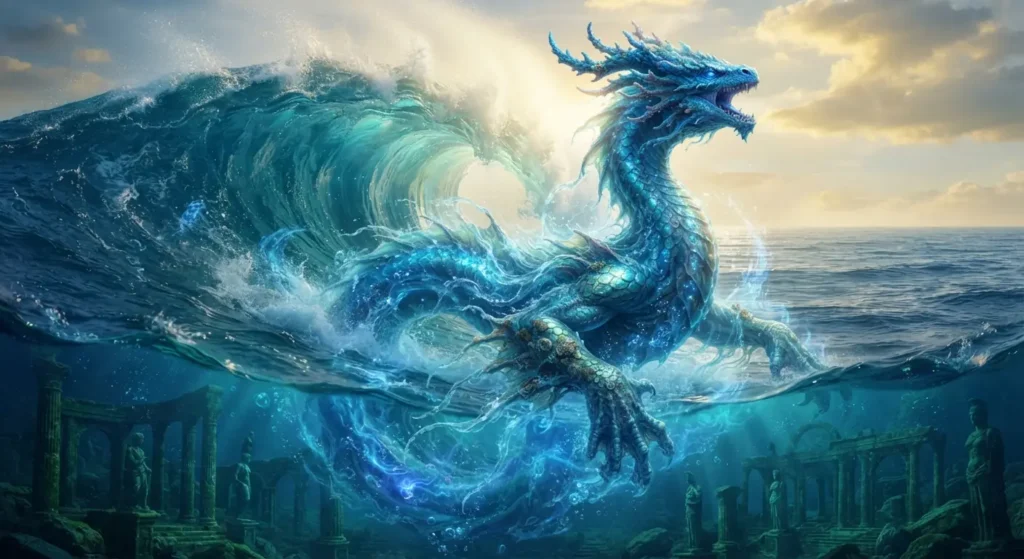
This is the type with the richest real mythological foundation of anything on this list. Chinese Long tradition, which I’ve covered extensively elsewhere on this blog, ties dragons to rain, rivers, and the sea almost universally, administered through the Dragon Kings of the Four Seas rather than existing as one variant among several equal elemental types.
Western fantasy’s water dragons typically borrow this administrative, benevolent register more than they borrow fire dragon aggression, often depicted as guardians of coastal territory or sunken treasure rather than pure destroyers.
Physically, these tend toward serpentine, sometimes wingless designs better suited to aquatic movement, a real structural difference from the four-legged, winged default most readers picture first.
Earth Dragon
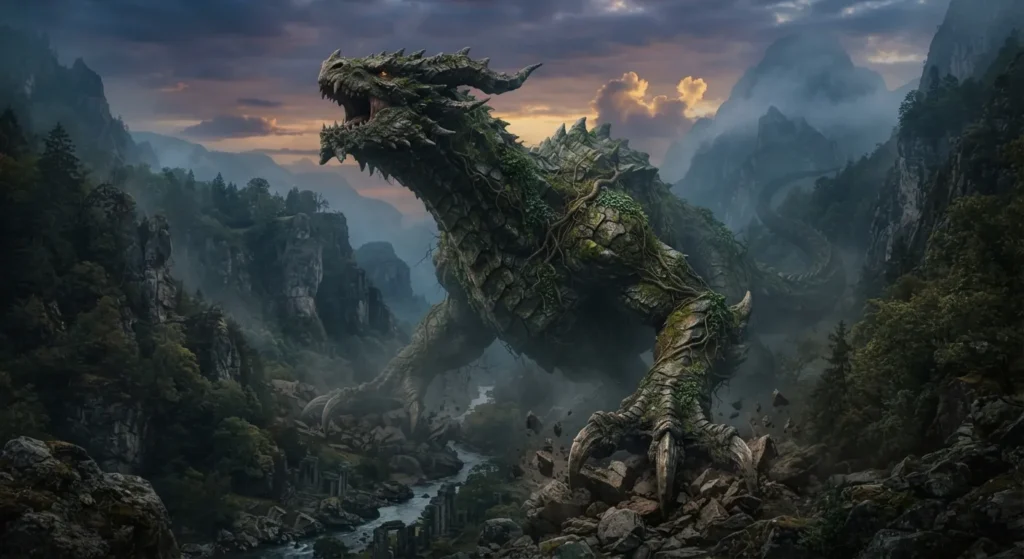
Earth dragons lean into sheer durability over speed or elemental spectacle, often depicted as barely distinguishable from the mountainous terrain they’ve occupied for centuries. Their attacks tend to involve tremors, collapsing stone, or simple overwhelming physical mass rather than a breath weapon in the conventional sense.
This type carries less unified mythological grounding than fire or water specifically. It functions more as a logical extension of the elemental taxonomy’s own internal symmetry (if fire and water exist as categories, earth fills an obvious gap) than as an inheritance from any single documented tradition.
Their extreme age is usually part of the design. An earth dragon reads as ancient almost by definition, since the element itself suggests permanence.
Air Dragon
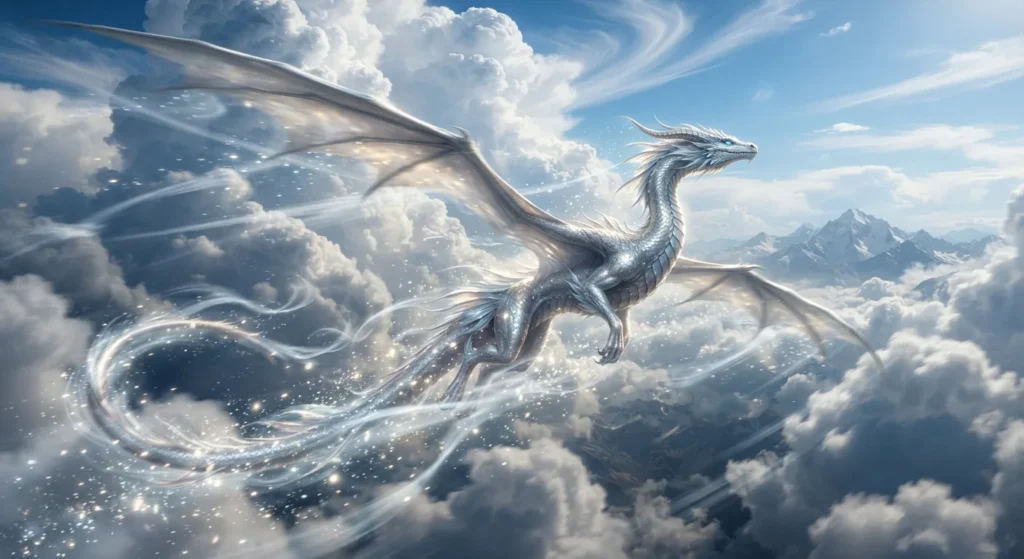
Air dragons emphasize speed, aerial maneuverability, and pressure-based attacks over a conventional elemental breath weapon. Some traditions give them near invisibility at altitude, using the element itself as a kind of camouflage.
Air dragons have no single ancient mythological prototype comparable to the Chinese water-associated dragon. A looser comparison can be made with powerful sky beings such as Garuda, although Garuda is a divine bird-like figure rather than a dragon.
The narrative function usually leans toward evasive, hit-and-run combat rather than sustained ground-based confrontation, distinguishing air dragons mechanically from most other entries on this list.
Lightning Dragon
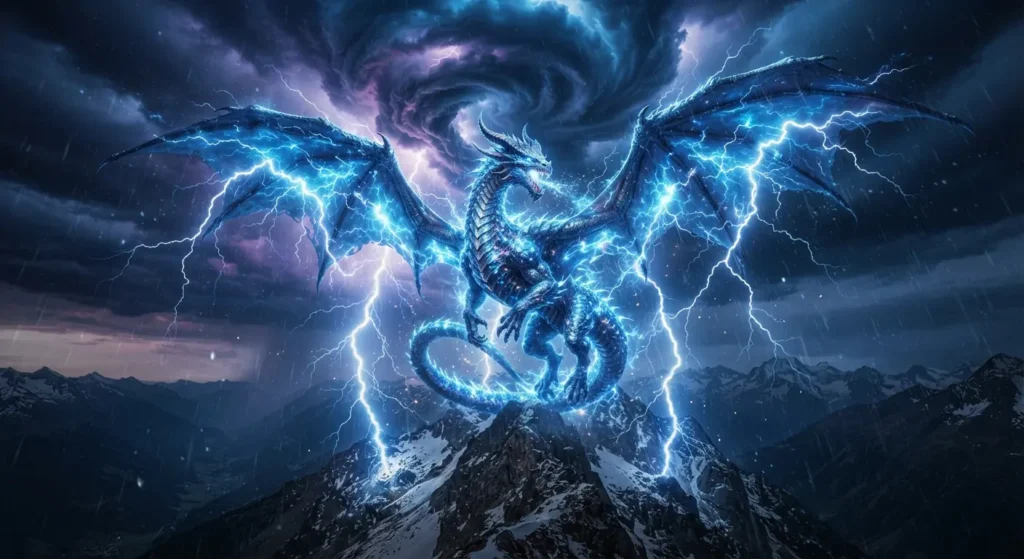
Lightning dragons channel raw electrical discharge, typically the fastest-acting and most immediately lethal attack type on this entire list, trading sustained damage for a single, devastating strike.
D&D’s own blue dragon, introduced in the original 1974 rule set, established the template most fantasy still borrows from directly, favoring open, arid terrain where clear sightlines let their attack reach full range.
Characterization for this type frequently leans calculating rather than simply aggressive, since a creature that strikes once and decisively reads naturally as more strategic than one relying on prolonged, grinding damage.
Storm Dragon
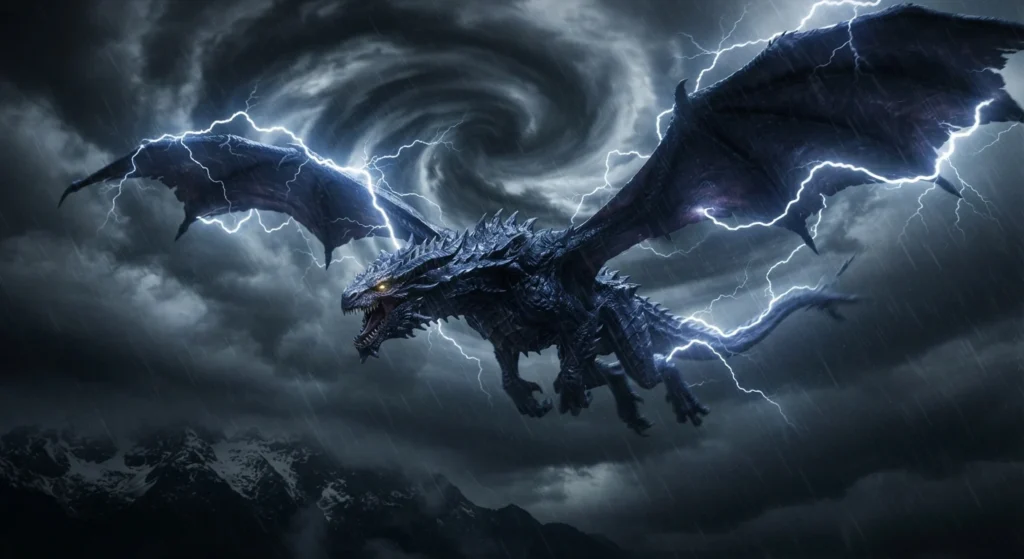
Where lightning dragons isolate one specific electrical attack, storm dragons combine wind, rain, thunder, and lightning into a single, sustained weather event rather than a discrete strike. Some traditions blur the line between the dragon and the storm entirely, treating the creature’s movement as functionally identical to the weather system surrounding it.
This makes storm dragons a lot harder to fight through conventional combat logic, since the threat isn’t a body you can flank or outmaneuver so much as an entire environment turned hostile.
They’re frequently written as territorial over specific coastlines or mountain passes where severe weather naturally recurs, tying the creature’s presence to a location’s own documented climate.
Lava Dragon
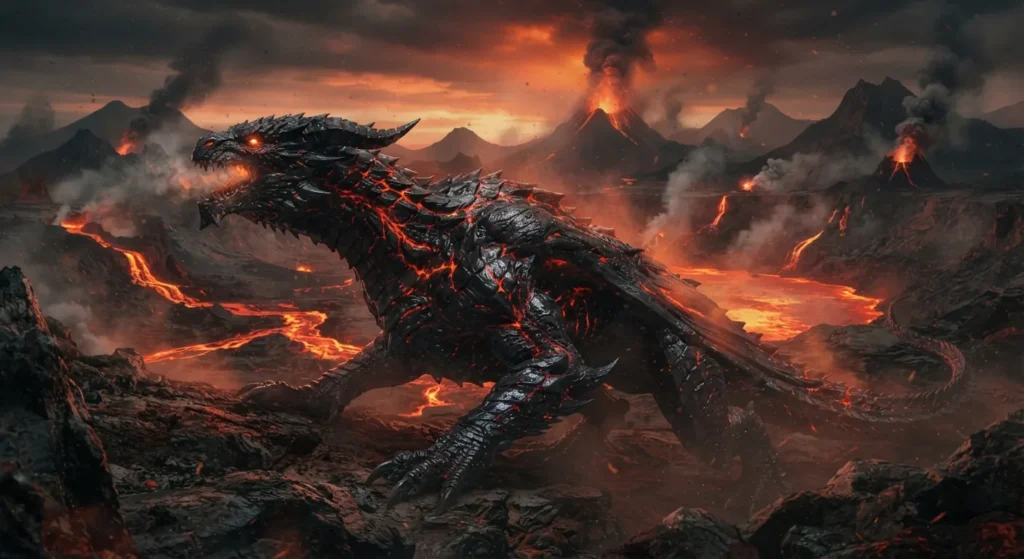
A more viscerally embodied version of the fire dragon, lava dragons typically move slower and hit harder, trading speed for attacks that leave lasting, visible damage to the terrain itself rather than simple burns.
Their bodies are often depicted as partially molten or cracked, glowing material visible beneath a hardened outer shell, a distinctly different physical design logic than a fire dragon’s more conventional scaled hide.
This type tends toward territorial rather than roaming behavior, anchored to active volcanic systems in a way straightforward fire dragons aren’t always written to be.
Nature Dragon
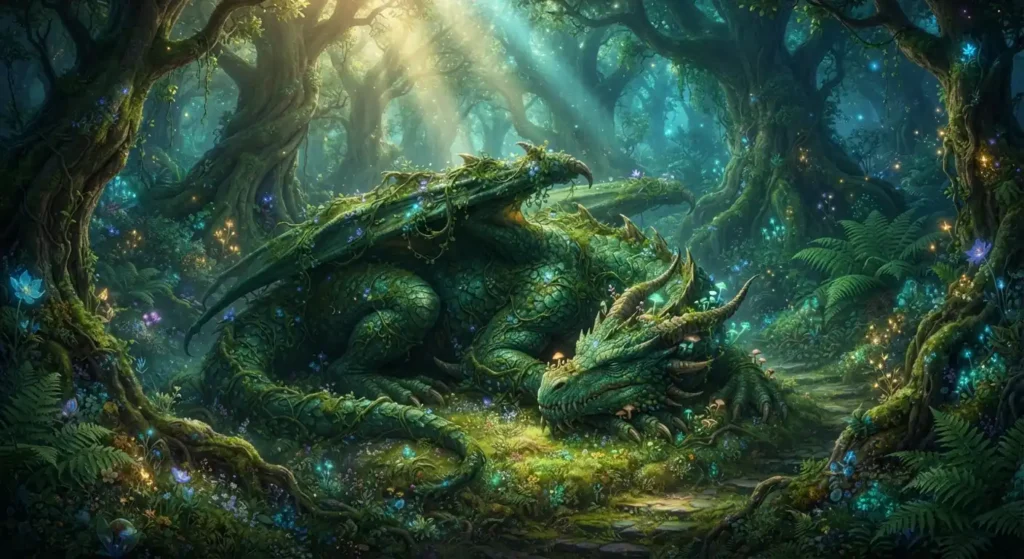
Nature dragons manipulate plant growth, root systems, and forest ecosystems, often functioning as guardians of a specific woodland rather than conventional destroyers. D&D’s green dragon carries some of this same territorial, forest-bound instinct, though nature dragons in broader fantasy tradition typically lean more protective than the green dragon’s documented cruelty.
The symbolic logic here differs from every other entry on this list. Fire, ice, and lightning dragons represent destructive force. Nature dragons represent growth and cyclical renewal, which gives them a genuinely different narrative role: frequently allies rather than antagonists.
Their attacks tend toward entanglement, poison, or overgrowth rather than direct elemental damage.
Crystal Dragon
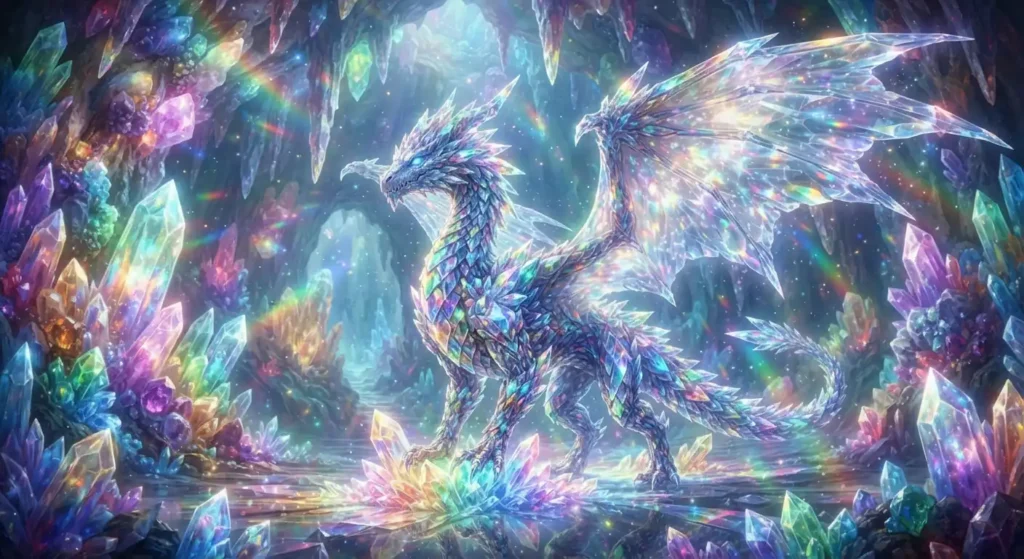
Crystal dragons draw on gemstone formations for both physical defense and magical amplification, often depicted with unusually reflective, faceted scales rather than a conventional hide. D&D’s own gem dragon category, a neutral-aligned third branch alongside chromatic and metallic types, gives this concept its clearest formal precedent, distinguished by psionic rather than purely elemental abilities.
This type frequently emphasizes magical resonance over raw physical combat, sometimes depicted as capable of storing, redirecting, or amplifying spells cast near them.
Their comparative rarity in popular fantasy, even among readers who know their dragon types well, mirrors how obscure D&D’s own gem dragons have remained relative to the more famous chromatic and metallic five.
Metal Dragon
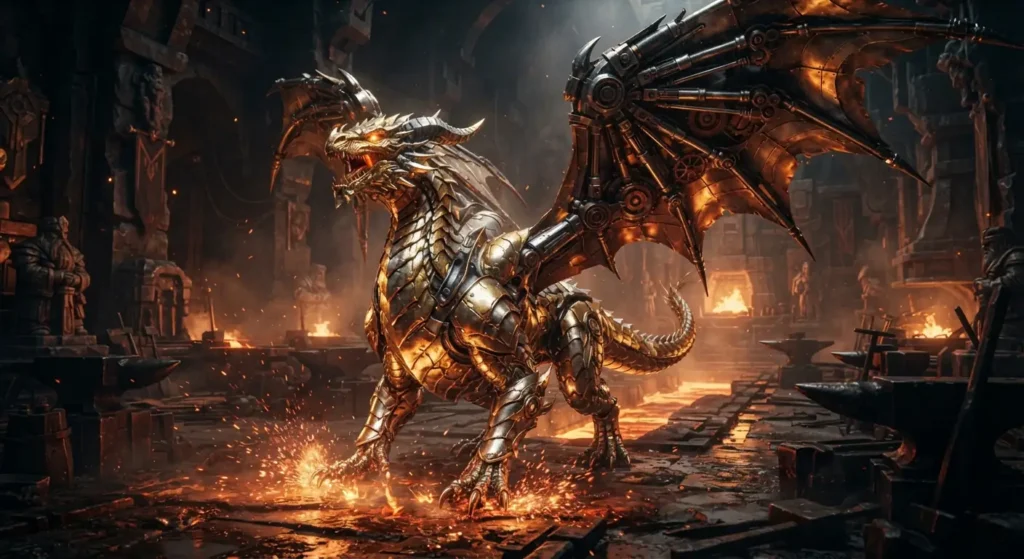
Metal dragons possess exceptionally durable, often literally metallic scales, and frequently generate or manipulate metal directly as a secondary ability alongside conventional combat. D&D’s metallic five, gold, silver, bronze, copper, and brass, established the clearest formal version of this concept: each pairing a lethal elemental breath with a second, non-lethal utility attack.
This dual weapon structure is genuinely distinctive. Where most elemental dragon types rely on one signature attack, metal dragons in the D&D tradition specifically carry two, giving them tactical range other types don’t share.
Characterization for this type leans toward nobility and deliberate moral purpose more consistently than almost any other entry here.
Sand Dragon
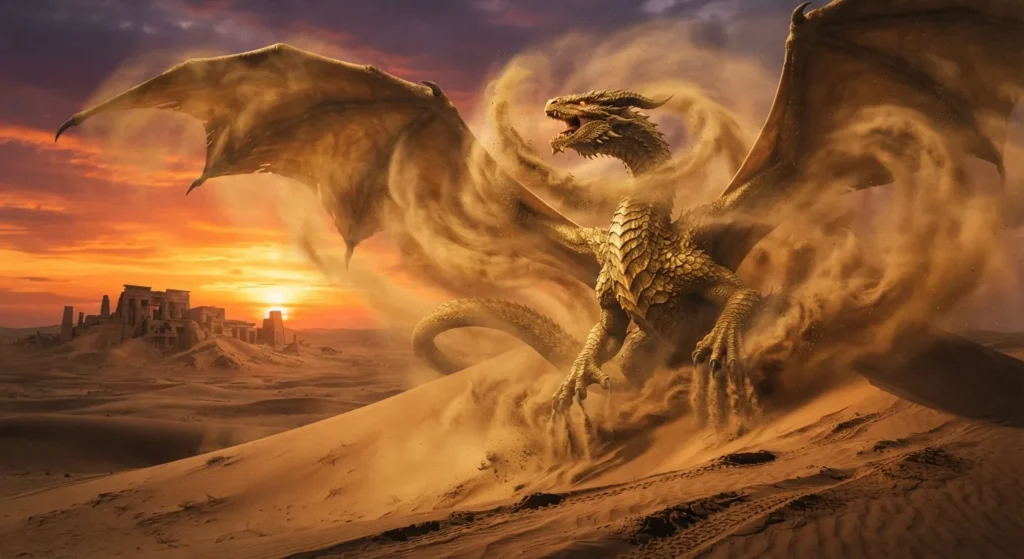
Sand dragons command desert terrain directly, using shifting dunes and sandstorms as both offense and camouflage. Their bodies are frequently depicted with a granular, rough-textured hide suited to burrowing beneath loose terrain and striking upward without warning.
This type shares some thematic territory with earth dragons but distinguishes itself through mobility. Where earth dragons emphasize permanence and mountainous stillness, sand dragons emphasize shifting, unpredictable movement across an equally harsh but far less stable landscape.
Ambush tactics dominate their typical combat behavior, using the desert’s own disorienting scale against anyone who enters it.
Smoke Dragon
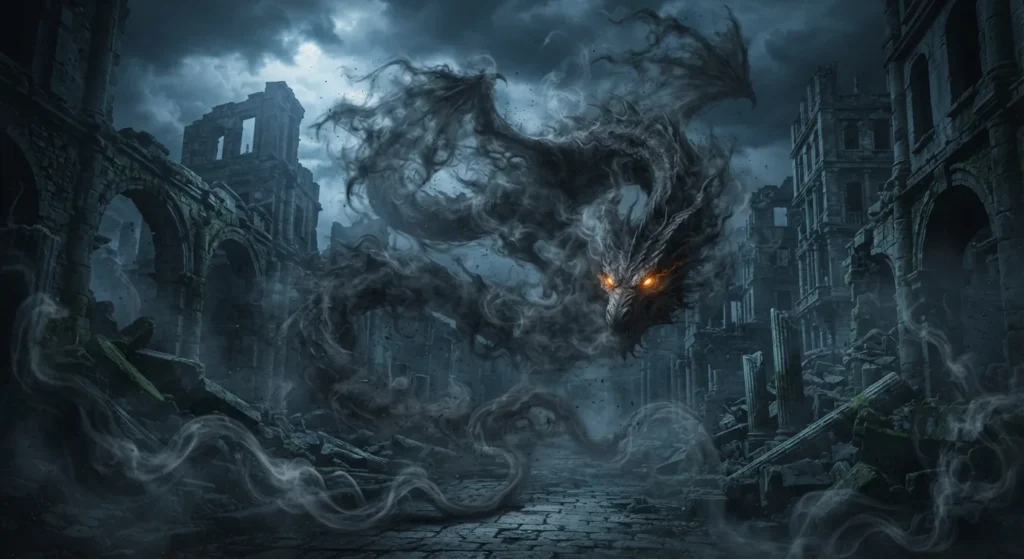
Smoke dragons generate obscuring, sometimes directly poisonous clouds rather than a conventional single-target attack, making them a lot harder to track or predict mid-combat than most other types on this list.
This type frequently pairs with a more elusive, evasive characterization, since a creature that can vanish into its own generated cover doesn’t need the raw physical durability other dragon types rely on.
The poison variant specifically echoes D&D’s green dragon toxic breath, though smoke dragons typically emphasize obscuring visibility and disorientation as much as direct damage, a notably different tactical profile from straightforward poison.
Magma Dragon
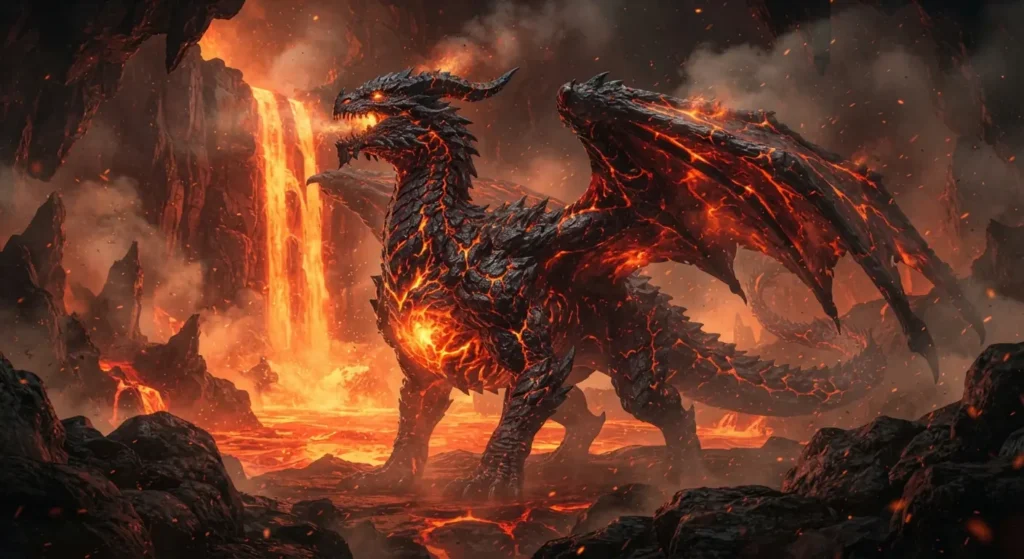
An even more intensely volcanic variant than the lava dragon, magma dragons are typically written as capable of superheated attacks well beyond conventional fire, sometimes depicted as able to reshape terrain permanently through their own presence.
This type tends to sit at the upper end of raw destructive capability among fire-adjacent dragons specifically, functioning as an escalated version of lava dragons rather than a fully distinct concept, in roughly the same relationship gold dragons hold to standard fire-breathing chromatic types.
Their rarity in fiction, compared to straightforward fire dragons, usually signals unusually high threat level within a given story’s own internal power scale.
Ash Dragon
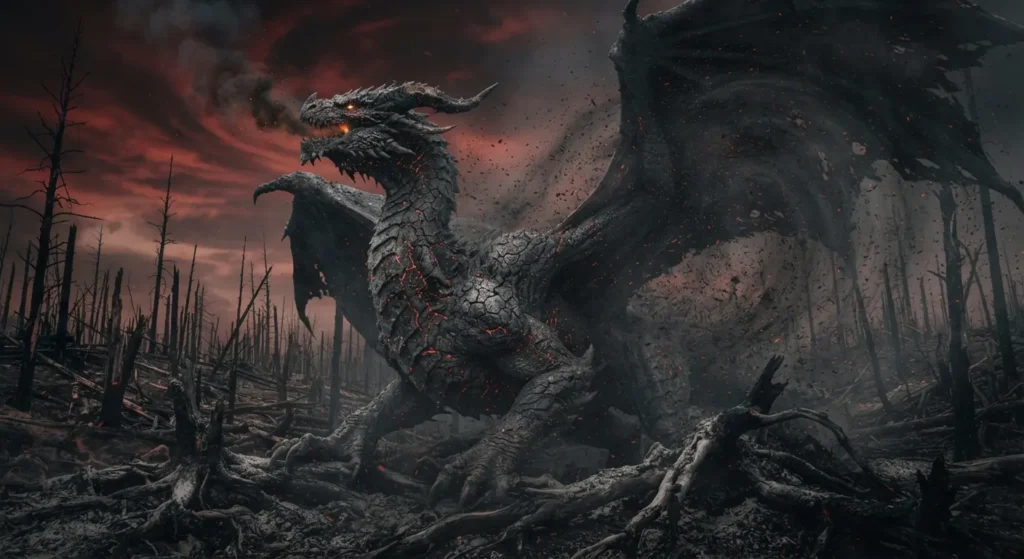
Ash dragons close out this list with the most explicitly symbolic association of any entry here, tied directly to decay, ruin, and the aftermath of volcanic devastation rather than the eruption itself.
Where fire, lava, and magma dragons represent active destructive force, ash dragons represent what’s left once that force has already finished, which gives them a distinctly different narrative function: frequently appearing in ruined, post-catastrophe settings rather than active combat zones.
Their attacks, when they occur at all, tend to emphasize suffocation, blindness, or lingering environmental damage over direct physical harm, reinforcing their association with slow aftermath rather than sudden violence.
An Honest Counterargument
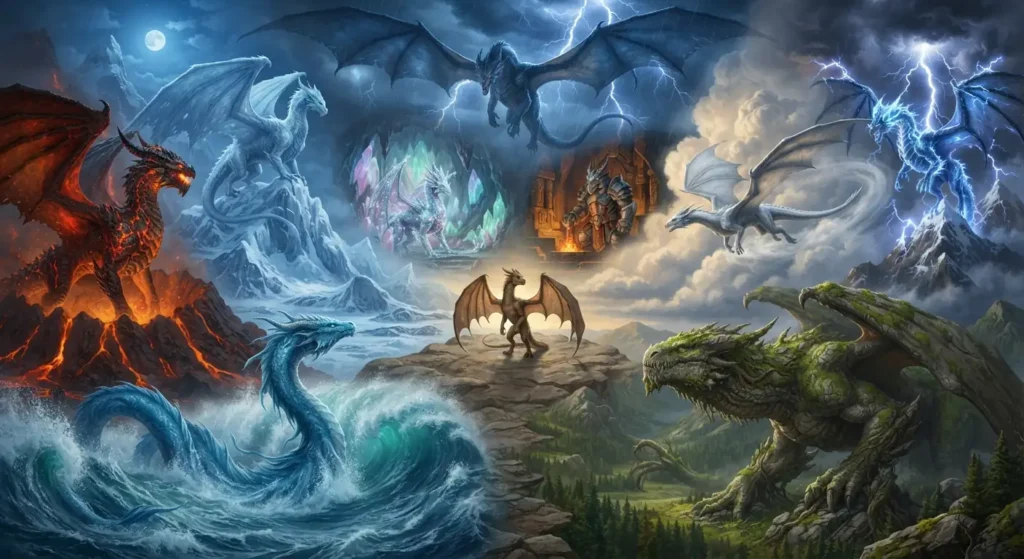
I want to be direct about something before closing this out. Several of these fifteen types (crystal, smoke, magma, and ash specifically) have thinner independent mythological or literary grounding than fire, water, or ice. They function more as logical extensions of an already established taxonomic structure than as inheritances from any documented tradition.
That’s not necessarily a weakness. A well-designed elemental system benefits from genuine internal symmetry, and filling out the full range of environmental themes gives worldbuilders and readers alike a complete, usable framework rather than a partial one. It’s still worth knowing which entries carry real historical weight and which are comparatively recent inventions built to complete the set.
Frequently Asked Questions
Which of these fifteen types has the strongest documented mythological history behind it?
Water dragons, by a wide margin, given the depth of Chinese Long tradition specifically, administered through the Dragon Kings and tied to real, centuries-old religious and agricultural practice rather than existing purely as one fantasy variant among equals.
Is there a real world geological basis for the difference between lava and magma dragons?
Yes, loosely. Magma technically refers to molten rock still underground, while lava refers to the same material once it reaches the surface, which is likely why magma dragons are typically written as capable of even more extreme, less contained destructive force.
Do any of these fifteen types commonly appear together as a full matched set in a single fictional world?
Some tabletop and video game properties do build complete elemental dragon rosters covering most or all of these types, though most literary fantasy tends to use only one or two elemental dragon concepts rather than a full symmetrical taxonomy. of course there are more than 15 elementals dragon types in fantasy.
Why do smoke and ash dragons get confused with each other so often?
Both involve airborne particulate matter and obscured visibility, but smoke dragons typically represent active, ongoing danger through poison or concealment, while ash dragons represent aftermath and decay, a meaningful thematic distinction despite the visually similar imagery.
Is the crystal dragon concept connected to real gemstone folklore in any documented way?
Not strongly. Real-world folklore around gemstones typically involves protective or healing properties attributed to the stones themselves rather than a dragon composed of or empowered by them, making this type closer to a modern fantasy invention than an inherited tradition. This is a list of mainly dragons from fantasy, not mythology-specific.
Final Thoughts
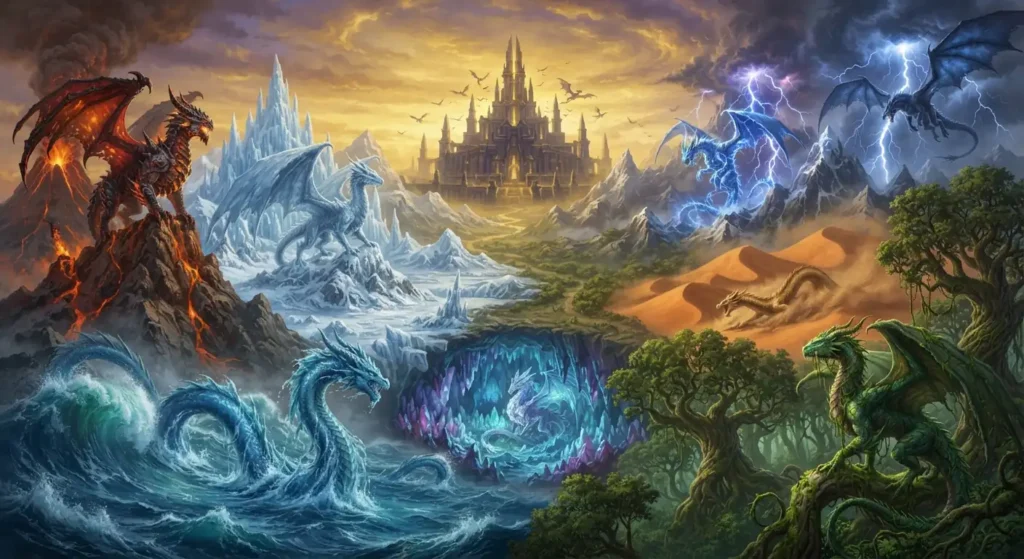
Fifteen types, and a genuinely uneven distribution of real historical weight underneath them: water and fire carrying centuries of documented tradition, several others built more recently to complete a taxonomy that started as a specific 1974 design decision rather than an inheritance from anywhere older.
That unevenness isn’t a flaw in the system. It’s just useful to know which of these fifteen you’re borrowing from deep tradition and which you’re borrowing from a rulebook, next time you’re building or simply enjoying a world that uses them.
Related Articles
- 13 Overlooked Dragon Books Worth Reading in 2026
- 15 Best Dragon Books for Adults [Dark & Epic Picks of 2026]
- Why Dragons Are Almost the Perfect Mythological Creature
- What If Dragons Were Real? Here’s What Would Happen
- Why Do Dragons Hoard Gold? What Role Does Fafnir Play
- 14 Most Iconic Anime Dragons You Should Recognize
- 9 Fantasy Creatures Authors Invented From Scratch
- Why Are So Many Mythical Creatures Hybrids?
Written by Batin Khan, a curious free spirit who loves reading and exploring the worlds of fantasy, mythology, and ancient stories. Through this blog, Batin hopes to share that sense of wonder with readers while building an exciting future along the way.