
 By
By Anime dragons are everywhere, and I mean everywhere. They grant wishes, they guard temples, they get sealed inside gauntlets, and sometimes they just move into your apartment and do the laundry.
And I am not the one to complain about it. Western fantasy mostly agrees on what a dragon looks like: scales, wings, a hoard, maybe a knight to fight. Anime never got that memo.
I’ve spent countless hours tracking where these designs come from. Most borrow one piece of real mythology, then build something completely different around it.
This list covers the fourteen that stuck, the ones you’d recognize from a single frame even without knowing the show.
What Counts as an Anime Dragon Here
Not every scaly creature in an anime counts as a “dragon” the way this list means it. I used three rules to keep things honest.
First, it has to be called a dragon, treated as one in-universe, or be an unmistakable dragon design. Second, it needs to be genuinely well known, not just well known to me.
Third, I skipped anything where the dragon angle is a one-episode gag rather than a real part of the character.
That still leaves plenty of room for debate. I’ll flag it whenever a pick is contested rather than pretend these categories are clean.
The 14 Most Iconic Anime Dragons
1. Shenron, Dragon Ball
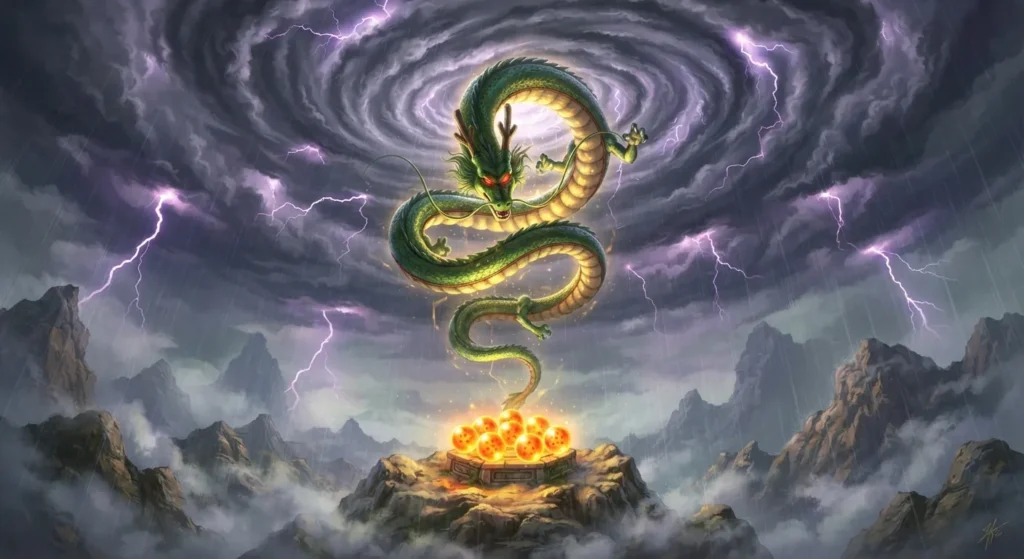
This is probably a no-brainer for most anime fans. Shenron is probably the reason “dragon that grants wishes” feels like a default anime trope instead of a strange one.
Summon all seven Dragon Balls, and this green and gold serpent appears to grant a single wish before vanishing along with the Balls for a year. Akira Toriyama built an entire franchise’s plot engine around that one mechanic.
The design leans on Chinese dragon iconography rather than the winged European kind: long, limbless, and serpentine, closer to a parade dragon than a lizard with wings.
Namek has its own version, Porunga, who grants three wishes instead of one and looks more like a horned, humanoid serpent.
Fans argue about which is “better” constantly, which says a lot about how much this one mechanic shaped the genre’s whole idea of a wish-granting dragon.
2. Blue-Eyes White Dragon, Yu-Gi-Oh!
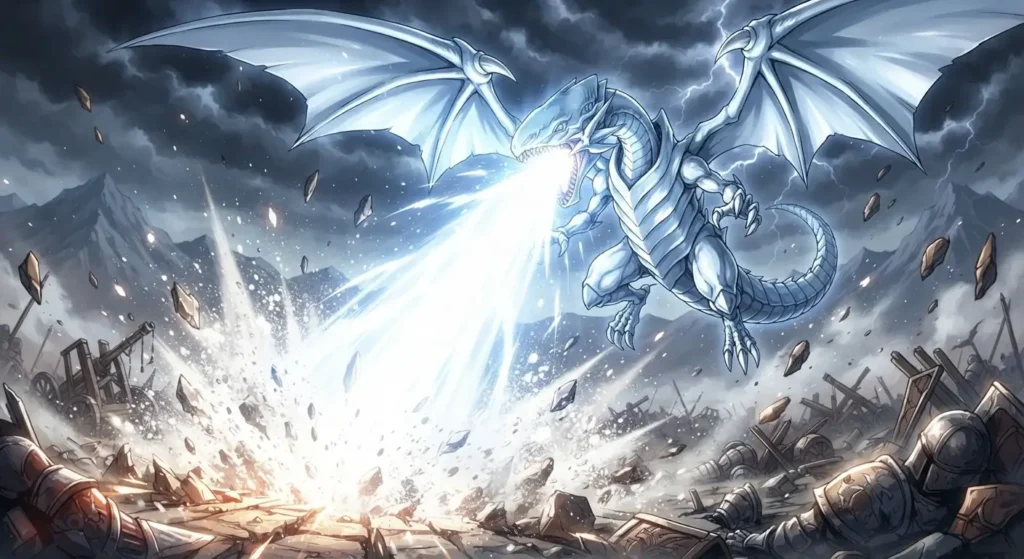
If Shenron taught anime that dragons grant wishes, Blue-Eyes White Dragon taught it that dragons could be status symbols.
Seto Kaiba owns three of them, and that fact alone tells you most of what you need to know about his character before he says a word. The card’s rarity and raw attack power made it the aspirational pull for an entire generation of fans.
It’s a purely Western-style dragon: four legs, wings, no obvious mythological source beyond “cool dragon, but bigger.” That’s actually unusual on this list. Most other entries borrow specific folklore. This one is closer to pure card game power fantasy.
3. Red-Eyes Black Dragon, Yu-Gi-Oh!
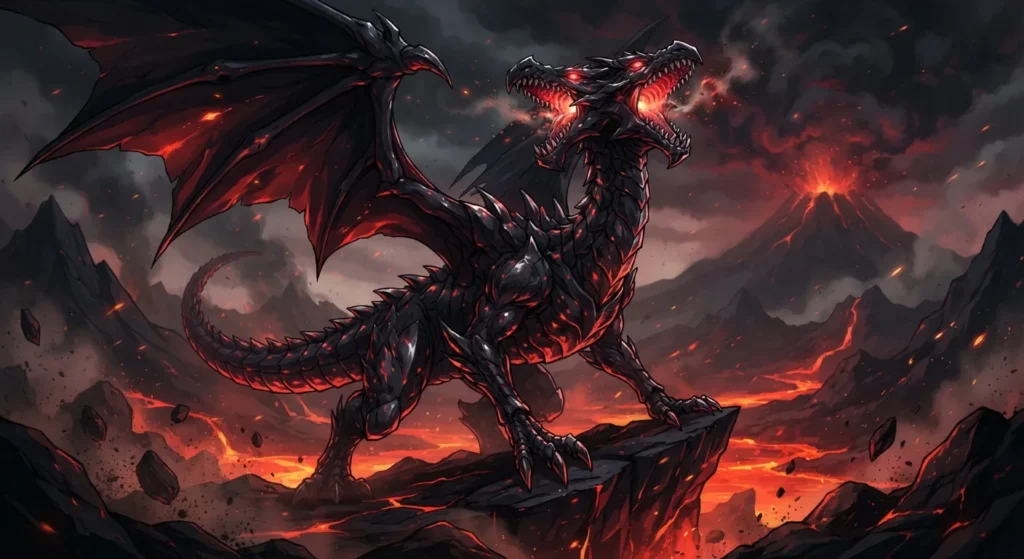
Red-Eyes Black Dragon exists mostly to be Blue-Eyes’ rival, and it plays that role well.
Joey Wheeler’s signature card never hits Blue-Eyes’ raw numbers, and the show makes a running theme out of that exact gap. What Red-Eyes has instead is narrative weight. Red-Eyes plays the underdog’s dragon, powered by loyalty rather than inherited wealth.
Card game math aside, putting these two side by side says something real about how anime uses dragons as character shorthand. One dragon signals privilege. The other signals grit.
4. Haku, Spirited Away
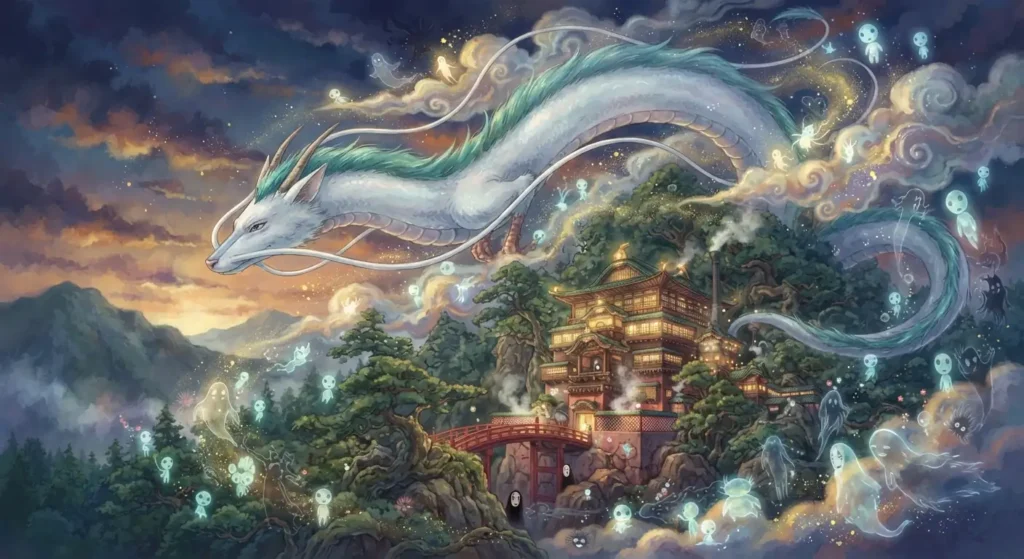
Haku is where this list leaves the shonen action shelf for something closer to actual folklore.
He’s a river spirit, specifically the spirit of the Kohaku River. His dragon form is how that spirit manifests when he isn’t walking around as a teenage boy.
Studio Ghibli didn’t invent this concept from nothing. Shinto tradition is full of kami tied to specific rivers and mountains, and a river spirit taking serpentine dragon shape fits comfortably inside that framework.
The quiet tragedy underneath Haku’s arc, that he’s forgotten his own name because his river got built over, works as understated commentary on urban development that a lot of first-time viewers miss.
5. Igneel, Fairy Tail
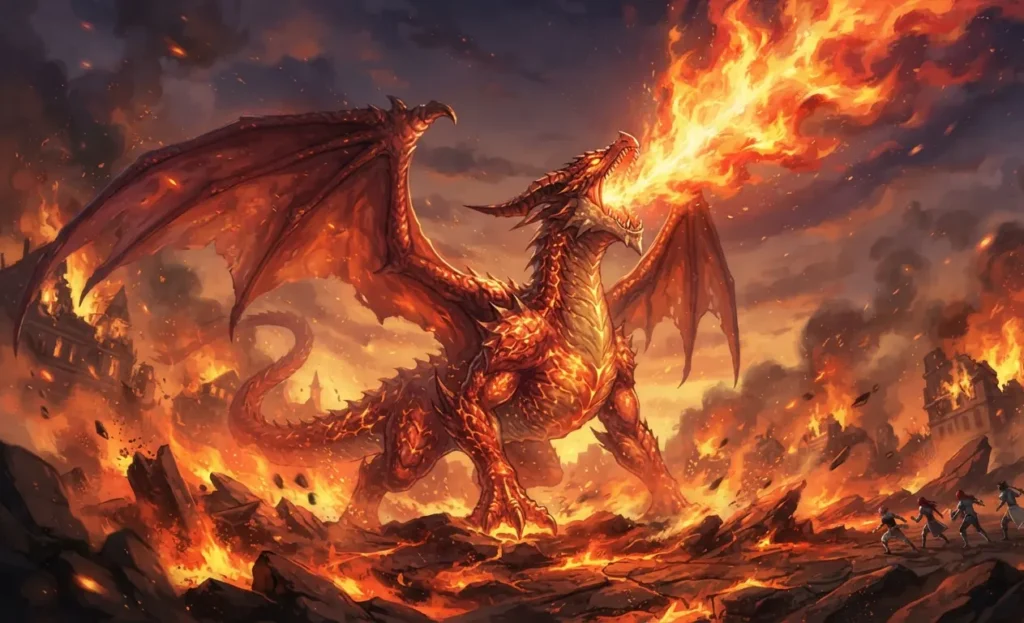
Igneel raised Natsu Dragneel as his adopted son, taught him fire magic, then disappeared, and that setup alone tells you Fairy Tail was never going to keep this dragon simple.
He’s the Fire Dragon King, one of several dragons in the series who raised human children as Dragon Slayers. That detail reframes the whole trope.
These aren’t hunters trained to kill dragons. They’re students raised by them, a stranger and more interesting premise than the trope’s name suggests.
Igneel’s actual fate ties into some of the densest lore in the series, so I’ll leave the specifics alone here. What matters for this list is the archetype he created: the vanished mentor dragon, equal parts parent and unanswered question.
6. Acnologia, Fairy Tail
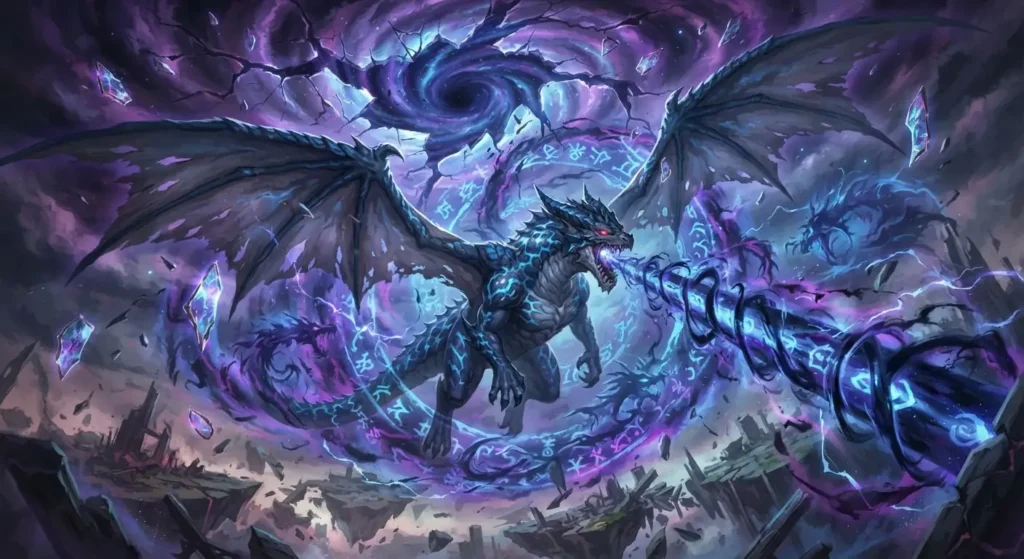
Acnologia is what happens when Fairy Tail asks what a human being becomes after consuming too much dragon power.
He started human, absorbed dragon lacrima, and became what the series calls the Dragon of Apocalypse, strong enough that other dragons fear him.
Igneel and Acnologia work as opposite poles of the same show. One dragon chose to parent a human. One human became a dragon and lost himself doing it.
That contrast is doing real thematic work, not just filling a villain slot. The question underneath is whether power like that can ever be inherited safely.
7. Tohru, Miss Kobayashi’s Dragon Maid
Tohru is a several-thousand-year-old dragon from another dimension who works as a maid because she’s in love with the woman who saved her life.
That premise could have stayed a one-joke gag. Instead, the show plays the domestic comedy completely straight while never letting you forget what Tohru actually is: capable of leveling a city block, currently more concerned with getting the laundry right.
The design draws on Eastern dragon proportions, long and serpentine rather than four-legged and squat, but the personality is pure sitcom. That gap between raw power and small daily stakes is the entire engine of the show’s comedy.
8. Lucoa, Miss Kobayashi’s Dragon Maid
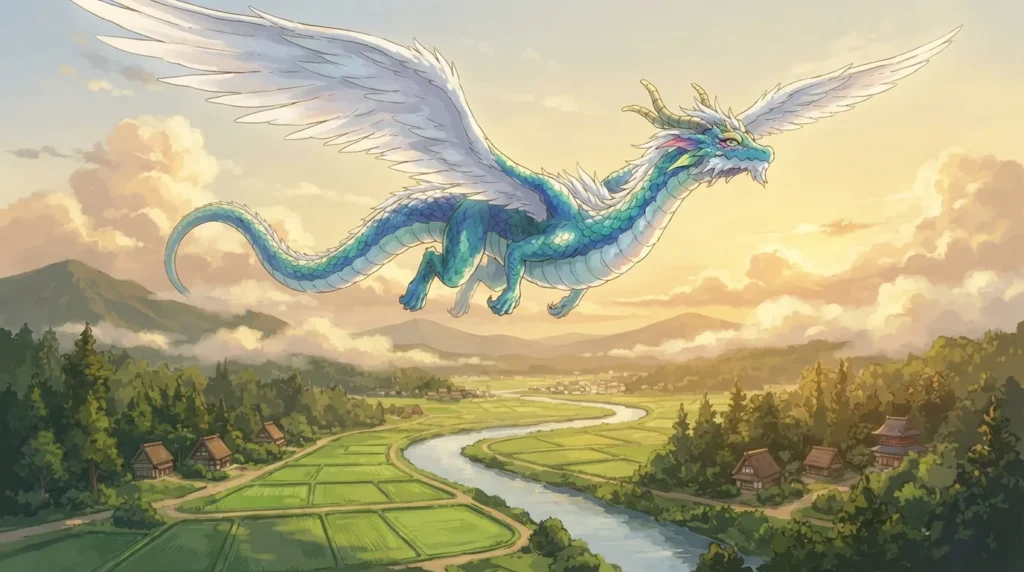
Lucoa is the other reason Dragon Maid earns two spots on this list instead of one.
Where Tohru is anxious and eager to please, Lucoa is ancient and unbothered, a chaos agent who’s been alive long enough to stop taking most things seriously.
She’s a golden dragon, sun-associated in her design, and centuries older than most of the cast combined.
Putting Tohru and Lucoa side by side shows how much range a single anime can get out of “dragon” as a character concept. Same species, same setting, completely different relationship to power and time.
9. Ddraig, Highschool DxD
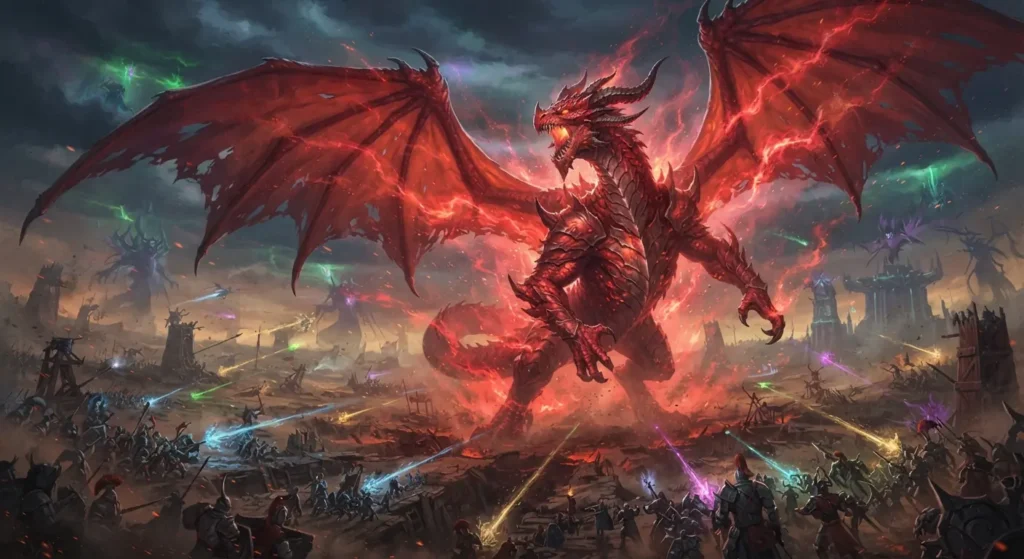
Ddraig’s name is not a coincidence, and this is where the folklore gets genuinely interesting.
He’s called the Welsh Dragon, and “Ddraig” comes directly from Y Ddraig Goch, the red dragon on the Welsh flag. That flag design traces back to a much older story: two warring dragons, one red and one white, buried beneath a fortress in the Mabinogion tradition.
Highschool DxD splits that old rivalry in two. Ddraig becomes the red dragon sealed inside Issei Hyoudou’s gauntlet, and Albion becomes the white dragon and his eternal rival.
It’s a genuinely clever move. Take a real national myth about two dragons who never stop fighting, and turn it into a permanent rivalry running underneath a completely unrelated story.
10. Kaido, One Piece
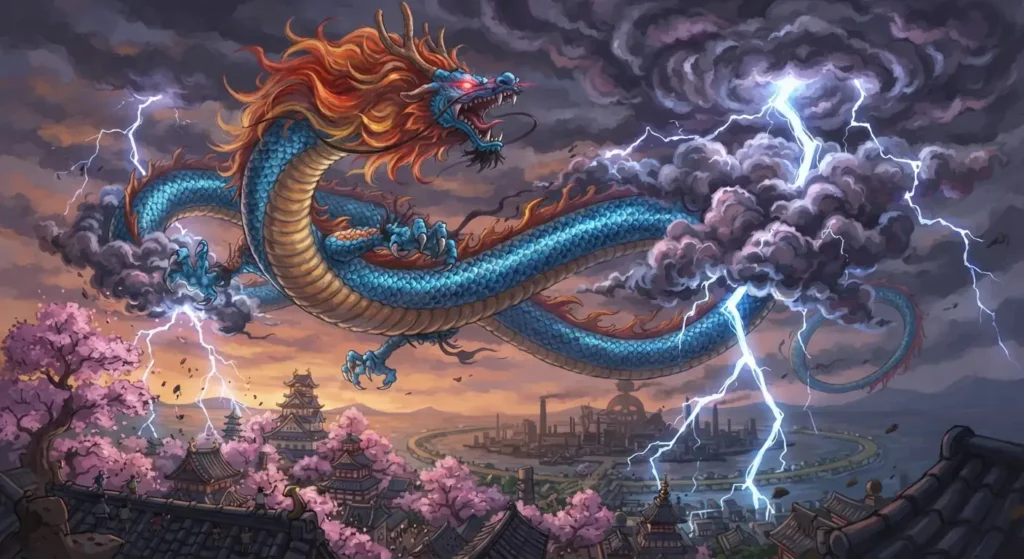
Kaido doesn’t look like a dragon for most of his screen time, which is sort of the point.
He’s the captain of the Beast Pirates and one of the strongest characters in One Piece. His Devil Fruit, the Uo Uo no Mi, Model: Seiryu, lets him transform into a massive Azure Dragon at will.
Seiryu is the Japanese name for the Azure Dragon of Chinese constellational mythology, one of four directional guardian beasts alongside a tiger, a phoenix, and a tortoise.
Eiichiro Oda didn’t stop at the name, either. Kaido’s fruit ties explicitly to the Chinese legend of the Dragon Gate, where a carp fighting up a waterfall against impossible odds gets rewarded with a dragon’s body.
Given how much of Kaido’s arc is about struggle and endurance, that reference isn’t random.
11. Veldora Tempest, That Time I Got Reincarnated as a Slime
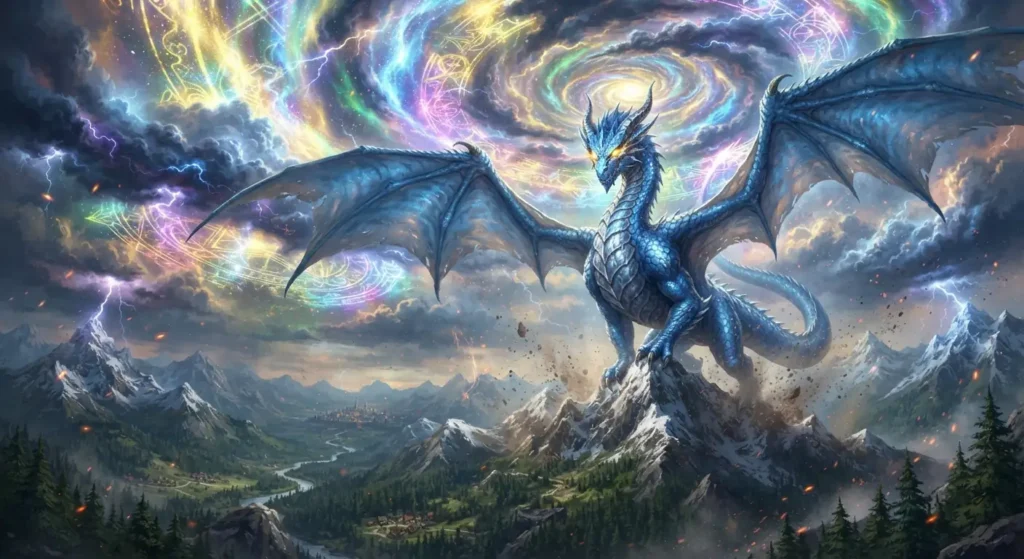
Veldora spent three hundred years sealed in a cave before the story even starts, and that detail shapes everything about who he becomes.
He’s one of the True Dragons, catastrophically powerful, and the first character the reincarnated protagonist actually talks to.
Being trapped that long left him lonely enough that the moment someone shows him kindness, he attaches completely, sharing his family name and becoming the story’s emotional anchor early on.
The show gets real comedy out of a world-ending dragon whose personality was partly shaped by reading manga during his imprisonment. It’s a strange detail, and it works because the show commits to it fully instead of treating it as a throwaway joke.
12. Bahamut, Rage of Bahamut and Granblue Fantasy
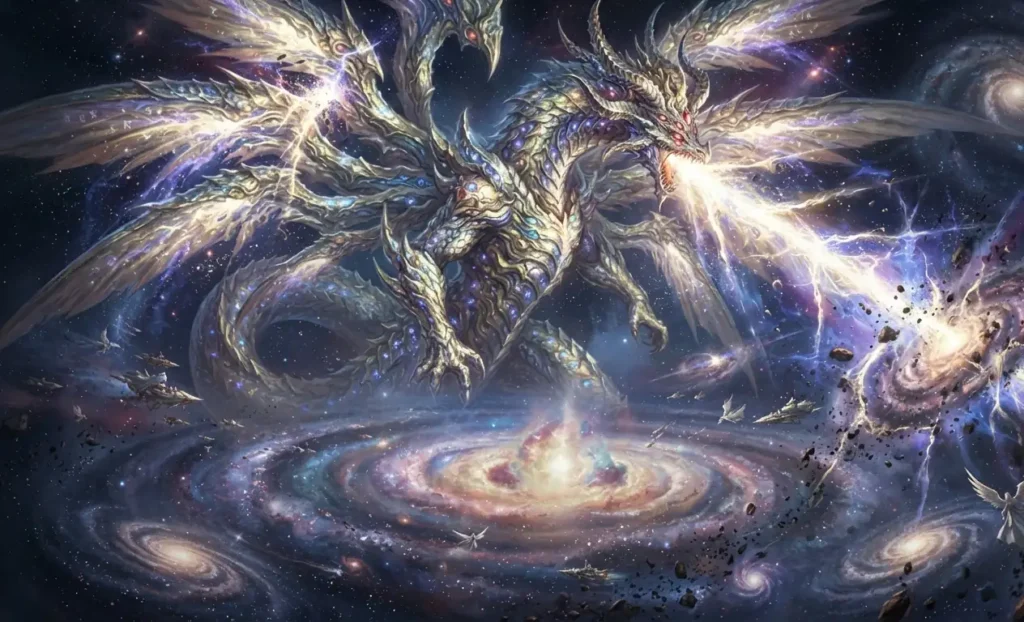
Bahamut has one of the strangest origin stories on this entire list, and almost nobody clocks it.
In Arabic cosmology, Bahamut was originally a colossal fish, sometimes described with an elephant-like head, holding up the world from beneath a stack of other creatures. No dragon involved anywhere in that version.
Dungeons & Dragons changed that in the 1970s. Designers Gary Gygax and Rob Kuntz turned Bahamut into the Platinum Dragon, king of good dragonkind, a reinvention specific to their game rather than anything in the original folklore.
Anime and games inherited that D&D version wholesale. Rage of Bahamut built its entire 2014 anime around a Bahamut apocalyptic enough to end the world, and Granblue Fantasy leans on the same dragon-god framing.
So the “ancient mythological dragon” most fans picture when they hear the name Bahamut is really a decades-old reinterpretation of a fish. That’s not a knock on the character. It’s just a more interesting history than “ancient dragon god” suggests on its own.
13. Charizard, Pokemon
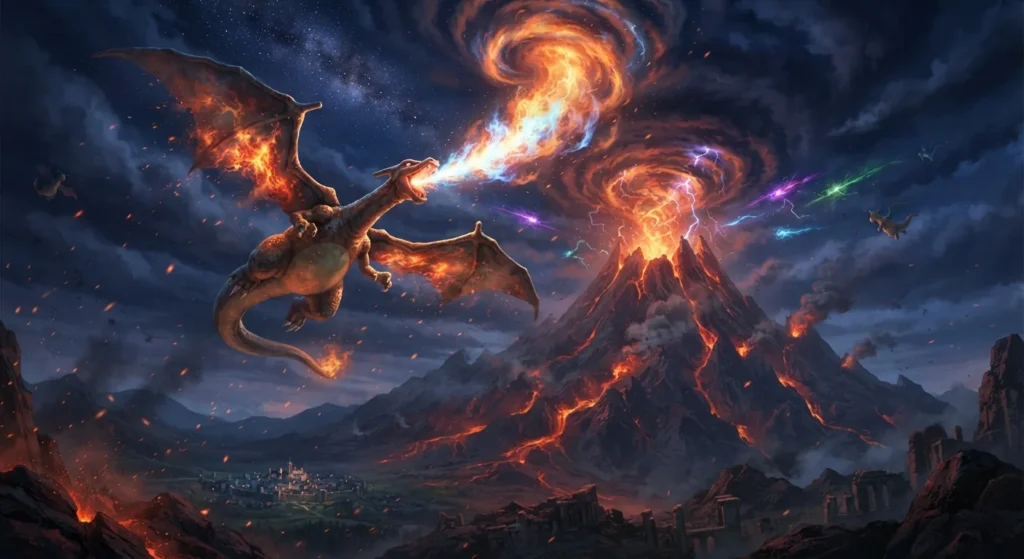
Charizard belongs on this list and also technically shouldn’t be here, and that tension is worth sitting with.
Charizard is Fire and Flying type, not Dragon type, which surprises people who grew up assuming otherwise. The Pokemon itself predates the Dragon type existing in the games at all.
Its design leans hard on European dragon imagery: wings, horns, a tail flame standing in for fire breath.
The games do eventually grant it a dragon typing, but only through Mega Charizard X, a temporary battle transformation, not its default form.
Ask ten anime fans to name an iconic anime dragon, and a good number will say Charizard without hesitating. Ask Game Freak, and technically, they’d disagree.
14. The Red Dragon, Delicious in Dungeon
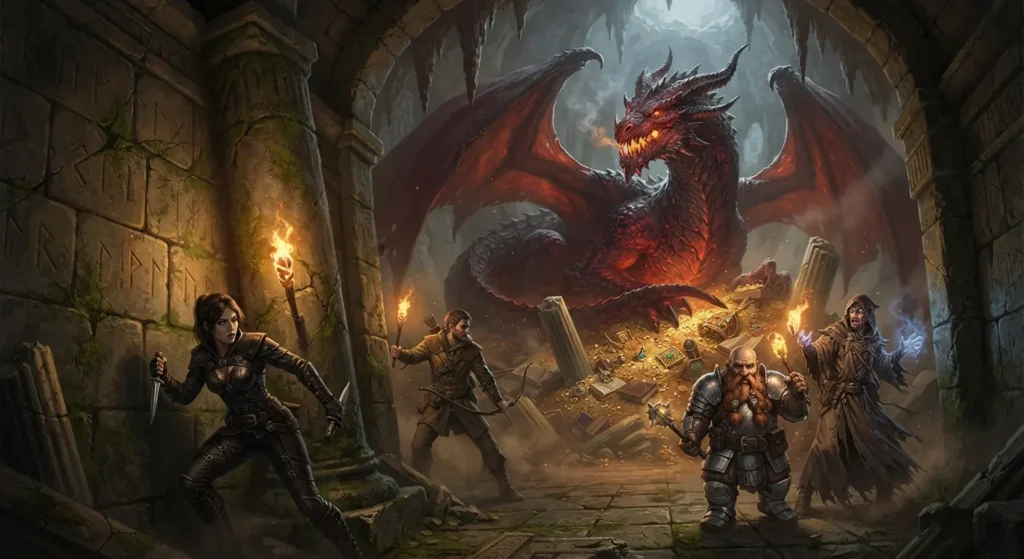
The Red Dragon doesn’t have a personal name, and it’s still one of the most memorable dragons on this entire list.
It eats Falin in the opening stretch of the story, the event that kicks off the whole plot. Its defeat and dissection get treated with more anatomical seriousness than almost any other dragon fight in anime.
Delicious in Dungeon is famous for asking what monsters would actually taste like, and the Red Dragon gets the full treatment: skin, organs, meat, all of it.
No name, no tragic backstory, no rivalry arc. Just a genuinely dangerous animal the story respects enough to treat as a creature instead of a plot device with a face. Sometimes that restraint is exactly what makes something memorable.
Final Thoughts: What These Fourteen Dragons Actually Have in Common
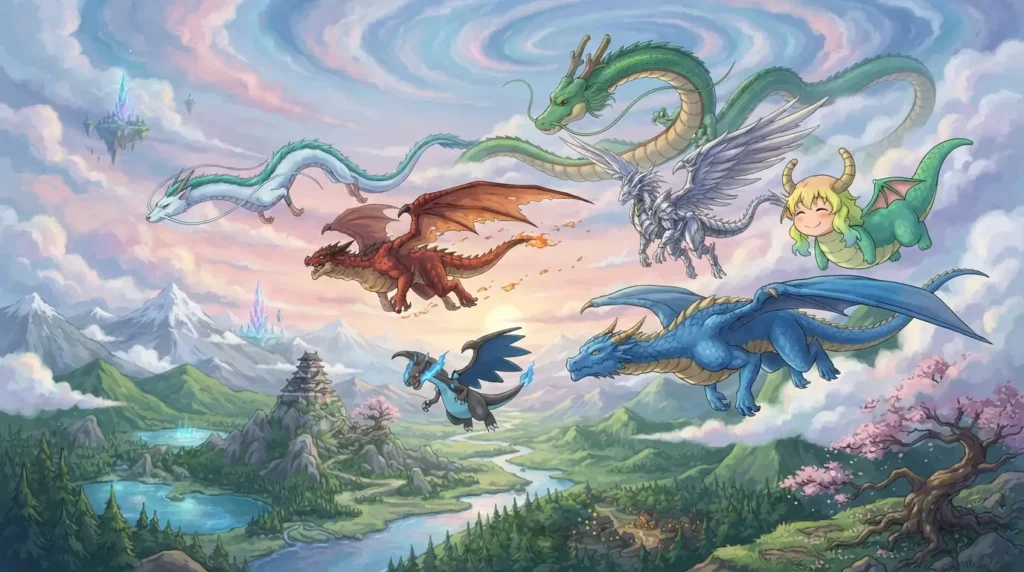
Looking at all fourteen together, a pattern shows up that I didn’t fully expect going in.
Roughly half of these draw on real mythology and bend it hard: Ddraig from Welsh legend, Kaido from Chinese constellational myth, Bahamut from Arabic cosmology, Haku from Shinto tradition.
The other half are closer to pure invention, built to serve a specific mechanic or character beat rather than reference anything older.
Neither approach is more legitimate than the other. Blue-Eyes White Dragon doesn’t need three thousand years of folklore behind it to mean something. It needs Kaiba glaring at it dramatically, and it delivers exactly that.
What actually separates a forgettable anime dragon from a genuinely memorable one isn’t mythological pedigree. It’s whether the dragon does real work in the story.
A wish granter, a rival, a parent, a warning, rather than existing because the genre expects one somewhere in the cast.
Frequently Asked Questions
Are there more dragons in anime than in Western fantasy?
Not necessarily more, but anime dragons cover a wider range of roles. Western fantasy tends to use dragons as obstacles or treasure guardians. Anime uses them as parents, rivals, gods, and comic relief just as often, which is part of why the designs vary so much.
Why do so many anime dragons take human form?
It’s partly a budget and pacing choice. A humanoid dragon can talk, act, and appear in ordinary scenes without constant transformation animation. It also lets writers explore personality up close, which is harder to do with a creature that mostly roars and breathes fire.
What’s the real difference between Eastern and Western dragon designs?
Eastern dragons, the kind Shenron and Kaido use, are typically long, limbless, and serpentine, associated with water and weather. Western dragons, like Blue-Eyes White Dragon, have four legs and wings and usually connect to fire, hoards, and territory. You can check out my blog post about Western vs Eastern dragons, where I explain in detail.
Is Toothless from How to Train Your Dragon an anime dragon?
No. How to Train Your Dragon is a DreamWorks production made in the United States, not Japan, so it doesn’t fit the definition of anime regardless of its visual style. Toothless belongs to Western animated fantasy, not the tradition covered here.
Which anime studio has made the most dragon-focused shows?
No single studio dominates this space. Dragon-centered anime spans Toei Animation (Dragon Ball), Kyoto Animation (Kobayashi’s Dragon Maid), and Studio Trigger (Delicious in Dungeon), among others, so the trope crosses studios rather than belonging to one.
Further Reading
- Susan J. Napier, Anime from Akira to Howl’s Moving Castle: Experiencing Contemporary Japanese Animation
- Michael Dylan Foster, The Book of Yōkai: Mysterious Creatures of Japanese Folklore
- Wolfram Eberhard, A Dictionary of Chinese Symbols
- Advanced Dungeons & Dragons, Monster Manual: Special Reference Work – Gary Gygax
- The legend of the Welsh dragon | Visit Wales
- Delicious in Dungeon World Guide: The Adventurer’s Bible, Complete Edition | Annie Bloom
Related Articles
- Dragon Mythology: How Dragons Are Depicted Across Cultures
- Chinese, Japanese & Korean Dragons: How They Actually Differ
- 7 Eastern Dragon Facts Most People Believe But Are Wrong
- 10 Eastern Dragon Legends Still Shaping Fantasy Today
- Fourth Wing Review: Enjoyable, Not Groundbreaking
- Why Dragons Are Almost the Perfect Mythological Creature
- 15 Elemental Dragon Types in Fantasy: Fire, Ice & Beyond
Written by Batin Khan, a curious free spirit who loves reading and exploring the worlds of fantasy, mythology, and ancient stories. Through this blog, Batin hopes to share that sense of wonder with readers while building an exciting future along the way.