
 By
By Quick Takeaways:
- Monster theory gives the word monster a technical meaning well beyond simply scary, and that technical meaning is where the real answer to this question actually lives
- An undisputed complete monster needs to violate categories, adapt endlessly to whatever a culture is actually afraid of, refuse to stay defeated, and occupy the literal boundary between civilization and everything outside it
- Dragons satisfy every one of these four criteria more completely than vampires, werewolves, or giants, which is a specific and testable claim rather than a vague compliment
- Composite anatomy, cyclical returns after apparent defeat, and threshold geography aren’t decoration in dragon myth. They’re the exact mechanisms monster theorists have identified as doing the cultural work of a monster
- Perfect here means structurally complete, not morally superior, and the honest caveat at the end matters as much as the argument itself
Perfect monster sounds like a compliment you’d pay lazily, the kind of phrase that means nothing more specific than very impressive dragon. I want to make a much narrower and more specific claim than that, using an actual technical framework that scholars of horror and folklore have spent decades developing, and then show you exactly why dragons keep winning against every other candidate you could put forward.
What a Monster Actually Is, Technically
It’s Not Just Something Scary
| Scholar | Main Idea |
|---|---|
| Noël Carroll | Monsters violate categories. |
| Mary Douglas | Pollution comes from category confusion. |
| Jeffrey Jerome Cohen | Monsters embody cultural anxieties. |
Philosopher Noël Carroll, in his influential 1990 study The Philosophy of Horror, argued that what separates a monster from a merely dangerous animal is impurity, a specific quality of violating or straddling the categories a culture uses to organize the world. A lion is dangerous.
It isn’t a monster, because it fits cleanly into an existing category, predator, animal, understood threat. A creature that’s simultaneously alive and dead, or simultaneously animal and something categorically other, produces a different and more specific kind of unease, because your classification system itself has nowhere to put it.
Literary scholar Jeffrey Jerome Cohen pushed this further in his widely cited 1996 essay Monster Theory: Seven Theses, proposing that monsters do real, ongoing cultural work rather than simply existing to frighten.
His theses include the claims that a monster’s body encodes the specific anxieties of the culture that produced it, that the monster always escapes rather than staying permanently defeated, and that the monster dwells at the gates of difference, marking the literal boundary between the world a culture considers safe and known and everything that sits beyond it.
Four Criteria a Truly Complete Monster Needs
| Criterion | What It Means | Why It Matters | Dragon Example |
|---|---|---|---|
| 🧩 Categorical Impurity | Breaks natural classifications | Creates unease through ambiguity | Composite anatomy |
| 🌍 Cultural Adaptability | Changes meaning across cultures | Allows different societies to reinterpret the monster | Benevolent in China, Satanic in Europe |
| ♻️ Structural Persistence | Cannot be permanently defeated | Makes the monster culturally enduring | Apep, Fafnir, recurring dragon myths |
| 🚪 Threshold Positioning | Guards the boundary between worlds | Represents the unknown beyond civilization | Caves, mountain passes, river gates |
Pulling from both of these frameworks, and from anthropologist Mary Douglas’s earlier work on how cultures define pollution through category violation,
I want to propose four specific criteria a true complete monster needs to satisfy. Not every monster needs all four to work well in a specific story. But the monster that satisfies all four most completely earns the word perfect in a way that’s actually defensible rather than just enthusiastic.
Categorical impurity. It has to resist clean classification within the culture’s existing schemes for organising the natural world.
Cultural adaptability. It has to be flexible enough to encode whatever a given culture’s specific anxieties happen to be, rather than being permanently tied to one fixed meaning.
Structural persistence. It has to truly resist staying defeated, returning, escaping, or leaving consequences that outlive its apparent destruction.
Threshold positioning. It has to occupy the literal or symbolic boundary between the human world and whatever lies outside it, rather than simply existing inside either space.
Let’s test dragons against each one specifically.
Criterion One: Categorical Impurity
The Composite Body as the Whole Point
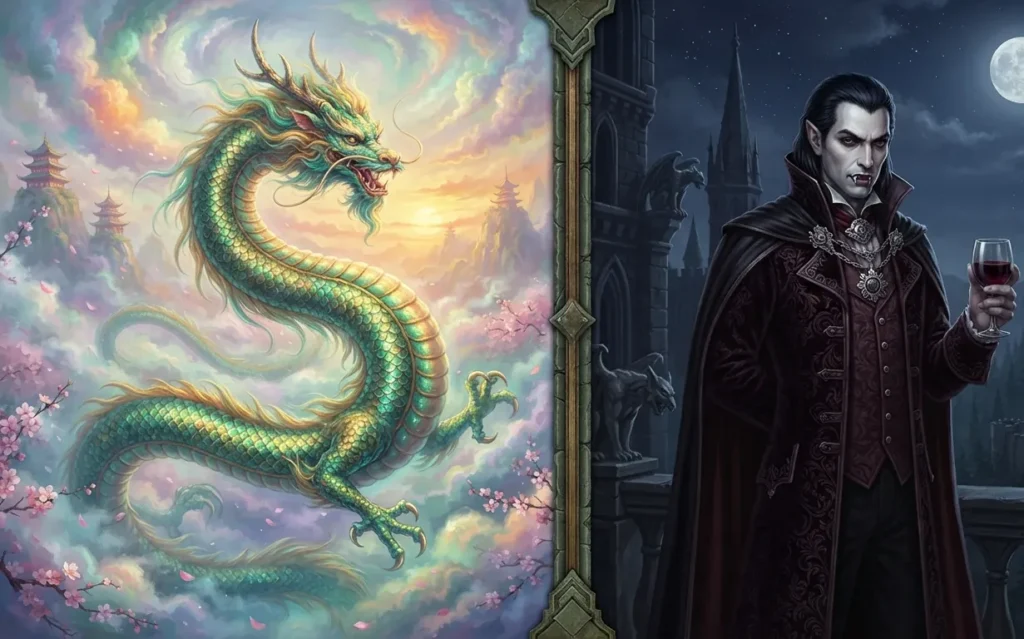
Carroll’s impurity thesis is almost embarrassingly literal when you apply it to the classical Chinese dragon, whose composite form combines features from nine different animals, camel’s head, deer’s antlers, demon’s eyes, snake’s neck, clam’s belly, carp’s scales, eagle’s claws, tiger’s paws, and cow’s ears, according to the traditional description.
That’s not decorative excess. It’s a body deliberately constructed so that no single animal category can contain it.
European dragon tradition does the same work through a different route, a creature simultaneously reptilian, avian through its wings, and elementally tied to fire in a way no purely biological animal is.
Whichever specific tradition you look at, the dragon consistently refuses to sit inside a single zoological box, which is precisely the quality Carroll identifies as the core mechanism of monstrousness itself.
Compare This to a Vampire
A vampire is impure too, alive and dead simultaneously, which is exactly why it counts as a monster under Carroll’s framework rather than simply a dangerous person.
But a vampire violates only one major category boundary, the line between life and death. The dragon violates several simultaneously, reptile and mammal and bird, sometimes fish, often elemental force on top of all of it. If impurity is the mechanism, the dragon is doing considerably more of the actual work in a single body than the vampire manages.
Criterion Two: Cultural Adaptability
| Culture | Primary Symbolism | Narrative Role | Representative Example |
|---|---|---|---|
| China | Rain, prosperity, imperial authority | Benevolent guardian | Chinese dragon (Long) |
| Medieval Europe | Sin, Satan, chaos | Enemy to be defeated | Saint George and the Dragon |
| Norse | Greed, corruption, curse | Embodiment of avarice | Fafnir |
| Mesoamerica | Creation, knowledge, civilization | Divine culture hero | Quetzalcoatl |
One Body, Radically Different Meanings
Cohen’s thesis that a monster’s body is a cultural body, encoding whatever specific anxiety produced it, predicts that the most successful monsters should be able to carry wildly different meanings across different cultures without losing coherence. Dragons pass this test about as completely as any figure in world mythology.
The same basic creature type becomes, in China, a benevolent rain bringing cosmic administrator whose favor agricultural survival depends on. In medieval Christian Europe, it becomes a proxy for Satan and original sin, something a saint exists specifically to overcome.
In Norse tradition, through Fafnir, it becomes what unchecked greed does to a person from the inside. In Mesoamerican tradition, through Quetzalcoatl, it becomes a creator god who taught humanity civilization itself.
Why This Range Matters
No other single monster type manages this range while remaining recognisably the same creature. Vampires stay fairly consistently tied to specific anxieties about contagion, sexuality, and predation across most of their major traditions. Werewolves stay tied to anxieties about the beast hiding inside civilised humanity specifically.
The dragon alone seems to accept almost any cultural anxiety a society hands it, benevolence, greed, sin, creation, imperial legitimacy, and wear each one convincingly. That’s a truly rare structural property, and it’s exactly what Cohen’s cultural body thesis says a maximally effective monster should be capable of.
Criterion Three: Structural Persistence
           STRUCTURAL PERSISTENCE

    ⚔ Defeat
        │
        ▼
 ☠ Legacy Survives
        │
        ▼
 🌱 Evil Re-emerges
        │
        ▼
  🐉 New Dragon
        │
        ▼
  📖 New Generation
        │
        └──────────────↺
The Monster Always Escapes
Cohen’s specific phrase, the monster always escapes, describes how the most durable monsters resist staying permanently defeated, returning in altered form, leaving consequences that outlive their apparent destruction, or simply repeating on a cycle no single hero’s victory can interrupt. Dragons satisfy this criterion in ways that are more literal than most monster traditions manage.
Egyptian mythology’s Apep isn’t defeated once. He’s defeated every single night, forever, in an eternal battle against the sun god Ra that never produces a final, permanent resolution. Norse mythology’s Fafnir dies at Sigurd’s hands, but the cursed gold he’d hoarded passes directly to his killer and destroys him too, meaning the dragon’s actual legacy outlived its own death entirely.
Even the Longmen legend I’ve written about elsewhere on this blog, carp transforming into dragons at the Yellow River’s waterfall, describes a transformation that keeps happening, on a recurring cycle, rather than a single completed event.
Compare This to a Giant
A giant, in most mythological traditions, is really defeatable in a way that produces real closure. Kill the giant, the threat ends, the story moves forward without that specific menace returning. Giants are dangerous and often monstrous under Carroll’s impurity criteria too, but they lack this specific quality of structural persistence that the best dragon myths build in almost automatically.
The dragon doesn’t just get defeated more slowly. It frequently isn’t fully defeatable in the first place, which is precisely the property Cohen identifies as separating the truly durable monster from the merely dangerous one.
Criterion Four: Threshold Positioning
Dwelling at the Gates of Difference
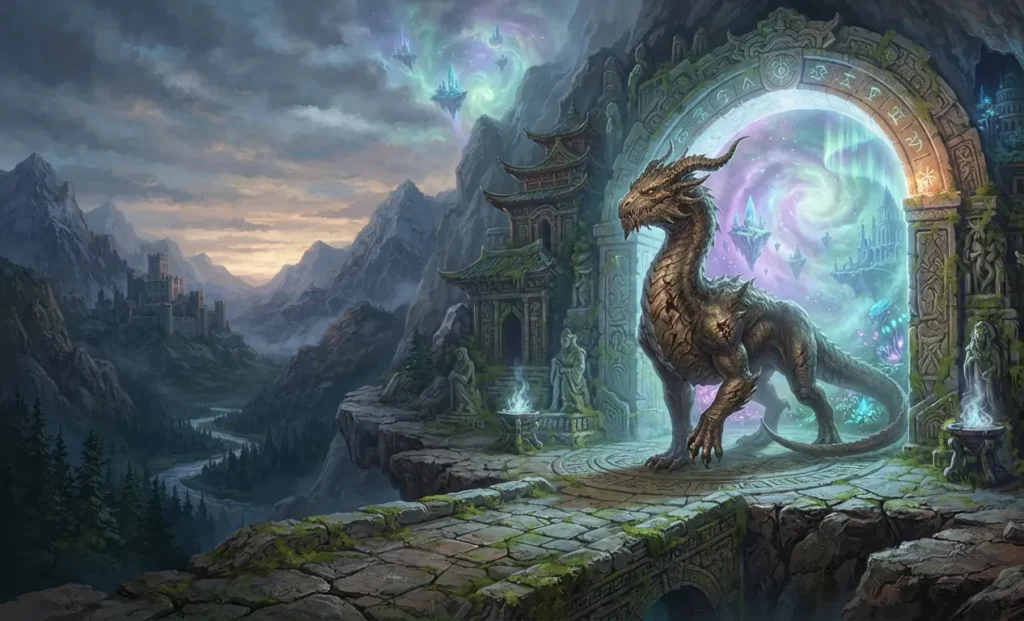
Cohen’s fourth relevant thesis, that the monster dwells at the gates of difference, describes how the most effective monsters occupy literal boundary spaces, marking the actual edge between the world a culture considers safe and understood and whatever lies beyond it. I’ve written on this blog about how consistently dragon mythology places its dragons at exactly these threshold locations, and it’s worth stating plainly how deliberate that pattern actually is.
Cave mouths, mountain passes, river mouths and river gates specifically, the boundary between the mortal world and the undersea Dragon King’s palace, the specific point where a carp either remains a fish or becomes something else entirely at the Longmen waterfall.
These aren’t incidental settings an author picked because they sounded atmospheric. They’re the exact geography Cohen’s framework predicts a complete monster should inhabit, because a creature marking the boundary between known and unknown needs to physically occupy that boundary rather than living safely inside either the human world or fully outside it.
Compare This to a Kraken
A kraken is unmistakably terrifying and impure under Carroll’s framework, an oversized, barely classifiable sea creature. But it typically lives entirely within one domain, the deep ocean, fully outside the human world rather than at its actual threshold. Dragons, by contrast, are consistently positioned at the specific crossing point between domains, the cave you have to enter, the pass you have to cross, the gate you have to pass through.
That’s a more complete satisfaction of Cohen’s fourth thesis than most sea monster traditions manage, precisely because the dragon so often guards the door rather than simply living somewhere far away and dangerous.
Running the Full Comparison
| Monster | Category Violation | Cultural Adaptability | Persistence | Threshold Dweller |
|---|---|---|---|---|
| Dragon | ⭐⭐⭐⭐⭐ | ⭐⭐⭐⭐⭐ | ⭐⭐⭐⭐⭐ | ⭐⭐⭐⭐⭐ |
| Vampire | ⭐⭐⭐⭐ | ⭐⭐⭐ | ⭐⭐⭐ | ⭐⭐ |
| Werewolf | ⭐⭐⭐⭐ | ⭐⭐ | ⭐⭐ | ⭐⭐⭐ |
| Giant | ⭐⭐ | ⭐ | ⭐ | ⭐⭐⭐ |
| Kraken | ⭐⭐⭐ | ⭐ | ⭐⭐ | ⭐ |
Scoring the Usual Suspects
Putting this together honestly, here’s how the most commonly cited mythological monsters actually perform against these four specific criteria, rather than against a vague sense of how scary each one feels.
Vampires score high on categorical impurity, the life and death boundary violation is central to the figure, and reasonably high on cultural adaptability, since vampire mythology has absorbed anxieties about disease, sexuality, and aristocracy across different eras. They score lower on threshold positioning specifically, since vampires typically operate inside human settlements rather than marking the literal boundary of them.
Werewolves score well on categorical impurity, human and animal simultaneously, and reasonably on threshold positioning, since the transformation itself often happens at literal borders, the edge of town, the tree line. They score lower on cultural adaptability, staying fairly consistently tied to one specific anxiety, the beast inside civilised humanity, across most major traditions.
Giants score reasonably on threshold positioning, often guarding literal borders and passes in folklore, but score considerably lower on structural persistence, since giant myths overwhelmingly end in a completed, final defeat rather than a cyclical or unresolved one.
Dragons score highly across all four criteria simultaneously, which is precisely the specific claim this whole article is actually making, rather than a vaguer statement that dragons are simply cooler than everything else.
The Honest Caveat
Perfect Doesn’t Mean Best, and It Doesn’t Mean Only
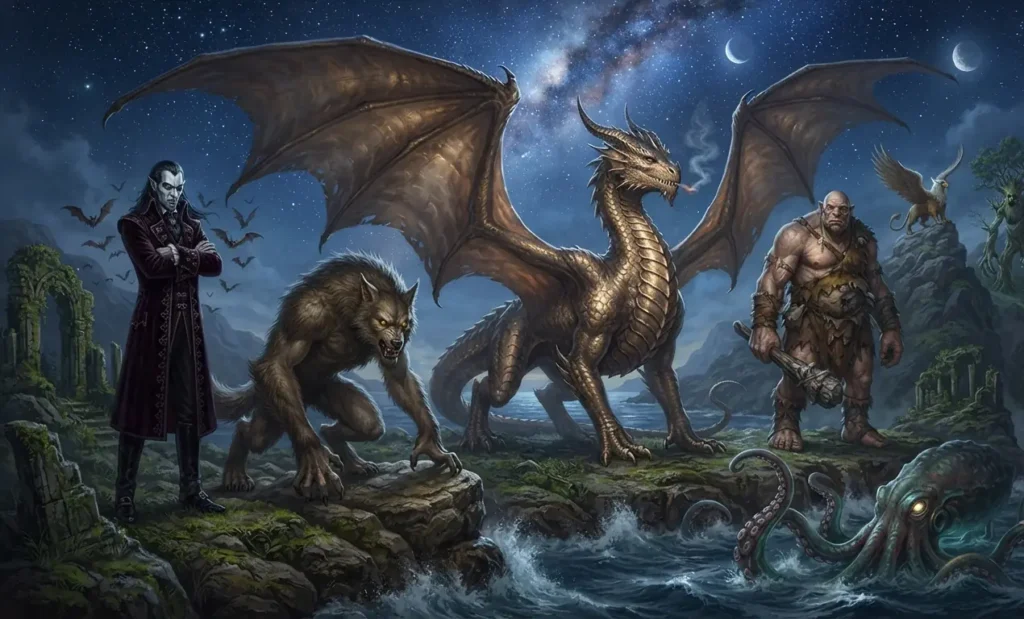
I want to be careful here, because perfect in this article’s specific, technical sense means structurally complete against a particular theoretical framework, not morally or aesthetically superior to every other monster tradition.
A vampire’s tighter, more specific cultural focus on contagion and predation makes it a considerably more precise tool for certain specific stories than a dragon’s broader, more adaptable menace ever could be. Specificity and completeness aren’t the same virtue, and a writer reaching for a vampire instead of a dragon is often making the correct choice for what a particular story actually needs.
I’d also flag honestly that Carroll and Cohen’s frameworks are themselves specific academic theories, influential and widely cited within horror studies and folklore scholarship, but not universally accepted as the single correct account of what monsters are or do. Other theorists emphasise different mechanisms entirely.
I’m applying a specific, defensible framework here rather than claiming it’s the only lens that could produce a meaningful answer.
What the Argument Actually Establishes
What I do think this argument establishes solidly is that dragons aren’t simply popular because they’re big or because they breathe fire. They’re popular, across cultures that never had contact with each other, because the underlying structure of the dragon figure happens to satisfy, more completely than almost any competing mythological candidate, the specific mechanisms scholars have identified as doing the actual cultural and psychological work a monster is supposed to do.
That’s a considerably more interesting claim than dragons are just cool.
Frequently Asked Questions
What does categorical impurity actually mean in monster theory?
It refers to a creature that resists clean classification within a culture’s existing categories for organising the natural world, simultaneously alive and dead, or animal and something else entirely. Philosopher Noël Carroll argues this specific quality, rather than danger alone, is what makes something a monster rather than merely a dangerous animal.
Who is Jeffrey Jerome Cohen and why does his work matter here?
Cohen is a literary scholar whose widely cited 1996 essay Monster Theory: Seven Theses proposed that monsters do genuine cultural work, encoding a society’s specific anxieties, resisting permanent defeat, and marking the literal boundary between the known world and whatever lies beyond it.
Does this mean vampires or werewolves are lesser monsters?
Not lesser, more specific. Vampires and werewolves each score highly on some of the four criteria discussed here but not all four simultaneously, which makes them excellent, precise tools for particular kinds of stories even though dragons satisfy the full framework more completely overall.
Is monster theory a widely accepted academic framework?
Carroll’s and Cohen’s specific works are influential and frequently cited within horror studies and folklore scholarship, though they represent particular theoretical approaches rather than a single universally agreed account of what monsters fundamentally are or do.
Why do dragons appear at thresholds and boundaries so consistently across cultures?
Cohen’s framework predicts that the most complete monsters occupy the literal boundary between a culture’s known world and what lies beyond it. Dragon mythology consistently places dragons at cave mouths, mountain passes, and river gates specifically, which satisfies this pattern unusually completely.
Final Thoughts
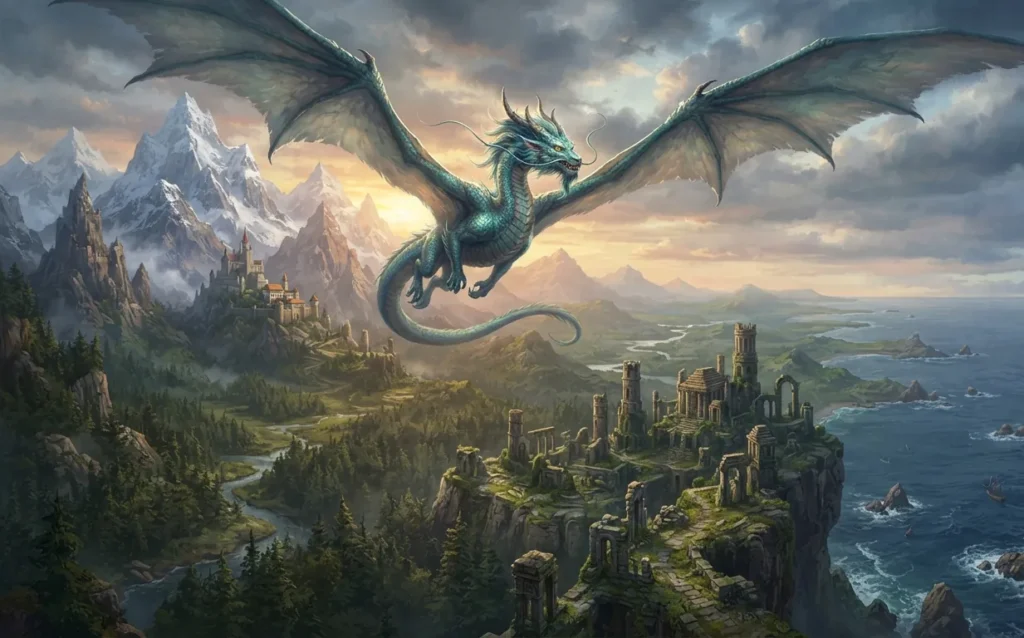
A perfect monster, in the narrow and specific sense this article has actually been arguing for, isn’t the one that scares you the most in any single moment. It’s the one whose body resists your categories, whose meaning bends to fit whatever your culture is actually afraid of, whose defeat never quite sticks, and whose home address is the exact boundary between everything you understand and everything you don’t.
Test any other monster you can think of against those four specific requirements. The dragon keeps winning not because it’s the loudest or the largest, but because its actual structure, composite, adaptable, undefeatable, and permanently stationed at the door, happens to be built from exactly the materials monster theory says a complete monster needs.
Related Articles
- Dragon Mythology: How Dragons Are Depicted Across Cultures
- Chinese, Japanese & Korean Dragons: How They Actually Differ
- 11 Eastern Dragon Legends Still Shaping Fantasy Today
- What If Dragons Were Real? Here’s What Would Happen
- 14 Most Iconic Anime Dragons You Should Recognize
- Why Do Dragons Hoard Gold? What Role Does Fafnir Play
- 15 Elemental Dragon Types in Fantasy: Fire, Ice & Beyond
- What Is the Largest Dragon in Mythology? [Real Answer]
References
- Cohen, J. J. (Ed.). (1996). Monster Theory: Reading Culture.
- Carroll, N. (1990). The Philosophy of Horror, or Paradoxes of the Heart.
- Purity and Danger: An Analysis of Concepts of Pollution and Taboo – Mary Douglas
- The Penguin Book of Dragons
- The Book of Dragons & Other Mythical Beasts – Joe Nigg
- An Instinct for Dragons by David E. Jones
- Birrell, Anne. Chinese Mythology: An Introduction.
- Dragons and Dynasties: An Introduction to Chinese Mythology – Ke Yuan
- The Poetic Edda – Carolyne Larrington
- The Ancient Egyptian Book of the Dead
- The Gods and Symbols of Ancient Mexico and the Maya: An Illustrated – Mary Ellen Miller, Mary Miller, Karl A. Taube
Written by Batin Khan, a curious free spirit who loves reading and exploring the worlds of fantasy, mythology, and ancient stories. Through this blog, Batin hopes to share that sense of wonder with readers while building an exciting future along the way.