

 By
By Quick Takeaways:
- Cradle’s specific achievement isn’t just escalating power. It’s making every advancement feel earned and legible, and these seven series share that discipline rather than just sharing a genre label
- Four are complete, giving you the same full payoff Cradle delivers. Three are ongoing, for readers who want more time inside a world before it closes
- The methodology below is stated plainly so you can see exactly what’s driving each placement
- Every entry includes an honest note on what it does differently from Cradle, not just what it does the same
Disclosure: As an Amazon Associate, I earn from qualifying purchases. This means I may receive a small commission if you buy through links on this site, at no extra cost to you. I appreciate your support
Cradle earned its following by respecting its own rules completely, letting every breakthrough mean something specific rather than simply making a character bigger. These seven series chase that same discipline, each in a truly different direction.
List Placement Methodology

Three criteria drive every placement on this list.
Craft and writing quality evaluates prose, structure, characterization, and the author’s control over pacing and emotional payoff across a long run. A series that starts strong and loses its grip scores lower than one that sustains quality throughout.
Progression system originality rewards novels that build internally consistent, visibly creative power systems rather than recycling generic leveling mechanics without contribution. This is the specific quality that made Cradle work, and it’s the bar every entry here has to clear.
Character depth evaluates whether the protagonist and key supporting cast are fully realized people whose choices feel driven by who they are rather than what the plot requires.
Mistborn: The Final Empire

Author: Brandon Sanderson | Length: 3 volumes in the original trilogy, complete Mistborn series consist of 8 books
If what you actually loved about Cradle was the feeling that every rule mattered and nothing happened arbitrarily, start here. Sanderson’s Allomancy is built with the same rigor Cradle applies to its own sacred arts, metals consumed for specific, consistent effects, with real limits the plot never quietly ignores.
Vin’s own growth follows a comparable arc to Lindon’s, starting from true powerlessness and building competence the reader can actually track breakthrough by breakthrough, rather than through vague, unexplained power spikes.
What’s different from Cradle is scale and tone. This is a tighter, three volume heist structure against an oppressive empire rather than an expansive, continuously escalating cosmic journey, and the ending lands with real finality rather than opening onto a much larger universe.
Best for: Readers who specifically loved Cradle’s rule bound rigor and want that same discipline applied to a tighter, fully self contained trilogy.
Status: Complete. 3 volumes in the original Mistborn era.
Mother of Learning

Author: Domagoj Kurmaic | Length: 4 Books, Complete, serialized in arcs
Cradle rewards readers who pay close attention to its own rules. Mother of Learning asks for that same attention and pays it off even more directly, since Zorian’s time loop means every piece of information he gathers becomes a tool he can actually reuse in the next iteration.
The progression here runs through accumulated knowledge and strategy as much as raw power, which gives it a real different texture from Cradle’s more straightforward strength escalation, while sharing the same core promise that nothing the protagonist learns goes to waste.
Best for: Readers who want progression built from compounding knowledge and strategy rather than pure power increase.
Sufficiently Advanced Magic
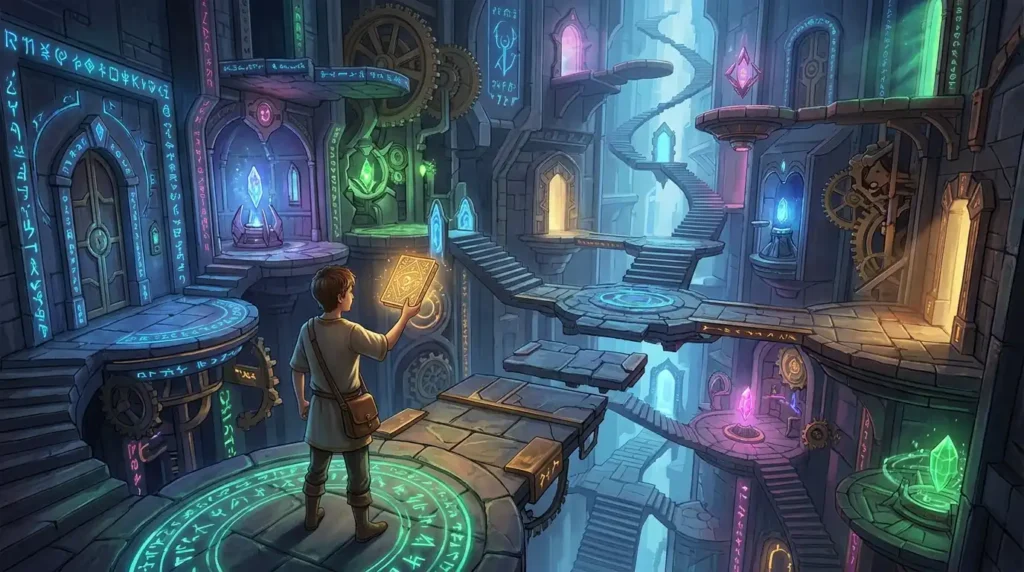
Author: Andrew Rowe | Length: 6 volumes in the Arcane Ascension series
Rowe’s magic system, built around bracers with distinct, learnable specializations, carries the same internal consistency Cradle fans specifically praise, rules that stay fixed across the entire series rather than bending whenever the plot needs them to.
Corin’s search for his missing brother gives the progression emotional stakes alongside the mechanical satisfaction, and the academy setting lets Rowe introduce new system wrinkles gradually, the way Cradle introduces new path mechanics as Lindon’s own world expands.
Best for: Readers who want a hard magic system explained with real precision, inside an academy structure Cradle doesn’t use.
Status: Complete, 4 volumes.
Mage Errant

Author: John Bierce | Length: 7 volumes and counting
Where Cradle follows one protagonist’s rise closely, Mage Errant spreads its progression across a incredibly distinct ensemble, each student developing their own specific magical Talent rather than sharing one universal system.
Bierce resists letting any single character dominate the group’s growth, which gives this series a different rhythm than Cradle’s tighter focus on Lindon specifically, while keeping the same commitment to internally consistent, clearly explained power growth.
Best for: Readers who want Cradle’s rigor applied to a ensemble cast rather than one central protagonist.
The Bound and the Broken
Author: Ryan Cahill | Length: 4 volumes and counting
Cradle eventually widens from a personal journey into cosmic stakes, and The Bound and the Broken starts closer to that larger scale from the outset, pairing Calen’s personal training under a hidden warrior with a sweeping, world spanning conflict building in the background.
Cahill treats both halves seriously, the personal skill progression and the epic political backdrop, which gives readers who loved Cradle’s eventual scale something that reaches for similar size earlier in its own run.
Best for: Readers who want progression fantasy blended with full epic fantasy stakes from early on.
Orconomics
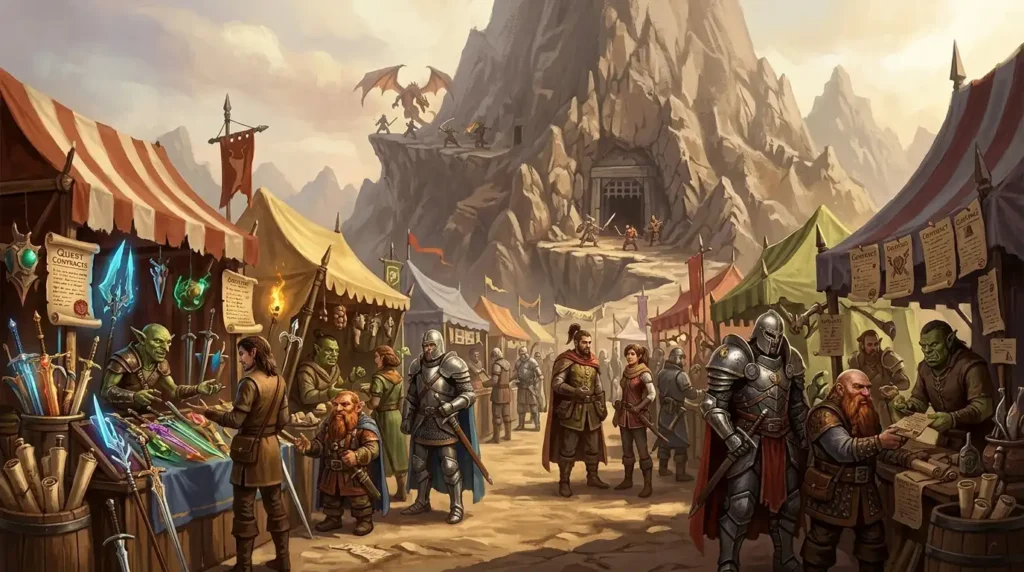
Author: J. Zachary Pike | Length: Complete trilogy
A genuine tonal palate cleanser after Cradle’s largely sincere register. Pike satirizes progression fantasy’s own conventions, questing as a regulated, bureaucratic industry, loot economics the characters openly discuss, while still delivering real character investment underneath the humor.
If you want to laugh at the genre’s tropes for a book or two before returning to something more serious, this is the strongest complete option available.
Best for: Readers who want progression fantasy’s tropes affectionately mocked rather than played straight, without losing real emotional stakes.
He Who Fights With Monsters

Author: Shirtaloon (Travis Deverell) | Length: 13 volumes and counting
Jason’s specific talent for solving problems sideways rather than through brute strength echoes the inventive, rules aware problem solving Cradle rewards, just delivered with considerably more comedy and a faster, more action forward pace.
This is the pick if you want something genuinely long to sink into next, with a comparable commitment to internal logic stretched across a much larger page count than Cradle’s own twelve volumes.
Best for: Readers who want a long, ongoing commitment with faster pacing and more humor than Cradle’s own tone.
Quick Reference Table
| Title | Author | Status | Best For |
|---|---|---|---|
| Mistborn: The Final Empire | Brandon Sanderson | Complete | Tighter, rule bound trilogy |
| Mother of Learning | Domagoj Kurmaic | Complete | Knowledge based progression |
| Sufficiently Advanced Magic | Andrew Rowe | Complete | Academy setting, hard magic |
| Mage Errant | John Bierce | Ongoing | Ensemble cast progression |
| The Bound and the Broken | Ryan Cahill | Ongoing | Epic scale blended progression |
| Orconomics | J. Zachary Pike | Complete | Satirical tonal break |
| He Who Fights With Monsters | Shirtaloon | Ongoing | Long, fast paced commitment |
Frequently Asked Questions
Which of these seven is closest to Cradle in actual tone, not just structure?
Sufficiently Advanced Magic and Mistborn both share Cradle’s largely sincere, earnest register, where the stakes are treated seriously throughout rather than undercut by humor, making them the closest tonal matches on this list.
Which series is the best choice if I want something I can finish quickly, the way Cradle eventually completed?
Orconomics is the shortest complete option here, at three volumes, followed by Sufficiently Advanced Magic at four, both giving you a finished arc without the open ended commitment the ongoing entries ask for.
Does Mistborn have the same escalating realm structure Cradle uses?
Not exactly. Mistborn’s progression runs through mastering specific Allomantic metals rather than discrete named realms, but the underlying principle, clear rules governing exactly what a character can and can’t do at a given skill level, functions the same way.
Is there a series here with multiple interconnected protagonists the way later Cradle volumes expand their cast?
Mage Errant is the clearest match, built from the outset around several distinct student protagonists rather than widening gradually from one central character the way Cradle’s own cast grows across its twelve volumes.
Which pick is best if I specifically want more cosmic, world threatening stakes like Cradle eventually reaches?
The Bound and the Broken reaches for that scale earliest and most directly, pairing personal training with a world spanning conflict from early in its run, rather than building toward that scale gradually the way Cradle does.
Final Thoughts
Seven series, each one chasing a different piece of what made Cradle work, rigor, earned advancement, genuine scale, or simply more time inside a world that respects its own rules.
Start with Mistborn if you want Cradle’s discipline in a tighter package, or He Who Fights With Monsters if you’re not ready to leave a long, ongoing commitment behind just yet.
Related Posts
- 9 Best Progression Fantasy Books 2026 [Ranked List]
- Cultivation vs Progression Fantasy: Which Should You Read?
- 12 Best Cultivation Novels [Ranked by Genre Fans]
- Why Your Brain Loves Progression Fantasy & LitRPG
- What Is LitRPG? The Genre Where Games Meet Fiction
- 9 Progression Fantasy Books With Female Leads [2026]
- LitRPG vs GameLit: Where One Ends and One Begins
- 13 Best Progression Fantasy Books You’ll Get Addicted To
Written by Batin Khan, a curious free spirit who loves reading and exploring the worlds of fantasy, mythology, and ancient stories. Through this blog, Batin hopes to share that sense of wonder with readers while building an exciting future along the way.