
 By
By After reading dozens of progression fantasy & litRPG novels over the years, I’ve started noticing that the books that kept me awake weren’t necessarily the ones with the biggest battles. They were the ones that understood exactly how to pace anticipation.
The Zeigarnik Effect and the One More Chapter Problem
An Almost Century Old Finding About Unfinished Things
In the 1920s, psychologist Bluma Zeigarnik observed something that’s since been replicated across decades of research: people remember and mentally return to unfinished tasks considerably more than tasks they’ve already completed. An interrupted goal keeps a small, persistent cognitive thread open, pulling attention back toward it, in a way a resolved one simply stops doing.
Progression fantasy weaponizes this structure more directly than almost any other genre. A chapter ending with a character at ninety eight percent toward a breakthrough, or mid battle against an opponent whose realm they haven’t yet matched, is a deliberately unfinished cognitive loop.
Your brain doesn’t experience that as a clean stopping point the way it experiences a fully resolved scene. It experiences it as an open task still demanding attention, which is exactly why closing the book there feels so much harder than it should.
You can see this pacing in many cultivation novels. Nine Star Hegemon Body Art provides a good example. Long Chen’s major advancements, such as progressing from the Five Star to the Six Star Battle Armor (or Combat Body), are rarely resolved the moment they become possible. Instead, the story stretches the anticipation across multiple chapters, layering obstacles, preparation, and escalating stakes before finally delivering the breakthrough.
Readers aren’t simply waiting for a fight to end; they’re waiting for a promise the story has deliberately left unfinished. That lingering anticipation is precisely what the Zeigarnik effect predicts.
Numbers Do Work That Prose Alone Can’t
Goal Setting Theory and the Power of Specificity
Psychologists Edwin Locke and Gary Latham spent decades building what’s now one of the most replicated findings in organizational psychology: specific, measurable goals consistently produce more motivation and more satisfaction on completion than vague ones. Telling yourself to do your best at something produces worse outcomes, reliably, than telling yourself to hit a specific, numbered target.
Traditional fantasy tells you a character grew stronger through vivid but fundamentally vague prose. Progression fantasy tells you their strength went from a specific number to a higher specific number, often with the exact mechanism spelled out.
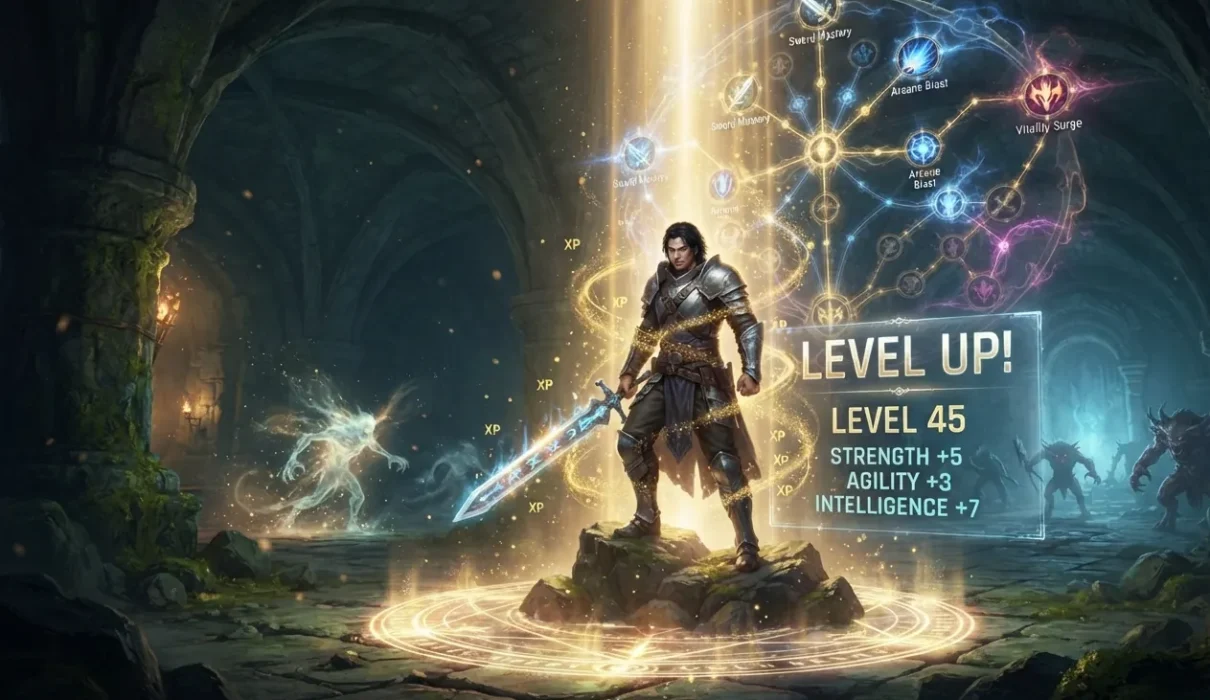
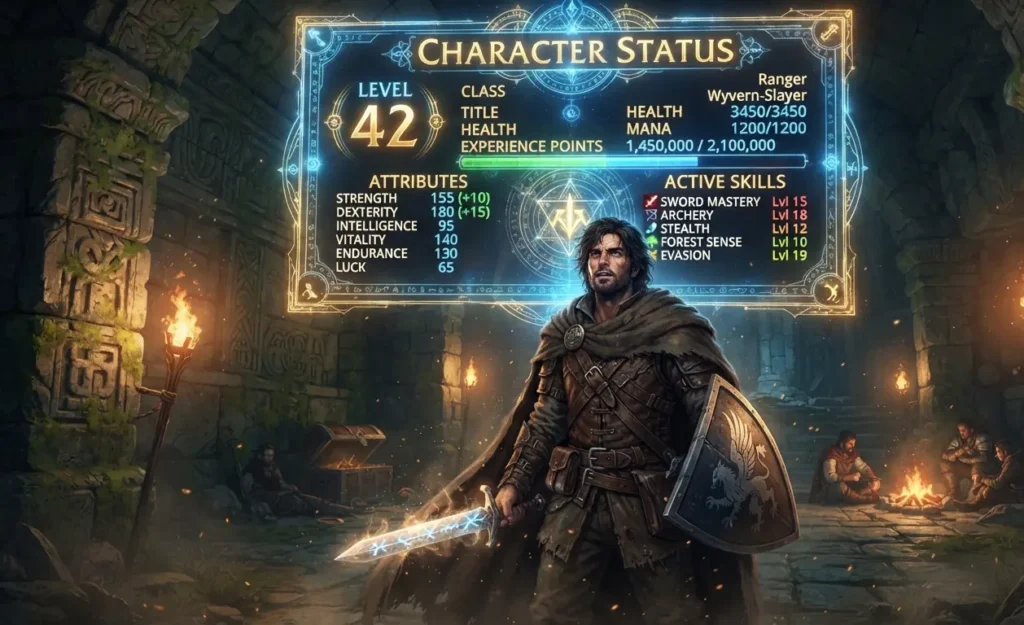
LitRPG makes this effect unusually literal. When a protagonist gains +5 Strength, reaches Level 30, or unlocks a new class, the reader doesn’t have to infer improvement from prose alone. The goal, the progress, and the payoff are all immediately visible. The satisfaction comes not just from becoming stronger, but from seeing exactly how much stronger.
For many modern readers, Solo Leveling helped popularize this style of explicitly measurable progression. Sung Jin-Woo’s growth isn’t merely described. It is continuously measured. Every completed quest, stat increase, and level gained reinforces the sense of steady, observable progress in a way traditional fantasy rarely attempts.
That’s not a lesser form of storytelling. It’s tapping directly into the same specificity effect that makes a numbered goal more motivating than a fuzzy one, applied to a reader’s experience of watching someone else achieve it rather than to the reader’s own personal goal.
| Traditional Fantasy | Progression Fantasy / LitRPG |
|---|---|
| Power growth is often implied through narrative. | Power growth is explicitly measured through levels, realms, or stats. |
| Readers infer that the hero has become stronger. | Readers can immediately see how much stronger the hero has become. |
| Advancement is usually one part of the story. | Advancement is often a central source of narrative tension. |
| Success is communicated through events and character reactions. | Success is reinforced by visible milestones like breakthroughs, stat gains, or class evolutions. |
| The emotional payoff comes primarily from the story itself. | The emotional payoff comes from both the story and measurable progress. |
Competence Is a Genuine Psychological Need, Not Just a Preference
Self Determination Theory’s Three Pillars
Psychologists Richard Deci and Edward Ryan developed Self Determination Theory around the idea that humans have three basic psychological needs that drive motivation and wellbeing: autonomy, the sense of acting on your own choices, competence, the sense of genuine growing mastery, and relatedness, connection to others.
This framework has become one of the most cited in motivation research generally, and it’s been applied extensively to why games specifically feel satisfying, most notably by Scott Rigby and Richard Ryan in their own work directly connecting this theory to game engagement.
Progression fantasy delivers the competence need about as directly and legibly as fiction possibly can. You’re not just watching a character become more skilled in some abstract sense. You’re watching a specific, trackable capability increase in a way you can point to and measure, chapter over chapter.
That legibility is doing real psychological work that a story built around less measurable personal growth simply isn’t built to deliver in the same concentrated dose.
That feeling isn’t limited to combat strength. Some progression fantasy builds competence through knowledge instead. Every solved mystery, mastered spell, or refined strategy becomes another visible marker that the protagonist genuinely understands their world better than they did before.
Mother of Learning is an excellent example. Zorian’s progress isn’t defined by ever larger explosions, but by accumulated knowledge, magical precision, and increasingly sophisticated problem solving. His competence grows in ways the reader can track almost chapter by chapter.
Variable Reward and the Pull of Unpredictability
What Skinner Actually Found
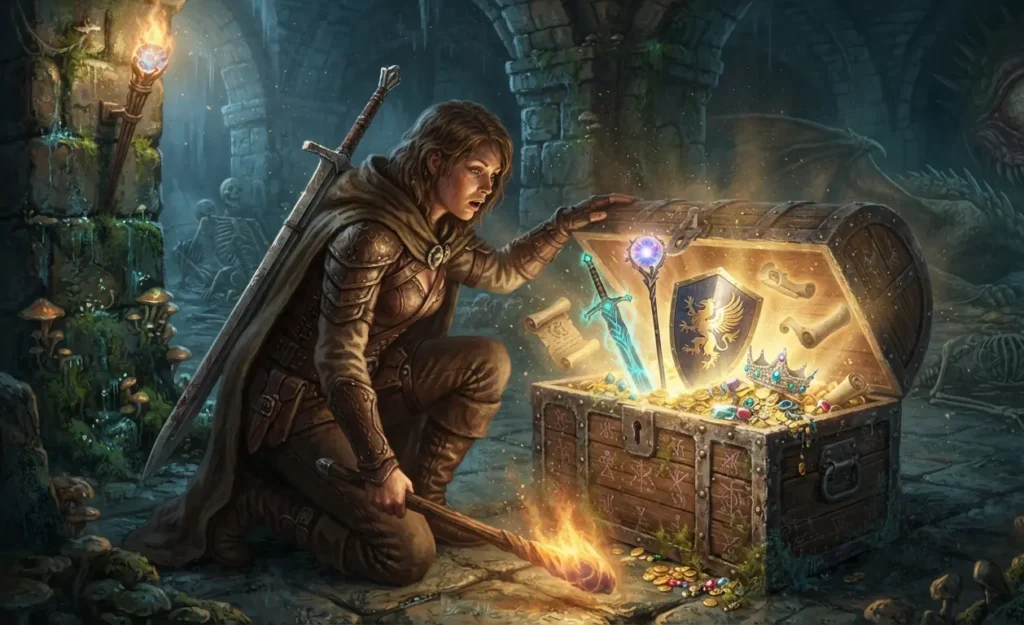
B.F. Skinner’s mid twentieth century research on operant conditioning established that unpredictable reward schedules, sometimes called variable ratio reinforcement, produce more persistent, harder to extinguish behavior than reliable, fixed ones. A reward that arrives on an unpredictable schedule keeps the anticipating behavior going longer and more intensely than one you can set your watch to.
Progression fantasy’s best written breakthroughs, unexpected technique discoveries, and rare drops mirror this structure closely. You don’t know exactly when the next major power spike is coming, only that the story keeps signaling it’s plausible soon, which is precisely the unpredictability that Skinner’s research shows sustains engagement more effectively than a schedule you could set a clock by.
The important part isn’t that rewards happen frequently. It’s that readers can’t predict exactly when they’ll happen. Sometimes a character struggles for dozens of chapters before advancing. Other times a seemingly ordinary encounter unexpectedly reveals a rare technique, hidden bloodline, or unique class. The uncertainty is part of the reward.
Many LitRPG novels use this rhythm with loot and class evolutions. Readers quickly learn that every dungeon, quest, or boss fight might contain something transformative, even if most do not.
Flow, and Why Well Paced Progression Feels So Good
Matching Challenge to Capability
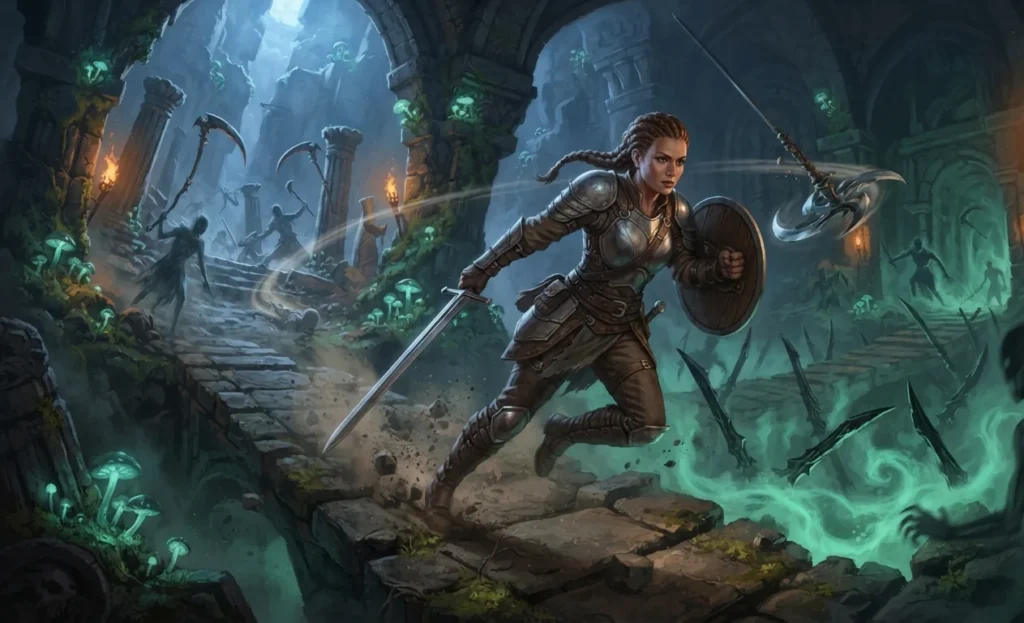
Psychologist Mihaly Csikszentmihalyi’s concept of flow describes an optimal psychological state that occurs specifically when a task’s difficulty closely matches a person’s current skill level, not so easy it bores you, not so hard it produces anxiety.
It’s worth being honest that this concept describes the state of the person actually performing a task, not a reader passively watching someone else perform one, so applying it here is a true parallel rather than a direct transfer.
That said, the parallel is a strong one. A well constructed progression fantasy paces its challenges to escalate at almost exactly the rate the protagonist’s own growing power can meet them, which mirrors the flow structure closely enough that readers often describe the reading experience itself in flow adjacent terms, fully absorbed, time passing without noticing.
Good progression fantasy constantly recalibrates its challenges. Once yesterday’s impossible enemy becomes manageable, the story quietly introduces a stronger rival, a more demanding trial, or a higher cultivation realm. The protagonist rarely stays comfortable for long, but neither do they remain hopelessly outmatched. That balance keeps both the character and the reader engaged.
Cradle excels at this escalation. Every advancement solves yesterday’s problem while revealing tomorrow’s. Lindon is almost never the strongest person in the room for long, which preserves the sense of forward momentum across the entire series.
The story isn’t putting the reader into flow directly. It’s modeling a character experiencing something flow-shaped, closely enough that some of that absorption transfers to how the reading itself feels.
Why Training Arcs Often Feel Better Than the Battles They Lead To
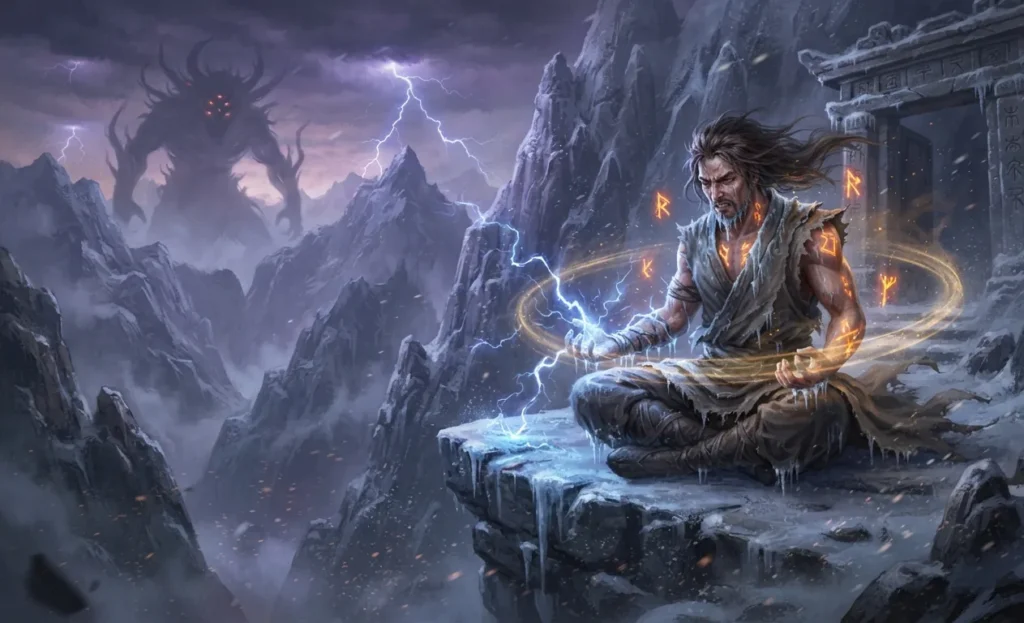
One pattern I’ve started noticing after reading progression fantasy for years is that I often remember the training arc more vividly than the battle it was building toward. That sounds backwards at first. Battles are supposed to be the payoff. They’re where the protagonist risks everything and finally proves they’ve become stronger. But more often than not, the part I keep thinking about afterward is the process of getting there.
I don’t think that’s accidental.
A training arc compresses almost every psychological mechanism we’ve talked about into one place. There’s a clear goal sitting just over the horizon, visible progress toward reaching it, repeated demonstrations of growing competence, and constant uncertainty about whether the protagonist will actually succeed before time runs out.
Every chapter feels like another step toward an unfinished promise, which makes stopping halfway through surprisingly difficult.
The battle, by comparison, often resolves that tension in a single dramatic moment. It’s satisfying precisely because the anticipation has finally ended. The training arc is where that anticipation is built.
That’s also why weak progression fantasy sometimes feels strangely hollow. If the training exists only to fill pages before the inevitable breakthrough, readers eventually start skimming it. Strong progression fantasy turns the journey itself into the reward. Every failed attempt teaches something new.
Every small improvement matters. Every obstacle changes how the protagonist approaches the next one. By the time the breakthrough finally arrives, it feels less like a surprise and more like the natural conclusion to dozens of earned decisions.
Looking back, I think that’s one of the genre’s quiet strengths. It doesn’t just celebrate becoming stronger. It makes the process of becoming stronger enjoyable in its own right.
The Honest Counterweight

Is This Just Manipulation Dressed Up as Fiction
I want to take the genre’s harshest critics seriously rather than dismiss them, because the underlying complaint isn’t entirely wrong. Some progression fantasy is built almost entirely around triggering these specific mechanisms, unpredictable power spikes, numbered stat increases, deliberately unresolved chapter endings, with minimal investment in character interiority, prose craft, or thematic depth beyond the mechanism itself.
Critics who call this brain rot are pointing at something real, a story that’s essentially a delivery system for these specific psychological triggers and not much else underneath them.
Why That Criticism Doesn’t Cover the Whole Genre
But that critique describes a failure mode, not the genre’s ceiling. The best progression fantasy uses these exact same mechanisms in service of character stakes, earned emotional payoff, and real thematic weight, the numbers matter because you actually care about the person they belong to, not simply because a number went up.
Compare two different kinds of progression fantasy. One novel might spend twenty chapters moving a protagonist from Level 29 to Level 30, with little changing except the number itself. Another uses the exact same advancement to transform relationships, reshape political alliances, or force difficult moral choices.
The psychological mechanism is identical. The storytelling surrounding it is what determines whether the moment feels disposable or memorable.
The honest answer is that the mechanism itself is neutral. It’s a really effective set of tools for sustaining reader attention, and like any effective tool, it can be used to build something disposable or something that actually earns the attention it’s holding.
Where This Explanation Stops
Everything we’ve talked about explains why progression fantasy can be unusually compelling. It doesn’t explain why some series stay with you for years while others fade from memory a week after you finish them.
Psychology can explain why a cliffhanger keeps you reading or why a visible breakthrough feels satisfying. It can’t explain why one protagonist becomes unforgettable, why a particular conversation hits harder than a battle, or why one world feels worth revisiting long after the numbers stop going up.
If these psychological mechanisms were the whole story, every progression fantasy with enough level-ups and cliffhangers would become a classic. They don’t.
The mechanics can capture your attention. They can’t earn your affection on their own. That still comes down to the things fiction has always relied on: memorable characters, meaningful conflict, thoughtful worldbuilding, and emotional payoff. The strongest progression fantasy doesn’t replace those foundations with psychology. It builds on top of them.
| When the Mechanics Feel Hollow | When the Mechanics Feel Meaningful |
|---|---|
| Level-ups exist only to raise numbers. | Level-ups reflect real character growth. |
| Cliffhangers exist only to force another chapter. | Cliffhangers deepen anticipation for an earned payoff. |
| Battles are repetitive obstacles. | Battles reveal character, relationships, or themes. |
| The magic system exists only as a progression engine. | The magic system supports the story’s world and themes. |
| Readers chase the next reward. | Readers care about both the reward and the person earning it. |
What This Means for How You Read
Knowing the Mechanism Doesn’t Ruin the Magic
I don’t think understanding any of this makes the pull less enjoyable, and I’d be lying if I claimed knowing about the Zeigarnik effect has ever once stopped me from reading one more chapter at an unreasonable hour. What it does give you is a choice about which books deserve that midnight hour and which ones are simply pulling the lever because they know the lever works.
That’s a useful thing to know about your own reading habits, not a reason to feel bad about them.
Frequently Asked Questions
Is progression fantasy scientifically designed to be addictive?Is progression fantasy scientifically designed to be addictive?
Most authors aren’t consciously applying psychological research when writing. They’re intuitively replicating patterns that work, unpredictable rewards, unresolved endings, measurable growth, because readers respond to them, patterns that happen to align closely with mechanisms psychologists have independently documented and studied for decades.
What is the Zeigarnik effect exactly?
A psychological finding, first documented by Bluma Zeigarnik in the 1920s, that people remember and mentally return to unfinished tasks considerably more than completed ones. It explains why a chapter ending mid breakthrough pulls at your attention more than a fully resolved scene does.
Is it bad that I stay up late reading progression fantasy?
Not inherently. The pull you’re feeling is a well documented, real psychological response rather than a personal weakness. Whether to indulge it is a personal choice about sleep and priorities, the same as it would be for any great engaging book in any genre.
Does this mean traditional fantasy is less psychologically engaging?
Not less engaging, differently engaging. Traditional fantasy typically leans more heavily on relatedness and narrative immersion from Self Determination Theory’s three needs, while progression fantasy leans unusually hard on the competence need specifically, through legible, numbered growth.
Is the brain rot criticism of progression fantasy fair?
Partly. Some entries truly are thin delivery systems for these specific psychological triggers with little else underneath them. The strongest examples in the genre use the same mechanisms in service of real character stakes and thematic depth, which the blanket criticism doesn’t account for.
Conclusion

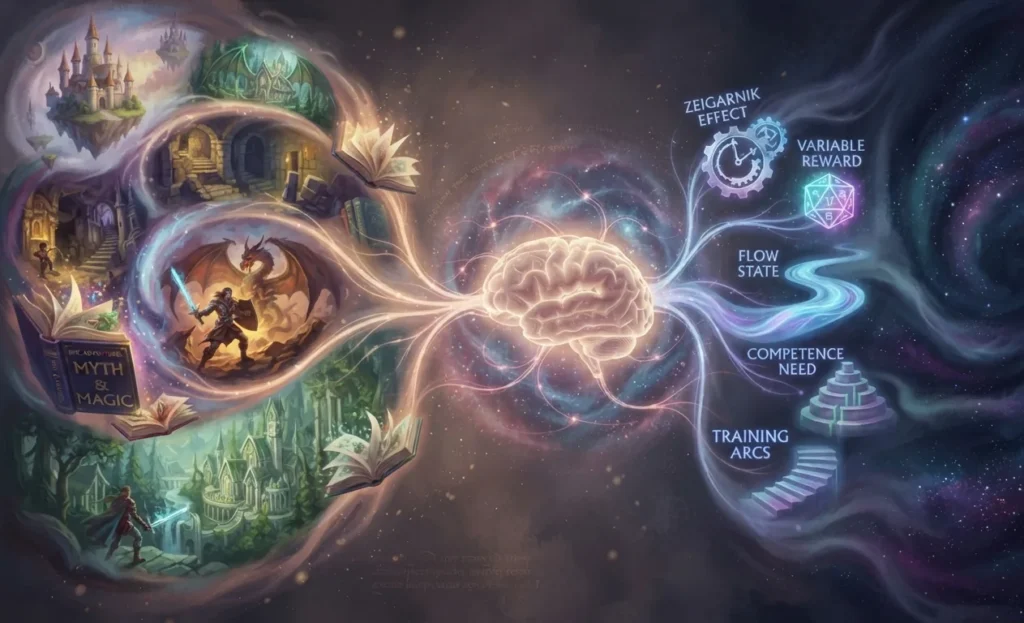
The pull toward one more chapter isn’t a character flaw or a mark against your self control. It’s the Zeigarnik effect, goal setting specificity, a real competence need, and a variable reward schedule, all working on you at once, in a genre that happens to deliver all four in unusually concentrated, legible form.
Knowing that doesn’t dim the pull. It just means the next time you catch yourself reading past 2am because a character’s realm breakthrough hasn’t resolved yet, you’ll at least know exactly which century old psychological finding is currently running the show.
Related Posts
- 9 Best Progression Fantasy Books 2026 [Ranked List]
- Cultivation vs Progression Fantasy: Which Should You Read?
- Best Xianxia Novels of 2026: From Hidden Gems to Legends
- 12 Best Cultivation Novels [Ranked by Genre Fans]
- 7 Best Completed Cultivation Novels [2026 Binge List]
- What Is LitRPG? The Genre Where Games Meet Fiction
- 9 Progression Fantasy Books With Female Leads [2026]
- LitRPG vs GameLit: Where One Ends and One Begins
Further Reading
- Locke & Latham (2006) – Goal-Setting Theory.
- Deci & Ryan (2000) – Self-Determination Theory.
- Mihaly Csikszentmihalyi – Flow: The Psychology of Optimal Experience (1990)
- Skinner (1953) – Science and Human Behavior.
- Rigby & Ryan (2011) – Glued to Games.
- Loewenstein (1994) – The Psychology of Curiosity.
- Narrative Transportation Theory – Melanie Green & Timothy Brock
Written by Batin Khan, a curious free spirit who loves reading and exploring the worlds of fantasy, mythology, and ancient stories. Through this blog, Batin hopes to share that sense of wonder with readers while building an exciting future along the way.