
 By
By GameLit didn’t arrive first and get narrowed down into LitRPG. It happened the other way around, and knowing that order changes what the relationship between these two terms actually means.
GameLit Was Coined to Fix a Problem With LitRPG

A Specific Author, a Specific Year
LitRPG existed as a named genre for roughly four years before GameLit did. Author Dustin Tigner coined GameLit specifically because a portion of the reading and writing community felt LitRPG’s definition, requiring explicit, visible game mechanics on the page, didn’t cover stories they still felt belonged in the same broad family.
Tigner has written directly about the process behind settling the term’s actual definition, describing a month of exhaustive debate with more than two dozen authors in September 2017 before the community landed on working language for what GameLit actually meant.
Why the Order Matters
This isn’t two independently invented terms that happened to end up overlapping. GameLit is a direct, deliberate response to LitRPG’s own narrowness, built specifically to hold stories that used game logic and game feeling without necessarily displaying formatted stat screens the way strict LitRPG requires.
That makes the subset relationship in this article’s title accurate, but for a more specific historical reason than most casual explanations give credit for.
The Misconception Even the Coiner Had to Correct

It’s Not Simply LitRPG Minus Stats
Tigner has pushed back directly against what he calls one of the biggest misconceptions about GameLit, the idea that GameLit is just LitRPG without the stats. He’s explicit that this oversimplifies a distinction that took a month of debate to actually work out properly.
What the Real Distinction Actually Involves
Reading through his fuller explanation and the surrounding community discussion, the difference runs deeper than presence or absence of numbers.
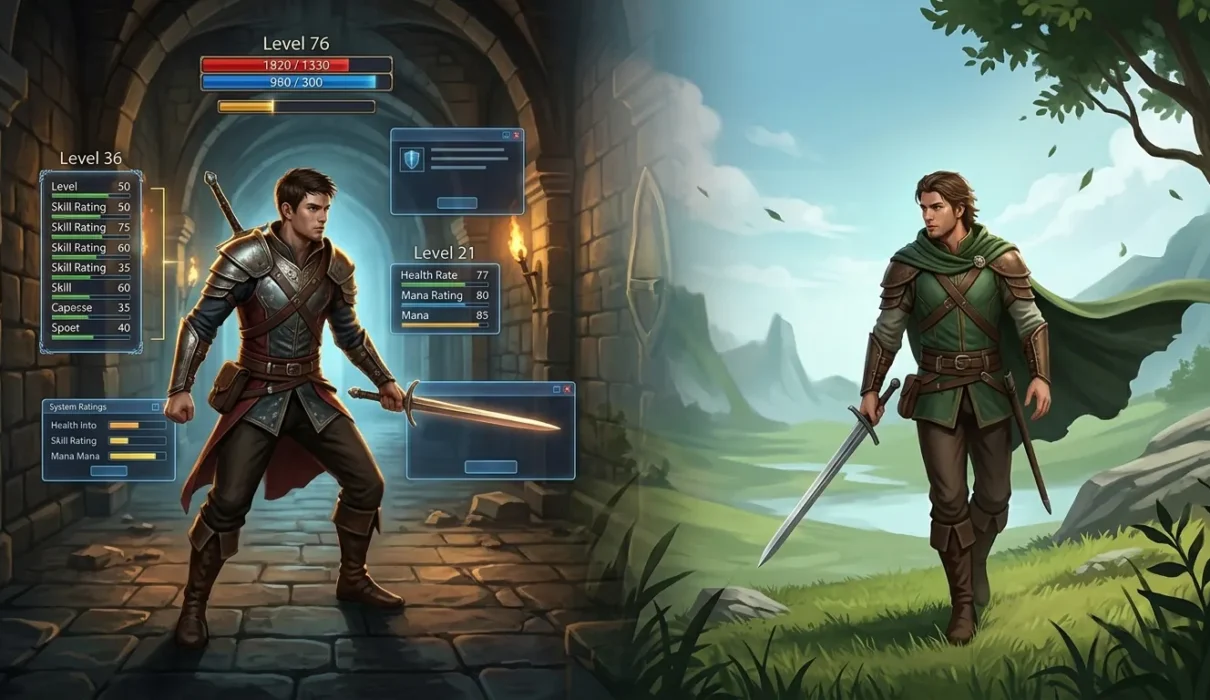
GameLit requires gaming elements to be essential to the plot, characters thinking and acting according to game logic, game structured stakes, a fundamentally gamified reality, whether or not that reality ever displays a formal interface.
LitRPG adds a stricter, additional requirement on top of that foundation, the mechanics have to be visible and explicit within the actual text, not just present in the story’s underlying logic.
Real Books That Show Where the Line Actually Sits
Ready Player One Sits Right on the Boundary
Ernest Cline’s 2011 novel gets cited repeatedly as a real test case, often described as sometimes treated as GameLit rather than strict LitRPG.
The entire plot runs on true game logic, quests, scoring, virtual competition with real world stakes, but the prose doesn’t interrupt itself with formatted stat blocks or system notifications the way Dungeon Crawler Carl does.
That’s GameLit by Tigner’s actual standard specifically because the gaming logic is essential to everything happening in the plot, with or without a visible interface tracking it.
Conor Kostick’s Epic Makes the Same Case Even More Directly
Kostick’s 2004 novel Epic imagines an entire society whose real political and social status is determined by performance inside a massive virtual game. Real world consequences flow directly from in game achievement, which is gaming logic organizing the whole narrative, again without requiring a formatted stat screen to qualify.
The Deeper Lineage Nobody Mentions in the Short Version
Korean Web Fiction Reached Russia First
The Legendary Moonlight Sculptor, a Korean web novel, received early Russian translations around 2010, and its popularity is credited with triggering a wave of Russian fan fiction that fed directly into the specific authors, Dmitry Rus, Dem Mikhailov, and Vasily Mahanenko, who went on to help coin LitRPG itself three years later.
That’s a three-step transmission chain worth naming properly. Korean web fiction reaches Russian readers, inspires a wave of Russian fan work, and that fan work matures into the specific authors credited with founding LitRPG as a named category.
An Even Earlier, Obscure Precedent
LitRPG Author Christopher Keene has cited Ken Catran’s 1998 novel Running Dogs, a considerably earlier New Zealand book, as a personal early exposure to game structured fiction well before either term existed.
It’s not treated as the genre’s true origin point by anyone I’ve found. It’s a genuine reminder that the underlying storytelling instinct predates its eventual branding by considerably longer than the tidy Russia to English pipeline usually suggests.
Why Cultivation Fiction Never Gets Filed Under Either Term

Cultivation novels realm systems, Qi Condensation, Foundation Establishment, Core Formation, and so on. These are explicit, nameable, rigorously tiered progression systems, arguably every bit as quantified as a LitRPG stat block.
Cultivation novels almost never get classified as LitRPG or GameLit anyway and working out why sharpens the actual boundary between these categories better than any single definition does.
The Missing Ingredient Is Diegetic Game Framing
The difference isn’t precision of measurement. It’s whether the world itself is explicitly understood, by its own characters, as a game or game like system. Cultivation realms are cosmological and philosophical categories within their own internal logic, not a system anyone in the story experiences as gamified.
LitRPG and GameLit both require that in world game logic specifically, characters aware they’re operating within rules resembling an actual game, whether or not that awareness comes with a visible interface.
Cultivation novel tiers are just as explicit and just as trackable. They’re simply not framed as a game at all, which is exactly why the classification never applies, no matter how quantified the underlying system gets.
The Community Itself Still Argues About Where the Edge Sits
Even Genre Readers Disagree in Real Time
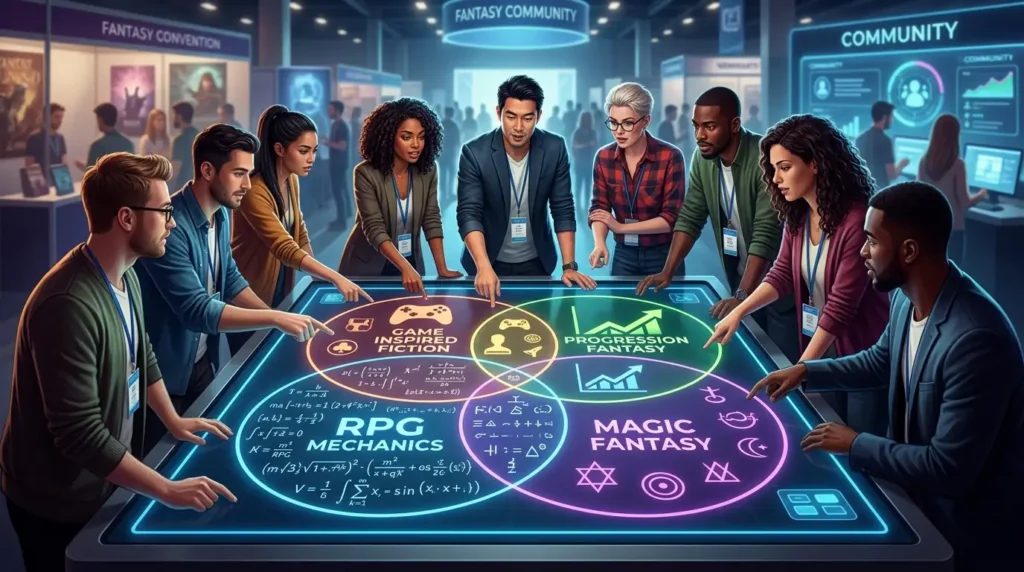
Discussion among Royal Road’s own readers shows this boundary still gets actively debated rather than treated as fully settled.
computer-likeOne recurring question is whether a system needs to be explicitly computer like to count as GameLit, or whether a story built around tabletop role-playing game logic instead of a digital one still qualifies just as legitimately.
The general reader consensus in that discussion leans toward inclusion, treating any explicit or even implied system, computerized or not, as sufficient for the GameLit label.
That’s a truly more permissive reading than a stricter definition might allow, and it shows real, ongoing negotiation happening inside the community rather than a single fixed rulebook everyone already agrees on.
An Honest Rebuttal

I want to push back on how tidy this subset relationship actually is in practice, because Tigner’s own writing suggests the boundary was never as clean as this article’s title implies.
If it took a month of debate among more than two dozen working authors to settle GameLit’s own definition, and the person who coined the term still felt compelled to correct a widespread misconception about it years later, that’s real evidence the category boundary remains contested rather than cleanly resolved.
Treating LitRPG as a perfectly nested subset of GameLit is a useful simplification for a reader trying to orient themselves quickly. It’s considerably less precise than the actual, ongoing arguments happening inside the community that built both terms.
Frequently Asked Questions
Is LitFPS a recognized subgenre distinct from both LitRPG and GameLit?
Yes, generally treated as a specific variant focused on first person shooter style mechanics rather than traditional role playing game structures, existing as its own recognized branch within the broader GameLit family rather than as a fully separate category.
Does Sword Art Online count as LitRPG, GameLit, or something else entirely?
It’s frequently cited as a major influence on Western isekai and game structured storytelling generally, though as a Japanese light novel and anime property predating the formal English language terms, it’s usually discussed as a genre precedent rather than classified strictly under either label.
Why did Russian authors specifically end up founding LitRPG rather than authors from another country?
The specific combination of early access to translated Korean web fiction, an active domestic self publishing culture through sites like samizdat.ru, and a major publisher, EKSMO, willing to formalize and market the category all converged in Russia specifically during this exact period.
Is there a term for stories that use game logic without any fantasy or science fiction elements at all?
Not a widely standardized one. Most GameLit and LitRPG discussion assumes a fantasy, science fiction, or science fantasy setting by default, since the genre grew directly out of virtual reality and secondary world gaming premises rather than purely realistic contemporary fiction.
Final Thoughts
One term built to correct the other’s narrowness, settled only after a month of real disagreement among the people who actually write in both categories.
Cultivation fiction sitting right next to both, equally quantified and permanently excluded from either label, is the detail that actually proves the real dividing line. It was never about how precisely a story counts its numbers. It’s about whether anyone inside the story thinks they’re playing a game in the first place.
Related Posts
- 9 Best Progression Fantasy Books 2026 [Ranked List]
- Cultivation vs Progression Fantasy: Which Should You Read?
- Best Xianxia Novels of 2026: From Hidden Gems to Legends
- 13 Best Cultivation Novels With No Harem [2026 Picks]
- 12 Best Cultivation Novels [Ranked by Genre Fans]
- 7 Best Completed Cultivation Novels [2026 Binge List]
- 9 Progression Fantasy Books With Female Leads [2026]
- Why Your Brain Loves Progression Fantasy & LitRPG
Written by Batin Khan, a curious free spirit who loves reading and exploring the worlds of fantasy, mythology, and ancient stories. Through this blog, Batin hopes to share that sense of wonder with readers while building an exciting future along the way.