
 By
By Quick Takeaways:
- The single biggest problem for a What If Dragons Were Real? question isn’t fire. It’s getting off the ground at all, and actual pterosaur research gives us a fairly precise answer for where that ceiling sits
- The largest flying animal that ever lived probably weighed around 250 kilograms and only managed flight through a launch method no bird uses. Anything meaningfully bigger runs into a wall biomechanics probably can’t clear
- A real, working chemical precedent for fire breath already exists in a beetle small enough to sit on your fingernail, and scaling that mechanism up is a genuinely different problem than most people assume
- An ecosystem that could actually support dragons would look almost nothing like the crowded, sociable dragon populations fantasy usually imagines
- The mythologically satisfying dragon and the biologically plausible one are, frustratingly, almost never the same animal
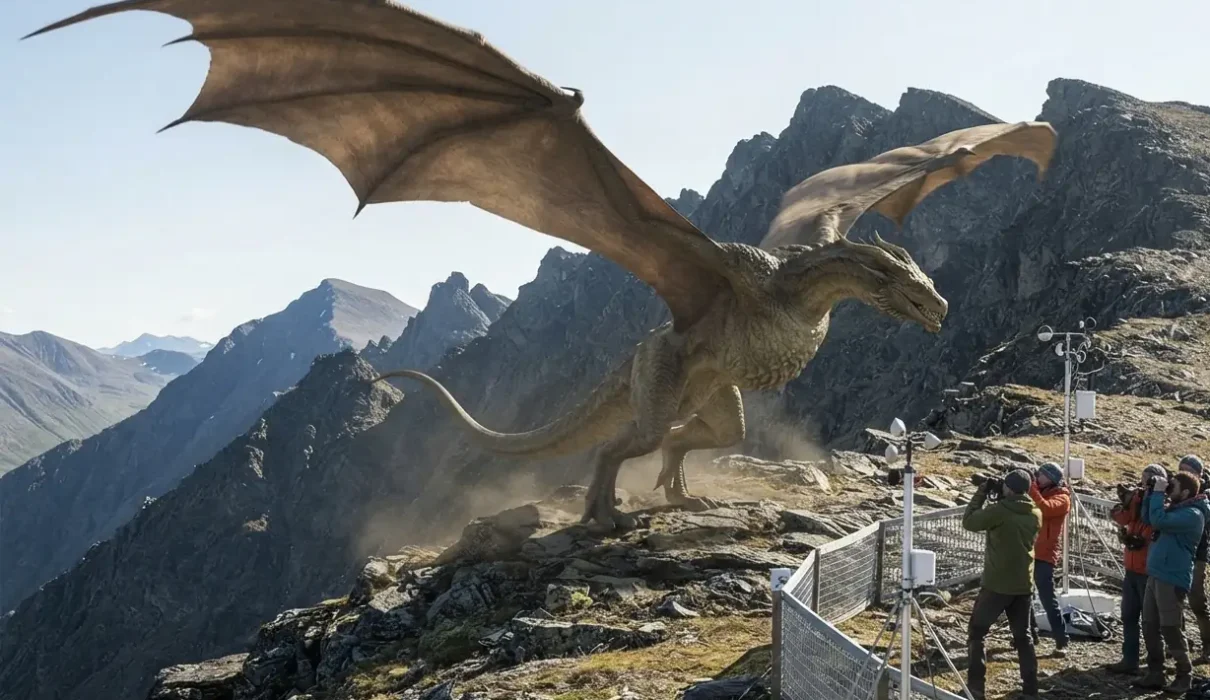
After digging through research on pterosaur biomechanics, I found that the answer is surprisingly different from what most dragon stories assume. I went down this rabbit hole purely out of curiosity, expecting the biggest problem to be fire. Instead, the research points to something much less cinematic: a real dragon’s first serious problem would be getting off the ground.
Let’s actually work through it.
The Real Limit Isn’t Size. It’s Launch
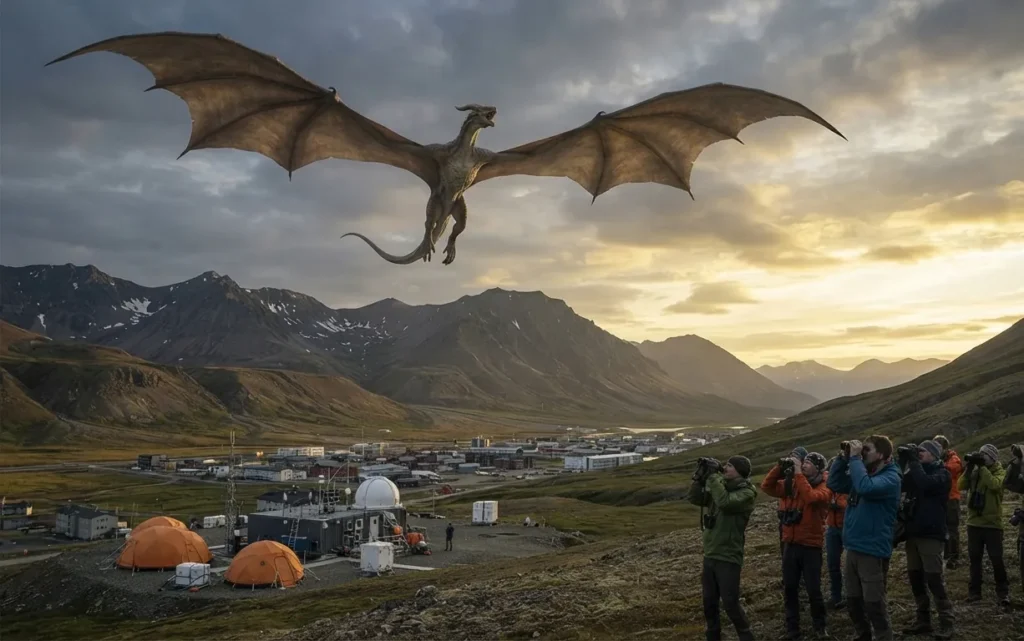
Quetzalcoatlus northropi is the largest flying animal science has confirmed existed, a pterosaur with a wingspan somewhere between 10 and 12 meters, roughly the width of a small aircraft, and a body weight that only reached around 200 to 250 kilograms thanks to hollow, strut reinforced bones.
That weight figure matters more than the wingspan does. A solid boned animal at that size simply couldn’t have carried itself into the air.
Paleontologist Michael Habib’s research, building on work he and Mark Witton published together, found something specific and slightly surprising: the actual ceiling on flying animal size isn’t set by wing area or muscle strength during flight. It’s set by launch. Quetzalcoatlus didn’t use a running start the way birds do.
Its forelimbs were disproportionately reinforced compared to its hindlimbs, the reverse of a bird’s body plan, and the current model has it vaulting off all four limbs at once, like a pole vaulter using its own arms as the pole, to get enough altitude for its wings to catch air before gravity won.
Habib’s own modeling puts something close to one proposed limit around a 12-meter wingspan for powered flight using this method. Push meaningfully past that, and the launch physics stop working regardless of how strong the animal’s flight muscles are once airborne.
A classic four legged, winged dragon depicted at the size fantasy usually gives one, considerably larger than a Quetzalcoatlus, is running directly into a wall that isn’t about power. It’s about the specific mechanics of the first half second off the ground.
Fire Has a Real Chemical Precedent. Scale Is the Actual Problem
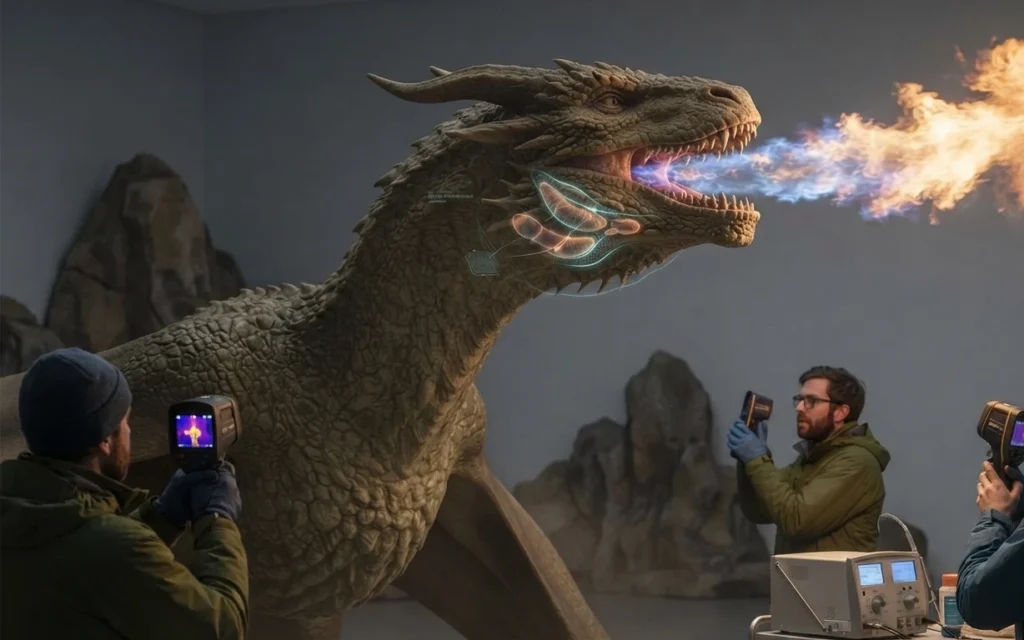
The part that would surprise you most is what I found when I actually looked into it properly. Fire breathing isn’t chemically absurd on its face. The bombardier beetle already does something structurally similar, storing hydroquinone and hydrogen peroxide in separate chambers, then mixing them with catalase and peroxidase enzymes in a reinforced reaction chamber.
The reaction is genuinely exothermic, producing a spray that reaches close to the boiling point of water, expelled through a directional valve the beetle can aim with real precision.
That’s a real, working biological blueprint for internally generated, weaponized heat. The problem isn’t the chemistry existing. It’s what scaling it up from an insect abdomen to a creature the size of a horse or larger would actually require, a vastly larger volume of precursor chemicals stored safely without leaking or reacting prematurely, a reaction chamber lined with tissue that can survive repeated near boiling discharges without damaging the animal itself, and enough control over the exhaust to avoid the same heat simply cooking the creature’s own throat on the way out.
None of that is chemically impossible in the way faster than light travel is physically impossible. It’s an engineering problem of the kind evolution solves through millions of accumulated small steps rather than one dramatic leap.
A beetle sized version of this system scaling cleanly up to dragon size, with no intermediate failure states along the way, is the part that asks for the most generous benefit of the doubt.
What a Real Dragon Ecosystem Would Actually Look Like
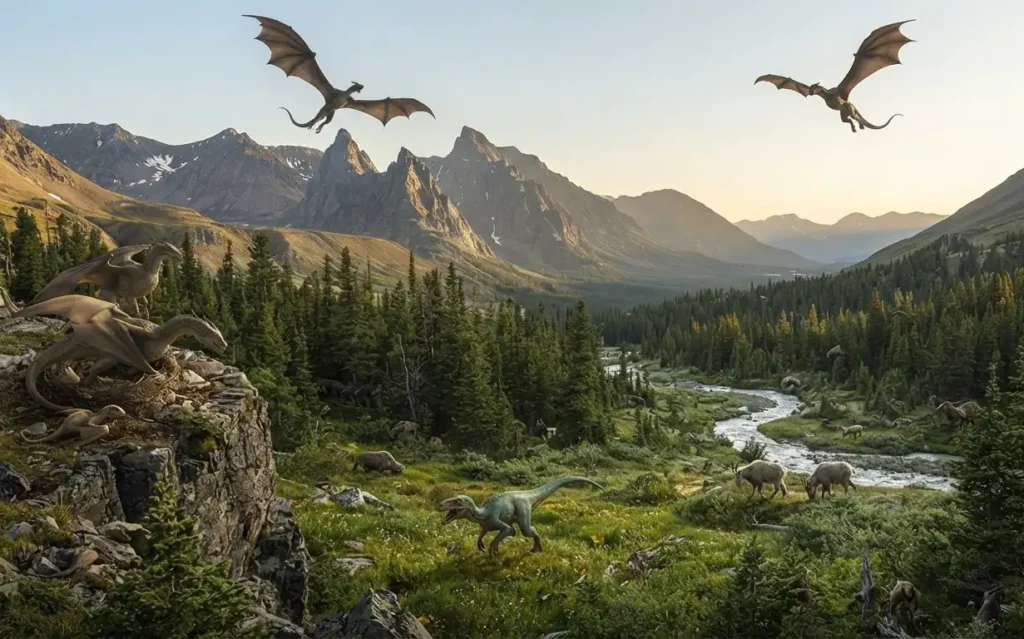
Assume, for the sake of argument, that both problems above got solved somehow, evolutionary time, a different planet’s gravity and atmospheric oxygen content, whatever generous premise you want to grant. What happens next is where the real ecological analysis gets genuinely interesting, and it’s the part fantasy fiction almost never engages with seriously.
Apex predators of significant size require enormous amounts of prey biomass per individual to sustain themselves, which is why real ecosystems support very few large predators relative to the herbivores beneath them.
A creature the size fantasy usually gives a dragon, especially one burning enough metabolic energy to power both flight and a heat generating internal reaction chamber, would need a genuinely vast hunting territory and correspondingly low population density.
This means the fantasy image of multiple dragons coexisting near each other, entire mountain ranges hosting several distinct individuals within visiting distance, is closer to fantasy than the fire is.
A biologically real dragon population would almost certainly be rare, solitary, fiercely territorial against its own kind specifically, and geographically sparse enough that most human generations in a given region might never encounter one directly. Which, worth noting honestly, actually matches quite a lot of real world dragon folklore considerably better than modern fantasy fiction does.
Myths describing a single, named, region specific dragon guarding one treasure or one mountain pass may be closer to ecological reality than any story with dragon riding armies.
The Honest Counterargument: Not All Dragons Face the Same Problem
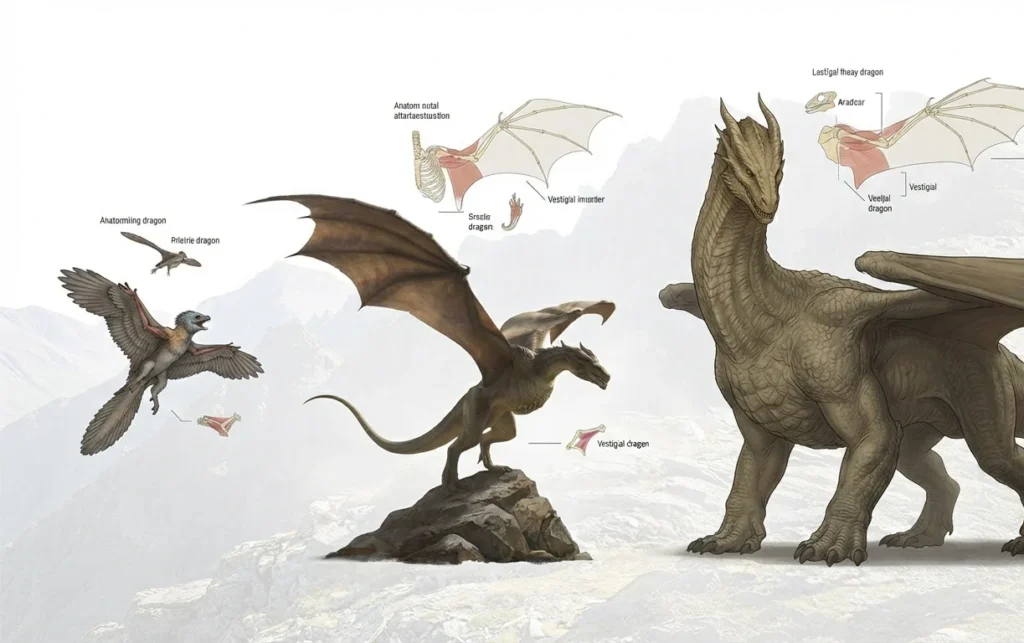
I want to push back on my own argument here, because everything above assumes the classic western dragon specifically, four legs, wings, powered flight. That’s not the only major dragon body plan in world mythology, and it’s worth being fair about which traditions actually have an easier physical case to make.
The Chinese Long is traditionally depicted as wingless and serpentine, moving through cloud and water rather than flying on muscle powered wings in the western sense. Strip away the requirement for powered flight entirely and you’re left with something closer to an enormous aquatic or semi aquatic reptile, a body plan with genuinely less biomechanical difficulty than a flying quadruped faces.
Large real crocodilians and the extinct giant snake Titanoboa, estimated at over 12 meters long, demonstrate that scale alone, without flight, is a considerably more solvable problem.
So the fair version of this answer isn’t dragons can’t be real. It’s that the specific version of dragon most people picture, the flying, fire breathing, four legged western type, happens to be stacking the two hardest unsolved problems on the list, launch mechanics and internal combustion, onto a single animal simultaneously. A wingless, water associated dragon sidesteps the harder of the two entirely.
Why the Best Story Dragon and the Most Plausible Dragon Rarely Match
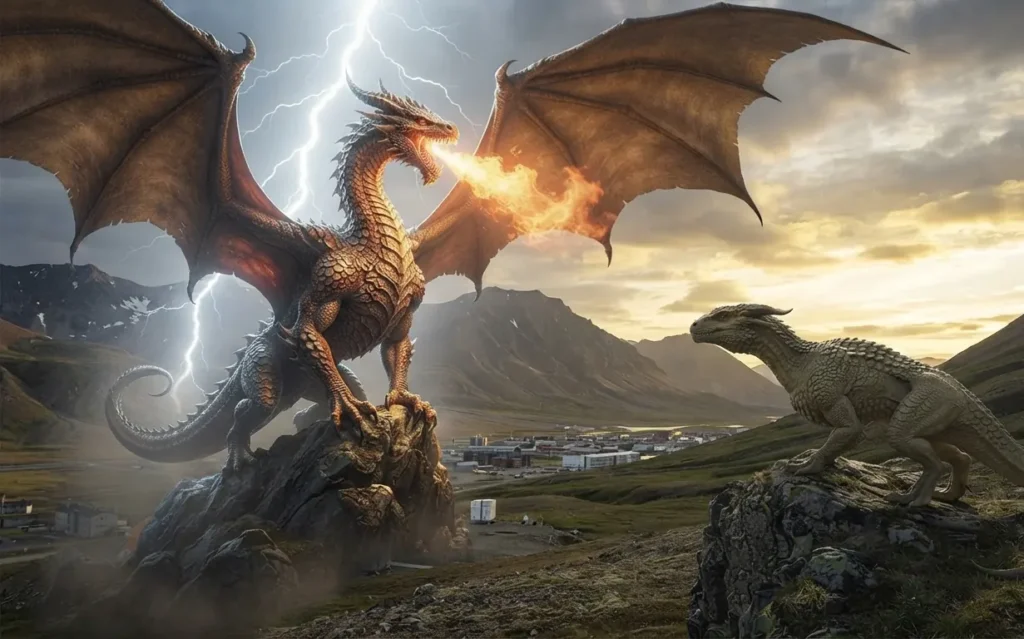
This is the part I find a tad bit frustrating as both a mythology reader and someone who just spent an afternoon reading pterosaur biomechanics papers. The dragon that makes for the best story, dramatic wingspan, fire on demand, terrifying scale, is consistently the version physics is least forgiving toward.
The dragon physics is most comfortable with, smaller, wingless, more serpentine, closer to a real giant reptile than a mythic terror, is consistently the one that reads as least impressive on the page.
That tension isn’t a coincidence, and it’s not really a flaw in either the mythology or the science. Myth was never obligated to solve for biomechanics, and biomechanics was never trying to satisfy a reader’s sense of awe. They’re answering two completely different questions that happen to use the same word.
Frequently Asked Questions
Has anyone actually tried to model dragon flight seriously outside of pterosaur research?
Author Peter Dickinson’s 1979 book The Flight of Dragons proposed dragons generating hydrogen gas internally from digestive reactions with metal rich rocks, making them buoyant like a zeppelin rather than reliant purely on muscle powered flight, with the same hydrogen doubling as fuel for their fire. It’s speculative, not established science.
Could a dragon breathe fire without harming its own mouth and throat?
This remains the least solved part of any serious version of this thought experiment. Real animals with internal chemical reactions, like the bombardier beetle, use specialized, heavily reinforced tissue lining specifically evolved to survive repeated exposure, a structure no proposed dragon anatomy has worked out in comparable detail.
Why do larger flying animals need reinforced bones instead of just bigger muscles?
Weight scales up faster than muscle or bone strength as an animal grows, a relationship long recognized in biomechanics. Pterosaurs solved part of this with hollow, internally strutted bones that stayed strong while staying light, a structural trick real dragons would almost certainly also require.
Are there real historical cases of a single dangerous predator generating dragon like legend?
Yes. The documented eighteenth century Beast of Gévaudan attacks in France, likely caused by wolves or wolf hybrids, killed dozens of people and generated intense regional folklore and organized hunts within living memory, showing how quickly a rare, genuinely dangerous predator can accumulate mythic weight.
Would a real dragon population realistically include multiple individuals living close together?
Unlikely. Large predators require substantial territory and prey biomass per individual, meaning real dragon ecology would almost certainly produce sparse, solitary, widely spaced populations rather than the social groups or armies of dragons that modern fantasy fiction frequently depicts for narrative convenience.
Final Thoughts
Ask what would actually happen if dragons were real, and the honest answer turns out to be smaller and stranger than either total impossibility or straightforward magic.
Somewhere between a giant pterosaur pushed past its known limits and a beetle’s chemistry scaled up past anything currently observed sits a version of the animal that could very nearly work, rare, solitary, more reptilian than reptilian myth usually bothers to be, and considerably less interested in showing off for an audience than any dragon fiction has ever needed it to be.
Related Articles
- Dragon Mythology: How Dragons Are Depicted Across Cultures
- Chinese, Japanese & Korean Dragons: How They Actually Differ
- 11 Eastern Dragon Legends Still Shaping Fantasy Today
- What If Dragons Were Real? Here’s What Would Happen
- 14 Most Iconic Anime Dragons You Should Recognize
- Why Do Dragons Hoard Gold? What Role Does Fafnir Play
- 15 Elemental Dragon Types in Fantasy: Fire, Ice & Beyond
- What Is the Largest Dragon in Mythology? [Real Answer]
Sources & Further Reading
- Habib, M. B. – Research on Pterosaur Launch Mechanics
- Darren Naish, Mark P. Witton – Azhdarchid Biomechanics
- Molecular basis of the explosive defence response in the bombardier beetle Brachinus crepitans | Royal Society Open Science | The Royal Society
- The Flying Ability of the Pterosaur Quetzalcoatlus Northropi in a Reduced Gravity.
- What Can Studying Anacondas Tell us About Titanoboa
- Peter Dickinson, The Flight of Dragons (1979)
- Study on Physiological Characteristics and Ecological Impacts of Dragon Based on Analytic Hierarchy Process by Ruoqian Song
Written by Batin Khan, a curious free spirit who loves reading and exploring the worlds of fantasy, mythology, and ancient stories. Through this blog, Batin hopes to share that sense of wonder with readers while building an exciting future along the way.