
 By
By Quick Takeaways:
- A dark fantasy world that stays with a reader long after the book closes almost never does it through the most graphic scene in the book. It does it through restraint, specifically what the author refuses to show directly
- A single recurring, sensory, specific detail does more lasting work than a dozen new horrors, because the reader’s own mind keeps returning to it uninvited
- The darkest worlds implicate the reader rather than simply horrifying them from a safe distance, making you complicit in understanding something you’d rather not
- Atrocity that’s treated as bureaucratic and ordinary within the world’s own logic is considerably more disturbing than atrocity performed by an obvious, theatrical villain
- Leaving one real mystery permanently unresolved gives the reader’s brain something to keep working on long after they’ve finished the last page
I’ve spent years reading dark fantasy with one recurring question in mind: why do certain fictional worlds stay lodged in memory while others disappear almost as soon as the final page closes? The patterns below aren’t rules or formulas. They’re simply the five techniques I keep finding beneath the worlds readers continue thinking about years later.
Restraint Does More Than Spectacle
What You Don’t Show
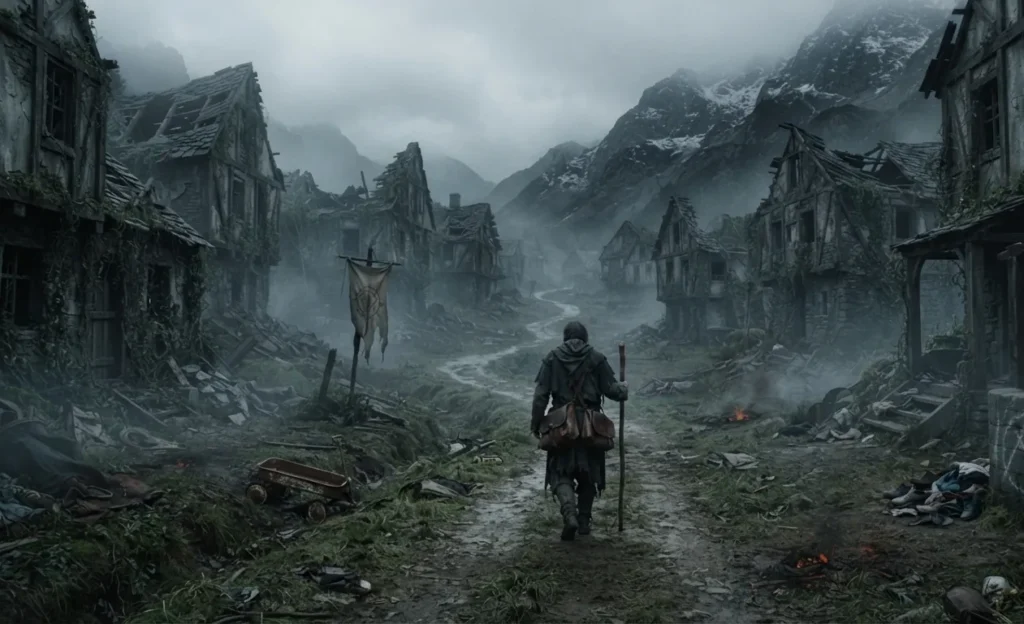
The instinct in dark fantasy is often to show everything, the wound in full detail, the atrocity in real time, on the assumption that more explicit content produces more lasting impact. It’s almost always the opposite. A scene the author cuts away from just before the worst of it, leaving the reader’s own imagination to fill the specific gap, tends to sit in memory far longer than the equivalent scene shown in full.
Imagine two versions of the same scene. In one, the narrative follows a prisoner into the torture chamber and records every injury in careful detail. In the other, the viewpoint remains outside as the heavy door closes, leaving only the muffled conversation that suddenly stops halfway through a sentence, followed by the quiet scrape of a bucket being dragged across stone.
The second scene asks the reader to imagine what happened rather than merely observe it. That act of imagining is often what keeps the moment alive long after the details of more explicit scenes have faded.
This isn’t a new insight, and I don’t want to pretend it is. Horror theorists have made a version of this argument for decades, that the imagination, left to construct the worst possible version of an implied threat, will almost always outperform anything an author can put on the page directly.
Dark fantasy that trusts this, that lets a specific horror happen just off the visible edge of the scene, produces the kind of dread that doesn’t fully resolve, because the reader never actually got the full picture to file away as complete.
Where This Goes Wrong
The failure mode here isn’t showing too much. It’s cutting away from everything, all the time, until the restraint itself becomes a pattern the reader can predict and therefore stops fearing. Restraint works because it’s selective. Pick the two or three moments in your entire book where the reader most needs to see something happen fully, and cut away from almost everything else. The contrast is what makes the restraint actually land.
One Recurring Detail Beats a Dozen New Horrors
The Anchor Object
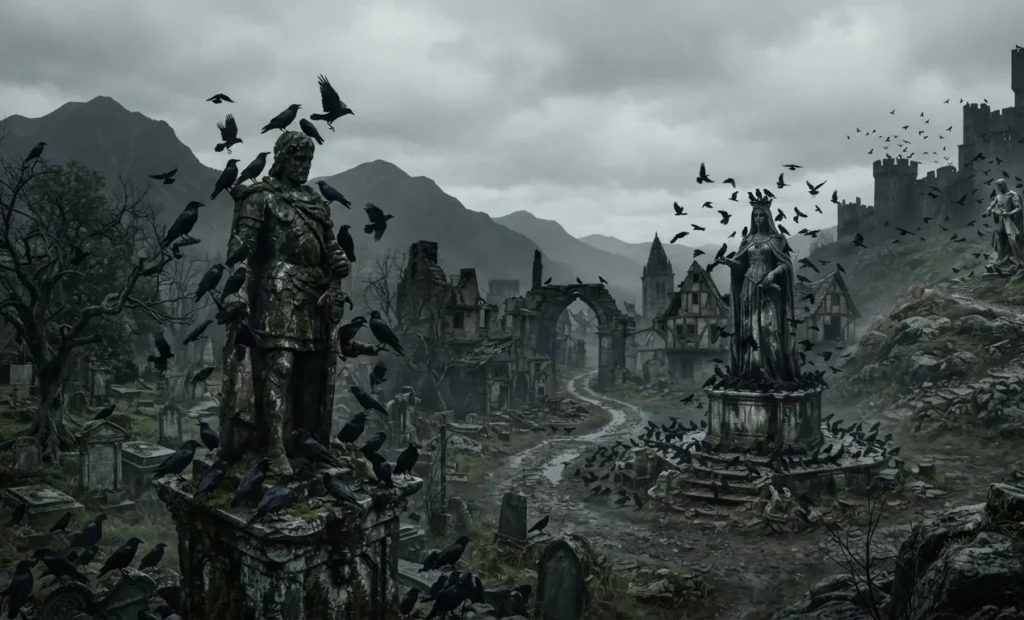
The books that actually haunt me tend to return, again and again, to one small, specific, sensory detail, a smell, a particular sound, an object handled at several distinct points in the story, rather than continuously escalating to new and different horrors.
That repetition does something a constant stream of fresh material can’t. It gives the reader’s own mind an anchor point to keep returning to, unprompted, long after they’ve stopped actively reading.
Catherynne Valente’s Deathless, set in a version of Soviet Russia populated by figures out of Russian folklore, returns constantly and deliberately to specific recurring images, particular colors, particular repeated phrases lifted from folk tale cadence, until they stop reading as description and start reading as something closer to an incantation the reader can’t quite shake either.
The repetition itself becomes the haunting mechanism, not any single instance of it.
Why Repetition Works Where Escalation Doesn’t
A city where every abandoned house has a small brass bell hanging beside the front door. No one explains why. The first time it barely registers. Fifty pages later another bell appears outside an entirely different ruin.
By the end of the novel, the reader begins noticing the bells before the characters do, quietly anticipating what they might mean. The bell is ordinary enough that many readers barely notice it at first. By the third or fourth appearance, though, it begins acquiring a weight the object itself never possessed.
Constant new horror asks the reader to keep processing fresh information, which is cognitively exhausting in a way that actually protects the reader from lasting impact, since new information displaces old information quickly. A recurring detail asks nothing new of the reader each time it reappears.
It simply reactivates something already lodged there, deepening the groove rather than laying down a new one, which is precisely why it outlasts the reading experience itself.
Make the Reader Complicit, Not Just Horrified
The Difference Between Watching and Understanding
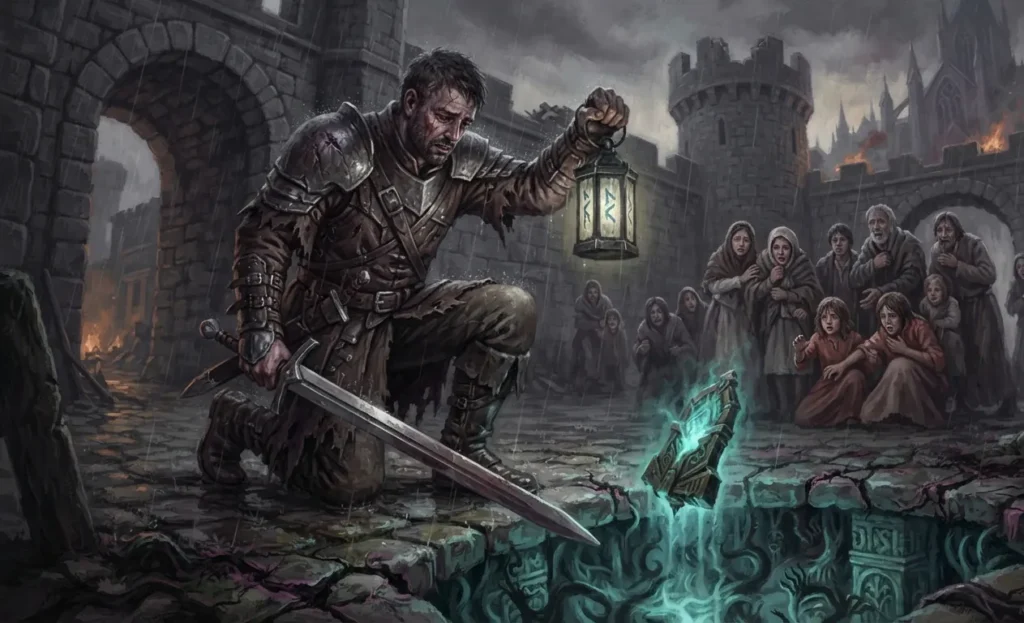
Consider a village facing a winter severe enough that one family must lose its child if everyone else is to survive. The disturbing part isn’t that the decision is cruel. It’s that the reader can follow every argument that leads to it, finding themselves agreeing with individual steps they would normally reject in isolation. The discomfort comes from recognizing the logic rather than condemning the outcome from a safe distance.
There’s a specific and much harder trick than simply depicting something disturbing happening to a character. It’s making the reader genuinely understand, and sometimes even sympathize with, the impulse behind something monstrous, so that closing the book means sitting with your own uncomfortable understanding rather than simply having witnessed someone else’s suffering from a safe emotional distance.
I’ve written on this blog about why dark fantasy readers gravitate toward morally gray protagonists specifically because that grayness reflects something true about how people actually behave. The technique that makes a world unshakeable takes this a step further, applying it to the world’s actual horrors rather than only to individual character choices, so the reader isn’t simply disturbed by what happened.
They’re disturbed by how completely they understood why it happened, and what that understanding says about them.
Why This Requires True Craft Discipline
This only works if the author resists the urge to condemn the understanding clearly on the page. The moment a narrator steps in to reassure the reader that understanding a monstrous choice doesn’t make them complicit in it, the discomfort dissolves. The books that actually stay with readers leave that discomfort completely unresolved, letting the reader do the moral work themselves rather than doing it for them.
Normalize the Atrocity Within the World’s Own Logic
Bureaucracy Is Scarier Than Villainy
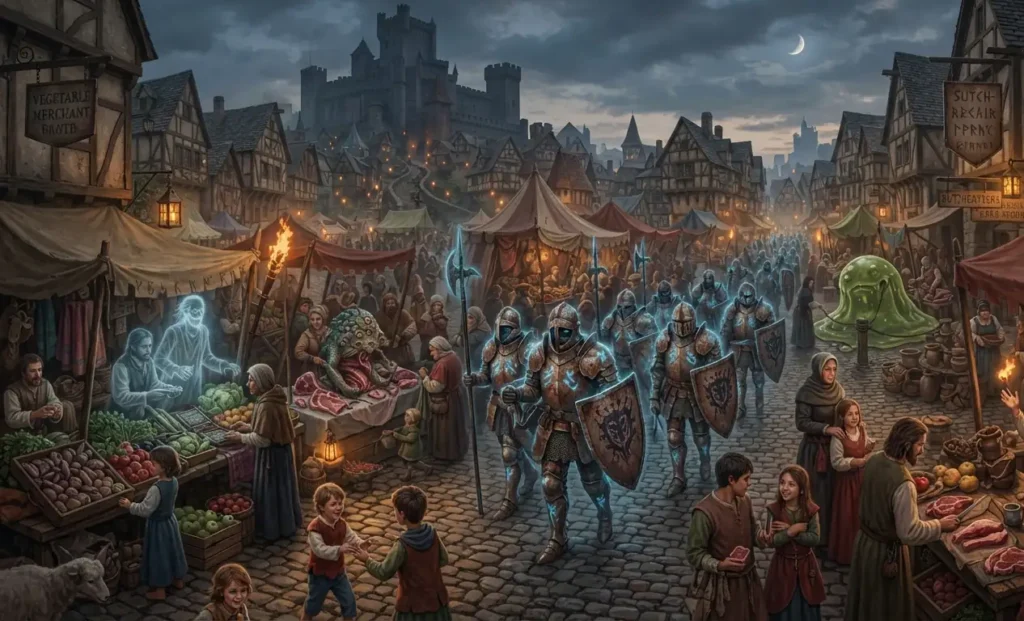
An obvious villain, cackling and theatrical, is considerably easier to process and file away than a world where terrible things are handled as routine administrative matter by people who don’t consider themselves monstrous at all.
This connects to something Hannah Arendt described in her real historical analysis of the banality of evil, that the most disturbing atrocities in actual human history were frequently carried out by people who understood themselves as simply doing their job correctly, following established procedure, rather than as villains choosing evil deliberately.
Max Gladstone’s Craft Sequence, beginning with Three Parts Dead, builds an entire world around exactly this mechanism. Necromancy and soul contracts are handled through what reads, deliberately, like corporate legal practice, complete with something functioning as contract law, litigation, and professional specialization, applied to magic that reanimates the dead and trades in human souls as a tradeable asset.
The horror isn’t a single evil figure. It’s an entire functioning economic system where atrocity has simply become Tuesday’s paperwork for the people running it.
Why Ordinary Language Does This Work Best
The specific craft tool here is dry, procedural, unremarkable language applied to something incredibly horrifying. A character discussing soul harvesting quotas in the same flat tone you’d use for quarterly sales figures produces a considerably deeper unease than a villain announcing their evil plan with obvious relish, because the flat tone tells the reader this is simply how the world works, which is a permanent condition rather than a single defeatable threat.
Picture a government clerk apologizing because a permit approving the removal of someone’s memories hasn’t been signed by the correct department yet. The conversation isn’t dramatic. Nobody raises their voice.
Both people treat the loss of an entire lifetime as little more than an administrative inconvenience. That ordinary language quietly teaches the reader that the horror isn’t exceptional. It’s infrastructure.
Leave One Genuine Mystery Permanently Unresolved
The Question That Never Gets Answered
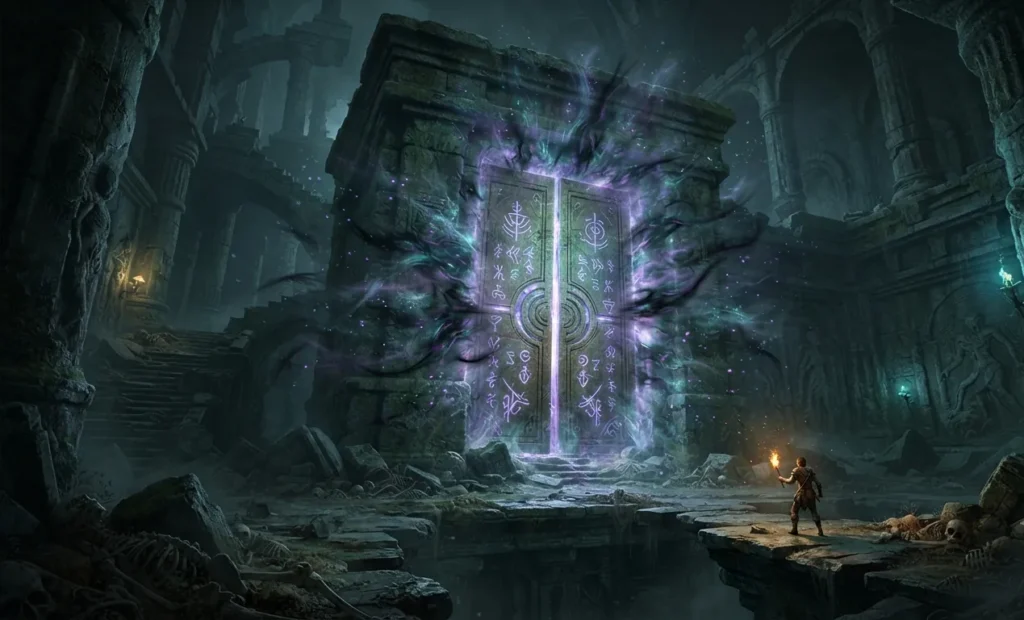
The final technique, and I think the one most writers are actually afraid to use, is deliberately never explaining one of your world’s mysteries. Not a plot thread you forgot to close, a specific, deliberate choice to let one question about your world’s fundamental nature remain permanently open, even after the book itself ends.
Robert Holdstock’s Mythago Wood centers on an ancient forest that generates mythic figures directly from the collective unconscious of everyone near it, and the novel deliberately never fully resolves exactly how or why the wood does this, or what its ultimate nature actually is.
That unresolved core is precisely why the book keeps working on readers long after they’ve finished it. Their own mind keeps returning to try to solve something the author specifically never gave them the tools to solve.
Why This Requires Real Confidence as a Writer
This technique only works if the withheld answer feels like a choice rather than an oversight, which requires the rest of your worldbuilding to be rigorous enough that readers trust you actually know the answer and are choosing not to share it. A world that’s sloppy everywhere else and then conveniently vague about its central mystery reads as an author who simply never worked it out.
A world that’s precise everywhere else and vague about exactly one thing reads as a deliberate silence, and that specific kind of silence is what keeps a reader awake turning the question over long after the book is back on the shelf.
This is easier to see in practice than in theory.
Imagine a mountain every civilization agrees must never be climbed. Historians mention failed expeditions almost in passing. Maps leave the summit blank. Children grow up hearing contradictory stories about what waits there.
The reader reaches the final page without learning the truth, not because the author forgot, but because every confirmed explanation would inevitably be smaller than the question the reader had already built in their own imagination.
Putting These Together Without Overloading the Reader

None of these five techniques work particularly well used constantly and all at once. Restraint needs ordinary directness around it to stand out.
A recurring anchor detail needs long enough gaps between appearances that it feels earned rather than repetitive filler. Reader complicity needs to be reserved for a small number of truly load bearing moments rather than applied to every scene. Normalized atrocity needs ordinary, undisturbing world building surrounding it so the contrast actually registers.
And you only get to withhold one central answer before withholding starts reading as evasion rather than confidence.
Pick where each of these five actually belongs in your specific story, use them sparingly and precisely, and you’ll end up with a world readers describe, months later, as something they still think about sometimes, without always being able to say exactly why.
Frequently Asked Questions
Is showing less violence always better in dark fantasy?
Not always. Restraint works because it’s contrasted against moments where you do show something fully. A book that never shows anything directly loses its impact just as much as one that shows everything, since the reader can no longer tell which withheld moments actually matter.
What does Hannah Arendt’s banality of evil have to do with fantasy worldbuilding?
Her real historical analysis observed that history’s worst atrocities were often carried out by people who saw themselves as simply following procedure rather than choosing evil deliberately. Applying that same bureaucratic, procedural tone to fictional atrocity produces considerably deeper unease than an obvious villain does.
Why does a recurring detail work better than constantly escalating horror?
New horror asks a reader to process fresh information, which displaces what came before it fairly quickly. A recurring detail reactivates something already lodged in the reader’s memory each time it returns, deepening its hold rather than competing with newer material for attention.
Isn’t leaving a mystery unresolved just bad worldbuilding?
Only if it reads as an oversight rather than a deliberate choice. If the surrounding world building is precise and rigorous everywhere else, one real, deliberately withheld answer reads as confident silence rather than a gap the author simply never filled in.
How do I make a reader complicit without making them feel manipulated?
Resist the urge to have a narrator step in and resolve the reader’s discomfort for them. The moment the text reassures the reader that their understanding doesn’t implicate them, the effect dissolves. Complicity requires letting that discomfort sit unresolved on the page.
Final Thoughts
Five techniques, and every one of them works by giving the reader’s own mind something to keep doing after the book stops actively doing anything for them.
Restraint gives them a gap to fill. A recurring detail gives them an anchor to return to. Complicity gives them a discomfort about themselves to sit with. Normalized atrocity gives them a system to keep noticing everywhere else in the world once they’ve spotted it once. An unresolved mystery gives them a question they can’t put down.
That’s the actual mechanism behind the dark fantasy worlds that won’t leave you alone. They don’t work harder to disturb you in the moment. They hand your own mind a small, specific, unfinished piece of work, and then they simply stop, trusting you to keep carrying it.
Related Articles
- 12 Best Dark Fantasy Books 2026: You Should Never Miss Out
- Why Millennials and Gen Z Love Dark Fantasy
- Why Every Great Dark Fantasy Needs a Cursed Kingdom
- Dark Fantasy vs Gothic Fantasy: Where’s the Line?
- How Norse & Greek Mythology Built Modern Dark Fantasy
- 14 Dark Fantasy Books That Don’t Need a Sequel [2026]
- 9 Dark Fantasy Creatures That Turn Familiar Into Fear
- 9 Fantasy Magic Systems Unlike Anything Else
Further Reading
If you’re interested in why these techniques work, these books explore similar ideas from different directions.
- Danse Macabre – Stephen King
- The Philosophy of Horror – Noël Carroll
- The Weird and the Eerie – Mark Fisher
- On Writing – Stephen King
- The Uses of Enchantment – Bruno Bettelheim
- Tzvetan Todorov – The Fantastic: A Structural Approach to a Literary Genre
Written by Batin Khan, a curious free spirit who loves reading and exploring the worlds of fantasy, mythology, and ancient stories. Through this blog, Batin hopes to share that sense of wonder with readers while building an exciting future along the way.