
 By
By If dark fantasy creates dread without leaning on jump scares, gore, or the sudden monster reveal, why does it still feel so unsettling?
Horror gets its dread from a specific kind of uncertainty, whether the strange thing happening has a natural explanation or a supernatural one, and the tension of not knowing.
Dark fantasy doesn’t need that trick. Its supernatural elements are usually already accepted as real, so the genre has to find other places to put uncertainty.
Dark fantasy isn’t inventing a new technique. It’s running on a two-hundred-year-old idea that predates horror as a genre category entirely.
The Distinction Everyone Forgets
Terror and Horror Used to Mean Different Things
In 1826, the Gothic novelist Ann Radcliffe published an essay titled “On the Supernatural in Poetry.” She wrote it as a dialogue between two travelers and buried inside it is one of the most useful sentences in the history of dread.
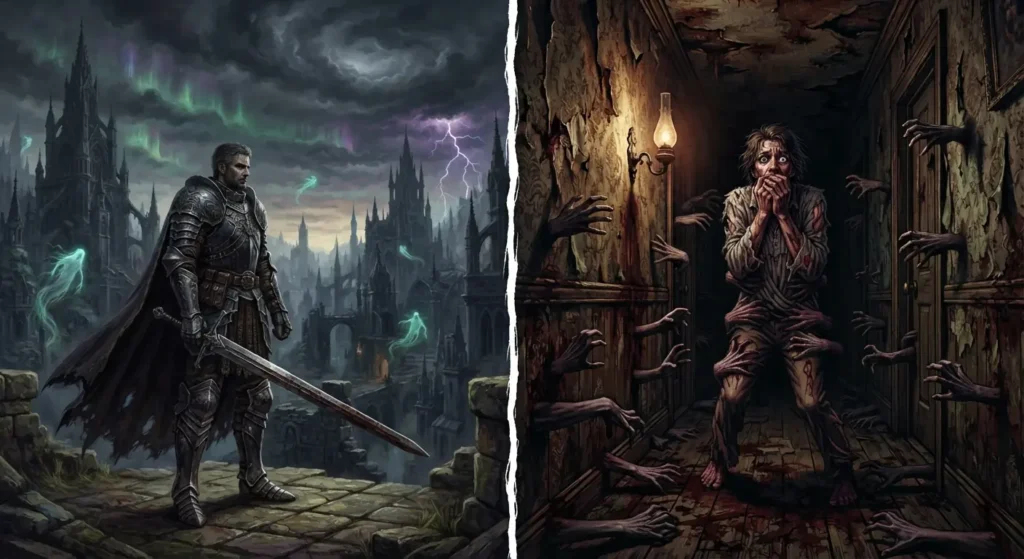
Radcliffe argued that terror and horror aren’t the same feeling at all. Terror, she wrote, “expands the soul, and awakens the faculties to a high degree of life.”
Horror does the opposite. It contracts you. It freezes you. According to Radcliffe, horror shuts the mind down where terror keeps it running.
The difference, she said, comes down to uncertainty. Horror shows you the thing clearly. Terror keeps the thing obscured, so your own imagination does the work of frightening you.
A Real rivalry, Not Just a Theory
Radcliffe wasn’t writing in a vacuum. She was drawing on Edmund Burke’s 1757 work on the sublime, which had already tied terror to obscurity decades earlier.
She was also drawing a line against a specific rival. Matthew Lewis published The Monk in 1796, a novel packed with explicit violence, demonic pacts, and graphic death.
Readers and critics at the time treated Radcliffe’s restraint and Lewis’s explicitness as two different schools entirely. That’s not a modern reader projecting a framework backward. It’s how contemporaries actually described the split.
Dark fantasy, whether it knows it or not, is almost always working the Radcliffe side of that split. The dread comes from what’s held back, not from what’s shown.
Technique One: Dark Fantasy Creates Dread Through Inevitability
Knowing The Ending Removes the Jump Scare
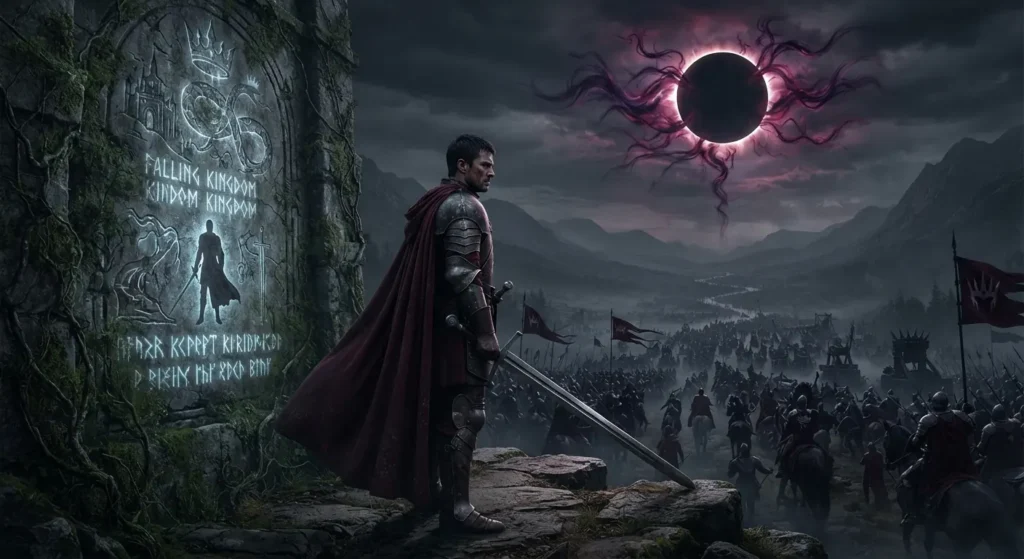
Horror often depends on not knowing what’s coming. Dark fantasy frequently does the reverse. It tells you exactly what’s coming, then makes you watch it approach.
Norse mythology gives the clearest ancient version of this. Ragnarök isn’t a twist. It’s foretold, named, and expected by the gods who are going to lose it.
J.R.R. Tolkien, who spent decades teaching Old Norse at Oxford, wrote about why that structure hits differently. In a 1936 lecture on Beowulf, he described Northern myth as granting its side “victory but no honour.”
The gods know the ending. They fight anyway. There’s no surprise left to spring, only the slow approach of something already scheduled.
Modern Fantasy Runs the Same Machine
You can watch this exact technique at work in A Song of Ice and Fire. The books spend enormous energy reminding you that winter is coming, long before winter arrives.
That’s not suspense in the horror sense. Nobody is wondering if something is hiding in the closet. Readers know the general shape of the threat and simply wait.
Dread built from foreknowledge works on a completely different nervous system than a jump scare. It’s slow, cumulative, and impossible to resolve with a single scary image.
Technique Two: Dread Through Withholding
The Best Monster is Often the One You Never See
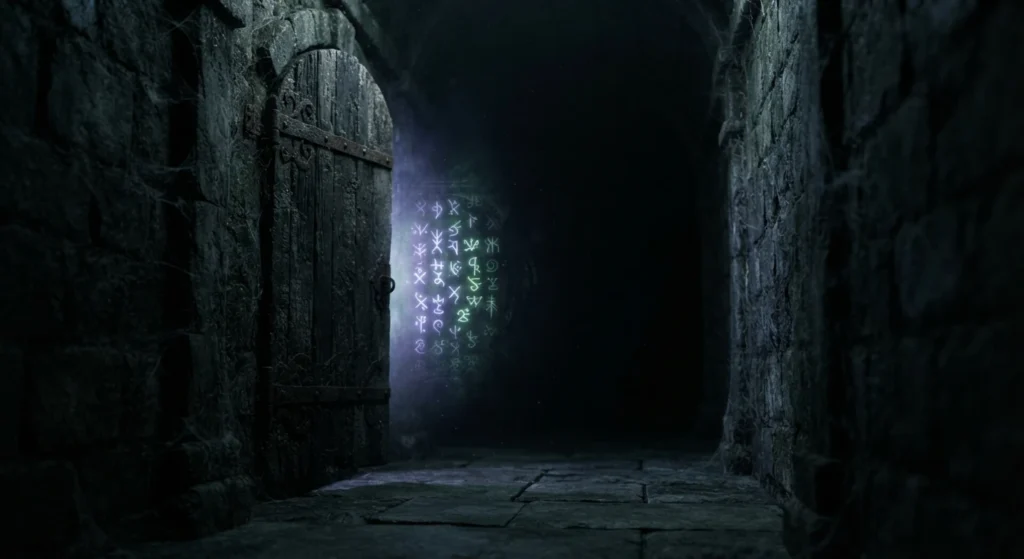
Radcliffe’s obscurity principle shows up constantly in how dark fantasy handles its worst threats. The technique is simple to describe and hard to execute well: say less than you could.
The clearest example I know sits in The Two Towers. After Gandalf survives his fall fighting the Balrog, he tells Aragorn, Legolas, and Gimli what he found in the deep places beneath Moria.
Something was already down there. Older than Sauron. Unknown even to him.
Tolkien gives Gandalf exactly one line about it: the world is gnawed by nameless things. Then Gandalf refuses to say more, and the book never brings it up again.
I used The Lord of the Rings here, but that does not mean I classify it as dark fantasy. Just wanted to make things clear.
Why Restraint Outperforms Description
A full physical description would have given readers something concrete to measure and dismiss: a tentacle count, a size, a weakness.
Instead, readers get a wizard powerful enough to kill a Balrog admitting there’s something down there he won’t describe. Your own imagination is forced to do the frightening, exactly the way Radcliffe predicted it would.
This only works because the author trusts the reader to fill the gap with something worse than any single sentence could specify. Most attempts at this fail by explaining too soon.
Third Technique: Dread Through Politeness
When The Villain Never Raises Their Voice
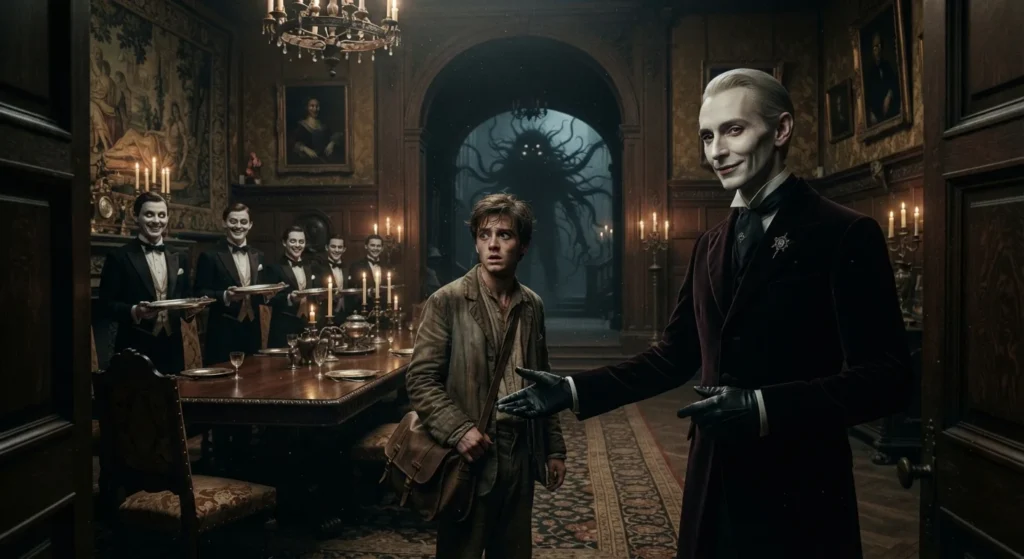
Horror often signals danger clearly: growling, blood, a raised weapon. Dark fantasy has a quieter trick, and it might be the most unsettling one on this list. Dark fantasy takes the saying “it’s the quiet ones you should be careful of” seriously.
Susanna Clarke’s Jonathan Strange & Mr Norrell features a fairy known only as the gentleman with the thistle-down hair. Clarke never gives him a proper name.
He showers a character named Stephen Black with lavish gifts: gold, a fine horse, treasures from old tombs. By every surface signal, he’s generous and charming.
He also enchants Stephen into silence and cannot comprehend that Stephen is miserable. The horror isn’t a monster’s roar. It’s a smiling captor who genuinely doesn’t register the harm he’s causing.
Incomprehension Is Scarier Than Malice
A villain who knows they’re hurting you is at least legible. You can appeal to them, bargain, or run.
A villain who is being kind by their own accounting, while destroying you, leaves no door to knock on. There’s nobody home to reason with.
This is dread built entirely out of manners. No blood required, and arguably more disturbing for it.
Fourth One: Dread Through Complicity
Making The Reader An Accomplice
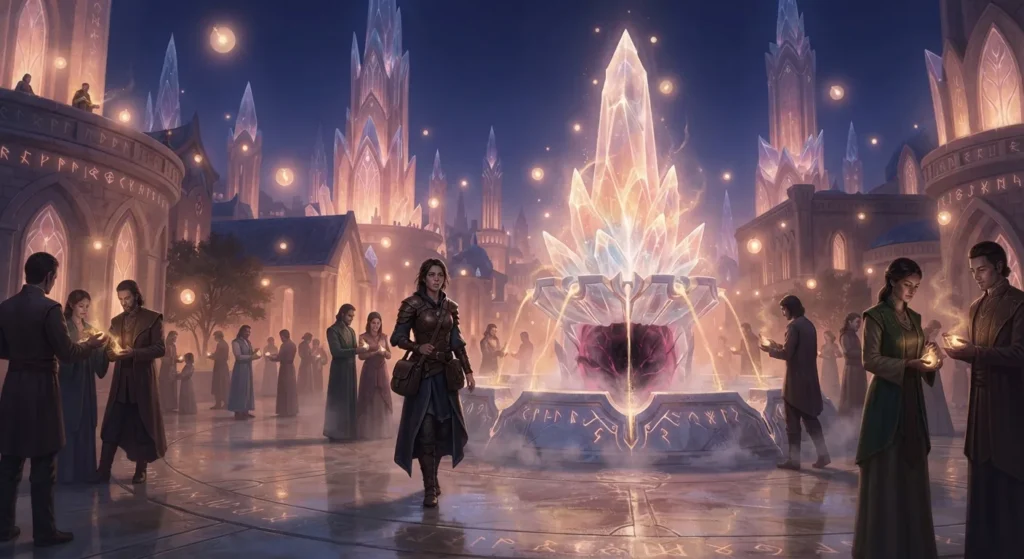
The last technique doesn’t put anything frightening in front of you. It puts you inside someone frightening and lets you notice that from there.
Mark Lawrence’s Prince of Thorns opens with its narrator, Jorg Ancrath, surveying the aftermath of a village his own men have just destroyed. He’s a teenager, and he’s completely unbothered by it.
Readers keep reading anyway. Reviewers routinely describe developing sympathy for Jorg despite everything he’s done, and that sympathy is precisely the mechanism.
The Dread is Recognizing Your Own Complicity
You’re not scared of Jorg the way you’d be scared of a creature in the dark. You’re unsettled by how easily his logic pulled you along with it.
That’s a different nervous system entirely from a scare. It’s closer to guilt, and it lingers far longer than a startle does.
Grimdark uses this constantly. An unreliable, charming, amoral narrator is a dread delivery system that horror’s toolkit doesn’t really have an equivalent for.
There Are Always Odd Ones Out There
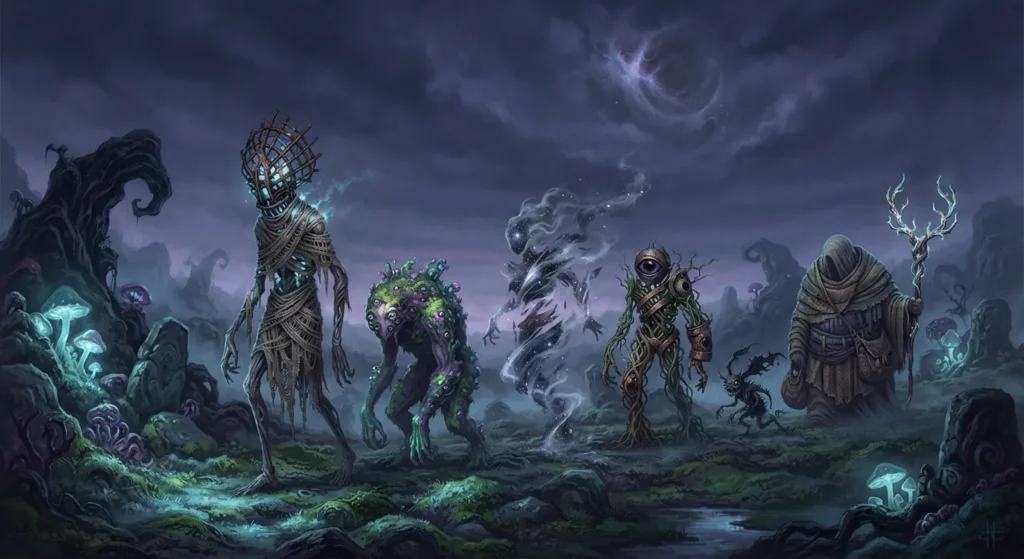
I’d be misleading you if I framed this as a clean split. Plenty of dark fantasy absolutely does use horror’s tools, and pretending otherwise would flatten the genre.
R. Scott Bakker’s Second Apocalypse novels go out of their way to be graphic, not obscure. Some grimdark leans hard into body horror, gore, and explicit violence exactly like horror does.
The honest claim isn’t that dark fantasy never uses horror’s tricks. It’s that its most distinctive, longest-lasting effects usually come from somewhere else.
A jump scare fades in seconds. The feeling of watching an inevitable ending approach, or realizing you liked a monster too much, can sit with a reader for years.
What Should You Do
Next time a fantasy novel gets under your skin without a single scare in it, look for which of these four levers got pulled.
Did you know the ending before the characters did? Did the author refuse to describe something you desperately wanted described? A character’s kindness masking real harm is another. So is catching yourself rooting for someone you shouldn’t.
Horror asks your body to jump. Dark fantasy, at its best, asks your judgment to sit still and watch something it can’t fix.
Read: 7 Dark Fantasy Tropes That Make The Genre Work
Frequently Asked Questions
Is dread the same thing as fear?
Not quite. Fear usually responds to an immediate, specific threat. Dread is anticipatory and diffuse, built from the sense that something bad is coming without a clear moment to react to. Dark fantasy specializes in the second one.
Did Ann Radcliffe write fantasy herself?
No. Radcliffe wrote Gothic novels like The Mysteries of Udolpho, always explaining her supernatural events rationally by the end. Her terror and horror framework outlived her genre and became foundational to how later writers, including fantasy authors, think about suspense.
Does grimdark always avoid horror’s tricks?
No, and it shouldn’t have to. Some grimdark writers blend explicit violence with slower, dread-based techniques in the same book. The two approaches aren’t mutually exclusive, just different tools solving different problems.
Why does dramatic irony create dread instead of boredom?
Because the tension shifts from “what happens” to “how it happens” and “what it costs.” Readers stay engaged watching characters approach a known outcome because the emotional toll, not the surprise, is the actual payload.
Is this terror and horror distinction still used by critics today?
Yes, though scholars note Radcliffe used the two words interchangeably in her own novels. The clean binary is mostly a later critical simplification of a distinction she raised more loosely in a single essay.
Sources & Further Reading
- “On the Supernatural in Poetry” by Ann Radcliffe
- Edmund Burke, A Philosophical Enquiry into the Origin of Our Ideas of the Sublime and Beautiful (1757)
- David Punter, The Literature of Terror
- The Monk: A Romance by M. G. Lewis
- Beowulf: The Monsters and the Critics – John Ronald Reuel Tolkien
- Carroll, Noël. The Philosophy of Horror, or Paradoxes of the Heart. Routledge, 1990.
- Brian Stableford – The A to Z of Fantasy Literature