
 By
By Quick Takeaways:
- Dark fantasy and horror share more surface material, violence, dread, moral bleakness, than almost any other two genre labels, which is exactly why the confusion is so persistent
- The actual dividing line isn’t tone or content. It’s commitment versus hesitation, whether the story eventually lets you understand what’s happening or deliberately withholds that understanding
- Dark fantasy and horror share a genuine, documented historical root in the pulp magazine Weird Tales, where Robert E. Howard and H.P. Lovecraft corresponded and wove elements of each other’s mythologies into their own work
- Two practical tests, the ending test and the survival versus achievement test, will tell you which genre you’re actually reading faster than any amount of theorizing
- The honest answer is that they’re close cousins built from the same toolbox, not the same genre wearing two names
I get some version of this question all the time, and it’s usually a genuine complaint: Is dark fantasy horror?
Someone picked up a book shelved as dark fantasy, expecting grim violence and moral complexity, only to end up sleeping with the lights on. Or the opposite: someone wanted a story that would genuinely unsettle them and instead got a perfectly solid epic fantasy with a high body count.
The confusion is understandable. Dark fantasy and horror fantasy share more DNA than almost any other pair of speculative subgenres. They often feature the same monsters, the same eerie settings, and the same bleak imagery. At a glance, they can look almost identical.
But they’re not the same thing. And the difference has surprisingly little to do with how dark either one gets.
The Real Dividing Line Is Commitment, Not Content
Todorov’s Hesitation, Applied Properly This Time
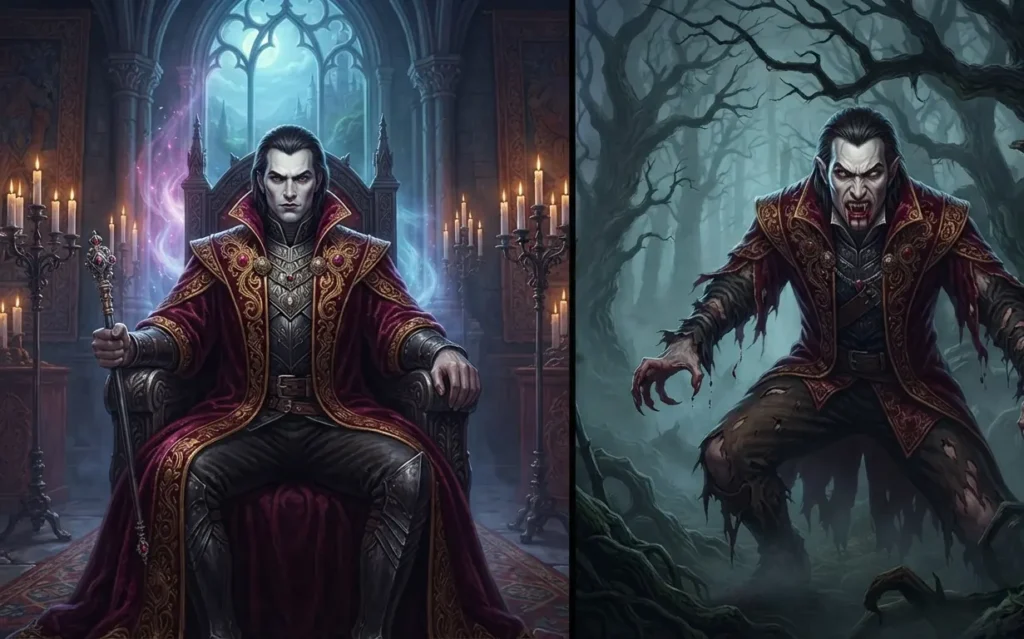
Literary theorist Tzvetan Todorov proposed that the fantastic exists specifically in the moment of hesitation a reader experiences deciding whether a strange event has a natural or a supernatural cause. Once a story commits firmly to one answer, it settles into either the uncanny, a natural explanation eventually arrives, or the marvelous, the supernatural explanation is simply confirmed as real.
Dark fantasy lives almost entirely in the marvelous. Its magic, its monsters, its gods, are treated as settled facts of the world from very early on, and the story’s darkness comes from what characters do within that confirmed reality rather than from doubt about whether the reality is confirmed at all.
Horror’s actual job, by contrast, is staying in that hesitation as long as it possibly can, because the uncertainty itself is doing the frightening work. The moment horror commits fully to an explained, rule bound supernatural system, it starts drifting back toward dark fantasy whether the author intended that or not.
Why This Matters More Than Tone
This is the part most casual genre comparisons get wrong. They compare darkness of theme, violence, moral ambiguity, and conclude the two categories must be nearly identical. But a story can be extraordinarily dark in content while remaining fully committed to the marvelous, fully explained, fully stable, the entire time.
Darkness of content and denial of understanding are two completely separate variables, and horror specifically needs the second one. Dark fantasy generally doesn’t.
The Settled World Test
Can You Learn the Rules
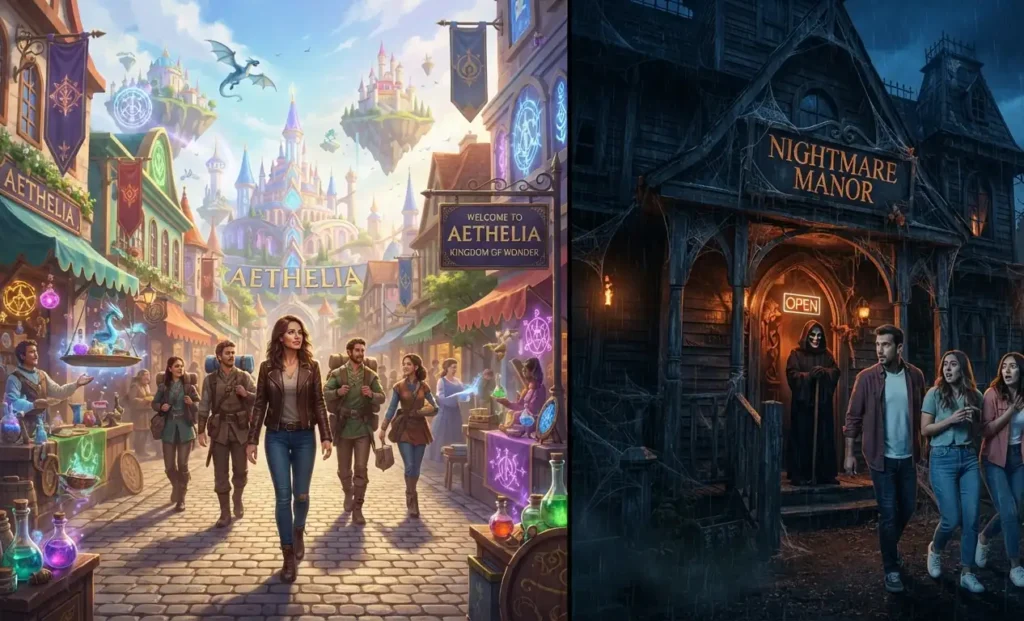
Here’s a genuinely practical test you can apply to almost anything you’re reading. Ask whether the story wants you to eventually learn and predict how its impossible element actually works. If yes, that’s dark fantasy’s instinct, even when the content is brutal. If the story is actively working to make sure you can never fully predict or understand the threat, that’s horror’s instinct, regardless of how the threat is dressed.
Joe Abercrombie’s grimdark novels are unmistakably dark, but the magic in them, however sparingly used, follows understandable rules, and the political and military systems that produce the violence are entirely legible once you’re a few chapters in.
You come to understand exactly why things go wrong. That legibility is the settled world doing its job.
What Happens When the Rules Refuse to Settle
Compare that to something like Jeff VanderMeer’s Annihilation, the opening volume of the Southern Reach trilogy, where an expedition enters a mysterious, transformed coastal region called Area X and encounters phenomena the narrative refuses to fully explain, even by the trilogy’s end.
VanderMeer isn’t withholding the explanation because he hasn’t thought of one. He’s withholding it because the withholding is the entire point, keeping the reader in genuine, sustained uncertainty about what Area X actually is and whether human categories can even describe it.
That’s horror’s instinct wearing science fiction and fantasy’s clothing simultaneously, which is exactly why VanderMeer’s work gets filed under the New Weird label rather than comfortably into either dark fantasy or straightforward horror on its own.
The Ending Test
Does the Story Let You Understand What Happened
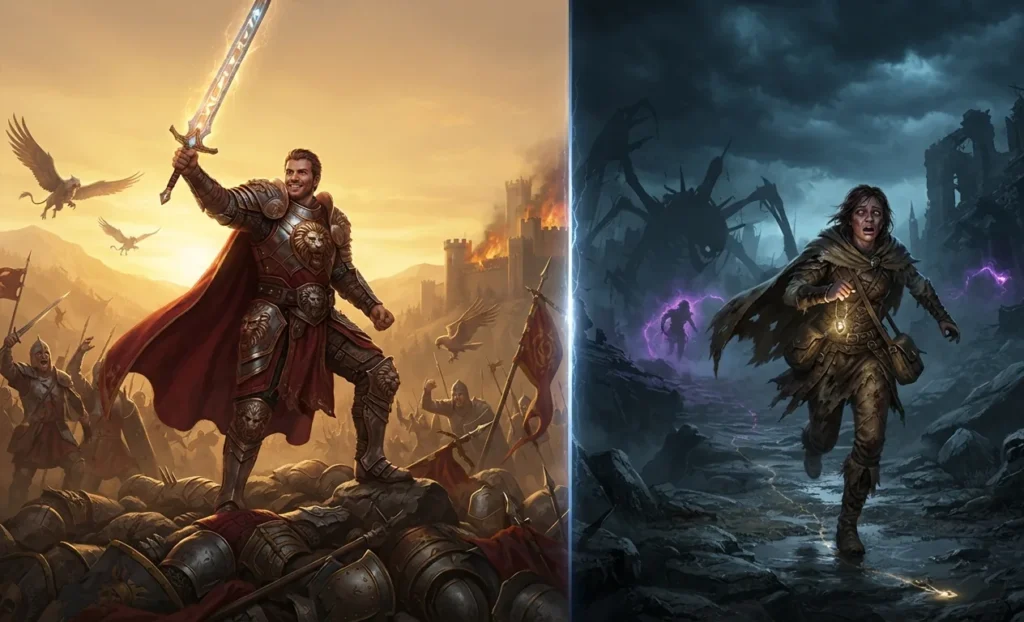
A second genuinely useful test: look at how the story ends and ask whether you’re meant to understand what happened, even if what happened is devastating. Dark fantasy endings are frequently bleak, morally compromised, and far from happy, but they’re usually legible. The war concludes one way or another. Someone’s death means something specific and stays meant.
A new, often grim, political order settles into place.
R.F. Kuang’s The Poppy War trilogy ends in genuine devastation, but you understand precisely why every major event happened and what it cost. Steven Erikson’s Malazan Book of the Fallen closes an enormous, sprawling conflict with real, traceable consequences for every major thread, however much loss accompanies it. Both are dark. Neither denies you understanding.
Horror’s Preference for Withheld Closure
Horror, by contrast, frequently ends without confirming the threat is actually gone, or without fully resolving what the threat even was. The uncertainty that ran through the whole story often survives into the final page specifically because resolving it completely would undercut the genre’s central effect.
A horror story that neatly explains and permanently defeats its monster in the last chapter has, in a meaningful sense, stopped being horror at that exact moment and become something closer to an adventure story with a scary middle section.
Survival Versus Achievement
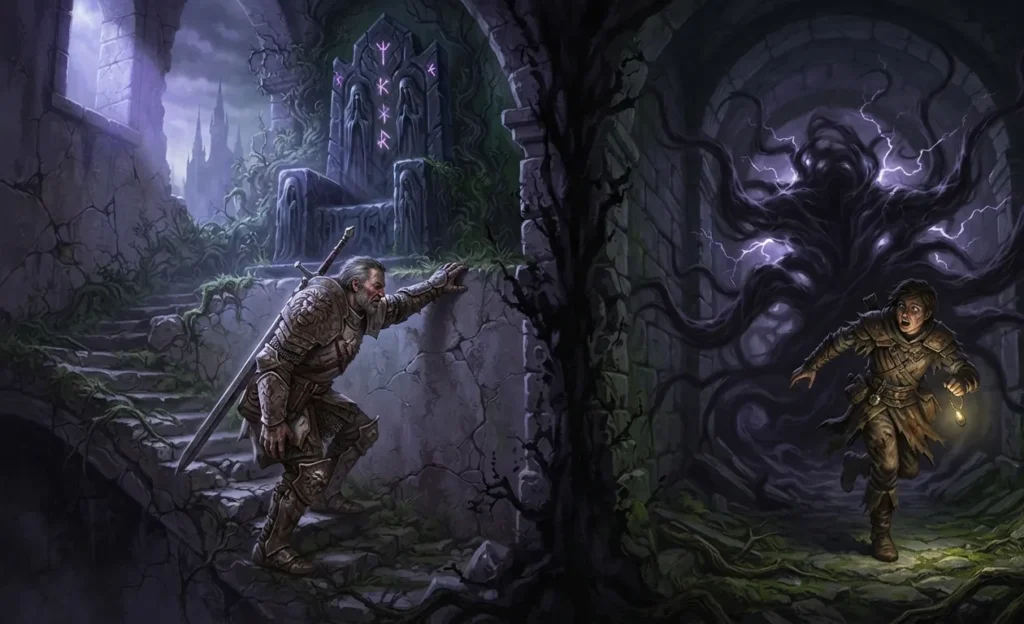
What Counts as Winning
Here’s a distinction I find genuinely clarifying and that most genre comparisons skip entirely. In horror, simply surviving, making it to the end still alive, still sane, still yourself, frequently counts as complete victory on its own. The genre doesn’t usually demand the protagonist accomplish anything beyond enduring the threat and coming out the other side.
Dark fantasy almost never accepts bare survival as sufficient triumph. Its protagonists generally need to accomplish something specific, win the war, overthrow the corrupt order, complete the mission, even when the cost of that accomplishment is genuinely terrible and the achievement itself is morally compromised.
Mark Lawrence’s Jorg Ancrath doesn’t just need to survive his own trilogy. He needs to actually become king and hold the throne he’s spent the whole story pursuing, however monstrous the path there was.
That difference, survival as sufficient ending versus survival as merely the precondition for the real ending, tells you an enormous amount about which genre’s instincts a given story is actually following.
Where the Pulps Blurred This From the Very Beginning
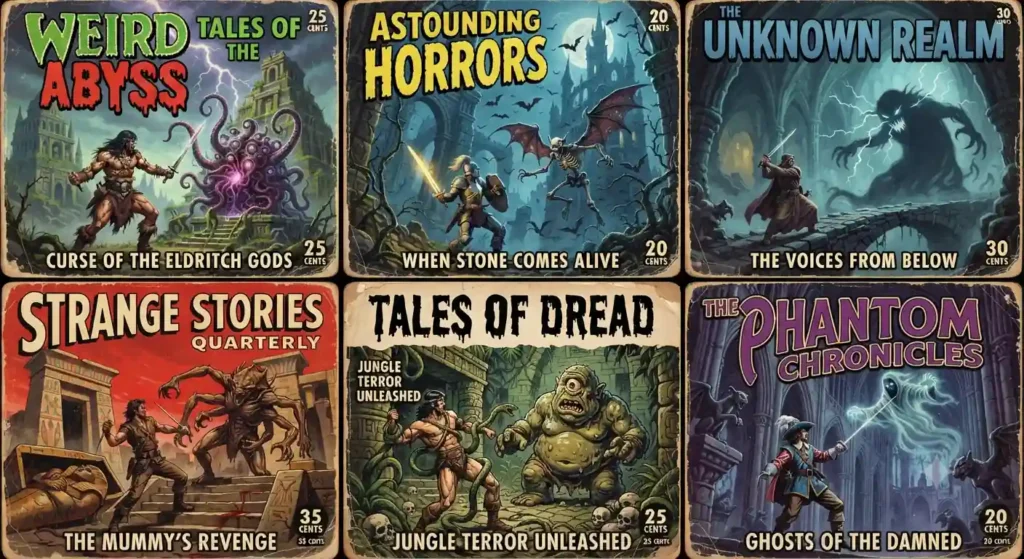
Howard, Lovecraft, and a Shared Magazine
This confusion isn’t new, and it isn’t accidental. Dark fantasy and horror share a genuine, documented common ancestor: the pulp magazine Weird Tales, active from the 1920s through the 1950s, which published both Robert E. Howard’s Conan stories and H.P. Lovecraft’s cosmic horror within the same issues, often side by side.
Howard and Lovecraft were real correspondents, exchanging letters regularly, and their fiction shows the direct result of that friendship. Howard wove elements resembling Lovecraft’s cosmic mythology into his own Hyborian Age stories, and other Weird Tales regulars, including Clark Ashton Smith, moved fluidly between sword and sorcery adventure and genuinely cosmic dread within their own bibliographies, sometimes within the same story.
Why This History Actually Matters
I bring this up because it means the blur between these categories isn’t a modern marketing problem or a lazy bookstore shelving decision. The two traditions grew up together, in the same magazine, among writers who read and influenced each other directly.
Sword and sorcery, dark fantasy’s direct ancestor, and cosmic horror emerged from genuinely overlapping soil, which is exactly why pulling them fully apart a century later still feels somewhat artificial no matter how carefully you draw the line.
The Modern Blur, Case by Case
T. Kingfisher and the Deliberate Hybrid
Contemporary author T. Kingfisher, the pen name of Ursula Vernon, writes work that deliberately sits on this exact boundary. Her novel What Moves the Dead, a retelling of Edgar Allan Poe’s The Fall of the House of Usher, uses fully committed, rule bound fungal biology as its horror mechanism, genuinely explained science standing in for supernatural dread, while still delivering sustained, unresolved unease specifically about what that explanation actually means for the characters trapped inside it.
This is a genuinely useful modern example precisely because it shows the settled world test and the hesitation test can pull in different directions within the same book. The biology gets explained. The dread doesn’t fully resolve anyway.
Piranesi and Atmospheric Dread Without Full Commitment
Susanna Clarke’s Piranesi sits closer to dark fantasy’s territory than horror’s, despite genuine, sustained unease running through its atmosphere. The novel’s central mystery, what the House actually is and why the narrator lives inside it, does eventually resolve into real understanding by the book’s end.
That resolution is exactly why it lands as literary dark fantasy with horror adjacent atmosphere rather than as horror proper. The hesitation gets answered.
Read: How Dark Fantasy Creates Dread Without Horror’s Tricks
Malazan and Poppy War as Useful Controls
I’ve written about both of these on my best dark fantasy books blogpost specifically as dark fantasy, and they’re worth mentioning briefly here as clean control cases. Both are genuinely brutal. Neither withholds understanding of its central conflicts the way horror structurally requires. That’s precisely why, however dark they get, neither one reads as horror wearing an epic fantasy disguise.
The Honest Verdict
Cousins, Not Twins
After all of this, here’s my actual answer, stated plainly. Dark fantasy is not horror, and treating the two labels as interchangeable will consistently mismatch readers with books they didn’t actually want. But they are genuine close cousins, built from an overlapping toolbox, sharing a real historical origin, and producing work that sometimes deliberately straddles both categories at once.
The dividing line isn’t how dark the story gets. It’s whether the story ultimately wants you to understand what happened, however terrible that understanding turns out to be, or whether it’s specifically built to deny you that understanding, permanently or for as long as it can manage. Dark fantasy, even at its bleakest, tends to answer. Horror’s whole reason for existing is frequently refusing to.
Frequently Asked Questions
Can a book genuinely be both dark fantasy and horror at the same time?
Yes, and the New Weird movement exists specifically for work that refuses to commit fully to either category’s instincts. Jeff VanderMeer’s Southern Reach trilogy is the clearest modern example, combining dark fantasy and science fiction elements with horror’s genuine, sustained refusal to fully explain its central mystery.
Why do Howard and Lovecraft matter to this specific question?
They demonstrate that dark fantasy and horror share a genuine historical common root rather than being unrelated categories that happen to overlap by accident. Their correspondence and cross referenced fiction, published together in Weird Tales, shows the two traditions developing side by side from the very beginning.
Is grimdark the same as dark fantasy horror hybrid?
No. Grimdark specifically describes moral cynicism and the deconstruction of heroic fantasy convention, a completely separate axis from horror’s structural denial of understanding. A grimdark story can be fully committed to the marvelous, fully explained magic system, and still qualify as grimdark without any horror elements involved.
What’s the simplest test for telling the two apart while reading?
Ask whether the ending resolves your understanding of the central threat, even if the resolution is bleak, or whether it deliberately withholds that understanding. A resolved, legible outcome leans dark fantasy. A withheld or ambiguous one, especially regarding whether the threat is truly finished, leans horror.
Does darker content always mean a story is closer to horror?
No, and this is the single most common mistake in comparing these genres. Darkness of theme and violence is a completely separate variable from horror’s structural requirement of sustained hesitation and denied understanding. A story can be extraordinarily dark and still be fully committed dark fantasy rather than horror.
FInal Thoughts
Not quite the same genre, then, but not strangers either. Dark fantasy and horror grew up in the same pulp pages, borrowed each other’s monsters, and still trade tools constantly. What actually separates them is smaller and more precise than tone: whether the story is willing to eventually tell you what happened, or whether refusing to tell you is the entire reason it exists.
That’s a genuinely useful thing to know the next time you’re standing in front of a shelf trying to decide whether tonight calls for something bleak you can understand, or something you’re specifically not supposed to.
Related Articles
- Grimdark vs Dark Fantasy: Are They One & The Same
- Why Every Great Dark Fantasy Needs a Cursed Kingdom
- How to Build a Dark Fantasy World That Actually Disturbs
- Dark Fantasy vs Gothic Fantasy: Where’s the Line?
- Why Millennials and Gen Z Love Dark Fantasy
- How Norse & Greek Mythology Built Modern Dark Fantasy
- 14 Dark Fantasy Books That Don’t Need a Sequel [2026]
- 7 Dark Fantasy Tropes That Make The Genre Work
Further Reading
- H. P. Lovecraft – Supernatural Horror in Literature
- Tzvetan Todorov – The Fantastic: A Structural Approach to a Literary Genre
- Carroll, Noël. The Philosophy of Horror, or Paradoxes of the Heart. Routledge, 1990.
- Clute, John & John Grant (eds.). The Encyclopedia of Fantasy. Orbit, 1997.
- Joshi, S. T. H. P. Lovecraft: A Life.
- Lovecraft, H. P., and Robert E. Howard. A Means to Freedom: The Letters of H. P. Lovecraft and Robert E. Howard.
- VanderMeer, Ann & Jeff (eds.). The New Weird. Tachyon Publications, 2008.
- The Time Machines: The Story of the Science-Fiction Pulp Magazines.