
 By
By Quick Takeaways:
- Cursed fantasy kingdoms distribute consequence across an entire population, most of whom never caused the original harm, which is precisely the moral texture dark fantasy is built to explore
- The device has ancient literary roots, tracing back through the Fisher King and Wasteland tradition and Sophocles‘ plague ridden Thebes, long before any modern fantasy novel used it
- Once established, a curse generates its own plot through its specific rules, meaning the story doesn’t need a recurring villain reappearing in every chapter to keep the tension alive
- Curses build their own escalating clock directly into the premise, which solves a pacing problem a lot of otherwise strong dark fantasy struggles with
- The trope fails specifically when the curse has no real rules and no real cost to lifting it, becoming atmosphere instead of structure
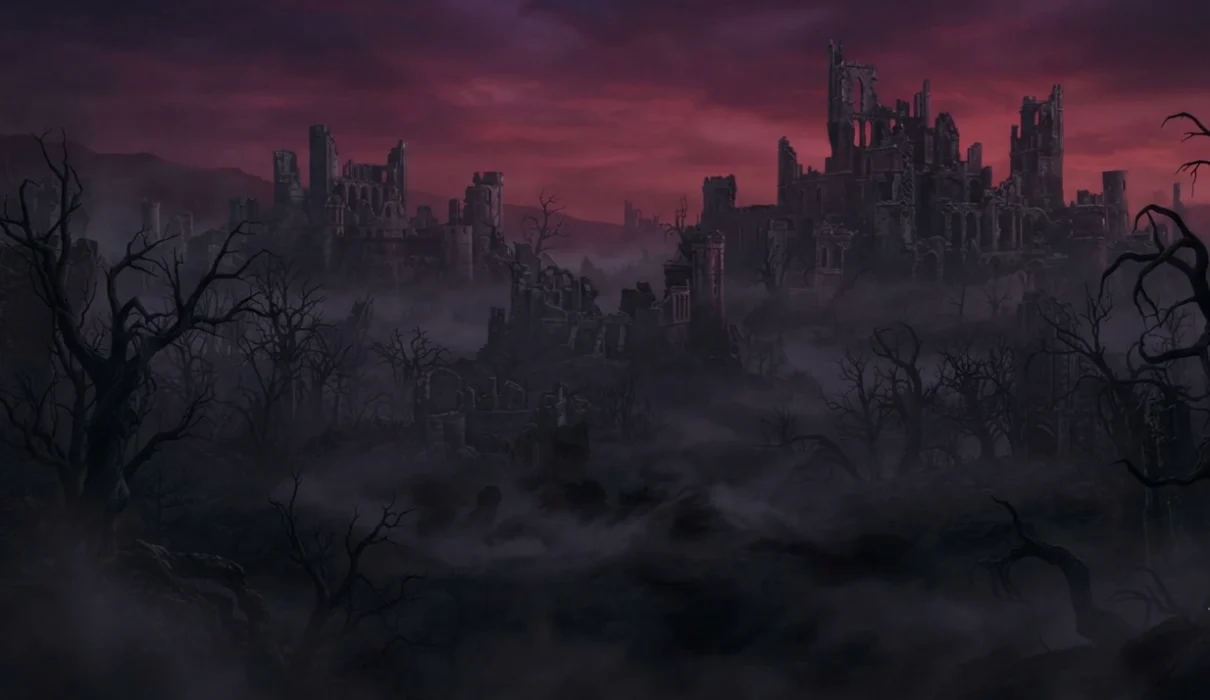
Ask a dark fantasy reader to name their favorite setting, and you’ll hear some version of a cursed kingdom more often than you would expect: a blighted realm, a land under a plague, a nation slowly dying from something nobody currently living actually did. That recurrence isn’t laziness on the genre’s part. It’s the device doing three specific pieces of structural work that almost nothing else does quite as efficiently.
The Device Has Genuinely Old Roots
The Fisher King and the Wasteland
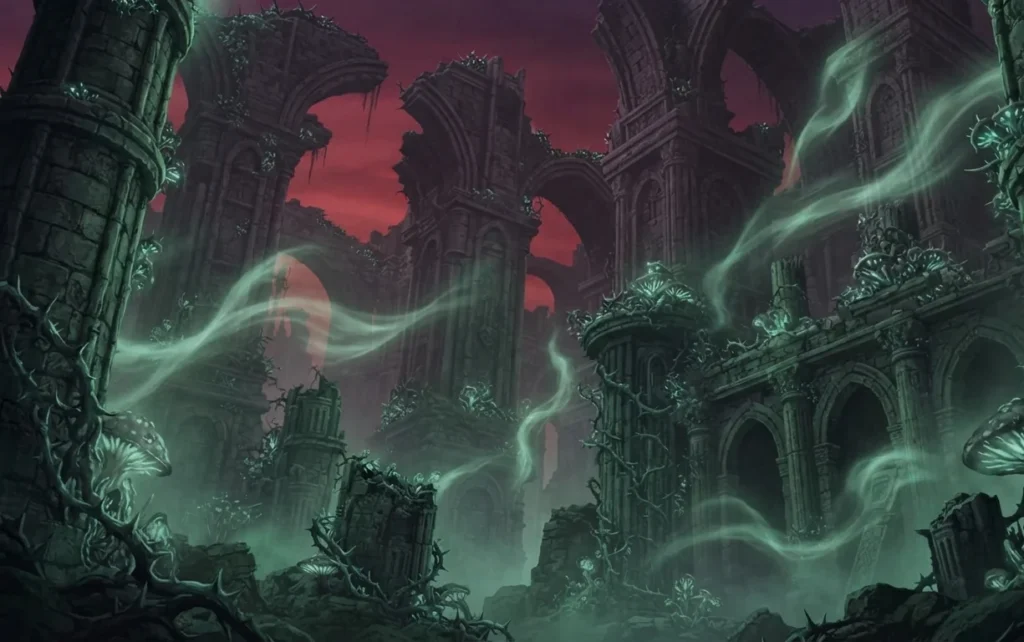
Long before modern fantasy existed, medieval Arthurian legend had already built an entire literary tradition around exactly this idea. The Fisher King, a wounded ruler whose infirmity directly blights his surrounding land, appears across Chrétien de Troyes’s twelfth century Perceval and its later elaborations, tying the health of an entire kingdom directly to the health, and moral standing, of the single figure who governs it. T.S. Eliot borrowed this exact tradition centuries later as the structuring device behind his 1922 poem The Waste Land.
Oedipus and the Plague at Thebes
Sophocles gives the same device its sharpest classical staging. Oedipus Rex opens with Thebes suffering under a genuinely catastrophic plague, and the entire play is structured as an investigation into why, only for the answer to be the ruler’s own hidden crimes, patricide and unwitting incest, crimes he didn’t consciously choose but that the city suffers for regardless.
The land’s affliction is never separate from the ruler’s own moral condition. It’s the direct, visible symptom of it.
These aren’t distant academic footnotes. They’re the actual origin of an idea dark fantasy keeps reaching for because it never stopped being useful.
It Distributes Guilt Instead of Isolating It
Nobody Currently Suffering Actually Did This
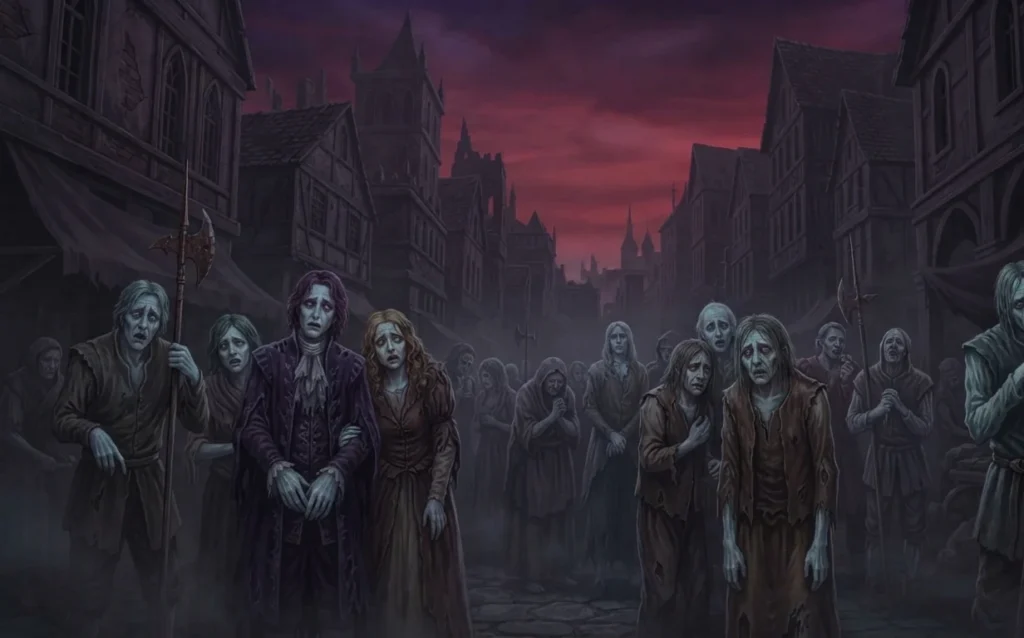
Here’s the mechanism I think matters most. A cursed kingdom means an entire population, farmers, children, soldiers, merchants, none of whom made the original choice, inherits the consequence of something a founder, a king, or an ancestor did generations earlier. That’s a different moral situation from a single villain committing crimes and a single hero eventually stopping them.
Dark fantasy specifically wants this kind of moral texture. I’ve written a blog post on this blog about why the genre’s readers gravitate toward morally gray protagonists rather than clean heroes, and a cursed kingdom produces that greyness almost automatically.
Every character living inside the curse has to decide how to survive a broken system they didn’t build, which means every character’s compromises start looking reasonable rather than villainous the moment you actually sit with their situation.
Guy Gavriel Kay’s Tigana
Kay’s Tigana takes this distribution to its most precise possible form. A tyrant erases a conquered province’s very name from the memory of everyone not born there, meaning an entire generation inherits a specific, collective wound that has nothing to do with anything they personally did. The novel’s real subject isn’t defeating the tyrant.
It’s what an entire population does while carrying a punishment none of them individually earned, which is exactly the kind of question a single villain story structurally can’t ask in the same way.
It Generates Plot Without Needing a Recurring Villain
Rules Do the Work an Antagonist Usually Does
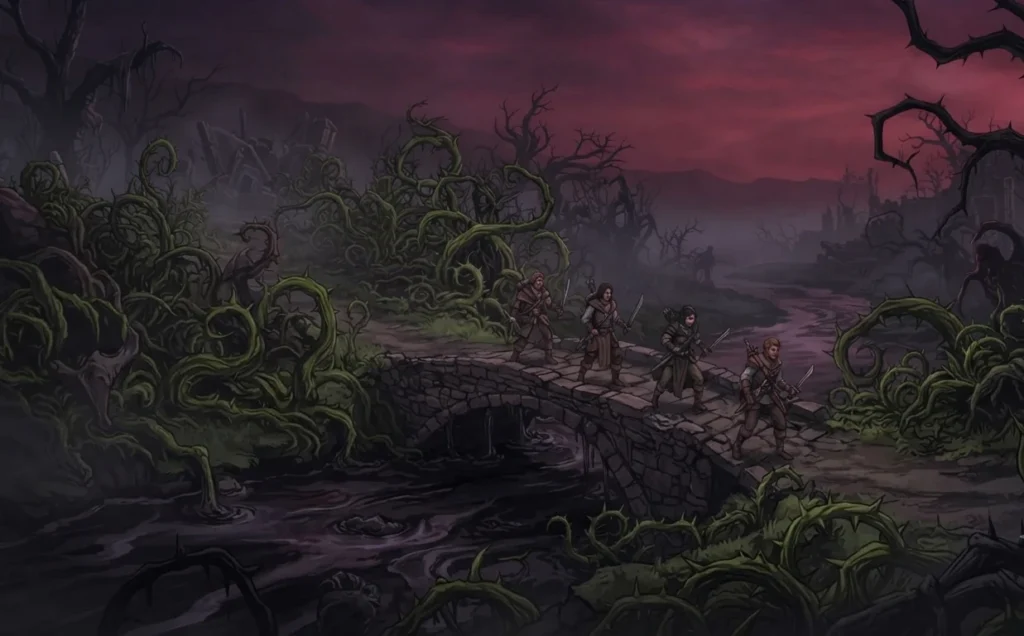
Once a curse is established with specific, consistent rules, no crops will grow past the seventh year, no child born here can leave, the fog only lifts if the old debt is paid, the story gets a plot engine that doesn’t require a mustache twirling antagonist reappearing in every scene to keep tension alive. Characters generate their own conflict simply by trying to live inside, around, or against those rules.
Naomi Novik’s Uprooted uses exactly this structure. The corrupting Wood threatening the valley isn’t a villain with a face and a monologue. It’s a systemic, rule bound blight, and the entire plot emerges from characters navigating its specific, consistent logic rather than chasing down a person who keeps escaping and returning.
Why This Solves a Real Craft Problem
A recurring villain has to keep making choices that plausibly extend the story without becoming repetitive, which is incredibly difficult to sustain across a long series.
A well built curse doesn’t have that problem, because the tension comes from the established rules themselves interacting with whatever the characters try next, which can generate fresh complications almost indefinitely without ever needing the same character to show up and cause trouble for the fourth time.
It Builds Its Own Clock Into the Premise
Escalation Without an Invented Deadline
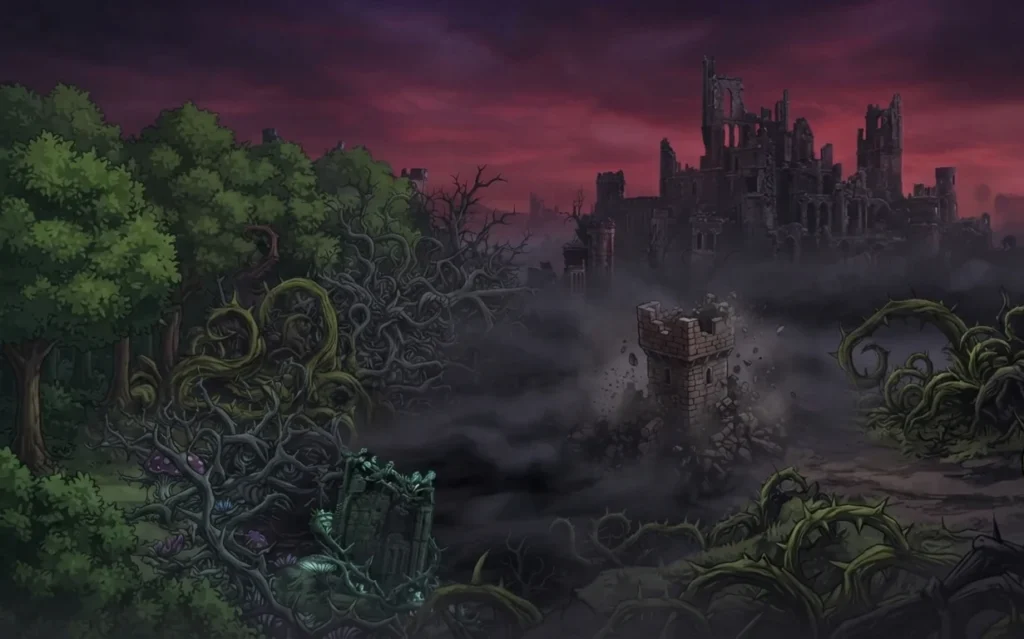
A lot of otherwise strong fantasy struggles with pacing specifically because it has to manufacture urgency from outside the premise, an approaching army, a countdown a wizard announces. A cursed kingdom often solves this automatically, because curses in fiction tend to worsen. The blight spreads further. The fog grows thicker. The seventh failed harvest arrives closer than the sixth did.
N.K. Jemisin’s Broken Earth trilogy takes this to its most literal extreme. The Stillness’s entire cosmology is a world broken by an ancient catastrophe, the Moon severed from the Earth, producing catastrophic seasons that repeat and worsen on their own internal schedule, independent of any character’s individual choices. The clock isn’t invented for dramatic convenience. It’s built directly into what the curse actually is.
Where the Device Actually Fails
Atmosphere Without Rules
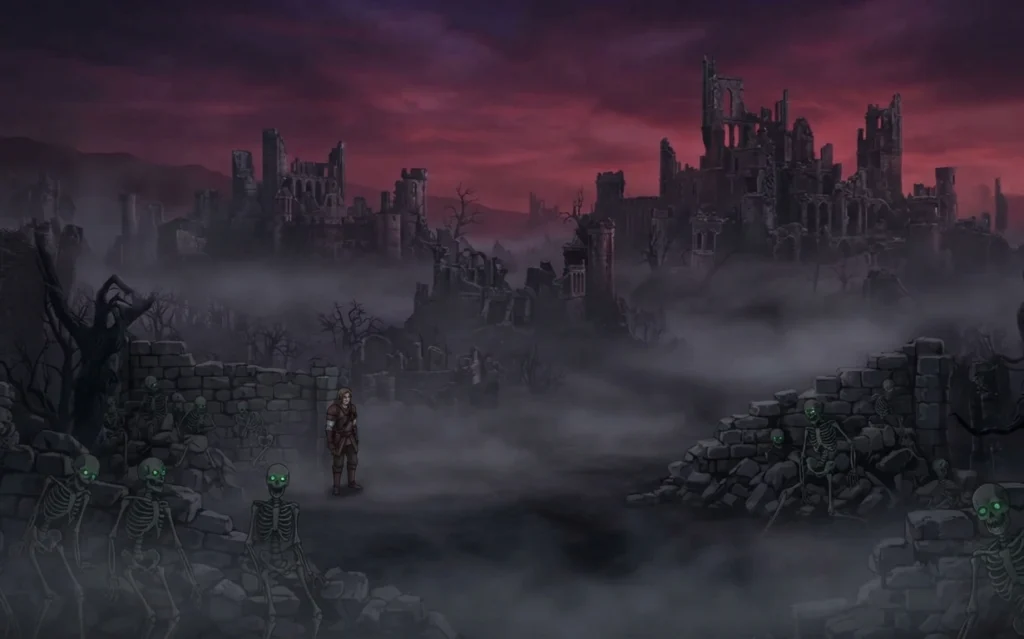
I want to be honest about the trope’s failure mode, because it’s common and it’s specific. A cursed kingdom stops working the moment the curse has no real rules and no genuine cost attached to lifting it, becoming pure atmosphere, fog, decay, ominous ravens, rather than an actual structural mechanism the plot depends on.
If breaking the curse could happen at any point with no established cost or consequence, and simply doesn’t because the plot needs more chapters first, readers feel that emptiness even if they can’t immediately name it.
The device only does its real work when the rules are genuinely fixed, consequential, and something the characters have to work within rather than around.
Why This Trope Isn’t Going Anywhere
Three Advantages, One Device
Distributed guilt that produces morally complex casts without extra effort. Built in plot generation that doesn’t require a repeating villain. An escalating clock that doesn’t need to be invented separately from the premise itself. That’s three real difficult craft problems, solved simultaneously, by one setting choice with roots stretching back through Sophocles and medieval Arthurian legend long before modern fantasy ever touched it.
That’s why the cursed kingdom keeps showing up. Not because dark fantasy authors are short on ideas, but because this specific idea keeps doing three jobs at once that most other premises need three separate solutions for.
Frequently Asked Questions
What is the Fisher King legend and why does it matter here?
The Fisher King is a wounded ruler in Arthurian legend whose infirmity directly blights his surrounding kingdom, tying the land’s health to the ruler’s own moral and physical condition. It’s one of the oldest documented versions of the cursed kingdom device, predating modern fantasy by centuries.
How does Oedipus Rex relate to cursed kingdom stories?
Sophocles opens the play with Thebes suffering a catastrophic plague caused by Oedipus’s own hidden crimes, unknown even to himself. The city’s suffering is a direct, visible symptom of the ruler’s moral condition, making it one of literature’s clearest early examples of this device.
Why does a cursed kingdom produce morally gray characters more easily than other premises?
Because everyone living inside an inherited curse has to make compromises to survive a broken system they didn’t create. That collective, distributed guilt produces truly complex characters automatically, without needing an author to construct individual moral ambiguity from scratch for each one.
What makes a cursed kingdom stop working as a story device?
When the curse has no consistent rules and no real cost attached to lifting it, becoming pure atmosphere rather than a structural mechanism. Readers sense the emptiness once it becomes clear the curse persists only because the plot needs more chapters, not because anything actually constrains it.
Is the cursed kingdom trope the same as a dystopia?
Not quite. A dystopia is typically a deliberately constructed political system maintained by identifiable human actors. A cursed kingdom usually involves an inherited, often magical consequence nobody currently in power actually chose or controls, which produces a different kind of moral and narrative texture.
Final Thoughts
Three separate craft problems, one setting choice, and roots running back through a wounded king in Arthurian legend and a plague ridden city in fifth century Athens. That’s a lot of durability for a device some readers still dismiss as a familiar shortcut.
It keeps recurring because it isn’t a shortcut at all. It’s one of the most efficient structural tools dark fantasy has ever borrowed, and it was doing exactly this same work centuries before anyone thought to call it a genre convention.
Related Articles
- How Fantasy World-Building Actually Works [Full Breakdown]
- Grimdark vs Dark Fantasy: Are They One & The Same
- 12 Best Dark Fantasy Books 2026: You Should Never Miss Out
- Is Dark Fantasy Horror? Where the Line Actually Falls
- How to Build a Dark Fantasy World That Actually Disturbs
- How Norse & Greek Mythology Built Modern Dark Fantasy
- 14 Dark Fantasy Books That Don’t Need a Sequel [2026]
- 9 Fantasy Magic Systems Unlike Anything Else
Further Reading
- Chrétien de Troyes – Perceval, the Story of the Grail
- Jessie L. Weston – From Ritual to Romance
- T. S. Eliot – The Waste Land
- Sophocles – Oedipus Rex
- Guy Gavriel Kay – Tigana
- Naomi Novik – Uprooted
- N. K. Jemisin – The Broken Earth Trilogy
Written by Batin Khan, a curious free spirit who loves reading and exploring the worlds of fantasy, mythology, and ancient stories. Through this blog, Batin hopes to share that sense of wonder with readers while building an exciting future along the way.