
 By
By Quick Takeaways:
- Every book on this list is a standalone dark fantasy book, one complete story, no trilogy commitment required, which is a real gap in most dark fantasy recommendation lists that quietly slip series entries in anyway
- The methodology below is stated plainly so you can see exactly what each ranking is actually measuring, rather than taking my word for it
- Each entry now carries specific reading data, length, pacing, horror and fantasy intensity, content notes, and age range, so you can match a book to your actual mood rather than just its premise
- Two corrections worth flagging upfront. Coraline and The Graveyard Book are written for younger readers, not adult audiences, and I’ve labeled them honestly.
Disclosure: As an Amazon Associate, I earn from qualifying purchases. This means I may receive a small commission if you buy through links on this site, at no extra cost to you. I appreciate your support
Dark fantasy recommendation lists have a specific bad habit. They call something standalone, then it turns out to be book one of a trilogy with the second volume conveniently unmentioned. Every title here is truly complete in itself.
How I Created This List
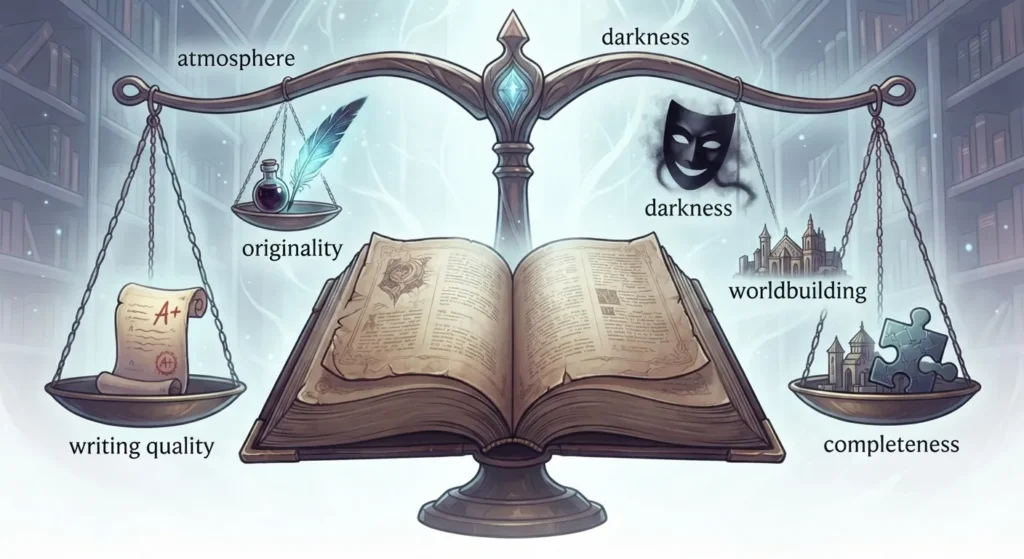
Four criteria drive every placement on this list.
Craft and prose quality evaluates control over sentence level writing, structure, and emotional payoff within a single, complete book. A standalone doesn’t get the luxury of a slow burn across multiple volumes. It has to land everything it’s doing in one shot.
Atmospheric coherence rewards novels whose dark tone is sustained and purposeful throughout rather than dark in patches surrounded by material that undercuts it. Dark fantasy fails specifically when its darkness feels inconsistent.
Character depth within a single volume evaluates whether the protagonist and key supporting cast feel like fully realized people despite having only one book to develop in, rather than sketches that a trilogy would have had room to properly build out.
Critical and reader consensus uses major literary awards, sustained critical attention, and long term reader discussion as a check against purely personal taste. A book I love that the wider reading community has consistently found wanting won’t rank as high as one where my enthusiasm and that consensus actually align.
Piranesi
Author: Susanna Clarke | Central Darkness: Isolation and the erosion of identity
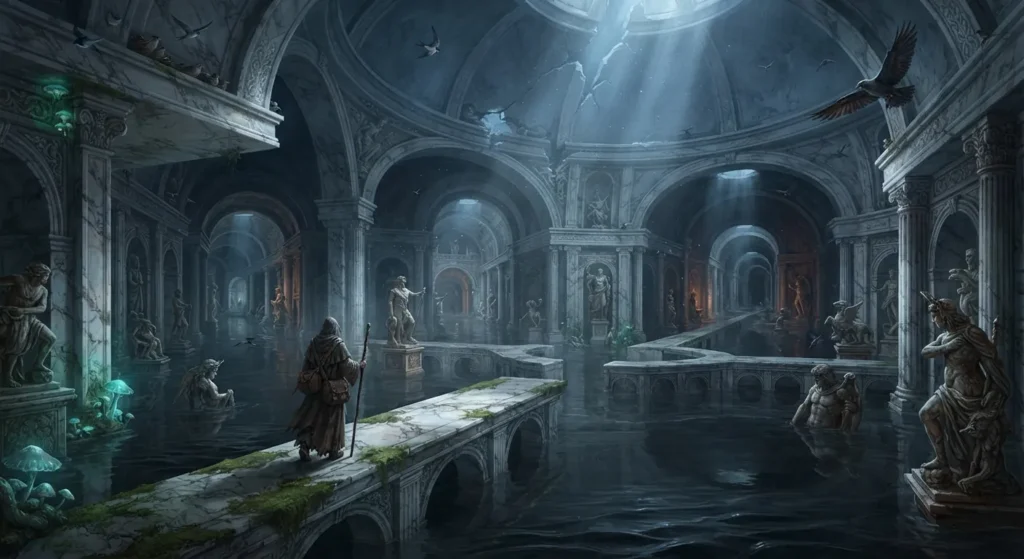
Piranesi lives alone in an infinite House of endless halls, tides, and statues, keeping careful, loving records of everything around him. He doesn’t know he’s forgotten who he actually is until the novel slowly, patiently lets you realize it alongside him.
What makes this work is restraint. Clarke never rushes the reveal, and the dread builds entirely from the gap between Piranesi’s contentment and the reader’s growing unease about what that contentment is actually built on.
The weakness is real. This is a quiet, interior book with almost no external action for most of its length, and readers who need momentum will find the pace noticeably difficult. The case for this ranking rests on sustained craft. Few standalone novels commit this completely to a single, difficult narrative technique and land it as cleanly as Clarke does here.
Length: 249 pages | Pacing: Slow | Horror level: 2/5 | Fantasy level: 3/5 | Gore: None | Romance: None | Age range: Adult | Standalone: Yes
Best for: Readers who want dread built entirely from atmosphere rather than plot
Jonathan Strange & Mr Norrell
Author: Susanna Clarke | Central Darkness: Genteel menace hiding inside Regency manners
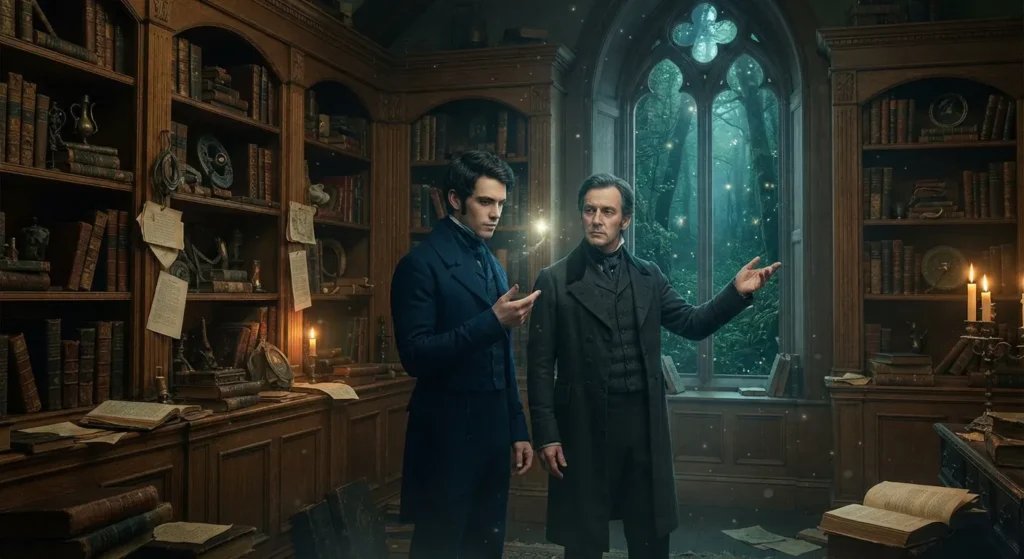
Two magicians revive English magic in an alternate early nineteenth century, and their rivalry unfolds alongside the Gentleman with the Thistle Down Hair, one of the most quietly unsettling antagonists in fantasy, polite, charming, and horrifying underneath both.
The noteworthy aspect for this ranking is craft density. Almost no other standalone fantasy sustains this much stylistic control across this much page count without losing momentum entirely.
Clarke’s deliberate period pastiche prose, complete with extensive footnotes describing an entire invented magical history, makes the world feel thoroughly, believably real before the darkness fully arrives.
The pain point is length and pace. This is a really long, dense novel, and the first several hundred pages ask for real patience before the stakes fully clarify.
Best for: Readers who want slow build atmospheric dread with genuinely exceptional prose
Length: 865 pages | Pacing: Slow | Horror level: 2/5 | Fantasy level: 5/5 | Gore: Low | Romance: Minor | Age range: Adult | Standalone: Yes
Grendel
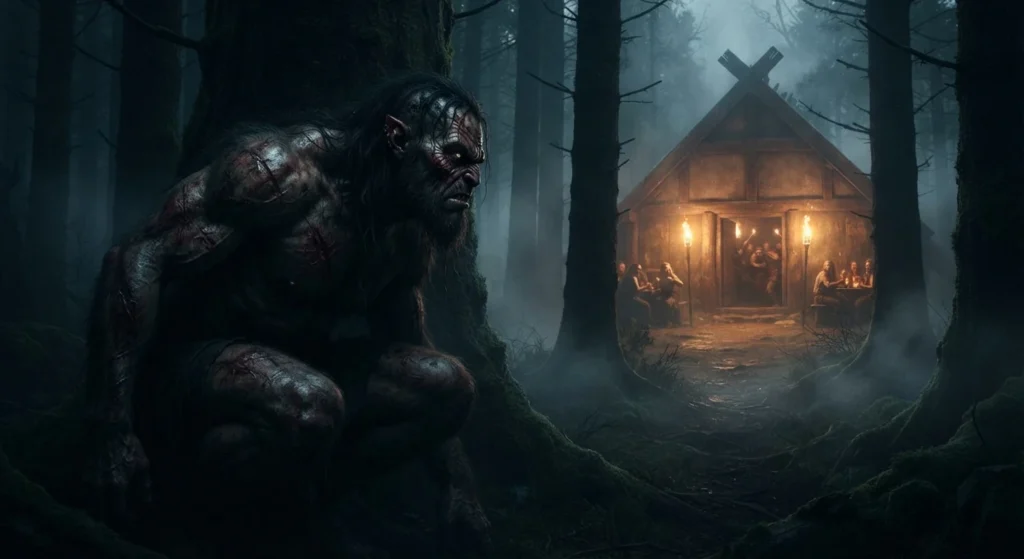
Author: John Gardner | Central Darkness: Meaninglessness and philosophical isolation
Best for: Readers who want the Beowulf story told from the monster’s own consciousness
The case for this ranking is the originality of the angle. No other book on this list does anything close to what Gardner does here, inhabiting genuine monstrous consciousness rather than simply depicting monstrous action.
Gardner retells Beowulf entirely from Grendel’s perspective, an incredibly intelligent, philosophically restless monster who watches human society develop and finds himself unable to locate any meaning in it, in himself, or in his own violence.
This is short, dense, and considerably more literary than most entries on this list, closer to existentialist philosophy wearing a monster’s skin than to conventional dark fantasy narrative.
The weakness is accessibility. Readers wanting plot-driven fantasy will find this difficult, since it’s built around interior philosophical rumination rather than conventional story momentum.
Length: 194 pages | Pacing: Slow | Horror level: 2/5 | Fantasy level: 3/5 | Gore: Low to moderate | Romance: None | Age range: Adult | Standalone: Yes
The Buried Giant
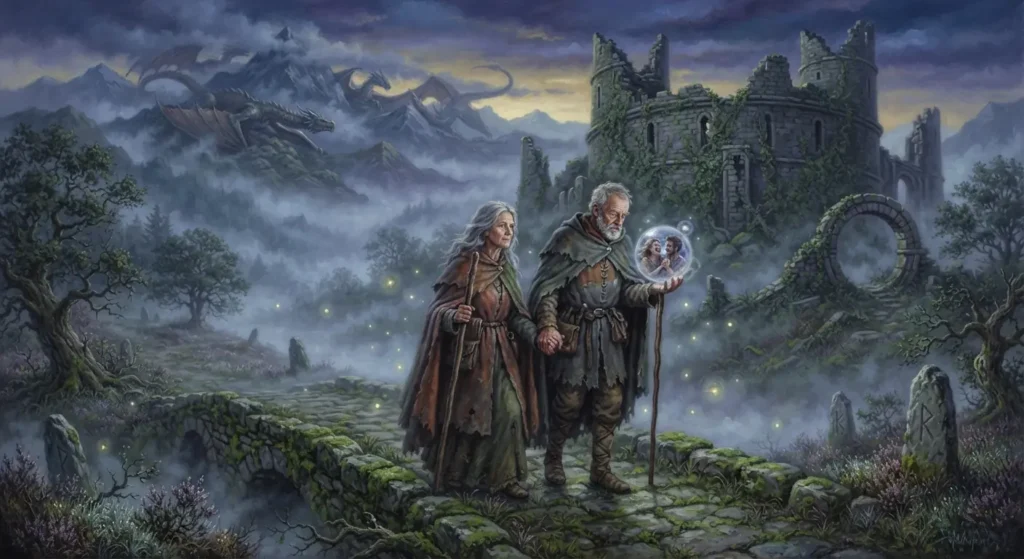
Author: Kazuo Ishiguro | Central Darkness: Collective forgetting and the cost of peace built on erasure
An elderly couple travels through a post Arthurian Britain shrouded in a mysterious mist that erases memory, encountering ogres, a dragon, and the slow, painful recovery of things a fragile peace depended on everyone forgetting.
Ishiguro’s spare, controlled prose makes the fantasy elements feel unmistakably uncanny rather than decorative, and the central question, whether forgetting a genocide is what allowed peace to exist, gives the book real philosophical weight.
The slight weakness is tonal restraint that some readers find emotionally distant.
Ishiguro’s characteristic reserve, effective for the novel’s themes, keeps the reader at more of a remove than most dark fantasy attempts.
The case for this ranking is thematic ambition matched by real execution. Few fantasy novels ask this large a question this directly and actually earn the answer they arrive at.
Best for: Readers who want quiet, devastating fantasy about memory and reconciliation
Length: 336 pages | Pacing: Slow | Horror level: 1/5 | Fantasy level: 3/5 | Gore: Low | Romance: Minor, central to the plot but not genre romance | Age range: Adult | Standalone: Yes
Nettle & Bone
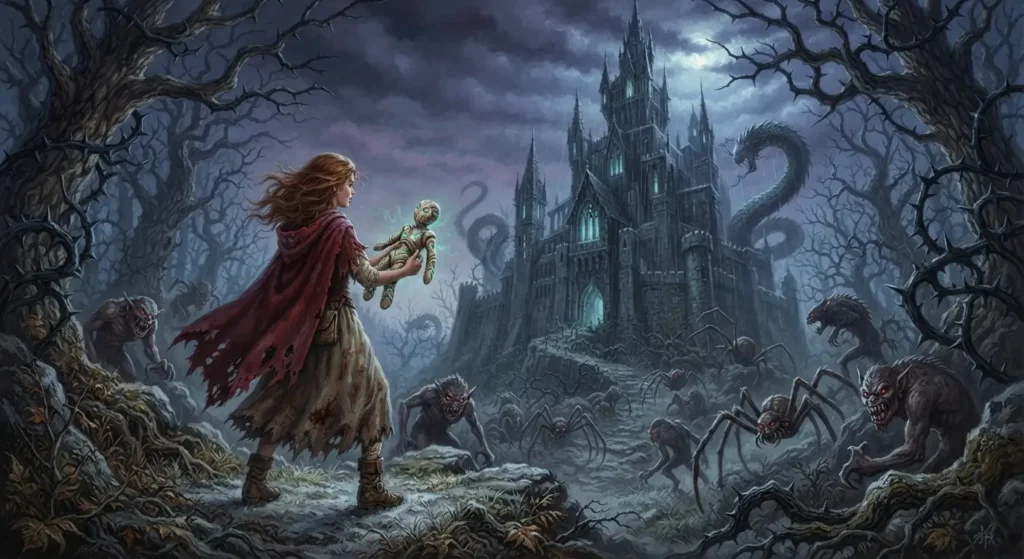
Author: T. Kingfisher | Central Darkness: Fairy tale cruelty taken seriously rather than softened
Kingfisher masterpiece, with the potential weakness, which is a slightly uneven back half, where the pacing loosens compared to the tightly constructed opening chapters. But I say don’t let it hold you back; you should definitely add it to your TBR.
A princess assembles the traditional impossible objects, a dog made of bones, a cloak of nettles, to save her sister from an abusive husband, and Kingfisher takes the fairy tale scaffolding seriously enough to let real cruelty and real cost sit inside it rather than softening either.
The book’s real strength is refusing to let its fairy tale logic excuse away what its darker elements actually mean for the people living through them. The case for this ranking is tonal honesty. This is dark fantasy that respects its fairy tale roots by taking its darker implications seriously rather than treating them as decoration.
Best for: Readers who want a quest structure built around consequence rather than fairy tale convenience
Length: 256 pages | Pacing: Moderate | Horror level: 3/5 | Fantasy level: 4/5 | Gore: Low to moderate | Romance: Minor | Age range: Adult | Standalone: Yes
The Golem and the Jinni
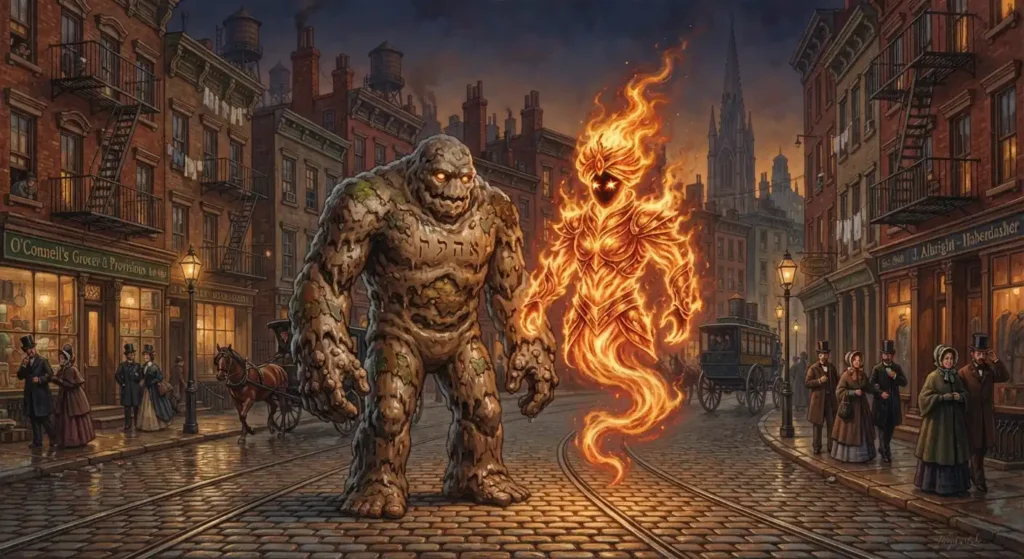
Author: Helene Wecker | Central Darkness: Displacement, forced obedience, and the terror of unchosen nature
A golem and a jinni, both displaced into early twentieth century New York, form an unlikely friendship while each grapples with a fundamental nature they didn’t choose, obedience for one, ancient freedom lost for the other.
The case for this ranking is emotional specificity. Few standalone fantasy novels give two entirely different mythological traditions this much true, researched respect within one book.
Wecker’s research into both Jewish golem tradition and Middle Eastern jinni folklore gives both characters real cultural weight rather than generic fantasy creature status. The weakness is pacing in the middle third, where the dual narrative structure occasionally slows before the two central threads fully converge.
Length: 496 pages | Pacing: Slow to moderate | Horror level: 1/5 | Fantasy level: 4/5 | Gore: Low | Romance: Minor | Age range: Adult | Standalone: Reads as complete on its own, though Wecker published a sequel, The Hidden Palace, eight years after the original release
Best for: Readers who want mythological figures given enough emotional interiority in a historical setting
The Raven Tower
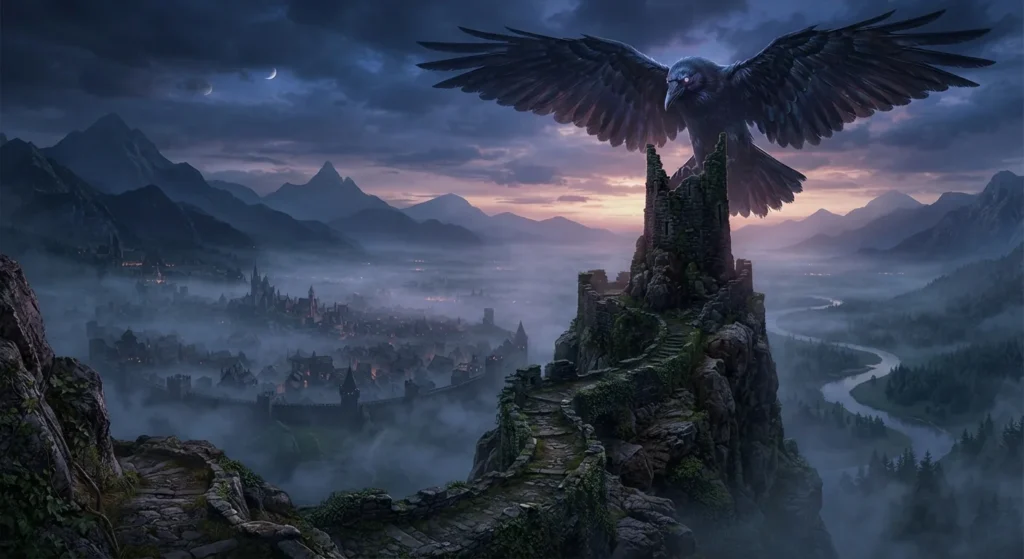
Author: Ann Leckie | Central Darkness: Divine power built on, binding cost
Best for: Readers who want a fantasy world where gods are constrained by real rules rather than arbitrary power
Leckie builds a world where gods gain power specifically by speaking the truth, and lying costs them dearly, with a magic system that carries load-bearing consequences rather than decorative flavor. The unusual second person narration, delivered by a god observing a human protagonist, gives the book an incredibly unsettling perspective most fantasy doesn’t attempt.
The weakness is that unconventional narration itself, which some readers find difficult to settle into for the book’s full length.The case for this ranking is structural originality. Few standalone fantasy novels build their entire magic system and narrative voice around one unified, rigorously applied idea this completely.
Length: 432 pages | Pacing: Slow to moderate | Horror level: 1/5 | Fantasy level: 5/5 | Gore: Low to moderate | Romance: None | Age range: Adult | Standalone: Yes
The Historian
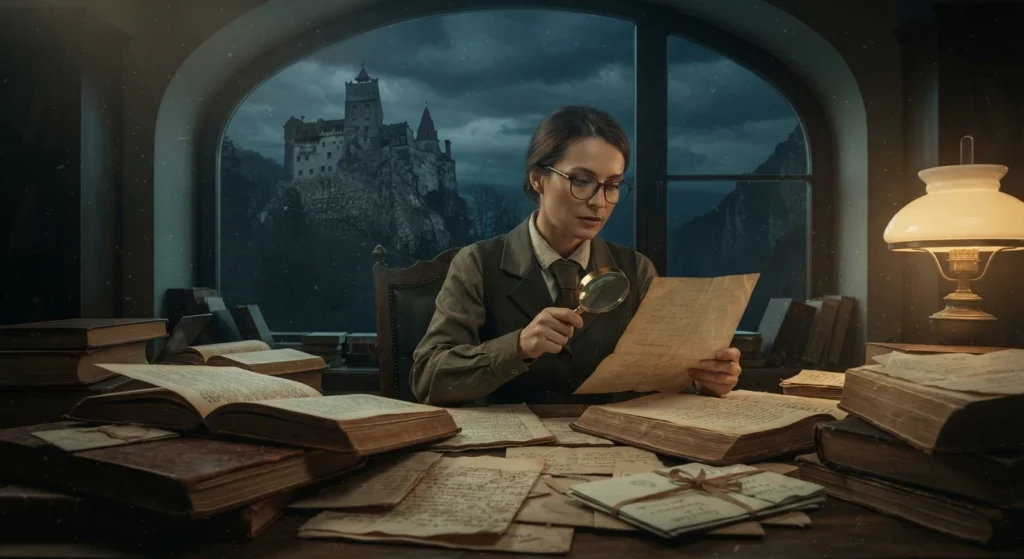
Author: Elizabeth Kostova | Central Darkness: Historical atrocity given a ancient, undying face
A young woman discovers her father’s research into the historical Dracula and follows a decades-spanning, multi-generational mystery across Cold War-era Europe, treating vampire mythology as something worth historical and academic investigation rather than romantic decoration.
Kostova’s research into actual Ottoman and Eastern European history gives the book real texture, and the epistolary, letter driven structure builds dread patiently across generations.
The potential drawback is length and pace. This is a genuinely slow-burn novel, and readers wanting immediate horror payoff will find the academic mystery structure demands real patience. The worthy aspect for this ranking is historical seriousness. Few vampire novels treat the underlying history with this much genuine research and respect.
Best for: Readers who want a slow, academic mystery structure wrapped around vampire mythology
Length: 720 Pages | Pacing: Slow | Horror level: 2/5 | Fantasy level: 3/5 | Gore: Low | Romance: Minor | Age range: Adult | Standalone: Yes
The Starless Sea
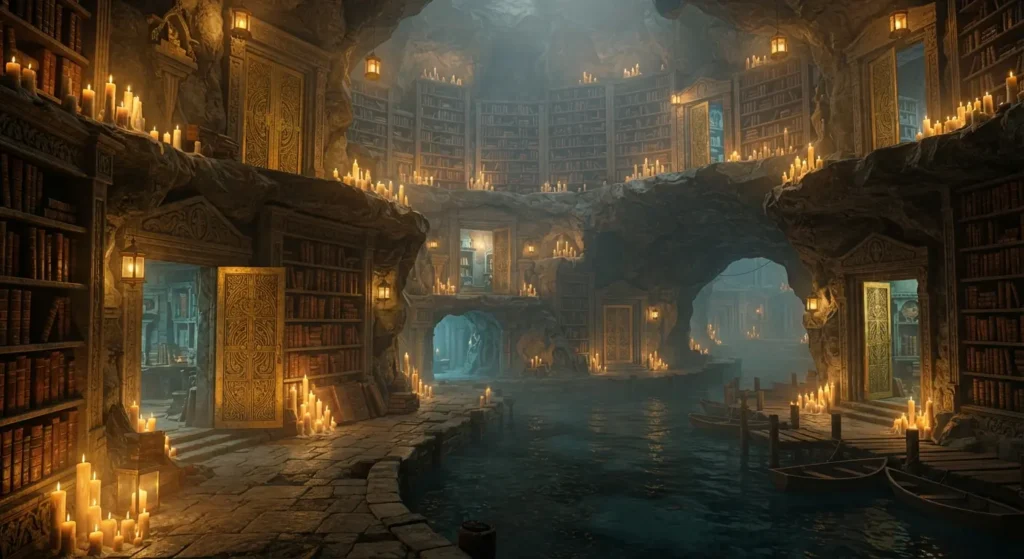
Author: Erin Morgenstern | Central Darkness: A dreamlike world built on buried loss
A graduate student discovers a book containing a story from his own childhood and follows it into a hidden underground world of libraries, secret societies, and stories nested inside other stories, all built around a sense of buried, accumulating loss.
What might hold you back is structural complexity that some readers find disorienting, since the nested stories occasionally obscure the central plot’s momentum.
Morgenstern’s prose is gorgeous in the truest sense, and the nested storytelling structure rewards patient, attentive reading in ways that pay off considerably by the book’s end. The case for this ranking is sheer atmospheric achievement. Few books build a world this immersive through prose style alone.
Best for: Readers who want lush, atmospheric dark fantasy built from nested stories rather than a single linear plot
Length: 512 pages | Pacing: Slow to moderate | Horror level: 1/5 | Fantasy level: 5/5 | Gore: Low | Romance: Minor | Age range: Adult | Standalone: Yes
The Ocean at the End of the Lane
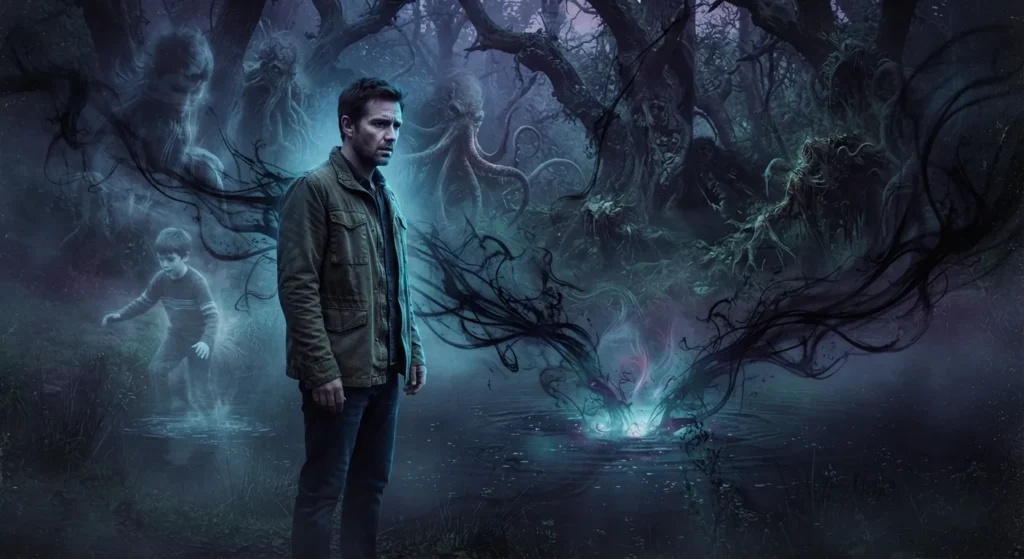
Author: Neil Gaiman | Central Darkness: Childhood vulnerability against ancient, incomprehensible forces
The book is worth this ranking for its emotional precision. Few books this short land this much real dread and genuine tenderness simultaneously. A man returns to his childhood home and recovers memories of an ancient, otherworldly threat he encountered as a seven-year-old, one that adults around him couldn’t perceive or protect him from.
Gaiman’s great skill here is capturing childhood’s specific vulnerability, the terror of a threat only you can see and no adult believes, without ever condescending to the child protagonist’s actual intelligence.
The potential weak point is brevity, which leaves some of the mythology feeling underexplored compared to Gaiman’s longer work.
Best for: Readers who want dark fantasy filtered through the specific helplessness of being a child
Length: 259 pages | Pacing: Moderate | Horror level: 3/5 | Fantasy level: 4/5 | Gore: Low | Romance: None | Age range: Adult, despite the child protagonist. Gaiman has been explicit that this was written and marketed for adult readers | Standalone: Yes
Coraline
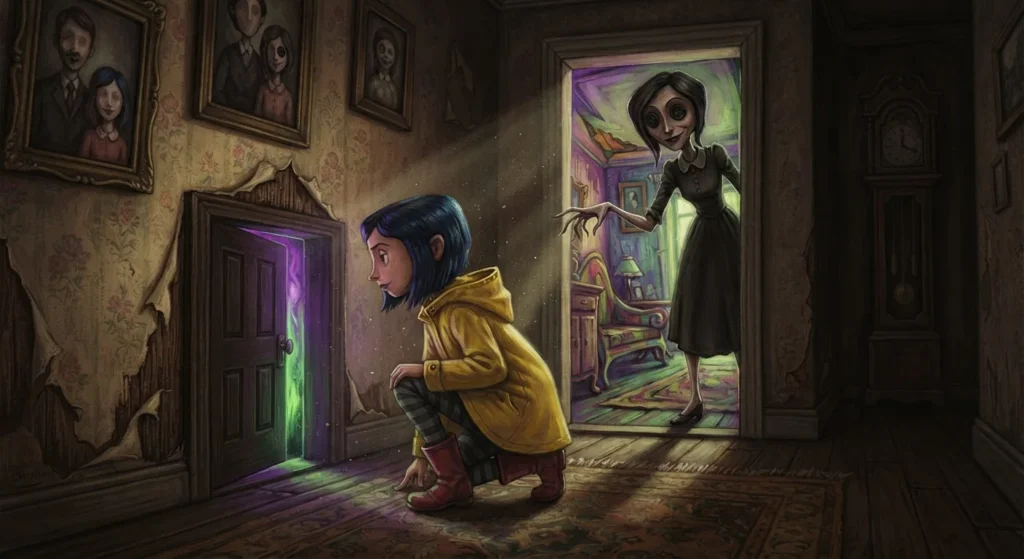
Author: Neil Gaiman | Central Darkness: A mother figure whose love is deliberately hollow
Best for: Readers wanting a shorter entry point into unsettling dark fantasy, or a book to hand a younger reader who wants something real
Coraline discovers a door to an alternate version of her home, complete with an Other Mother whose attention feels perfect right up until the disturbing cost of staying becomes clear.
Gaiman builds real dread from a specifically domestic threat, a parent figure whose love turns out to be possessive and hollow, which lands with particular weight for younger readers and adults alike.
What might you slightly dislike is scale. This is deliberately compact, and readers wanting a fuller dark fantasy world will find it satisfying but limited in scope. The plus point for this ranking is efficiency. Few books this short and this specifically aimed at younger readers manage to be this unsettling without ever feeling inappropriate for its actual audience.
Length: 176 pages | Pacing: Fast | Horror level: 3/5 | Fantasy level: 4/5 | Gore: Low | Romance: None | Age range: Middle grade, generally marketed toward roughly ages 8 and up, though it reads as unsettling for adults too | Standalone: Yes
The Graveyard Book
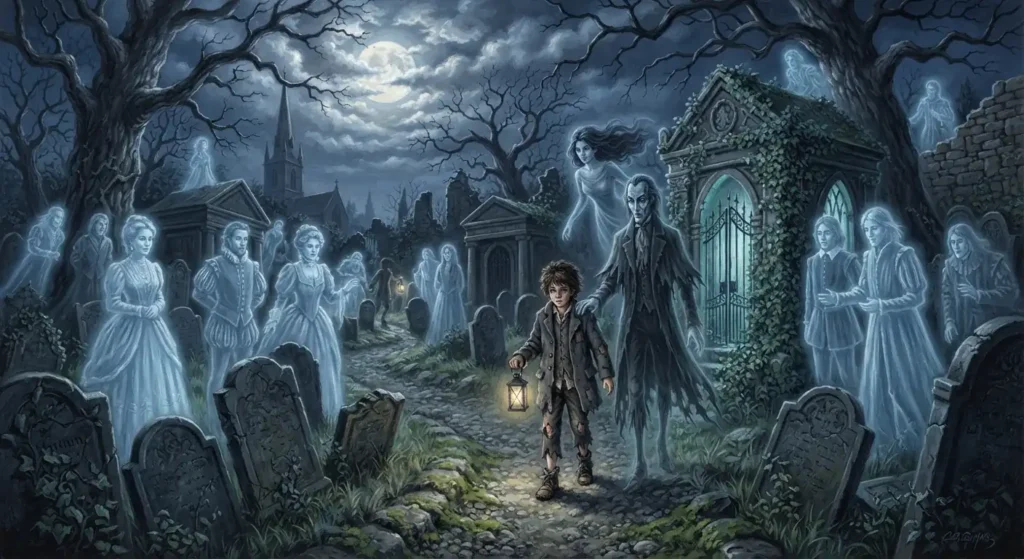
Author: Neil Gaiman | Central Darkness: A child raised by the dead to survive the living
Neil Gaiman’s third entry on this list, and it is definitely worthy of this list for it is warmth balanced against genuine darkness, a combination that this list’s other entry rarely attempts directly, especially for its actual intended age range.
A toddler escapes his family’s murder and is raised by the ghostly residents of a graveyard, learning to navigate both supernatural danger and the very human threat that killed his family in the first place, still hunting him.
Gaiman structures the book as a series of connected episodes across the protagonist’s childhood, giving it genuine emotional accumulation by its conclusion despite the episodic structure. The weakness is that episodic structure itself, which occasionally makes individual sections feel more loosely connected than a fully unified novel.
Best for: Readers who want dark fantasy built around found family in a specifically eerie setting
Length: 325 pages | Pacing: Moderate | Horror level: 3/5 | Fantasy level: 4/5 | Gore: Low to moderate | Romance: None | Age range: Middle grade to YA, winner of the Newbery Medal, which is specifically awarded for children’s literature | Standalone: Yes
Mexican Gothic
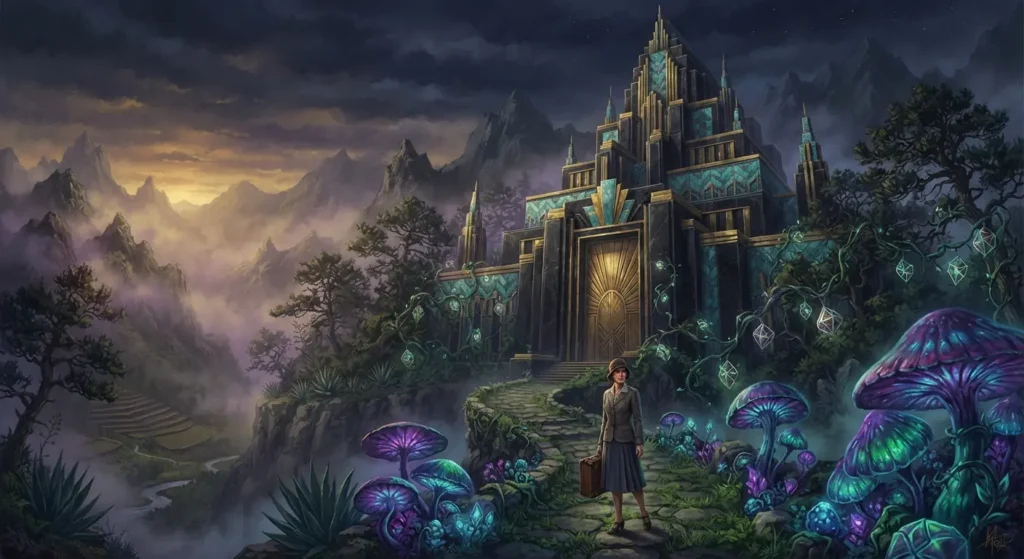
Author: Silvia Moreno-Garcia | Central Darkness: Colonial rot literalized into physical horror
Best for: Readers who want classic Gothic atmosphere applied to a specifically Mexican historical setting
A young socialite travels to a remote, decaying estate to check on her newly married cousin, uncovering a family whose colonial-era wealth and control over their workers have concealed something literally rotten beneath the house itself.
Moreno-Garcia takes classic Gothic conventions, the isolated decaying mansion, the menacing family, and grounds them specifically in Mexican history and the real horror of colonial exploitation, giving familiar tropes real new weight.
Few books take Gothic convention this seriously while reworking what it’s actually about. The potential downside is a slower opening that takes real time establishing atmosphere before the more overtly horrific elements arrive.
Length: 320 pages | Pacing: Slow building to fast | Horror level: 4/5 | Fantasy level: 3/5 | Gore: Moderate | Romance: Minor | Age range: Adult | Standalone: Yes
Tigana
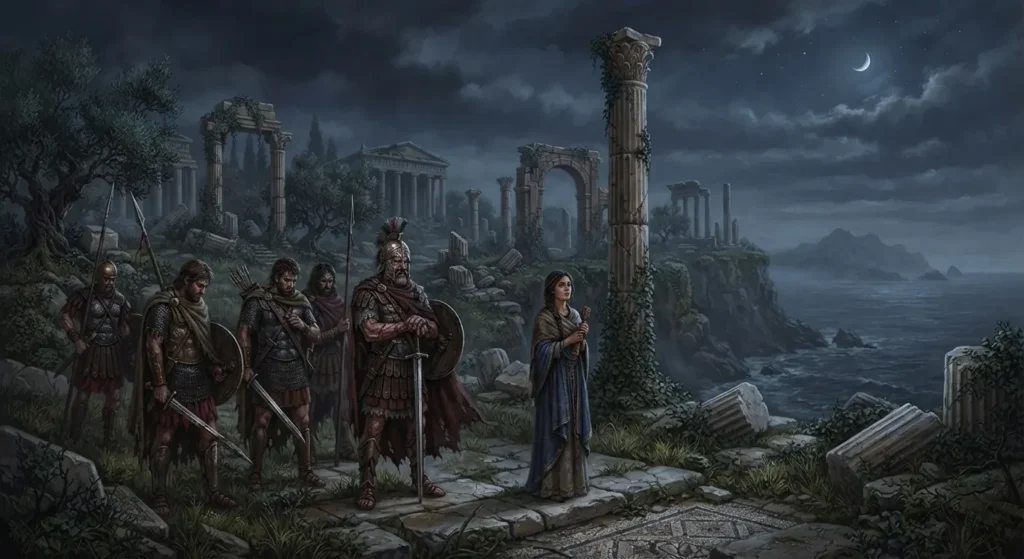
Author: Guy Gavriel Kay | Central Darkness: Cultural erasure and the specific grief of being made unable to remember your own history
A tyrant erases a conquered province’s very name from the memory of everyone not born there, and the surviving generation carries a collective wound none of them individually earned, fighting to reclaim not just territory but the right to be remembered at all.
Kay’s prose is among the finest in the genre, and the central premise, memory itself as the actual battlefield, gives the book emotional stakes most political fantasy doesn’t reach for.
The weakness is a large cast that takes real time to fully track in the opening chapters, before the emotional payoff of the central premise becomes clear.
The case for this ranking is thematic depth matched by prose craft, a combination this entire list has been measuring against from the start.
Best for: Readers who want dark fantasy about political violence and cultural loss rather than combat
Length: 676 pages | Pacing: Slow to moderate | Horror level: 1/5 | Fantasy level: 4/5 | Gore: Moderate | Romance: Moderate, more developed here than in most other entries on this list | Age range: Adult | Standalone: Yes
Frequently Asked Questions
Which book on this list is the shortest commitment?
Coraline and Grendel are both under 200 pages, making them the strongest picks if you want a complete dark fantasy experience in a single sitting or two.
Are any of these actually appropriate for younger readers?
Coraline and The Graveyard Book were both written specifically for younger readers, middle grade and middle grade to YA respectively. Everything else on this list is adult fiction, including The Ocean at the End of the Lane despite its child narrator.
Which entries have the highest horror ratings on this list?
Mexican Gothic scores a 4 out of 5 for horror, the highest on this list, making it the strongest pick if true dread and body horror are what you’re looking for rather than atmosphere alone.
Is there a book here specifically for readers who want historical grounding rather than a fully invented world?
The Historian and Mexican Gothic both root their darkness in real historical context, Cold War Europe and colonial-era Mexico respectively, giving readers who want that grounding two strong options.
Which book on this list took the most creative risk with its central premise?
The Raven Tower’s second person narration delivered by a god, and Grendel’s full commitment to monstrous interior consciousness, are both genuinely unusual structural choices that could have failed badly and instead became each book’s defining strength.
Final Thoughts
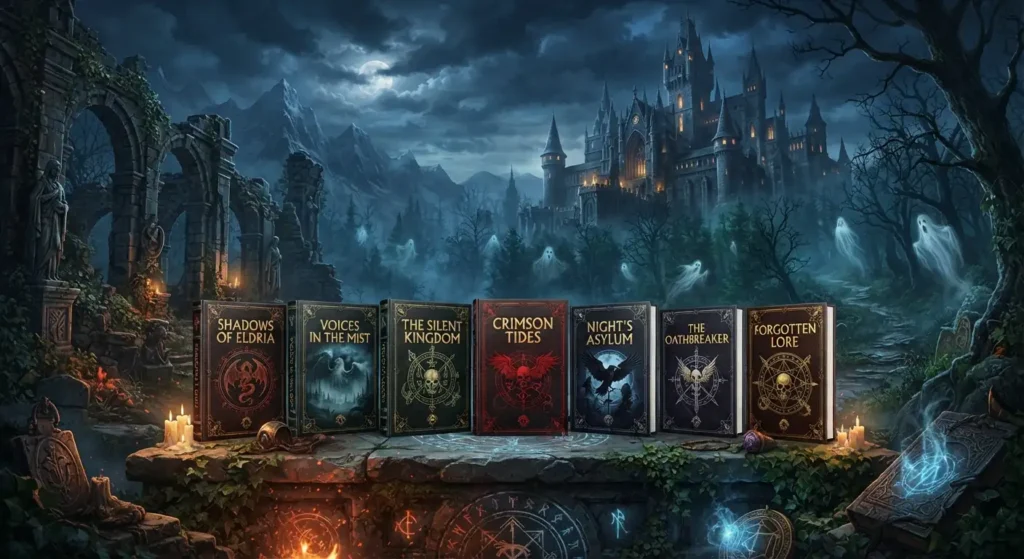
Fourteen books, every one complete in itself, no second volume required to feel like you got the full story, and two of them honestly relabeled here because they were never actually written for the adult shelf in the first place.
Start with Piranesi if you want the most patient, atmospheric entry point, or Coraline if you want to see how much dread a shorter book, aimed at a younger reader, can still hold for an adult one. Either way, you’re getting a complete dark fantasy experience in a single sitting rather than a commitment to a series you may or may not finish.
Related Articles
- Grimdark vs Dark Fantasy: Are They One & The Same
- Why Millennials and Gen Z Love Dark Fantasy
- Is Dark Fantasy Horror? Where the Line Actually Falls
- Why Every Great Dark Fantasy Needs a Cursed Kingdom
- How to Build a Dark Fantasy World That Actually Disturbs
- Dark Fantasy vs Gothic Fantasy: Where’s the Line?
- 13 Dark Fantasy Books That Show No Mercy [2026]
Written by Batin Khan, a curious free spirit who loves reading and exploring the worlds of fantasy, mythology, and ancient stories. Through this blog, Batin hopes to share that sense of wonder with readers while building an exciting future along the way.
2 Comments