
 By
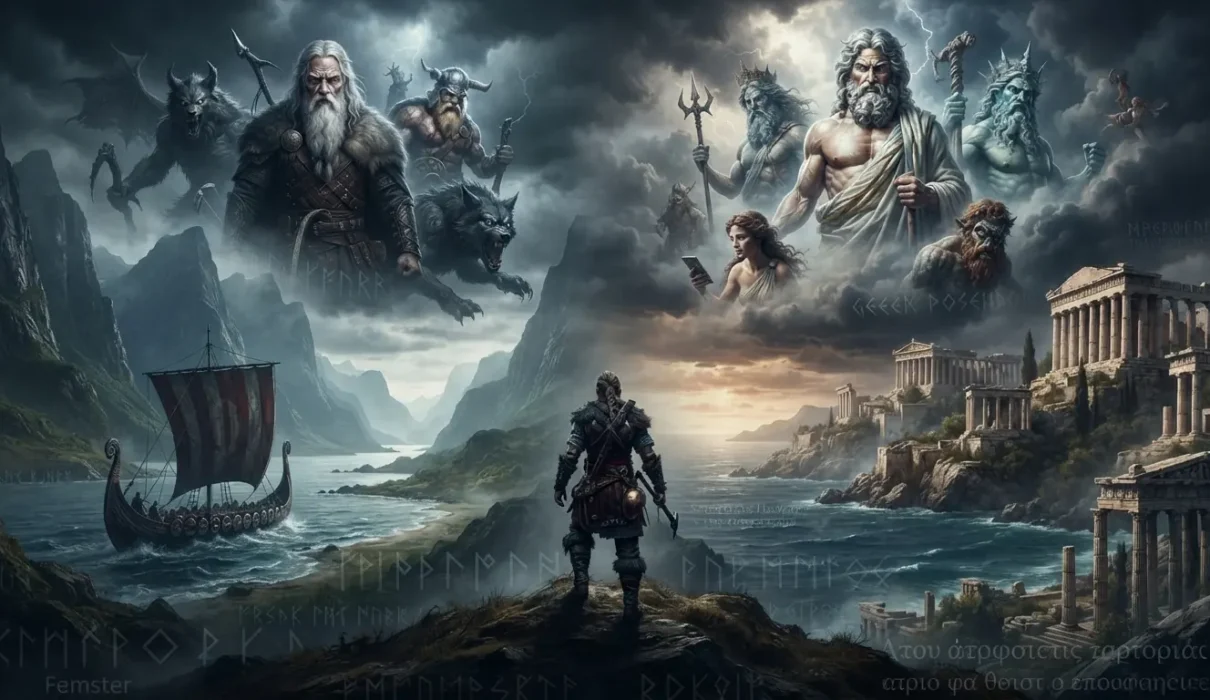
By Two thousand years before “grimdark” was a word anyone used, two very different cultures had already worked out how to make a story feel doomed.
The Norse did it by scheduling the end of the world and having the gods fight it anyway. The Greeks did it by making sure a hero’s own best qualities were the thing that killed him. Modern dark fantasy runs on one of these engines constantly, often without anyone involved knowing which one, and the two produce different kinds of dread.
Norse & Greek Mythology Aren’t The Only Two
This isn’t a claim that Norse & Greek mythology are the only sources of dark fantasy’s darkness. Slavic, Arabic, West African, and East Asian traditions all have their own fully developed machinery for doom and tragedy, and plenty of dark fantasy runs on those instead.
Norse and Greek myth get the dedicated treatment here because they happen to be the two traditions that shaped the specific Anglo-American fantasy lineage running from Tolkien through the current grimdark shelf, largely by way of one very well-read Oxford professor. That’s a narrower claim than “dark fantasy comes from mythology,” and a more useful one.
Before We Go Further
Quick terms before the rest of this makes sense: dark fantasy generally means fantasy that borrows horror’s toolkit, dread, body horror, the supernatural played as a threat rather than a costume.
Grimdark is narrower still, a specific skepticism that anyone in the story is actually heroic or that good intentions survive contact with power. The two overlap constantly and aren’t identical, and there’s more on that distinction in my blog post about Grimdark & Dark fantasy.
The Norse Engine: A World Built to End
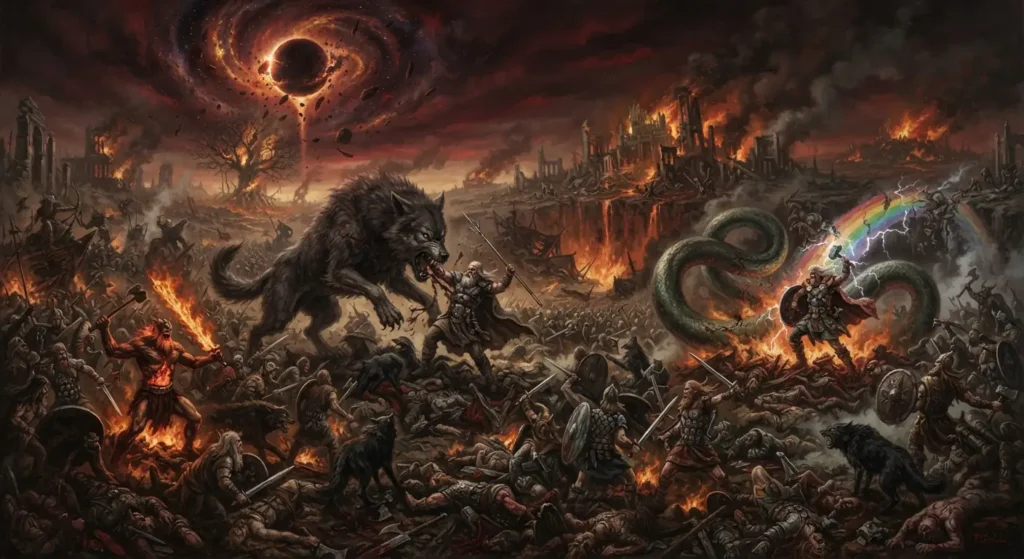
Ragnarök is the word to start with. It’s the Old Norse name for the end of the world: a final battle in which most of the gods die, the sun goes dark, and the earth sinks into the sea, foretold in detail long before it happens and unstoppable by anyone, including the gods it kills. Odin knows the wolf Fenrir will eventually swallow him. He spends the whole mythology gathering an army of dead warriors into Valhalla to fight that exact battle anyway, knowing they lose.
That’s the whole engine, right there: a cosmos dying on a fixed schedule, with its most powerful beings fully aware of the schedule and unable to change it.
Two main sources record this, and they are not the same kind of document.
The Poetic Edda is a collection of anonymous Old Norse poems, the oldest of which likely circulated orally for generations before being written down in thirteenth century Iceland. Voluspa, the poem that lays out Ragnarök in the most detail, belongs to this collection.
The Prose Edda is a different, later thing: a single author’s systematic handbook of the same mythology, written by the Icelandic chieftain Snorri Sturluson roughly two centuries after Iceland’s official conversion to Christianity.
Snorri wasn’t a neutral transcriber. He was explaining a dead religion to a Christian audience, and his organizing choices shape almost everything modern readers think they know about Norse myth. Treat the Poetic Edda as closer to the pagan-era material, and the Prose Edda as an enormously valuable but mediated retelling, not the original text with better footnotes.
That cosmology backs the doom up structurally, too. Norse myth doesn’t open with a garden. It opens with Ginnungagap, an empty void sitting between the freezing mist of Niflheim and the raw fire of Muspelheim. Where the two meet, the primordial giant Ymir forms, and the gods eventually kill him to build the world out of his body.
A world assembled from a dead giant, wedged permanently between fire and ice, was never going to end quietly.
Tolkien – Beowulf: The Monsters and the Critics
J.R.R. Tolkien, who taught Old English and Old Norse at Oxford for two decades, put his finger on exactly why this cosmology hits differently than most mythology, in a 1936 lecture to the British Academy called Beowulf: The Monsters and the Critics.
He argued that Northern myth, unlike the Greek and Roman tradition most of his academic contemporaries had been raised on, puts monsters at the actual center of the story and gives its own side “victory but no honour”: the gods lose, on schedule, and everyone in the story already knows it.
What the mythology offers instead of a happy ending is courage as its own reward, a fight worth having even without any promise it will work. Tolkien wasn’t being poetic for its own sake. He was describing, as a professional philologist, the specific emotional mechanism he believed Northern myth runs on, and it’s the same mechanism a huge amount of dark fantasy still runs on today.
The Greek Engine: The Flaw That Finds You
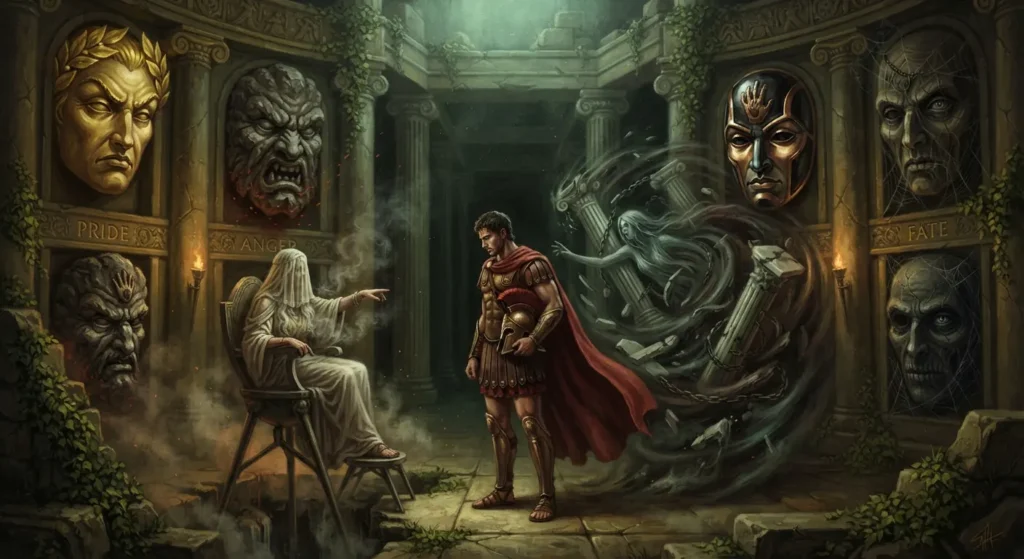
Greek myth runs on a different mechanism, and Aristotle is the one who named it. Writing around 335 BCE in the Poetics, he described what makes a tragedy actually tragic: not a villain doing something evil, but a fundamentally decent, high-standing person brought down by hamartia, an error or flaw in their own judgment.
Oedipus Rex was his go-to example, and it’s still the one classicists reach for first. An inherently good king, trying to save his city from a plague, methodically investigates a murder and discovers he committed it himself, against his own father, decades earlier and without knowing it.
Nothing external defeats Oedipus. His own competence, the exact trait that makes him a good king, is what drags the truth into the light.
Hubris is the sharper, more quotable version of hamartia: not just an error, but overreach, a mortal deciding the normal limits don’t apply to them. Hubris invites nemesis, a kind of automatic cosmic correction that restores whatever balance the overreach disturbed. It’s a moral universe with a thermostat. Reach too far, and something built into the structure of reality reaches back.
Aristotle’s Argument & Later Critics
Aristotle argued that good tragedy should leave an audience with two feelings at once: pity for the hero’s suffering, and fear that the same thing could happen to anyone watching, since the flaw is recognizably human rather than monstrous.
Later critics have pointed out that this only works because the punishment is wildly disproportionate to the actual mistake. A moment of misjudgment gets you a lifetime, sometimes a whole bloodline, of ruin.
What makes this a really different flavor of doom from the Norse version is where the blame lands. Ragnarök is coming regardless of what any single god does; it’s cosmic weather.
Oedipus’s downfall exists only because of choices he personally made, however blamelessly. One tradition says the world itself is rigged to end. The other says you, specifically, carry the seed of your own ending inside you, usually inside the same quality everyone around you admires most.
The Fate Neither Culture Let Anyone Escape
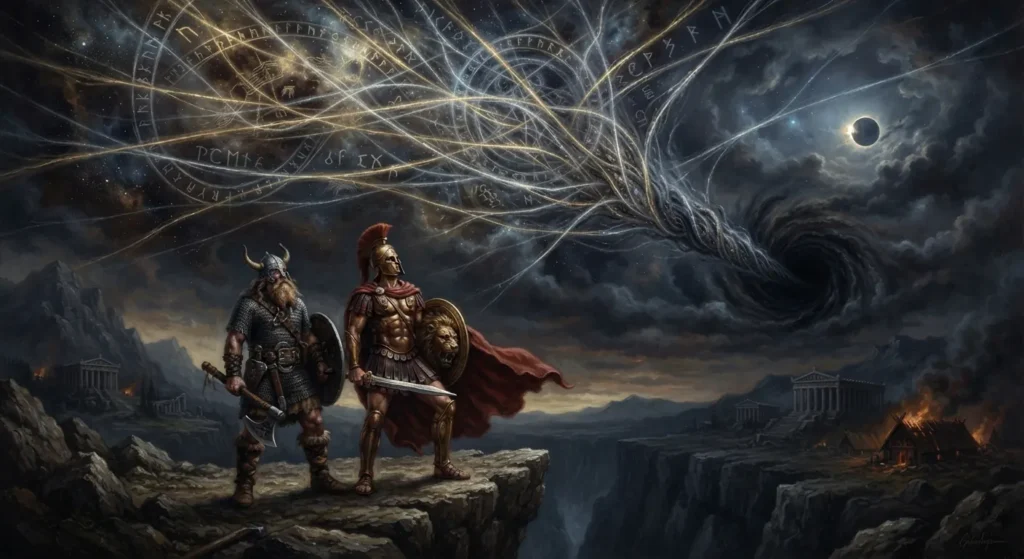
This is where the two traditions actually touch. Both mythologies put a trio of fate goddesses above even their chief god, and both describe them as spinners.
The Greek Moirai, Clotho, Lachesis, and Atropos, spin, measure, and cut the thread of every life, mortal and divine, and Hesiod’s Theogony is blunt that even Zeus doesn’t fully control them.
Norse mythology has its own version in the Norns, Urðr, Verðandi, and Skuld, whose names translate roughly to what-was, what-is-becoming, and what-must-be; they sit at a well beneath Yggdrasil doing the same work.
This link isn’t just thematic, either. The English word “weird” descends from the same root as Urðr, by way of the Old English “wyrd.” Shakespeare’s Weird Sisters in Macbeth are, linguistically, the Norns’ descendants, just prophesying in iambic pentameter instead of Old Norse.
There’s a real difference underneath the resemblance, though. Greek sources describe the Moirai as morally indifferent, an impersonal mechanism rather than a judgment; Hesiod says only that they give mortals “both good and evil,” with no reasoning attached.
The Prose Edda describes something closer to moral sorting instead: good norns from good lineage grant good lives, and misfortune specifically traces back to evil norns. Greek fate doesn’t care about you. Norse fate, in its own harsh way, might actually be about you.
Either way, both traditions land on the same unsettling idea that dark fantasy inherited wholesale: your ending is already written by something that outranks every character in the story, gods included, and the story’s real tension comes from how you carry yourself toward an outcome you cannot renegotiate.
Where You Can Actually See the Wiring
Tolkien: The Receipts Are Right There
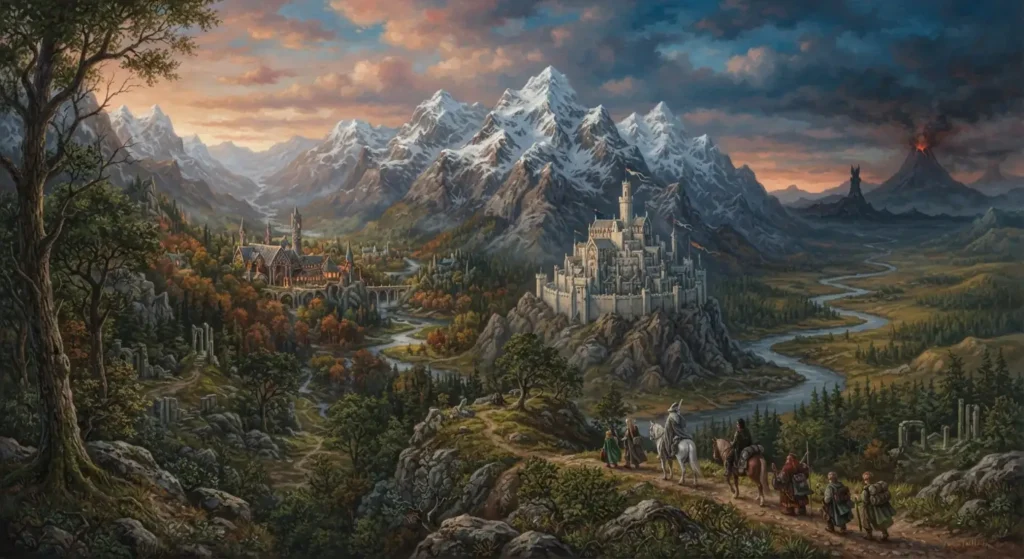
No one on this list documents their own influences as thoroughly as Tolkien, mostly by accident, since he was a professional philologist who happened to also write novels. Gandalf’s name comes directly from the Dvergatal, the tally of dwarves section of Völuspá, the same poem that lays out Ragnarök.
So do most of the dwarf names in The Hobbit, including Thorin, Fili, Kili, Bombur, and Oin. Tolkien wasn’t shy about the connection either. In a 1946 letter, he described Gandalf as an “Odinic wanderer,” naming the parallel outright: a one-eyed old man who travels the nine worlds in disguise, and who is also, not incidentally, the god who eventually loses at Ragnarök despite knowing it’s coming.
Even a detail fantasy readers already know gets a second layer here. Gandalf’s line about something ancient and unnamed gnawing at the roots of the world beneath Moria isn’t a random flourish.
Yggdrasil, the World Tree at the center of Norse cosmology, is itself gnawed at its roots: by the dragon Níðhöggr according to the Prose Edda, and by a group of serpents according to the Poetic Edda poem Grímnismál. Tolkien built a version of that exact image into Middle-earth’s foundations.
None of this makes The Lord of the Rings dark fantasy by most definitions. Tolkien’s Northern courage runs alongside hope and eventual grace, not instead of them. But the doom machinery he imported wholesale, the idea that a world can be built on a scheduled ending its wisest inhabitants already know about, is exactly the machinery later, bleaker books picked up and kept running without the hope attached.
Neil Gaiman: Writing Directly into the Myth
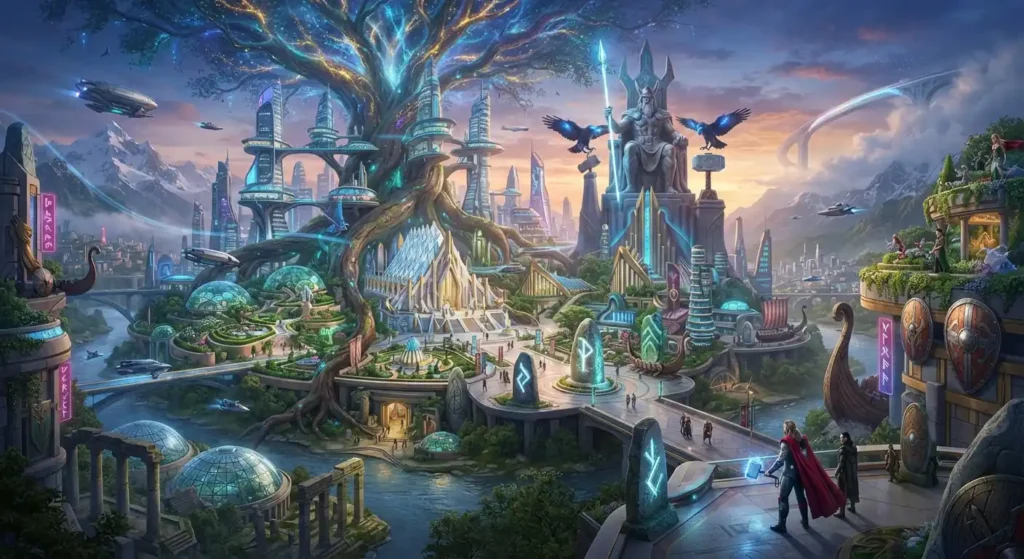
Gaiman represents the opposite end of the spectrum from diffuse influence: he just writes the myths themselves. His 2017 book Norse Mythology retells the material start to finish, ending at Ragnarök, and American Gods, published fifteen years earlier, folds Odin into a modern road novel as a con man calling himself Mr. Wednesday, Odin’s day, still gathering followers, still working an angle, still headed toward a war he may or may not be able to stop.
A 2019 study in the academic journal Studies in the Novel makes an argument worth sitting with. Comparing how several contemporary novelists, Gaiman included, repurpose old gods from different pantheons, it found that Norse gods specifically tend to get cast in darker, more threatening roles than gods borrowed from other mythologies, and traces this directly to their built-in connection to Ragnarök.
Odin already knows the ending. Loki already causes it. A writer doesn’t have to invent the doom; the source material arrives with it pre-installed.
God of War: A Franchise Picks its Mythology on Purpose
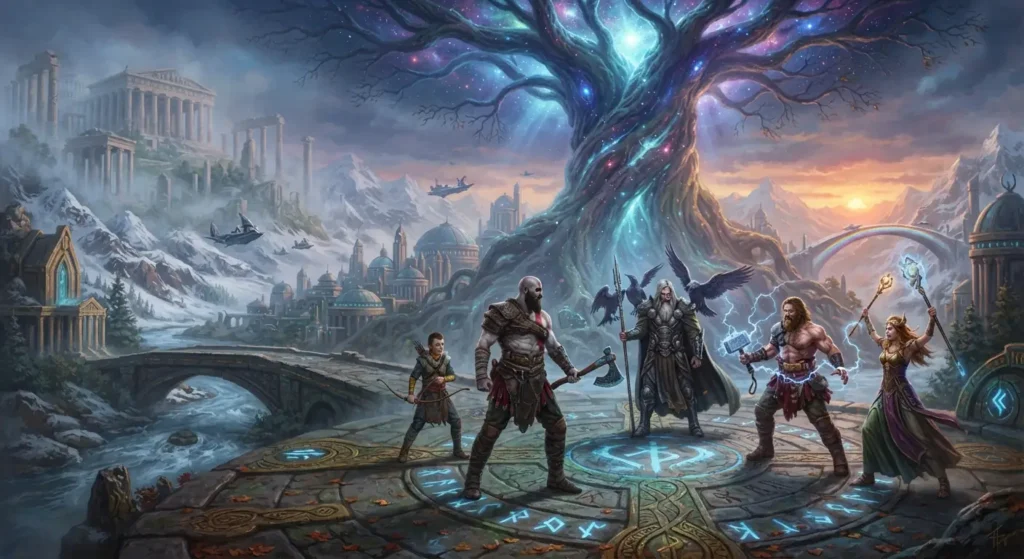
Video games make the choice explicit in a way novels rarely have to. Santa Monica Studio’s 2018 God of War reboot moved its protagonist, Kratos out of Greek mythology, where the original trilogy had him working through most of Mount Olympus by force, and into Norse mythology instead.
Creative director Cory Barlog has said in multiple interviews that the studio explored several mythological systems, including Egyptian and Hindu material, before settling on Norse for reasons that went beyond simply wanting something grimmer.
Norse myth offered a tonal range the Greek trilogy lacked, including what Barlog described as its own bleak, deadpan sense of humor, alongside room for the father son story between Kratos and his son Atreus to actually breathe between fights.
The studio also used Ragnarök itself as the story’s shape. That multi-game arc, which began in 2018, was built to end with 2022’s God of War Ragnarök, using the mythological apocalypse as a built-in finale instead of an invented one.
That’s the Norse engine doing exactly the structural job it did for Tolkien: not just supplying monsters, but supplying an ending everyone already knows is coming, which turns out to be a useful thing for a long story to have on hand.
George R.R. Martin: The Pattern Shows Up Without Evidence
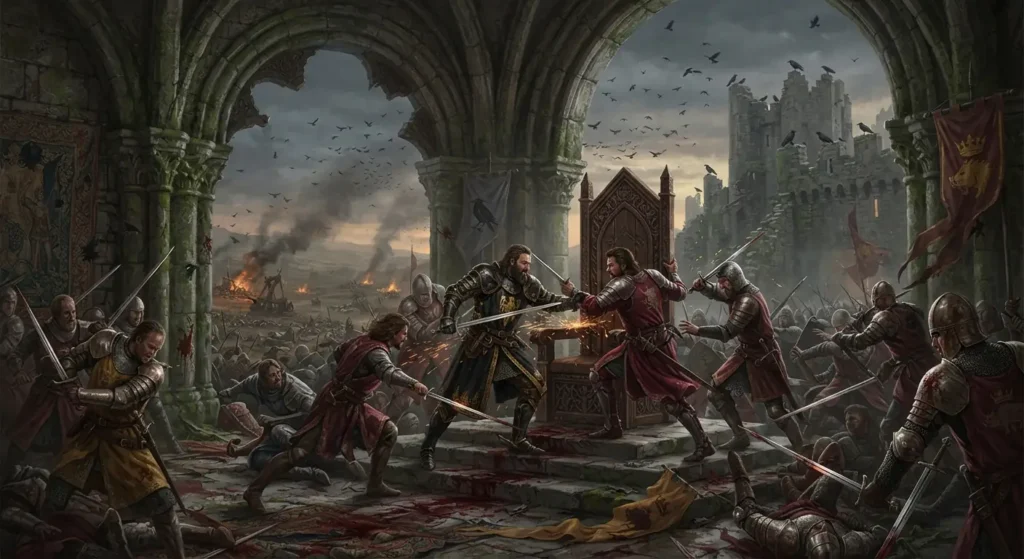
Not every case is this well documented, and it’s worth showing what the murkier end looks like. A Song of Ice and Fire has an antagonist, the Others, who arrive from deep in the frozen north commanding an army of the reanimated dead, and who had already been dismissed as legend for thousands of years before the books begin.
Martin’s wights, corpses that keep walking and have to be destroyed by fire or dismemberment rather than simply killed again, read a lot like the Norse draugr: the undead who keep their grudges along with their bodies. Readers and critics have been drawing the Odin and draugr comparisons for years.
The important part: Martin has never confirmed any of it. He’s been specific about other influences, the Wars of the Roses above all, and has confirmed that the Others and the Long Night work as a climate change allegory. The Norse parallels are something readers and critics assembled by pattern matching, not something the author pointed to.
This is not a weakness in the theory. It’s the more interesting data point. The Norse doom shape has sunk deep enough into the genre’s bloodstream that a writer can produce it without deliberately citing it, and readers will still recognize it on sight.
What Gets Lost in Translation
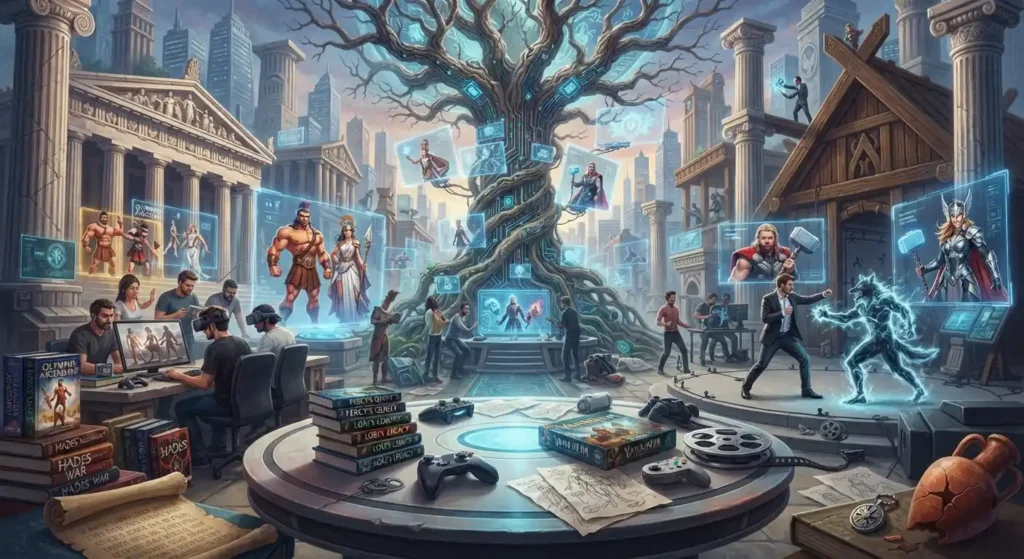
It’s worth seeing the opposite move too. The Marvel Cinematic Universe’s Thor films use the same names, Odin, Loki, Ragnarok, Hela, but largely strip out the doom mechanism that makes the source material what it is.
Surtr, a fire jötunn who leads the actual destruction of the cosmos in the myths, gets flattened into a generic movie demon in Thor: Ragnarok.
Hela is introduced as Thor’s previously unmentioned sister, when the myths make her Loki’s daughter, ruler of the underworld realm that bears her name.
These aren’t really errors. They’re a franchise built for a four quadrant audience deliberately trading the source material’s real bleakness for spectacle and jokes, which is a perfectly legitimate choice for what it’s trying to be. But it’s a useful reminder that “based on Norse mythology” and “running on the Norse doom engine” are not the same claim, and a lot of popular culture only ever borrows the former.
Madeline Miller: The Greek Equivalent of Writing Straight into the Myth
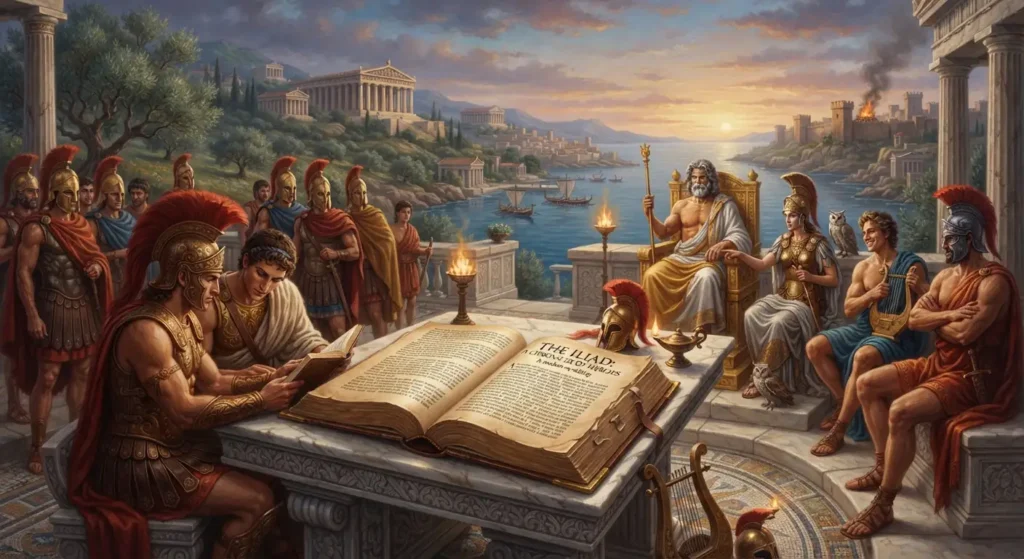
The clearest Greek counterpart to Gaiman’s direct approach is Madeline Miller, who holds a BA and MA in Classics from Brown University and spent years teaching Latin and Greek before publishing a word of fiction.
The Song of Achilles (2011) retells the Iliad from Patroclus’s point of view. Circe (2018) does the same for a minor Odyssey witch, expanding her into a full protagonist.
Miller has described her own genre as “mythological realism” rather than fantasy outright, and the classification sits in a gap: retailers shelve both books under fantasy and mythology alike, but the prose reads closer to literary fiction than to the action-driven end of grimdark.
What they share with the darker end of the genre is the actual tragic architecture, not just the borrowed names. The Song of Achilles ends exactly where the Iliad’s internal logic requires it to end, because Achilles’s own defining excellence, his need to be the greatest, is the trait that guarantees his death.
That’s hamartia with the serial numbers filed off, and the prose made gorgeous, built by someone who spent a career teaching the original texts before she ever wrote the retelling.
Frequently Asked Questions
Does this mean dark fantasy only comes from Norse and Greek mythology?
No, and treating it that way would flatten a much bigger picture. Slavic folklore, West African oral traditions, Arabic and Persian storytelling, and East Asian mythologies all have their own fully developed traditions of doom, tragedy, and cosmic reckoning, and plenty of dark fantasy draws directly on those instead. Norse and Greek myth get singled out here because of their specific, well-documented influence on the Tolkien-to-grimdark lineage of Anglo-American fantasy, not because they invented darkness.
What’s the actual difference between the Poetic Edda and the Prose Edda?
The Poetic Edda is a collection of anonymous Old Norse poems, likely rooted in oral tradition that predates its thirteenth century manuscript. The Prose Edda, by contrast, is one author’s work: Snorri Sturluson’s systematic handbook explaining the same mythology to a Christian, thirteenth century Icelandic audience. Most of what people casually call “Norse mythology” is actually Snorri’s organized, somewhat mediated version, since he’s the one who turned scattered poems into something resembling a single coherent story.
Did Tolkien mean The Lord of the Rings as a retelling of Norse myth?
Not as a direct retelling, no. Nothing in Middle-earth maps onto Ragnarök scene for scene. What Tolkien did was import specific pieces, names, the doom-laden cosmology, the idea of courage without a guaranteed reward, and build them into an original story that ultimately allows for hope and grace in a way Norse myth generally doesn’t. Treat the connection as structural borrowing by a scholar who knew the source material intimately, not as adaptation.
Is there a real difference between dark fantasy and grimdark?
The terms overlap constantly, but they aren’t identical. Dark fantasy usually means fantasy that borrows horror’s toolkit: dread, body horror, the supernatural played as a true threat. Grimdark is more specific to tone and worldview, a skepticism that anyone in the story is actually heroic, that institutions are trustworthy, or that good intentions survive contact with power. A book can be one, the other, or both at once.
Final Thoughts: The Actual Test – Works Most of the Time
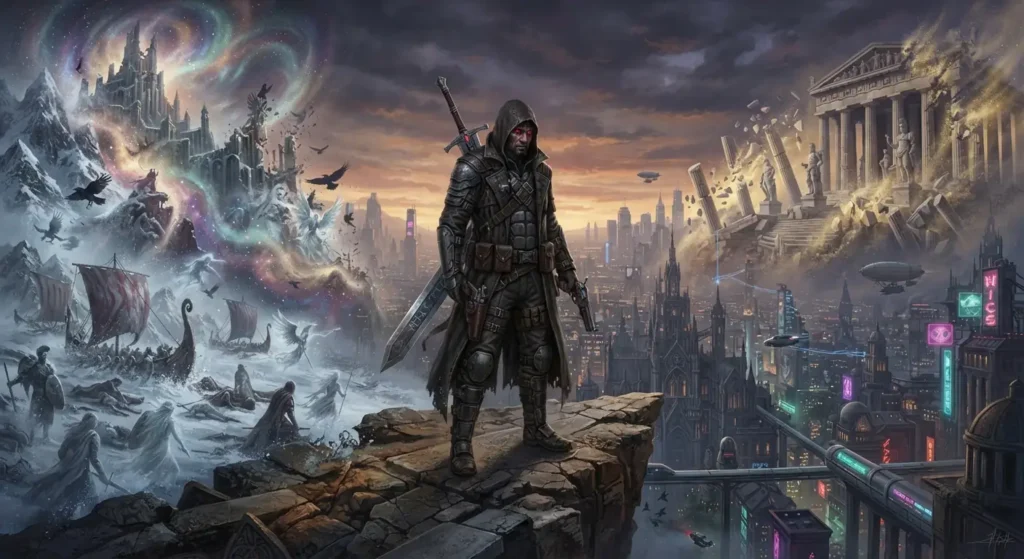
Next time a dark fantasy book or game feels properly bleak, it’s worth asking which engine is actually running.
Is the dread coming from outside, a world with a built-in expiration date that no one inside the story can renegotiate, which is the Norse move? Or is it coming from inside a specific character, the exact quality that makes them worth rooting for also being the thing that dooms them, which is the Greek move?
Most of the best grimdark runs both at once: an external doom nobody in the story can renegotiate, plus a cast of characters whose own defining virtues keep producing their own downfalls from the inside. That combination, a two thousand year old piece of engineering borrowed from two cultures that never crossed paths, turns out to be exactly what modern fantasy is good at running simultaneously.
Sources & Further Reading
- The Poetic Edda
- The Prose Edda by Snorri Sturluson
- Beowulf: The Monsters and the Critics – John Ronald Reuel Tolkien
- The Poetics of Aristotle, by Aristotle
- Oedipus, King of Thebes, by Sophocles
- HESIOD, THEOGONY
- The Letters of J.R.R. Tolkien – J.R.R. Tolkien – Google Books
- The Poetic Edda: Grimnismol
- Norse Mythology – Neil Gaiman
- Project MUSE – Studies in the Novel-Volume 51, Number 2, Summer 2019
- The Song of Achilles – Madeline Miller
Related Articles
- Grimdark vs Dark Fantasy: Are They One & The Same
- 12 Best Dark Fantasy Books 2026: You Should Never Miss Out
- Is Dark Fantasy Horror? Where the Line Actually Falls
- How to Build a Dark Fantasy World That Actually Disturbs
- Chaos: The Primordial Void Before the Greek Gods
- How Zeus Overthrew His Father to Rule Olympus
- The 12 Olympian Gods: Powers, Symbols & Key Stories
- 13 Legendary Greek Heroes, Ranked by Their Feats
- How Great Fantasy Writers Adapt Mythology Without Stealing
Written by Batin Khan, a curious free spirit who loves reading and exploring the worlds of fantasy, mythology, and ancient stories. Through this blog, Batin hopes to share that sense of wonder with readers while building an exciting future along the way.