
 By
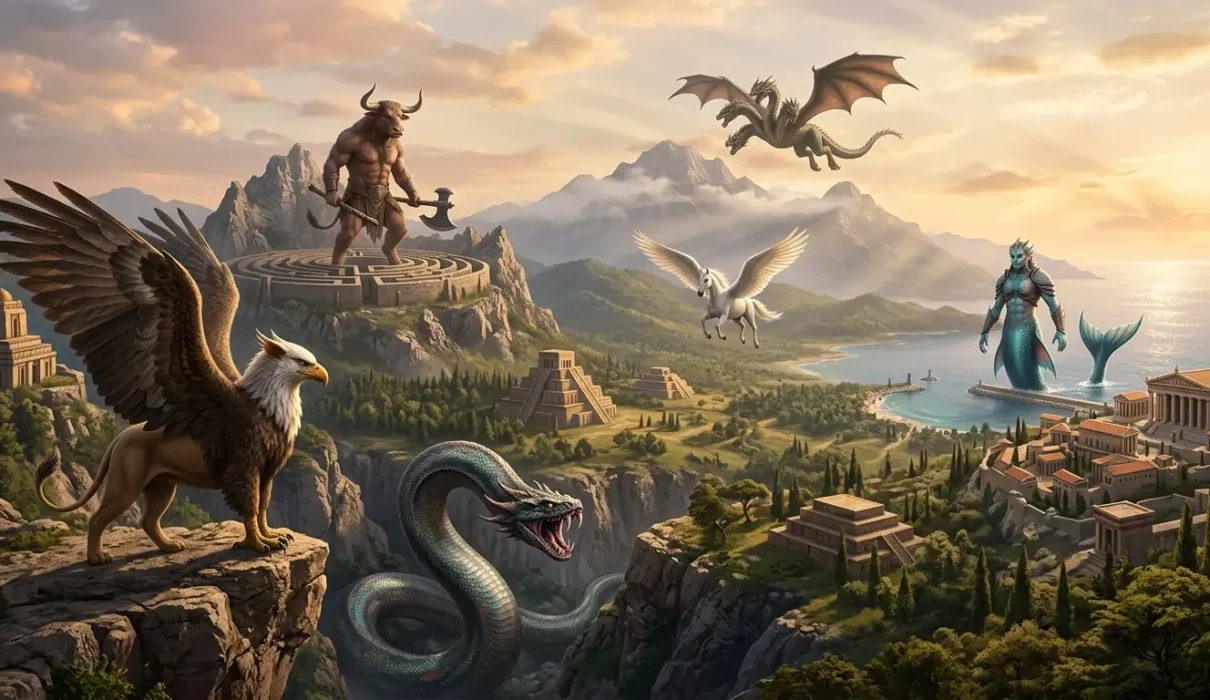
By A lion’s body with a human head guarding Egyptian tombs. A bull’s body with a human head and eagle’s wings guarding Assyrian palace gates.
A crocodile’s head, a lion’s torso, and a hippopotamus’s hindquarters devouring unworthy hearts in the Egyptian afterlife. An elephant’s head on a human body, worshipped daily across the Indian subcontinent right now.
Four unrelated cultures, four composite bodies, and that’s before you get to Greece’s Chimera and Sphinx. I want to actually work through why there are so many hybrid mythical creatures, using more than one explanation, because I don’t think a single theory covers it honestly.
Theory One: Impurity Is the Actual Mechanism of Fear
Carroll’s Framework, Briefly Restated
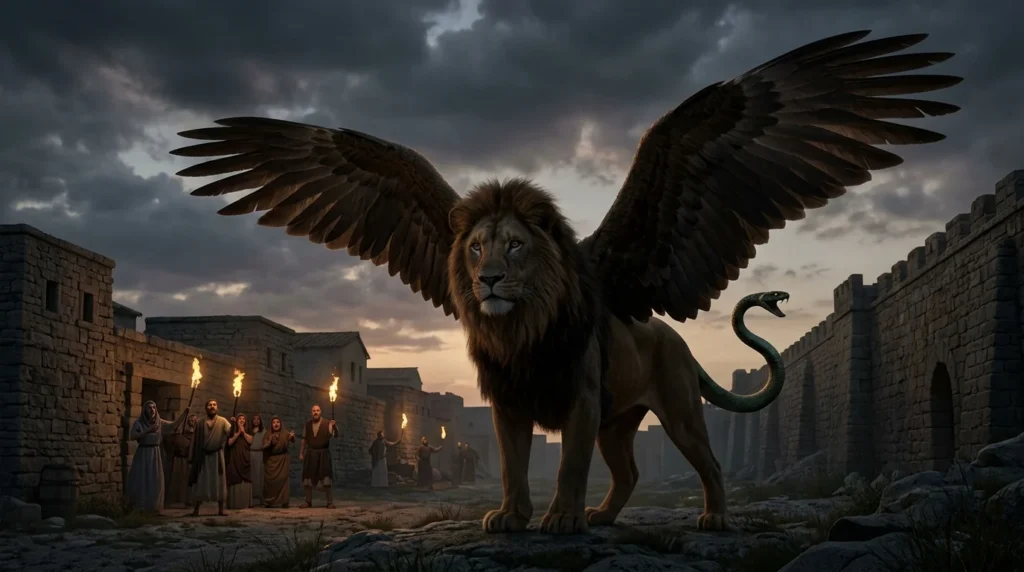
I’ve already covered this in my earlier blog post philosopher Noël Carroll’s argument that what separates a monster from a merely dangerous animal is categorical impurity, resisting or straddling the classification systems a culture uses to organize the world.
A lion is dangerous. It isn’t a monster, because it fits cleanly into an existing category. A creature that’s simultaneously human and lion produces a different, more specific unease, because your classification system has nowhere to file it.
Why This Alone Isn’t the Full Answer
This explains why hybrids feel unsettling once they exist. It doesn’t fully explain why so many independent cultures kept reaching for hybrid construction specifically, rather than inventing purely single form monsters of unusual size or malice instead. For that, I think you need a mechanism operating underneath conscious symbolism entirely.
Theory Two: Your Brain Remembers Composite Beings Better
Boyer’s Minimally Counterintuitive Concepts
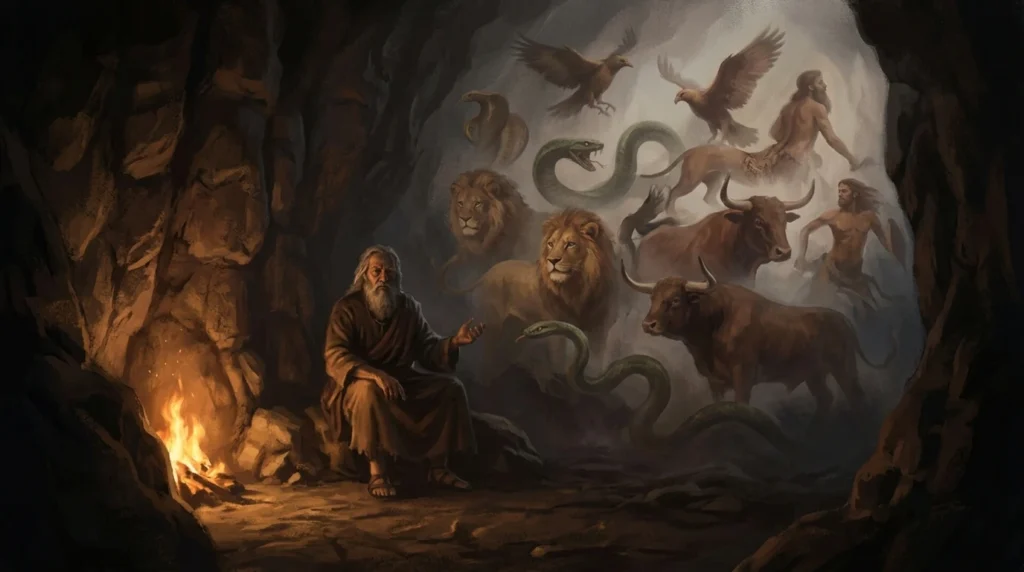
Cognitive anthropologist Pascal Boyer, in his 2001 book Religion Explained, proposed that religious and mythological concepts spread successfully across generations specifically because they’re minimally counterintuitive, violating just one or two expectations of an existing mental category while leaving the rest of that category’s normal properties intact.
Boyer’s own illustrative example is a tree that walks. You already have a robust, detailed mental template for tree, roots, bark, leaves, stillness.
Violate exactly one property, add walking, and you get something truly strange enough to notice and remember, while still inheriting every other detail your tree template already supplies for free.
Hybrids Are This Mechanism Made Physical
A sphinx does precisely this with body parts instead of behavior. Take the category human, keep the head and its expressive face, then attach it to lion, borrowing that category’s established body, claws, and predatory menace.
You get a being that’s cognitively cheap to construct and unusually easy to remember, because most of the conceptual work was already done by the two ordinary categories being combined.
Worth Flagging Honestly
I want to be direct that empirical testing of this specific hypothesis has produced what researchers have themselves called a vexed picture, with some studies supporting stronger memorability for minimally counterintuitive concepts and others complicating the effect considerably.
This is an influential, actively debated theory in cognitive science of religion, not a settled finding, and I think it’s more honest to present it that way than to treat it as proven.
Theory Three: Hybrids Mark the Boundaries a Culture Cares About
Douglas and the Anthropology of Pollution
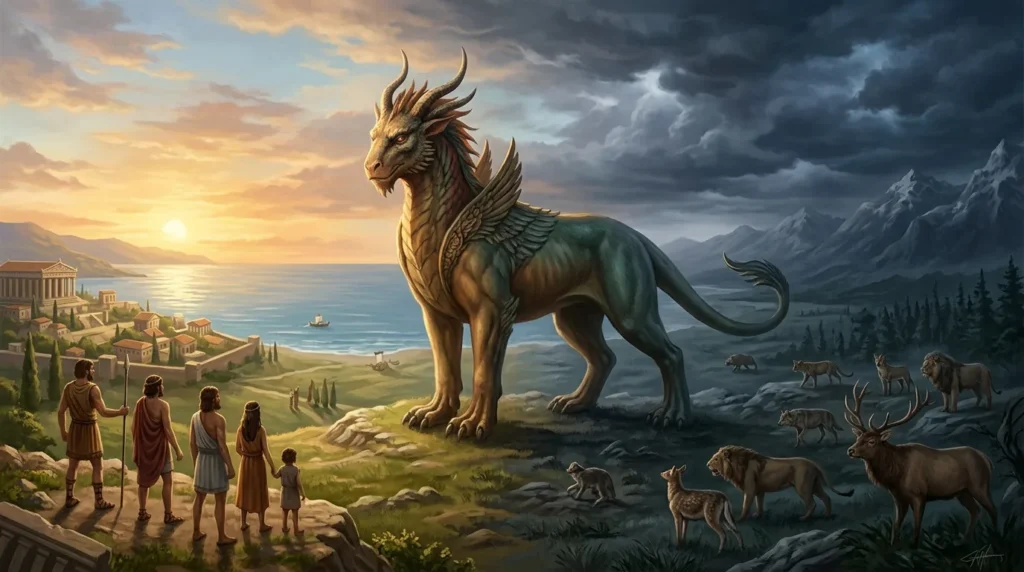
Anthropologist Mary Douglas, in her 1966 book Purity and Danger, argued that a culture’s sense of pollution and taboo attaches specifically to things that cross or blur its own fundamental classification boundaries, land versus sea, wild versus domestic, human versus animal.
Her own famous case study analyzes the dietary laws in Leviticus, arguing that animals marked unclean are disproportionately ones that don’t fit cleanly into the categories Israelite classification expected, creatures that seem to belong partly to one domain and partly to another.
Applying This to Mythical Hybrids Directly
If Douglas is right that boundary crossing creatures accumulate special religious and cultural weight specifically because they threaten a culture’s classification order, then a mythological figure deliberately built by combining two firmly separate categories, human and animal, land animal and bird, isn’t accidental strangeness.
It’s a being constructed specifically at the exact seam a given culture’s worldview considers most significant to keep intact.
The Lamassu guarding Assyrian palace gates, human head, bull or lion body, eagle wings, isn’t combining three animals randomly. It’s assembling authority markers from three domains, human intelligence, terrestrial strength, aerial vigilance, that Assyrian kingship specifically needed represented all at once.
Theory Four: Composite Fear, Briefly
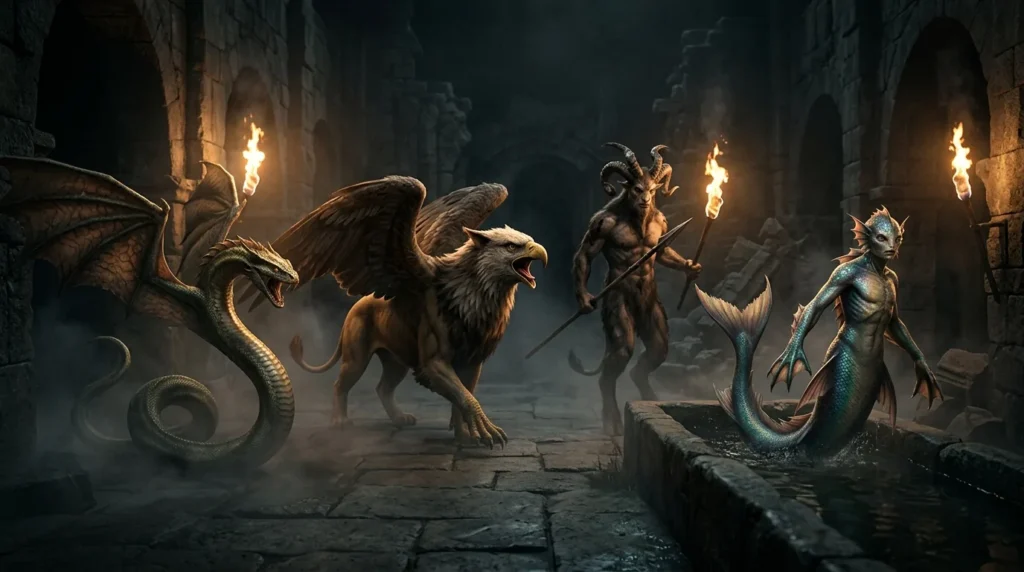
Researcher David E. Jones’s proposal that the classical dragon’s composite form specifically encodes the three predator categories, big cats, birds of prey, and snakes, that most consistently threatened primate ancestors across evolutionary history.
That’s a different mechanism from Boyer’s or Douglas’s, biological rather than cognitive or classificatory, but it points toward the same underlying pattern. Combination, whatever the specific driver, keeps outperforming single form invention across cultures with no contact between them.
The Honest Complication: Not Every Tradition Leans This Way
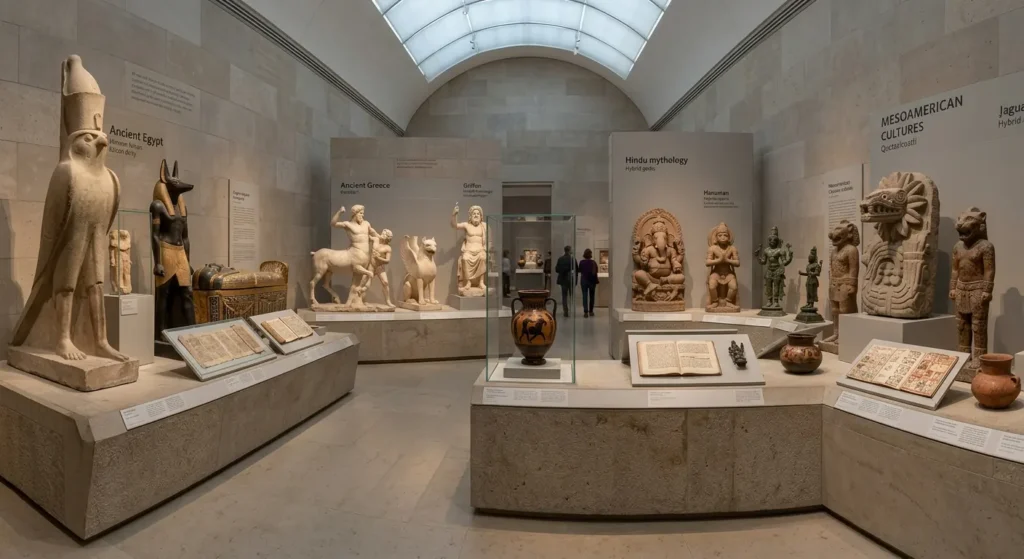
Norse Mythology Mostly Doesn’t
Here’s a counterexample worth taking seriously rather than smoothing over. Norse mythology’s most significant monsters, Fenrir and Jörmungandr, aren’t hybrids in the Egyptian or Greek sense. Fenrir is simply an enormous wolf. Jörmungandr is simply an enormous serpent, encircling the entire world.
Norse cosmology builds its dread through scale rather than composition. Nothing about Fenrir’s body confuses classification the way a sphinx does. He’s entirely, straightforwardly wolf, just impossibly large.
Why This Matters for the Overall Argument
This tells you hybridity isn’t a mythological universal, even if it recurs constantly. Some traditions solved the problem of building a sufficiently dreadful figure through composition, others through pure scale, and the difference is worth taking as a data point rather than an inconvenient exception to explain away.
Hybrid Mythical Creatures Are Not Universal
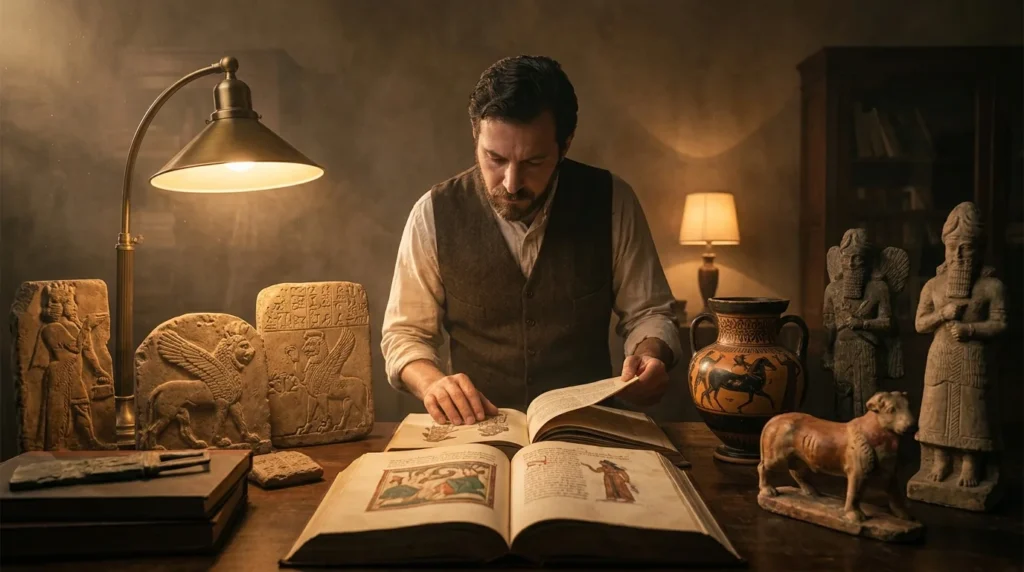
I want to push back on the framing of this entire article, because I may be overstating how universal this pattern is.
Hybrid creatures are visually striking, which means they get depicted in surviving art far more often than plainer supernatural beings do.
A ghost, a formless spirit, or a simply oversized single species monster doesn’t photograph as well on a tomb wall or a museum placard as a sphinx does, and that survivorship bias in what got carved, painted, and preserved may be inflating how statistically common hybrids were relative to the full range of supernatural beings a given culture believed in.
The Sphinx and the Lamassu survive partly because someone carved them permanently into stone specifically meant to last. We have far less evidence for whatever purely conceptual, non composite supernatural beings existed alongside them in the same cultures, precisely because those beings left a thinner physical record behind.
Frequently Asked Questions
Is Ganesha considered a hybrid in the same technical sense as the Greek Chimera?
Structurally yes, an elephant head combined with a human body, though Ganesha’s meaning within Hindu tradition is devotional and auspicious rather than monstrous, showing that hybrid construction serves benevolent religious functions just as readily as it serves fear based ones.
Did Mary Douglas ever apply her framework directly to mythology rather than just religious law?
Purity and Danger focuses primarily on ritual, taboo, and dietary law rather than mythological creature analysis specifically, though later scholars in religious studies and folklore have extended her boundary crossing framework directly to hybrid mythological figures.
Are there hybrid creatures that combine more than two source categories?
Yes, and Ammit is one of the clearest examples, combining crocodile, lion, and hippopotamus elements simultaneously in Egyptian funerary tradition, representing three of the era’s most feared predatory animals fused into a single devourer of unworthy hearts.
Does the minimally counterintuitive concepts theory explain why some hybrids became more popular than others?
Potentially, though this specific comparative question hasn’t been thoroughly tested empirically. Boyer’s framework would predict that combinations preserving more usable inferential detail from their source categories should transmit more successfully, but this remains a reasonable extension rather than a confirmed finding.
Is there a term for creatures that combine human and animal traits specifically, as opposed to two different animals?
Therianthropy is the general term used across mythology and anthropology for human animal hybrid figures specifically, distinct from purely zoomorphic composites like the Chimera, which combines multiple animal forms without any human element involved at all.
Final Thoughts
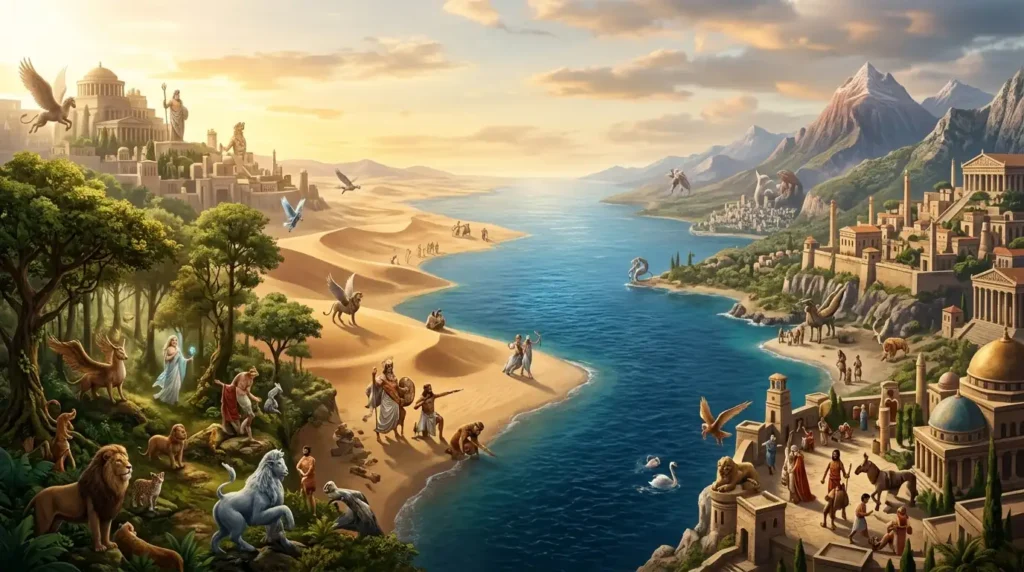
Four theories, none of them fully sufficient alone, and one honest counterexample sitting right in the middle of Northern Europe reminding you the pattern was never universal in the first place.
What I keep coming back to is that these explanations aren’t competing. A sphinx can be cognitively cheap to remember, culturally significant as a boundary marker, and viscerally unsettling all at once, and the fact that three separate academic disciplines each found a real, different piece of the answer is probably the most honest thing this article can tell you about why the combination kept working.
Related Articles
- Why Dragons Are The Most Beloved Fantasy Creatures
- Why Dragons Are Almost the Perfect Mythological Creature
- 9 Dark Fantasy Creatures That Turn Familiar Into Fear
- 15 Elemental Dragon Types in Fantasy: Fire, Ice & Beyond
- How Great Fantasy Writers Adapt Mythology Without Stealing
- 9 Fantasy Creatures Authors Invented From Scratch
- 15 Most Iconic Fantasy Creatures: East & West Mythology
References
- Carroll, N. (1990). The Philosophy of Horror, or Paradoxes of the Heart.
- Purity and Danger: An Analysis of Concepts of Pollution and Taboo – Mary Douglas
- An Instinct for Dragons by David E. Jones
- The Poetic Edda – Carolyne Larrington
- The Ancient Egyptian Book of the Dead
Written by Batin Khan, a curious free spirit who loves reading and exploring the worlds of fantasy, mythology, and ancient stories. Through this blog, Batin hopes to share that sense of wonder with readers while building an exciting future along the way.