

 By
By Quick Takeaways:
- Hard magic vs soft magic isn’t a binary. They’re two ends of a spectrum, and most successful fantasy magic sits somewhere between them rather than purely at either extreme
- Hard magic systems have explicit, knowable rules that let readers solve problems alongside characters. Soft magic systems preserve mystery and treat magic as genuinely miraculous rather than as a knowable mechanism
- Each has specific narrative strengths and specific failure modes, and knowing both makes you a better reader and a better judge of what an author is actually attempting
- The terminology itself comes from Brandon Sanderson, who borrowed the hard and soft distinction directly from science fiction criticism
- My honest verdict based on my personal observation: the best fantasy is usually hard at the mechanical level and soft at the cosmic level, but I’ll make the actual case rather than just asserting it
You probably have heard your friends say, “I like magic systems that actually make sense, don’t you?” Or the opposite: “I hate when fantasy explains everything, don’t you agree that mystery is better?”
Both questions assume the answer is obvious. It isn’t. Hard and soft magic solve different narrative problems, and after reading more than couple of books reading across both traditions I have come to realize that the honest answer requires understanding what each is actually for before deciding which one you want.
Let me give you the real comparison, and then I’ll tell you what I actually think.
What Hard Magic Actually Is
The Definition
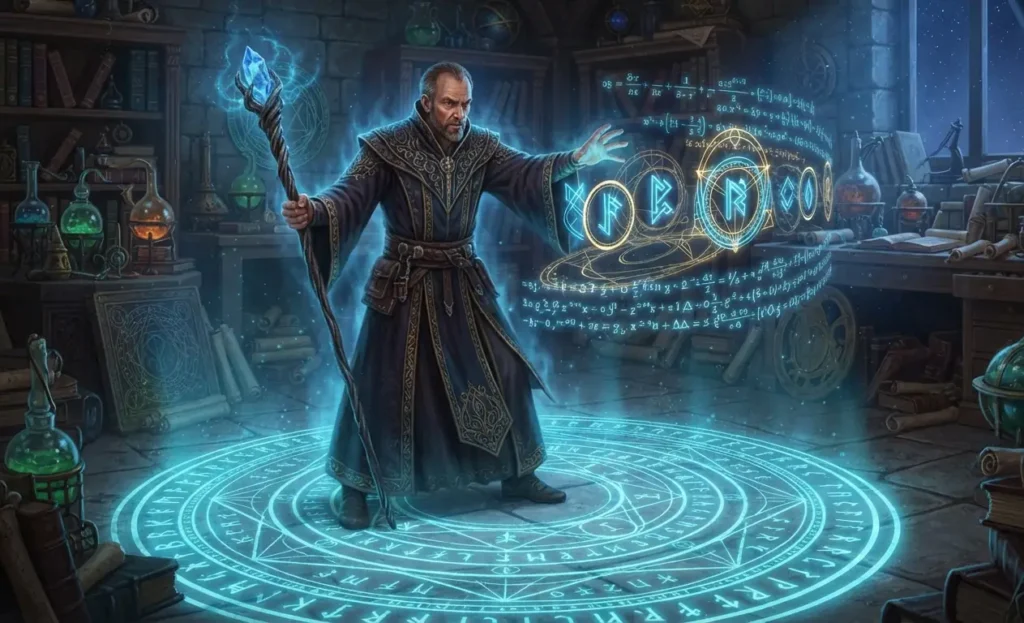
A hard magic system has explicit, defined rules that the reader has full access to. You know what the magic can do, what it costs, and where its boundaries sit. When a character solves a problem using magic, you can trace the solution back to rules you already understood.
The term comes directly from Brandon Sanderson, who borrowed it from science fiction criticism’s distinction between hard science fiction (rigorously grounded in real physics) and soft science fiction (using scientific concepts more loosely in service of story). Sanderson applied the same framework to magic systems in his influential essays on the subject.
Sanderson’s First Law Explained
Sanderson’s actual formulation is precise: an author’s ability to solve conflict with magic is directly proportional to how well the reader understands that magic. This is the load-bearing principle of hard magic systems. If you want your protagonist’s magical ability to resolve the story’s central problem, the reader needs to understand the rules well enough to see that the solution was earned rather than invented on the spot.
This is why hard magic systems tend to come with extensive internal logic: metal-based Allomancy in Mistborn, where each metal produces a specific effect; the naming-based sympathy magic in The Name of the Wind, where specific physical laws govern what’s possible; the explicit tiered power systems in progression-focused epic fantasy.
Hard Magic Examples
Mistborn (Brandon Sanderson): Allomancers ingest specific metals to access specific powers. Every capability is knowable. Every plot resolution using magic can be traced back to established rules.
The Stormlight Archive (Brandon Sanderson): A more elaborate hard system involving Stormlight, Spren bonds, and Surgebinding orders, each with specific and eventually fully explained mechanics.
Jim Butcher’s Codex Alera: Furycrafting operates according to consistent elemental rules that the reader can track and predict across the series.
What Soft Magic Actually Is

The Definition
Soft magic systems are deliberately mysterious. The reader experiences magic’s effects without being given complete access to its underlying mechanism. Magic in soft systems feels genuinely miraculous, genuinely beyond full comprehension, and genuinely capable of surprising both characters and readers.
Tolkien is the clearest and most influential example. Gandalf does things. Elves do things. The reader accepts these events as real and significant without ever receiving a rulebook explaining exactly how they work or what their limits are.
Why Mystery Has Its Own Logic
Soft magic isn’t the absence of rules. It’s the deliberate withholding of rules from the reader while the author maintains internal consistency that they may never fully reveal. The best soft magic systems feel consistent even though you couldn’t write out their mechanics if asked, because the author has thought through more than they’ve shown you.
This distinction matters. Soft magic done badly feels arbitrary, like the author is making things up as needed. Soft magic done well feels mysterious in a way that suggests deep, coherent logic operating just beyond what you can see.
Soft Magic Examples
The Lord of the Rings (J.R.R. Tolkien): Magic exists, is clearly powerful and significant, and is never mechanically explained. The wonder depends on this restraint.
A Song of Ice and Fire (George R.R. Martin): Magic is deliberately kept vague, rare, and mysterious for most of the series, which makes its rare appearances feel genuinely uncanny rather than routine.
Jonathan Strange and Mr Norrell (Susanna Clarke): Magic’s return to England is central to the plot, but its deeper nature remains genuinely mysterious even to the magicians practicing it.
The Spectrum, Not a Binary
Where Most Systems Actually Sit
Almost no major fantasy work sits at either pure extreme. Most magic systems occupy a position somewhere along the spectrum, and the most interesting critical conversation isn’t “hard or soft” but “how hard, in which specific ways, and why.”
Ursula K. Le Guin’s Earthsea is a genuinely interesting middle case. The true-name magic system has clear internal rules (knowing something’s true name gives you power over it), which leans hard. But the deeper metaphysics of magic, the Equilibrium, the nature of the Dry Land, remains genuinely mysterious throughout the series, which leans soft. Neither category fully describes it.
The Hybrid Approach
The most sophisticated fantasy world-building often deliberately combines both registers within a single world, using hard rules for the magic that characters actively practice and manipulate, while keeping the cosmic or metaphysical underpinnings of that magic genuinely mysterious.
Sanderson’s own Cosmere, the shared universe underlying Mistborn, Stormlight Archive, and his other major works, demonstrates this directly. The individual magic systems (Allomancy, Surgebinding) are rigorously hard. But the cosmic-scale forces underlying them, the Shards, the nature of Adonalsium, the deep metaphysics of the entire universe, remain deliberately mysterious even after multiple books. Sanderson is simultaneously the genre’s most famous hard magic author and someone who preserves genuine soft mystery at the largest scale.
What Hard Magic Does Better Than Soft
Fair-Play Problem Solving
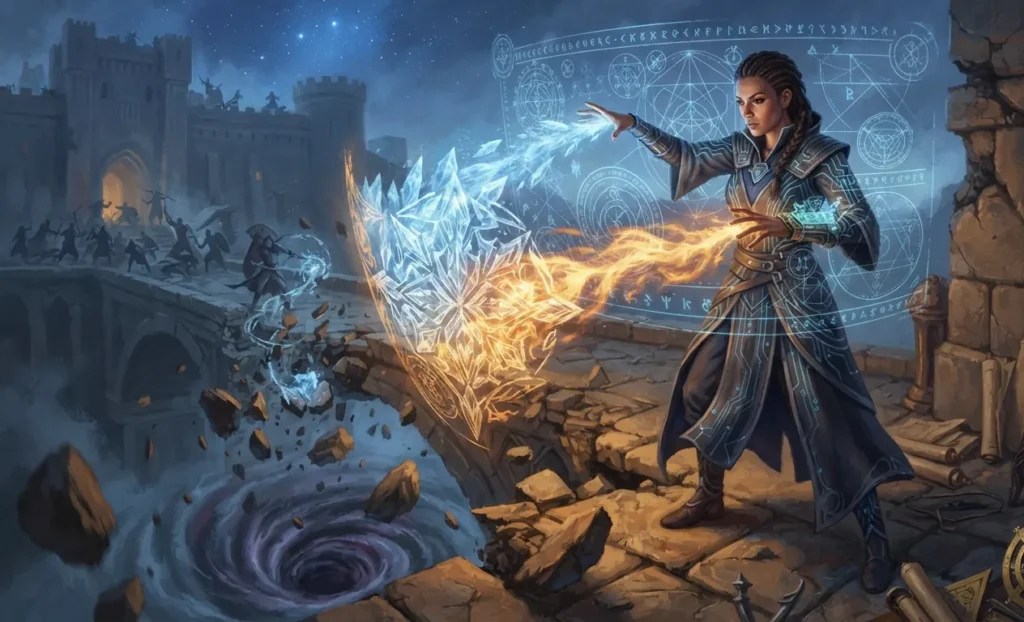
Hard magic allows a specific and genuinely satisfying reading experience: the fair-play mystery. When you understand the rules completely, you can attempt to predict how a character will solve their problem before the text tells you, and the satisfaction of being right, or of being surprised by a solution that still respects the established rules, is a pleasure unique to hard systems.
The Satisfaction of Mastery
Hard magic systems let readers develop genuine expertise in a fictional system. You learn Allomancy’s rules the way you’d learn a game’s rules, and that learning produces a specific engagement: you’re not just watching a story, you’re tracking a system you increasingly understand.
Consistency Readers Can Trust
Because hard magic’s rules are explicit, violations are immediately apparent, which creates a specific kind of trust between author and reader. You know the author can’t simply invent a convenient solution, because you’d notice if they contradicted established rules. This trust is valuable and specific to hard systems.
What Soft Magic Does Better Than Hard

Preserving Genuine Wonder
Soft magic protects something that explicit rules can destroy: the sense that magic is genuinely beyond human comprehension. Once you fully understand a magic system’s mechanics, it starts to resemble a technology with different physical laws rather than something genuinely miraculous. Soft magic keeps the miraculous quality intact.
Magic That Feels Miraculous Rather Than Mechanical
There’s a specific emotional register that soft magic accesses more easily: the numinous, the sense of encountering something genuinely beyond ordinary categories. Gandalf’s power feels different from an Allomancer’s power partly because you never receive the manual for how it works. The mystery itself is doing emotional work.
Atmosphere and Dread
Soft magic serves horror-adjacent and atmospheric fantasy particularly well. If you want your reader unsettled by something they can’t fully explain or predict, explicit rules work against you. Soft magic’s deliberate incompleteness is precisely what produces genuine unease.
Where Hard Magic Fails
The Textbook Problem
The most common hard magic failure is over-explanation that turns narrative into exposition. When an author becomes so invested in their system’s mechanics that explaining them starts to crowd out story and character, the magic stops feeling like magic and starts feeling like a physics lecture with fantasy vocabulary.
When Explanation Kills Mystery
Hard magic systems can accidentally eliminate the sense of wonder that drew readers to fantasy in the first place. If everything is knowable and explicable, the genre’s core promise, the encounter with the genuinely impossible, can get lost beneath rigorous but mechanical world-building.
Where Soft Magic Fails
The Deus Ex Machina Risk
Soft magic’s greatest vulnerability is the accusation of cheating. If magic isn’t clearly rule-bound, an author can be tempted to solve plot problems with convenient magical events that the reader had no way to anticipate, producing the specific dissatisfaction of a solution that feels unearned.
When Mystery Becomes Vagueness
Soft magic done poorly isn’t mysterious. It’s just underdeveloped. The difference between intentional mystery and accidental vagueness is whether the author actually knows more than they’re revealing, and readers can often feel the difference even when they can’t articulate it precisely.
The Verdict: My Honest Answer

Neither Wins Categorically
I want to resist the urge to simply declare one superior, because that would be dishonest. Hard and soft magic solve different problems, and a story that needs fair-play problem-solving needs hard magic regardless of how much wonder it sacrifices. A story that needs genuine numinous mystery needs soft magic regardless of how much narrative convenience it gives up.
But Here’s My Actual Position
Based on my personal findings, the fantasy that has stayed with me most consistently uses hard magic at the mechanical, practical level, the level where characters actively work with and manipulate magical forces, while preserving soft mystery at the cosmic, metaphysical level, the level of ultimate origins and ultimate meaning.
This combination gets you both things simultaneously. You get the satisfaction of mastery and fair-play problem-solving in the magic characters actually use day to day. And you get the preserved wonder of not fully understanding what magic ultimately is or where it ultimately comes from, which keeps the genre’s core promise, the encounter with the genuinely miraculous, intact even in a world with rigorously explained mechanics.
Sanderson’s own Cosmere is the clearest large-scale demonstration of this working. Tolkien’s Middle-earth, interestingly, works in something like the reverse direction: soft at every level, which is also legitimate, but produces a different kind of fantasy than the hybrid approach.
The magic system that’s purely hard risks becoming a physics textbook. The magic system that’s purely soft risks becoming vague atmosphere without teeth. The hybrid, hard where characters act, soft where the cosmos remains unexplained, gets you the pleasures of both without most of either extreme’s specific failure modes.
That’s my honest answer. Not “it depends,” though it genuinely does depend on what a specific story needs. But if you’re asking me what I think produces the best fantasy most consistently, it’s the hybrid, and I think the evidence across the genre’s most enduring works supports that position.
Read: Fantasy vs Sci-Fi vs Horror: What Actually Separates Them?
Frequently Asked Questions
Who invented the terms hard magic and soft magic?
Brandon Sanderson popularized these terms in his fantasy writing essays, explicitly borrowing the framework from science fiction criticism’s hard versus soft science fiction distinction. His “Sanderson’s Laws of Magic” essays, published between 2007 and 2013, remain the most cited source for this vocabulary in fantasy criticism.
Can a magic system change from soft to hard within the same series?
Yes, and this is a recognized and effective technique. A Song of Ice and Fire gradually reveals more rules about its magic as the series progresses. Revealing rules gradually lets an author preserve early mystery while eventually allowing magic to resolve plot problems in a fair, earned way.
Is hard magic more suited to certain fantasy subgenres?
Generally yes. Progression fantasy and epic fantasy with detailed power systems tend to favor hard magic because reader tracking of advancement requires explicit rules. Gothic, atmospheric, and horror-adjacent dark fantasy tends to favor soft magic because mystery serves the genre’s emotional goals more directly.
Does hard magic make a story less imaginative than soft magic?
No, though this is a common misconception. Hard magic requires enormous imaginative work to construct coherent, interesting rules and consequences. The imaginative labor shifts from atmosphere generation to systematic world-building, but it isn’t reduced. Sanderson’s elaborate systems demonstrate that hard magic can be as imaginative as any soft system.
What’s the biggest mistake authors make with magic system design?
Mismatching their system type to their narrative needs. Using soft magic to solve a plot’s central conflict produces reader dissatisfaction because the solution feels unearned. Using hard magic exclusively when the story needs genuine cosmic mystery can eliminate the sense of wonder that fantasy depends on. Matching the system to the story’s actual requirements matters more than picking a side.
Final Thoughts
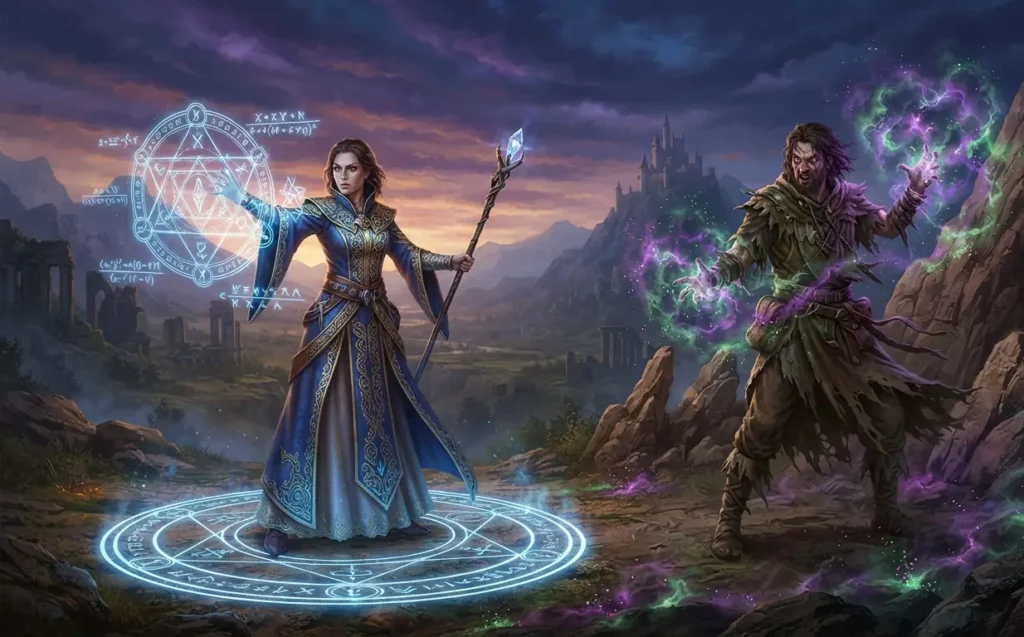
Hard and soft magic aren’t competing answers to the same question. They’re answers to different questions about what a specific story needs its magic to do.
The reader who wants fair-play mastery and the satisfaction of predictable, earned solutions wants hard magic. The reader who wants genuine numinous wonder and magic that never stops feeling miraculous wants soft magic. Most of the genre’s best work, in my assessment, finds a way to give you both by being explicit where explicitness serves the story and mysterious where mystery serves it better.
That’s not indecision. That’s recognizing that the best fantasy usually needs both registers working simultaneously, at different scales, for different purposes.
Related Articles
- How Fantasy World-Building Actually Works [Full Breakdown]
- 13 Overlooked Dragon Books Worth Reading in 2026
- 15 Best Dragon Books for Adults [Dark & Epic Picks of 2026]
- Why Millennials and Gen Z Love Dark Fantasy
- How to Build a Fantasy World Readers Will Believe
- How Fantasy Geography Shapes Kingdoms & Their Politics
- How to Build a Dark Fantasy World That Actually Disturbs
- Mana, Chi & Aether: Three Traditions, One Idea?
Further Reading & References
- Rhetorics of Fantasy – Wesleyan University Press
- The Encyclopedia of Fantasy – John Grant, John Clute
- Strategies of Fantasy – Attebery, Brian
- The Hero with a Thousand Faces – Joseph Campbell
- Tolkien – On Fairy-Stories
- Ursula K. Le Guin – The Language of the Night
- Sanderson’s First Law – Brandon Sanderson
- Sanderson’s Second Law – Brandon Sanderson
- Sanderson’s Third Law of Magic – Brandon Sanderson
Written by Batin Khan, a curious free spirit who loves reading and exploring the worlds of fantasy, mythology, and ancient stories. Through this blog, Batin hopes to share that sense of wonder with readers while building an exciting future along the way.