
 By
By Quick Takeaways:
- How to build a fantasy world? A fantasy world feels made up when everything in it exists because the plot needs it, and stops feeling made up when things exist for their own reasons instead
- The fix isn’t more detail. It’s the right kind of detail, specifically the unglamorous kind that has nothing to do with the story’s central conflict
- Borrowing the causal structure of real history works far better than borrowing its costumes and vocabulary
- Contradiction, regional variation, and pointless leftover cruft are what make a culture read as real rather than as a mood board
- A handful of specific examples from Jemisin, Kay, Hobb, Le Guin, and Martin show what this actually looks like on the page
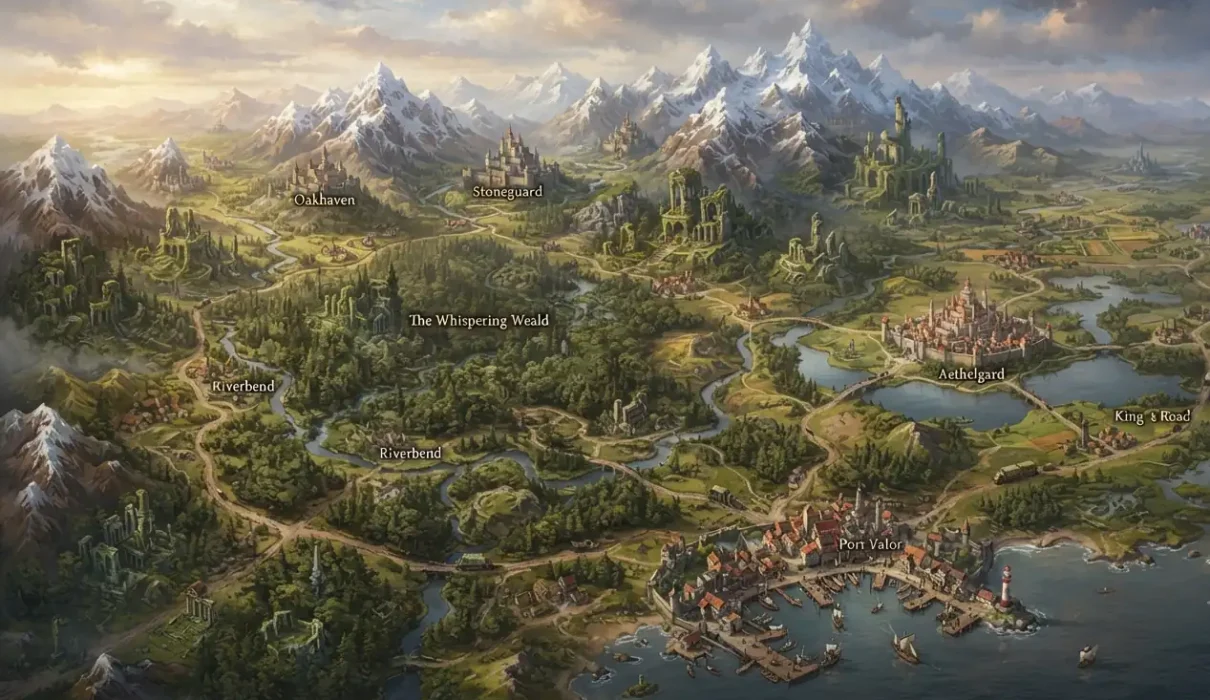
I’ve read enough fantasy across the years to recognize the feeling within the first chapter, sometimes within the first paragraph. A fantasy world that feels made up, no matter how many appendices it comes with, has a specific texture to it. Everything in it seems to exist because the author needed it to.
The capital city is exactly as important as the plot requires and no more. The one religion mentioned is exactly the religion relevant to the quest. Every character from a given nation shares one personality trait, as if the whole population agreed on it in advance. It’s not a lack of imagination. It’s usually the opposite: too much imagination pointed in only one direction, toward the story, and none left over for everything the story doesn’t need.
Real places don’t work that way, and neither does real history. That’s the whole secret, and it’s worth taking apart properly.
The Single Cause Problem
Why Real History Doesn’t Feel Authored
Nobody reads a history of medieval trade routes and thinks, this feels made up. Real events have too many overlapping causes for anyone to experience them as designed. A famine, a marriage alliance, a shift in river silt, a plague, and a stubborn grandmother’s inheritance dispute can all be pulling on the same outcome at once, and none of them were arranged by anybody for narrative convenience.
Invented worlds usually have exactly one cause behind everything: the story needs it. The kingdom is at war because the plot needs a war. The prophecy exists because the plot needs a prophecy. Once you notice this pattern, you can’t stop seeing it, and it’s the single fastest way to identify a world that hasn’t been thought through past its own necessity.
The Fix Isn’t Volume
Adding more lore doesn’t solve this. A fifty page history of made up kings is still single cause if every king’s reign exists purely to set up the current political situation the plot needs. Depth isn’t the same as volume. What actually breaks the single cause problem is giving your world reasons to be the way it is that have nothing to do with what your protagonist is about to do in it.
Borrow Structure, Not Surface
The Mistake Most Worldbuilders Make
The most common workaround is surface borrowing: take medieval Europe, rename the countries, adjust the map slightly, done. This produces a world that feels made up in a very specific way, like a costume party rather than a civilization, because the surface details of a real culture were never the thing making that culture feel real in the first place.
Guy Gavriel Kay is the clearest example I know of doing this correctly instead. Tigana draws on Renaissance Italian city-state rivalry, but Kay isn’t borrowing doublets and gondolas. He’s borrowing the actual mechanism: fragmented city states with local pride so intense that a foreign conqueror can exploit the fragmentation better than any single city could resist it alone.
That mechanism produces the plot. The plot doesn’t produce the mechanism.
What Structure Actually Means
Structure is the underlying cause and effect chain: how succession actually works and what happens when it’s contested, how a specific trade good creates specific dependencies between regions, how a religious schism produces specific and lasting grudges rather than a vague ancient conflict.
Borrow that, and the surface details you invent on top of it will cohere on their own, because they’re growing out of a mechanism that actually works rather than being hung decoratively on a plot.
The Residue Technique
Details That Don’t Pay Off
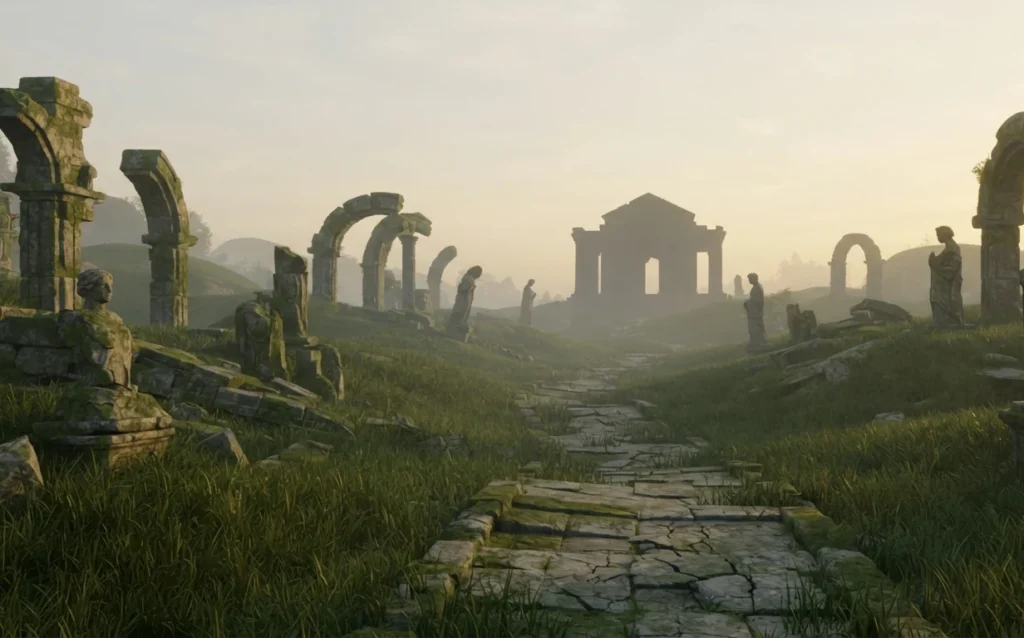
Real environments are full of leftover material that serves no current purpose. An old law nobody enforces anymore. A shrine to a god three generations of the town have forgotten the actual name of. A word that only makes sense in one specific valley because a flood once cut it off from its neighbors for a hundred years.
None of that residue is plot relevant, and that’s exactly why it works. A world where every single detail eventually matters to the story is a world that reads as engineered, because real places are full of dead ends, leftover customs, and things that used to matter and don’t anymore.
How Much Residue Is Enough
You don’t need pages of this. A single unexplained detail, mentioned once and never resolved, often does more work than an entire invented religion with a full pantheon.
N.K. Jemisin’s The Fifth Season is dense with this kind of residue: geological terminology, half remembered institutional grudges, technology from a lost era that nobody currently understands, all mentioned without full explanation because the world existed long before the reader arrived in it and will keep existing in ways the reader won’t get to see.
Vertical Depth Beats Horizontal Breadth
Pick One Thing and Go All the Way Down
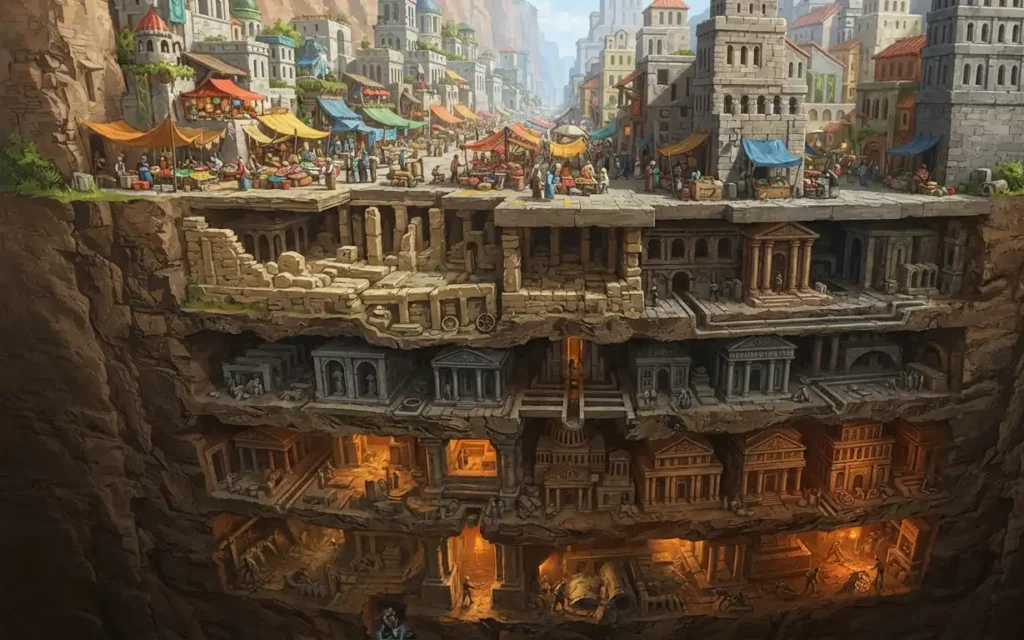
A map with forty named kingdoms, each with one sentence of description, feels thinner than a single kingdom explored down to its plumbing, its inheritance law, and its regional dialect variation. Breadth is easy to fake. Depth is not, which is exactly why depth is what convinces a reader.
Robin Hobb’s Farseer books are a genuinely useful model here because she rarely widens her scope. She stays inside one court, one keep, one protagonist’s very limited field of vision, and goes deep instead: what winter actually costs a coastal kingdom, what a specific poison does to a specific body over a specific number of days, what boredom and hunger and cold actually feel like to someone stuck at a remote outpost. That specificity does more worldbuilding work than a hundred named cities ever could.
Where to Put Your Depth
Pick the one or two things your story actually depends on, and go deep there specifically, rather than spreading equal effort across everything. If your plot turns on a trade dispute, understand that trade dispute down to specific goods, specific routes, specific families who profit and specific families who don’t.
Everything adjacent to that depth will borrow credibility from it without needing the same level of individual attention.
Give the Unglamorous Things Their Due
Nobody Invents Laundry, and That’s the Problem
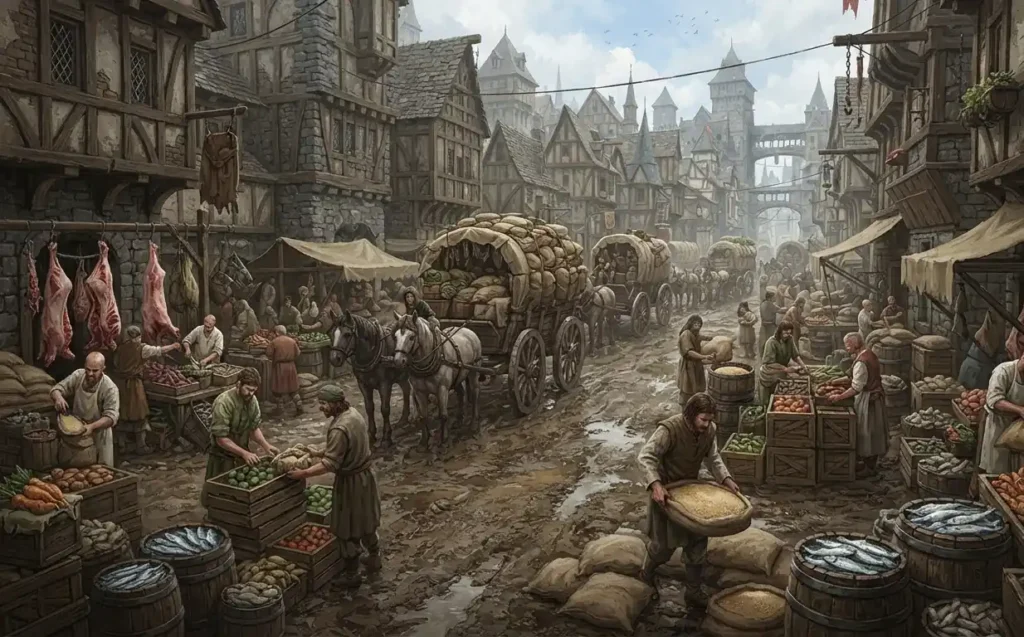
Fantasy worldbuilding tends to lavish attention on magic systems, dynasties, and prophecies, and almost never on the things that actually structure daily human life: what people eat when the harvest is bad, how waste and disease get managed in a crowded city, what a debased currency does to ordinary people’s ability to trust a transaction, how long it actually takes messages to travel and what that does to how quickly anyone can respond to anything.
These are the details real historical record is actually full of, and they’re almost entirely absent from worlds that feel made up. A kingdom that has clearly never had a bad harvest, a currency that never inflates, a disease that only ever kills named characters at dramatically convenient moments: all of these read as authored rather than lived in.
Where George Martin Gets This Right
Whatever else you think about the later stages of that series, the early economic detail in A Song of Ice and Fire is genuinely well built. The specific debt owed to the Iron Bank isn’t decorative. It constrains what characters can actually do, the way real debt constrains real governments, and its consequences ripple through decisions that have nothing directly to do with the debt itself.
That’s the unglamorous stuff doing real structural work rather than sitting in an appendix nobody reads.
Names and Language Need Internal Logic

The Tell of Randomly Different Naming
One of the fastest ways a world reveals itself as made up is inconsistent naming logic within a single culture. If one character from a given nation is named something that sounds Welsh and another from the same nation sounds vaguely Japanese with no explanation, the reader’s ear catches it even if they can’t articulate why.
Ursula K. Le Guin’s Earthsea handles this with real precision. Hardic names and Kargish names sound distinct from each other because they represent genuinely different linguistic traditions within the world, and within each tradition the names stay internally consistent.
True names, the deepest layer of the magic system, follow their own separate phonological logic again. The consistency itself is doing worldbuilding work, quietly, in a way most readers absorb without consciously noticing.
A Simple Fix
Decide on a small set of phonetic building blocks for each culture before you name anyone in it, and stick to them. It sounds almost too basic to matter, but this single habit prevents more made up feeling names than any amount of lore ever will.
Let Your World Disagree With Itself
Real Cultures Are Not Monocultures
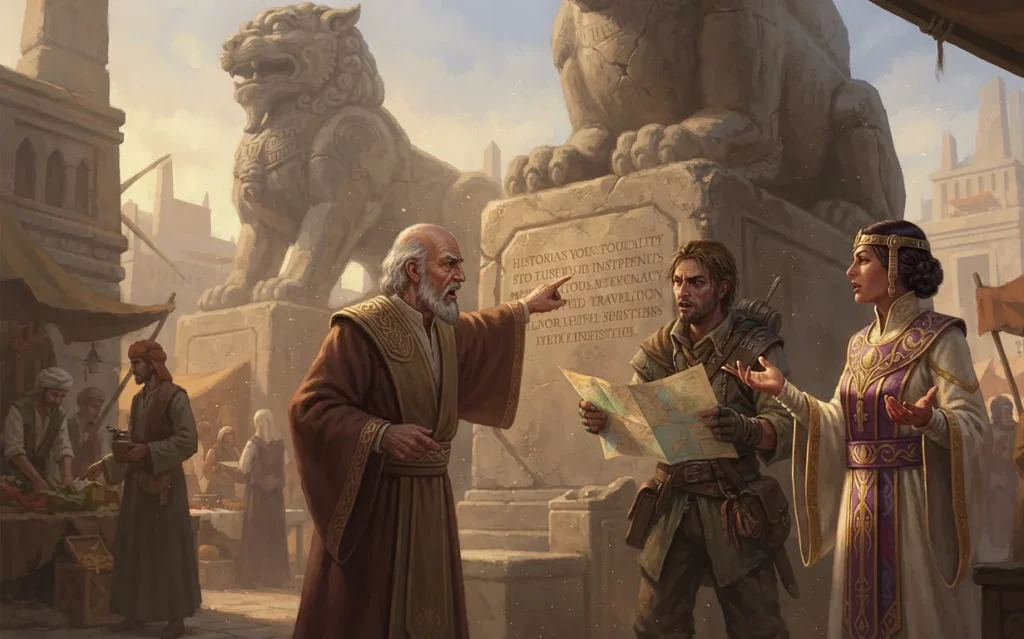
A nation where every single person shares the same opinion about the same political question is one of the clearest made up world signals there is. Real cultures argue internally, have regional rivalries within their own borders, have generational disagreement, have hypocrites who preach one thing and do another.
This matters because narrative convenience constantly pushes toward simplification. It’s easier to write, the northern kingdom hates magic, than to write, magic is legally restricted in the north but quietly tolerated in border villages, actively practiced by a persecuted minority in the capital, and a subject of genuine theological dispute among the clergy.
The second version is more work and it’s also the only one that reads as a real place rather than a single note played once.
Contradiction Is Not Inconsistency
There’s a difference worth being precise about. A world where the internal rules of magic contradict themselves from chapter to chapter is a craft failure. A world where the people in it disagree with each other, hold contradictory values, and don’t all behave identically is simply realistic. Confusing the two is a common and avoidable mistake.
Ask Why Nothing Has Changed
The Test Most Worldbuilding Fails
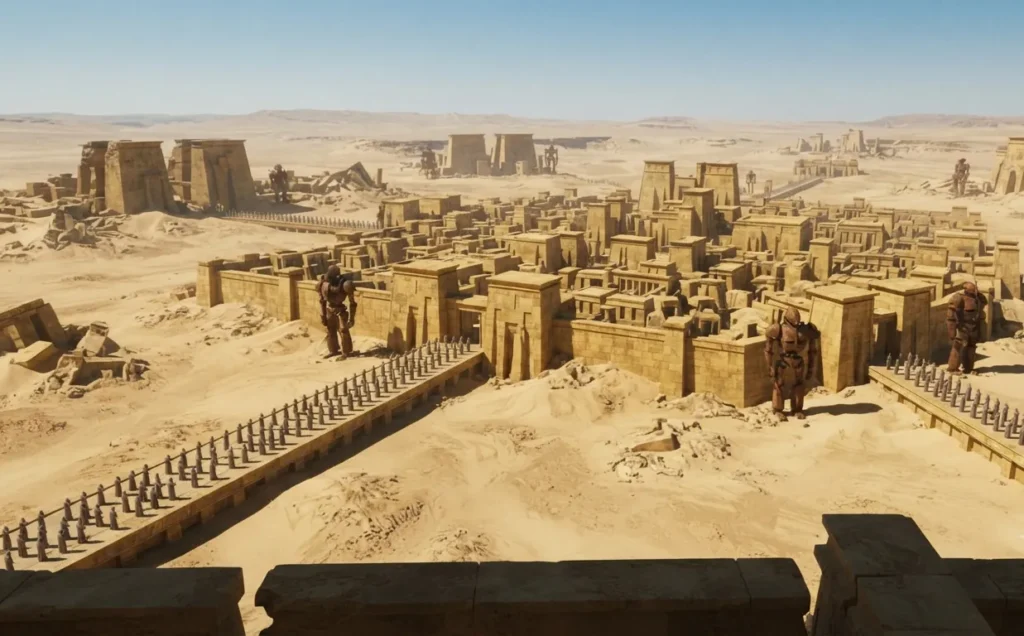
If your world has had a specific magic or technology for centuries, ask yourself honestly what that would actually have done to the society by now.
A healing magic that’s existed for five hundred years should have changed birth rates, warfare, inheritance patterns, and medicine in ways that ripple outward. If none of that has happened and the society still looks exactly like standard medieval Europe except for one magic system bolted on, that’s usually a sign the worldbuilding stopped at the surface.
This test catches more made up feeling worlds than almost anything else on this list, because it’s the question that reveals whether an author actually thought through consequences or just wanted the aesthetic of a magic system without doing the harder work of extending its logic forward through time.
You Don’t Need to Answer Everything
You don’t have to work out every consequence in exhaustive detail. You just need evidence, on the page, that you’ve thought about it. A single offhand mention that healers are a protected class exempt from certain taxes, or that inheritance law had to be rewritten three generations ago because resurrection magic complicated who counted as dead, does the job. The reader doesn’t need the full treatise. They need proof you wrote one in your head even if they never see it.
Putting It Together
None of these techniques work in isolation as well as they work together. Structure borrowed from real causal mechanisms gives your plot a reason to exist beyond convenience. Residue gives your world a past it doesn’t owe the reader an explanation for. Depth in the one or two places your story actually lives gives everything else borrowed credibility.
Unglamorous daily detail gives the whole thing weight. Consistent naming gives your ear something to trust. Internal disagreement gives your culture a pulse. And asking what should have already changed keeps your magic honest about its own implications.
None of this requires more imagination than making up a made up world in the first place. It requires pointing that imagination somewhere other than directly at the plot, which is a genuinely different discipline, and it’s the discipline that separates a world readers pass through from a world readers believe actually kept existing after they closed the book.
Frequently Asked Questions
Is this the same thing as hard versus soft magic systems?
No, though they’re related. Hard and soft magic is about how explicitly a magic system’s rules are shown to the reader. Feeling made up or not is broader, covering economics, naming, culture, and history, and applies equally to worlds with no magic system at all.
How much unglamorous detail is too much?
If it stops the story’s momentum or reads as a lecture, it’s too much. The goal is a few specific, well placed details, not an exhaustive account. One precise mention of debased currency does more than three paragraphs explaining the entire monetary system.
Can you use real world cultures directly without it feeling like appropriation?
Borrowing causal structure rather than surface costume is generally the safer and more respectful approach, since it requires genuinely understanding why a historical system worked the way it did rather than just decorating your world with someone else’s aesthetic markers.
Does this apply to short stories or only long series?
It applies at any length, though the technique changes. A short story has room for maybe one or two pieces of residue and one deep detail. A long series can sustain many. The principle, existing for reasons beyond the plot, scales down without losing its effect.
What’s the single fastest fix if I only have time for one technique?
Ask why nothing in your world has changed given how long its magic or technology has existed. That single question, honestly answered, tends to surface more consequences, and more genuine depth, than any other single exercise on this list.
Final Thoughts

After tons of reading, fantasy has taught me that readers can’t always name what’s wrong with a world that feels made up, but they can always feel it, usually within the first fifty pages. It shows up as a kind of thinness, a sense that everything present was placed there on purpose and nothing exists that wasn’t.
The fix was never more imagination. It was aiming the imagination you already have at the parts of the world that have nothing to do with your plot. That’s where the believability actually lives, and it’s the part most first drafts skip entirely.
Related Articles
- Grimdark vs Dark Fantasy: Are They One & The Same
- 15 Best Dragon Books for Adults [Dark & Epic Picks of 2026]
- Why Millennials and Gen Z Love Dark Fantasy
- Fantasy vs Sci-Fi vs Horror: What Actually Separates Them?
- How Fantasy Geography Shapes Kingdoms & Their Politics
- How to Build a Dark Fantasy World That Actually Disturbs
- How Tolkien & Martin Built Two Very Different Fantasies
- 7 Things Modern Fantasy Writers Can Learn From Tolkien
References
- Ursula K. Le Guin – Steering the Craft
- John Gardner – The Art of Fiction
- Orson Scott Card – How to Write Science Fiction & Fantasy
- Mark J.P. Wolf – Building Imaginary Worlds
- Wonderbook – Jeff VanderMeer
- Tolkien – On Fairy-Stories
- Joseph Tainter – The Collapse of Complex Societies
- Fernand Braudel – Civilization and Capitalism
Written by Batin Khan, a curious free spirit who loves reading and exploring the worlds of fantasy, mythology, and ancient stories. Through this blog, Batin hopes to share that sense of wonder with readers while building an exciting future along the way.