
 By
By Quick Takeaways:
- Dating ancient mythology precisely is genuinely difficult, so every date here reflects a scholarly range rather than a fixed certainty
- The oldest surviving physical dragon imagery may actually come from China, thousands of years before any of the written narratives on this list, which complicates the whole idea of a clean chronological answer
- Mesopotamia gives us the oldest clearly documented dragon narratives in writing, starting with figures most people have never heard of before Tiamat
- Several entries on this list are genuinely connected to each other across cultures, particularly the direct line running from Ugarit’s sea serpent Lotan to the biblical Leviathan
- This list traces documented narrative dragons specifically, not every serpent or hybrid creature that scholars might loosely call dragon adjacent
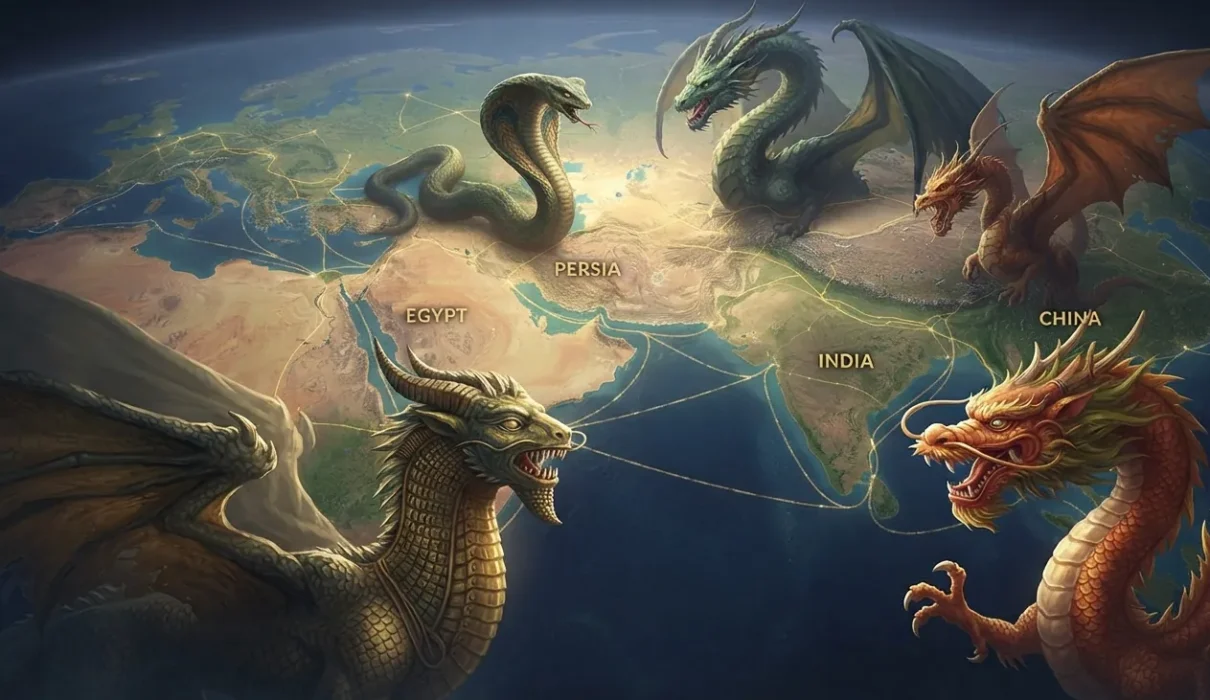
When I started writing this blog post, I’ve learned that “the oldest dragon” is a much trickier question than it sounds. Ask a Mesopotamian scholar, and you get Tiamat. Ask an archaeologist working in northeastern China, and you get something that predates Tiamat by thousands of years, carved in jade rather than written on clay.
The Hongshan culture, active in what’s now Liaoning and Inner Mongolia, produced carved jade dragon and pig dragon figures dating to somewhere between 4700 and 2900 BCE. That’s older than cuneiform writing itself.
So, before we get into the eleven entries on this list, it’s worth admitting up front that China may already hold the oldest dragon imagery in the world, even though its written dragon narratives come later than several of the myths below.
With that honestly on the table, here’s the chronological tour through documented dragon narratives, starting where writing itself began.
The Dragon of Ningishzida: Sumer
Where the Written Record Actually Begins
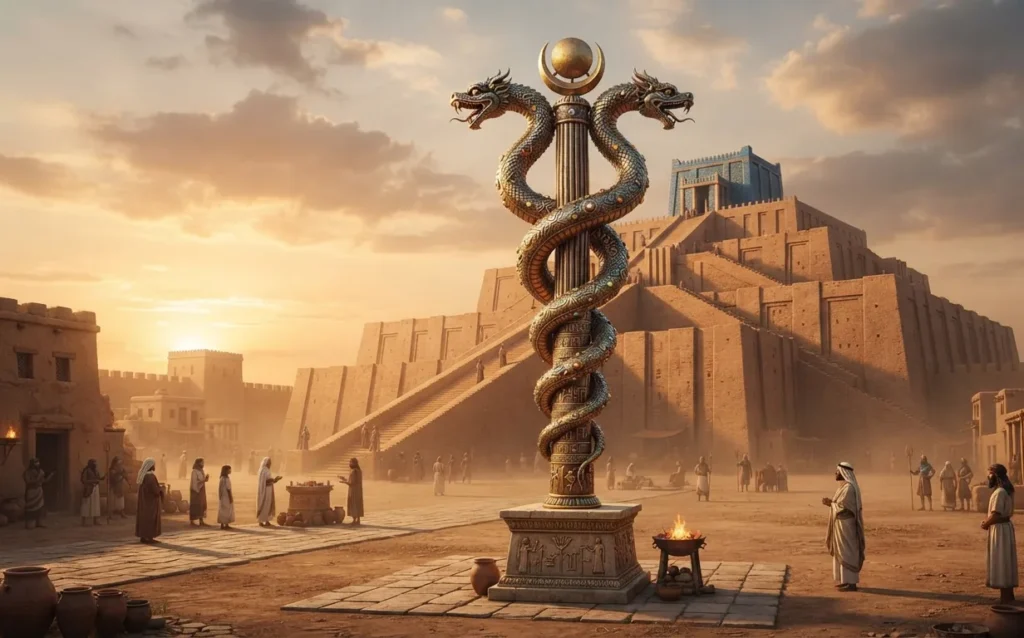
Most popular accounts of ancient dragons jump straight to Tiamat, but Tiamat is Babylonian, a later Semitic tradition that inherited and reworked older Sumerian religious ideas. The Sumerians themselves, the civilization that gave the world cuneiform writing, had their own dragon serpent term: ušumgal, meaning something close to great dragon or great serpent.
The clearest surviving image connected to this tradition is the Gudea cylinder, a stone vase from the city of Lagash dated to roughly 2100 BCE, showing two intertwined serpent dragons flanking a staff. It’s associated with the god Ningishzida, a deity of vegetation and the underworld frequently depicted with serpent dragon imagery.
This is genuinely older than Tiamat’s written story, and it’s the reason I open with Sumer rather than the Babylonian tradition most people already know.
Attested: roughly 2100 BCE, Neo-Sumerian period.
Tiamat: Babylon
The Dragon Who Became the World
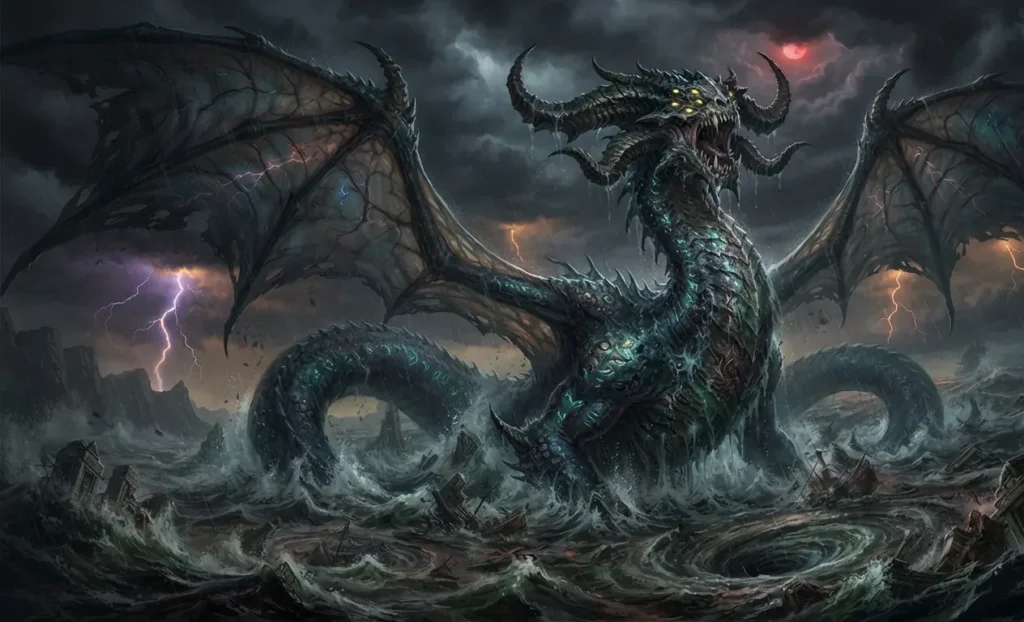
Tiamat is the primordial saltwater goddess of the Enuma Elish, Babylon’s creation epic, eventually depicted and defeated as a monstrous dragon by the god Marduk.
Her body is split in two to form the heavens and the earth, making her death the literal origin of the physical world in Babylonian cosmology.
Scholars generally date the composition of the Enuma Elish somewhere in the second millennium BCE, with the most complete surviving tablets coming from the seventh century BCE library of Ashurbanipal. The underlying cosmology likely reflects considerably older Sumerian religious ideas.
Tiamat remains the figure most people mean when they say the oldest dragon in the world, and she’s a genuinely strong claim, even if she isn’t quite the earliest one on this list.
Attested: composition likely second millennium BCE, surviving tablets from the seventh century BCE.
Mušḫuššu: Babylon
The Dragon You’ve Actually Seen
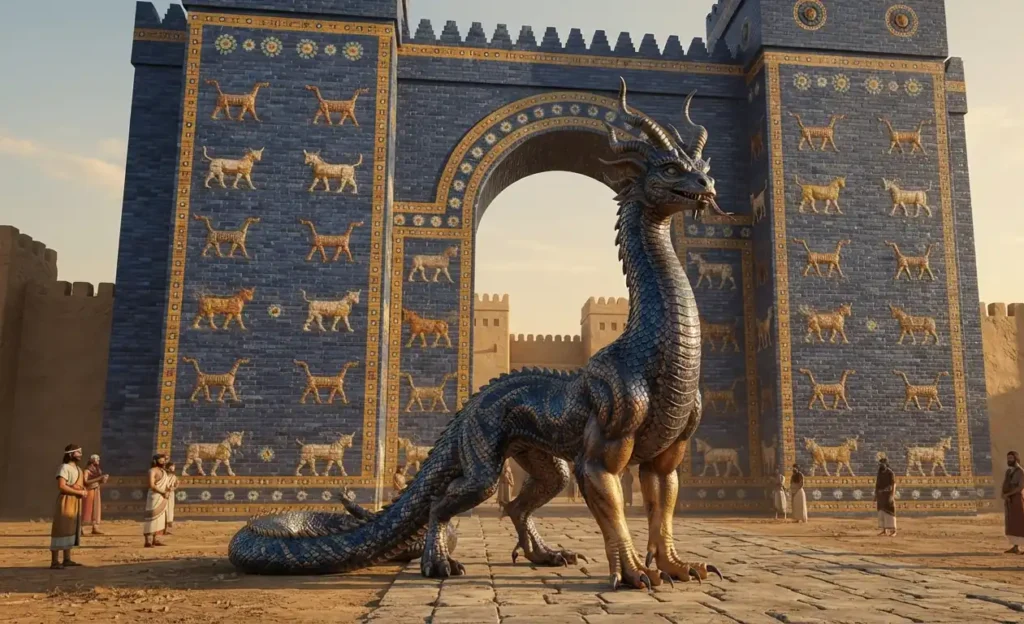
If you’ve ever seen an image of the Ishtar Gate, the glazed blue brick gateway from ancient Babylon now reconstructed in Berlin’s Pergamon Museum, you’ve seen the Mušḫuššu without necessarily knowing its name. This chimeric dragon, with a scaled serpent body, a horned head, eagle like hind legs, and lion like forelegs, appears repeatedly across the gate’s decorative program.
The Mušḫuššu was associated with several Mesopotamian deities over time, eventually becoming the sacred animal of Marduk specifically.
Its visual type in art is documented from the late third millennium BCE onward, considerably earlier than the Ishtar Gate itself, which was built under Nebuchadnezzar II around 575 BCE.
What I find genuinely remarkable is that this creature’s specific composite body plan stayed recognizable across nearly two thousand years of Mesopotamian art.
Attested: artistic type from roughly 2300 BCE, Ishtar Gate depictions circa 575 BCE.
Apep: Egypt
The Serpent Who Fights the Sun Every Single Night
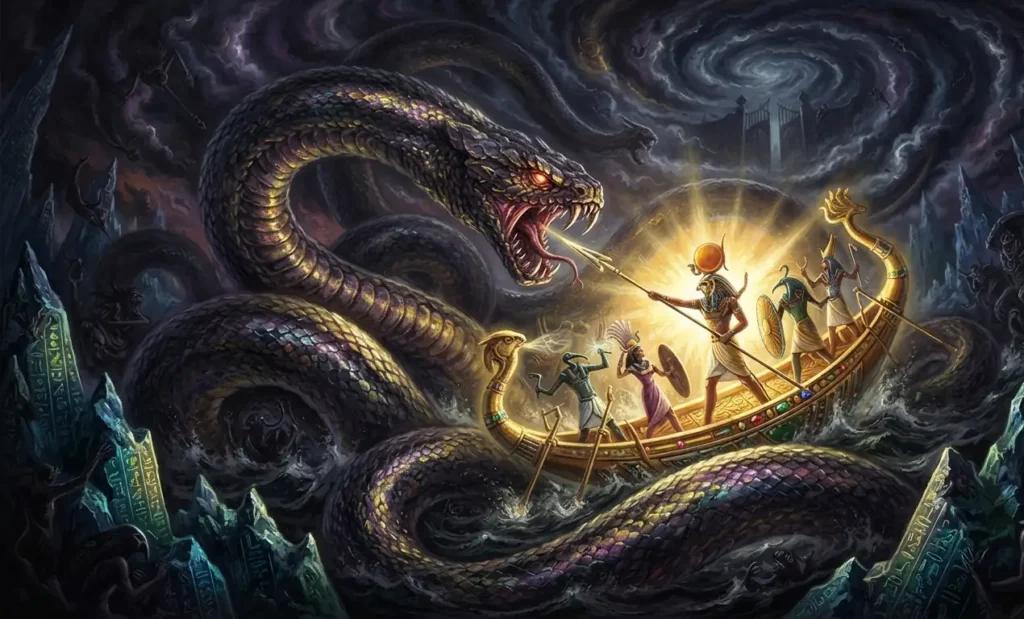
Apep, sometimes rendered Apophis, is the great chaos serpent of Egyptian mythology, locked in an eternal nightly battle against the sun god Ra as his barque travels through the underworld. Apep’s defeat every night is what allows the sun to rise the next morning, making this one of mythology’s clearest examples of a cosmic order maintained through continuous conflict rather than a single decisive victory.
Egyptian funerary texts, including material from the Coffin Texts and later the Book of the Dead, document Apep across an enormous span of Egyptian history. The clearest textual attestations are generally placed from the Middle Kingdom onward, roughly 2055 to 1650 BCE, though the underlying belief likely predates the surviving texts.
Apep is also unusual on this list for never actually being permanently defeated. The battle repeats forever, which is a genuinely different cosmological structure from most dragon slaying myths.
Attested: clear textual evidence from roughly 2055 to 1650 BCE.
Illuyanka: Hittite Anatolia
The Storm God’s Rival
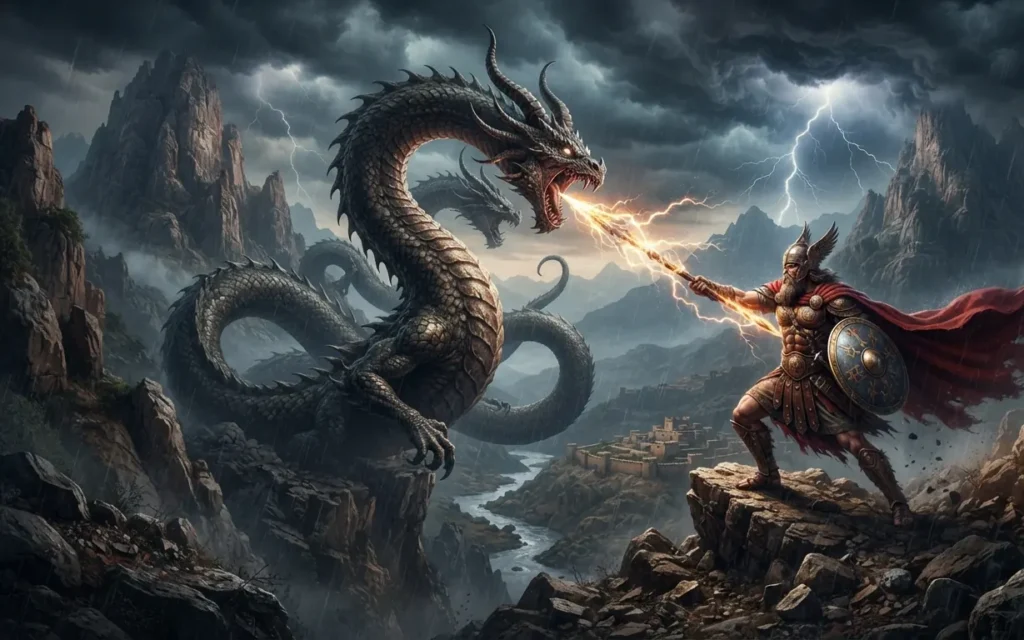
Illuyanka is the dragon of Hittite mythology, defeated by the storm god in a myth tied directly to the Puruli spring festival, a real annual ritual performed in the Hittite capital of Hattusa.
The myth survives in two somewhat different versions on cuneiform tablets recovered from that same site.
In one version, the storm god is initially defeated and has to enlist help, including a mortal man and a goddess who gets the dragon drunk at a feast before the storm god finishes the job. It’s one of the earliest documented examples of a hero using cunning rather than pure force against a dragon.
The tablets themselves are generally dated to around the fourteenth century BCE, though the ritual tradition they describe was likely already old by that point.
Attested: cuneiform tablets circa fourteenth century BCE.
Lotan: Ugarit and Canaan
The Sea Serpent Behind the Bible’s Dragon
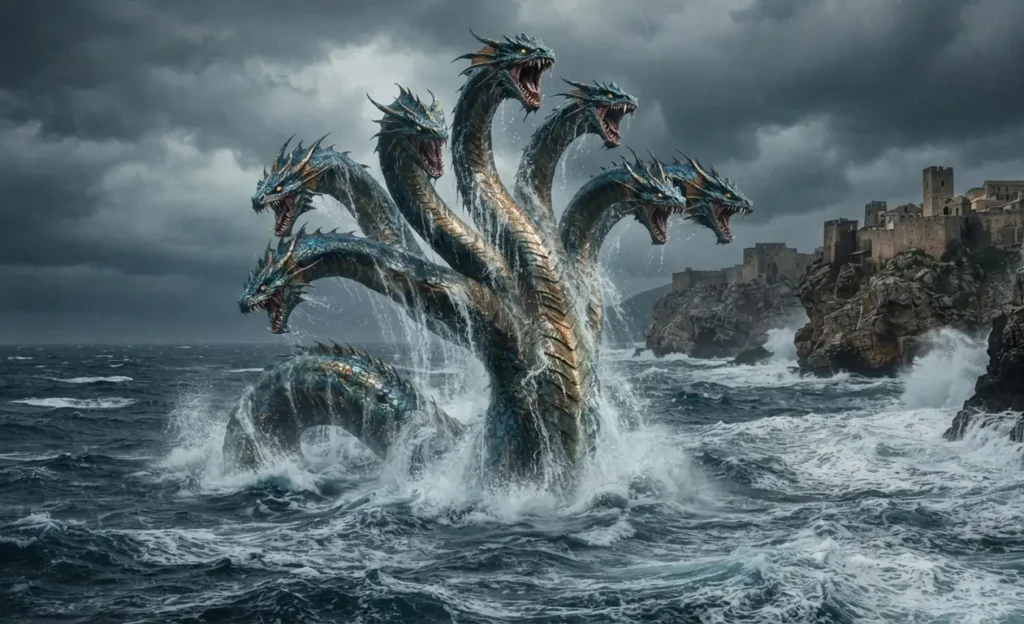
Lotan is the seven headed sea serpent of Ugaritic mythology, defeated by the storm god Baal in the Baal Cycle, a set of tablets recovered from the ancient city of Ugarit on the Syrian coast. These tablets are generally dated to the fourteenth through twelfth centuries BCE.
What makes Lotan essential rather than simply interesting is the direct linguistic and mythological line running from this figure to the biblical Leviathan later in this list.
The names themselves are cognates, and the imagery, a many headed sea serpent representing chaos defeated by a storm deity, transfers almost intact.
I am particularly fond of Lotan, because it’s the clearest case on this list where you can watch one culture’s dragon become another culture’s dragon through direct textual inheritance.
Attested: Ugaritic tablets circa fourteenth to twelfth centuries BCE.
Vritra: Vedic India
The Serpent Who Held Back the Waters
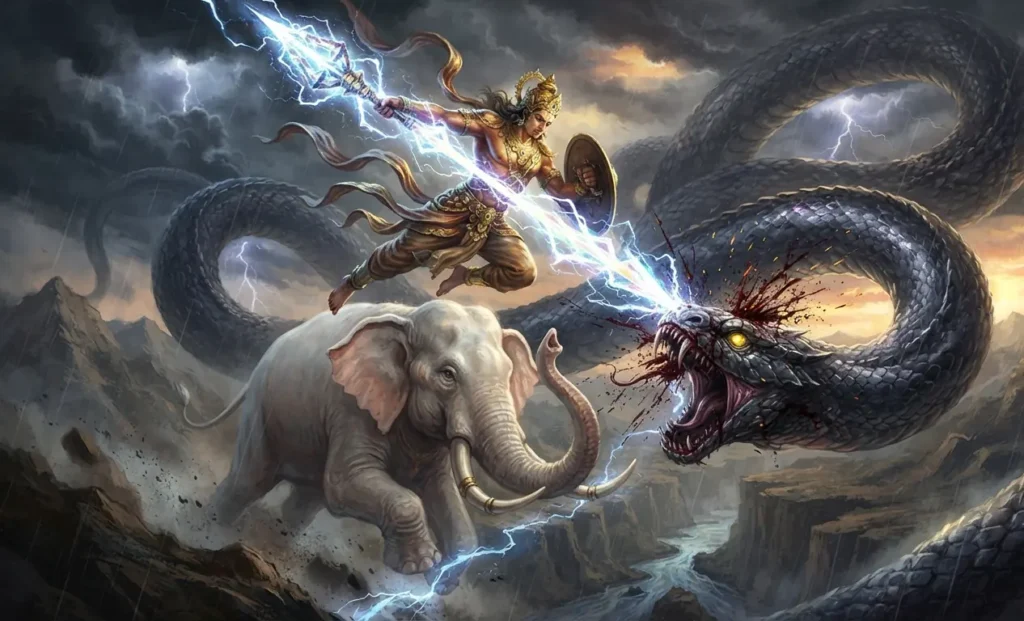
Vritra is the great serpent of the Rigveda, one of the oldest surviving religious texts in any Indo-European language, who holds back the cosmic waters until the storm god Indra kills him with his thunderbolt weapon, the vajra. The waters are released, and the myth is frequently read as an origin story for rainfall and agricultural fertility.
The Rigveda’s composition is generally dated by scholars to somewhere between 1500 and 1200 BCE, transmitted orally for a considerable period before eventually being written down.
Vritra’s name is directly related to the English word obstruction in its underlying linguistic sense, and the myth’s basic structure, a storm god defeating a water hoarding serpent, appears across a remarkable number of Indo-European traditions descended from the same root culture.
Attested: Rigveda, composed roughly 1500 to 1200 BCE.
Aži Dahāka: Persia
The Three Headed Tyrant Dragon
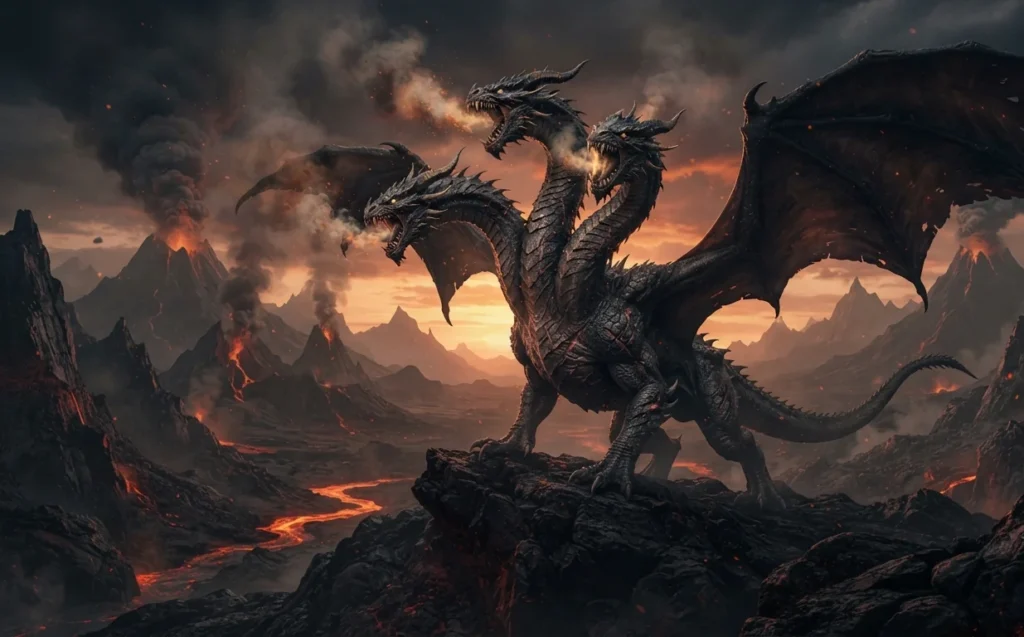
Aži Dahāka is the great dragon of Zoroastrian tradition, described in the Avesta as a three headed, three mouthed serpent created by the destructive spirit Angra Mainyu, eventually bound or defeated by the hero Thraetaona. Later Persian epic tradition, particularly Ferdowsi’s Shahnameh, transforms this figure into the tyrant king Zahhak.
I want to be honest that dating the Avesta precisely is genuinely contested among scholars, with proposals ranging from very early Indo-Iranian oral tradition to considerably later compilation dates. What’s clearer is that the Aži Dahāka myth shares deep structural roots with the Vedic Vritra story, reflecting a shared Indo-Iranian mythological ancestor before the two traditions split apart.
This shared ancestry is one of the more genuinely fascinating comparative mythology puzzles on this entire list.
Attested: dating debated, reflecting Indo-Iranian tradition likely predating the mid first millennium BCE.
Leviathan: Ancient Israel
The Bible’s Own Chaos Dragon
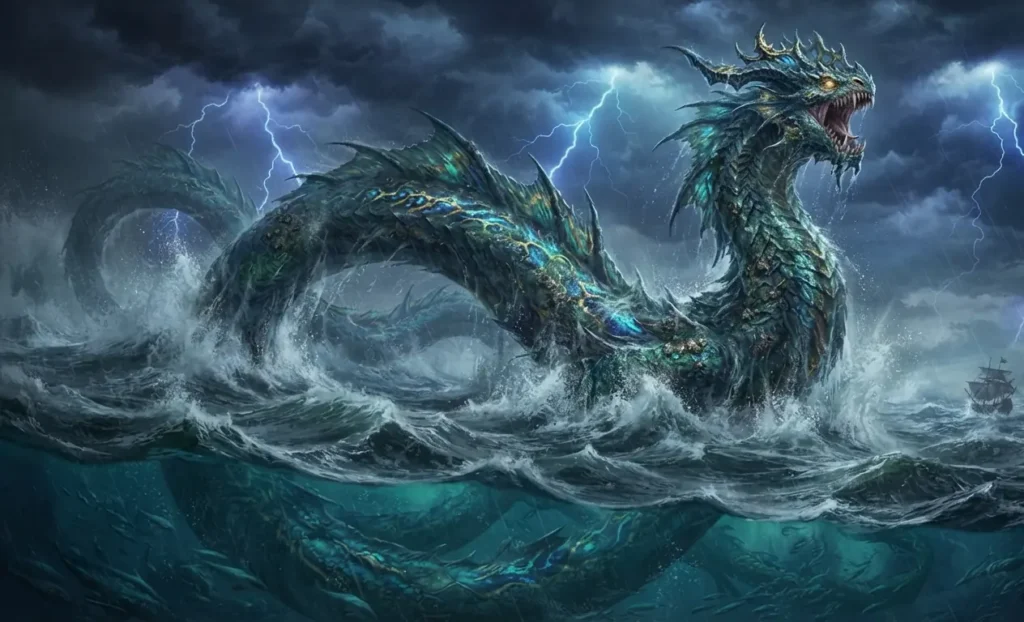
Leviathan appears across several books of the Hebrew Bible, including Job, Psalms, and Isaiah, as a great sea creature representing chaos that God either created as a display of power or will eventually defeat at the end of days.
The name and the underlying imagery connect directly back to the Ugaritic Lotan described earlier on this list.
Dating the specific biblical passages mentioning Leviathan is genuinely difficult and depends heavily on which book you’re discussing, with scholarly estimates for different texts ranging across several centuries. What’s well established is the clear literary relationship to the older Canaanite tradition.
Leviathan’s endurance in later Jewish, Christian, and broader Western culture as shorthand for an unstoppable chaos monster owes everything to this specific, traceable inheritance from a Bronze Age Levantine sea serpent.
Attested: biblical composition dates vary by book, generally placed after the Ugaritic Lotan tradition.
Python: Greece
The Serpent of Delphi
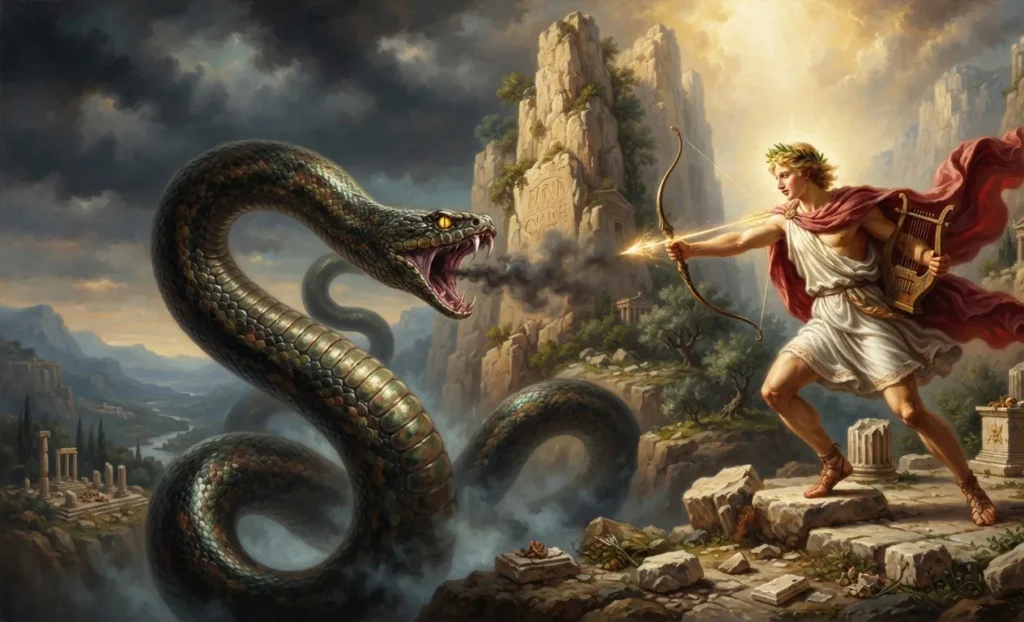
Python is the dragon or serpent that guarded the oracle at Delphi before being slain by the god Apollo, who then established his own prophetic sanctuary at the site. The Pythia, the priestess who delivered Apollo’s oracles at Delphi, takes her title directly from this defeated serpent.
The earliest clear literary attestation of the myth generally comes from the Homeric Hymn to Apollo, which most scholars date to roughly the seventh century BCE, though the oral tradition behind it and the religious practice at Delphi itself were almost certainly older.
Python is a useful reminder that Greek mythology, for all its later fame, is genuinely younger in written form than most of the Near Eastern and South Asian dragons already covered on this list.
Attested: Homeric Hymn to Apollo, circa seventh century BCE.
Yinglong and Zhulong: China
Where the Written Chinese Dragon Tradition Actually Begins
China closes this list, and it does so with two genuinely distinct figures preserved in the Shanhaijing, the Classic of Mountains and Seas.
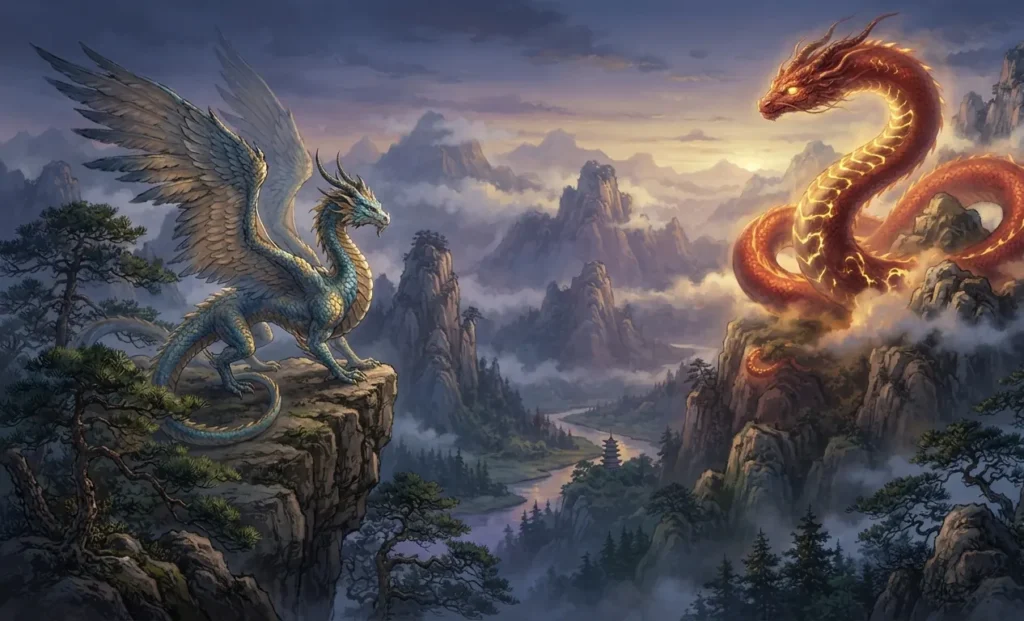
Yinglong is the winged dragon who served the Yellow Emperor in his legendary wars against the rebel Chi You, using rain and flooding as weapons.
Zhulong is the vast Torch Dragon whose opening and closing eyes are said to create day and night itself.
The Shanhaijing was compiled over an extended period generally placed from the Warring States era through the Han Dynasty, roughly the fourth century BCE through the first century CE, though it clearly draws on considerably older oral material.
This puts China’s written dragon narratives later than most of the Near Eastern and South Asian figures on this list, even while its jade carved dragon imagery, mentioned at the start of this article, may be the oldest dragon related artifact in the entire world.
Attested: Shanhaijing compilation, roughly fourth century BCE to first century CE.
Quick Reference Table
| Dragon | Culture | Earliest Attestation |
|---|---|---|
| Ningishzida’s Dragon | Sumer | Circa 2100 BCE |
| Tiamat | Babylon | Second millennium BCE (composition) |
| Mušḫuššu | Babylon | Circa 2300 BCE (artistic type) |
| Apep | Egypt | Circa 2055 to 1650 BCE |
| Illuyanka | Hittite Anatolia | Circa fourteenth century BCE |
| Lotan | Ugarit and Canaan | Circa fourteenth to twelfth century BCE |
| Vritra | Vedic India | Circa 1500 to 1200 BCE |
| Aži Dahāka | Persia | Debated, pre mid first millennium BCE |
| Leviathan | Ancient Israel | Debated by book, later than Lotan |
| Python | Greece | Circa seventh century BCE |
| Yinglong and Zhulong | China | Circa fourth century BCE to first century CE |
Frequently Asked Questions
Which dragon on this list is genuinely the oldest?
By written narrative, the Sumerian dragon associated with Ningishzida, attested around 2100 BCE, has the strongest claim. By physical artifact, Chinese Hongshan jade dragon carvings, dated between 4700 and 2900 BCE, are considerably older than any written dragon myth on this list.
Why isn’t Jörmungandr, the Norse world serpent, on this list?
Norse mythology survives mainly through texts like the Prose Edda, written down in the thirteenth century CE, thousands of years after every figure on this list. Older oral tradition likely existed, but the documented written record is genuinely much younger.
Are Lotan and Leviathan actually the same creature?
They’re closely related rather than strictly identical. Leviathan in the Hebrew Bible draws directly on the earlier Ugaritic Lotan tradition, sharing the name’s linguistic root and the core image of a chaotic sea serpent, though each culture developed its own specific theological framing.
Why do so many ancient dragons get defeated by storm gods specifically?
Storm gods across Mesopotamian, Hittite, Vedic, and Persian traditions repeatedly battle water hoarding or chaos associated serpents. Many scholars connect this pattern to a shared ancient Indo-European or broader Near Eastern mythological structure, reflecting agricultural societies whose survival depended entirely on rainfall.
Does the Chinese dragon tradition actually predate Mesopotamia’s?
In physical artifact form, quite possibly yes, since Hongshan jade dragon carvings predate Sumerian cuneiform writing itself. In written narrative form, no, since China’s earliest surviving dragon texts come many centuries after Sumerian, Babylonian, Egyptian, and Hittite dragon myths were already recorded.
Final Thoughts
Eleven dragons, spanning roughly three thousand years of documented human storytelling before we even reach the Common Era, and one honest complication sitting at the very start of the list that the strict chronology can’t fully resolve.
What strikes me most after tracing this out properly is how often these ancient dragons cross paths with each other without anyone intending it.
Lotan becomes Leviathan. Vritra and Aži Dahāka share a common ancestor buried somewhere in a language nobody speaks anymore. The dragon, it turns out, was never really one culture’s invention. It kept getting reinvented, borrowed, and passed along, long before anyone thought to write any of it down.
Related Articles
- Dragon Mythology: How Dragons Are Depicted Across Cultures
- Chinese, Japanese & Korean Dragons: How They Actually Differ
- 7 Eastern Dragon Facts Most People Believe But Are Wrong
- Why Dragons Are Almost the Perfect Mythological Creature
- What If Dragons Were Real? Here’s What Would Happen
- 14 Most Iconic Anime Dragons You Should Recognize
- 15 Elemental Dragon Types in Fantasy: Fire, Ice & Beyond
- What Is the Largest Dragon in Mythology? [Real Answer]
References
- Hongshan Culture Jade Dragons | The UNESCO Courier
- Stephanie Dalley – Myths from Mesopotamia
- Metropolitan Museum of Art – Mušḫuššu Dragon
- British Museum – Apophis
- John Day – God’s Conflict with the Dragon and the Sea
- Encyclopaedia Iranica – Aži Dahāka
- Richard E. Strassberg – A Chinese Bestiary
- Jamison & Brereton – The Rigveda
- Gary Beckman – Hittite Myths
- The Homeric Hymns to Apollo and Hermes In Contemporary Translation/Adaptation
Written by Batin Khan, a curious free spirit who loves reading and exploring the worlds of fantasy, mythology, and ancient stories. Through this blog, Batin hopes to share that sense of wonder with readers while building an exciting future along the way.