
 By
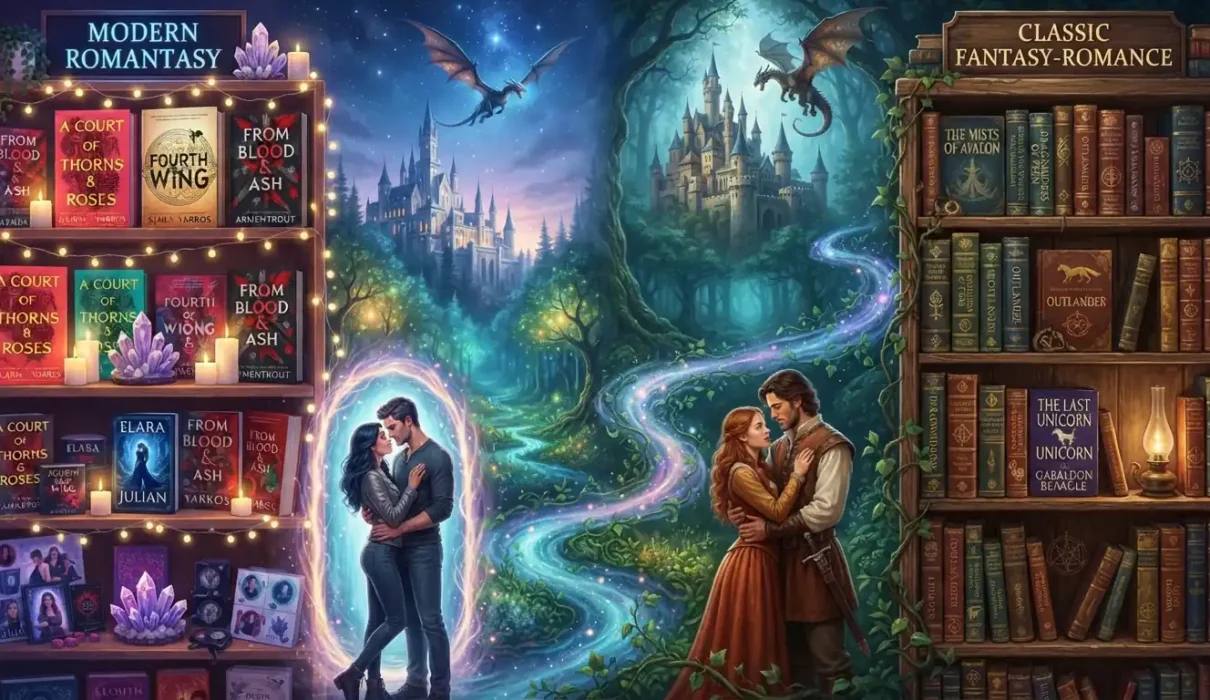
By Is romantasy a real genre? Ask a publisher what romantasy is, and they’ll describe a genre. Ask a skeptical reader, and they’ll roll their eyes and call it a sticker slapped on old wine.
I’ve spent a long time reading in this space, and I think both people are half right. The honest answer isn’t a coin flip between “real genre” and “just marketing.” It’s more specific than that, and the paperwork actually backs it up.
Let me show you what I mean, starting with where the word came from.
Where the Word Came From
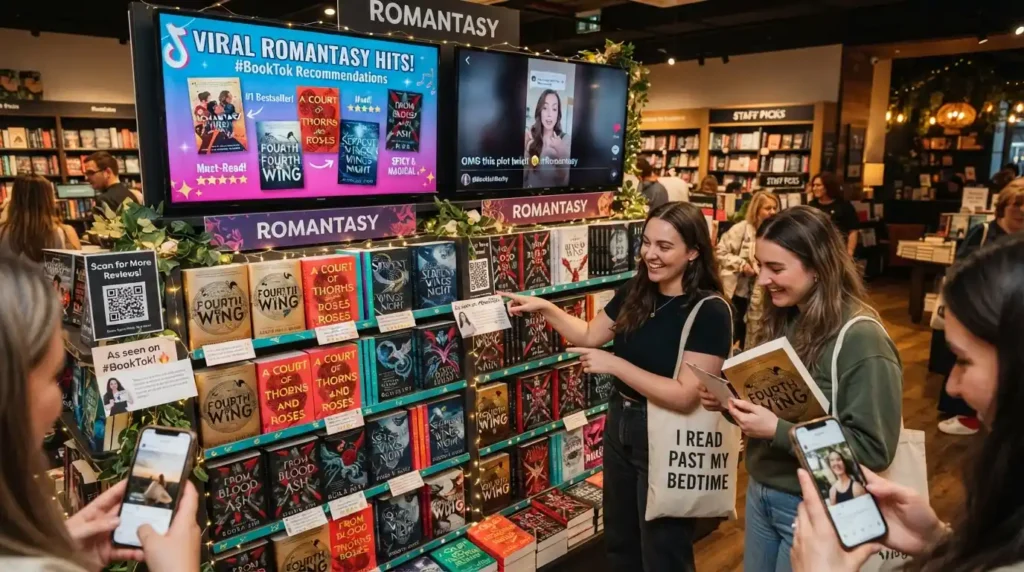
“Romantasy” isn’t a 2023 invention. An Urban Dictionary entry defining it as a fantasy and romance hybrid dates back to 2008, more than a decade before anyone was chasing it on TikTok.
Bloomsbury, Sarah J. Maas’s publisher, has claimed credit for coining the term, according to reporting in The Guardian. That claim runs directly into the 2008 entry, and nobody has fully reconciled the two stories.
What’s not in dispute is the timeline of when it actually mattered. The term barely circulated among publishers or readers until late 2022, when Maas’s books and their peers took off on BookTok.
By 2023, the shift was measurable. Circana, the market research firm that tracks real retail sales, reported a 42 percent jump in romantasy sales between 2022 and 2023.
That’s a genuine commercial event. It just isn’t the same thing as a word being invented from nothing.
What the Industry’s Own Paperwork Says
The Code Nobody Renamed
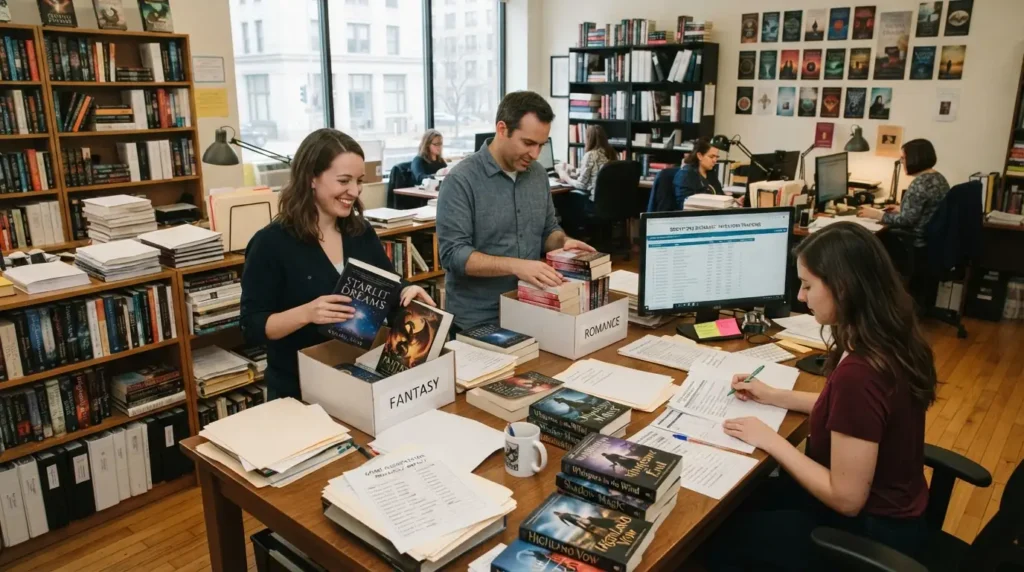
Every book sold through a North American bookstore or major retailer gets filed under a BISAC code, a standardized subject heading maintained by the Book Industry Study Group. These codes are what actually route a book to a shelf or a search result.
The code publishers use for books like this isn’t new. FIC027030, “Fiction, Romance, Fantasy,” has existed in the BISAC system for years, well before “romantasy” became a buzzword.
As of the current published editions, there’s no separate BISAC code for “romantasy” itself. The backend filing system never changed. Only the word customers see changed.
A Buzzword Riding on an Old Filing System
This matters because it draws a clean line between two different things people mean by “genre.” One is the formal industry classification a book is actually filed under. The other is what a reader calls it out loud.
Right now, romantasy lives entirely in the second category. It’s a reader-facing label sitting on top of a classification code that predates it.
BISAC does add new codes every year based on industry requests. If romantasy eventually gets its own heading, that would be a real signal the industry has decided to formalize it. It hasn’t happened yet.
The Older Genre Hiding Under the New Name
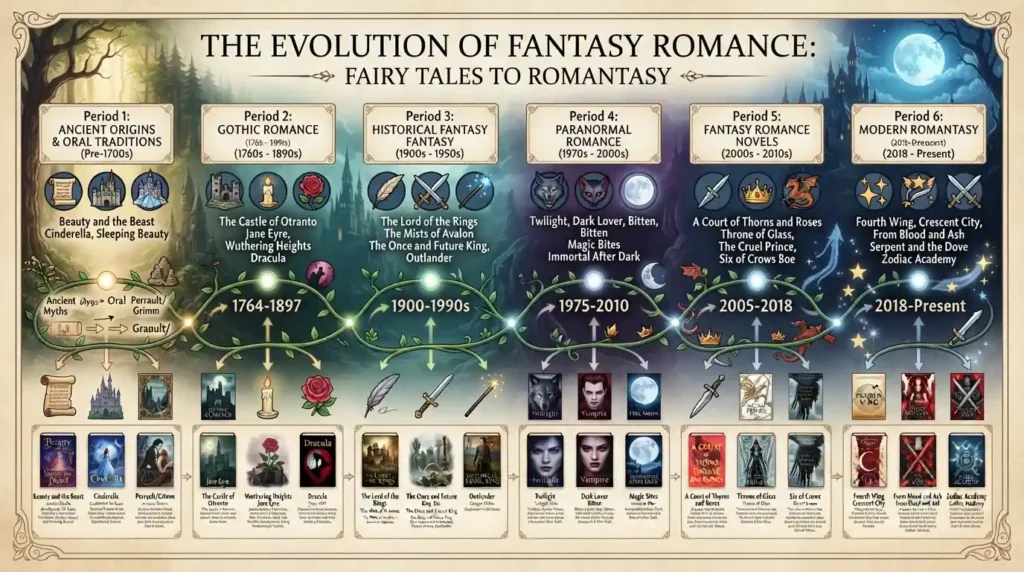
The Science Fiction and Fantasy Writers Association has made a version of this same argument directly, describing romantasy as an old genre wearing a new name.
Emma Bull’s War for the Oaks, published in 1987, is frequently cited as an early example. Full fantasy worldbuilding with a genuine central romance, decades before anyone called it romantasy.
C.L. Wilson’s Lord of the Fading Lands followed in 2007, the same general era as that Urban Dictionary entry.
Go back further and Robin McKinley’s Beauty, from 1978, fits the same pattern: a fully realized fantasy world where the love story isn’t decoration. It’s the point.
None of these books needed the word “romantasy” to work. Readers found them, loved them, and kept recommending them for decades under whatever label the shelf gave them that year.
The One Rule That Tests Whether It’s a Genre
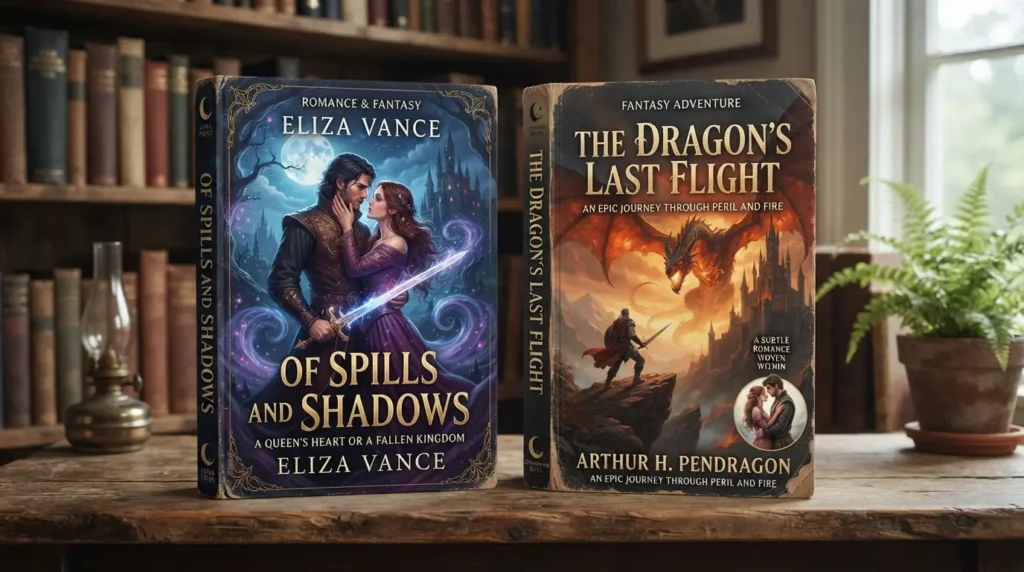
Here’s a more useful question than “is romantasy real.” Does it follow an actual structural rule, the way genres do, or does it just share some vibes and a shelf?
Romance Writers of America has a famously strict definition of its own genre. A romance novel needs “a central love story and an emotionally satisfying and optimistic ending.”
That second half is the part people underestimate. Readers genuinely revolt when it’s missing.
Books with a central relationship and a tragic or ambiguous ending, like Me Before You, don’t get counted as romance at all, no matter how central the love story is.
Romantasy, by and large, keeps that rule. Readers expect the couple to end up together, or clearly headed there, even inside sprawling multi-book fantasy plots.
That’s not a coincidence. It’s romantasy inheriting the single hardest structural requirement Romance actually has.
A blend that borrowed fantasy’s worldbuilding but ignored romance’s core rule would be a much weaker case for calling this a genre. This one didn’t ignore it.
Why “Just Marketing” Sells Readers Short
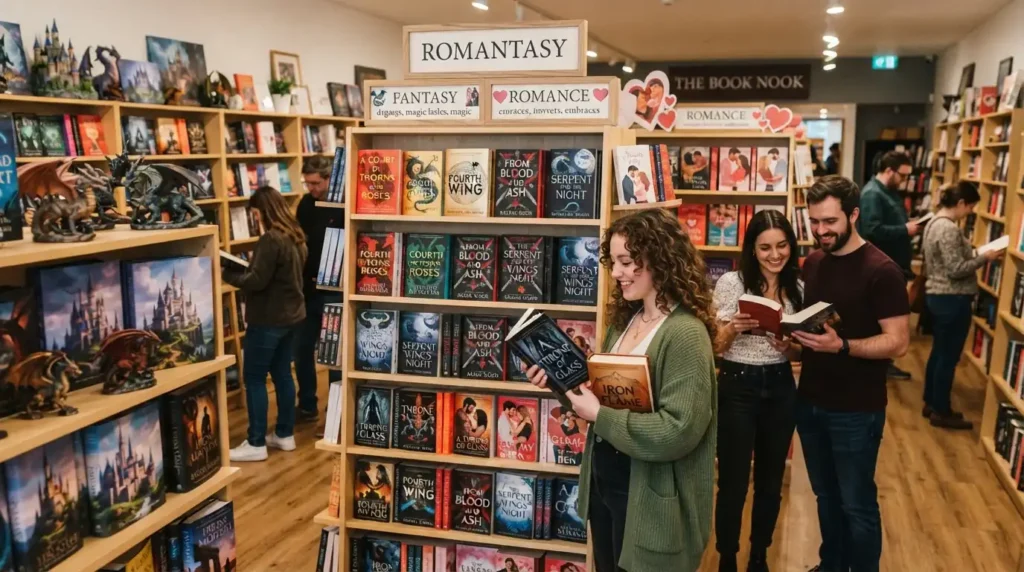
I want to push back on the dismissive version of this argument too, because it isn’t fair either.
Young Adult isn’t a genre in the traditional sense. It’s an age category that spans fantasy, contemporary, horror, and everything else. Nobody seriously argues YA doesn’t function as a real, useful category anyway.
New Adult followed a similar path: a marketing gap identified around 2009, deliberately filled by publishers, that readers then adopted as shorthand for something specific. The label came first, and it still ended up meaning something.
There’s a real, fair critique buried in the skepticism, though. Some critics have pointed out that heavy trope marketing on BookTok risks pushing authors toward interchangeable tropes over original craft.
That’s a legitimate concern about the current business incentives.
But that’s a critique of publishing practice, not proof the underlying story type is fake. Fantasy plus romance was working long before the incentive structure got this intense.
Is Romantasy A Real Genre – The Test
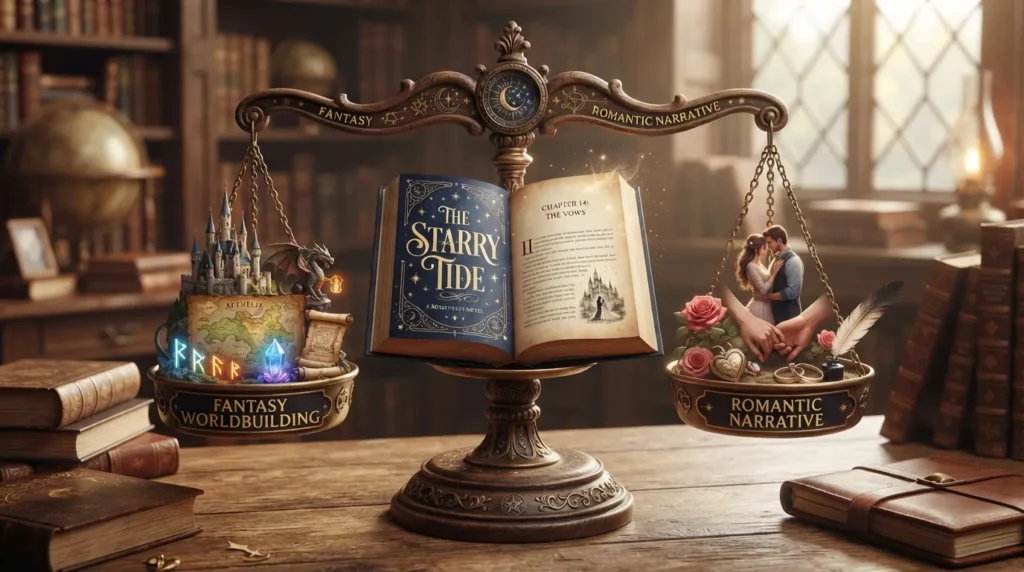
Next time someone asks you whether romantasy is a real genre, skip the yes or no. Ask which claim they’re actually making.
If they mean “did publishers market this hard and recently,” the answer is clearly yes. If they mean “is there a coherent story type underneath the marketing,” the answer is also yes, and it’s been there since at least 1978.
What’s genuinely new isn’t the fusion of fantasy and romance. It’s the volume, the speed, and the fact that a term born on Urban Dictionary now moves millions of copies before the industry’s own paperwork has caught up to it.
Frequently Asked Questions
Is Emma Bull’s War for the Oaks still commonly read by romantasy fans today?
It remains a respected foundational text among readers interested in the genre’s history, though its 1987 publication and different marketing era mean it’s less commonly discovered through the same BookTok driven discovery channels currently driving new romantasy readership.
Why did Bloomsbury claim to have coined the term if it already existed?
Publishers often claim credit for popularizing a term they didn’t originate, especially once it becomes commercially valuable. The distinction between coining a word and mainstreaming it gets blurred in marketing narratives fairly often.
Are all romantasy books marketed as adult fiction?
No. Some romantasy leans New Adult or crosses over from YA fantasy that got reclassified after the fact, like early Sarah J. Maas titles. The line between YA fantasy and adult romantasy is inconsistently applied across publishers.
Does self publishing play a larger role in romantasy than in other current fiction categories?
Independent authors have driven a significant share of romantasy’s growth, with several major traditionally published successes, including Quicksilver, originating as self published titles before being acquired, a pipeline that’s become notably more common in this category specifically.
Could romantasy eventually split into multiple separate BISAC headings rather than gaining just one?
It’s plausible, given how specific some current subcategories already are in reader discussion, fae romantasy, dragon rider romantasy, academy romantasy, any of which could theoretically justify its own heading if industry wide demand and consistent usage were demonstrated over time.
Final Thoughts
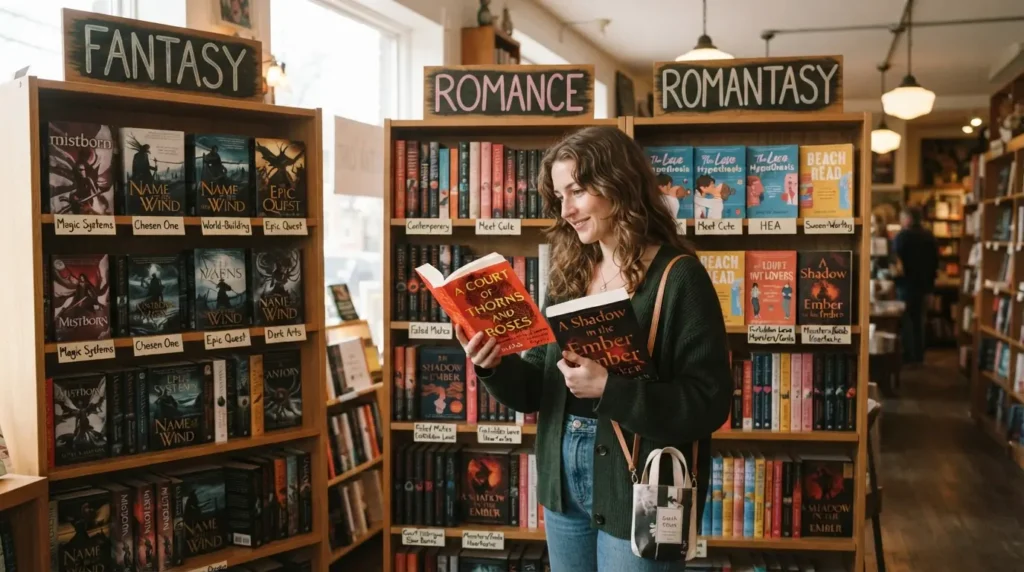
Romantasy is further along toward being a real genre than its skeptics generally credit, and further from formal recognition than its enthusiasts generally admit.
Both facts sit comfortably next to each other, because genre formation was never a single finish line to cross. It’s a process currently underway, and this is what the middle of that process actually looks like from the inside.
Related Articles
- What Is Romantasy? The Genre Taking Over Fantasy
- Why Dragons Took Over Romantasy, Thanks to Fourth Wing?
- Fourth Wing Review: Enjoyable, Not Groundbreaking
- Why Fated Mates Are So Hard to Put Down
- Why Enemies To Lovers Works So Well in Romantasy
- Why Romantasy Connects So Deeply With Female Readers
- Why Romantasy Solves a Problem Traditional Romance Has
- Why Romantasy Readers Love Dangerous Men
Sources & References
- BISAC Subject Codes – Book Industry Study Group
- About the Romance Genre – RWA
- Adult Fiction Outperforms the U.S. Book Market | Circana
- A genre of swords and soulmates: the rise and rise of ‘romantasy’ novels | Books | The Guardian
- St. Martin’s New Adult Contest | Uncreated Conscience
- War for the Oaks: A Novel – Emma Bull
Written by Batin Khan, a curious free spirit who loves reading and exploring the worlds of fantasy, mythology, and ancient stories. Through this blog, Batin hopes to share that sense of wonder with readers while building an exciting future along the way.