
 By
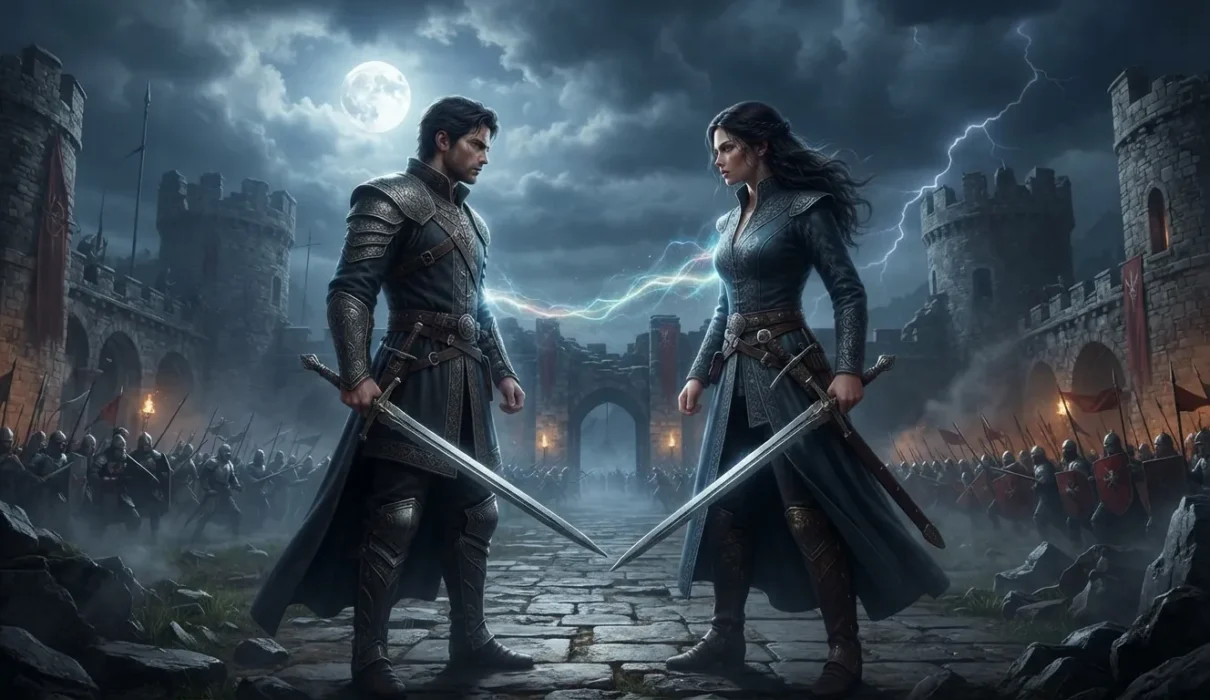
By Enemies to lovers runs everywhere in fiction, from workplace romance to historical drama. Romantasy has an unfair advantage at it, and the advantage is physiological rather than literary.
Contemporary romance has to manufacture the conditions this trope needs. Romantasy gets them for free, because its characters are already terrified.
The 1974 Study That Explains More Than It Should
The Setup on Capilano Canyon
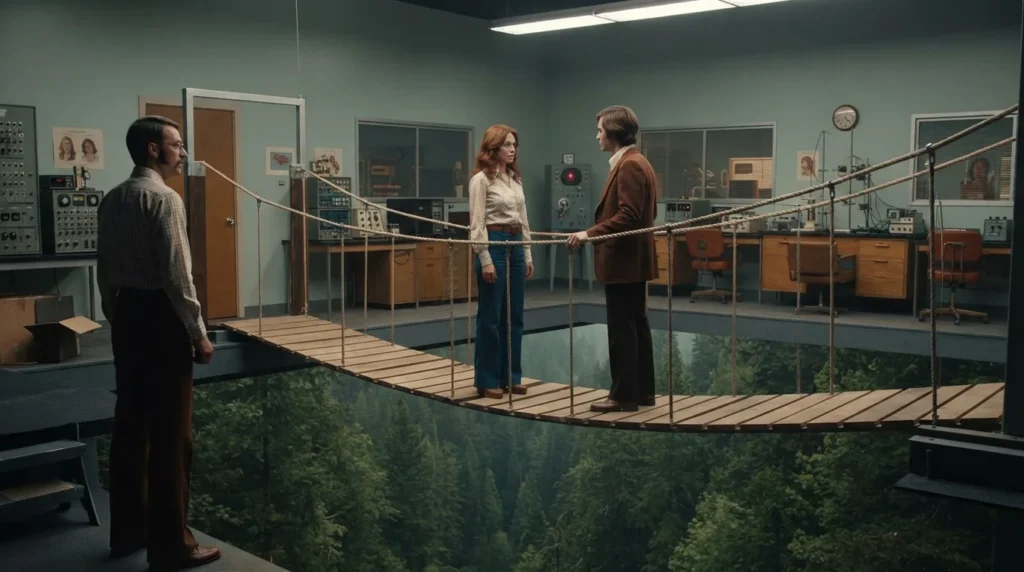
Psychologists Donald Dutton and Arthur Aron ran an experiment in Vancouver in 1974, published in the Journal of Personality and Social Psychology under the title Some Evidence for Heightened Sexual Attraction Under Conditions of High Anxiety.
Men crossed one of two bridges. The first was a swaying suspension bridge suspended high above Capilano Canyon, genuinely frightening to cross. The second was a low, sturdy bridge that produced no fear response at all.
An attractive female researcher stopped each man partway across and asked him to complete a Thematic Apperception Test, writing a short story about a deliberately non-sexual ambiguous image. She then offered her phone number in case he had further questions.
What the Results Showed
Men from the suspension bridge wrote stories containing significantly more sexual content than men from the safe bridge. They were also a lot more likely to actually call her afterward.
The Control Conditions Make the Case
This is the part that convinced me the finding is real rather than coincidental. When Dutton and Aron ran the same experiment with a male researcher instead, the effect vanished entirely. When they ran it on the safe bridge, it vanished again.
Fear alone produced nothing. An attractive person alone produced nothing. Only the combination generated the result.
The Mechanism Underneath
The body produces a specific physiological state under fear: elevated heart rate, faster breathing, increased blood flow. Those symptoms overlap almost exactly with physical attraction.
The brain, noticing arousal but not automatically knowing its cause, searches the immediate environment for the most plausible explanation. On a swaying bridge with an attractive stranger, it frequently picks the stranger.
Why Romantasy Exploits This Better Than Contemporary Romance
Contemporary Settings Have to Fake It
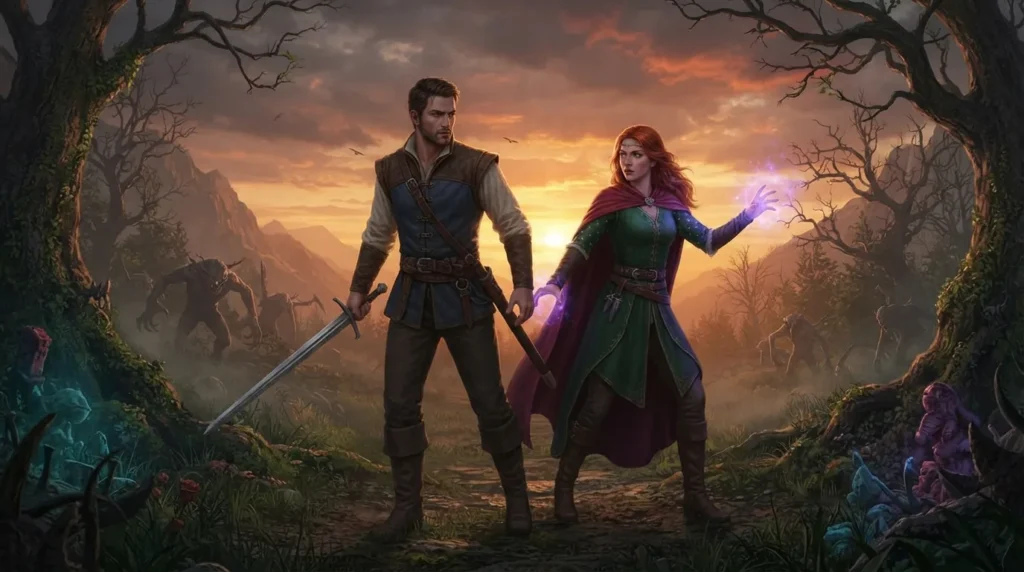
A workplace enemies to lovers romance has to generate physiological arousal from social sources: a heated argument, professional humiliation, a rivalry with career stakes. These produce genuine stress responses, but modest ones.
The author is essentially working with the safe bridge and hoping it feels like the suspension bridge.
Romantasy Has Real Lethal Danger Available
Fourth Wing opens with Violet Sorrengail crossing a narrow parapet where falling means dying, at a war college that kills a percentage of its own students on purpose. Cadets die in the opening stretch.
Every scene between Violet and Xaden Riorson takes place inside that environment. The physiological arousal isn’t manufactured through argument. It’s the baseline condition of simply attending this school.
The Advantage Compounds Across a Whole Book
Contemporary romance gets isolated moments of heightened arousal. Romantasy sustains the condition across hundreds of pages, because the characters are continuously in genuine danger from dragons, war, magic, and institutional violence.
That’s not a small difference. It’s the difference between crossing the suspension bridge once and living on it.
The Hostility Is Structural Rather Than Personal
Contemporary Enemies Usually Dislike Each Other for Reasons
A bad first impression. Competing for the same promotion. An ex who behaved badly. These are real reasons, and they’re also reasons that can be talked through, which limits how long the hostility can plausibly hold.
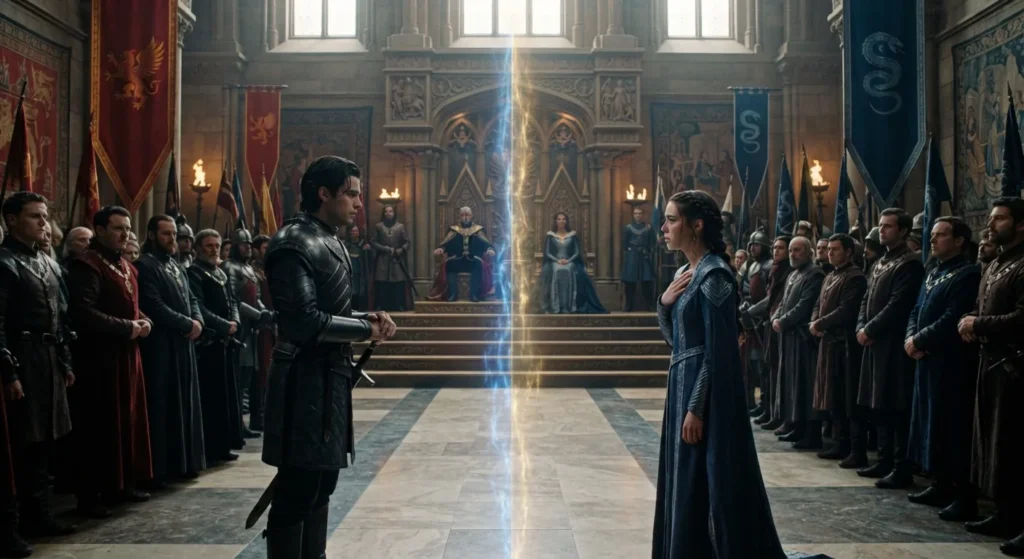
Romantasy Enemies Are Frequently on Opposite Sides of a War
Xaden’s father was executed as a rebel leader by Violet’s mother. That’s not a misunderstanding either of them can clear up over a conversation. It’s a structural position neither one chose, inherited from a conflict that predates their meeting.
Holly Black’s The Cruel Prince does something comparable through species and status rather than politics.
Jude is a human raised in a faerie court that genuinely holds humans in contempt, and Cardan’s cruelty toward her reflects that structural contempt rather than a personal grievance she could resolve by explaining herself.
Why Structural Hostility Reverses More Powerfully
When hostility comes from an inherited structural position, abandoning it requires a character to break with something larger than their own opinion: a family loyalty, a political allegiance, an entire society’s expectations.
That’s a much higher cost than changing a personal opinion, and higher cost produces more emotional payoff when the change finally happens.
The Literary Ancestors Are Older Than the Genre

Beatrice and Benedick, 1598
Shakespeare’s Much Ado About Nothing gives us two characters engaged in what the play itself calls a merry war, trading insults with real skill and apparent enjoyment before their friends manipulate them into recognizing what’s underneath it.
The template was fully formed over four centuries ago, including the specific detail that both parties are clever and genuinely enjoy the fighting.
Elizabeth and Darcy, 1813
Jane Austen’s Pride and Prejudice adds something Shakespeare’s version doesn’t emphasize: that both parties are actually wrong about each other in specific, correctable ways. Elizabeth misjudges Darcy’s character. Darcy genuinely behaves badly and has to change.
The mutual correction is the innovation, and it’s the element modern versions most often drop.
What Both Classics Have That Weak Modern Versions Lose
In both cases, the hostility is intellectually engaged rather than purely emotional. Beatrice and Benedick are matching wits. Elizabeth and Darcy are making genuine arguments about character and conduct.
Weak enemies to lovers substitutes generic antagonism for actual intellectual friction, which loses the specific pleasure of watching two capable people take each other seriously enough to fight properly.
The Uncertainty Romantasy Generates That Romance Alone Can’t
The Happy Ending Convention Removes One Question
Romance as a genre operates on a structural promise: an emotionally satisfying and optimistic ending for the central relationship. Readers know going in that these two will end up together.
That certainty removes one kind of tension entirely, and it’s a real cost the genre accepts in exchange for the specific comfort that guarantee provides.
Lethal Stakes Restore a Different One
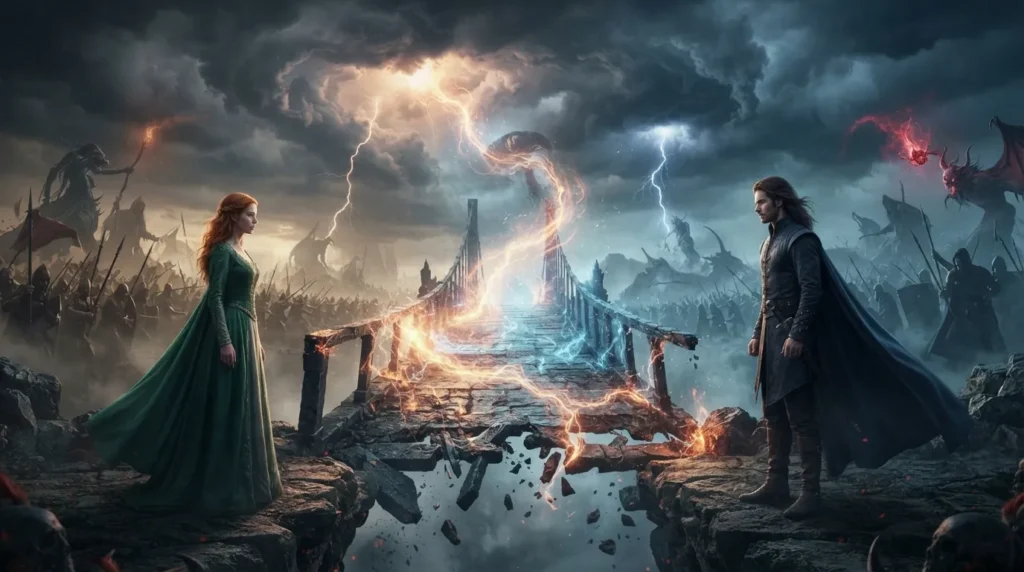
Romantasy’s real physical danger reintroduces uncertainty through a different door. You know the couple will resolve. You genuinely don’t know who else survives, what it costs, or what either of them has to become to get there.
Fourth Wing’s war college mortality rate does exactly this. The romance’s outcome is conventionally guaranteed. The specific price of reaching it isn’t.
The Dutton and Aron Study Isn’t Beyond Criticism
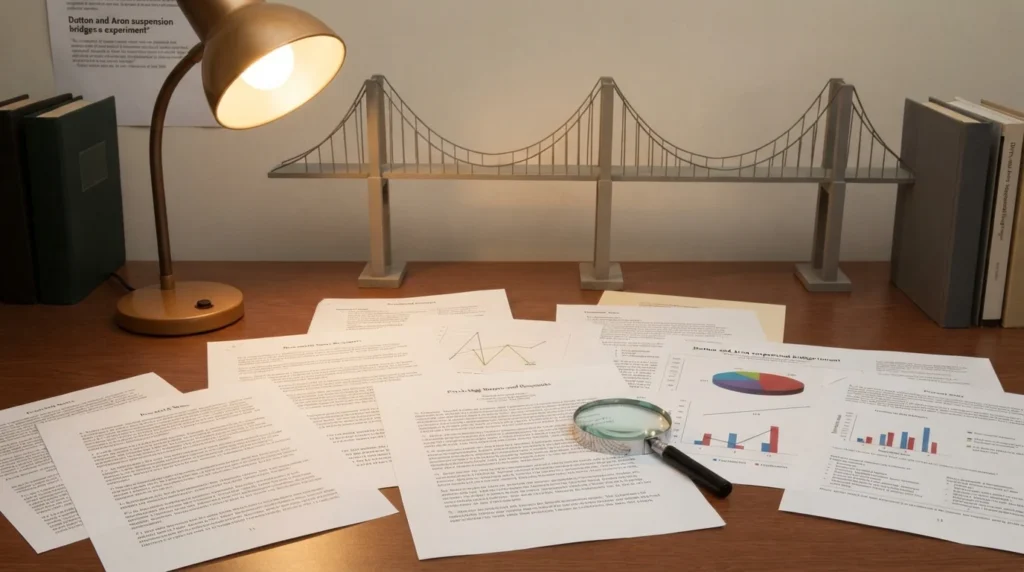
I’ve leaned on a fifty-year-old social psychology finding, and that deserves scrutiny rather than uncritical acceptance.
The study has faced real methodological criticism, including the reasonable objection that men choosing to cross a frightening suspension bridge might simply be more risk tolerant ad more socially bold than men choosing the safe one, which would produce the same results through a completely different mechanism.
Social psychology as a field has also weathered a serious replication crisis over the past decade, and classic findings from this era generally warrant more caution than they received when I first encountered them.
The broader arousal transfer principle has held up reasonably well across subsequent research, but I’d rather flag the uncertainty than pretend the bridge study settles anything definitively.
The Trope Has a Real Consent Problem
More importantly, there’s a real criticism of enemies to lovers that deserves direct engagement rather than deflection.
The line between compelling hostility and depicted abuse is genuinely thin, and plenty of executions cross it.
Cardan’s treatment of Jude in The Cruel Prince includes sustained cruelty that the narrative doesn’t excuse, and readers disagree legitimately about whether the eventual romantic turn adequately reckons with it.
I don’t think the trope is inherently guilty of this. I do think a version where one party’s hostility involves real, unaddressed harm, and the story simply moves past it once attraction arrives, is doing something worth criticizing rather than defending on genre grounds.
What Separates Strong Execution From Weak
The Hostility Needs to Cost Something to Abandon
If a character can drop their enmity without giving anything up, the enmity was never structurally real. Strong versions make abandoning hostility require an actual sacrifice: a broken loyalty, a rejected inheritance, a position surrendered.
Both Parties Need Genuine Agency in the Reversal
The weakest executions have one character simply wearing the other down. The strongest have both parties actively revising their position based on new information, the way Austen structured it two centuries ago.
Mutual correction, not conquest.
Frequently Asked Questions
Is excitation transfer theory the same thing as misattribution of arousal?
They’re closely related. Dolf Zillmann’s excitation transfer theory describes how residual physiological arousal from one event intensifies emotional response to a following event, offering a broader framework that the misattribution finding fits within as a specific case.
Does the enemies to lovers trope appear in non-Western literary traditions?
Yes, in various forms. Chinese classical drama and Japanese literature both contain antagonistic pairings that resolve romantically, though the specific conventions and expected resolutions differ quite a bit from the Shakespearean and Austen-derived template dominating English-language romance.
Why do some readers strongly dislike this trope despite its popularity?
Common objections include concern that it romanticizes hostility as attraction, frustration with executions where real harm goes unaddressed, and simple preference for watching affection build from mutual respect rather than requiring an antagonistic starting point first.
Is there a term for enemies to lovers where only one party is genuinely hostile?
Readers sometimes describe this as one-sided enemies to lovers or unrequited antagonism, though no single standardized term has emerged. It’s structurally distinct from mutual hostility and generally considered harder to execute without consent concerns.
Do romance publishers track enemies to lovers as a distinct marketable trope?
Yes. It functions as a searchable marketing tag across retailer categories, publisher marketing copy, and reader discovery platforms, sitting alongside terms like fated mates and forced proximity as recognized shorthand readers actively search for.
Final Thoughts
Two people who genuinely want each other dead, trapped somewhere with a real chance neither survives the week. Dutton and Aron would have needed a permit for that. Romantasy just calls it Tuesday at the war college.
That’s the actual advantage, and it explains why a trope four centuries old still lands hardest inside the newest genre using it.
Related Articles
- What Is Romantasy? The Genre Taking Over Fantasy
- Why Dragons Took Over Romantasy, Thanks to Fourth Wing?
- Fourth Wing Review: Enjoyable, Not Groundbreaking
- Why Fated Mates Are So Hard to Put Down
- Is Romantasy Actually a Genre or a Marketing Label?
- Why Romantasy Connects So Deeply With Female Readers
- Why Romantasy Solves a Problem Traditional Romance Has
Written by Batin Khan, a curious free spirit who loves reading and exploring the worlds of fantasy, mythology, and ancient stories. Through this blog, Batin hopes to share that sense of wonder with readers while building an exciting future along the way.