
 By
By Frodo Baggins is a chosen one. He is also one of fantasy’s most reluctant heroes. If these two archetypes were genuinely opposed, that sentence wouldn’t work, and yet it describes the most influential fantasy protagonist of the last century without any contradiction at all.
The comparison in this article’s title is the wrong comparison. Sorting out why gives you a much sharper tool for reading and writing heroes than picking a winner ever would.
They Answer Two Different Questions
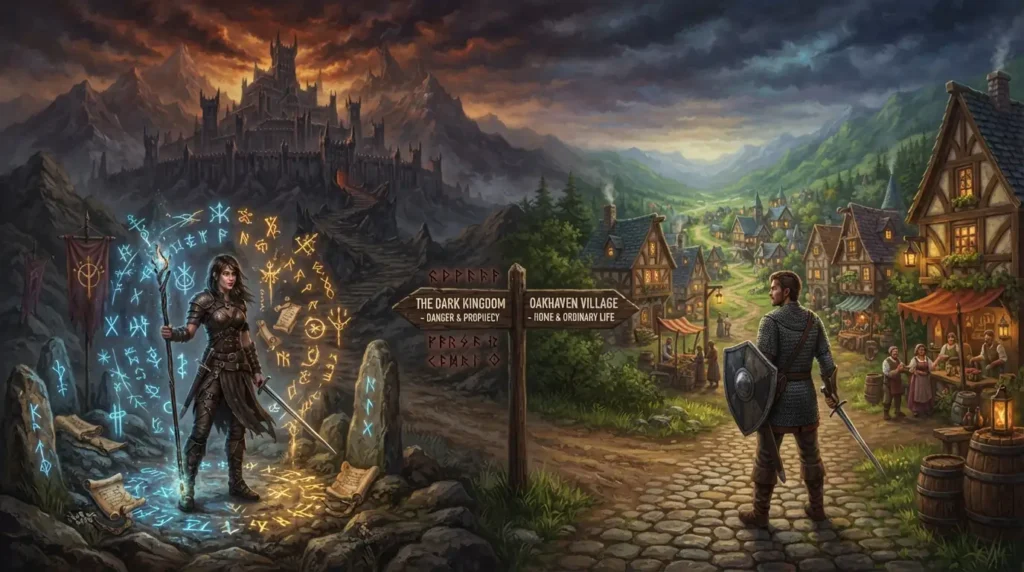
Chosen One tells you why a character matters. Prophecy, bloodline, some external authority selecting them before they’ve done anything to deserve selection.
Reluctant Hero tells you how a character feels about mattering. It’s a disposition, not a credential.
One is about legitimacy. The other is about consent. A character can hold any combination of the two, which means they aren’t opposites in any useful sense.
The Real Opposites
The real opposite of Chosen One is the Self-Made Hero, someone whose significance comes from what they built rather than what was assigned to them. Aerin in Robin McKinley’s The Hero and the Crown teaches herself dragon slaying through repeated failure and burns, with no prophecy involved.
The real opposite of Reluctant Hero is the Eager Hero. Conan wants the fight. Locke Lamora wants the score. Neither needs persuading into a plot.
Campbell Built Refusal Into the Chosen Structure
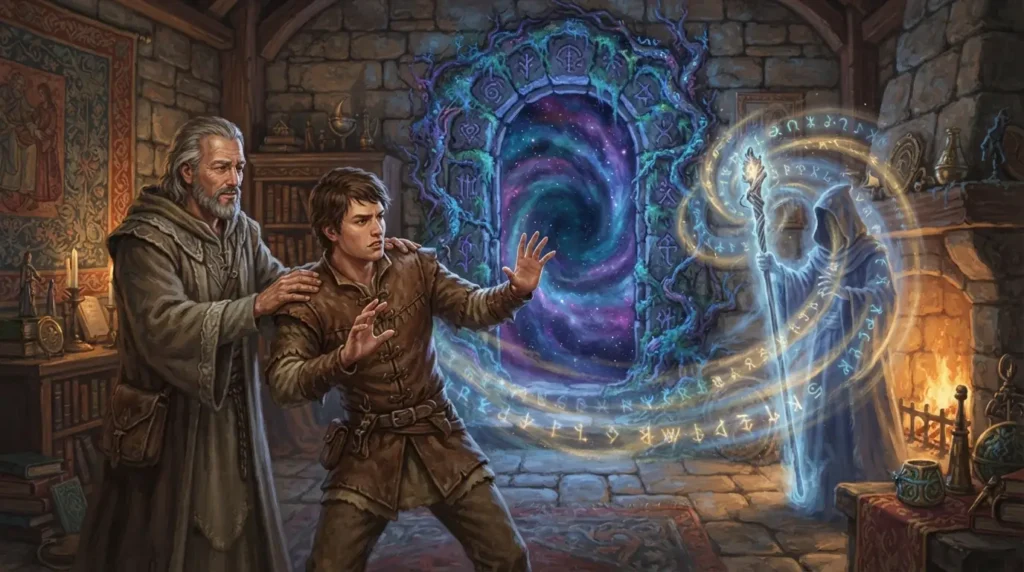
Joseph Campbell’s 1949 book The Hero with a Thousand Faces lays out a hero pattern he called the monomyth, and one of its named stages is the Refusal of the Call.
That’s reluctance written directly into the same model that describes the chosen hero’s journey. Campbell wasn’t treating refusal as an alternative to being called. He treated it as a normal response to being called.
Campbell’s work has drawn substantial, legitimate criticism from folklorists for flattening genuinely distinct cultural traditions into one universal template, so I’d treat the monomyth as an influential framework rather than settled fact. His observation about refusal still holds regardless of what you think of the larger system.
The Ancient Texts Agree
Moses at the burning bush in Exodus doesn’t accept his commission. He raises objection after objection, asking who he is to go, protesting that he isn’t eloquent, and eventually asking outright that someone else be sent instead.
Jonah receives his call and immediately boards a ship going the opposite direction. Jeremiah’s stated objection is that he’s too young to speak.
Three of the most consequential chosen figures in Western religious tradition all open with refusal. The reluctant chosen one isn’t a modern subversion of an older confident archetype. It’s roughly as old as the archetype itself.
The Grid That Sorts Heroes
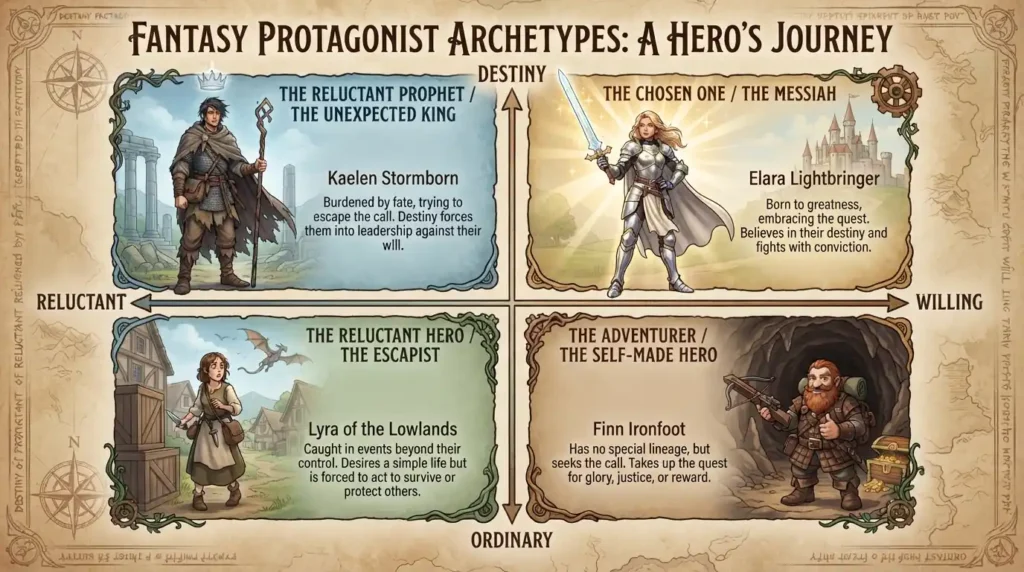
Treating selection and willingness as separate axes produces four quadrants rather than two camps.
| Reluctant | Willing | |
|---|---|---|
| Chosen | Frodo, Moses, Luke Skywalker | Aragorn, Wonder Woman |
| Self-Made | Logen Ninefingers, Geralt | Conan, Locke Lamora, Aerin |
Chosen and Reluctant
The overcrowded quadrant, and the one most people picture when they hear either term. Frodo receives the Ring by inheritance and accident, then volunteers at the Council of Elrond specifically because nobody else will, in a moment the text frames as dread rather than triumph.
Luke Skywalker tells Obi Wan he can’t get involved, has too much work at the farm, and only changes course after the farm is destroyed with his aunt and uncle on it. The refusal is real until circumstance removes the option.
Chosen and Willing
Underused and undervalued. Aragorn in the books carries his lineage with a lot more confidence than the films gave him, and Peter Jackson’s adaptation specifically added hesitation the source material didn’t have.
That change tells you something about contemporary taste. Modern audiences apparently find an eager chosen one harder to like, and adaptations respond by manufacturing doubt.
Self-Made and Reluctant
Logen Ninefingers in Joe Abercrombie’s First Law trilogy has no prophecy and no bloodline. His reluctance isn’t about accepting a call. It’s about what he becomes when the Bloody Nine takes over, a persona he genuinely can’t control or predict.
Geralt of Rivia builds his entire stated philosophy around refusing to take sides, and the plots consistently make that neutrality impossible to maintain.
Self-Made and Willing
The oldest configuration in adventure fiction and the least fashionable now. Conan wants what he wants and goes after it. Locke Lamora runs elaborate cons because running elaborate cons is who he is.
Aerin belongs here too, and the specific pleasure of her arc is watching competence accumulate through failure rather than arrive through prophecy.
So Which One Makes a Better Story
Since the question deserves a real answer rather than a dodge: reluctance does more narrative work than chosenness, and it isn’t close.
Chosenness is a premise. It establishes stakes before the story starts and then largely sits there. Once the prophecy is revealed, it generates no further scenes on its own.
Reluctance is a conflict. It generates scenes continuously, because every chapter can ask whether this person will actually do the thing, and every answer costs something.
The Practical Difference
Strip the prophecy out of most chosen one stories and the plot survives with a shrug. Strip the reluctance out and you often lose the entire second act, because the second act was the reluctance eroding.
That’s the honest case for reluctance. Not that it’s more sophisticated or more realistic, but that it produces pages.
How Each One Fails
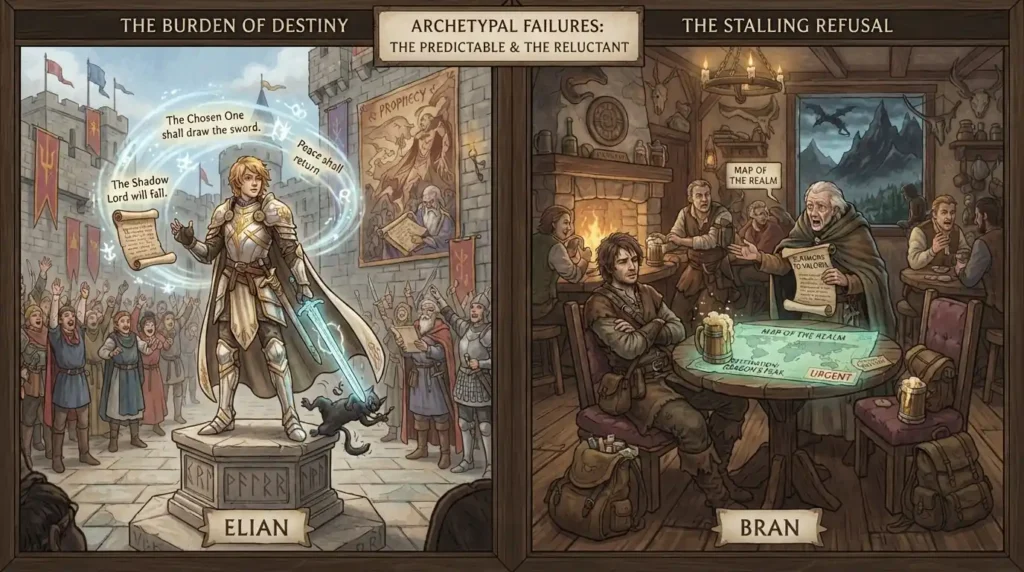
When Chosenness Collapses
I’ve argued in my chosen one blog post that the backlash against chosen one narratives targets unearned specialness rather than destiny itself. A protagonist who receives world-saving importance without paying any visible, ongoing price reads as a shortcut, and readers notice even when they can’t name what feels hollow.
Rand al’Thor works despite being prophesied by name because The Wheel of Time attaches escalating psychological cost to that status across the series.
When Reluctance Collapses
The failure mode here is reluctance that evaporates on schedule. Three chapters of protesting, one motivational speech from a mentor, and the character is fully committed for the remaining four hundred pages.
That isn’t reluctance. It’s a delay. Genuine reluctance recurs, costs something each time it’s overcome, and leaves residue afterward.
Kaladin in Brandon Sanderson’s Stormlight Archive is the clearest counterexample. His resistance to leadership stems from depression and repeated loss. It returns across multiple books rather than resolving once, and the returns aren’t treated as backsliding.
A Test You Can Apply
Four questions that sort any protagonist quickly.
Who decided this person matters? An external authority puts them in the Chosen row. Their own accumulated actions put them in Self-Made.
Does the character want the role? Willing or Reluctant, and answer this about the whole book rather than chapter one.
Does the reluctance recur, or does it resolve permanently after one conversation? Recurring reluctance is a genuine engine. One-time reluctance is a speed bump.
What does the chosen status cost, specifically? If nothing, the chosenness is decoration. If something visible and ongoing, it’s load-bearing.
A Counterargument
Reluctance has become its own cliché, and the pendulum may have swung too far.
Enough contemporary fantasy opens with a protagonist who doesn’t want this and never asked for any of it that the posture now reads as automatic rather than characterizing. When every hero is reluctant, reluctance stops communicating anything specific about who this particular hero is.
There’s also a fair objection that my whole framework is pedantic. In practice, readers saying chosen one story and reluctant hero story are describing recognizably different reading experiences, and the fact that Frodo occupies both quadrants doesn’t stop people from communicating clearly with the looser usage.
I think the framework earns its keep specifically in the confusing cases: a willing chosen one like Aragorn in the books, or a self-made hero whose reluctance is the whole point like Logen, where treating the two terms as opposites really obscures what a story is doing. For everything else, the loose usage works fine.
Frequently Asked Questions
Are antiheroes automatically reluctant heroes?
No. Antihero describes moral character, whether a protagonist meets conventional standards of virtue. Reluctance describes willingness. An antihero can be extremely eager, and a conventionally virtuous hero can be deeply reluctant.
Can a hero be both a Chosen One and a Self-Made Hero?
Not cleanly, at least not by the framework used here. Chosenness means an external force assigns significance to the character. Self-Made Hero means significance comes from accumulated actions. A character can resist the role and develop genuine competence, but those are separate dimensions rather than opposite labels.
Is every Chosen One a Reluctant Hero?
No. Chosenness answers why the character matters, while reluctance answers whether they want the role. Aragorn is a useful counterexample. He is chosen by lineage and destiny, yet the books present him as considerably more confident about his claim than the reluctant Chosen One stereotype suggests.
Can a villain be a Chosen One?
Absolutely. Chosenness describes how significance is assigned, not whether the character is morally good. A character can be selected by prophecy, bloodline, gods, or another external authority and still become a villain. The category describes narrative position, not moral character.
What makes a reluctant hero truly reluctant?
Reluctance has to survive beyond the opening refusal. If one conversation convinces the character and the hesitation never returns, it was probably a delay rather than a defining trait. Genuine reluctance recurs, costs something to overcome, and leaves some residue after the character accepts the responsibility.
Final Thoughts
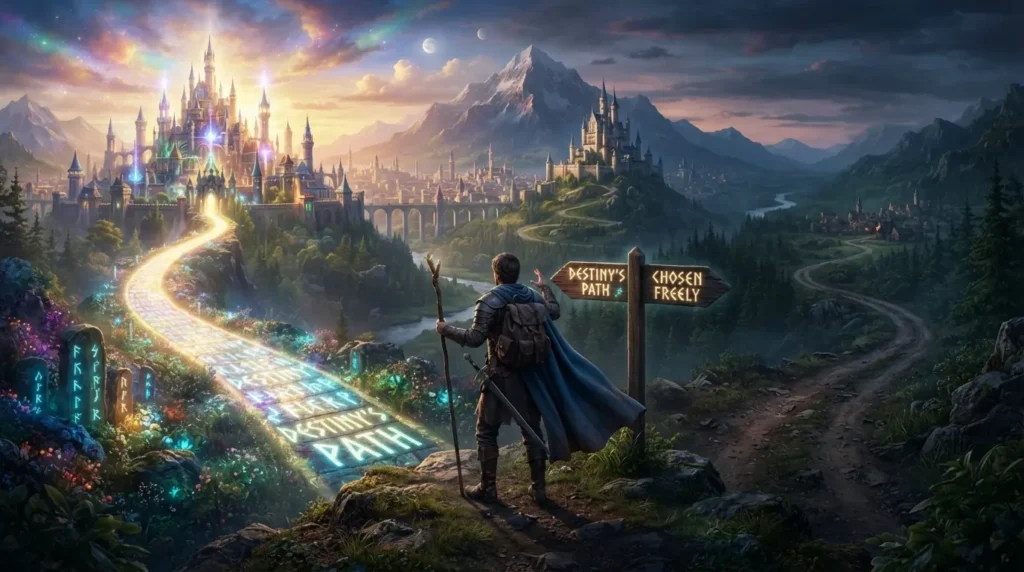
Frodo occupies both categories this article’s title treats as rivals, and so do Moses, Luke Skywalker, and a substantial share of the heroes anyone would name if you asked them for examples of either archetype.
The comparison worth making isn’t chosen against reluctant. It’s whether the chosenness costs anything and whether the reluctance lasts.
Those two questions will tell you more about whether a hero works than any amount of arguing about which archetype is inherently superior, and they’re a lot easier to check.
Related Articles
- 7 Things Modern Fantasy Writers Can Learn From Tolkien
- How Tolkien & Martin Built Two Very Different Fantasies
- Why the “Chosen One” Trope Refuses to Die
- 7 Dark Fantasy Tropes That Make The Genre Work
- The Best Found Family Begin as Rivals, Not Friends
- Fate vs Free Will: Dark Fantasy’s Favorite Argument
Written by Batin Khan, a curious free spirit who loves reading and exploring the worlds of fantasy, mythology, and ancient stories. Through this blog, Batin hopes to share that sense of wonder with readers while building an exciting future along the way.